Kathmandu
Saturday, July 25, 2026





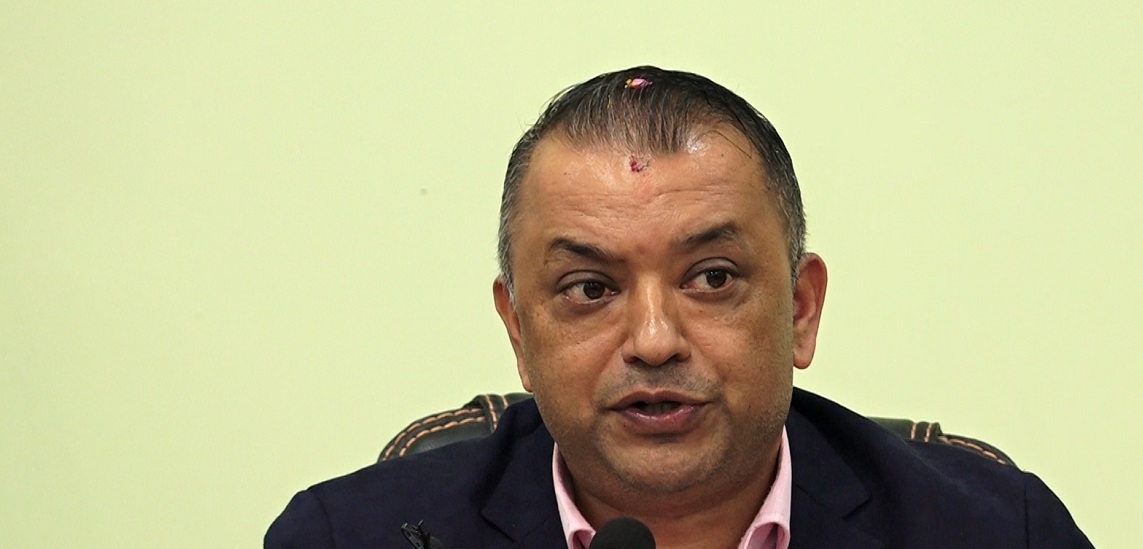
KATHMANDU: Nepali Congress President Gagan Kumar Thapa has criticised the government’s ongoing eviction drive against squatters, questioning whether the state is prioritising a show of force over due legal process in addressing Nepal’s long-standing landless crisis.
In a Facebook post on Friday, Thapa raised concerns over the use of bulldozers to clear settlements along riverbanks and public land, arguing that the issue of landless communities cannot be resolved simply by demolishing makeshift homes.
He described the crisis as a product of decades of structural inequality and flawed development policies that concentrated resources in urban centres, forcing migration from rural areas.
Thapa emphasised that landlessness in Nepal disproportionately affects marginalised and Dalit communities, calling it a result of historical state neglect rather than individual choice.
He stressed that the constitution guarantees the right to dignified living and housing, and specifically mandates the state to provide land and settlement to landless Dalits.
Referring to legal provisions, Thapa noted that amendments to land-related laws had already created a framework to identify genuine squatters and provide them with land or housing, including provisions for managed settlement in urban areas like Kathmandu.
However, he criticised the state for failing to implement these laws effectively over the years.
At the same time, Thapa acknowledged the existence of “fake squatters” who exploit public land under the guise of landlessness, stating that such individuals should be identified and punished according to the law.
He said his party had pushed for reforms in Parliament to ensure that genuine landless people receive justice while closing loopholes for those misusing the system.
The Nepali Congress leader also pointed out that a progressive amendment bill aimed at addressing the issue was passed by the House of Representatives but stalled in the National Assembly following the dissolution of Parliament.
He argued that the current government, which enjoys a strong majority, could have expedited solutions through legal mechanisms rather than resorting to forceful evictions.
Thapa warned that bulldozer-led actions not only destroy homes but also erode citizens’ dignity and trust in the state.
He described the approach as short-sighted and driven by populism, cautioning that it risks weakening the foundations of democracy.
Calling for an immediate course correction, Thapa urged the government to clear riverbanks through lawful procedures, ensure proper identification and rehabilitation of genuine landless families, and halt forced evictions without alternatives in place.
He stressed that the state must uphold the rule of law rather than rule by force, adding that true state strength lies in fair implementation of laws, not in coercive action.


![Young doctors protest alleged labor exploitation in health institutions [Photo Feature]](https://english.nepalnews.com/wp-content/uploads/2026/07/Doctor-Protest-Maitighar-4.jpeg)