Kathmandu
Saturday, July 25, 2026





From a near two-thirds majority to just 42 seats in the House of Representatives, decades of factional warfare and broken promises have finally caught up with the old guard.
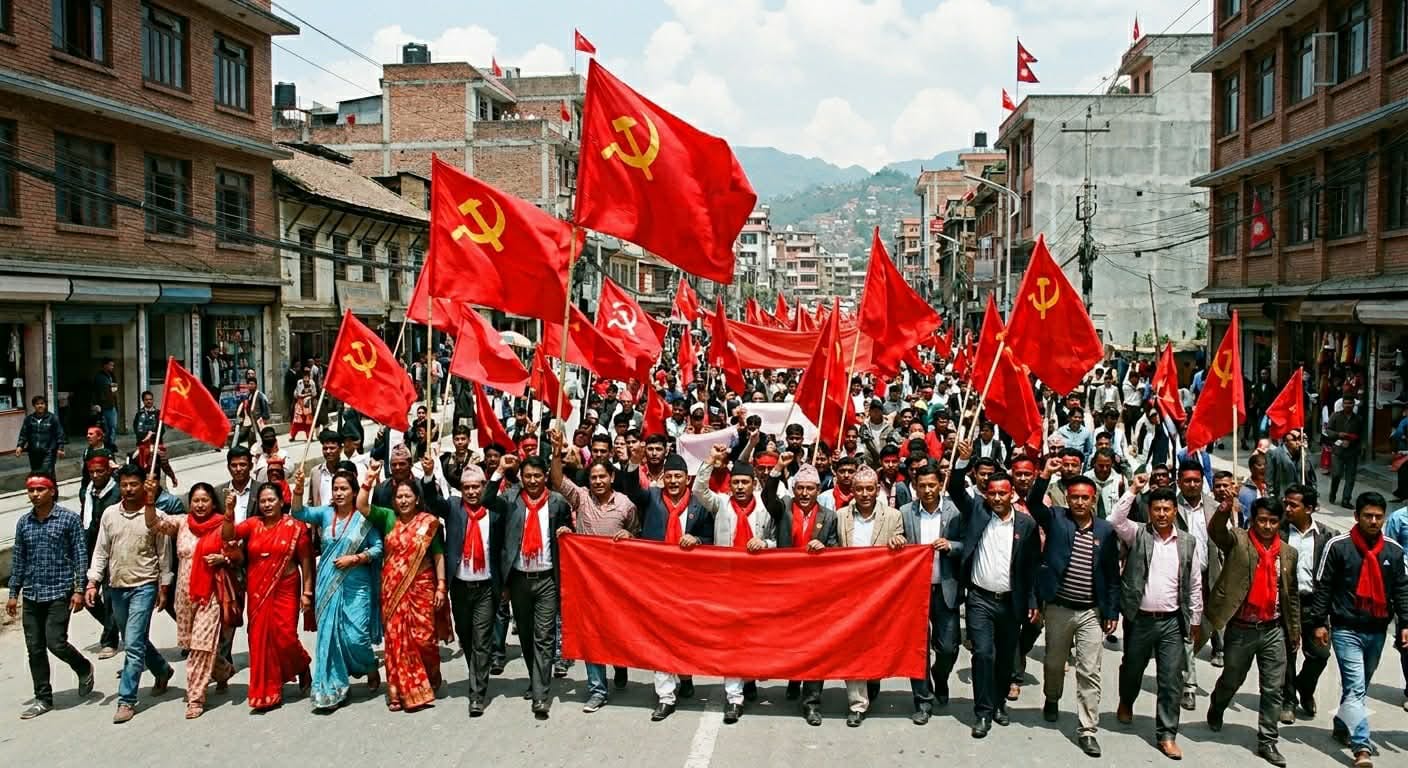
KATHMANDU: This week marks the death anniversaries of Pushpalal Shrestha and Nar Bahadur Karmacharya, two of the five founders who launched Nepal’s communist movement from exile in Calcutta in 1949. Decades on, Nepali communist leaders still invoke their names to preach unity while running rival parties that split and merge on the calculus of power rather than doctrine. Today’s (July 25) provincial power-sharing pact between KP Oli and Prachanda offers the latest example.
When and by whom was the Communist Party of Nepal formed?
The Communist Party of Nepal was born out of exile, not out of a mass uprising at home. On 22 April 1949, five young men and women, all barred from open political activity under the autocratic Rana regime, set up an organising committee in Calcutta. They were Pushpalal Shrestha, Nar Bahadur Karmacharya, Narayan Bilas Joshi, Niranjan Govinda Baidya and Moti Devi Shrestha.
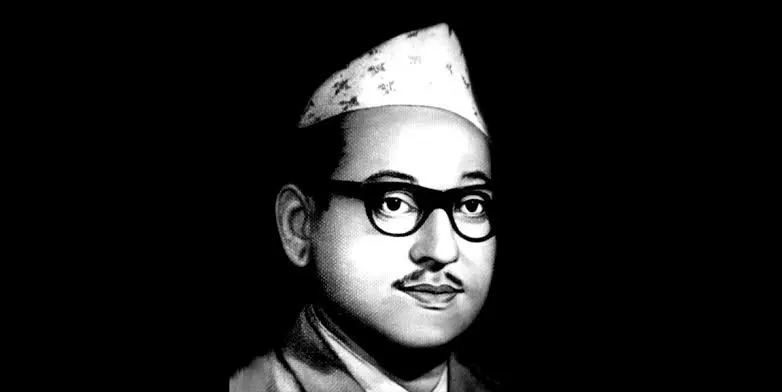
Pushpalal Shrestha/File photo
Pushpalal, then in his mid-twenties, took charge as general secretary and is remembered today as the intellectual force behind the entire project. The party was formally proclaimed later that year, on 15 September, through the release of its manifesto in a fortnightly bulletin called Prachar Patra, a date chosen deliberately to coincide with the anniversary of the Kot Massacre that had installed Rana rule a century earlier.
From its earliest days the party framed itself as a force against three enemies at once, the Rana oligarchy, feudal land relations and foreign imperial influence, which gave it an anti-establishment identity well before it ever contested an election.
What was the background that pushed these five to form a separate communist party?
Pushpalal had not begun as a communist. He was an active member of the Nepali National Congress, a precursor of today’s Nepali Congress, but grew disillusioned watching the party’s leadership negotiate and compromise with individual Rana aristocrats rather than confront the system outright. He came to believe that a movement built on gradual bargaining could never deliver the structural transformation Nepal needed, freedom from autocracy, an end to feudal landholding, and a route out of economic backwardness.
A meeting with the Indian communist leader Nripendra Chakrawarti convinced him that an organised international socialist framework, rather than nationalist sentiment alone, was the tool required to sustain a serious anti-Rana struggle. Operating from Indian soil was itself telling: Nepali political dissent in the late 1940s had almost no room to breathe inside the country, so the earliest communist organising, like much of the broader democratic movement, had to be conducted from Banaras, Calcutta and Darjeeling among the Nepali diaspora and Indian sympathisers before it ever set foot back home.
What did the party’s early years underground and its first taste of elections look like?
For a decade after its founding the CPN operated mostly underground, its cadres periodically jailed, its congresses often held on Indian soil because gatherings were banned inside Nepal. Things briefly opened up after the 1950-51 movement ended Rana rule, and the party held its second congress in Kathmandu in 1957, its first ever held openly on Nepali territory, where Keshar Jung Rayamajhi was elected general secretary in place of Pushpalal. Nepal then held its first-ever general election in February 1959 under a new constitution, and the CPN, contesting legally, won just 4 of the 109 seats with a vote share of roughly seven percent, a modest result next to the Nepali Congress’s sweeping majority.
That underwhelming performance mattered enormously for what followed, because it left the party too weak, in its own general secretary’s calculation, to survive on parliamentary politics alone, a judgment that shaped the party’s next and most consequential decision within barely a year of that election.
What was the Keshar Jung Rayamajhi controversy and why does it still get invoked today?
On 15 December 1960, King Mahendra dissolved the elected Nepali Congress government, jailed Prime Minister BP Koirala and banned all political parties, ending Nepal’s first democratic experiment after barely eighteen months. Rayamajhi, the CPN general secretary at the time, publicly welcomed the king’s coup as a “progressive step,” arguing that with the party’s parliamentary weight so thin it stood to gain more from royal patronage than from a banned opposition role.
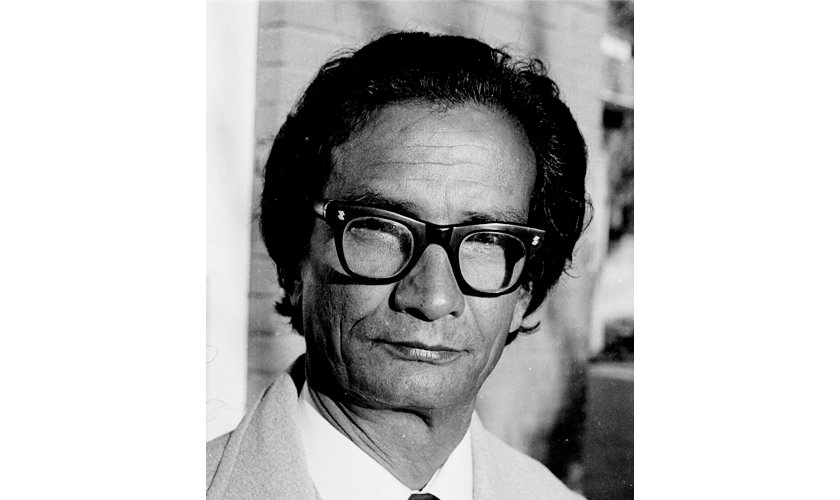
Keshar Jung Rayamajhi/File photo
He was rewarded with a seat in the king’s advisory Raj Sabha. The reaction inside the party was fierce. Pushpalal and a large section of cadres saw Rayamajhi’s position as outright betrayal of the party’s founding anti-feudal, anti-autocratic character, and the CPN split for the first time along a fault line that was not about Marxist theory at all but about whether to collaborate with the very monarchy the party had been created to oppose.
Rayamajhi was eventually expelled from the mainstream communist fold in 1983, but the episode is still cited by rival factions today whenever they want to accuse each other of opportunism dressed up as strategy.
How did the Sino-Soviet split affect Nepali communists, and did Moscow-Beijing loyalties really matter?
The global rupture between the Soviet Union and China in the early 1960s arrived in Nepal at almost the exact moment the party was already reeling from the Rayamajhi controversy, and it hardened an existing crack into a permanent one.
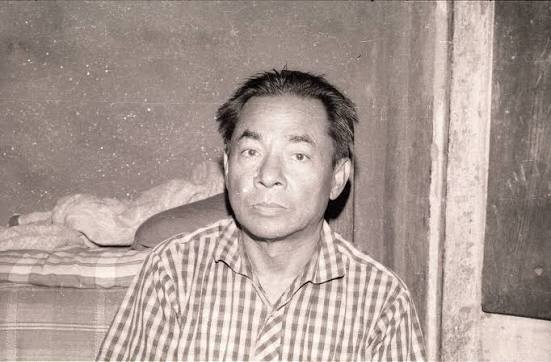
Tulsi Lal Amatya/File photo
Rayamajhi’s faction aligned itself with Moscow, declaring the Soviet Union the centre of world socialism and branding the rival faction, led by Tulsi Lal Amatya and Pushpalal, as dangerous “extremists.” The Amatya-Pushpalal camp leaned toward Beijing’s line, which by the mid-1960s was pushing a more confrontational, revolutionary posture rather than Rayamajhi’s gradualist accommodation with the monarchy.
This was not an abstract ideological quarrel confined to seminar rooms. It decided which faction got Chinese or Soviet-aligned literature, funding channels, and international recognition at communist congresses abroad, and it effectively meant Nepal’s communists spent a decade organising two separate parties that happened to share a name and a founding history, each claiming the other had betrayed the original 1949 project.
How many times has the Nepali communist movement actually split since 1949?
More times than most Nepalis can enumerate from memory, and that is precisely the point critics make. Beyond the 1961 Rayamajhi split and the Sino-Soviet divide, the movement fractured again in 1968 when Pushpalal, unable to keep working with Amatya, convened a separate congress in Gorakhpur and formed his own CPN faction.
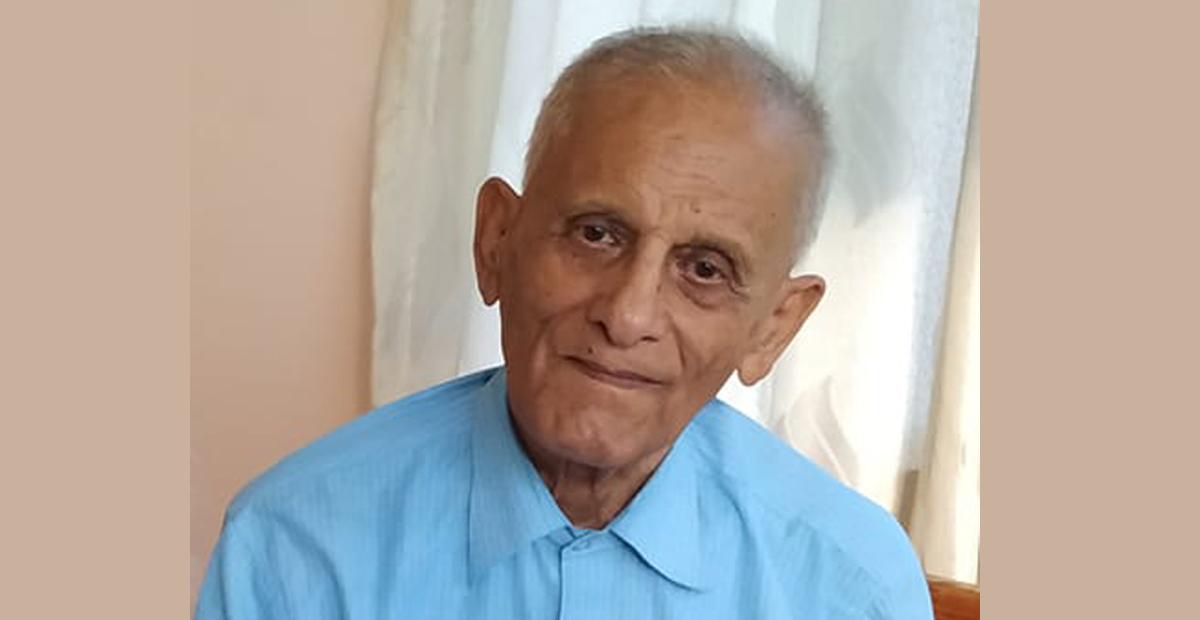
Mohan Bikram Singh/File photo
Mohan Bikram Singh split off to lead a harder-line faction from Pyuthan around the same period. Through the 1970s and 1980s more splinters emerged, including the CPN (Marxist-Leninist) under Madan Bhandari’s later leadership, which eventually merged with the CPN (Marxist) in 1991 to form CPN (Unified Marxist-Leninist), the UML most Nepalis know today.
Meanwhile a separate radical current, drawing on Mohan Bikram Singh’s lineage, eventually produced the CPN (Maoist) that launched the decade-long insurgency in 1996. After the 2006 peace process the Maoists themselves split repeatedly, spinning off breakaway factions under Mohan Baidya, Netra Bikram Chand and others.
Even the 2018 merger of UML and the Maoist Centre into a single Communist Party of Nepal lasted barely three years before the Supreme Court itself ordered it dissolved back into its two constituent parties in March 2021, and months later Madhav Kumar Nepal and Jhala Nath Khanal split from UML again to form CPN (Unified Socialist).
By any honest count, more than a dozen distinct communist parties have existed in Nepal at one point or another, most of them born from personal rivalry as much as doctrine.
How many prime ministers and governments have Nepal’s communists actually produced?
More than any other single political stream in Nepal’s post-1990 history, which makes their record on delivery all the more scrutinised. Man Mohan Adhikari became the first communist prime minister anywhere to take office through a fair multi-party election, governing from November 1994 to September 1995 as UML chief.
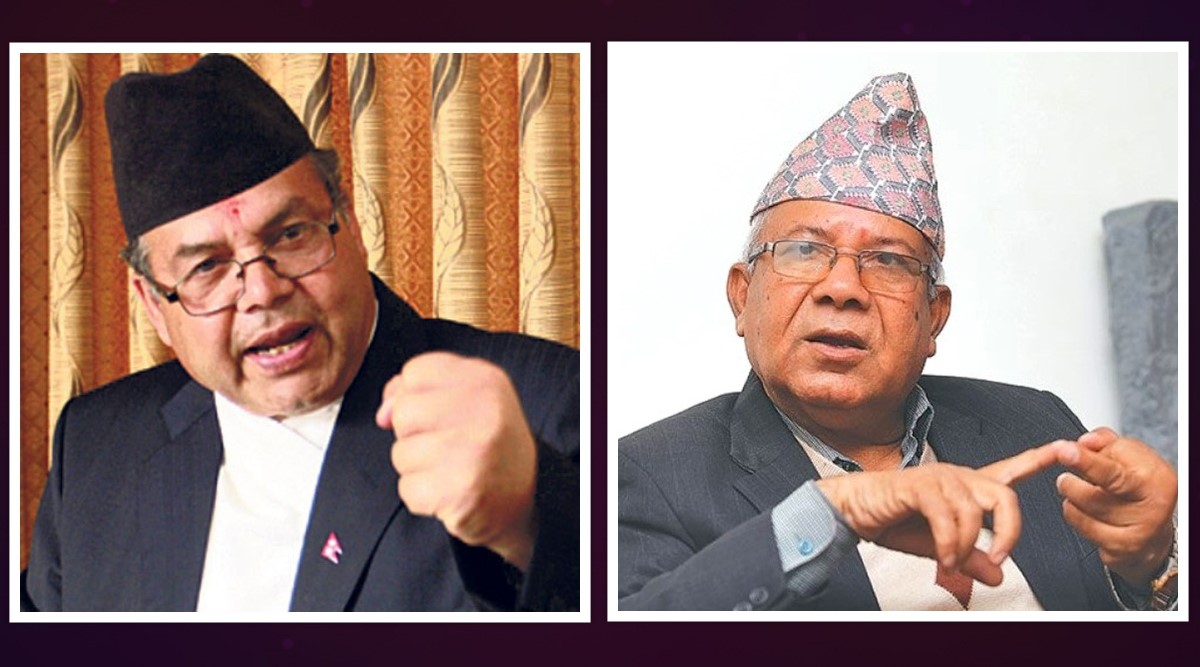
Jhala Nath Khanal And Madhav Kumar Nepal/ File photo
Since then Madhav Kumar Nepal (2009-2011), Jhala Nath Khanal (2011), Baburam Bhattarai of the Maoist camp (2011-2013), and Pushpa Kamal Dahal “Prachanda,” who has led the government on three separate occasions spanning 2008-09, 2016-17 and 2022-24, have all held the premiership.
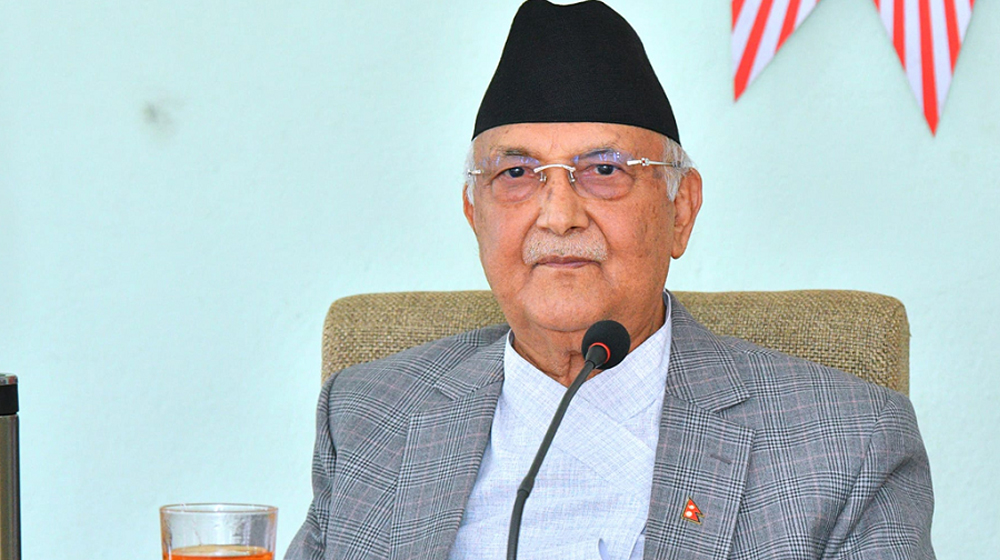
KP Sharma Oli. File photo
KP Sharma Oli alone has been prime minister four times, most recently from mid-2024, before the Gen Z uprising of September 2025 forced his resignation. Add these terms together and communist-led governments, in one configuration or another, have controlled Singha Durbar for a large share of the years since Nepal became a republic in 2008.
Yet none of these tenures produced the sweeping land reform, industrial base or welfare architecture the party’s founding documents promised, a gap between time in office and material outcomes that now forms the core of public disillusionment with the entire communist project.
What role did the Maoist insurgency play in reshaping the communist movement?
The People’s War launched by the then CPN (Maoist) in February 1996 was the most violent chapter in the movement’s history, killing around seventeen thousand people over a decade and displacing hundreds of thousands more, but it also fundamentally altered Nepal’s political map.
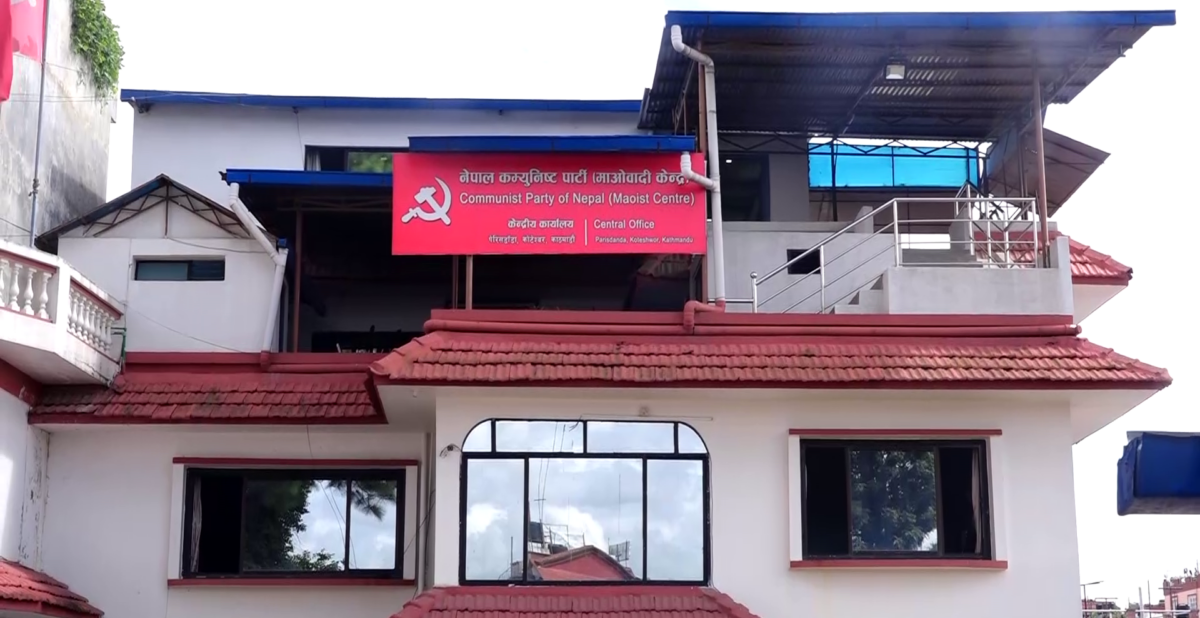
File photo
The insurgency’s stated cause, land redistribution and dignity for Dalits, indigenous communities and the rural poor left behind by feudal landholding, gave the Maoists genuine grassroots traction in the country’s poorest hill and mid-western districts, areas the older, more urban UML had never organised as deeply.
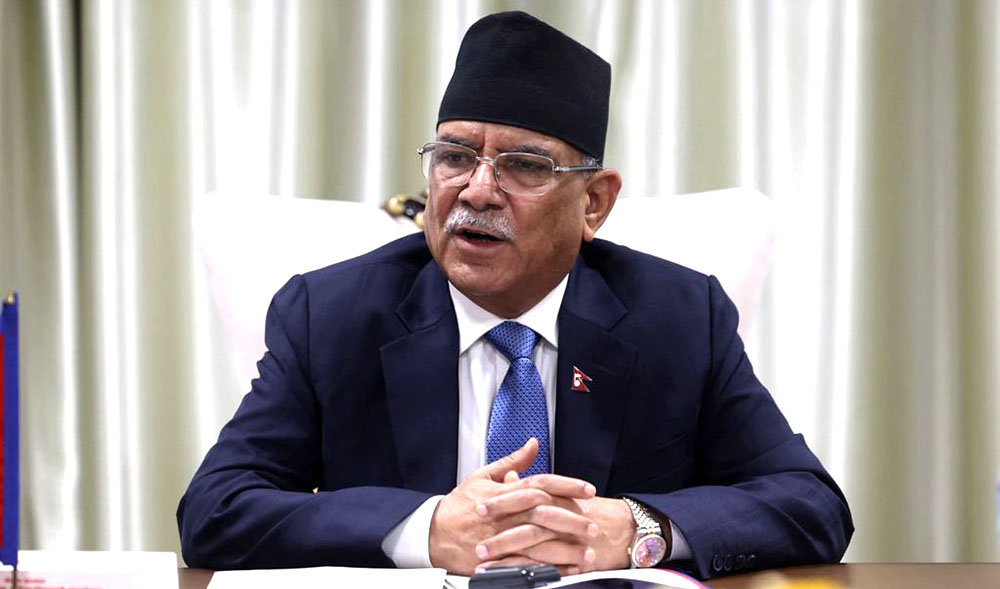
Pushpa Kamal Dahal/File photo
The 2006 Comprehensive Peace Accord brought the Maoists into mainstream politics, abolished the two-hundred-and-forty-year-old monarchy in 2008, and rewarded the former rebels with the country’s first republican-era prime minister in Prachanda. But the transition from armed movement to parliamentary party also exposed a structural weakness that persists to this day: the Maoists proved far better at mobilising an insurgency around the grievances of the dispossessed than at converting that mobilisation into durable policies once they controlled the state.
How did the 2018 unification and 2021 split of UML and the Maoist Centre unfold?
Riding a wave of post-constitution optimism, UML and the Maoist Centre contested the 2017 elections as an alliance, won a combined 174 seats out of 275, close to a two-thirds majority, and then formally merged in May 2018 into a single Communist Party of Nepal under joint chairmen Oli and Prachanda, who agreed to rotate the premiership between themselves.
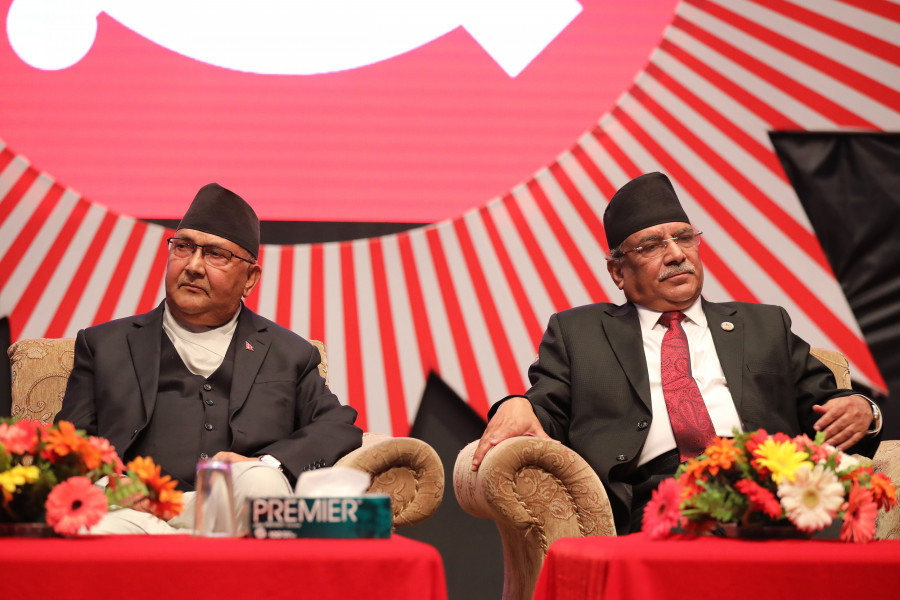
KP Sharma Oli and Pushpa Kamal Dhahal/ file photo
It was billed at the time as the definitive unification of Nepali communism and the strongest government the country had ever produced. It did not last. Internal battles over power-sharing, allegations that Oli was sidelining Prachanda, and Oli’s own controversial attempts to dissolve parliament twice in 2020 and 2021 tore the arrangement apart.
Supreme Court ultimately ruled the 2018 merger itself invalid on procedural grounds and ordered the party split back into its original UML and Maoist Centre identities in March 2021, a legal reversal of a political marriage that had been sold to voters as permanent barely three years earlier.
What ideological differences, if any, genuinely separate today’s communist factions?
On paper, remarkably little. UML describes itself as guided by “People’s Multiparty Democracy,” a doctrine crafted by Madan Bhandari in the early 1990s to reconcile Marxism-Leninism with parliamentary competition.
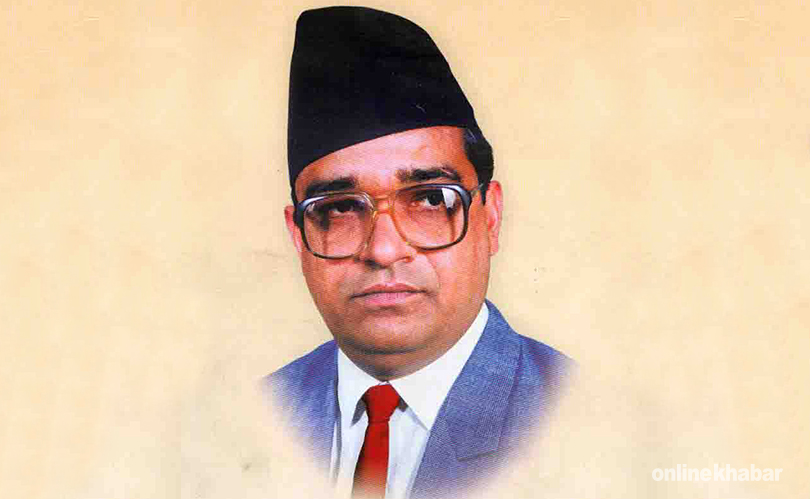
Madan Bhandari/File photo
The Maoists still nominally invoke Marxism-Leninism-Maoism and previously they used to invoke Prachanda’s own “Prachanda Path,” rhetoric rooted in the insurgency years.
Smaller factions like those led by Mohan Baidya or Netra Bikram Chand have at times rejected parliamentary participation altogether as a betrayal of revolutionary principle. But in practice, nearly every major split in the last twenty years traces back to personality clashes, leadership succession fights, or disputes over cabinet berths and provincial chief minister posts, not disagreements over class analysis or the path to socialism.
1735657171.png)
Netra Bikram Chand / File photo
Analysts and even some communist leaders themselves have long conceded that the ideological labels function more as brand names distinguishing rival power centres than as genuine programmatic differences, which is precisely why unity talks resurface so easily whenever an electoral or governmental opportunity appears, and why they collapse just as easily once posts have to be divided.
Have Nepal’s communists actually delivered for Dalits, Madhesis, indigenous groups, landless settlers and debt-trapped villagers?
This is where the gap between rhetoric and record is widest. Landless settlers known as sukumbasi have occupied public and forest land for generations while successive communist-led governments promised systematic land reform and resettlement, yet comprehensive land redistribution of the kind the party’s 1949 founding documents envisioned has never been implemented at scale.
Rural households trapped in exploitative informal lending, often paying interest rates far beyond anything regulated finance would permit, remain largely outside the reach of the microfinance and cooperative reforms that communist governments have periodically announced.
Madhesi and indigenous Janajati communities, who provided crucial support during the Maoist insurgency on promises of federalism and inclusive citizenship, have repeatedly accused both UML and the Maoists of retreating into traditional hill-elite dominated leadership structures once in power, with identity-based federal demands watered down during actual constitution drafting.
Dalits, whose emancipation from caste-based exclusion was central to Maoist insurgency messaging, still face disproportionate poverty and social discrimination two decades after the war ended.
Communist parties have held the prime minister’s office more often than any other political stream since 2008, which makes their comparatively thin record on these specific promises a recurring line of attack, including from the Gen Z protest movement itself.
Why do Nepal’s communist parties appear to be losing relevance today?
The clearest evidence arrived on 5 March 2026. UML, which once anchored a 174-seat alliance with the Maoists in 2017, was reduced to its worst-ever result, just 25 seats and roughly 13 percent of the proportional vote, with chairman KP Oli losing his own constituency.
The newly formed Nepali Communist Party, itself a product of yet another unity project stitched together after the September 2025 Gen Z uprising, managed only 17 seats, and its co-coordinator Madhav Kumar Nepal also lost his seat.
Together the two main communist forces hold 42 seats in a 275-member house, a collapse from the 174 they commanded jointly less than a decade ago.
The reasons are not mysterious to most Nepali voters: repeated splits and mergers driven by personal ambition rather than principle, governments remembered more for instability and infighting than delivery, and a younger electorate that came of age watching communist leaders trade chief ministerships and cabinet seats among the same handful of ageing men.
The Rastriya Swatantra Party’s landslide victory, built almost entirely on anti-establishment and anti-corruption sentiment, was as much a verdict against the communist old guard as against the Nepali Congress.
What does the current provincial power-sharing pact between UML and the Nepali Communist Party actually involve?
On 25 July, UML Chairman KP Oli and Nepali Communist Party Coordinator Prachanda signed an agreement dividing executive leadership across five of Nepal’s seven provinces. Under its terms, UML will lead the provincial governments in Koshi, Bagmati and Lumbini, while the Nepali Communist Party takes charge in Karnali and Sudurpashchim, with Madhesh and Gandaki left for further talks involving other parties.
The timing is notable: it comes barely a day after the two parties jointly marked the anniversary of Pushpalal’s death with speeches calling for communist unity to safeguard democracy and the constitution. Yet the arrangement itself has nothing to do with ideology and everything to do with dismantling a fraying Nepali Congress-UML alliance that had governed most provinces since 2024, an alliance whose partners have spent recent weeks trading no-confidence motions and removing each other’s provincial ministers in Karnali and Sudurpashchim.
The reshuffle underway is best read as two communist parties, sitting far behind the RSP in Kathmandu, moving to consolidate whatever provincial power remains available to them while national politics is dominated by a party neither of them controls.
What would the result have looked like if UML and the Nepali Communist Party had fought the March 5 election as a single alliance?
Based on the final tally, UML and the Nepali Communist Party won 25 and 17 seats respectively, a combined 42 out of 275, compared with the 174 seats the same two forces jointly held after their 2017 pre-election alliance.
That collapse alone shows the scale of what the two parties have lost regardless of whether they contested separately or together. Had they run as a formal alliance this time, the honest answer, based on the available FPTP and proportional vote data, is that the addition would have been marginal rather than transformative.
The Rastriya Swatantra Party’s 182-seat sweep included roughly 125 of the 165 directly elected constituency seats and close to 48 percent of the proportional vote, a scale of dominance built on a broad anti-establishment wave rather than narrow multi-cornered vote splitting in a handful of seats.
A combined communist ticket might plausibly have picked up an additional dozen to two dozen constituency seats in races decided by especially tight margins where UML and NCP candidates together outpolled the winner, nudging their combined total closer to 55 or 65 seats at the outer edge of a reasonable estimate.
It would not have come close to denying RSP its majority, let alone its near two-thirds mandate, because the scale of the anti-incumbent verdict this March was too broad and too deep to have been reversed by left unity alone.
What does this week’s convergence of anniversaries and alliance-building actually tell Nepalis about their communist movement?
It captures, in miniature, the entire history recounted above. The same week that communist parties gathered to honour Pushpalal and Nar Bahadur Karmacharya, founders who risked exile and imprisonment to build a movement against autocracy and feudal exploitation, their ideological descendants signed a deal over which of them gets to appoint chief ministers in which province.
Speeches on the podium invoked unity, democracy and the constitution. The actual text of the agreement invoked nothing but division of executive posts. This is not a new pattern; it is the oldest one in Nepali communism, visible from Rayamajhi’s compromise with King Mahendra in 1960 through the Sino-Soviet split, the multiple Maoist breakaways, the 2018 merger and its 2021 court-ordered dissolution, and now the scramble for provincial power just months after a historic electoral defeat.
Seventy-seven years on, the movement’s founders are remembered with reverence that the current leadership has done little in practice to earn.

![Young doctors protest alleged labor exploitation in health institutions [Photo Feature]](https://english.nepalnews.com/wp-content/uploads/2026/07/Doctor-Protest-Maitighar-4.jpeg)