Kathmandu
Monday, June 22, 2026





Over 1,500 politically appointed officials removed through ordinances as the government moves to reset public institutions, curb patronage, and push merit-based governance.
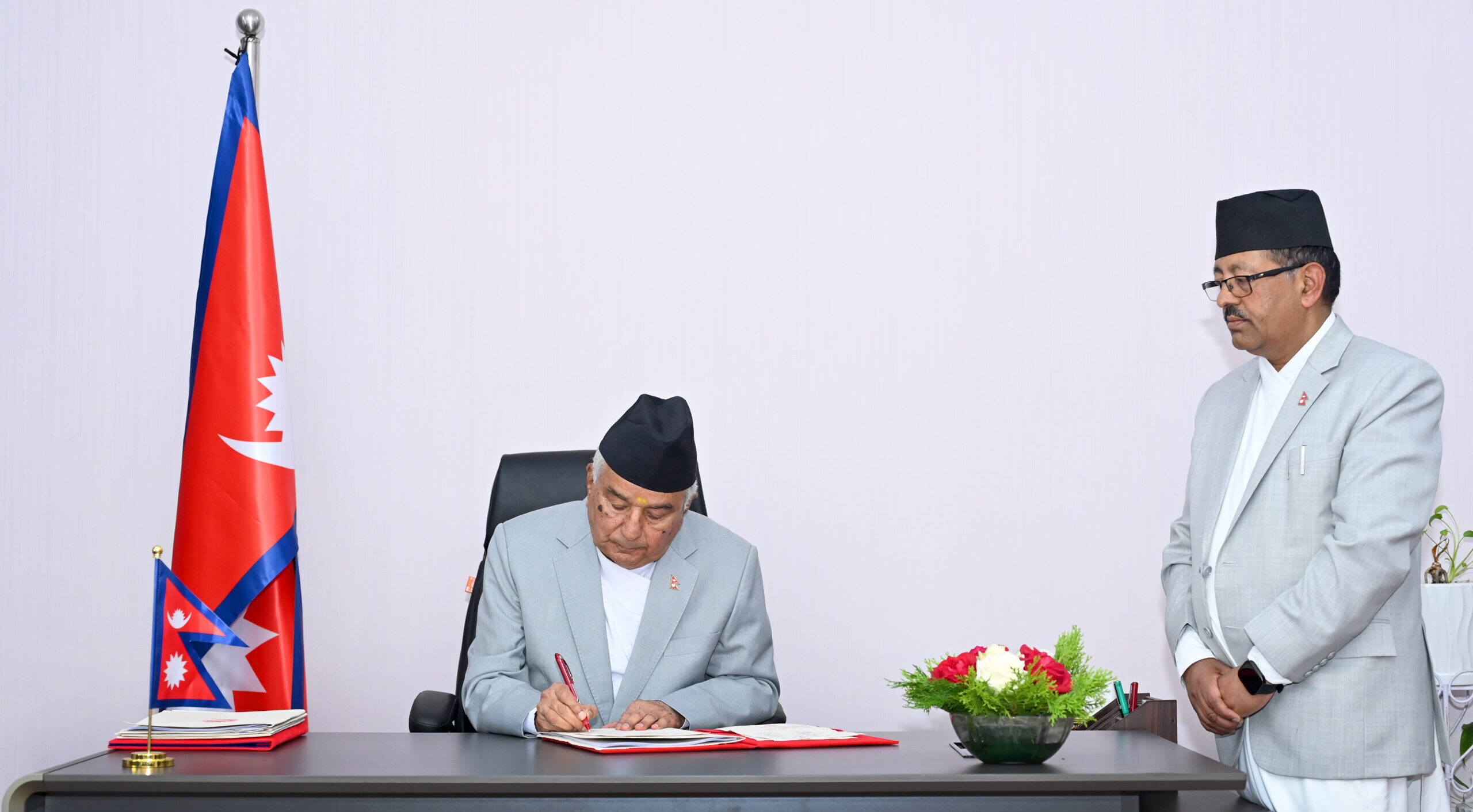
KATHMANDU: On May 2, 2026, President Ramchandra Paudel issued three ordinances on the recommendation of the Council of Ministers: the Special Provisions Ordinance on the Removal of Public Office Holders, 2026; the ordinance amending certain Nepal Acts related to Health Science Academies; and the ordinance amending certain Nepal Acts related to Universities.
This followed a Cabinet decision led by Prime Minister Balendra Shah, marking one of the most extensive administrative overhauls in Nepal’s recent history. Through these ordinances, the government has removed 1,594 officials who were appointed through political processes across a wide range of state institutions.
The changes span key sectors including universities, health academies, regulatory authorities, and public enterprises, making it one of the most far-reaching institutional reshuffles in recent years. According to officials, the objective of the move is to strengthen administrative efficiency, reduce partisan influence in public bodies, and inject renewed momentum into institutions that have long been shaped by politically driven appointments.
The decision also aligns with the government’s broader agenda of depoliticizing governance and shifting toward a more merit-based system in key public positions. This Nepal News explainer delves into this major administrative shake-up in detail.
What is the political context behind this move?
Balendra Shah, widely known as Balen, brings a distinctive background as a structural engineer, former hip-hop artist, and successful independent mayor of Kathmandu before entering national politics. At 36, he leads the country, which capitalized on widespread discontent with traditional parties following the 2025 Gen Z protests against corruption and poor governance. These youth-driven demonstrations created conditions for dramatic political change, culminating in the RSP’s decisive victory in the March 2026 elections.
Shah positioned his government around promises of clean administration, technological modernization, and ending the entrenched culture of favoritism that had defined Nepali public institutions for generations.
The ordinance package, issued just weeks into his tenure, embodies this reformist zeal. It targets positions filled during previous coalition eras marked by frequent government changes and compromise-driven appointments. By acting decisively, Shah aims to translate electoral support into tangible shifts, signaling to citizens and international partners alike that his administration prioritizes results over continuity with outdated practices.
This move also reflects broader generational demands for accountability in a nation where political instability has long hindered progress. Observers see it as an attempt to reset deeply rooted patronage networks that often prioritized loyalty over competence.
Why did the government choose ordinances instead of going through Parliament?
Ordinances provide a constitutional route under Article 114 for urgent executive action when the legislature is not in session, allowing the Cabinet to recommend measures directly to the President. In this case, the approach enabled rapid and uniform implementation across more than a hundred laws and institutions, bypassing the delays and negotiations typically associated with parliamentary processes.
However, critics have raised concerns over the government’s reliance on ordinances, arguing that it weakens legislative scrutiny and bypasses Parliament’s core law-making role. They also point to the fact that a parliamentary session had been called but was later recommended for prorogation, which, in their view, limited the space for debate on such a far-reaching decision.
Supporters of the move argue that past attempts to remove or replace office-holders individually often led to legal challenges and interim orders from the Supreme Court, particularly in cases involving fixed-term appointments. They say a consolidated ordinance framework was necessary to provide clear legal backing and reduce the risk of prolonged litigation while amending multiple laws at once.
The government maintains that the decision aligns with its early emphasis on rapid delivery of reforms, as waiting for a full parliamentary process could have significantly delayed action. At the same time, the debate reflects broader concerns about the balance of power between the executive and legislature, with differing views on whether the move strengthens efficiency or weakens democratic oversight.
How many officials are affected, and in which key sectors?
The total stands at 1,594 individuals, including chairpersons, vice-chancellors, board members, directors, and other executive positions. Significant changes are seen in the communications and aviation sectors, including leadership roles at Nepal Airlines Corporation, state-owned media such as Gorkhapatra and the Rastriya Samachar Samiti, the Press Council, as well as regulatory bodies like the Telecommunications Authority of Nepal and the Civil Aviation Authority of Nepal.
Education and higher learning institutions bear substantial impact, with large cohorts departing from Tribhuvan University, Kathmandu University, provincial universities such as Purbanchal and Pokhara, along with specialized bodies like the University Grants Commission and Teachers Service Commission.
Health and medical sciences encompass removals from academies in Patan, Karnali, Pokhara, and Rapti, plus councils for medicine, nursing, pharmacy, and specialized centers like cancer and heart hospitals.
Energy, infrastructure, and finance include Nepal Electricity Authority, road boards, drinking water corporations, provident funds, and securities regulators.
Agriculture, environment, cultural academies, sports development, and social welfare bodies round out the list, touching development funds, indigenous councils, and disaster management entities. This breadth ensures virtually no sector reliant on statutory appointments remains untouched, creating widespread vacancies intended for systematic refilling.
How were these officials originally appointed?
Appointments typically occurred through mechanisms embedded in individual acts governing each body, where Cabinets or relevant ministers exercised significant discretion in making recommendations. Over decades of coalition politics, positions became bargaining chips during government formation or maintenance, with parties allocating slots to secure support or reward cadres.
Even where selection committees existed on paper, final choices often reflected political equations involving ethnicity, region, or factional balance rather than open competition or proven expertise. This practice persisted through multiple administrations since the 1990s restoration of democracy and intensified in the federal era.
Some appointees served in advisory or oversight capacities in public enterprises and regulatory commissions, where influence over contracts, budgets, or policy implementation made the roles particularly attractive. The accumulated effect created overlapping networks of influence that the current leadership argues compromised institutional autonomy and public interest.
Understanding this history helps explain why a blanket approach was chosen over case-by-case reviews, which could prove administratively burdensome and legally contentious.
What is the stated rationale from the government?
Government spokesperson describe the action as a necessary corrective to longstanding inefficiencies caused by excessive political interference in day-to-day operations of public bodies. Many institutions had become extensions of partisan interests, leading to delayed projects, questionable decisions, and eroded public confidence.
By removing layers of politically aligned leadership simultaneously, the administration seeks to create space for professionals selected through more rigorous, transparent criteria focused on domain knowledge and integrity. Prime Minister Shah’s team has linked this to wider goals of improving service delivery, accelerating infrastructure development, and restoring trust in state mechanisms following years of youth protests highlighting governance failures.
Officials stress that the move is not punitive but structural, aimed at injecting dynamism into bodies that had grown stagnant.
It also facilitates alignment with national priorities such as digital transformation and better resource management. The emphasis remains on future appointments being competitive and merit-driven, with safeguards against repeating past mistakes. This rationale resonates with reform advocates who see depoliticization as essential for Nepal’s development ambitions.
What are the potential positive impacts?
If implemented thoughtfully, the changes could professionalize leadership across critical sectors, leading to faster project approvals, reduced leakage in public spending, and improved oversight. Universities might pursue academic excellence with less external pressure, while health institutions could enhance service quality and research focus.
Regulatory bodies in energy and finance may enforce rules more impartially, potentially attracting greater investment. Over time, a culture shift toward competence-based leadership could strengthen institutional memory and innovation, benefiting citizens through better roads, reliable power, quality education, and responsive administration.
The reset also offers an opportunity to diversify representation by drawing from broader talent pools, including diaspora experts and young professionals. Internationally, it may project an image of a government serious about modernization, supporting goals like improved ease of doing business rankings.
Success stories from similar reforms elsewhere suggest that clearing entrenched interests can unlock productivity gains, provided new processes emphasize accountability and performance metrics from the outset.
What concerns or negative impacts have been raised?
Observers point to risks of operational disruptions as experienced leaders exit abruptly, potentially affecting ongoing academic programs, medical services, regulatory enforcement, and development initiatives. Knowledge gaps could emerge in specialized areas where continuity matters greatly.
Questions linger about the fairness of group treatment without individual performance reviews and whether courts might still examine specific cases. Politically, the scale invites accusations of consolidating control rather than genuine reform, possibly deepening divisions. Short-term morale in public service might dip amid uncertainty, and rushed replacement processes could inadvertently replicate favoritism if not carefully managed.
Economic ripple effects, such as temporary halts in procurement or investment decisions, add another layer of caution. Stakeholders urge the government to prioritize smooth transitions, clear communication, and inclusive selection for new roles to mitigate backlash and sustain public support for the broader reform agenda. Balancing speed with stability remains a central challenge.
How does this fit into Nepal’s history of political appointments?
Since the return to multiparty democracy, public positions have frequently served as tools for maintaining alliances and distributing influence among parties navigating fragile coalitions. This pattern contributed to short government tenures and policy inconsistency.
Federal restructuring after 2015 expanded such opportunities across provinces and commissions, often without sufficient emphasis on professional qualifications.
Public enterprises and autonomous bodies accumulated appointees whose tenures aligned more with political cycles than institutional needs. Gen Z protests of 2025 highlighted how this system fueled perceptions of elite capture and inefficiency.
The current exercise stands as a more ambitious attempt to dismantle these networks compared to earlier, more limited adjustments after government changes. It responds directly to demands for systemic overhaul voiced by younger generations disillusioned with traditional politics.
Understanding this trajectory underscores why comprehensive action was deemed necessary rather than incremental tweaks that had proven insufficient in the past.
Are there past precedents for such large-scale removals?
Earlier instances include the invalidation of royal-era appointments following the 2006 democracy movement and selective scrapping of selections by outgoing administrations in subsequent years. However, those efforts were narrower in scope and often encountered legal resistance when targeting fixed terms.
Post-constitution periods saw occasional waves of changes in constitutional bodies or enterprises, but nothing matching the coordinated breadth here across legislative acts. Previous governments sometimes relied on non-renewal or voluntary exits, which proved slow and incomplete.
The present ordinance innovates by providing explicit special provisions for collective action, addressing gaps exposed in earlier attempts. It draws lessons from judicial interventions that frustrated piecemeal reforms. While unique in scale for the republican era, it continues a pattern where new leadership seeks to reshape institutions to match its vision, albeit through more streamlined legal engineering this time.
What happens to the vacant positions now?
Immediate effect creates acting arrangements where senior career officials or existing deputies assume temporary responsibilities to maintain essential functions. The government has signaled forthcoming transparent recruitment drives, likely involving public notifications, competitive evaluations, and possibly independent oversight panels to select replacements.
Timelines are expected to vary by institution’s urgency, with priority for operational bodies like hospitals, airlines, and regulators. Clear guidelines on eligibility, conflict-of-interest rules, and performance expectations should accompany the process to uphold reform credibility. Civil society groups and professional associations are likely to monitor developments closely.
Successful execution could involve capacity-building components for new leaders to ensure they hit the ground running. This phase represents a critical test of the government’s commitment to merit over patronage in practice.
Which major institutions are most affected in health and education?
Health sciences face deep leadership transitions at BP Koirala Institute of Health Sciences, Patan Academy, Karnali Academy, Pokhara and Rapti facilities, alongside national councils for medicine, nursing, pharmacy, and specialized centers for cancer and cardiac care. These changes touch medical education, research regulation, and service delivery networks nationwide.
In education, Tribhuvan University loses a significant cohort including vice-chancellor level figures, while Kathmandu University, Purbanchal University, Pokhara University, Lumbini Buddhist University, and newer specialized universities like Madan Bhandari University of Science and Technology and Rajarshi Janak University also see major turnover. CTEVT, Nepal Sanskrit University, Nepal Open University, and the University Grants Commission add to the total.
The moves affect policy-setting bodies, examination commissions, and youth development programs, potentially reshaping curricula, research priorities, and access initiatives once new teams settle. The concentration in these human development sectors highlights their strategic importance in national rebuilding efforts.
How does this relate to broader governance reforms?
The removals form part of an integrated package with university and health law amendments, building on earlier steps addressing cooperatives, anti-money laundering, and constitutional procedures. They advance the RSP’s roadmap emphasizing digitized services, procurement transparency, asset investigations of past leaders, and performance-linked bureaucracy.
By reducing political layers, the government seeks smoother implementation of development priorities and better coordination across ministries.
This fits larger aims of downsizing inefficiencies, enhancing accountability, and responding to public calls for responsive governance post-protest era.
Complementary measures on civil service incentives and digital ecosystems are anticipated to reinforce these changes, creating an environment where institutions focus on outcomes rather than political balancing. The overall thrust targets root causes of Nepal’s governance challenges for sustainable impact.
What legal basis supports the ordinances?
Article 114(1) empowers the President to promulgate ordinances on Cabinet recommendation when Parliament is not in session, provided they address matters requiring immediate attention. The special removal ordinance introduces targeted provisions that override conflicting elements in existing laws for affected positions, ensuring legal clarity and uniformity.
Accompanying amendments to university and health academy acts provide supporting frameworks. This mechanism has been used previously for policy adjustments, though rarely at this volume.
Constitutional experts note it remains subject to eventual parliamentary ratification and judicial review on procedural grounds.
The drafting carefully navigates protections for certain independent roles, such as the Nepal Rastra Bank governor, demonstrating calibrated application. It balances executive prerogative with constitutional limits in a manner tailored to the reform context.
What reactions have come from political parties and stakeholders?
Ruling party supporters hail the decision as courageous fulfillment of electoral commitments to clean governance. Traditional parties have condemned it as arbitrary and motivated by a desire to install allies, warning of precedent for future instability.
Some analysts praise the intent while advocating safeguards for institutional knowledge and due process. Professional bodies in health and academia express concern over continuity but acknowledge opportunities for renewal.
Youth and civil society groups largely back the depoliticization thrust, viewing it as responsive to long-standing grievances.
Media commentary spans cautious optimism to calls for vigilant oversight of replacements. Affected individuals may pursue individual remedies, adding layers to public discourse. Overall sentiment reflects Nepal’s polarized yet reform-hungry political landscape.
What does this mean for Nepal’s future governance?
This development could herald a shift toward institutions insulated from short-term political cycles, fostering stability and expertise-driven decision-making essential for economic growth and social services. If new appointment systems prove robust and transparent, they may inspire confidence among citizens, diaspora investors, and development partners.
Challenges include managing transitions without service breakdowns and preventing new forms of influence from emerging. Long-term success hinges on embedding performance evaluation, anti-corruption safeguards, and inclusive selection processes.
It sets expectations for accountability that future governments must meet, potentially elevating governance standards in a country seeking to overcome decades of under-performance. Broader effects may include energized public participation in monitoring state bodies and accelerated progress on national priorities.
The episode underscores evolving dynamics where public mandate for change drives structural adjustments in Nepal’s maturing democracy.