Kathmandu
Tuesday, June 23, 2026





Nepal's anti-graft body has filed its fourth corruption case tied to the scandal-ridden Pokhara International Airport, bringing the total number of people charged across all four cases to well over 90. The latest charge sheet, filed at the Special Court on Thursday, names former Finance Minister Gyanendra Bahadur Karki and 13 others over alleged illegal tax exemptions handed to Chinese contractor China CAMC Engineering during the airport's construction.

KATHMANDU: The Pokhara International Airport, inaugurated on January 1, 2023, was decades in the making and billions in the unmaking. The idea of an international airport serving Pokhara, gateway to the Annapurna Circuit and Nepal’s second tourism hub, was first floated in 1971 when German consulting firm DIWI prepared a master plan under an Asian Development Bank loan.
In 1975, the government acquired over 3,100 ropani of land near Chinnedanda, three kilometres east of the city’s existing domestic airport. By 1989, a JICA study proposed a 2,500-metre runway and priced the project at around $39.6 million.
Then the Maoist insurgency arrived, ground everything to a halt through the late 1990s and early 2000s, and Pokhara’s tourism sector suffered badly alongside it.
After the peace agreement in 2006, the airport dream was revived. By 2009, then Prime Minister Pushpa Kamal Dahal’s government approved the project, with the cost now estimated at about $169 million and with early plans to seek soft loans.
The real trouble began in 2011. Then then Finance Minister Barshaman Pun of the Maoist party secretly signed a memorandum of understanding with China CAMC Engineering Co Ltd on September 20, 2011, at the Ministry of Finance in Singha Durbar, committing the government of Nepal to provide the Chinese company “solid and substantial support” in winning the construction tender.
The deal was signed in the presence of then energy minister Posta Bahadur Bogati and Chinese Ambassador Yang Houlan. When Nepali Congress leader Deep Kumar Upadhyay exposed the MOU at a Public Accounts Committee meeting in parliament, public outrage forced Pun to scrap it. But the scandal had already baked suspicion into the project.
CAMC entered bids anyway. The company quoted $305 million, nearly double the government’s estimate at the time. When the bid was rejected as outrageous, CAMC hired its own affiliate, China Airport Construction Company, to prepare a revised cost study.
That study came back at $264 million. After adding 16 percent price escalation and 13 percent VAT, the total crept back toward $300 million, almost exactly CAMC’s original bid.
Pokhara residents launched a hunger strike in 2013 that lasted more than 150 days, demanding the government stop the delays and start construction.
In April 2014, then Tourism Minister Bhim Acharya chaired a CAAN board meeting that approved a revised project cost of $215.96 million, based on the recommendation of a four-member expert panel.
The then Finance Minister Ram Sharan Mahat had earlier called CAMC’s $305 million bid “outrageous” but later signed off on the loan structure. The construction contract was formally signed in May 2014 between then-CAAN chief Ratish Chandra Lal Suman and CAMC Chairman Lou Yan.
The soft loan agreement with China EXIM Bank was signed during then prime minister KP Sharma Oli’s March 2016 visit to Beijing.
Construction began in April 2016. The loan structure was a blend of a 25 percent interest-free component from China’s Ministry of Commerce and the remaining 75 percent from China EXIM Bank at 2 percent annual interest, with a seven-year grace period and a 20-year repayment window.
The airport’s revenues were pledged as collateral into an escrow account for repayment. The airport was originally supposed to open in 2020. Delays pushed that to January 2023.
Since inauguration, the airport has received virtually no scheduled international flights. Only Himalaya Airlines, a Nepal-China joint venture, operates a single weekly route to Lhasa.
Nepal has asked China to convert the loan into a grant. China has refused. Nepal now faces annual repayment installments approaching Rs 840 million on a facility that is generating almost no income.
In December 2025, the CIAA filed the first and largest of its four charge sheets. A second case followed days later. A third was filed in March 2026. And the fourth arrived on Thursday.
What exactly did CIAA allege in Thursday’s fresh case and who are the 14 accused?
The fourth charge sheet, filed Thursday at the Special Court in Kathmandu, centres on tax exemptions that the CIAA says were illegally granted to China CAMC Engineering during the construction of Pokhara International Airport. According to the CIAA officias, the original construction agreement did not provide for the kinds of tax waivers that were subsequently extended to the Chinese contractor. These exemptions included customs duties, taxes, and VAT, which the CIAA values at Rs 3.62 billion in total financial damage to the state.
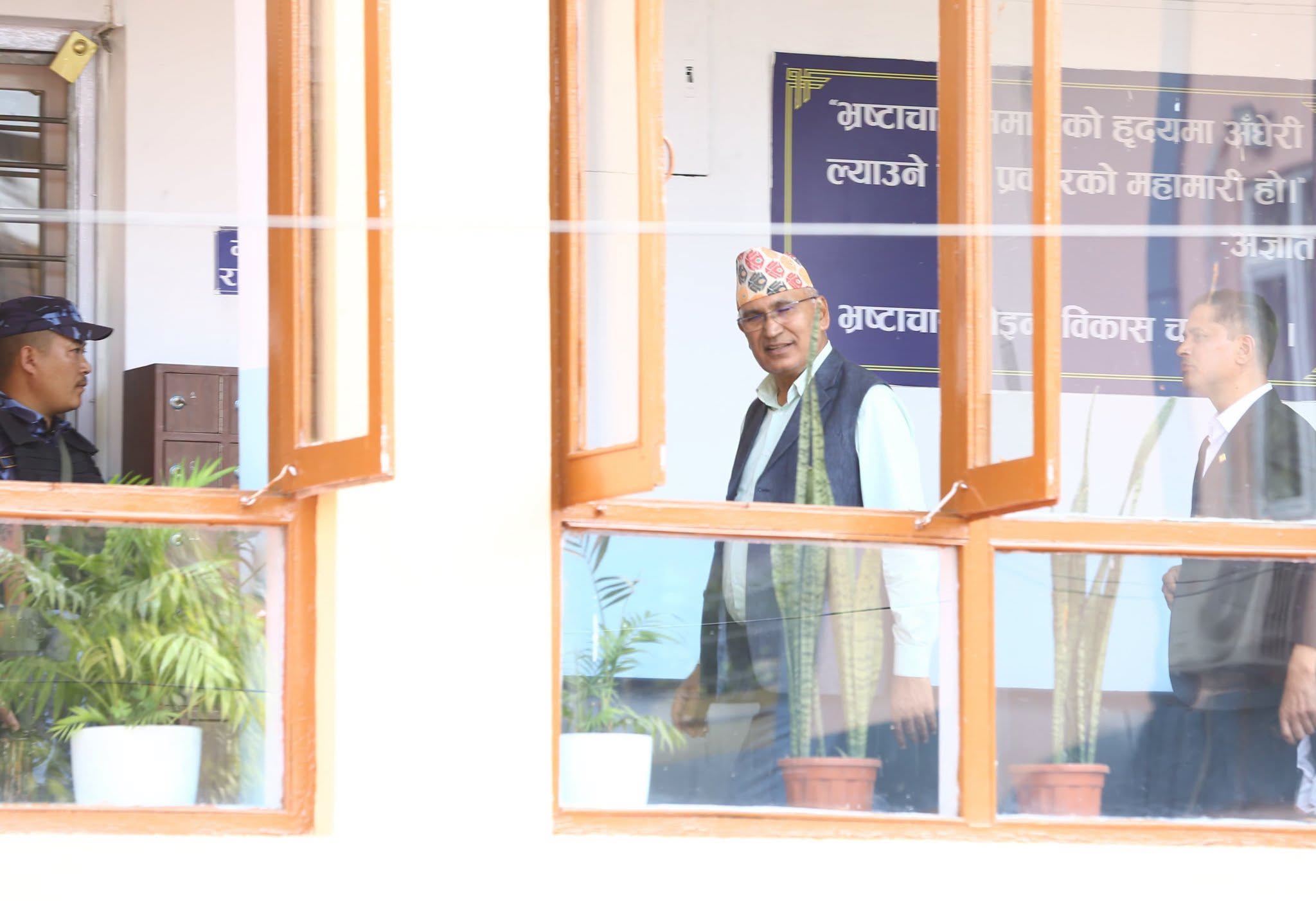
Named in the case are former Finance Minister Gyanendra Bahadur Karki, a Nepali Congress politician who served as Finance Minister under then Prime Minister Sher Bahadur Deuba. Also charged are former Finance Secretary Shankar Prasad Adhikari, former Secretaries Kewal Bhandari, Maheshwar Neupane and Suresh Acharya, currently serving secretary Danduraj Ghimire, and former CAAN director generals Pradeep Adhikari and Sanjeev Gautam.
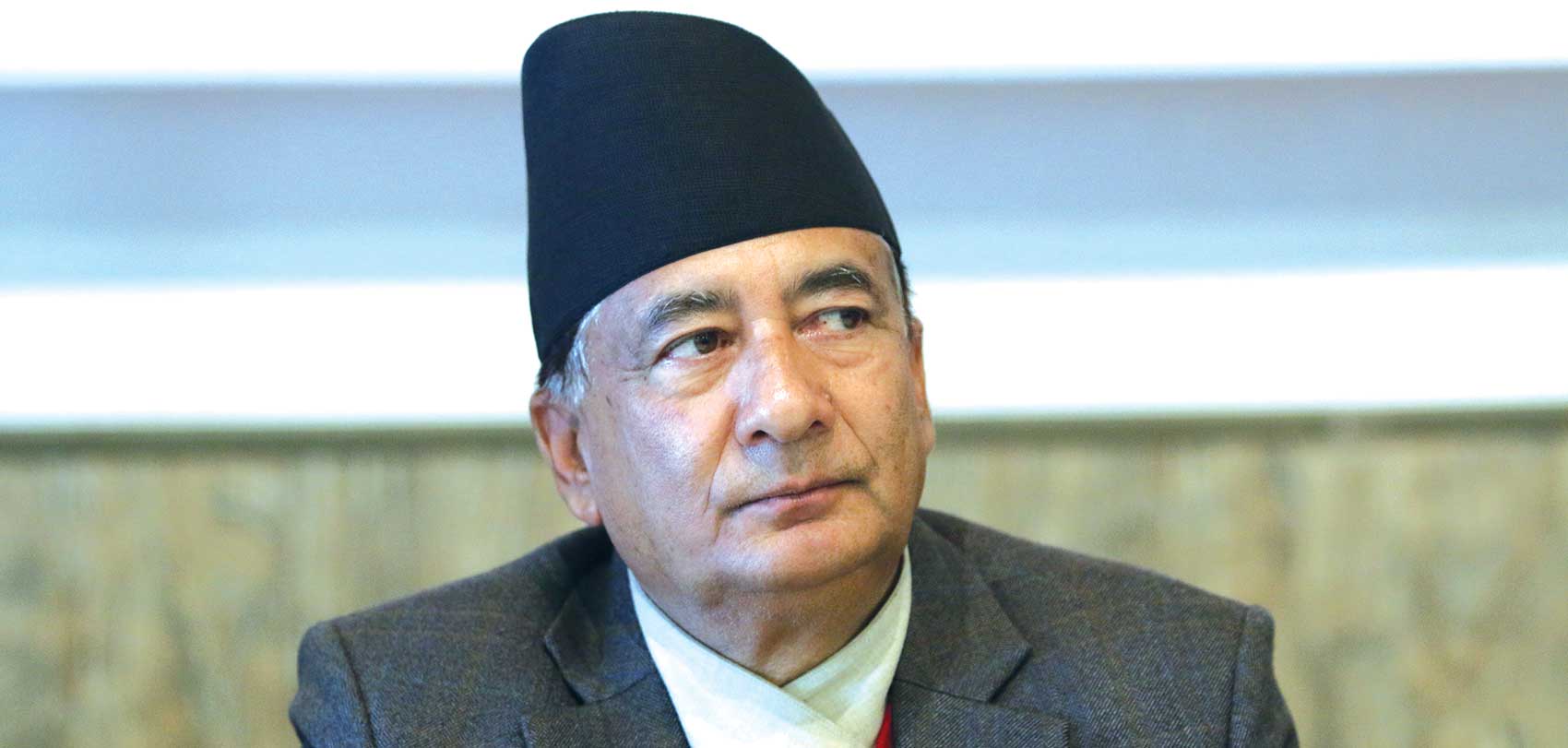
Former Finance Minister Gyanendra Bahadur Karki
Officials and representatives of China CAMC Engineering have also been included as defendants. The CIAA’s position is that these individuals, in their respective capacities, authorised or facilitated tax relief that CAMC was contractually not entitled to, allowing the Chinese firm to walk away with billions in public revenue that should have gone to the Nepali state.
How is this fourth case different from the landmark December 2025 chargesheet?
The December 7, 2025 chargesheet was about inflated construction costs. That case named 55 individuals plus China CAMC Engineering and alleged that government officials colluded with the Chinese company to artificially raise the cost estimates of the airport, resulting in excess payments of $74.34 million, or about Rs 8.36 billion.
The CIAA described it as the largest corruption case ever filed at Nepal’s Special Court in terms of financial magnitude under a state procurement process. The December case went after former tourism ministers, former finance minister Ram Sharan Mahat, secretaries, CAAN directors, and even three engineering professors from Tribhuvan University’s Institute of Engineering who are accused of lending false technical credibility to inflated estimates.
Thursday’s fourth case is narrower in scope but focuses on a separate mechanism of theft, specifically the granting of tax exemptions to CAMC that were not sanctioned by the original agreement. Where the first case was about overpaying CAMC, the fourth case is about allowing CAMC to avoid paying what it legally owed in taxes.
Together they represent a fuller picture of how the project was systematically exploited at multiple levels and through different mechanisms across several governments.
Who were the five former ministers charged in the December 2025 case and what were they accused of doing?
The five former ministers named in the December 2025 chargesheet were Ram Sharan Mahat of Nepali Congress, who served as finance minister; Bhim Prasad Acharya, Ram Kumar Shrestha, and Deepak Chandra Amatya, all former tourism ministers; and the late Post Bahadur Bogati, a former energy minister whose name appears in the case despite his death.
Bogati was also one of the witnesses to the infamous 2011 MOU between then Finance Minister Barshaman Pun and CAMC. The CIAA accused these ministers of approving or facilitating decisions that either used technically baseless bids, established illegal advisory committees to provide cover for revised cost estimates, or authorised payments that exceeded the legitimate scope of the contract.
The advisory groups formed in September 2013 and September 2014 had no legal standing under the Public Procurement Act, yet their recommendations were used to justify inflating the project’s approved cost.
Mahat, who publicly called CAMC’s original $305 million bid “outrageous,” is accused of later participating in decisions that still resulted in massive overpricing.
The CIAA sought Rs 8.36 billion in recovery from each of the 56 defendants in that first case, a figure that applies to every named party including CAMC, its chairman Wang Bo, and its regional general manager Liu Shengcheng.
What is CAMC’s role in all of this and why is a Chinese state-owned company being sued by Nepal?
China CAMC Engineering Co Ltd is a subsidiary of Sinomach, the Chinese state-owned manufacturing and construction conglomerate. CAMC was awarded the construction contract for Pokhara International Airport and is the company that actually built the airport using the Chinese EXIM Bank loan.
The CIAA’s charge sheets accuse CAMC of acting with malicious intent from the very start of its involvement in the project, going back to the 2011 secret MOU. According to the charge sheet, CAMC submitted bids that were technically baseless and financially overpriced, colluded with Nepali officials to inflate cost estimates, manipulated contract terms, and revised price schedules to divert funds in ways that benefited the company at Nepal’s expense.
A 2023 investigation by the New York Times found that CAMC had failed to complete several items it was paid for, including runway work, heating and ventilation systems, and a fuel supply facility. CAMC had also allegedly evaded $16 million in taxes it was contractually required to pay.
CAMC’s chairman and regional general manager are both individually named defendants in the December 2025 chargesheet. The company has denied wrongdoing.
When the case was filed, then Chinese Ambassador Chen Song paid a farewell call on then Prime Minister Sushila Karki and explicitly asked her to ensure that China and Chinese entities were not implicated, arguing that CAMC as a state-owned company could not be involved in corruption under Chinese law. Karki told the ambassador she could not interfere with the independent CIAA.
What is the total financial damage alleged across all four CIAA cases?
Adding up the figures from the four charge sheets filed to date, the total alleged financial damage runs to a staggering sum. The first and largest case from December 7, 2025, involves Rs 8.36 billion in damages tied to inflated construction costs, representing the $74.34 million that the CIAA says was artificially added to cost estimates and paid to CAMC between August 2018 and February 2024 out of a total $224.77 million received by the Chinese firm.
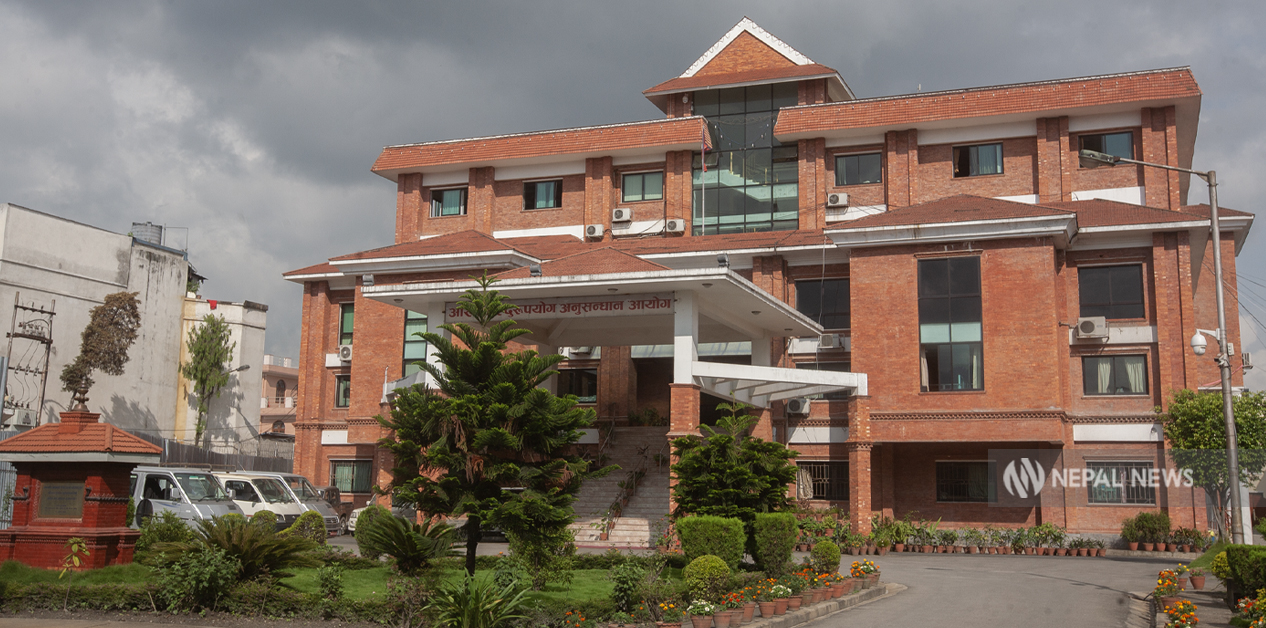
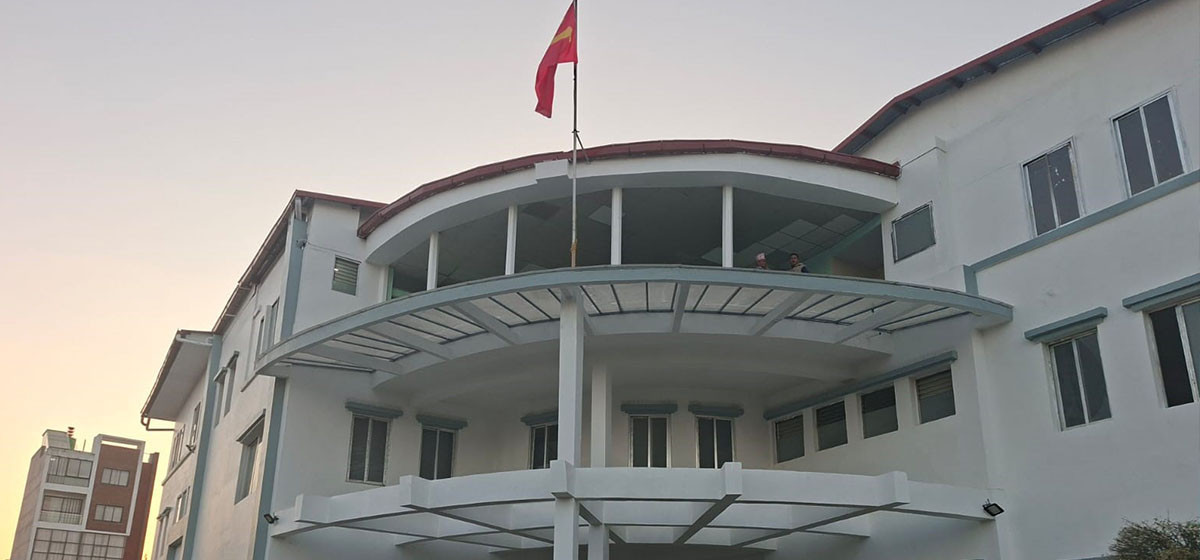
CIAA Office. Photo: Bikram Rai/ Nepal News
The second case, filed about a week after the first, targeted former project chief Binesh Munankarmi and centred on assets disproportionate to his known income rather than a project-level financial loss.
The third case, filed in March 2026 against 21 individuals including two Chinese officials, alleged the misappropriation of Rs 461.58 million through manipulated contract terms and consulting fund diversions. In that case, investigators found that of a $2.8 million consultancy allocation, only $10,000 was actually used for its stated purpose while the rest was redirected to other expense heads for the contractor’s benefit.
The fourth case, filed Thursday, adds Rs 3.62 billion in damages related to illegal tax exemptions. Taken together, the financial claims reach well beyond Rs 12 billion across the cases filed so far, making the Pokhara airport scandal by far the largest corruption matter ever to enter Nepal’s legal system.
How did the Chinese loan for the airport work and what is Nepal’s current repayment situation?
Nepal secured a $215.96 million loan package in March 2016 to finance the airport. The funding came in two parts: roughly 25 percent, amounting to about 355.9 million Chinese yuan, came from China’s Ministry of Commerce as an interest-free loan, while the larger portion of about 1.02 billion yuan came from China EXIM Bank at 2 percent annual interest.
The deal included a seven-year grace period during which no repayments were required, and a 20-year total repayment window. The loan was secured against revenues the airport was expected to generate, which were required to be deposited into an escrow account.
A 2014 feasibility study commissioned by CAMC projected the airport would handle around 280,000 international passengers a year starting in 2025. That projection turned out to be fiction.
Since the airport opened in January 2023, it has attracted virtually no scheduled international flights. When the grace period ended, Nepal found itself unable to make repayments from airport revenues because there were no meaningful revenues.
The government formally asked China EXIM Bank in August 2024 to convert the loan into a grant. China declined. As of late 2024, Nepal required annual installments of approximately Rs 840 million on a facility that is generating almost nothing.
The then Prime Minister Oli reportedly raised the issue with Chinese President Xi Jinping in November 2024, but no agreement was announced. A framework cooperation agreement was signed in December 2024 to address some of Nepal’s concerns, but the loan remains a loan.
What was the 2011 secret MOU and why does it matter so much to this entire case?
The September 20, 2011 memorandum of understanding is the original sin of the Pokhara airport project. The then Finance Minister Barshaman Pun, acting on behalf of the government of Nepal and without publicly disclosing what he was doing, sat down at the Ministry of Finance in Singha Durbar with Liu Shengcheng, regional general manager of China CAMC Engineering, and signed a document pledging that the Nepali government would provide CAMC “solid and substantial support” in a tender for the airport’s construction contract.
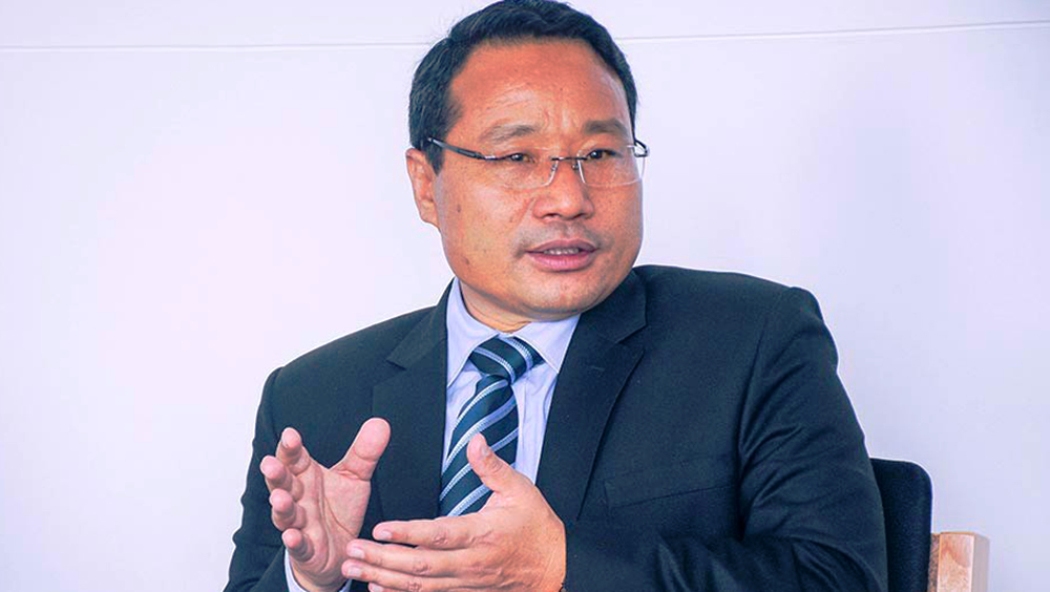
Former Finance Minister Barshaman Pun
The then Energy Minister Post Bahadur Bogati and Chinese Ambassador Yang Houlan attended as witnesses. The entire arrangement was kept secret.
It only surfaced when Nepali Congress leader Deep Kumar Upadhyay got hold of the document and circulated it at a Public Accounts Committee meeting in parliament. The subsequent outcry forced Pun to scrap the MOU, but by then the damage was done.
The MOU had essentially pre-selected CAMC before any transparent bidding process could take place. The CIAA’s chargesheet describes how, from this point on, the project’s entire trajectory was shaped by insider arrangements designed to ensure CAMC won the contract and then received inflated payments.
The short 45-day bidding deadline that followed the MOU’s signing further suggested that the process was structured to favour CAMC. Although the MOU was officially cancelled, CAMC proceeded to dominate the subsequent bidding process anyway, eventually winning the contract in 2014.
What role did the Public Accounts Committee play before CIAA filed its cases?
The Public Accounts Committee of the House of Representatives played a critical role in forcing accountability into the open after years of the case being buried. A subcommittee headed by Rastriya Prajatantra Party Chairman Rajendra Lingden conducted a detailed investigation into the airport’s construction and produced a report that identified 15 fundamental questions requiring investigation.
The PAC voted in May 2025 to formally forward the report to the CIAA with instructions to investigate the alleged irregularities and take action against those found guilty. The subcommittee’s findings were significant.
It found that the airport cost jumped from an original estimate of $145 million to $216 million, a difference of $71 million that lawmakers described plainly as corruption. It reported that the runway was built 20 feet deeper than specified in the detailed project report, creating safety concerns.
It found that an additional $750,000 was illegally paid for air conditioning installation that should have been covered by the main budget. It found that Rs 330 million was spent just to trim the Chinnedanda ridge, a figure that attracted particular scrutiny.
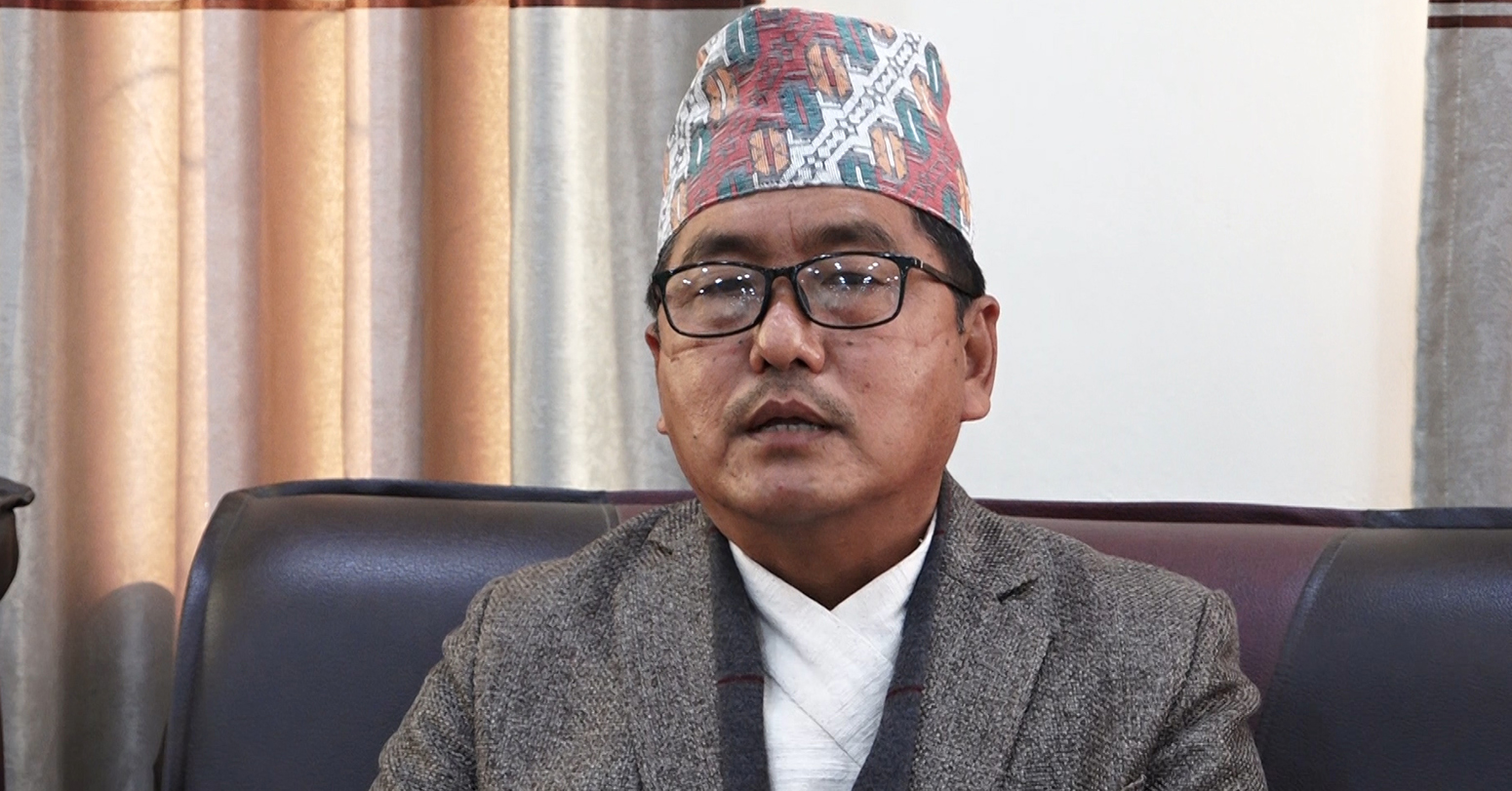
Rastriya Prajatantra Party Chairman Rajendra Lingden
The subcommittee also noted that then CAAN Director General Pradeep Adhikari’s finances warranted a money laundering investigation.
CPN (UML) lawmakers tried to resist the Lingden report at the time, calling it politically motivated, but the committee voted to forward it regardless. That parliamentary action gave the CIAA the political cover it needed to file the first major charge sheet in December 2025.
Why was the airport built if it had no guaranteed international flights and what happened to the original feasibility projections?
The airport project accumulated so much political momentum over five decades that no government felt able to stop it, even as serious questions mounted about whether it would ever be financially viable.
The JICA study from 1989 had already raised concerns about whether the project could justify such large investment given Pokhara’s traffic patterns. When the Asian Development Bank reviewed the project in later years, it eventually withdrew its support, citing financial inviability.
China EXIM Bank then stepped in, with the important caveat that only companies on its pre-approved list would be eligible to bid for the construction contract. The 2014 feasibility study commissioned by CAMC itself projected 280,000 international passengers annually from 2025 onward, a figure that aviation analysts subsequently described as wildly optimistic for a secondary city with Pokhara’s existing infrastructure and international connectivity.
No major international airline had committed to flying to Pokhara. The runway was built to accommodate aircraft up to the size of Boeing 737s and Airbus A320s, but its design imposed weight restrictions that made it financially unattractive for many medium-haul routes.
The airport also lacks instrument landing systems adequate for consistent mountain flying in poor weather. Since opening, the airport has seen one weekly Himalaya Airlines flight to Lhasa, operated by a Nepal-China joint venture. The runway has been questioned for structural soundness, with engineers who worked on the project telling CIAA investigators that construction quality was compromised.
What was China’s diplomatic response when CIAA filed the charge sheets?
China’s response was unusually direct and diplomatically uncomfortable. When the CIAA filed its December 2025 chargesheet naming CAMC and its executives, then Chinese Ambassador Chen Song was preparing to end his three-year posting in Kathmandu.
Before leaving, he paid a farewell call on then Prime Minister Sushila Karki at Singha Durbar and made an explicit request that she use her influence to ensure China and Chinese entities were not implicated in the case.
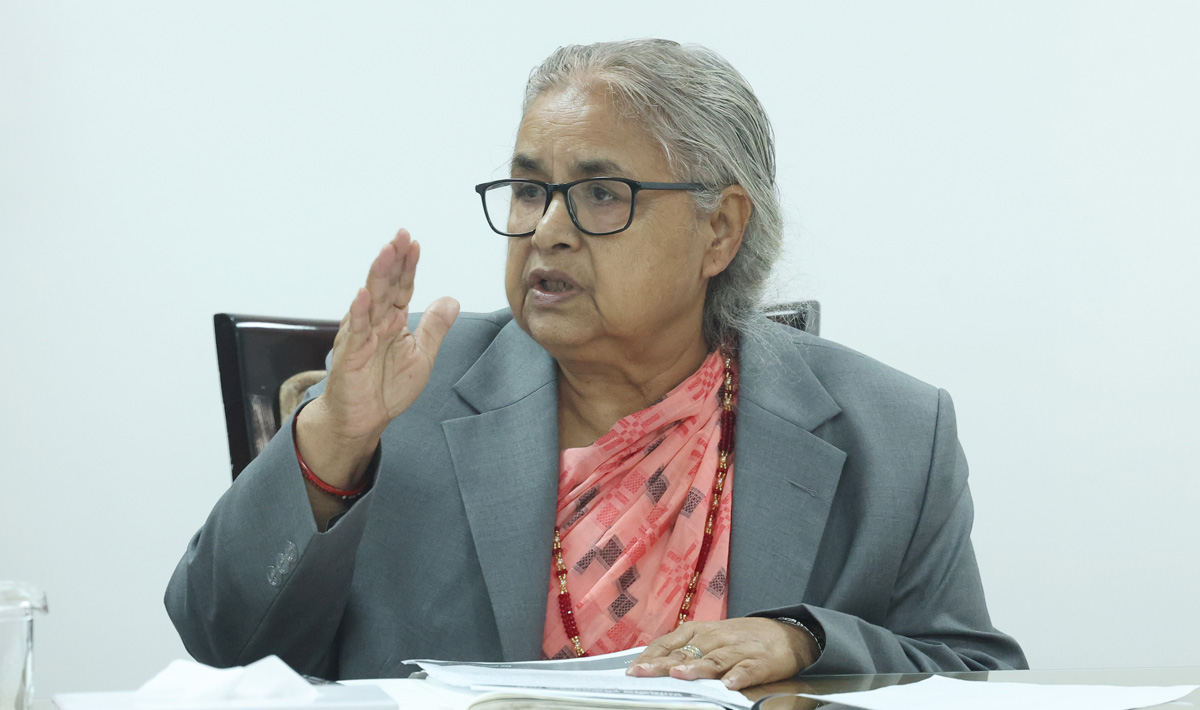
Former Prime Minister Sushila Karki
The ambassador argued that CAMC, as a state-owned enterprise, could not be involved in corruption under Chinese law. He told the prime minister that the project had been dragged into controversy due to Nepal’s internal political differences and that China bore no responsibility.
He went further, suggesting that foreign countries and their agencies had deliberately stirred up the controversy to damage China’s reputation in Nepal, though he named specific countries in private meetings with ministers rather than publicly.
The then PM Karki’s response was firm: the CIAA is independent and she cannot interfere in its investigation. Chen also apparently met with cabinet ministers and other officials to make similar arguments before departing. His departure was noted as unusually early for an ambassador during an election period.
Following the PAC report, CAMC had already issued a public statement denying wrongdoing, which it published in Nepal’s state-owned newspapers Gorkhapatra and The Rising Nepal, a move that drew criticism from lawmakers who called it inappropriate pressure on the judicial process.
What happened when the CIAA first tried to investigate this case and why was it stopped?
The CIAA’s investigation of the Pokhara airport project has a long and frustrating history of interruption. The first formal complaint to the CIAA about irregularities in the project was filed as far back as 2014, when the contract was being signed.
At that point, then CIAA chief commissioner Lokman Singh Karki ordered the probe to be put on hold on March 26, 2014, a decision that effectively shelved the case for years. The investigation was not revived until October and November of 2023, when the CIAA conducted field investigations following a renewed complaint.
Even then, the process was halted again due to political interference, according to the parliamentary subcommittee’s own findings. The Finance Ministry’s reluctance to hand over documentation was specifically noted in the PAC subcommittee report, which said that although then Finance Minister Gyanendra Bahadur Karki was allegedly implicated, the subcommittee could not fully establish his accountability because the Finance Ministry refused to provide the relevant tax-related documents.
It was only after the PAC formally forwarded the Lingden report to the CIAA in May 2025, and later against the backdrop of Nepal’s Generation Z protests that toppled the KP Sharma Oli government in September 2025 and installed interim PM Sushila Karki, that the investigation was finally able to proceed without political obstruction.
The interim government’s limited mandate paradoxically gave it more freedom to pursue long-standing corruption cases.
How does the project connect to China’s Belt and Road Initiative and what are the geopolitical concerns?
Nepal has been formally consistent in saying the Pokhara airport project was not designated as a Belt and Road Initiative project. The construction contract was signed before Nepal formally joined the BRI in 2017. However, when then Chinese Ambassador Chen Song publicly linked the airport to the BRI at an event in October 2023, his comments reframed how many Nepalis understood the project’s strategic significance.
China has since listed Pokhara airport as a BRI flagship project in its own communications. The loan structure itself follows the pattern identified in other Chinese infrastructure financing: a state-owned bank funds a state-owned construction firm, with the host country’s revenues pledged as collateral.
Critics have drawn comparisons to the Hambantota port in Sri Lanka, where a similar loan structure eventually led Sri Lanka to hand over the port on a 99-year lease to service its debts. Nepal’s aviation revenues being pledged to repay a loan for an airport that generates almost no aviation revenue is a precise echo of that structural vulnerability.
Some analysts, including Indian strategic affairs researchers, have argued that Pokhara airport’s location near a strategic corridor and its runway capable of handling military aircraft adds a layer of concern beyond the financial. The CIAA chargesheet’s description of the project as one where CAMC acted with malicious intent from the outset, and where Nepali officials colluded with the Chinese firm through illegally formed advisory committees, fits a pattern of procurement capture that has been documented in other BRI-linked infrastructure projects across Asia and Africa.
What has happened to the accused since the December 2025 chargesheet and what is the current status of the cases?
The cases are moving through Nepal’s Special Court system at varying speeds. Former CAAN Director General Pradeep Adhikari, who appears in multiple charge sheets, had already been in custody for a separate helipad corruption case before the airport charges were filed, making him one of the more visible symbols of the aviation sector’s rot.
Proceedings in the December 7, 2025 case, which is the main case involving the 55 individuals and CAMC, are ongoing at the Special Court.
The second case targeting former project chief Binesh Munankarmi on disproportionate assets charges was filed a week after the first.
The third case against 21 individuals over Rs 461.58 million in consultancy fund misappropriation was filed in March 2026.
The fourth case, filed Thursday, brings in former finance minister Gyanendra Bahadur Karki and focuses on the tax exemption angle. No convictions have been announced in any of the airport-related cases as of the filing date.
The CIAA has indicated that additional investigations are ongoing, meaning further charge sheets may follow. Nepal’s Special Court has a reputation for slow proceedings in complex financial cases, and several lawyers have noted that the sheer volume of defendants across four cases, combined with the involvement of a Chinese state-owned enterprise that may not fully cooperate with the court’s processes, could extend the timeline significantly.
What does this mean for Nepal’s governance going forward and will anyone actually go to prison?
The Pokhara airport corruption saga has become the defining test of Nepal’s willingness to hold its political class accountable. For the first time in the country’s history, former cabinet ministers from multiple parties across multiple governments are simultaneously defendants in a single corruption case before the Special Court.
The breadth of the December 2025 chargesheet, which spans decisions made between 2011 and 2024 under governments led by Maoists, Nepali Congress, and CPN (UML), strips away the usual partisan excuse-making. The generation of young Nepalis whose protests in September 2025 forced out KP Sharma Oli has been watching closely, and the airport case has been one of the clearest examples they cite of why systematic change is necessary.
Whether convictions follow is a different question. Nepal has a long history of spectacular corruption cases that dissolve into procedural delays, appeals, and ultimately suspended sentences or acquittals.
The last comparable aviation corruption case, involving the 2017 purchase of two Airbus A330s, resulted in convictions in December 2024 for 11 individuals including four Nepali officials, which gives some basis for cautious optimism.
However, that case took seven years to reach a verdict. The airport cases are far larger, involve a Chinese company whose cooperation with Nepali courts is uncertain, and carry enormous diplomatic weight given Nepal’s dependence on Chinese infrastructure financing.
What is certain is that Nepal’s reputation for tolerating corruption without consequence has been placed under the most serious scrutiny it has faced since the country became a federal democratic republic.