Kathmandu
Tuesday, June 23, 2026





While there is frequent talk about land encroachment by individuals, there is no precise data on land encroachment carried out by political parties, organizations, and the government itself.
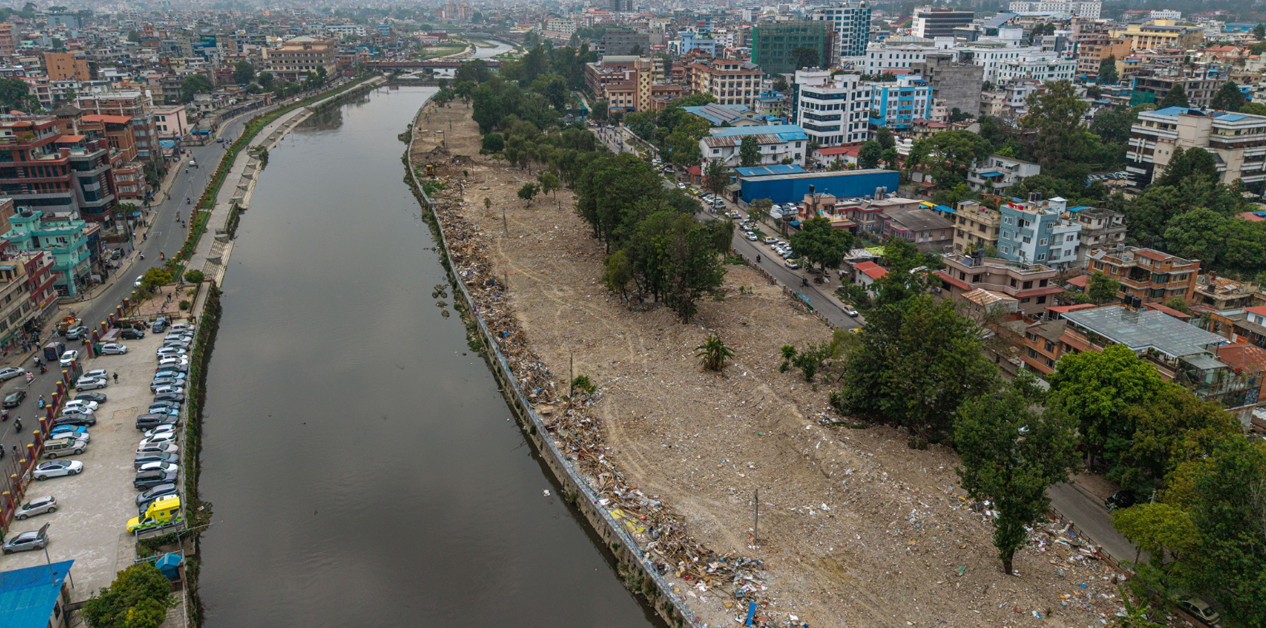
KATHMANDU: The “Rawal Commission Report” on land encroachment, which had been shelved in a drawer for three decades, is currently a subject of intense discussion. Although it has been discussed occasionally since the commission was formed in 1993, it has once again become a matter of public interest following the Council of Ministers’ decision on June 12, 2026 to implement the report.
Following the encroachment of public spaces amidst rapid development in Kathmandu, a “High-Level Commission on Investigation and Protection of Government and Public Land” was formed on October 7, 1993 under the chairmanship of former Secretary Ram Bahadur Rawal, by a decision of the government. This is commonly known as the Rawal Commission.
After about two years of study, the commission submitted its report to the government in 1995. Based on the land survey of 1964, the commission’s study revealed that out of 9,634,809.91 square meters of land in the Kathmandu municipal area at that time, 946,217.12 square meter—or 9.81 percent—was encroached upon. Among this, the highest encroachment was 59,013.84 square meters in the then Ward No. 5, Hadigaun, and 112,935.84 square meters in Boudha, which fell under Ward No. 6.
The report specified that 1,187 encroachers had encroached upon 308 plots of government and public land for private use, and 6,906 individuals had seized 1,762 plots of government and public land to merge into their private property. Thus, the report states that a total of 8,093 encroachers had encroached upon 2,070 plots of government and public land. According to the report, the encroached public lands in Kathmandu range from the banks of rivers like the Bagmati to areas in other locations. In the fourth week of April 2026, the government used bulldozers on settlements to evict squatters who had been living for years on the banks of the Bagmati in Thapathali, Manohara, Sinamangal, and other areas.
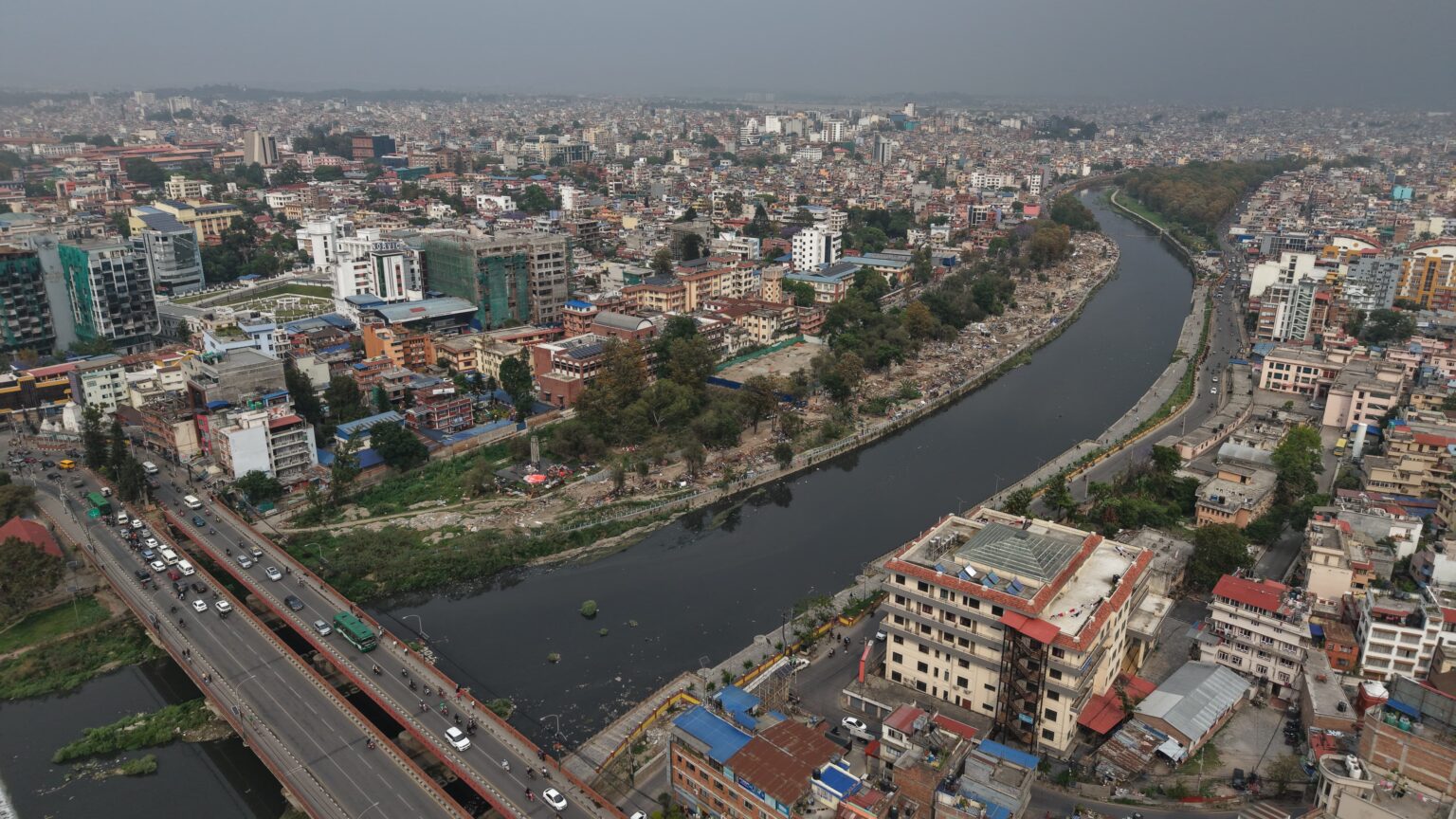
The view of the Thapathali landless people settlement after demolition. Photo: Nepal Photo Library
The commission’s report made public the data on encroachments across all 35 wards (currently 32) of the then Kathmandu Municipality and recommended their removal. Accordingly, the government decided on December 21, 1995 to issue a departmental circular to implement the report. However, no interest was shown in executing it.
After the commission’s report remained unimplemented for eight years, advocate Prakash Mani Sharma filed a writ petition in the Supreme Court in 2003, naming the Office of the Prime Minister and Council of Ministers, among others, as defendants, seeking a mandamus order to implement the report. The issue then came into the spotlight again.
During the hearings, on May 31, 2009, the Supreme Court ordered that a committee including experts study the Rawal Commission’s report and submit a report with recommendations. Since the Rawal Commission had only studied encroachment within Kathmandu, that committee submitted a report on March 14, 2010, recommending that encroachments on government land in other parts of the country should also be investigated.
After studying the expert committee’s recommendations, the Supreme Court, during the final hearing on the writ petition on May 26, 2010, issued a directive order to the government to investigate and take action against encroachments in other parts of the country and to implement the Rawal Commission’s report with high priority.
Later, in 2019, the government formed an investigation commission on the protection of government, public, and Guthi (trust) land under the leadership of Mohan Raman Bhattarai, former chairperson of the Special Court. Based on complaints and grievances regarding encroachment, the commission investigated and submitted a report to the government in 2020, stating that around 4,069,760 square meter of land in 21 districts had been transferred into the names of individuals. Since then, no government-level investigation has been conducted on land encroachment across the country, nor have the reports of the commissions been implemented.
Encroachment from parties to organizations
The Rawal Commission’s report only studied public and government land encroached upon by individuals within Kathmandu. Although the Supreme Court subsequently ordered an investigation into encroachment across the nation, the government has not yet conducted a nationwide study.
A decade ago, the Community Self-Reliance Centre (CSRC), an organization working in the field of land rights, in collaboration with the National Land Rights Forum, Nepal, and with the support of the international non-governmental organization Oxfam, studied the trends of land encroachment across the country and released a report. According to the report titled “Land Encroachment in Nepal and Its Impacts” published in 2014, land encroachment in Nepal has been carried out not only by individuals but also by the private sector, organizations, and even the government. The report mentions that such encroachment has affected the lifestyle of local communities.
During the armed conflict, land encroachment was carried out by both the state side and the then-Maoist rebels. Although peace returned to the country after the peace accord, lands in many encroached places were not returned.
In some places, the Maoists explicitly declared they would not return the land, while there is no accountability for encroachments carried out by the Nepal Army, Armed Police Force, and others.
According to the details in the annual report of the then Ministry of Land Reform and Management for the fiscal year 2010/11, the government itself distributed public land to political parties under the names of various trusts and foundations. According to the report, 2000 square meter of land was distributed in Janakpur, Dhanusha, to build the party office of the CPN (UML); 66,600 square meter in Shivaganj, Jhapa, to the Ganeshman Singh Memorial Foundation; 10,000 square meter in Kanchanbari, Morang, to the Pushpalal Memorial Committee; 89,000 square meter in Katunje, Bhaktapur, to the Ganeshman Singh Memorial Park and Samadhi Establishment Committee; 6,600 square meter in Lalitpur to the Tulsilal Memorial Foundation; and 171400 square meter in Danchi, Kathmandu, for the Madan Bhandari Polytechnic Institute. In subsequent years, political parties and affiliated institutions have seized land by influencing the state.
The CSRC report also pointed out that government and public land had been encroached upon under the guise of educational institutions. Lands have been encroached upon under the names of universities, polytechnics, and various schools. The report also presents some examples of encroachment. For instance, the report mentions that three schools in Rautahat occupied 99,219.03 square meters of cultivable public land. Similarly, the government itself gave 241,732.05 square meter of unregistered public land to Mahendra Multiple Campus in Sonpur, Dang, while the report pointed out that Janasewa School in Surkhet occupied 77,885.25 square meter of land.
Government land is also misused under the names of social and religious organizations. The government provided 412,079.4 square meters of land in Kavre to Indian yoga guru Ramdev’s Patanjali Yogpeeth under a land ceiling exemption, on the condition that it would not be resold. A controversy arose after Patanjali sold 123,623.10 square meter of that land. The case on this matter, involving individuals including former Prime Minister Madhav Kumar Nepal, is currently sub-judice in the Special Court. Similarly, according to a report by the Land Revenue Office, Kalanki, the Land Revenue Office provided land in Dandapauwa, Kathmandu, in 2010 for the construction of the Narayan Prasad Pandit Memorial Foundation.
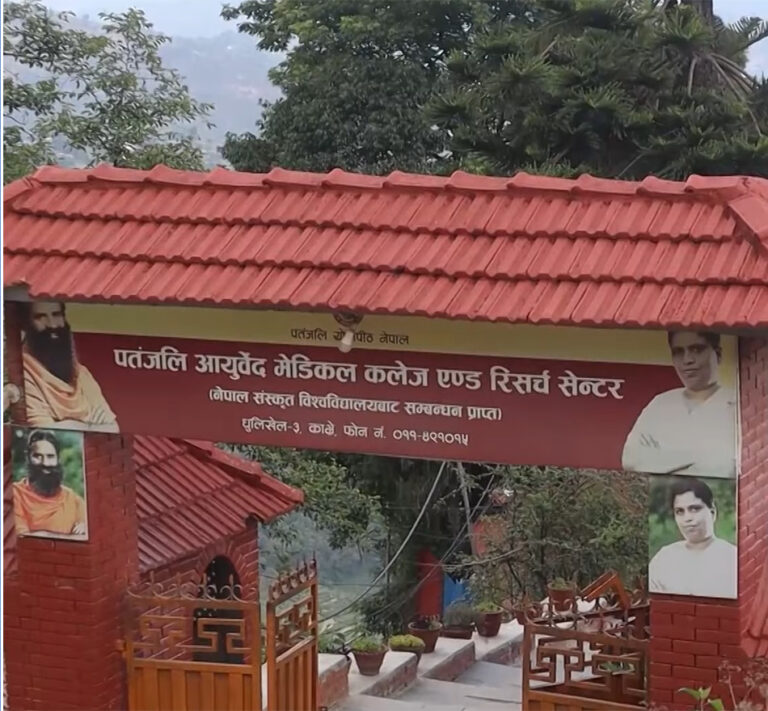
Patanjali Ayurveda Medical College. File Photo
This trend exists all across the country. Public and forest lands have been distributed and encroached upon in the names of shrines, temples, monasteries, churches, burial grounds, and various ethnic organizations. Jagat Basnet, the then Executive Director of CSRC, says, “When we studied the trend of land encroachment back then, we found a situation different from other countries. Here, it was discovered that political parties, organizations, industries, and even the government itself had encroached on land. I am not aware of any study as detailed as this on the issue of encroachment since then.”
Private sector also involved in encroachment
The private sector is no less involved in encroaching upon public land. A study conducted in 2013 in collaboration with the non-governmental organization Community Self-Reliance Centre and the Food, Agriculture, and Water Rights Network discovered that Jagdamba Steel and Hulas Steel industries had seized around 338631.58 square meter of land in Simara, Bara. The study report states that the two industries captured the land, which local farmers had been cultivating until prior to 2008.
Similarly, the report notes that a large volume of land has been encroached upon under the names of 204 industries registered in Naubise, Dhading. The report highlights that land has been seized and kept unused under the names of many industries. According to the report, Bahumukhi Krishi Farm in Morang seized 495,214.71 square meters; Morang Sugar Mill seized 3.701 million square meters; Morang Scanning Company Limited in Jhapa seized 720,133.75 square meters; Sugabhalaras Office seized 786,844.15 square meters; Himalayan Tea Garden and Agriculture Pvt. Ltd. seized 3.903 million square meters; Giribandhu Tea Garden seized 2.585 million square meters; Khatighatta Tea Garden seized 1.733 million square meters; Sanjeevani Business Pvt. Ltd. seized 530,042.47 square meters; Budhakaran and Sons Tea Pvt. Ltd. seized 1.804 million square meters; and Mittal Tea Garden Pvt. Ltd. seized 3.087 million square meters.
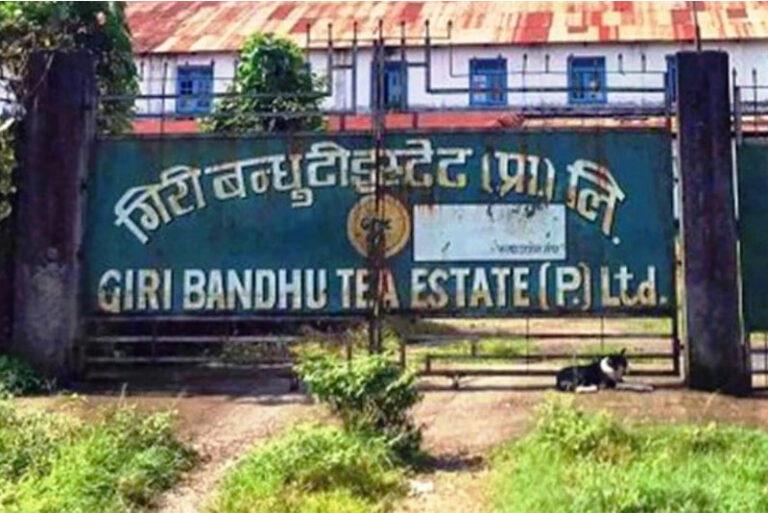
Giribandhu Tea Estate. File Photo
Likewise, during the study, it was found that Khijara Khadsari Mills Pvt. Ltd. in Nepalgunj occupied 1.219 million square meters; Radhepur Farm occupied 508,895.59 square meters; Mahavir Agriculture Industry in Dhankuta occupied 2.187 million square meters; Himali Agriculture Industry occupied 3.171 million square meters; Uttarbahini Agle Thumki Fruit Industry occupied 3,160,144.06 square meters; and Uttarpani Multi-purpose Agricultural Farm occupied 7.853 million square meters.
Furthermore, the report mentions that Shangri-La Agricultural Farm in Tehrathum occupied 2.487 million square meters; Kanchanjunga Cardamom Farm Pvt. Ltd. in Taplejung occupied more than 4.458 million square meters; Gita Phalodan Pvt. Ltd. in Nuwakot occupied more than 8.5 million square meters; and Rijal Canning Company in Sunsari occupied 373,205.89 square meters. “The study also revealed examples where some landlords used political influence and connections to bring government employees over to their side, or used political pressure if necessary, to convert public land into private land and register it,” the report states.
Land rights activist Bishwas Nepali, who was also involved in this study, says the government must conduct a study on the issue of encroachment across the country. He says, “Land has been encroached upon in different ways in the country. A narrative seems to have been built that only the landless and the poor encroach. However, there is no clear data on encroachments carried out by the private sector to the government, nor has there been any investigation into it.”
Encroachment by the government itself
The study report from 2013 mentions that the government itself has also been encroaching on land. The report states that the government has encroached on land in the name of hydropower projects, national parks, airports, security forces, and development.
In Nepal, protected areas including 10 national parks, 3 wildlife reserves, 1 hunting reserve, 6 wildlife sanctuaries, and 11 buffer zones cover an area of 34,186.62 square kilometers. This accounts for 23.23 percent of Nepal’s total land area. The report concludes that such land encroachment by the state is negatively affecting the living standards of local residents.
Moreover, the government used to distribute land in the name of Birta in the past. The report states that before the abolition of the Birta system in 1893, about one-third of the country’s total area—7.8 billion square meters of land—existed as Birta.
Previously, the state used to give land itself as salary to government employees, which was called “Jagir.” The government had distributed 1.463 billion square meters of land in the form of Jagir, Rakam, and Rajya. Similarly, 400 million square meters of land were distributed in the name of Guthi and 770.9 million square meters in the name of Kipat. Only the remaining 50 percent of the land was Raikar (land utilized by paying taxes to the government).
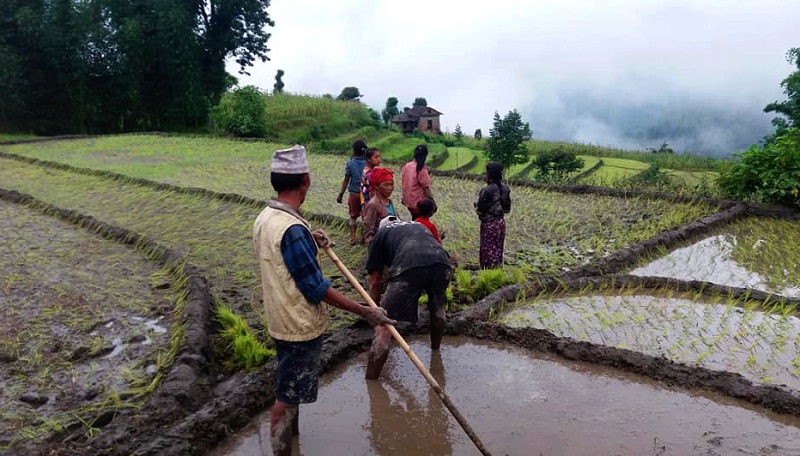
There is a tendency for anyone who can to encroach on forest areas. This issue often causes disputes particularly between Community Forest User Groups and local residents. The community forest side accuses locals of encroachment, while the locals accuse the community forests of encroaching on their ancestral settlements where they had been living long before the concept of community forestry was introduced.
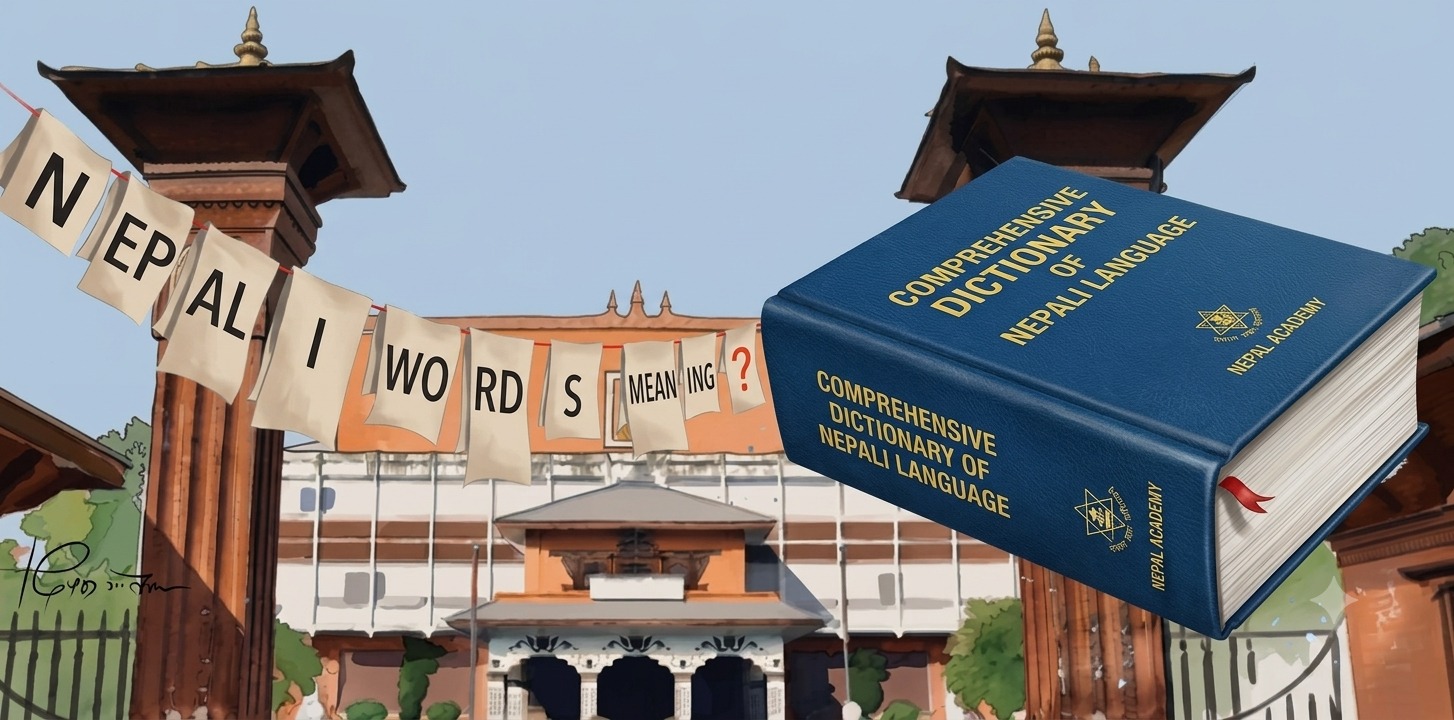
Because of this, the definition of encroachment also appears to differ based on time and circumstances. According to the Pragya Nepali Brihat Shabdakosh of the Nepal Academy, land means “a country or a specific territory” or “the land portion of the earth,” and encroachment means “violation of rights or limits” or “the act of exceeding the designated boundaries of something.” This can be understood as the unauthorized occupation of any territory.
The Community Self-Reliance Centre, however, defines land encroachment slightly differently. Defining land encroachment, the Centre’s report states: “The process of seizing land in large quantities, displacing local residents, and violating their rights over natural resources is called land encroachment.”
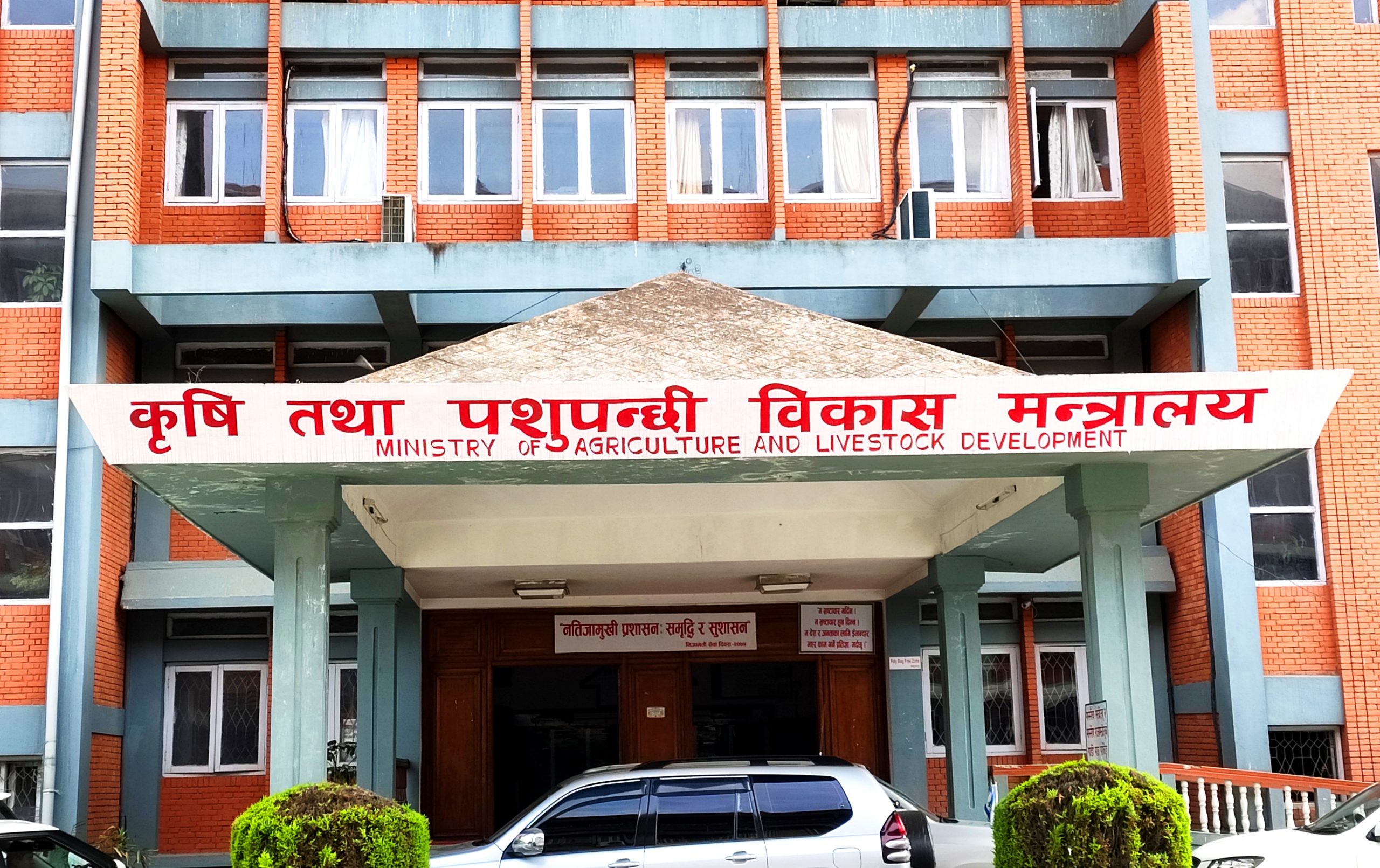
While land encroachment is carried out by various quarters, the government lacks exact records regarding it. Under-Secretary Rajendra Prasad Gautam, information officer at the Ministry of Land Management, Cooperatives and Poverty Alleviation, states that even the ministry does not possess data on nationwide land encroachment. He says, “We do not have that kind of record.”
Anthropologist Suresh Dhakal, who also led the CSRC study, says that various forms of land encroachment are visible in Nepal. He notes that while debates often center on land encroachment by the landless, squatters, and individuals, those with access and influence encroach and occupy public land much more.
He points out that since the government has not conducted new studies and the Rawal Commission’s report is old, implementing it is not easy. He says, “It is difficult to take action based on very old data. In many places, there are government structures on the encroached land; the government itself has encroached. Who will you penalize?”