Kathmandu
Sunday, June 21, 2026





Despite a politically stable two-thirds-strength government and a budget addressing long-standing investor demands, Nepal's stock market has shed roughly Rs 400 billion in investor wealth in three months, driven by arrests, regulatory uncertainty, and a leadership vacuum at the securities regulator.
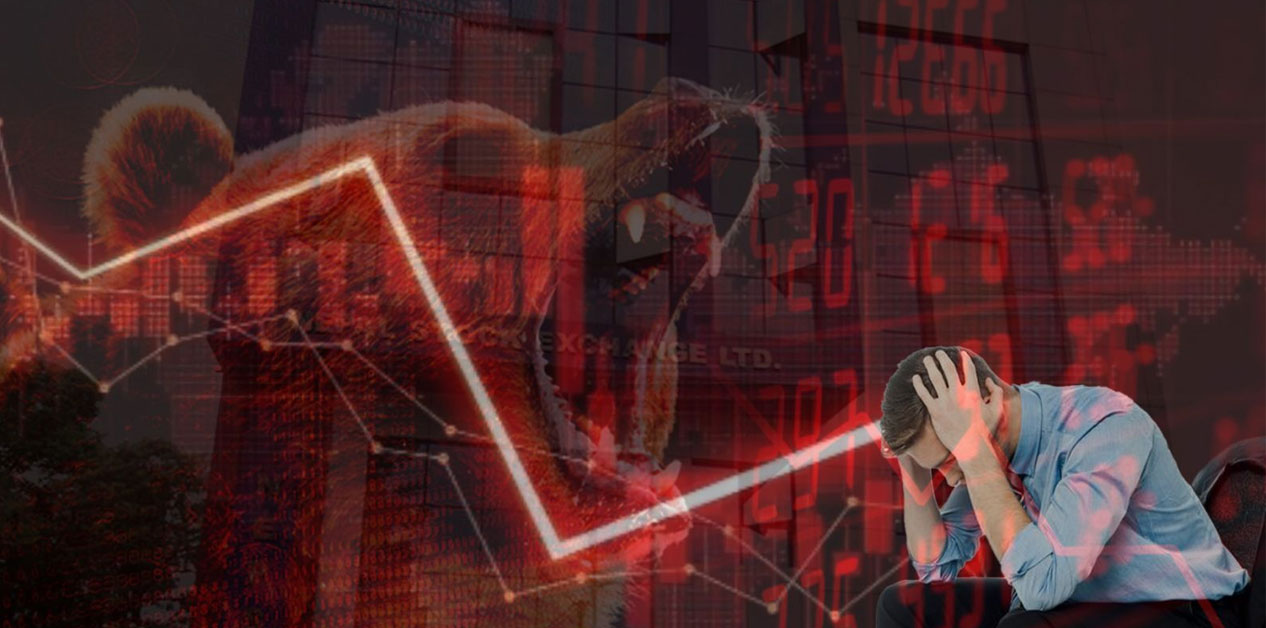
KATHMANDU: Following Nepal’s parliamentary election on March 5, 2026, a new government led by Prime Minister Balendra Shah took office on March 27 with a strong majority. Markets initially rallied on hopes of stability, with the NEPSE index climbing past 2,950 points.
But since the government’s formation, NEPSE has fallen steadily to around 2,705-2,711 points by mid-June, even after a budget addressed capital gains tax and market-reform demands, as corruption investigations and a vacant regulator chair unsettled investors.
How has Nepal’s stock market performed since the new government took office?
Nepal’s benchmark NEPSE index has been on a largely uninterrupted downward path since the government led by Prime Minister Balendra Shah took office on March 27, the final month of the Nepali fiscal calendar’s third quarter.
The index had peaked near 2,950 points on the trading day just before the new government’s formation, a level reached after six consecutive positive trading sessions following the March election.
Since then, NEPSE has fallen steadily, dropping to roughly 2,705 to 2,711 points by mid-June 2026, a decline of more than 230 points or close to 8 percent over roughly three months.
Daily turnover has fallen alongside the index, with trading volume considerably below the levels recorded immediately after the election, when investor optimism about post-election stability was at its highest.
The decline has continued despite occasional brief recoveries, and brokers describe the overall trend as a sustained, multi-week slide rather than ordinary day-to-day volatility.
How much money have investors actually lost during this decline?
Market capitalization data from the Nepal Stock Exchange shows that total investor wealth, measured as the combined market value of all listed shares, stood at approximately Rs 5,018 billion just before the new government’s formation in late March 2026.
By mid-June 2026, roughly three months later, that figure had fallen to approximately Rs 4,614 billion, representing a decline of about Rs 403 billion in investor wealth over the period. Separate calculations using slightly different reference dates put the market capitalization drop at just over Rs 400 billion as well, with one accounting placing the figure at a reduction from about Rs 5,009 billion to Rs 4,634 billion.
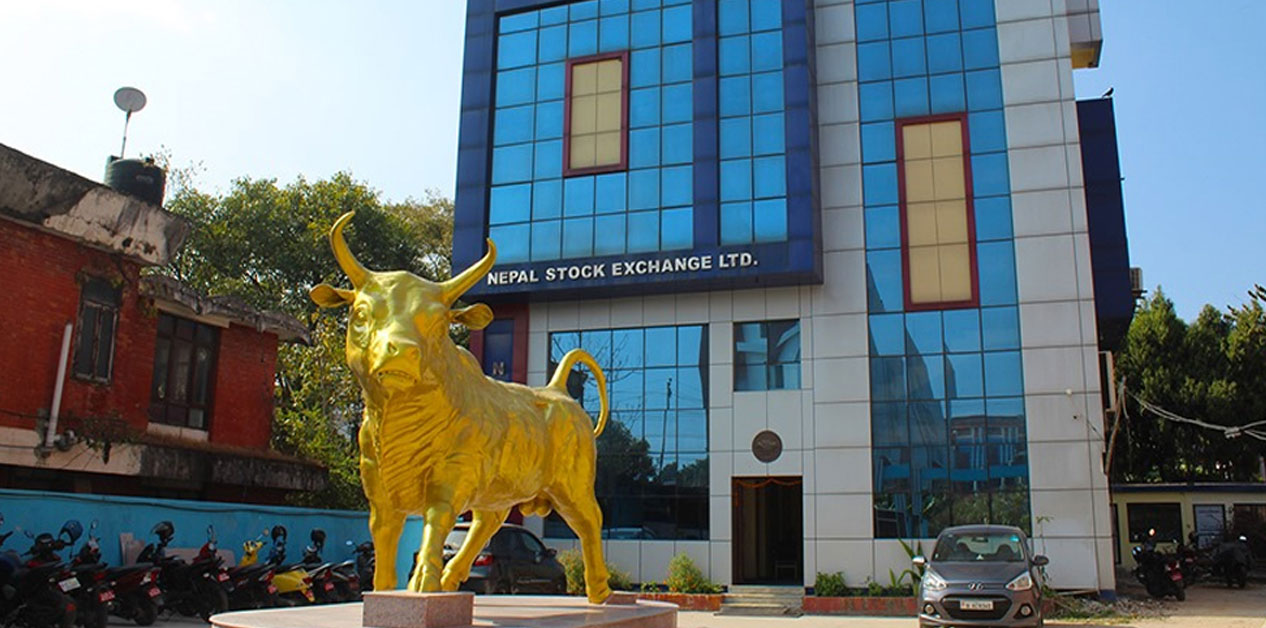
Nepal Stock Exchange
The loss would likely be understated rather than overstated, since several new companies have listed on the exchange during this same period, meaning their added market value is included in the more recent total figure, so the actual erosion in value among shares that were already listed before the government took office is somewhat larger than the headline net figure suggests.
Why did the market fall so sharply right after the new government formed, given that investors had initially welcomed it?
The immediate trigger was the government’s decision to arrest former Prime Minister KP Sharma Oli and former Home Minister Ramesh Lekhak just one day after the new cabinet took office.
On the very first trading day following the government’s formation, NEPSE dropped by more than 71 points, and it fell again the next day by close to 48 points, reflecting investor unease about the speed and visibility of high-profile arrests so soon after the political transition.
Some commentators characterized the timing as premature or appearing retaliatory, which they argued raised the risk of renewed political confrontation rather than the calm consolidation investors had been hoping for.
While the broader macroeconomic indicators investors typically watch, including foreign exchange reserves, interest rates, and the size of the new government’s parliamentary majority, all remained favorable or stable, the market’s reaction suggested that political and governance-related uncertainty was outweighing economic fundamentals in shaping investor sentiment during this specific period.
Did the new government’s budget for fiscal year 2026/27 fail to address investor concerns?
Not entirely, but the market’s reaction suggests the announcements were not enough to restore confidence on their own. Finance Minister Swarnim Wagle’s budget speech addressed several long-pending capital market demands, including making capital gains tax on share sales final rather than subject to later adjustment, a change investors had sought for years.
The budget also announced plans to restructure NEPSE itself, introduce intraday trading, short-selling, and derivative instruments in phases, and adopt what the finance minister described as a zero-tolerance policy toward share cornering and insider trading.
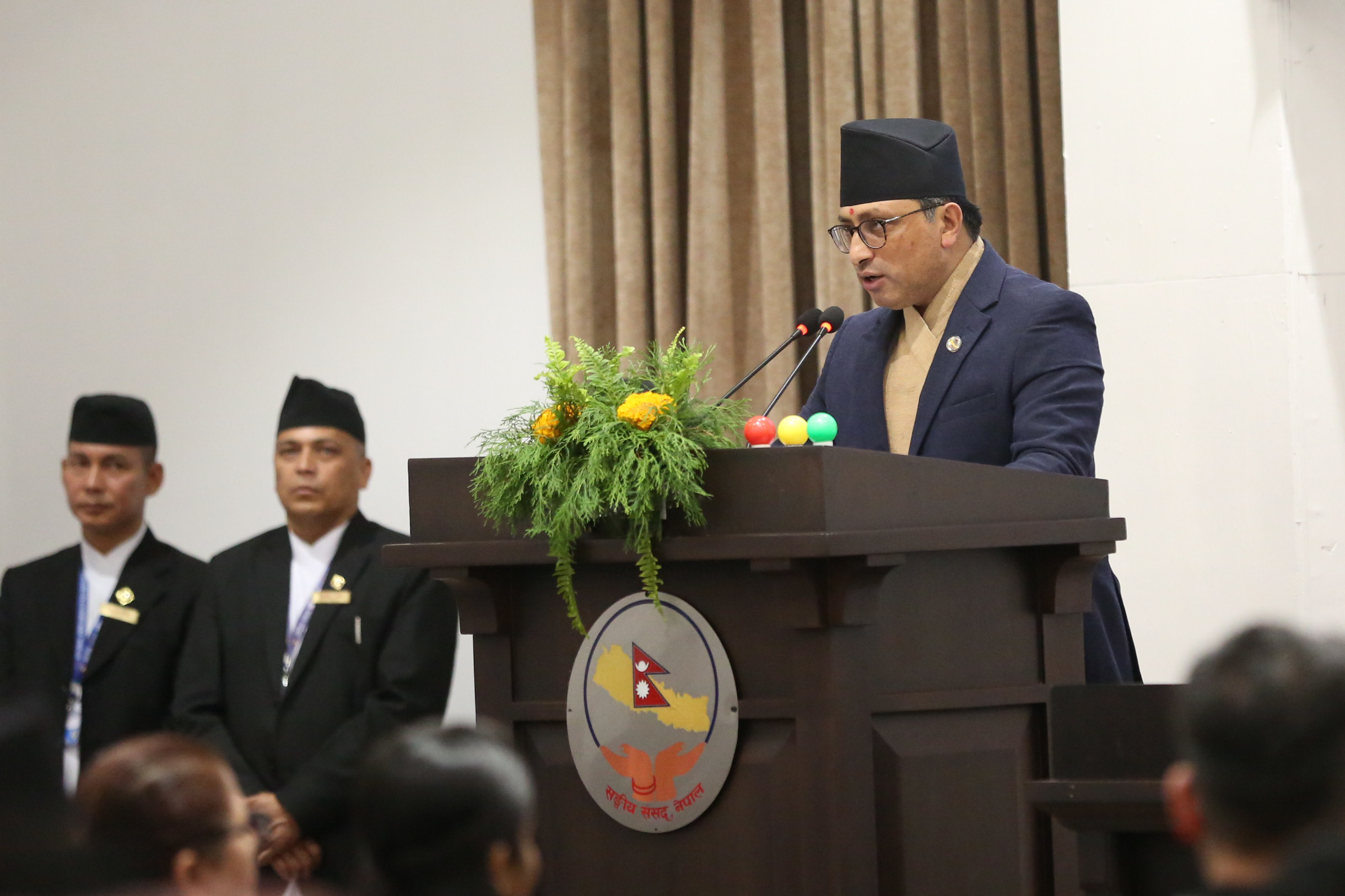
Finance Minister Swarnim Wagle
Despite these announcements directly targeting issues market participants had long complained about, the index continued falling afterward, with NEPSE dropping further to around 2,711 points and turnover shrinking to about Rs 4.41 billion on one trading day shortly after the budget, compared to roughly Rs 23.17 billion in total turnover recorded shortly after the election in March.
This gap between policy announcements and market response indicates that non-fiscal factors, particularly governance and enforcement uncertainty, were driving investor behavior more than tax policy at this stage.
What role have corruption investigations and arrests of businesspeople played in the market’s decline?
Investigations and detentions involving prominent businesspeople have been repeatedly cited by brokers and market analysts as a significant drag on trading activity and investor confidence.
Ongoing legal proceedings and asset investigations against individuals connected to the securities and broader business sector have made some large investors and brokers cautious about processing high-value transactions, out of concern that funds or counterparties involved could later become subject to scrutiny.
One veteral stock broker explained that even investors who are not personally implicated in any wrongdoing have become hesitant, since the pattern of repeated detentions creates a generalized sense of unease that affects trading behavior across the board rather than just among those directly under investigation.
There has also been discussion of extending asset investigation processes beyond government officials to private-sector figures, which market participants say has further widened the pool of people who feel exposed to potential scrutiny, contributing to reduced willingness to commit large sums to the market during this period.
Has Nepal’s securities regulator, the Securities Board of Nepal, had a stable leadership during this period?
Leadership instability at Nepal’s securities regulator has long been a concern for investors and market analysts. However, the government appointed Gopal Prasad Bhatta as Chairman of the Securities Board of Nepal (SEBON) on June 19, 2026, ending a prolonged vacancy at the top of the market regulator.
Before the appointment, the chairperson’s post had remained vacant for an extended period, creating uncertainty over regulatory decision-making and delaying key approvals. Investors had repeatedly warned that the absence of a permanent chief weakened regulatory oversight at a time when the stock market was facing persistent volatility.
The SEBON chairperson plays a critical role in approving new market instruments, overseeing listed companies and intermediaries, enforcing rules against market manipulation, and providing regulatory direction to the capital market. As a result, the prolonged vacancy had been viewed as one factor contributing to uncertainty among market participants.
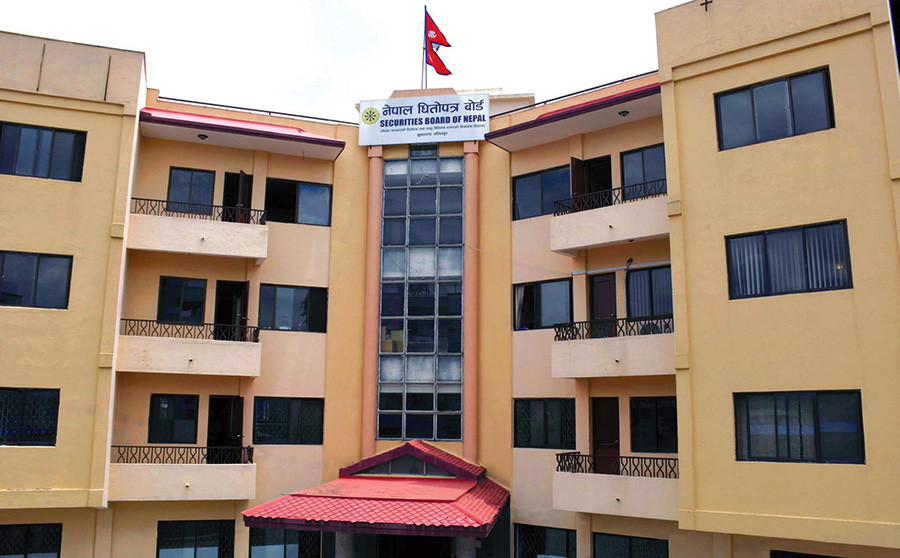
Securities Board of Nepal
The appointment of Bhatta is expected to bring greater stability to the regulator and facilitate pending policy and regulatory decisions. Separately, the Nepal Stock Exchange (NEPSE) also resolved its own leadership gap in mid-June 2026 after operating without a confirmed chairperson for about a month and a half, when the government appointed a joint secretary to lead the exchange.
How does current trading volume compare to the same period last fiscal year?
Trading turnover has fallen substantially on a year-over-year basis. Across the first eleven months of the current fiscal year, from mid-July 2025 through mid-June 2026, total share turnover on the Nepal Stock Exchange reached approximately Rs 1,462.96 billion, compared to approximately Rs 1,880.85 billion in the same eleven-month period of the previous fiscal year, a decline of roughly 22.2 percent.
Nearly every major sector tracked by the exchange recorded lower turnover than the prior year, with finance companies down about 68.6 percent, life insurance companies down nearly 50 percent, investment companies down over 50 percent, and commercial banks down close to 29.5 percent.
The one notable exception was the manufacturing and processing sector, where turnover actually rose by approximately 89 percent year-over-year, suggesting that while most sectors saw investors pull back, a smaller group of manufacturing-related stocks attracted renewed buying interest even amid the broader downturn, partly due to new company listings within that category.
What caused the broader downturn in trading volume across the fiscal year, beyond the recent post-election decline?
The turnover decline reflects more than just the past three months of post-government-formation jitters. Market activity was first disrupted in early September in 2025, when youth-led street protests, led to several days of market closure as a precaution.
The subsequent period of political uncertainty leading up to the eventual March 2026 election further dampened trading activity, since investors typically reduce exposure during periods when the composition of the next government remains unclear.
Layered on top of that earlier disruption came the most recent decline tied to arrests and investigations following the new government’s formation, meaning the fiscal year as a whole captured at least two distinct shocks to investor confidence, first the political upheaval surrounding the September 2025 protests and subsequent election, and then the post-election governance and enforcement uncertainty that has persisted since late March 2026.
Have ordinary retail investors been pulling out of the market, or are they still trading actively? Technical market indicators suggest selling pressure has dominated buying interest for an extended stretch, consistent with retail investors reducing their exposure rather than accumulating new positions.
The 14-day Relative Strength Index, a widely used gauge of whether a market is being oversold or overbought, fell to around 16 on a recent measure, well below the 30-point threshold typically associated with an oversold condition, and the index had spent 10 of the preceding 14 trading days in decline.
A separate money-flow indicator stood at approximately 31, reflecting that more capital was exiting the market than entering it, while an accumulation-distribution measure remained negative for six consecutive trading sessions, indicating sustained net selling activity.
Brokers interpret this combination as evidence that a large share of remaining active investors have been positioned to sell into any minor rally rather than hold for recovery, though some analysts caution that historically low readings on oversold indicators can also precede a stabilization, since selling pressure of this intensity is difficult to sustain indefinitely without a corresponding buyer base eventually stepping in.
Are investors borrowing more money to buy shares despite the falling market?
Margin lending data shows that bank and financial institution exposure to share-collateral loans has continued rising even as the index falls, an unusual pattern that suggests some investors are still adding to positions using borrowed funds.
As of the most recent data available in mid-June 2026, total share-collateral lending by banks and financial institutions reached approximately Rs 162.53 billion, up from about Rs 140.70 billion at the end of the previous fiscal year, an increase of roughly Rs 21.83 billion over roughly ten months.
Of this total, loans exceeding Rs 10 million accounted for the largest share at around Rs 115.94 billion, while smaller share-collateral loans in the Rs 2.5 million to Rs 5 million range and below Rs 2.5 million made up smaller portions of the overall lending pool.
Analysts view rising margin debt during a falling market with some caution, since it raises the risk of forced selling if share prices fall far enough to trigger margin calls, potentially amplifying further declines if a significant share of this borrowed-fund exposure needs to be unwound quickly.
What do brokers and market analysts believe is needed for the market to recover?
Several brokers and a former president of the Stock Broker Association of Nepal have suggested that meaningful recovery is unlikely before Nepal Rastra Bank, the central bank, announces its monetary policy for the upcoming fiscal year, since investors are largely in a wait-and-see posture regarding interest rates and banking-sector regulatory signals that could affect listed financial institutions.

Nepal Rastra Bank office at Thapathali. Photo: Bikram Rai/Nepal News
Beyond monetary policy, analysts point to the need for a confirmed, stable leadership at the Securities Board of Nepal, continued clarity on how asset investigation processes will be conducted so that uncertainty does not deter legitimate large investors from trading, and visible follow-through on the budget’s promised market reforms such as the phased introduction of new trading instruments.
Some brokers also argue that since over 80 listed companies’ share prices were already trading near multi-year lows as of mid-June 2026, much of the available downside may already be priced in, suggesting the market could stabilize once buying interest returns rather than necessarily requiring a major new policy intervention.
How does the current decline compare to past episodes when Nepal’s stock market rose despite political or economic stress?
Nepal’s stock market has a documented history of moving in the opposite direction from what conventional theory would predict during periods of national stress.
It rose during the politically unstable period when the first Constituent Assembly failed to draft a constitution, and similarly gained ground following the 2015 earthquake, prompting a former prime minister to once describe the market as functioning like a “gambling house” rather than a genuine barometer of the broader economy.
This earlier pattern stands in contrast to the present episode, where a politically stable, strong-majority government has coincided with a sustained market decline rather than the rally history might suggest.
Analysts attribute the difference to the specific nature of the current pressure, arguing that previous instability was primarily political and did not directly threaten the business community’s sense of security, whereas the current government’s enforcement-focused approach, including high-profile arrests and expanded asset investigations reaching into the private sector, more directly affects the confidence of the wealthy individuals and institutional players who typically drive large-volume trading.
Which sectors of the stock market have been hit hardest, and which have held up relatively well?
Among the sectors tracked by the Nepal Stock Exchange, finance companies recorded the steepest turnover decline at roughly 68.6 percent year-over-year, followed by non-life insurance companies down about 60.8 percent and life insurance companies down nearly 50 percent, reflecting sharp pullbacks in trading activity across Nepal’s smaller financial institutions.
Investment companies also saw turnover fall by more than half, while development banks and microfinance institutions both recorded declines exceeding 29 percent. Commercial banks, despite being the largest segment of Nepal’s listed financial sector by overall trading value, still saw turnover fall by close to 29.5 percent.
By contrast, the manufacturing and processing sector was the only major category to post a year-over-year increase, rising by approximately 89 percent, helped partly by new company listings within that sector during the year.
Hydropower, the single largest sector by total turnover value, fell by a comparatively modest 5 percent, suggesting hydropower shares retained relatively more investor interest than most other sectors even amid the broader market-wide slowdown.
What specific policy or institutional steps has the government taken in direct response to the market’s decline?
Beyond the budget’s capital gains tax and market-instrument announcements, the most concrete recent institutional step has been the appointment of a new chairperson at the Securities Board of Nepal (SEBON), the actual market regulator, a vacancy that had been a significant source of investor unease according to brokers.
This crucial appointment was seen by some market participants as an attempt to restore regulatory leadership, even though a separate, shorter-standing vacancy at the Nepal Stock Exchange itself was filled in mid-June 2026 when the finance minister named a joint secretary to lead the exchange after that position had remained empty for about a month and a half.
The finance minister has also publicly stated that only those engaged in wrongdoing within the market need fear ongoing investigations, an attempt to reassure the broader investor base that enforcement actions are narrowly targeted rather than indicative of a wider crackdown on legitimate business activity, though brokers note this reassurance has not yet visibly translated into renewed buying activity or rising turnover.
What is the broader significance of this stock market decline for Nepal’s economy and ordinary investors?
While Nepal’s stock market technically functions as a barometer of broader economic conditions, the current decline is unfolding even as core macroeconomic indicators, including foreign exchange reserves sufficient to cover well over a year of imports and historically low bank deposit interest rates, remain comparatively favorable, illustrating that the market’s movement in this episode is being driven primarily by governance, enforcement and institutional uncertainty rather than underlying economic weakness.
For ordinary retail investors, many of whom entered the market in large numbers during a period of rapid account growth in preceding years, the roughly Rs 400 billion reduction in collective investor wealth over three months represents a meaningful erosion of household savings and paper wealth, even if losses are not realized unless shares are actually sold at current depressed prices.
The episode also illustrates a recurring vulnerability in Nepal’s capital market structure, namely its sensitivity to leadership vacancies at regulatory bodies and to the pace and visibility of anti-corruption enforcement.
While the government has recently moved to address these leadership gaps by appointing new chairpersons at both SEBON and NEPSE, the broader friction surrounding anti-corruption enforcement remains an active challenge that has not yet been resolved as of mid-June 2026.