Kathmandu
Sunday, June 21, 2026





In the past, during visits to China from Nepal, we constantly found ourselves stuck in politics and geopolitics. This time, the effort to move forward by being a bit more pragmatic appears to be a positive development.
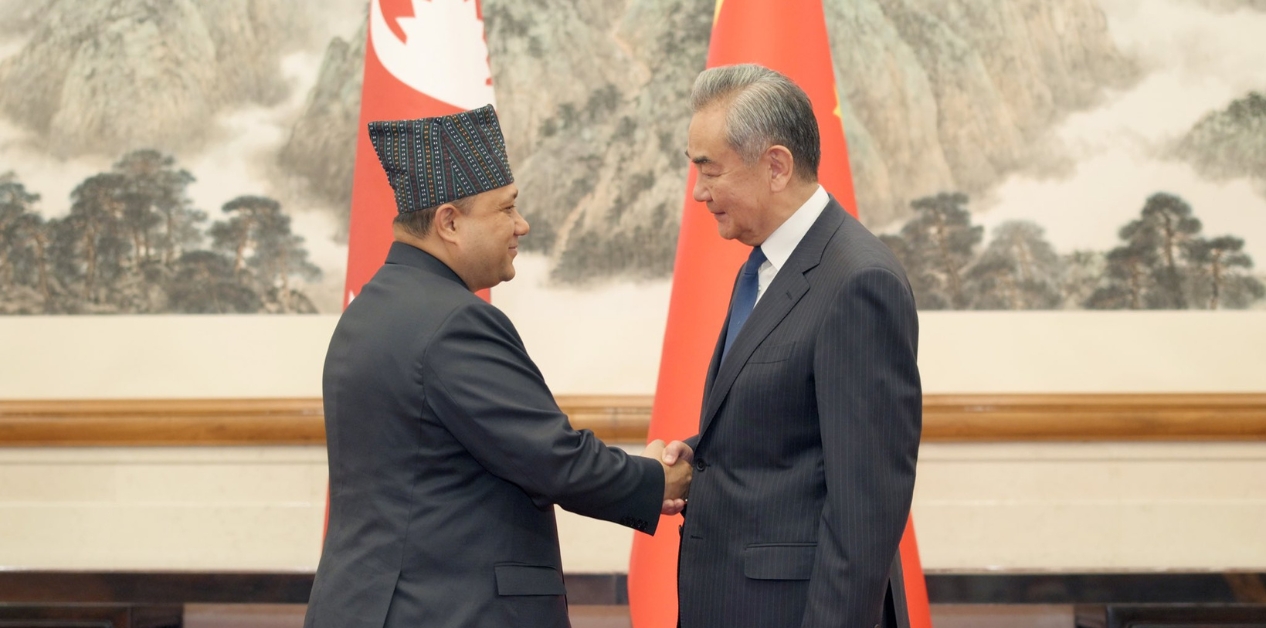
KATHMANDU: Following last year’s House of Representatives election, a new government was formed in Nepal with nearly a two-thirds majority. However, regardless of the size of the majority, one cannot change their neighbors. It was essential for China to understand the nature of this new Nepali government and its stance on various issues. With the objective of conveying this, the country’s top diplomat—Foreign Minister Shisir Khanal—undertook the visit. Foreign Minister Khanal promptly clarified and provided the reassurances the Chinese side has traditionally sought regarding the One-China policy, Taiwan, Tibet, and China’s territorial integrity.
The Government of Nepal wishes to align itself with the progress of the rapidly growing Chinese economy. Connecting economically with China means integrating into their global value chain. Even today, our per capita income has not reached USD 2,000, whereas China’s has already surpassed USD 10,000. In simple terms, this means that the cost of goods and services in China—which has made immense strides in technology recently—is much higher than in our country. Consequently, the production of various goods has shifted from China to Vietnam and other nations. If we become a link in that value chain, we will establish a genuine economic connection.
In this process, we can start with small, foundational projects and gradually work toward integrated cooperation in high technology. However, we currently lack the vocational education required to reach that level. While we witness China’s sudden development, we often forget their long history of vocational training. In developing vocational—meaning technical and skill-based—education, China linked specific industries with designated cities. For instance, one city is renowned for producing telecommunications equipment, while another is famous for manufacturing furniture. Their skill level is exceptionally high.
Connectivity was an area of profound emphasis during this visit to China. Although China is our northern neighbor, 67.5 percent of our imports still originate from India. Even when discussing import-export dynamics with China, or planning for future integration into their value chain, robust connectivity is vital. Furthermore, connectivity is no longer limited to traditional infrastructure; it now encompasses internet and financial connectivity, among various other dimensions.
Similarly, another key subject raised by Foreign Minister Khanal during this visit pertained to the Belt and Road Initiative (BRI). Rather than debating whether or not to execute specific projects under the BRI, he suggested evaluating their economic viability first and making decisions based on those findings. This represents a refined conceptual shift. In the past, when leaders like KP Sharma Oli, Sher Bahadur Deuba, or Pushpa Kamal Dahal visited China, the primary interest centered around which mega-project Nepal could secure. That is no longer the case. The focus has now pivoted toward whether a project—big or small—is economically viable. This is a modern, strategic outlook.
Connecting economically with China is not just about hardware; it is equally about software. For this to happen, policies must be integrated. Several past initiatives failed because our policies were not harmonized. For example, we agreed to export buffalo meat to China. We initiated shipments, but they were halted. Discussions with officials from the Ministry of Foreign Affairs revealed that we lacked the baseline infrastructure for it. We did not possess the testing equipment or the training aligned with international meat inspection standards. Adequate quarantine facilities and supportive policies were missing. Another example was the export of alfalfa hay. A country with such a massive population will inevitably evaluate how any import affects its citizens. Just because we fail to pay attention to such standards does not mean others will ignore them too.
Another persistent issue in our diplomacy is the lack of a dedicated follow-up mechanism. The Foreign Minister or Secretary represents the nation, holds discussions, and signs agreements on various matters. However, foreign diplomats are often left confused about who to contact for follow-up. Our embassies need to establish dedicated desks for specific sectors, but this has yet to materialize.
A promising start
Four years have passed since the founding of the ruling Rastriya Swatantra Party (RSP) in 2022. Foreign Minister Khanal has served as the chief of the party’s international department since its inception. In this capacity, his contact with Chinese officials spans four years.
As a new political force enters government, relations naturally progress step by step. With the general public in Nepal still getting to know the RSP, the Foreign Minister’s visit has provided a promising start to the dialogue with China. Through this visit, the Government of Nepal has clearly articulated its commitments, reassuring China that we are sensitive to their long-standing concerns regarding Tibet and Taiwan, and that Nepal’s territory will never be allowed to be used against them.
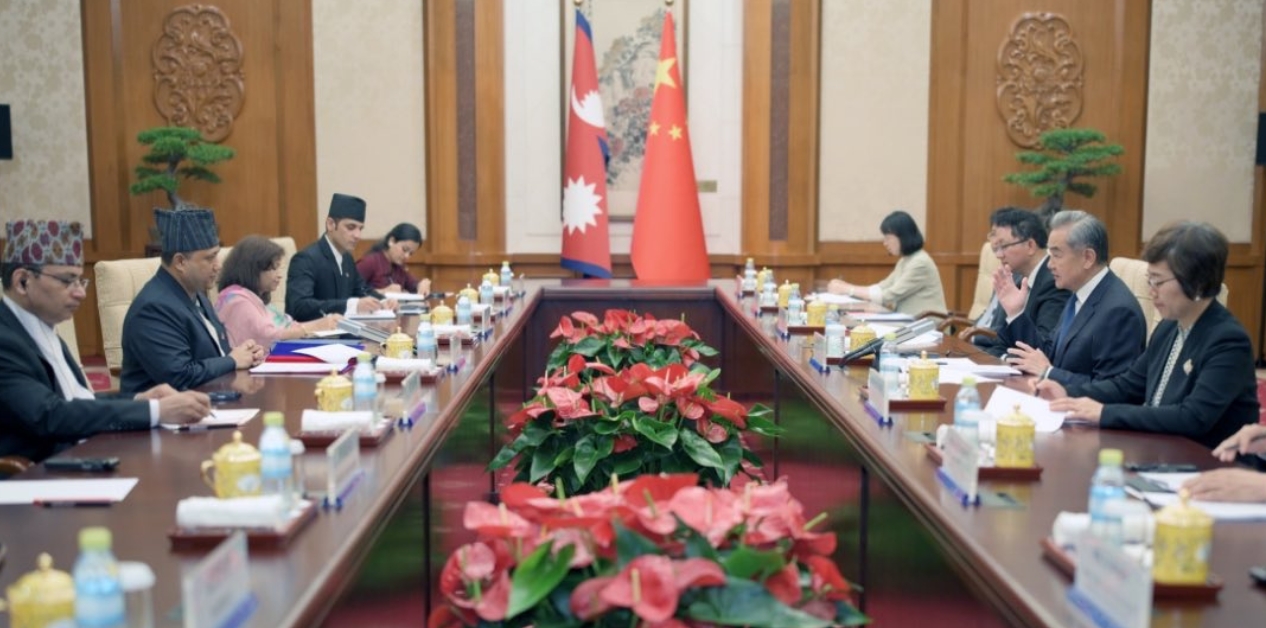
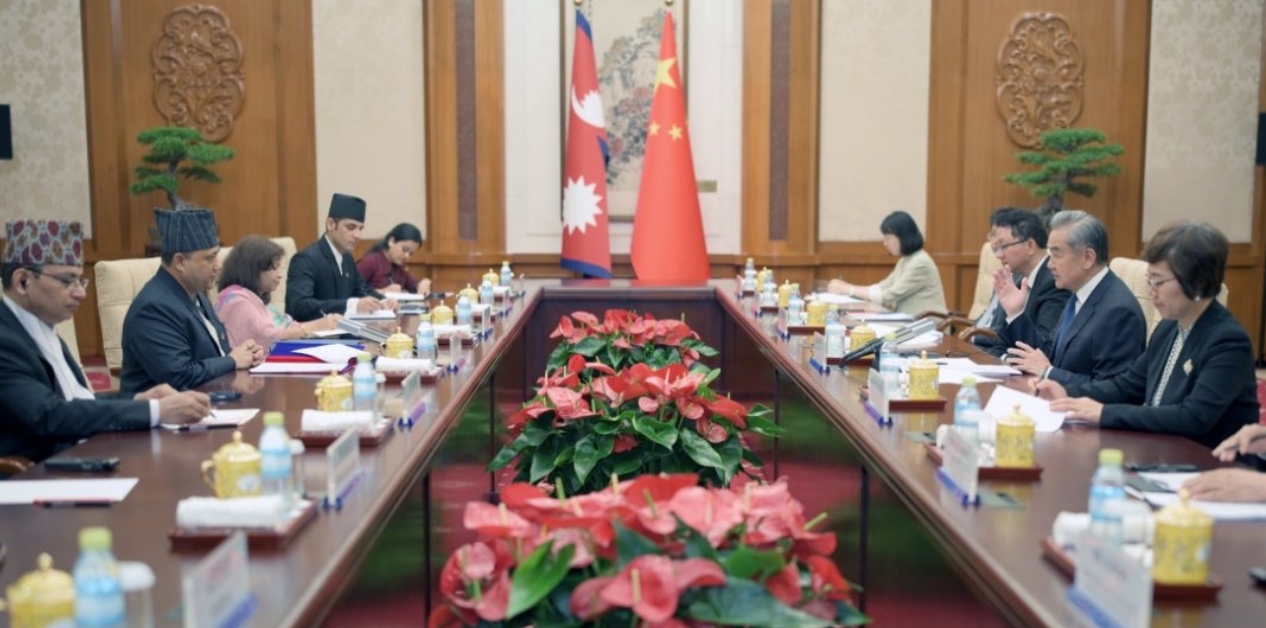
The bilateral talks between the Nepalese and Chinese delegations in Beijing on June 15. Photo: Foreign Minister Khanal’s X account
Past visits lacked concrete substance and a clear direction. Commitments were made superficially, followed by a scramble for large projects—focusing heavily on what massive project was being gifted and for which region. This time, the government intentionally shifted the dialogue away from specific projects, choosing instead to first debate the operational model and move forward with a unified concept. The approach has transitioned toward accepting projects only if they make economic sense.
In my estimation, this implies that the current government will not rush into railway projects and will instead prioritize roadways. Do we even possess the capacity to service the debt required for such massive railway investments? Interestingly, during this visit, China asked whether they could explore options to access the broader South Asian market through Nepal. The Chinese side expressed an interest in conducting feasibility studies, assisting with technology transfer, and developing smart cities. They intend to study whether Nepal can be integrated into their industrial supply chain to operate across South Asia.
What we must understand is that China, with its massive economy and a population of 1.4 billion, operates on a grand scale across all sectors. Small-scale projects are simply not viable for them. They invest initially, during which human resources are gradually developed. True development occurs when all these elements align. For that to happen, connectivity is indispensable.
Another significant facet of this China visit was that Minister Khanal became the first senior leader to hold an open, interactive Q&A session with the Nepali diaspora in China. Historically, China’s own initial wave of foreign investment came from its diaspora. The message Minister Khanal delivered to the diaspora in China was highly impactful, reassuring them by stating: “You are our assets. Rest assured that we stand behind you.”
Overall, this visit gave the impression that Foreign Minister Khanal is seeking to elevate Nepal-China relations to a different height. Having studied the past visits of our leaders, we historically remained stuck in politics and geopolitics. Moving beyond that, this visit represents a commendable effort to advance pragmatically and accomplish goals deliberately without undue haste.
(This article is based on a conversation between Mani Dahal and Akhilesh Upadhyay, a Senior Fellow at the Institute for Integrated Development Studies—IIDS).