Kathmandu
Friday, June 19, 2026





During the foreign minister-level meeting, China pointedly commented regarding Nepal this time that "a near neighbor is more important than a distant relative," which is food for thought for us.
KATHMANDU: Following the formation of the new government, Foreign Minister Shisir Khanal has visited Nepal’s two neighboring nations, first India and then China. These visits appear to have been aimed at maintaining harmonious relations between the two countries, establishing acquaintances, gaining trust toward the new government, and building an environment for cooperation.
Some details have emerged in the media regarding what Chinese Foreign Minister Wang Yi reportedly said after the bilateral meeting in China. Looking at that, it appears China has been unable to trust and harbors suspicions regarding Nepal’s current government. During the foreign minister-level talks, Wang commented that “a near neighbor is more important than a distant relative.” This means there could be a Chinese suspicion that Nepal might be moving away from its neighborhood relations.
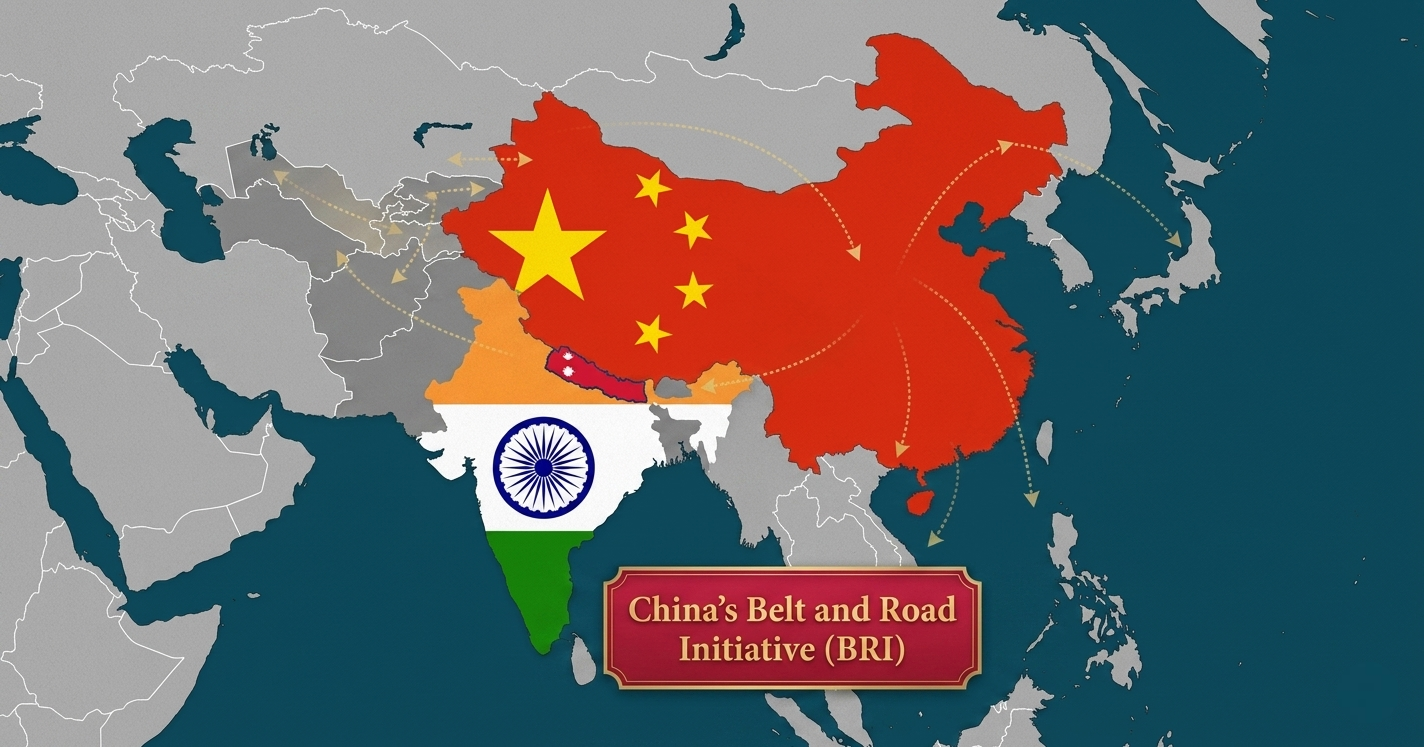
During the bilateral talks, the Chinese side raised issues such as lawsuits being filed against Chinese contractors involved in the construction of Pokhara International Airport and how Chinese investors are unable to be attracted to Nepal due to unequal treatment. Even though nine years have passed since we signed China’s ambitious program, the ‘Belt and Road Initiative’ (BRI), not a single project has moved forward. Meanwhile, two or three projects had been selected a few years ago. Because of this, a deep suspicion regarding Nepal’s policies and the current government persists in the minds of the Chinese.
China has reiterated its past support for Nepal’s independence and territorial integrity. However, during discussions with the Nepali side, the Chinese side spoke its mind openly this time. Its statement that “a neighbor is more important than a distant relative” is a serious comment. I am not aware of China speaking so bluntly in the context of Nepal before. This is indeed a rare occurrence. Therefore, it is highly sensitive. From this comment, the Chinese side does not appear to be reassured by Nepal’s current activities. Hence, Nepal needs to do adequate homework to reassure
A visit to Nepal from the level of the Chinese President took place after 23 years in October 2019. During President Xi Jinping’s visit, 20 agreements were signed between Nepal and China. If Nepal moves forward by building upon those, and slightly increases Nepal’s engagement and commitment to the BRI and other initiatives, an environment of trust will gradually be built.
During the meeting with the Chinese side, Foreign Minister Khanal presented Nepal’s views in his own way. He raised the issue of the agreement between China and India to conduct trade and pilgrimage through the Nepali territory of Lipulekh. China responded to that stating it is a matter between Nepal and India. He expressed commitments on matters such as Nepal remaining firm on the One China policy, ensuring no discrimination against Chinese investors, and maintaining good relations with neighbors. To what extent the Chinese side is reassured by this remains to be seen.
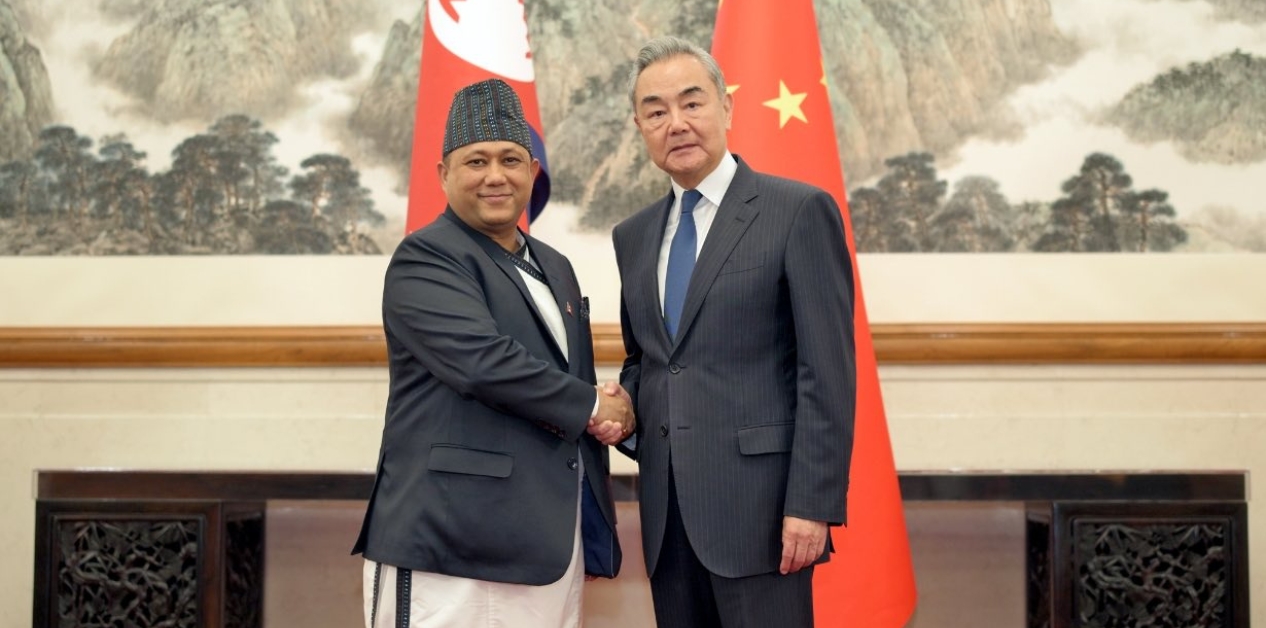
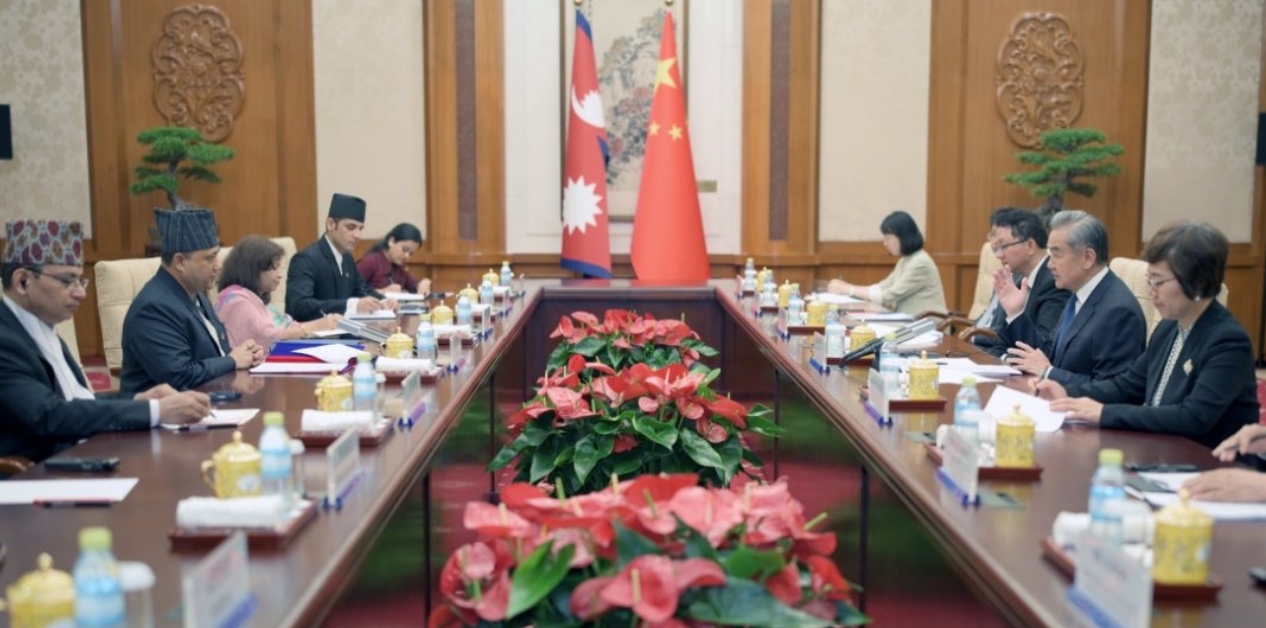
Foreign Minister Shisir Khanal and Chinese Foreign Minister Wang Yi during their meeting in Beijing on June 15, 2026.
Currently, there is no Nepali ambassador in China. The situation is being managed by a Chargé d’Affaires. Additionally, due to reasons such as past social media posts by Prime Minister Balendra Shah and his cancellation of a visit to China when he was Mayor, the Chinese side wants to be reassured by Nepal’s new government. In August 2023, then-Mayor Shah had cancelled a pre-scheduled five-day visit to China, stating that China had not recognized Nepal’s pointed map which included Lipulekh-Limpiyadhura-Kalapani. How positive was Foreign Minister Khanal’s role in clearing suspicions and providing reassurance on such matters? How reassured did the Chinese leadership become? This will become clear in the coming days.
Nepal and China need to somewhat increase the frequency of high-level visits. We must take China into confidence by speaking openly about and resolving the issues where China has suspicions and concerns. However, it has not come to light that our Foreign Minister extended an invitation for a visit to his Chinese counterpart. An environment of trust is built when visits take place at various levels.
In the election manifesto released last year by the Rastriya Swatantra Party (RSP), it is written, “We want to become a vibrant bridge between China and India.” It sounds and reads pleasant. But how can we be a ‘vibrant bridge’ without taking these neighboring countries into confidence? There is a gulf of mistrust on both sides. A lot of homework needs to be done to build trust.
To strengthen relations, we should not go for ‘big power diplomacy.’ We should develop our ‘soft power’ and move forward by enhancing our diplomatic skills. Before Foreign Minister Khanal went on his visit to China, I thought he would speak with other individuals, including myself, who have served as ambassadors to China and have worked in connection with Chinese Foreign Minister Wang at various times, and that we would put forward our views. But that did not happen. If he had consulted me, I would have advised him not to make the visit in such a hurry.
Wang has been in the Chinese Foreign Ministry for 30 years. On the other hand, it has not even been three months since Khanal became Foreign Minister. No matter how knowledgeable or expert someone is, 30 years of experience and three months of experience are certainly not comparable. Instead of enhancing one’s knowledge and skills by consulting people who have worked previously, diplomacy can neither move forward nor be effective by holding a narrow perspective within one’s own country.
The Chinese often express their intent and convey messages even without speaking. Everything—the speaking, the seating, the gestures—holds significance. I am not aware of what the gestures and other details were like during the bilateral meeting during Foreign Minister Khanal’s visit, but looking at what has appeared in the media, it does not look very encouraging for Nepal. I am an optimistic person; it is my desire and expectation that this visit will dispel China’s suspicions.
That said, everything does not happen through just one visit. We need to do serious homework to make relations with neighbors deep and respectful. It will also be determined in the days ahead by what kind of person goes as ambassador. Currently, the government has done groundwork to select ambassadors for various countries through an application process similar to the American DV lottery system. How effective that will be and what kind of person will be appointed remains to be seen.
Let’s do this to remove suspicions
Whether or not one has an ambassador in a country makes a difference. If we had our ambassador in China, there would have been discussions prior to the visit regarding what our specific agendas were. After the formation of the new government, how much dialogue could take place even with the Chinese Ambassador to Nepal?
In the context of China, rather than entering into huge topics all at once, we should focus on implementing the commitments made in our socio-economic development right now. It would be more fruitful for us if we move forward on the basis of agreements made during high-level visits between Nepal and China. During Chinese President Xi Jinping’s visit to Nepal, agreements were signed on projects under the BRI, Trans-Himalayan connectivity, and other issues. Xi Jinping had said, “Nepal will no longer be landlocked, it will be a land-linked country.”
Instead of taking hold of all those aspects and moving forward with implementation, it appeared as though Nepal ignored them. Such matters might give China the feeling that “Nepal only uses China when it is in difficulty and ignores China at other times.” Under the BRI, we need to choose and move forward with projects that support production, productivity, employment, and economic development.
The current government has stated it will create 1.5 million jobs in five years. What kind of things need to exist within the country to increase employment? It would have been an excellent step if Nepal had proposed for China to build a ‘Special Economic Zone’ for us, similar to the ones China built for itself. Such a ‘zone’ can be built in an appropriate place in the northern region of the country. Around 8 to 10 such special economic zones can be built.
When I was the Ambassador to China, an agreement related to the agricultural sector was reached in 2001. Ministers had signed the agreement in Kathmandu in the presence of the Prime Ministers of both countries. However, because Nepal failed to implement it, it faded away. Within 10 to 15 days, that file disappeared entirely. There were some industries built with Chinese assistance, all of which we privatized. Even if they do not speak about these things, it might have created a feeling that nothing comes of just giving to Nepal. Even now, we have not moved forward with the matters on which understandings were reached. Therefore, Chinese suspicion and mistrust toward Nepal is not the product of a single day. They might have had things in mind regarding Nepal since the past, but they did not express them before.
As far as I understand, Wang Yi is among those who love Nepal. That is a good aspect for us. We could have worked for our national interest by expanding relations with him. Cordiality would have increased. Whether this government made an effort for that or not is unknown.
There is another aspect regarding the Chinese. They climb the political ladder gradually, becoming seasoned before reaching a certain level. Therefore, they do not trust newcomers easily. They do not trust based solely on what is spoken or committed. There is a Russian proverb that former US President Ronald Reagan used to use frequently: “Trust, but verify.” We too must win trust through our actions in our relationship with China to overcome suspicions.
(Based on a conversation between Mani Dahal and Acharya, former Nepali Ambassador to China)