Kathmandu
Monday, July 6, 2026






KATHMANDU: Nepal News presents today’s snapshot of Nepal’s economic activities. Get quick updates on major market movements, policy shifts, and financial developments shaping the economy of Nepal. Here are the key economic highlights for today:
Commission Mandates Wealth Disclosures for NRB Executives
The Property Investigation Commission mandated compulsory wealth disclosure submissions for all high-ranking executives and retired officers of the Nepal Rastra Bank. The administrative directive targets the governor, board members, deputy governors, executive directors, and first-class officials or higher to ensure transparency and eliminate illicit asset accumulation within the financial sector. The specialized reporting forms require full verification of personal family records, movable and immovable assets, bank balance registries, stock investments, foreign income streams, remittances, and outstanding debt obligations. The commission warned that failure to submit assets or presenting fraudulent declarations will result in prosecution under existing anti-corruption laws.
NEPSE Decreases by 6.51 Points with Rs 3.087
The Nepal Stock Exchange index declined by 6.51 points on Tuesday, closing at 2,724.39, a drop of 0.23 percent from the previous trading day. The sensitive index slipped 0.14 percent to 467.37, while the float and sensitive float indices also edged lower. Trading volume, however, increased to Rs 3.08 billion, with over 7.81 million shares of 346 companies traded through 45,519 transactions. Share prices of 113 companies gained, while 145 declined. Development banks, finance and non-life insurance groups posted gains, whereas trading, hydropower, hotels, manufacturing and other major sectors closed lower.
NOC Sustains Rs 36 Billion Losses While Keeping Prices Unchanged
The Nepal Oil Corporation (NOC) opted to keep domestic petroleum prices unchanged despite receiving revised tariff rates from the Indian Oil Corporation on Saturday. The latest import invoices show that petrol rates increased by Rs 10 per liter, while diesel rates decreased by Rs 22 per liter, balancing overall operational profit and loss margins. However, liquefied petroleum gas continues to generate a deficit of Rs 1,078 per cylinder. Due to global price hikes triggered by the Iran-America conflict since February 28, the corporation has sustained a cumulative loss of Rs 36 billion.
2-Day Weekend Policy Distributes Up to 900 Kiloliters of Fuel Daily
The government’s two-day weekend policy, enacted to curb fuel usage, inadvertently triggered heavy congestion and long customer queues across Kathmandu’s fuel pumps on Mondays. Because the Nepal Oil Corporation shuts its main distribution depots on Saturdays and Sundays, pumps ran dry over the weekends, causing high demand surges when weekly trading resumed. The corporation maintains regular daily supply lines to match typical valley consumption rates, which float between 700 and 800 kiloliters of petrol and 850 and 900 kiloliters of diesel. The Nepal Petroleum Dealers’ National Association requested the Ministry of Industry, Commerce, and Supplies to reopen depots on Sundays to preserve market stability.
Finance Ministry Unlawfully Disburses Rs 129.2 Million Micro-Insurance Funds
The Office of the Auditor General reported that the Ministry of Finance violated the Insurance Act, 2079 BS, by releasing Rs 129.2 million in micro-insurance funds to unauthorized financial institutions. The ministry bypassed legal mandates restricting micro-insurance execution to non-life insurance companies by distributing Rs 41.6 million to the Agricultural Development Bank and Rs 87.5 million to Sana Kisan Bikas Laghubitta Bittiya Sanstha. Neither entity holds an insurance license or agent registration under the 2076 BS guidelines. Furthermore, the ministry failed to establish standard procedural workflows or conduct mandated project monitoring, prompting the auditor to order a complete structural re-evaluation.
State Entities Evade Mandatory Audits for 17 Continuous Years
The 63rd Annual Report of the Auditor General revealed severe lapses in financial governance, showing that major state-owned enterprises have operated without mandatory financial audits for up to 17 years. Nepal Orient Magnesite failed to submit any accounts for auditing since the 2007/08 fiscal year. Similarly, Sajha Prakashan has skipped audits for 12 years, while the Rastriya Beema Sansthan and the Rastriya Beema Company have evaded oversight for nine and eight years, respectively. Data from the 2023/24 fiscal year showed only 21 out of 45 public enterprises maintained regular audits, with Gorkhapatra Sansthan and Nepal Railway Company also facing critical reporting backlogs.
Gen Z Protests Obstruct Rs 162.9 Billion Audit of the Office of the President
The Office of the Auditor General reported that the Office of the President, which maintains a staff of 68 workers, could not audit its financial books due to records being destroyed during the Gen Z protests on September 8 and 9, 2025. The missing documentation blocked the audit of Rs 162.9 billion, consisting of Rs 141.9 million in allocations, Rs 20.9 million in deposits, and Rs 53,000 in revenue. Auditor General Toyam Raya noted that the unrest disrupted audits worth over Rs 150 billion across 179 offices, though total national audits managed to cover Rs 9.484 trillion.
Auditor General Directs Suspensions on 89 Mining Firms Over Weighbridge Fraud
The Office of the Auditor General directed the state to penalize mining companies and processing factories using fraudulent extraction tactics that bypass weighbridge requirements. Out of 159 licensed entities instructed by the Department of Mines and Geology to set up calibrated scales, 89 operators completely defied regulatory directives. Field audits revealed 22 scale-deficient mines are actively operating, while an inspection across three cement plants confirmed only two facilities maintained operational scales. Under Rule 19 of the Mines and Minerals Regulations, 1999, failure to register precise volumetric weights requires immediate license cancellation, as current non-compliance allows operators to under-report yields and evade mandatory mineral royalties.
5 Customs Offices Undercharge Rs 7.498 Billion on Unassembled Vehicle Imports
The Auditor General Report revealed that various customs offices caused a Rs 7.498 billion revenue deficit by unlawfully granting customs and excise waivers on unassembled vehicle imports under the Customs Act. Legally, assembly plants receive 25 percent customs and 50 percent excise tax reductions if they hit direct employment and value-addition benchmarks. However, importers failed to provide authorized manufacturing verification, violating Harmonized System rules that dictate knocked-down kits must be taxed as finished goods. The specific breakdowns of undercollected revenue across major operations include Rs 4.797 billion at the Bhairahawa Customs Office, Rs 2.587 billion at the Birgunj Customs Office, and Rs 106.8 million at the Dry Port Customs Office in Parsa.
Rs 3.618 Billion Revenue Collected in 10 Months in Bhadrapur
The Inland Revenue Office in Bhadrapur collected Rs 3.618 billion in revenue during the first 10 months (July 17, 2025, to May 14, 2026) of the current fiscal year 2025/26, achieving 82.21 percent of its target. According to tax officer Dilli Ram Chamlagain, the office had set a target of collecting Rs 4.401 billion by mid-May. From mid-April to mid-May alone, the office aimed to collect Rs 428.5 million but managed to achieve only 83.87 percent of the monthly target. Office data shows that by mid-May, revenue collection included Rs 1.686 billion from income tax, Rs 1.288 billion from VAT, and Rs 499.7 million from excise duty. The office said efforts are ongoing to increase revenue collection through taxpayer awareness, regular monitoring, and more effective tax administration.
Auditor General Identifies Rs 2.508 Billion EV Customs Tax Evasion
The Auditor General Report revealed that Rs 2.508 billion in state taxes was evaded by declaring underreported peak motor power capacities on electric vehicles (EVs). Specifically, Rs 1.272 billion was evaded at the Rasuwa Customs Office and Rs 1.235 billion at the Tatopani Customs Office. Importers manipulated technical catalogs to bypass Customs Act schedules requiring 20 percent customs and 15 percent excise for 50-100 kW motors, and 30 percent customs and 20 percent excise for 100-200 kW motors. Discrepancies included Zeekr X models pushing 200.06 kW registered lower, alongside underreported imports of Deepal E07, Jaecoo J6, Avatr 11, Xpeng, Nami Box, and X30LEV passenger vans, avoiding millions in due revenues.
Tourism Department Collects Rs 1.258 Billion in Spring Mountaineering Royalties
The Department of Tourism collected Rs 1.25 billion in mountaineering royalties for the Spring 2026 climbing season, granting permits to 1,181 climbers across 79 nations. Mount Everest drew the largest crowd, with 494 climbers from 55 nations, including 109 Chinese, 77 Americans, 61 Indians, and 12 Nepalis, generating Rs 1.078 billion. Additional allocations included 143 permits for Lhotse, yielding Rs 63.6 million, at least 111 for Ama Dablam, yielding Rs 16.6 million, and 36 for Kanchenjunga, yielding Rs 16 million. While the department handles peaks above 6,500 meters, the Nepal Mountaineering Association (NMA) administers permits for elevations down to 5,800 meters.
JICA to Hand Over Nagdhunga-Naubise Tunnel to Government After 7-Year Construction
The Japan International Cooperation Agency (JICA) will hand over the Nagdhunga-Naubise Tunnel Project to the government within seven to 10 days. The construction initiative began in October 2019 with an original 42-month completion target but faced pandemic disruptions and local protests, extending the timeline to nearly 7 years. Following the formal transfer, the operating partner ART-Yucin JV, which signed its service contract on April 29, 2026, will manage human resources and technical training within 15 days. The framework schedules official vehicle trials to begin from mid-June ahead of full public operations from mid-July to mid-August.
Kaski Police Collect Over Rs 4.4 Million in Traffic Fines in May
The District Police Office Kaski collected more than Rs 4.4 million in revenue from traffic rule violations during the month of May, authorities said. According to Police Inspector Sujit Kumar Devkota, a total of 5,263 drivers were fined during the period as traffic monitoring and enforcement campaigns were intensified across the district. Traffic police records show that 12 vehicles were penalized for overspeeding, while five drivers were caught driving without licenses and three were found operating vehicles under the influence of alcohol. During the same period, 22 road accidents were reported in Kaski, leaving five people dead and 26 injured. Police said both the District Police Office and the Traffic Police Office jointly conducted inspections targeting traffic violations, driver conduct, and passenger treatment as part of efforts to reduce road accidents and improve road safety.
Border Controls Lift Nawalparasi Wholesale Fish Prices to Rs 330 Per Kilo
State-enforced border regulations targeting cheap, chemically preserved imports significantly boosted the domestic aquaculture sector across Nawalparasi (Bardaghat Susta Purba). Wholesale fish values rose from last year’s rate of Rs 280 per kilogram up to Rs 330 per kilogram. The Veterinary Hospital and Livestock Services Expert Center in Kawaswoti logged 1,574 functional fishponds stretching across 93,606.84 square meters of active water bodies. The district is rapidly approaching full self-sufficiency, with annual per capita production hovering at 13 kilograms against the recommended benchmark consumption target of 14 kilograms. Local farmers are currently lobbying the government for subsidized financing, skilled training, and dedicated live fish transportation channels.
Inflation Increases Retail Induction Cooker Prices to Rs 2,700
Rising geopolitical tensions in the Gulf increased global fuel transport tariffs and shipping costs, pushing retail prices of electric induction and infrared cookers up by 20 percent across domestic markets. In wholesale centers, basic units previously priced at Rs 2,200 jumped up to prices between Rs 2,600 and Rs 2,700 per piece, showing a flat Rs 400 retail surge. Concurrently, Salt Trading Corporation reported that its branded Diamond induction cookers climbed from Rs 4,000 to Rs 4,960. Despite fluctuating consumer demand, Department of Customs logs for the months from mid-March to mid-April recorded high imports of 17,125 induction units, 19,010 infrared cookers, and 14,303 electric rice cookers.
51 Microfinances Net Rs 7.244 Billion Profits Growing by 43.16%
The third-quarter financial data of 51 operating microfinance institutions for the fiscal year ending April 13 revealed cumulative net profits of Rs 7.244 billion. This represents a 43.16 percent financial growth compared to the previous fiscal year’s matching period, which logged Rs 5.06 billion in profits. However, profits declined across nine institutions, including Unique, Kalika, Sirjanashil, Nerude Mirmire, CYC Nepal, Mahila, RSDC, Nirdhan Utthan, and Sana Kisan Bikas Microfinance. Concurrently, Bijay Microfinance experienced severe distress, shifting from a prior profit of Rs 78 million into a Rs 26.7 million loss, while Chhimek Microfinance recorded the highest profit.
Commercial Banks Disburse Rs 136.71 Billion Share Pledge Loans via Nabil Bank Lead
Commercial banks expanded stock-pledged credit lines to Rs 136.71 billion during the nine-month period ending April 13, 2026, rising significantly above the previous matching timeframe’s total of Rs 101 billion. This surge marks a 34.55 percent scale expansion, pushing total margin lending up by Rs 35.10 billion due to central bank risk-weight relaxations to 100 percent. Nabil Bank led total volume outlays, expanding credit by 19.94 percent to reach a dominant position of Rs 17.40 billion. Agricultural Development Bank expanded its portfolio by 179.71 percent, reaching Rs 8.49 billion, while credit lines dropped at Nepal Bank, Citizens Bank, and Nepal SBI Bank.
Sanigad Hydro to Launch Rs 467.4 Million General Public IPO on May 28
Sanigad Hydro Company will launch its Initial Public Offering (IPO) for the general public on May 28, issuing 4,674,000 shares valued at Rs 467.4 million at Rs 100 per share. The company possesses a total capital base of Rs 2.85 billion and received approval to issue 30 percent of its shares, totaling Rs 855 million or 8,550,000 units. It previously allocated 2,850,000 shares to locals, at least 570,000 to migrant workers, 171,000 to staff, and 2,850,000 to mutual funds. Managed by Laxmi Sunrise Capital, the subscription closes on June 3.
Gold and Silver Prices Rise in Domestic Market Today
The price of gold and silver in the market has increased today. According to the Federation of Nepal Gold and Silver Dealers’ Association, the price of gold has risen by Rs 500 per tola (11.66 grams) and is now being traded at Rs 295,300 per tola. On Monday, gold was traded at Rs 294,800 per tola. Similarly, the price of silver has also increased. Today, silver is being traded at Rs 5,085 per tola after rising by Rs 45. On Monday, silver was traded at Rs 5,040 per tola.
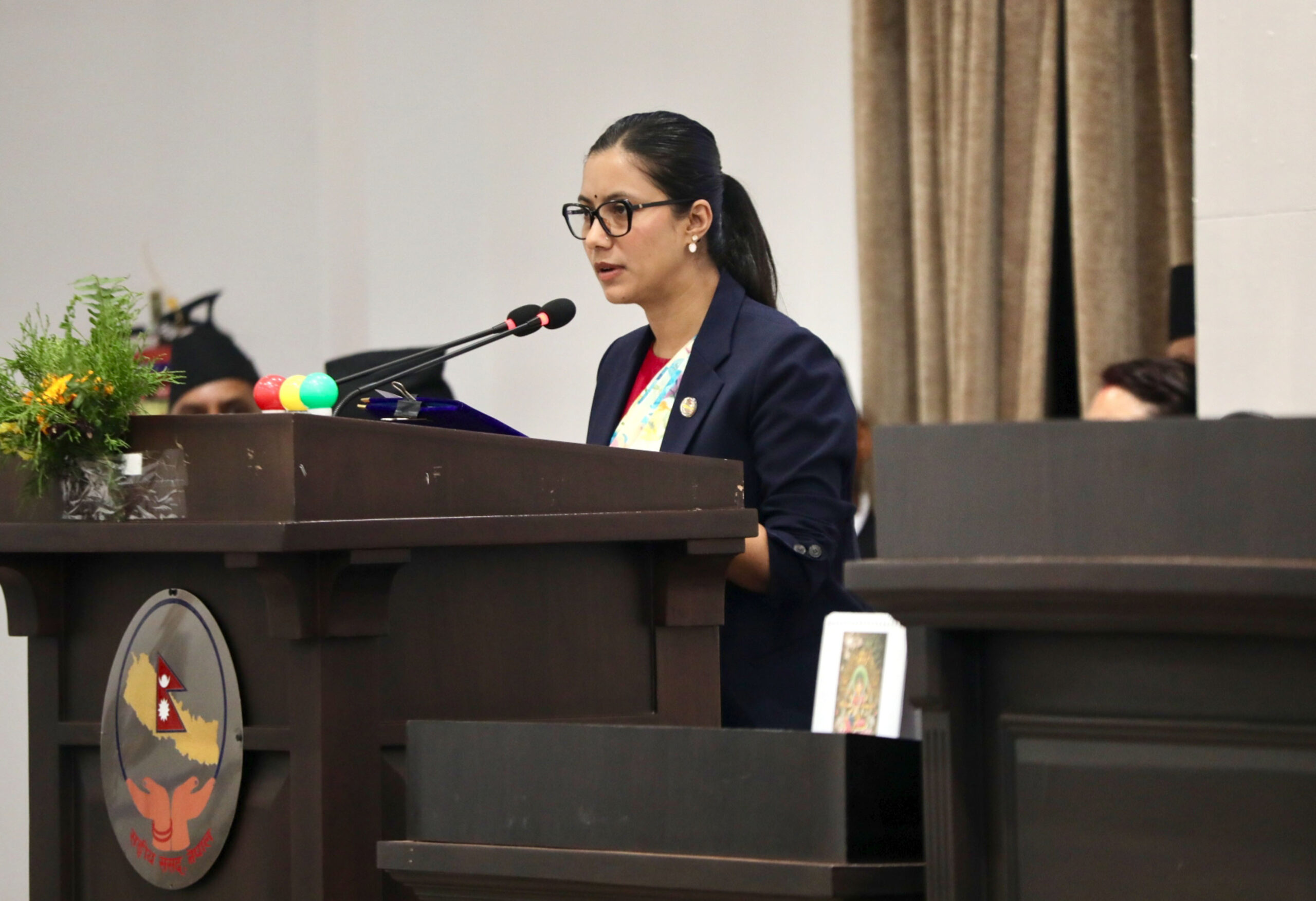


![Auction for third edition of NPL begins [Photo Feature]](https://english.nepalnews.com/wp-content/uploads/2026/07/NPL-3-auction_NPL-5.jpeg)