Kathmandu
Thursday, July 23, 2026






KATHMANDU: Nepal News presents today’s snapshot of Nepal’s economic activities. Get quick updates on major market movements, policy shifts, and financial developments shaping the economy of Nepal. Here are the key economic highlights for today:
NRB mops up Rs 100 Billion Liquidity via 61 Day Instruments
The Nepal Rastra Bank (NRB) successfully executed an open-market liquidity management operation, absorbing Rs 100 billion from the domestic banking system on Friday. The central bank deployed its specialized deposit collection instrument for a fixed tenor of 61 days to manage excess financial system float. Participating commercial banks and financial institutions finalized their competitive interest rate bids through the automated online bidding system software before the 3:00 PM closing deadline. Financial settlement files confirm that the principal amount alongside accrued interest yields will be disbursed back to participating institutions on July 22. Individual subscription limits were capped between a minimum of Rs 100 million and increments divisible by Rs 50 million.
NEPSE Falls by 16.38 Points Despite Rise in Turnover
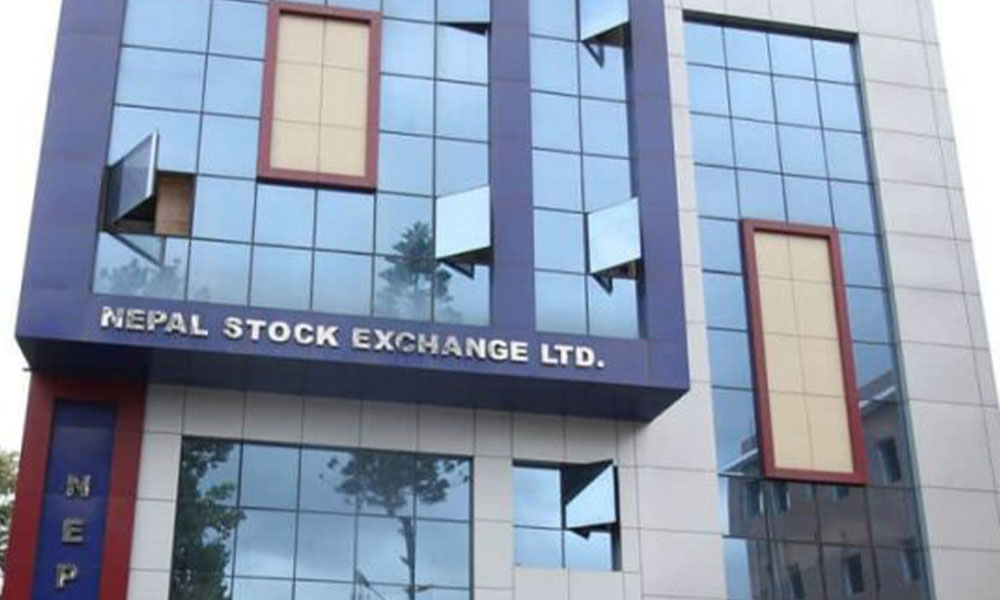
The Nepal Stock Exchange (NEPSE) index declined by 16.38 points on Friday, the final trading day of the week, even as daily turnover increased. A total of 10,847,000 shares of 336 companies were traded, generating a turnover of Rs 4.482 billion. Among the gainers, First Microfinance Laghubitta recorded the highest rise, with its share price surging by 14.81 percent. Shares of Mabilung Energy climbed 9.35 percent, while Bungal Hydro and Ankhukhola Hydropower gained 7.24 percent and 7.20 percent respectively.
Finance Ministry Reports 4K Registered Ventures in National Project Bank
Finance Minister Swarnim Wagle presented an economic status profile to the Development, Economic Affairs and Good Governance Committee of the National Assembly on Friday. Official inventory logs reveal that the cumulative number of projects cataloged inside the National Project Bank reached 4,391 entries after adding 390 new infrastructure schemes. Analytical breakdowns show that 3,909 registered sub-projects are undergoing preliminary feasibility assessments, while 92 are active multi-year ventures. The minister highlighted stable macro-financial indices, including expanded domestic hydroelectricity generation, rebounded international tourist arrivals, high liquidity levels across commercial banks, and foreign exchange reserve asset sheets that cover the country’s import demands.
Nepal’s Trade Deficit Jumps 15% to Rs 1.44 Trillion as Imports Surge
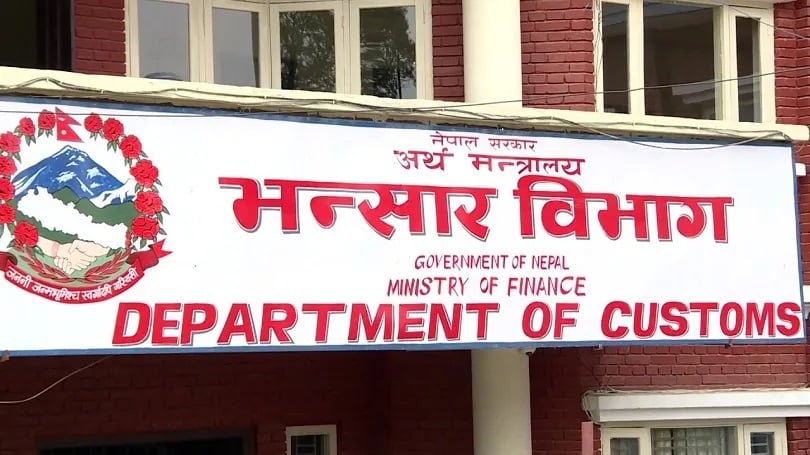
Nepal’s foreign trade grew by 14.75 percent to reach Rs 1.941 trillion during the first ten months of the current fiscal year 2025/26, according to the Department of Customs. However, the country’s trade deficit widened by 14.92 percent, climbing to Rs 1.443 trillion as import growth outpaced export gains. During the review period, imports rose by 14.82 percent to Rs 1.692 trillion, up from Rs 1.474 trillion in the same period last fiscal year. Meanwhile, exports saw a 14.25 percent increase, reaching Rs 248.96 billion compared to last year’s Rs 217.91 billion. Despite the improvement, export volumes remain critically low compared to imports. The ballooning import bill means inbound goods now command a staggering 87.18 percent share of Nepal’s total foreign trade, while the export share has shrunk to 12.82 percent. This imbalance has pushed the import-to-export ratio to 6.80, meaning Nepal currently spends Rs 6.80 on imports for every Re 1 earned from exports.
Electric Vehicle Influx Yields Rs 12.433 Billion National Customs Revenue
The Department of Customs announced that Nepal imported 8,607 completely built electric vehicle units during the initial 10 months of the fiscal year 2025/26, ending on May 14, 2026. The aggregate valuation of the green vehicle fleet hit Rs 20.325 billion, contributing Rs 12.433 billion to the national treasury in customs duties. The import manifests show 2 unassembled and 2,848 completely built units in the 50 kW bracket, 5,025 units in the 51 to 100 kW segment, 723 units in the 101 to 200 kW division, and 9 units in the 201 to 300 kW tier. Additionally, three-wheeled passenger electric vehicles saw high volumes, with 7,785 fully assembled units worth Rs 894.5 million alongside 9,011 unassembled kits worth Rs 936.6 million entering the country.
Customs Bureau Logs Rs 1.941 Trillion External Trade Volume Over 10 Months
Statistical summaries published by the Department of Customs revealed that Nepal conducted external merchandise trade worth Rs 1.941 trillion during the primary 10-month period of the current fiscal year 2025/26, spanning July 17, 2025, through May 14, 2026. Gross import spending hit Rs 1.692 trillion, marking a 14.82 percent spike compared to the Rs 1.474 trillion logged during the matching calendar window of fiscal year 2024/25. Outbound export trade volumes grew by 14.25 percent to settle at Rs 248.96 billion. Despite minor export corrections, the disproportionate import dependency expanded the national trade deficit by 14.92 percent to hit an absolute baseline of Rs 1.443 trillion, forcing imports to claim an 87.17 percent structural share.
Ministry of Foreign Affairs Requests Delay for Developing Nation Status Graduation
The Ministry of Foreign Affairs officially requested the United Nations Committee for Development Policy (CDP) to delay Nepal’s graduation from Least Developed Country status by three years. Foreign Ministry Spokesperson Lok Bahadur Poudel Chhetri announced on Friday that Foreign Minister Shisir Khanal sent a formal letter to the CDP Chairman on May 13, 2026, requesting to postpone the transition from November 24, 2026, to November 2029. The government cited five major challenges: global supply chain shocks from regional conflicts, a sluggish 2.3 percent GDP growth projection by the World Bank, a potential 35 percent loss of manufacturing jobs once duty-free quota-free market access ends, stalled smooth transition strategies, and lower remittance inflows from recent geopolitical tensions in the Middle East.
MCA-Nepal Speeds Up Cross-Border Transmission Line Tower Construction in Nawalparasi
MCA-Nepal accelerated infrastructure works on the 18-kilometer cross-border transmission grid under the Millennium Challenge Corporation (MCC) pact in Nawalparasi (Bardaghat Susta Paschim). Project trackers show that 22 transmission line towers are fully erected out of 53 planned units between Sunwal-13, Suryabasti and the Indian border, with 24 concrete foundations laid. TL Limited India holds the engineering contract, which has two months remaining. Land compensation distribution for the tower footings is complete, while right-of-way payout processing for land under the wires has reached 70 percent. Compensation Committee Coordinator and Chief District Officer Dipak Raj Nepal confirmed direct bank transfers to landholders, while Executive Director Khadga Bahadur Bista noted that the cross-border link will draw power from the 315-kilometer master grid starting at Lapsiphedi to join the New Butwal-Gorakhpur line within 21 months.
NRB Survey Shows Gandaki Province Factory Outputs Drop to 39%
A Nepal Rastra Bank (NRB) economic survey for the first half of fiscal year 2025/26 revealed that the industrial capacity utilization of manufacturing units in Gandaki Province fell to 39.56 percent through January 14, 2026, down from 41.40 percent the previous year. While mustard oil and pharmaceutical outputs rose, processed milk and cigarette production dropped. The National Statistics Office projected a provincial GDP growth rate of 5.01 percent, with service domains contributing 55.35 percent, farming 26.28 percent, and manufacturing 18.37 percent. Agricultural tracking showed a 6.87 percent drop in crop acreage to 392,425 hectares, reducing food crop yields by 7.06 percent. Conversely, local banks maintained Rs 23.162 billion in agricultural credit alongside Rs 28.72 billion in industrial loans, while international tourism fell by 33.2 percent.
IDC Directs Government to Resolve Builder Payment Arrears
The Infrastructure Development Committee (IDC) under the House of Representatives directed the government to resolve pressing challenges faced by domestic construction entrepreneurs during its meeting on Friday. Committee Chairperson Ashish Gajurel urged the state to clear delayed contract payments to prevent developmental standoffs, while lawmaker Mo Phirdosh Alam emphasized prompt monetary clearance. Lawmakers Bodha Narayan Shrestha, Jayapati Rokaya, and Nisha Dangi raised policy concerns regarding infrastructure delays, citing uncoordinated handover processes for a China-built bridge in the Hilsa boundary sector, Hilsa-Simikot road bottlenecks, and inflation. Infrastructure Ministry Secretary Gopal Sigdel committed to policy relief amid rising fuel costs, while Federation of Contractors’ Associations of Nepal President Nicholas Pandey demanded adjustments under public procurement laws due to a 10 percent market price fluctuation caused by global conflicts.
Kaski Imposes 3-Month Ban on Riverine and Mineral Extraction
The District Riverine and Mineral Product Monitoring Committee of Kaski imposed a comprehensive three-month absolute ban on riverine and mineral aggregate extraction spanning the entire district. Committee Coordinator and District Coordination Committee Chief Liladhar Paudel confirmed on Thursday that all mining, collection, and transport operations will remain shut from June 15 through September 16. District Coordination Officer Navaraj Baral announced that specialized police patrols will enforce environmental safeguards under the 2020 statutory guidelines, restricting standard operating hours to 8:00 AM through 6:00 PM prior to the shutdown. The enforcement aims to protect the Phewa Lake watershed, stop tax leakage via mandatory billing checks, and seize delayed ghat inventories for local treasury auctions.
Kowang-Jomsom Road Contract Terminated Over 9-Year Construction Delay
The Beni-Jomsom-Korla Road Project Office issued an official public notice on Friday terminating its Rs 700 million highway construction contract for the 17-kilometer Kowang-Jomsom road segment. Project Chief Tejaswi Sharma confirmed that the joint-venture entity Pappu-Gauri Parvati Koshi & Neupane failed to complete the asphalt paving work despite receiving seven consecutive contract extensions. The final deadline expired 200 days ago on October 11, 2025, leaving 15 percent of the physical layout unbuilt, including critical works around Thasang Rural Municipality, Marpha Rajkhola Bridge, and Puthang Airport. The department invoked Section 59(7) of the Public Procurement Act, 2007, penalizing the non-compliant contractor 0.05 percent of the gross value while initiating fresh liquidation bidding.
Nepal Chamber of Commerce Criticizes Sudden Public Transport Registration Halt
The Nepal Chamber of Commerce issued an official press release on Friday opposing the Department of Transport Management’s sudden freeze on new public transport vehicle registrations, including electric models. Chamber President Kamlesh Kumar Agrawal warned that the unannounced freeze puts auto dealers at financial risk. Many had used bank loans to open Letters of Credit for fleet units that are now stuck at customs warehouses, in transit, or on factory floor queues. Recalling the loss of market trust from similar vehicle import freezes during COVID-19, the business group warned that the sudden change disrupts banking investments, public transport expansion, and state customs collections, urging immediate clearance for shipments that had prior import approvals.
Vaidya Elected FNCCI Senior Vice President
Sur Krishna Vaidya secured the senior vice president seat of the Federation of Nepalese Chambers of Commerce and Industry (FNCCI) during an internal executive committee vote on Friday. Official counting charts show that Vaidya won 56 votes, beating rival candidate Ram Chandra Sanghai, who received 30 votes. Concurrently, the organization held its executive treasurer selection, where Manish Lal Pradhan won the financial leadership seat with 61 votes. Challenger Ambika Poudel finished second with 25 votes. The newly formed executive leadership team will focus on driving policy advocacy, resolving current merchant sector credit issues, expanding industrial output, and strengthening corporate partnerships between corporate boardrooms and state ministries.
Kalanga Launches Public Share Subscription Tranche
Kalanga Hydro Company opened its initial public offering subscription portal for the general public on Friday. The regular public issuance forms the final block of a Rs 490 million fundraising campaign representing 35 percent of the company’s Rs 1.40 billion total issued capital, following prior distributions of 1.4 million shares to project-affected locals, 350,000 shares to migrant laborers, 195,000 shares to mutual funds, and 105,000 shares to staff. Issue manager Sanima Capital opened the remaining 2,870,000 shares at a par value of Rs 100 per unit. Retail investors can apply for a minimum of 10 units up to a maximum ceiling of 20,000 units via the C-ASBA network or MeroShare software before the early closing date of May 27.
Gold Prices Dip Slightly, Silver Rises in Domestic Market Today
The price of gold saw a slight decline in the market today, while the price of silver recorded an increase. According to the Federation of Nepal Gold and Silver Dealers’ Association, the price of gold dropped by Rs 100 per tola (11.66 grams) today, with fine gold currently trading at Rs 293,700 per tola. On Thursday, gold was traded at Rs 293,800 per tola. Meanwhile, silver prices registered an upward trend today. The Federation reported that the price of silver increased by Rs 65 per tola, bringing its trading price to Rs 5,115 per tola. Prior to this, silver was traded at Rs 5,050 per tola on Thursday.