Kathmandu
Thursday, July 23, 2026






KATHMANDU: Nepal News presents today’s snapshot of Nepal’s economic activities. Get quick updates on major market movements, policy shifts, and financial developments shaping the economy of Nepal. Here are the key economic highlights for today:
NEPSE Gains 27.85 Points, Turnover Nears Rs 6 Billion
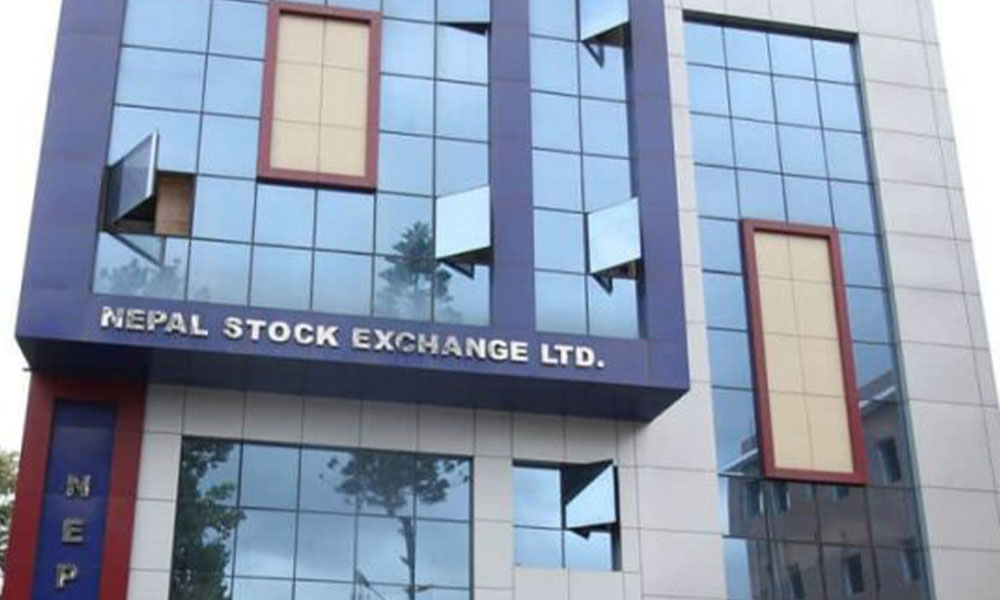
The Nepal Stock Exchange rose by 27.85 points on Monday, ending at 2,786.35 as investor activity and trading volume strengthened at the start of the week. Daily turnover climbed to Rs 5.986 billion with more than 14.54 million shares of 342 companies traded through 74,856 transactions. Share prices of 235 companies advanced, while 28 declined and seven remained unchanged. Among sectoral indices, hydropower gained 1.50 percent, manufacturing and processing rose 1.35 percent, hotels and tourism increased 1.02 percent, and microfinance added 0.99 percent. The mutual fund group was the only sector to decline, slipping 0.20 percent.
SEBON Prepares Lock-In Extension to Stop Premature Capital Exits
The Securities Board of Nepal (SEBON) finalized structural preparations today to extend the mandatory lock-in period for Private Equity and Venture Capital (PEVC) funds to protect general investors. The regulatory revision targets PEVC funds that heavily exploit the existing short one-year lock-in framework to dump shares and exit listed entities primarily in the hydropower sector immediately after initial public offerings (IPOs), whereas standard promoters, local project-affected residents, and corporate employees face a mandatory three-year restriction. A dedicated study committee has already submitted a formal review report detailing how these rapid capital withdrawals dump overvalued shares onto the secondary market, and SEBON intends to legally formalize the extended lock-in timeline immediately following the appointment of its new executive chairperson.
Land Ministry Financial Arrears Reach Rs 13 Billion
The total outstanding financial arrears under the land administration wing of the Ministry of Land Management, Cooperatives, and Federal Affairs reached Rs 13.247 billion. During a formal presentation before the Public Parliamentary Accounts Committee today, ministerial secretariats confirmed that Rs 7.12 billion requires bureaucratic regularization, Rs 6.03 billion is slate for direct recovery, and Rs 125.6 million remains stuck in advanced payments. The Land Management and Archive Department and its branch land offices account for 99 percent of the total arrears principally driven by 36 percent income tax evaluation disputes on commercial real estate transactions and an uncollected Rs 1.97 billion fine mapped to 18314.38 square meters of encroached public land along the Dhobi Khola Corridor in Chabahil, Kathmandu.
Industrial Registrations Hit 654 Units with Rs 447 Billion Investment
A total of 654 new industrial plants were officially registered in the country during the first nine months of the current fiscal year 2025/26, marking a sharp recovery in domestic corporate expansion. Statistical ledgers published by the Department of Industry today show that the newest registrations brought in a massive proposed capital investment totaling Rs 447.75 billion, with a corporate projection to generate 33,168 new manufacturing jobs. The current data shows an upward momentum compared to the 700 total industries registered during the entirety of the last fiscal year. This newest wave pushes the cumulative historical count of registered domestic industrial operations to 11,010 units, commanding an overall lifetime proposed investment of Rs 3.727 trillion and a total employment projection of 785,000 jobs.
Bankers Association Submits Proposals Demanding Corporate Tax Slashing
The Nepal Bankers’ Association officially submitted a comprehensive list of financial reform recommendations to the government today for inclusion in the upcoming fiscal budget. To strengthen the banking ecosystem, the association demanded that corporate income tax rates for financial institutions be slashed from 30 percent down to 25 percent to match alternative commercial sectors. The lobby group urged the state to lower individual deposit interest tax from 6 percent to 5 percent and adjust the 1 percent entry-level income tax bracket to a minimum ceiling of Rs 1 million while capping the peak 39 percent tax rate at 25 percent. Furthermore, the guidelines advise the central bank to replace the standard 15 percent legal interest benchmark with timely market-based bank rates, reduce tax reassessment windows from four years to two years, and raise institutional tax-exempt donation limits from Rs 100,000 to Rs 500,000.
Informal Economy and Financial Irregularities Deepen Concerns in Madhesh
A new study by Nepal Rastra Bank has revealed that a large share of Madhesh Province’s economy continues to operate through the informal sector, fueled by unchecked cross-border trade and weak financial regulation. The report estimates Madhesh’s GDP at Rs 863.33 billion with economic growth of just 1.31 percent in fiscal year 2025/26, while per capita GDP stands at USD 934. Agricultural land used for vegetable farming rose 45.24 percent, though food grain and cash crop cultivation declined. Separately, the Auditor General reported Rs 1.87 billion in financial irregularities in Madhesh, the highest among all provinces. Outstanding irregularities have climbed to Rs 10.98 billion, with the Ministry of Physical Infrastructure Development accounting for nearly 60 percent of the total.
Karnali Capital Budget Expenditure Slumps Below 22% Over 10 Months
The Karnali Province government recorded critical delays in its development portfolio, spending just 29.3 percent of its total annual budget during the first 10 months (July 17, 2025 to May 14, 2026) of the current fiscal year 2025/26. Financial performance reports from the Provincial Comptroller Office confirmed that out of a total Rs 32.996 billion allocation, only Rs 9.635 billion was utilized, with capital expenditure trailing at a weak 21.53 percent compared to a 41.37 percent utilization for recurrent operational costs. The Ministry of Physical Infrastructure and Urban Development, which commands the largest development pool of Rs 10.731 billion, spent only 21.43 percent or Rs 2.229 billion, while the Ministry of Land Management, Agriculture, and Cooperatives used just Rs 520.2 million out of its Rs 2.571 billion budget.
338 Local Units Complete Mandatory National Land Classification
A total of 338 local units across Nepal successfully completed their comprehensive land-use classification programs by April 13 to enforce the Federal Land Use Act. Official tracking datasets published by the Ministry of Land Management, Cooperatives, and Federal Affairs confirm 169 local governments finalized specific zoning metrics, map updates, and parcel-by-parcel records, while 15 local units completed targeted agricultural sector assessments. Concurrently, 134 local bodies are updating digital parcel maps, and 50 units are compiling basic classification criteria, leaving only 47 local units that failed to initiate field operations. The federal government has fixed an absolute statutory deadline of July 16 for all remaining local governments to finish the zoning classifications to preserve agricultural fields, minimize fragmentation, and manage urban development.
Experts Advise Government to Enforce 50% Tobacco Tax
Health policy analysts and economic researchers urged the government during a national convention today to implement rigorous tax increases on tobacco, alcohol, and sugary beverages in the upcoming 2026/27 fiscal budget. Financial statistics presented by the Nepal Development Research Institute show Nepal maintains South Asia’s lowest tobacco tax rate at just 41 percent, causing massive long-term public health costs from cardiovascular diseases and cancer. Pointing out that routine 3 to 5 percent annual tax adjustments fail to curb consumption, policy experts advised a progressive tax strategy to push tobacco duties to 50 percent by 2035 to actively reduce utilization rates among youth, boost revenue reserves, and insulate the state from soaring healthcare burdens.
60K Migrant Workers Shift from Gulf to European Labor Sectors
Nepal’s foreign employment demographic shifted heavily toward European markets during the first 10 months (July 17, 2025 to May 14, 2026) of the current fiscal year 2025/26, with 60,439 youths securing official labor permits for six European nations. Data compiled by the Department of Foreign Employment showed 28,594 workers migrated to Romania, 14,000 to Croatia, 7,348 to Portugal, 5,239 to Malta, 6,539 to Cyprus, and 1,700 to Austria, marking a sharp increase from the 45,273 permits recorded during the same timeframe last year. Out of the total European labor cohort, 57,948 individuals migrated via individual visas while only 2,451 went through institutional manpower channels. This reliance on private consultancies has driven personal recruitment costs to fluctuate between Rs 700,000 and Rs 1.6 million per individual due to a lack of bilateral government oversight.
Lack of Coordination Causes Rs 65.9 Million Pipeline Damage in Kathmandu
The Office of the Auditor General’s 63rd annual report revealed today that a total lack of coordination among public utility offices caused Rs 65.9 million in physical destruction to drinking water pipelines across the Kathmandu Valley. Institutional damage audits show construction machinery from the Nepal Electricity Authority caused Rs 16.7 million in pipe ruptures, the Department of Roads inflicted Rs 20 million, the Lalitpur Metropolitan City caused Rs 11.2 million, and alternative entities accounted for Rs 17.1 million in unrecovered losses. Additionally, the federal audit questioned the state’s failure to recover Rs 2.599 billion in performance guarantees from a canceled wastewater treatment plant contract in Kodku, Sallaghari, and Dhobighat that was originally signed with a foreign firm for Rs 3.469 billion.
Public Procurement Ordinance Forbids Infrastructure Project Shutdowns During Disputes
The government enacted a structural amendment to the Public Procurement Act of 2006 through a new legislative ordinance today, legally prohibiting the shutdown of ongoing public infrastructure developments due to contractual disputes. The statutory addition of Section 58(A) mandates that parallel construction work must continue uninterrupted while alternative dispute resolution mechanisms, arbitration, or court proceedings resolve disagreements regarding site availability, land acquisition, variation orders, or payment delays. Procurement legal experts noted the guideline removes historical trends where regulatory blocks or parliamentary committees brought projects to a complete halt for years. The rule permits structure-specific pauses only for fundamental engineering design failures, meaning that 90 percent of non-technical contract disputes will no longer delay development, and non-compliant contractors face immediate legal prosecution.
Valley Traffic Police Penalize Over 2K Drivers, Collecting Rs 1.1 Million in 24 Hours
The Kathmandu Valley Traffic Police Office penalized 2,453 motorists during a coordinated 24-hour enforcement operation conducted between Sunday morning and Monday morning, May 24 to May 25. The comprehensive traffic crackdown successfully generated Rs 1,151,000 in state revenues from monetary fines. Official enforcement logs show citations were issued to 105 drivers for driving under the influence (DUI), 238 for illegal ride-sharing operations, 184 for red-light violations, 186 for speeding, 14 for lane breaches, 100 for sidewalk encroachment, 119 for unauthorized horn usage, 139 for one-way violations, and 1,368 for alternative regulatory offenses.
Construction Accelerates on Butwal-Palpa Highway Tunnel for October Launch
The construction of the ongoing tunnel project along the Butwal-Palpa section of the Siddhartha Highway has intensified to meet an operational launch deadline of October. Implemented under the Engineering, Procurement, and Construction (EPC) model, the five-year project transfers entire design and execution liabilities directly to the contracted firm, which will manage maintenance and security for five subsequent years followed by a five-year Latent Defect Liability Period (DLP). Project tracking metrics confirm the infrastructure development has achieved 68 percent physical progress and 58 percent financial progress. While the initial fiscal blueprint estimated an investment of Rs 10 billion, competitive bidding successfully lowered the final contract value to Rs 7 billion to bypass historical land-clearing delays and secure safer transit across landslide-prone zones.
126 MW Lower Seti Hydropower Project to be Built in Tanahun
The 126 MW Lower Seti Hydropower Project is set to be developed in Tanahun with an estimated investment of USD 227 million from the Asian Development Bank. Project Chief Hari Kumar Shrestha said the project financing will consist of 30 percent equity and 70 percent loan investment. The semi-reservoir project’s dam will be located in Bandipur-6 and Devghat Rural Municipality-3, while the powerhouse, staff quarters, and main tunnel will fall within Devghat Rural Municipality-3 and 4. Authorities have already started the land acquisition process for around 74,274.99 square meters needed for the construction of the powerhouse and staff quarters.
Swabhimaan Microfinance Withdraws Recommended 10% Shareholders Dividend
The Board of Directors of Swabhimaan Microfinance completely reversed its previous earnings distribution plan today, declaring that no dividends will be issued to shareholders for the elapsed fiscal year. The financial turnaround occurred during an emergency board meeting on May 22, which canceled a prior February 27 corporate proposal that earmarked a 10 percent total dividend payout split between 9.5 percent bonus shares and a 0.50 percent cash component. The microfinance institution clarified that compulsory fiscal revisions, regulatory adjustments, and auditing corrections mandated by the Nepal Rastra Bank made it legally and technically impossible to maintain the initial payout structure while preserving core financial stability metrics.
Gold Traded at Rs 292,800, Silver Rs 5,150 Today
Gold and silver prices saw a significant increase in the local market today. According to the Federation of Nepal Gold and Silver Dealers’ Association, the price of fine gold has increased by Rs 1,900 per tola (11.66 grams). Gold, which was traded at Rs 290,900 per tola on Sunday, has been fixed at Rs 292,800 for today. Similarly, the price of silver has gone up by Rs 40 per tola. Silver was traded at Rs 5,010 per tola on Sunday and has been priced at Rs 5,150 for today.
India’s 4 Fuel Hikes in 10 Days Threaten Nepal’s Inflation Risk
State-owned oil marketing enterprises across India implemented an immediate domestic retail fuel price hike today to cushion rising international crude oil procurement costs. Petroleum pricing metrics confirm petrol rates rose by INR 2.61 per liter and diesel by INR 2.71 per liter, pushing retail pricing in the capital city of New Delhi to INR 102.12 per liter for petrol and INR 95.20 per liter for diesel. The market adjustment marks the fourth fuel price shock within this May, following distinct hikes on May 15, May 19, and May 23, which drove retail petrol rates across Mumbai, Kolkata, and Chennai to fluctuate between INR 107 and INR 113 per liter. Because Nepal imports 100 percent of its refined petroleum products directly from Indian corporate suppliers, this upward fiscal trend is expected to trigger a corresponding rise in domestic transport costs and fuel prices across Nepal.