Kathmandu
Tuesday, July 28, 2026





Even as Nepali cinema gains international recognition, its lack of diversity behind the camera is perpetuating harmful, age-old stereotypes on screen.
KATHMANDU: Art is born in the process of expressing our feelings and ideas through various words, sounds, pictures, visuals, or symbols. Art represents our private and collective emotions and perceptions. Through this very process, meaning is constructed and reproduced through art.
In this practice, how a specific person or community is portrayed in any medium of art is linked to power and ideology according to the social structure. Therefore, such representation is never neutral. It is on this foundation that debates on representation in various artistic mediums are ignited, leading to differing opinions for and against.
In the context of Nepali cinema, concerns and anxieties have also been raised regarding the portrayal and representation of marginalized genders, castes, religions, groups, and communities. In these debates, the old argument of “art for art’s sake” versus “art for society’s sake” frequently surfaces.
Analyst Anup Subedi states that relations, events, and experiences embedded in art, literature, or cinema represent society in one way or another. “When talking about films, the stories shown in them are the stories of people living in society,” Subedi says. “A person is never alone; they are interconnected with others. How a film shows that relationship and how it views a character determines representation. Representation is fundamentally a matter of perspective.”
Starting as a tool for promoting the Panchayat system, early Nepali cinema championed state-controlled ideology. Commercial cinema only began to be made after the political changes of 1990. However, the cinemas of that phase were crude ‘remakes’ of Indian cinema in all aspects—including story, subject matter, structure, presentation, and character portrayal.
Limited strictly to entertainment, those films were insensitive toward women, Dalits, indigenous groups (Janajatis), and people with disabilities. Instead of contributing to a realistic portrayal or transformation of society, those films rejoiced in stereotypes. They restricted minority communities to villains or jokers. Female roles were shrunk down to merely domestic, weeping, or glamorous characters.
Analyst Subedi says, “At one time in Nepali films, the villain’s henchmen were mostly made to have Mongolian faces. Later, the main villain himself was made Mongolian. Now, that has broken down a bit.”
Actor Najir Husen says, “Previously, there was a trend where only people with fair skin and a specific look were considered heroes. Mongolian faces were typecast as villains, and Madhesi faces as comic characters.”
He states that this is changing now, and the audience has also started accepting artists from all communities as actors and actresses. He considers this to be a major achievement.
“Stereotypes about marginalized communities have existed in society for a long time,” says writer and activist Sanjeev Uprety. “When art and literature portray these communities, creators must be conscious so that they do not repeat the existing stereotypes.”
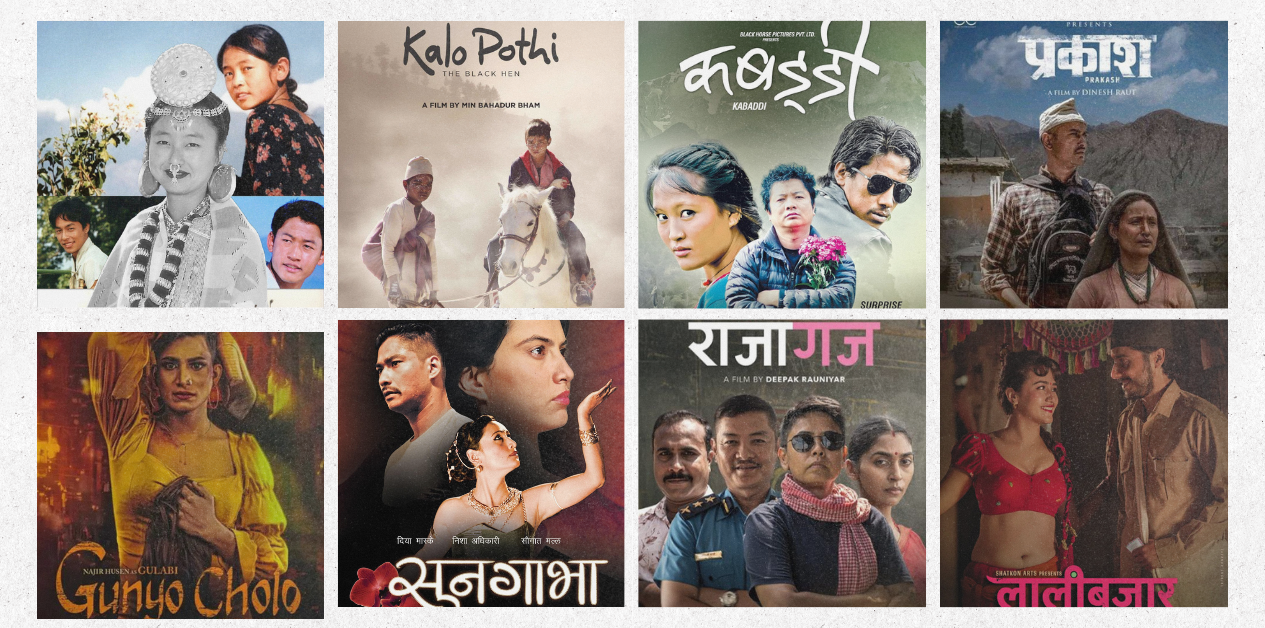
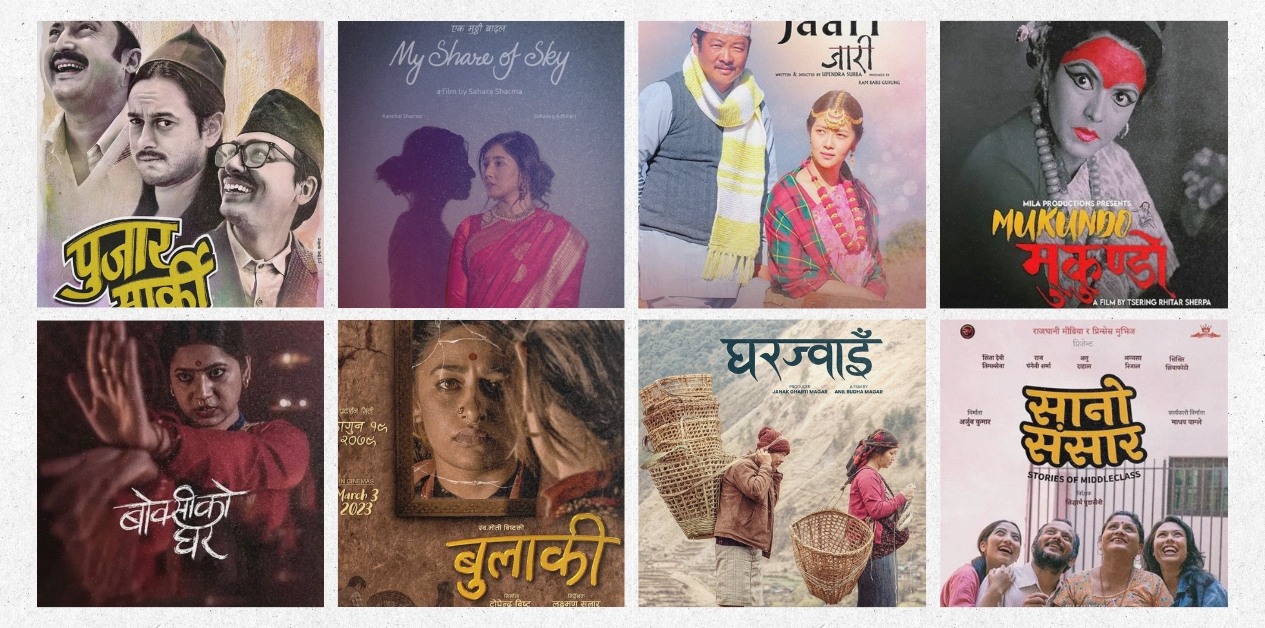
Over the past decade and a half, following the production of films like Numafung , Loot , and Mukundo , stories and characters reflecting Nepal’s own society, geography, and culture began appearing in Nepali cinema. After the People’s Movement of 2006, and particularly due to the impact of the Maoist armed conflict and constitutional debates, there was an increase in stories coming from marginalized communities and regions, including indigenous groups, Madhesis, women, Karnali, and the Far-West. In the subsequent phase, Nepali cinema began receiving praise for portraying original presentations and social diversity more sensitively than before. Nepali cinema also began claiming its identity on international platforms.
The cultural impact of political change is being found not only in the artistic films made today but also in commercial cinema. Nevertheless, allegations that Nepali cinema is still failing when it comes to the question of representation have not stopped.
The latest example of this is Lalibazar , which is currently screening. The production team of Lalibazar , directed by Yam Thapa, claimed it portrayed the struggle of Badi women. However, some representatives of the Badi community were not only hurt, stating that it injured their self-esteem, but they also filed a lawsuit. The screening of Lalibazar was even halted by the court for some time.
Prior to this, in 2018, the same community had approached the court against Pandit Bajeko Lauri , directed by Deepak Oli, which was also produced on the story of the Badi community.
In August 2007, while the Badi community was protesting in Kathmandu, content aired on Nepal Television’s Jire Khursani and Kantipur Television’s Postmortem program implied, “Why pay models to show their bodies when Badi women are available?” This content faced severe criticism at the time.
The recurring issue of representation
“The main reason for this is the insensitivity of those who tell the stories or make the movies. When we tell someone’s story, we must be sensitive toward those to whom the story is connected,” says Shanta Nepali, director of Dhey Dreams . “However, sometimes even with good intentions, the process can be wrong.”
Actor Husen believes that creators also fail because reality is not shown as it is in cinema, but is instead exaggerated.
Actor Husen, who has performed various roles ranging from Madhesi to transgender characters, says that he personally is always sensitive.
“Being sensitive as an artist is a learning process. While living in various characters, my personal effort is to avoid distorting their culture, social structure, and lifestyle as much as possible,” he says.
Samudra Bhatta, director of Gunyo Cholo , a film made about the transgender community, says, “In many films, sexual minorities are portrayed as bad, helpless, or as fillers. In Gunyo Cholo , I wanted to show their self-esteem. But for that, I met many people from that very community and tried to understand their feelings and perceptions.”
Director Nepali says it is positive that recent films have made people realize that their own culture, rituals, and daily lives can also become stories. She adds that understanding has grown that audiences also want to watch such stories.
However, she objects to the trend of selling ‘sympathy’ through marginalized stories, making ‘melodramas‘, and making suffering ‘saleable’. She states that the story of any community should not be made purely from a market perspective. From casting artists to presentation, if everything is done solely for commercial reasons, it raises questions about the intent itself. She says, “The current situation is just like that.”
Analyst Subedi states that when weak communities of society are repeatedly portrayed negatively in the name of representation, it creates a permanent image of them.
“That pinches them more. It is from that sensitivity that protest responses like stopping films or burning books are seen,” he says.
In the Nepali film industry, artists, producers, and directors who came from a television serial background hold a strong presence today. In the past, those coming from many television serials like Hijo Aajaka Kura , Tito Satya , Meri Bassai , and Twakka Tukka have achieved great success in cinema. Yesterday, in the name of making the audience laugh on television, they used to demean short, fat, and disabled characters, while belittling minorities including Madhesis and women. Today, some of them are continuing similar presentations in a new way within cinema as well. This also seems to repeat the same images, same symbols, and the same problems in mainstream cinema.
This practice of stereotyping across radio, television, newspapers, and cinema is a global problem. From the portrayal of Black communities in Hollywood to the portrayal of Tamils, Muslims, or other minorities in Bollywood, numerous deliberations and creative interventions have taken place to correct these errors.
In this process, the concept of “telling one’s own story by oneself” is growing stronger. This practice is considered effective for social empowerment. Such stories are also ‘authentic,’ lacking an ‘outsider’s gaze.’
“I also want to tell the stories of other communities, but I haven’t written them because I feel I might not be able to do justice to them,” says writer Uprety. “If anyone is portrayed incorrectly, such representation is a form of violence in itself.”
A discussion from a story pitch session held recently in Kathmandu is relevant here. Prasuna Dongol, director of the documentary Dolpa Diary , wrote on her Facebook, “Yesterday, one thing made me really uncomfortable. I participated in a film pitch program where most of the filmmakers presenting women’s stories were men. That in itself is not the problem. Stories must be told even by going beyond the boundaries of experience. But, what worried me was that in many pitches, the depth, research, empathy, or real-life experience demanded by the story was missing. I was already disappointed. For context, I am a person who stands for women, but I do not hold the belief of hating anyone or dismissing their perspective just because they are men.Then the organizers called the entire organizing team to the stage. There were 12 men. If we are still standing in the year 2026 and seeing all-male panels, all-male organizing teams, and mostly male ‘gatekeepers‘ deciding how women’s stories should be told, then perhaps we haven’t moved as far forward as we think. And honestly, this should worry us all.”
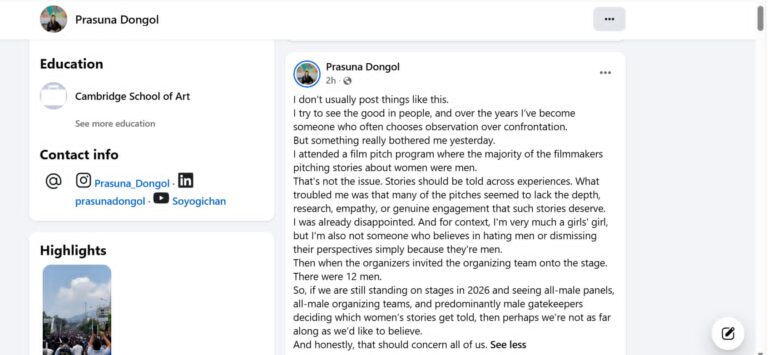
This comment by director Dongol forces one to think about the ongoing debate on representation within the Nepali cinema sector. It indicates that for representation inside the screen of Nepali cinema to appear balanced, there is a need for balance in many activities behind the screen as well.