Kathmandu
Monday, June 22, 2026





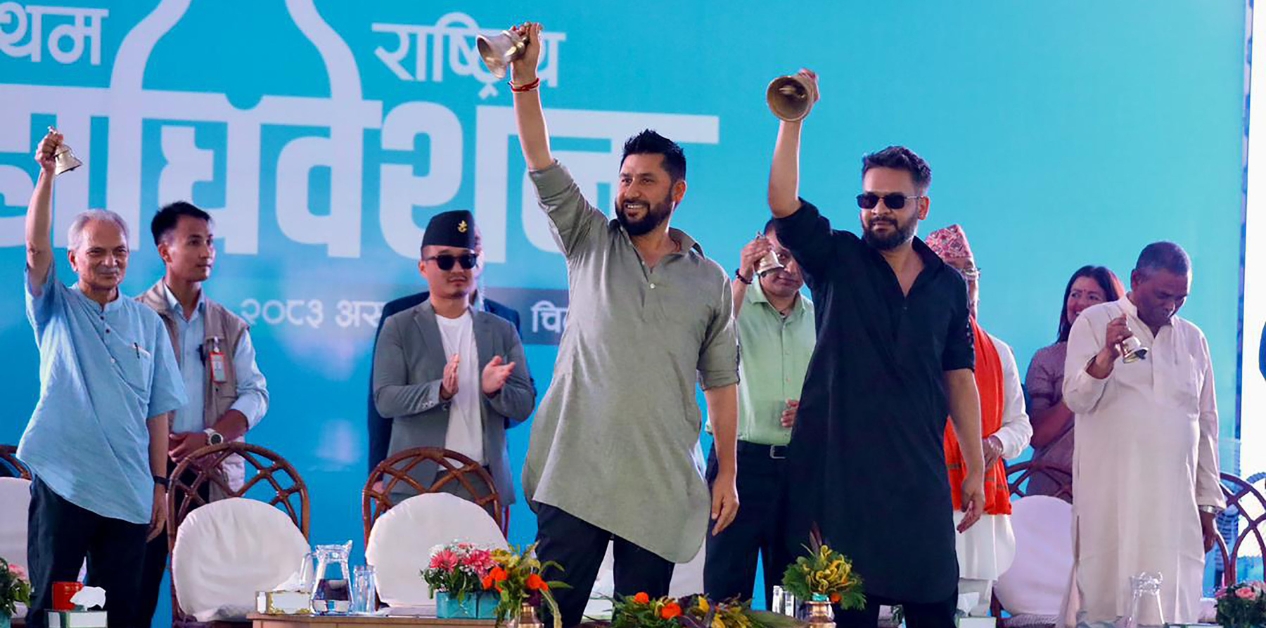
CHITWAN: Ahead of its first historic National Convention, the Rastriya Swatantra Party (RSP) has extensively amended its party statute to strengthen its grassroots organizational structure and ensure diverse representation across all communities.
Passed during a Central Committee meeting held in Bharatpur, the newly revised provisions place gender and regional inclusivity at the forefront of the party’s upcoming leadership framework.
According to Ganesh Parajuli, a member of the Statute Amendment Committee, the new rules mandate the participation of women and marginalized communities at every tier of the party, including a binding requirement that at least one woman serve as Vice President.
Under the overhauled structure, RSP’s Central Committee will expand to a 151-member body, featuring a combination of elected and nominated positions designed to balance representation.
While the Party President and 99 central members will be chosen through a direct election process, the President will nominate the remaining 51 members to maintain a comprehensive inclusive balance across various regions and communities. The elected leadership ranks will comprise the President, three Vice Presidents (including at least one woman), two General Secretaries, and five Joint General Secretaries (including at least one woman).
Additionally, the party will nominate a Treasurer, two Joint Treasurers, a Spokesperson, and three Joint Spokespersons, while the party presidents from all seven provinces will automatically serve as ex-officio central committee members.
The amendments also significantly expand the President’s executive authority to foster internal adjustment and balance. In a shift from the previous practice where only the Treasurer and Spokesperson were presidential appointees, the President has now been granted the power to directly nominate one Vice President, one General Secretary, and two Joint General Secretaries.
To ensure strong regional diversity, 35 of the 99 directly elected central members will be drawn equally from all seven provinces, with a mandatory requirement of at least two women from each province.
Furthermore, tailored to provincial demographics, the statute guarantees the reservation of at least one Janajati seat each for Gandaki and Koshi provinces, one Dalit seat each for Sudurpashchim and Koshi, one Tharu seat for Lumbini, and one Madhesi Dalit seat for Madhesh Province. A permanent Central Committee seat has also been secured for a Senior Leader to honor exceptional contributions to the party.
The grand opening of this landmark convention commenced on Sunday at the Guest House Chaur in Chitwan, and the closed sessions are currently underway at the Chitwan Association of Industries Exhibition Center.
As delegates gather to hammer out the party’s new policies, core ideology, and future organizational direction, the formal election process to choose the new leadership is scheduled to begin the following day. Political analysts across Nepal are closely monitoring the event, viewing it as a critical turning point that will map out RSP’s long-term ideological and strategic path.