Kathmandu
Monday, June 22, 2026





The largest investigation in the telecommunications sector regarding the case where a single group benefited from the asset transfer and auction of Smart Telecom.
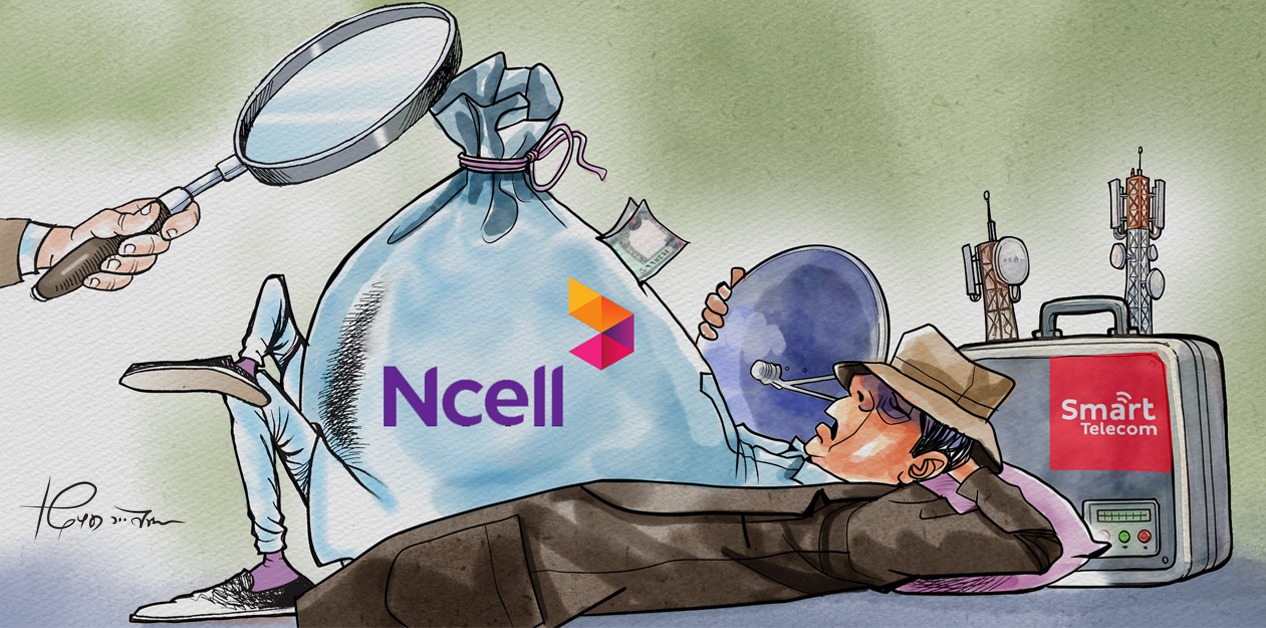
KATHMANDU: A suspicious relationship has been revealed between Ncell, a private sector telecommunications service provider, its major investors, and political leadership in the Smart Telecom case, where assets were controversially auctioned off following the revocation of its license. According to the investigation conducted by the Central Investigation Bureau (CIB) of the Nepal Police, the Smart Telecom case is not limited to the failed story of a company whose license was revoked; rather, Ncell appears to be the primary beneficiary of the sale of Smart’s assets.
The chief of the CIB, Additional Inspector General of Police (AIG) Manoj Kumar KC, states that the investigation into the sale of Smart’s assets is ongoing, and it is impossible to predict how long it will stretch. “In a situation where no individuals are in custody, the investigation can get prolonged,” he says.
Currently, the investigation is examining Smart Telecom’s share sales, shareholding history, bank loans, asset transfers, and various transactions linked with Ncell. As the police investigate Smart Telecom, its shareholders, asset management, equipment sales, and financial relationships tied to Ncell, new facts have surfaced.
Legally, after the revocation of the license, the assets and infrastructure of Smart Telecom should have come under the ownership of the Nepal Telecommunications Authority (NTA)—meaning the Government of Nepal. However, the CIB has concluded that due to the negligence of high-ranking officials in the Authority and the government, Ncell illegally auctioned Smart Telecom’s assets.
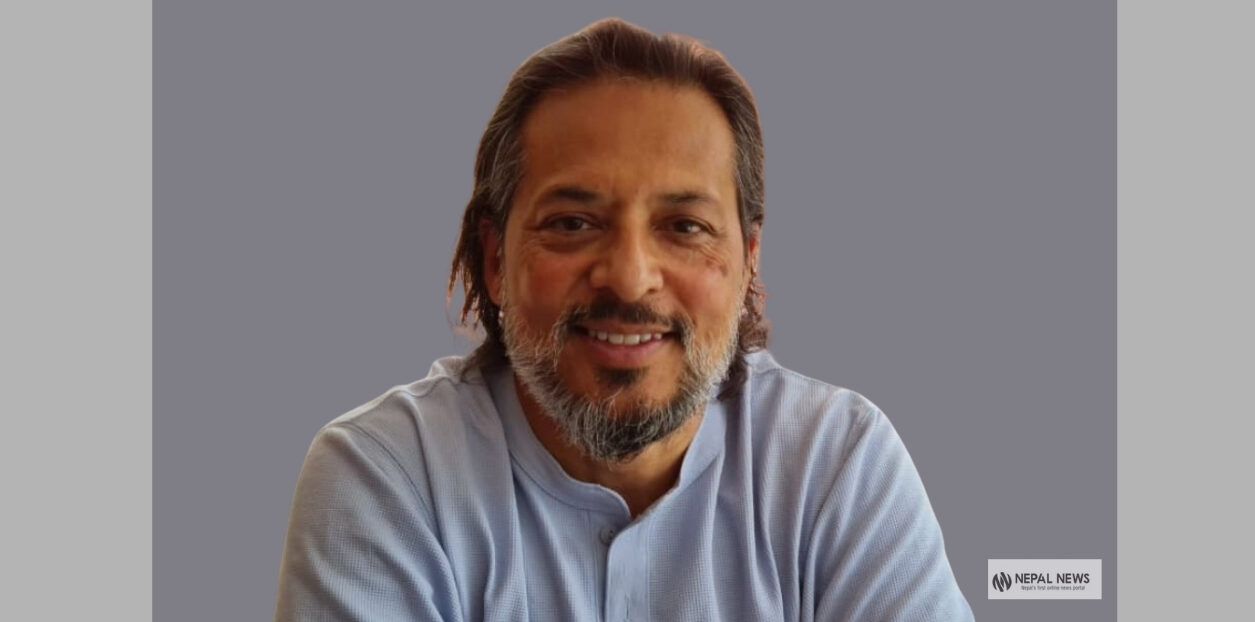
According to the CIB, a relationship between Smart Telecom and Ncell is visible even before the asset auction process. Based on this, some high-level individuals connected with Ncell have also been brought into the scope of the investigation. The CIB has investigated Ncell’s Nepal-based directors—Satish Lal Acharya, Bhawana Singh Shrestha, and Sachin Lal Acharya—in connection with Smart’s asset auction case. Sachin is Satish’s brother, and Bhawana is his wife. In Ncell Nepal, Satish is the Chairman and Sachin is a member of the Board of Directors. Bhawana is also associated with Ncell’s ownership structure.
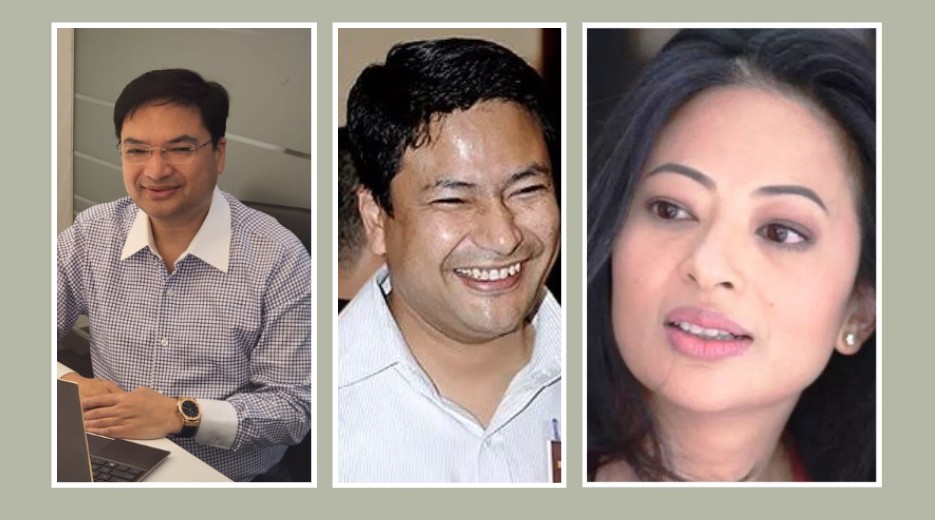
Satish Lal Acharya, Sachin Lal Acharya, and Bhawana Singh Shrestha.
Satish and Bhawana, who are of Nepali origin, hold Singaporean citizenship. They are involved in telecommunication services both in Nepal and abroad and are currently absconding. In connection with the Smart Telecom auction case, the police arrested Palina Shrestha, director of Transtech Company; Jyoti Prakash Pandey, Chief Executive Officer (CEO) of Nepal Investment Mega Bank; Sarvesh Joshi, director of Smart Telecom; and Narendra Ulak. Pandey and Joshi were released by the Supreme Court. The police have released Joshi and Ulak on personal recognizance bail.
The investigation shows that the contemporary political leadership was involved in providing benefits during the ups and downs of Smart Telecom. It appears that favorable decisions regarding Smart’s license and the payments due to the government were made directly by the Council of Ministers. The CIB is preparing to write to the Commission for the Investigation of Abuse of Authority (CIAA) to investigate those decisions and decision-makers. “We investigate matters that fall within our jurisdiction, and for matters that do not, we write and send them to the CIAA,” says AIG KC.
The connection between the two companies
Ncell’s Nepal-based directors Satish Lal Acharya, Sachin Lal Acharya, and Bhawana Singh Shrestha were previously with Smart Telecom.
Smart Telecom Pvt. Ltd. received its license from the Telecommunications Authority in 2013 and started telecom services in Nepal under the name Smart Cell. The company’s investment structure consisted of 80% foreign and 20% Nepali investment. The main investors in Smart Telecom were Satish Lal, Sachin Lal, Bhawana, and Sarvesh Joshi. Foreign companies such as Lal Sahu Distribution Pvt. Ltd., Square Network Pvt. Ltd., River Road International Limited, Gilat Satellite Networks, Casco Investment Limited, and Lal Sahu Holdings Limited Singapore were found to be connected to it.
Smart Telecom’s assets were auctioned by Nepal Investment Mega Bank (NIMB) on October 6, 2025. Ncell accepted the said auction for Rs 4.60 billion. In other words, Satish Lal and his associates brought the assets of a company previously owned by them back into their own hands.
Smart had taken a loan of Rs 1.06 billion from NIMB. After the company failed to pay the principal and interest, it turned into a non-performing loan. Taking action for loan recovery, the bank evaluated the total assets of Smart Telecom and transferred them to Ncell through the auction process.
The police focused their investigation in that direction after the connection of Ncell’s investors to Smart Telecom was established. In this process, the primary point of investigation in the Smart Telecom case appears to be the share transfer process. The transfer of Smart’s assets is seen to have taken place on April 11, 2016. The investigation shows that Bhawana Singh Shrestha sold Square Network Pvt. Ltd.’s shares in this telecom to Sarvesh Joshi.
Following that, the investigation shows that Shrestha entered Ncell by taking a 20% stake through her company, Sunivera Capital Ventures Pvt. Ltd. For this reason, the CIB stated that the relationship between Smart-Ncell investors, the investment structure, and beneficiary identification has been kept at the center of the investigation. “We are investigating all aspects, including whether the series of transfers were ordinary commercial transactions or whether they laid the foundation for major telecom transactions that took place later,” says AIG KC.
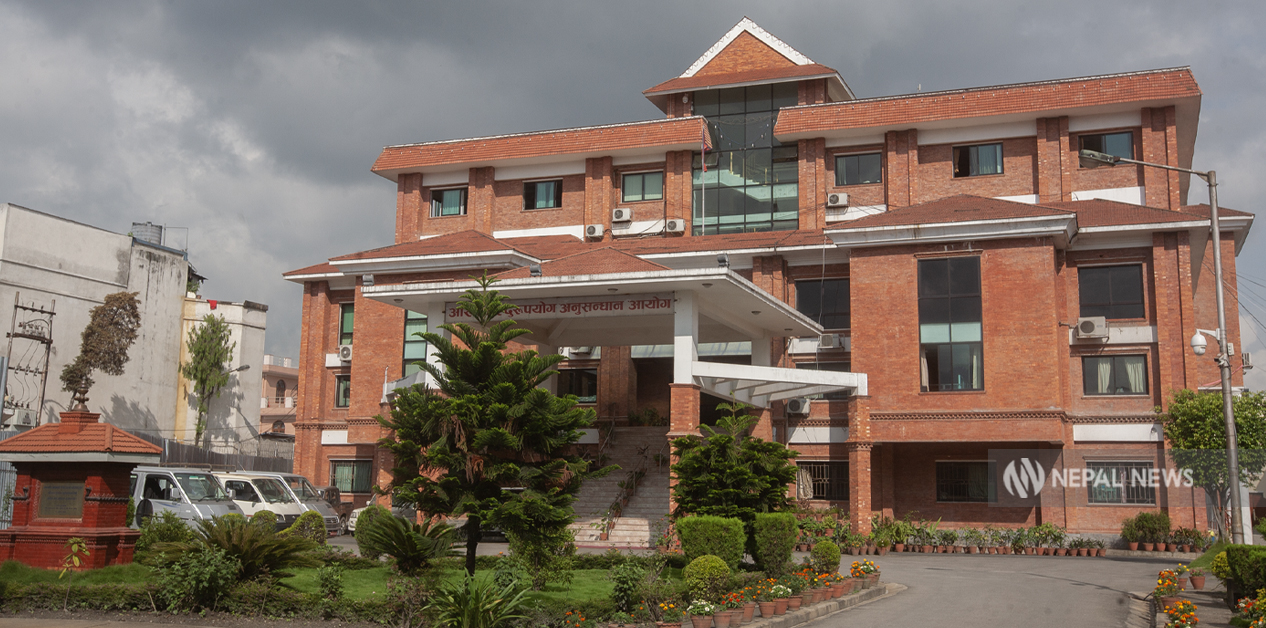
Central Investigation Bureau
On October 6, 2025, details were made public that Ncell had purchased Smart Telecom’s equipment through the head office of Nepal Investment Bank Limited. According to the documents, Ncell accepted Smart’s assets for Rs 4.60 billion. Following that, on January 14, 2026, Ncell requested permission from the Authority to integrate the equipment into its network and operate services. However, the Authority has not granted that permission to date.
According to the police investigation, the principal and interest of the loans taken by Smart Telecom from various banks and financial institutions amounted to Rs 3 billion 750 million 900 thousands and 338. Smart pledged its machinery and parts for the purpose of taking the loan. Sarvesh Joshi appears to be the guarantor of the loan.
Smart had purchased machinery plants from countries including India, Singapore, Italy, China, and Hong Kong. It is shown that Rs 539 million 317 thousand and 179 was paid during the purchase of the machinery.
Investigation of Rs 178 billion game
In 2015, the Malaysian telecom company Axiata entered Ncell by purchasing 80% of its shares. Eight years later, claiming that the environment for doing business in Nepal was unfavorable, it sold all its shares to Spectrlite UK on November 24, 2023. The director of Spectrlite is Satish Lal Acharya.
When selling the shares, not only was prior approval not obtained from the government and the Telecommunications Authority, but the share transfer occurred at a time when the valuation process and outstanding payments due to the government remained unclear. The transaction appeared unusual and suspicious. Axiata showed that the shares it bought from the Swedish company TeliaSonera on April 11, 2016 for Rs 143 billion (USD 1.36 billion) were sold for USD 50 million. According to the exchange rate of that day, USD 50 million amounts to Rs 6.65 billion.
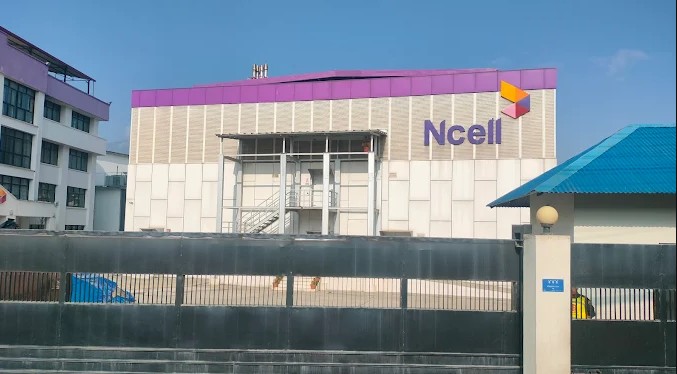
Ncell head office in Nakkhu.
After questions were raised regarding the sale of Ncell’s shares, the government formed a five-member study and investigation committee on December 7, 2023, led by former Auditor General Tankamani Sharma Dangal. The committee submitted a report stating that USD 50 million was an extremely low valuation. “In the report we prepared after our study, we mentioned foreign investment, share purchase and sale, tax evasion, and multi-dimensional relationship issues between Ncell and Smart Cell. You should ask the Telecommunications Authority, the Ministry of Communications, and the Prime Minister’s Office why the government did not implement that report.”
Min Prasad Aryal, spokesperson for the Telecommunications Authority, says, “That report has not reached us. The government had sent some points asking us to implement them. We have implemented them.”
The investigation revealed that another condition for dividend distribution was set when the shares were bought and sold. At that time, future dividends to be received from the company were also calculated. According to that, provisions were made to receive 80% of the 2023 dividend, 40% each in 2024 and 2025, 30% each in 2026 and 2027, and 20% each in 2028 and 2029. However, a condition was also placed stating that the said dividend would depend on the company’s actual income and profit, and that the mentioned potential liability could turn into an actual payment liability in the future.
The investigation shows that Smart Telecom was also evaluated during the transfer of ownership of Ncell. The evaluation appears to have been done assuming that Smart Telecom’s license was renewed. According to this, a condition was set that if Smart Telecom’s license was renewed and acquired by Ncell, an additional USD 10 million (currently Rs 1.5 billion) would have to be paid.
Since the investors of Ncell and Smart Telecom are the same, a relationship of financial interest is visible. A family relationship is visible between the two companies and investors from the beginning. The investigation has shown that they built an empire in the telecommunications sector under the concept of ‘cross-holding’.
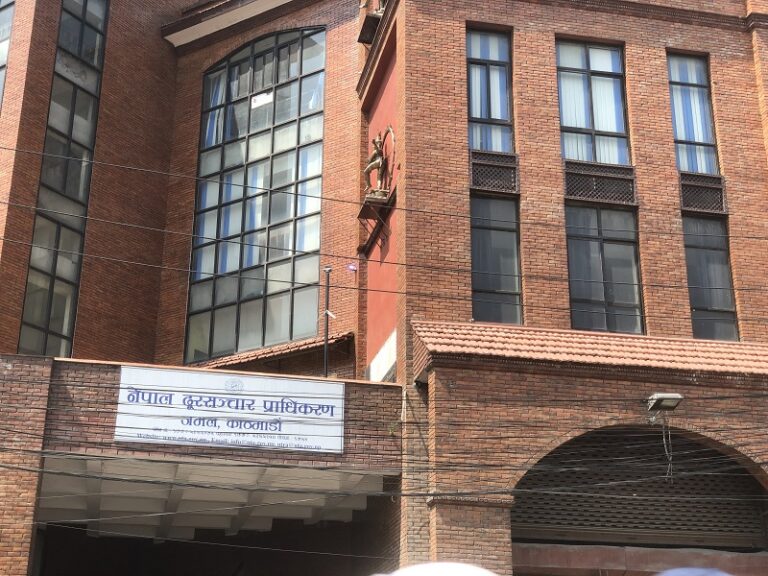
Nepal Telecommunications Authority building in Jamal. File Photo
Cross-holding in the telecommunications sector means that the same individual, family, or business group maintains direct or indirect ownership and control over competing companies. If such a situation exists, even though different companies appear on paper, real control can end up in the hands of the same group, which poses a risk of affecting market competition. Regulations regarding cross-holding in the telecommunications sector in Nepal were implemented only much later.
The Nepal Telecommunications Regulation 2076 (Ninth Amendment) mentions that any licensee, its subsidiary company, director, basic shareholder, family member, or any company under the control of such person cannot invest/cause to invest more than one percent of equity or provide loans in the capital structure of another licensee. Smart’s investors had already entered Ncell before this provision came into effect. Although Smart appeared to be a competitor company to Ncell on paper, it appears that a single interest group worked behind it. Since the investigation has shown a relationship at the ownership, beneficiary, or control level, the case is no longer limited to an asset auction dispute but has surfaced as a form of ‘cross-holding’ in the telecommunications sector.
According to the police, cases of suspicious transactions and criminal breach of trust will be attracted against Smart-Ncell. Smart has an outstanding liability of Rs 30 billion to be paid to the government for frequency, license, and renewal fees. Considering the basis on which the bank conducted the auction without this amount being paid, there is a high probability that a consolidated claim amount (Bigo) will be established against Ncell, Smart Telecom, and the officials involved. When established in this manner, the claim amount reaches RS 178 billion. CIB chief AIG KC says, “Because the investigation is not completed, it is impossible to determine exactly how much the claim amount is right now.”
Smart Telecom: The governments of Oli, Deuba, Dahal, and Karki
After Smart Telecom failed to renew its license, the Telecommunications Authority revoked the company’s license on July 28, 2019, after which another game began. The company’s investors began attempts to stall the regulator’s decision using administrative and political power. The Authority had become strict against the company due to billions of rupees in renewal fees owed to the government, a weak financial condition, and failure in service expansion. However, the company’s faction began frequenting Singha Durbar to overturn, or at least suspend, the Authority’s decision at the political level to save the license. They secured access all the way to the Ministry of Communications and the Office of the Prime Minister and Council of Ministers.
In this context, the contemporary Communications Minister Gokul Baskota was met. The Prime Minister was KP Sharma Oli. Baskota initiated political interference in the regulator’s jurisdiction. While Baskota was the Communications Minister, the Council of Ministers overturned the Authority’s decision to revoke Smart Telecom’s license on December 30, 2019. Baskota lost his ministerial post on February 20, 2020, following an audio scandal in which he allegedly demanded a Rs 700 million commission for the purchase of a security printing press.
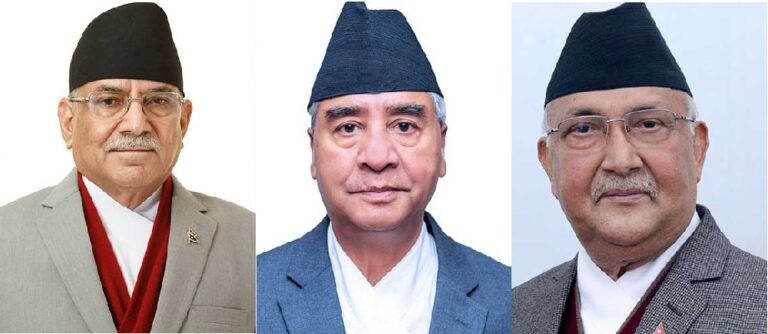
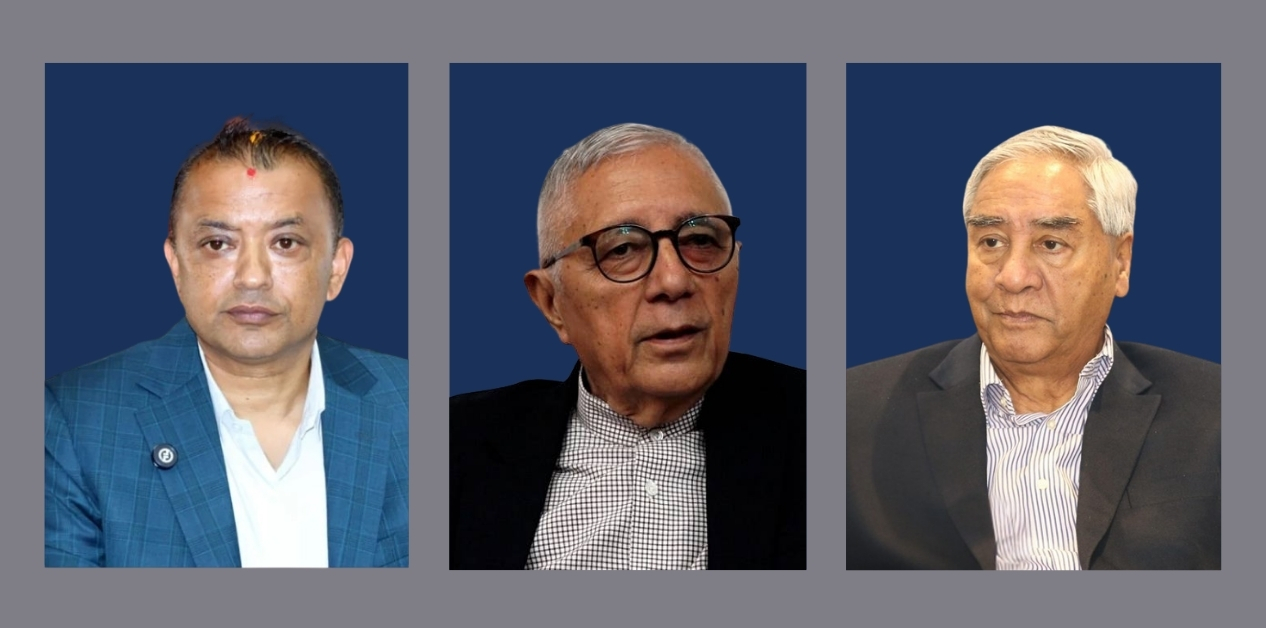
Former Prime Ministers, from right respectively: KP Sharma Oli, Sher Bahadur Deuba, and Pushpa Kamal Dahal.
On the same day, contemporary Finance Minister Yuba Raj Khatiwada also took charge of the Ministry of Communications. Following this, the Oli government provided exactly what Smart wanted, with the Council of Ministers extending the deadline for the renewal fee four consecutive times. On April 14, 2020, a Council of Ministers decision extended the period for Smart to pay its license renewal fee. Smart was not honest regarding the fees. On March 14, 2021, the Council of Ministers again decided to extend the deadline for Smart Telecom to pay its frequency and license fees. On July 13, 2020, the Council of Ministers once again decided to maintain the period for paying Smart Telecom’s frequency and license renewal fees until mid-September 2020.
Similarly, on September 14, 2020, the Council of Ministers extended the time for Smart Telecom Company to submit its frequency and license renewal fees yet again by mid-March 2021. This time, a decision was made instructing the Authority to adopt necessary legal procedures regarding license revocation if the remaining installments were not paid within the extended period.
Smart Telecom maintained its intention to take advantage of the Council of Ministers’ facilities but not to renew. Khatiwada left the responsibility of the Ministry of Communications on October 14, 2020. On the same day, Parbat Gurung took charge of the said ministry. During his tenure, the hustle of Smart’s investors toward Singha Durbar increased again. One day before exiting the government, on July 12, 2021, the Oli-led Council of Ministers decided to extend the deadline for Smart Telecom to submit its frequency, license, and renewal fees.
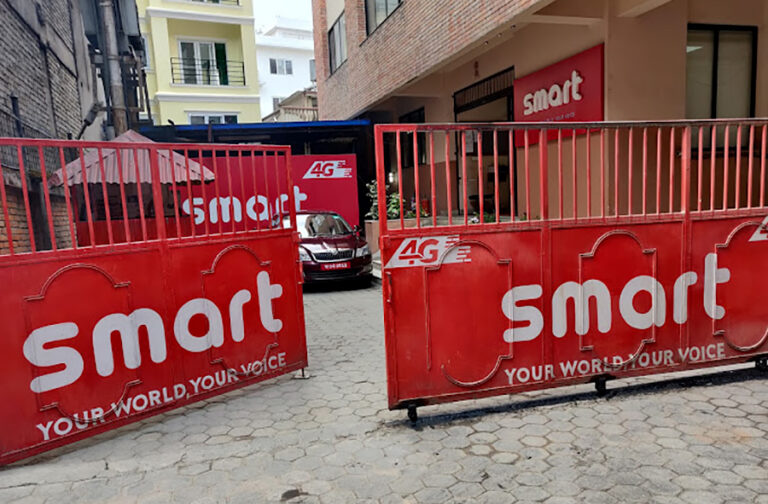
Smart Telecom. File Photo
Although Nepal News sent messages and attempted phone calls to make contact, Baskota and Khatiwada did not come into contact. Regarding the decision to extend the time for frequency, license, and renewal fees for the last time during the Oli government’s tenure, contemporary Communications Minister Gurung says, “Decisions were already being made previously; rather than taking any company into a revocation process all at once, the period for Smart was extended out of a positive mindset and not from any malicious intent, believing that an opportunity should be given.” According to him, such companies would submit applications, and the government made decisions regarding the applications with a positive outlook. “It was known that Ncell-Smart Cell were the same, but one should not chase away and revoke an investing company all at once; there might be a negative understanding regarding the work done by the contemporary government,” Gurung says.
On July 13, 2021, Sher Bahadur Deuba became the Prime Minister. On October 8, 2021, Gyanendra Bahadur Karki was appointed as the Communications Minister. Around this time, the ‘Asset Management Regulation of Telecommunication Service Providers Whose Licenses Are Not Valid, 2079’ was issued. In the draft recommended by the Authority, a provision had been kept stating that service providers must pay their own taxes, royalties, bank loans, employee liabilities, and other arrears themselves. In the final regulation, that was removed, and a provision was inserted stating that liabilities would be paid only from the sale of the company’s cash or assets. The question of who would bear the remaining liabilities if the loans exceeded the assets was left open.
Within this very regulation, a provision was sneaked in to provide an additional license period, frequency, and special facilities in the telecommunications market to the company that accepts Smart Telecom’s liabilities. In this manner, instead of showing readiness to collect arrears while granting concessions to a company that should have been revoked earlier, Smart Telecom seems to have seized opportunities while Singha Durbar, ministers, and the Council of Ministers itself were involved. During the tenures of both the Oli and Deuba governments, things kept moving under the pretext of sometimes extending the deadline for frequency, license, and renewal fees, and sometimes formulating regulations.
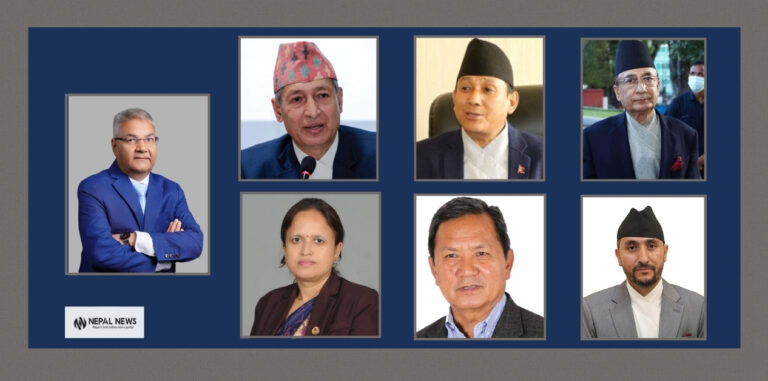
Former Communications Ministers, from left respectively: Gokul Baskota, Yuba Raj Khatiwada, Parbat Gurung, Gyanendra Bahadur Karki, Rekha Sharma, Prithvi Subba Gurung, and Jagadish Kharel.
On December 25, 2022, Pushpa Kamal Dahal became the Prime Minister. Rekha Sharma was appointed as the Communications Minister. On February 18, 2024, Sharma appointed her information-technology advisor Bhupendra Bhandari as the Chairman of the Authority. However, after Smart failed to submit the arrears amount and did not get it renewed, it faced automatic revocation on April 15, 2023. Following this, the Authority decided to advance the company’s asset and management process by implementing the ‘Asset Management Regulation of Telecommunication Service Providers 2022’. For this purpose, a management group was formed under the coordination of Authority board member Gokarna Mani Sitaula.
The Authority called for letters of intent for an asset valuation committee to evaluate the company’s assets on May 5, 2023. Claiming that insufficient applications were received, it published notices again on May 19 and June 23 of that year. Following that, claiming that applications with the required qualifications had still not arrived, it requested letters of intent for a fourth time in September. For the fourth time, it selected the names of qualified consultants and alternative consultants for five members, including the coordinator of the valuation committee, and recommended them to the Ministry of Communication and Information Technology. However, the Secretary and Minister did not move the file forward.
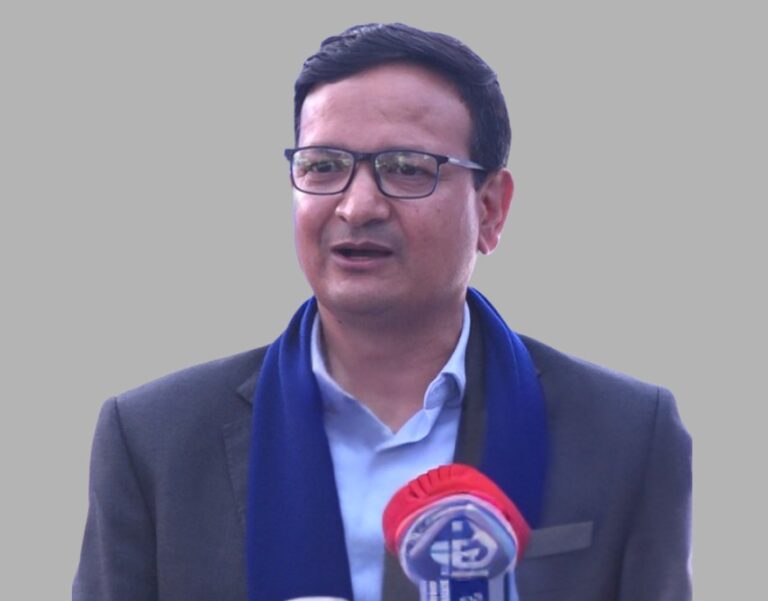
Bhupendra Bhandari. File Photo
On July 15, 2024, Prithvi Subba Gurung arrived as the Communications Minister of the Oli government. However, he did not cast his eyes toward Smart Telecom at all. He did not inquire into what was in the regulations or what the arrears amounted to. Following a Gen Z protest, the Oli government fell on September 9, 2025. On September 12, an electoral government was formed under the leadership of former Chief Justice Sushila Karki. On September 21, 2025, Jagadish Kharel was appointed as the Communications Minister. During the time Kharel was minister, on October 7, 2025, the bank illegally auctioned Smart’s assets. Bhandari was the Chairman when the auction took place. However, the Authority, Minister, and Secretary all acted as if they were unaware.
Regarding the matter of the auction, complaints have been filed at the Commission for the Investigation of Abuse of Authority against both Kharel and the then-head of the Authority, Bhandari. “We will study the complaints, the actions adopted during the auction, and how accountable someone needs to be based on responsibilities, and then make a decision on who to summon for statements,” says a high-ranking official of the CIAA.