Kathmandu
Monday, June 22, 2026






KATHMANDU: Nepal News presents today’s snapshot of Nepal’s economic activities. Get quick updates on major market movements, policy shifts, and financial developments shaping the economy of Nepal. Here are the key economic highlights for today:
Imports Hit Near Rs 1.9 Trillion in First 11 Months of Current Fiscal Year
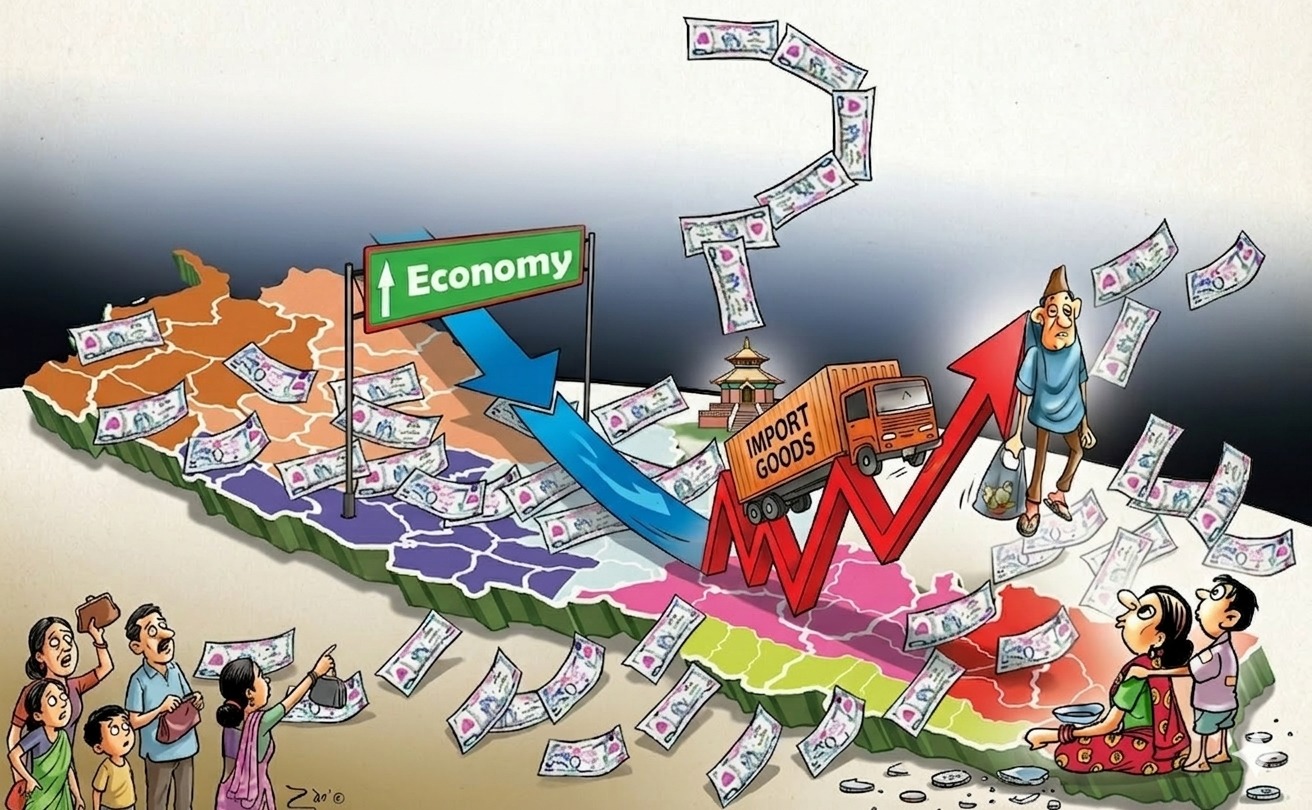
Nepal’s imports surged to nearly Rs 1.9 trillion in the first 11 months of the current fiscal year, according to the Department of Customs. Total imports reached Rs 1.894 trillion, reflecting a 15.16% increase compared to the same period last year. Exports also grew by 12.28%, rising to Rs 277.96 billion from Rs 247.57 billion a year earlier. However, the faster growth in imports compared to exports led to a widening trade imbalance. As a result, Nepal’s foreign trade deficit increased by 15.67% during the review period, the department reported.
FATF Refuses to Remove Nepal From ‘Grey List’
The Financial Action Task Force (FATF) has retained Nepal on its “grey list” of countries under increased monitoring following its plenary meeting in Paris. The global anti-money laundering body said Nepal has not made sufficient progress despite earlier political commitments to reforms. FATF stressed that Nepal must fully implement its action plan to address strategic deficiencies in combating financial crimes. Key requirements include stronger supervision of banks, cooperatives, casinos, and real estate, along with action against illegal hundi operators. It also urged improved coordination among investigative agencies to enhance prosecutions and asset recovery. Nepal remains on the list due to limited progress.
NEPSE Edges Down in Volatile Session; Daily Turnover Ticks Up to Rs 4.44 Billion
The Nepal Stock Exchange (NEPSE) index closed slightly lower on Monday, the first trading day of the week, after a volatile session. The benchmark index fell by 1.46 points, or 0.05%, to settle at 2,700.65 points, while turnover edged up compared to the previous session. The Sensitive Index also dipped marginally, while broader indicators showed mixed movement. A total of 8.13 million shares were traded through 90,862 transactions, generating a turnover of Rs 4.44 billion. Market breadth was negative, with more decliners than gainers, as 10 of 13 sectoral indices closed in the red. Finance, trading, and microfinance sectors posted gains, while hydropower, insurance, and banking sectors declined. Two hydropower companies hit the 15% upper circuit, while Sopan Pharmaceuticals led turnover.
Department of Transport Management Partially Reopens Public Vehicle Registration
The Department of Transport Management (DoTM) has partially lifted its earlier ban on registering new public transport vehicles. Registration will now be permitted only for vehicles whose import process was initiated through Letters of Credit (LC) opened by May 22, 2026, and which have already arrived in Nepal. Importers must submit verified documents confirming LC opening and vehicle arrival to qualify for registration approval. The department had imposed a nationwide halt in April 2026, citing worsening traffic congestion, weak transport management, and rising air pollution. The revised decision offers limited relief to importers affected by the abrupt suspension of registrations mid-process.
Tea Entrepreneurs Visit Singha Durbar Seeking State Action on Export Crisis
Tea entrepreneurs and farmers have urged the government to urgently intervene as exports face disruption at the Indian border due to strict new testing and certification rules. A delegation led by the Suryodaya Orthodox Tea Producers Association submitted a memorandum to concerned ministries, calling for diplomatic talks to ease trade barriers. Industry representatives said mandatory lab testing, online registration, and delayed report issuance have stalled shipments for weeks, creating a backlog of around 300,000 kg at the border and about 1 million kg in domestic warehouses. They warned of rising costs, quality risks, and loss of competitiveness. The delegation demanded a bilateral trade mechanism, mutual recognition of lab tests, and policy support to protect farmers and exporters.
Victims Stage Protest at RBB Demanding Compensation for Gold Looted During Gen Z Protest
Aggrieved borrowers who had pledged gold at the New Baneshwor branch of Rastriya Banijya Bank (RBB) staged a protest outside the bank’s central office at Singha Durbar Plaza, demanding full compensation for lost assets. The dispute stems from the theft of around 18 kg of gold and Rs 52.5 million in cash during last year’s unrest at the Baneshwor branch. Protesters accused the bank of offering compensation based on outdated gold prices instead of returning the actual gold or its current value. They said they have already repaid loans but are still being denied justice. Police were deployed after protesters attempted to enter the office premises.
Koshi Industrialists Urge NRB to Raise Working Capital Loan Limit to 60 Percent
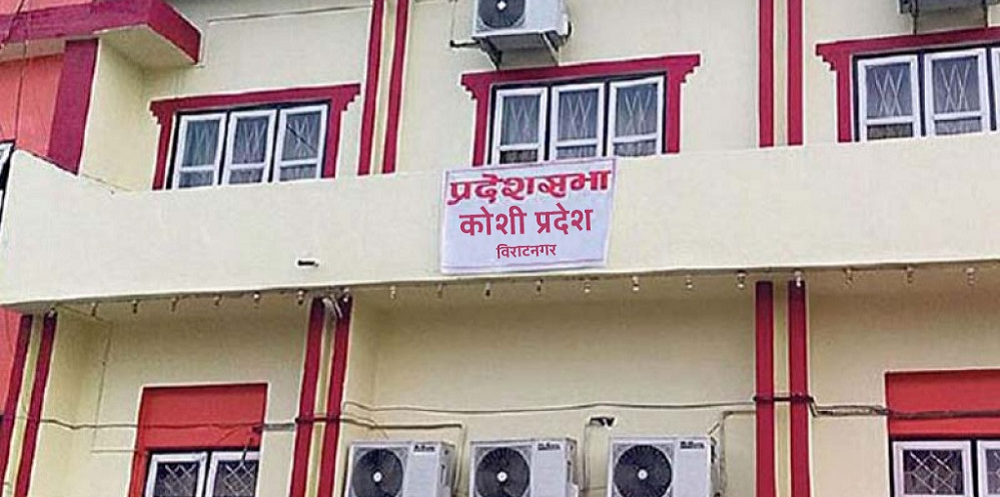
Industrial and business bodies in Koshi Province have urged Nepal Rastra Bank (NRB) to allow working capital loans of up to 60% of annual turnover on a permanent basis, based on cash flow and industry type. As NRB drafts its monetary policy, Koshi business bodies submitted recommendations to its Biratnagar office. They called for separate policies for manufacturing and trading sectors, lower risk premiums for manufacturers, adjustments in lending ratios, debt restructuring, and tighter foreign exchange spreads. Despite high liquidity, credit flow remains weak due to NPLs and procedural hurdles.
Toxic Chemicals and Zero Fruit Juice: Eastern Nepal Food Outlets and Industries Penalized
Market inspections in eastern Nepal have uncovered serious food safety violations, including fruit drinks with no actual fruit content and restaurants using banned industrial chemicals and expired ingredients. The Department of Food Technology and Quality Control (DFTQC) in Biratnagar has launched strict enforcement actions, destroying large quantities of adulterated products. In Jhapa, officials found “ORA” brand mango and orange drinks that failed to meet the required 10% fruit content standard, leading to the seizure and destruction of 748 cartons worth Rs 492,132. In Biratnagar, a restaurant was found using toxic chemicals, synthetic dyes, and expired items in unhygienic conditions. Authorities have ordered corrective action and further legal proceedings.
Lack of Communication Facilities Troubles Pilgrims on Damodar Kunda Trail
Pilgrims traveling to the sacred Damodar Kunda in Mustang’s Lo-Ghekar Damodar Kunda Rural Municipality are facing serious difficulties due to the lack of telecommunication services along most of the trekking route. While limited coverage exists near Yara village, the stretch from Ghime Thatty to Damodar Kunda remains a complete communication dead zone. Stakeholders raised the issue during a tourism interaction in Jomsom, stressing that mobile connectivity is essential for safety at the 5,000-meter-high pilgrimage site, where altitude sickness is common. They also pointed out the absence of signboards and shelters along the trail. Officials have proposed installing a telecom tower and improving infrastructure to enhance safety and accessibility for pilgrims.
Lumbini Province Assembly Meeting Adjourned as Lawmakers Request Time to Study Budget
The Lumbini Province Assembly meeting scheduled for Monday has been postponed by one day. According to Assembly Secretary Durlabh Kumar Pun Magar, the 10th meeting of the ongoing eighth session was adjourned at the request of the provincial government. Lawmakers said they needed more time to review the budget details and the expenditure “Red Book” for the upcoming fiscal year. Following the Speaker’s directive, the meeting has been rescheduled for Tuesday, June 23, at 3 pm. The decision aims to allow proper study of the budget documents before further discussion and approval in the provincial assembly.
Government Steps Up Efforts to Revive Hetauda Textile Industry
The government has stepped up efforts to revive the long-closed Hetauda Textile Industry following a new policy directive. Established in 1975 and shut down in 2000 due to financial and administrative issues, the state-owned factory is now undergoing inspections and structural assessments for restart. Officials say most machinery remains usable and can be reactivated with minor repairs. The Office of the Prime Minister is leading the revival plan in coordination with the Industry Ministry and local authorities. The project also aims to restore related supply chains, including cotton production in Banke and yarn processing in Butwal, with plans to resume operations within this fiscal year.
Malika Rural Municipality Begins Branding Local Turmeric
Malika Rural Municipality in Gulmi has begun commercial branding and packaging of locally produced turmeric to promote indigenous agricultural products. The initiative, led by the Didibahini Agriculture and Livestock Development Women’s Cooperative, is selling the packaged organic turmeric from Darlìng in Malika-2 at Rs 400 per kg. Formed under the Small Farmer and Youth Entrepreneurship Development Project implemented by Janabikas Kendra, the cooperative operates a processing unit equipped with machinery and technical support provided through the program. Women farmers from wards 1, 2, and 3 supply raw turmeric for processing. The cooperative plans to expand into other local products such as corn flour and organic grains to strengthen rural livelihoods and create sustainable income opportunities.
Raskot Municipal Assembly Presents Budget of Rs 566.7 Million
Raskot Municipality in Kalikot has presented a budget of Rs 566.75 million for the fiscal year 2026/27 during its 18th Municipal Assembly, on Sunday. Deputy Mayor Maniraj Baral tabled the budget, which includes funding from federal, provincial, and internal sources, with only 3.09% expected from local revenue. Of the total allocation, 61.42% is earmarked for recurrent spending and 38.58% for capital investment. The municipality has prioritized social development, receiving 64.88% of the budget, including major allocations for education and health. Infrastructure, governance, and environmental sectors also received designated shares. The assembly concluded with a vision of “Prosperous Raskot, Happy Residents.”
Wheat Production Falls in Madhesh Province
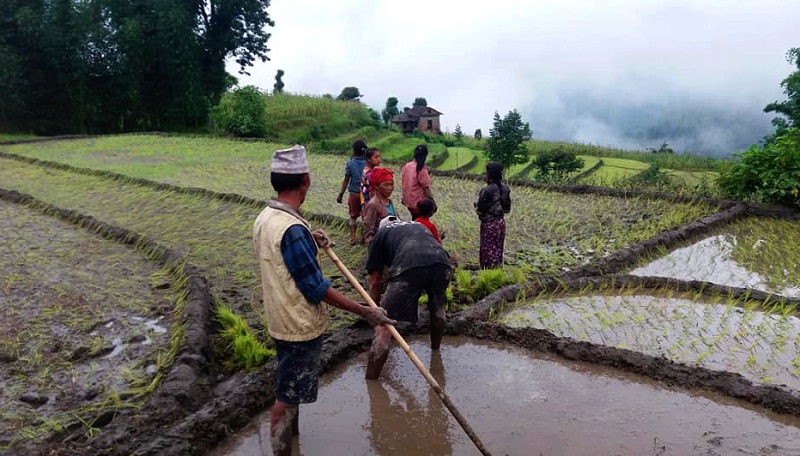
Wheat production in Madhesh Province has declined this year despite the region being one of Nepal’s key grain-producing areas. According to the Directorate of Agriculture Development, the province produced 543,160 metric tons of wheat from 300,732 hectares, with an average yield of 1.8 metric tons per hectare. Dhanusha recorded the highest output, followed by Saptari, Mahottari, Sarlahi, Bara, and Rautahat, though yields varied across districts. Officials attributed the decline to adverse weather conditions, pest infestations, and inadequate irrigation and quality seeds. Agriculture authorities say these challenges significantly affected productivity across the province this season.
Kathmandu Traffic Police Collect Rs 1.05 Million from 2,076 Drivers in 24 Hours
The Kathmandu Valley Traffic Police Office penalized 2,076 drivers for violating traffic rules within 24 hours, collecting Rs 1.05 million in revenue. According to police spokesperson SP Naresh Raj Subedi, 228 drivers were fined for speeding, 117 for running red lights, 93 for unauthorized ride-sharing, and 88 for driving under the influence. Authorities also booked 129 drivers for lane violations, 90 for parking on pavements, 88 for driving the wrong way on one-way roads, and 57 for unnecessary honking in restricted areas. Another 1,186 drivers faced action for various other traffic offenses.
Dang’s ‘Janti Dhunga’ Sees Tourism Boom
The ‘Janti Dhunga’ area in Ward No. 13 of Tulsipur Sub-Metropolitan City is rapidly emerging as a popular tourism destination. Located in the Jhankri Dhunga Community Forest, the site features thousands of uniquely shaped natural rock formations resembling human figures, attracting visitors who share photos and videos on social media. Locals associate the area with a myth that a wedding procession once mysteriously vanished there, giving rise to its name. The growing popularity has boosted local economic activity, with temporary shops and basic infrastructure development. Residents believe the site could become a major tourist attraction with proper conservation and promotion.
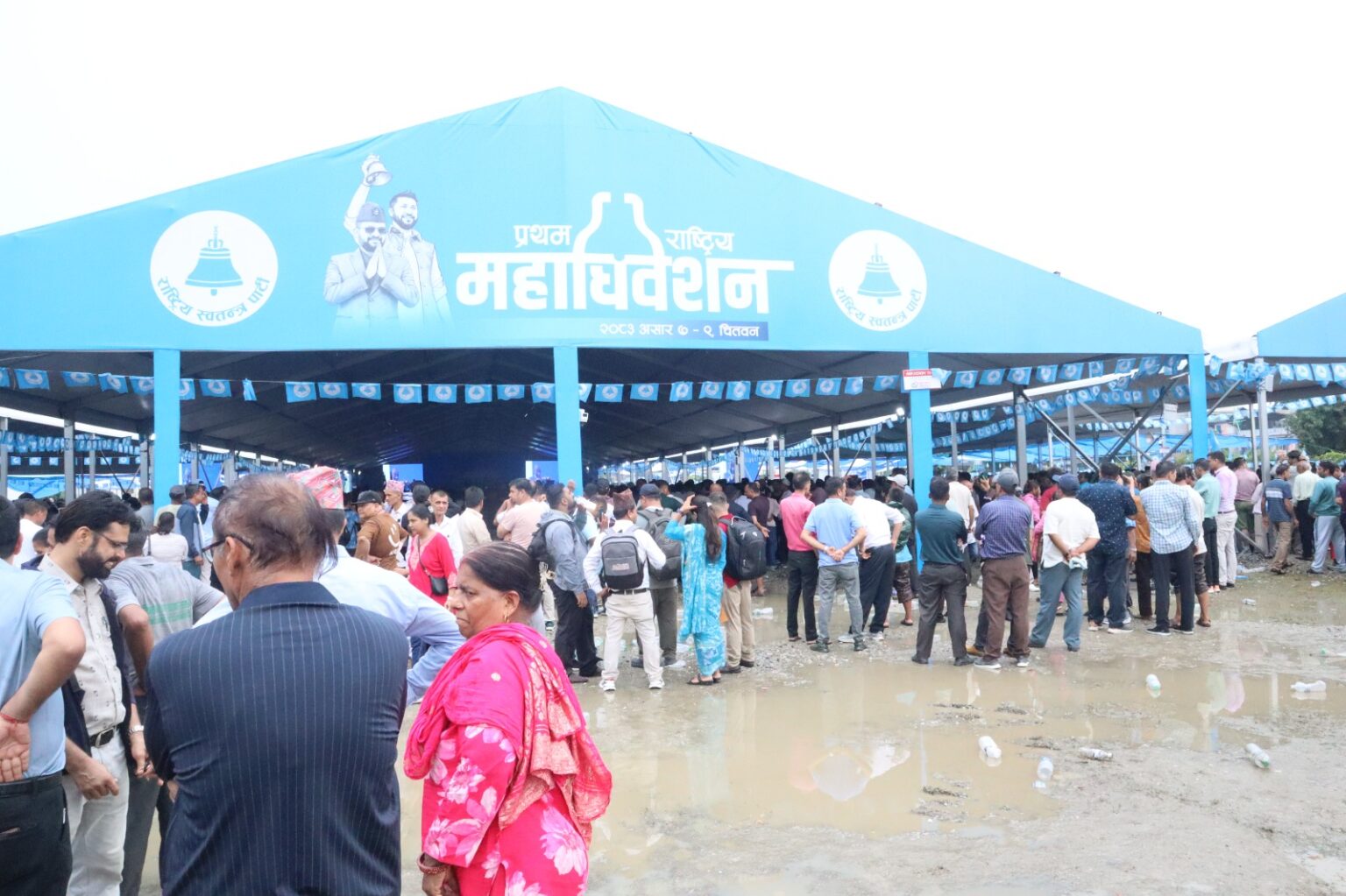
Up to 9 Quintals of Mutton Consumed Daily at RSP National Convention
Diyalo Foodland is providing catering services at the first national convention of the Rastriya Swatantra Party (RSP) in Bharatpur, Chitwan. Staff from its Bharatpur, Butwal, and Kathmandu branches, along with manpower from five outlets, have been mobilized to serve delegates from June 21 to 23. According to Operations Manager Prem Khatri, meals are being provided on a fixed schedule, including breakfast, lunch, snacks, and vegetarian dinner. The service is catering to around 5,000 people, including representatives, observers, and security personnel. The event is also witnessing high food demand, with up to 900 kg of mutton consumed daily.
Feasibility Study Begins for Monorail Project at Guptabaraha Temple
A preliminary feasibility study has begun for a proposed monorail system at the Guptabaraha Temple area in Barahachhetra-1, Sunsari, after the Koshi Province Government allocated funds in the upcoming fiscal year budget. A South Korean expert team has arrived to assess the terrain and technical viability. The monorail is planned to improve access to the temple, which lies about 400 meters below the main road and is difficult for pilgrims to reach. Officials are also exploring additional tourism infrastructure, including a skywalk and glass bridge. Authorities say the project, if implemented, could become Nepal’s first monorail and boost religious tourism and the local economy.
Literacy Rate Reaches 82.1 Percent in Bagamati, Poverty Rates Fall Below National Figures
Bagmati Province has recorded stronger socio-economic indicators than the national average, according to provincial officials. Its literacy rate has reached 82.1%, surpassing the national rate of 76.2%. The province is also projected to achieve 5.40% economic growth, higher than the national target of 3.85% for the current fiscal year. Officials estimate Bagmati will contribute 36.7% of Nepal’s total GDP, valued at around Rs 2,423 billion out of Rs 6,600 billion. Per capita income in the province is expected to reach USD 2,644, the highest among all provinces. Poverty levels are also lower than the national average, with reduced absolute and multidimensional poverty rates.
Duty Hike Drives Up Gold Prices, Slashing Demand
Gold demand in Nepal has fallen sharply after the government doubled customs duties on gold and silver imports from 10% to 20% in the new fiscal year budget. The revised rate, effective May 29, 2026, immediately pushed domestic prices up by about Rs 20,500 per tola, briefly reaching Rs 311,100 before easing to around Rs 287,300 per tola. Although international gold prices have recently declined, domestic rates remain elevated due to higher import costs. Market experts say the tax increase has further weakened already subdued demand, with daily consumption dropping to about 6–7 kilograms even during the wedding season.
Gold and Silver Prices Rise on Monday
Gold and silver prices increased in Nepal on Monday, according to the Federation of Nepal Gold and Silver Dealers’ Association. The price of fine gold rose by Rs 800 per tola, reaching Rs 197,900, while hallmark gold was traded at Rs 197,000 per tola. Silver also recorded a gain, climbing by Rs 15 per tola to reach Rs 2,230. The rise follows recent fluctuations in the precious metals market and reflects trends seen in international markets, where gold and silver prices have shown renewed strength. Traders and consumers are closely monitoring price movements as demand and global economic factors continue to influence the market.