Kathmandu
Tuesday, June 23, 2026





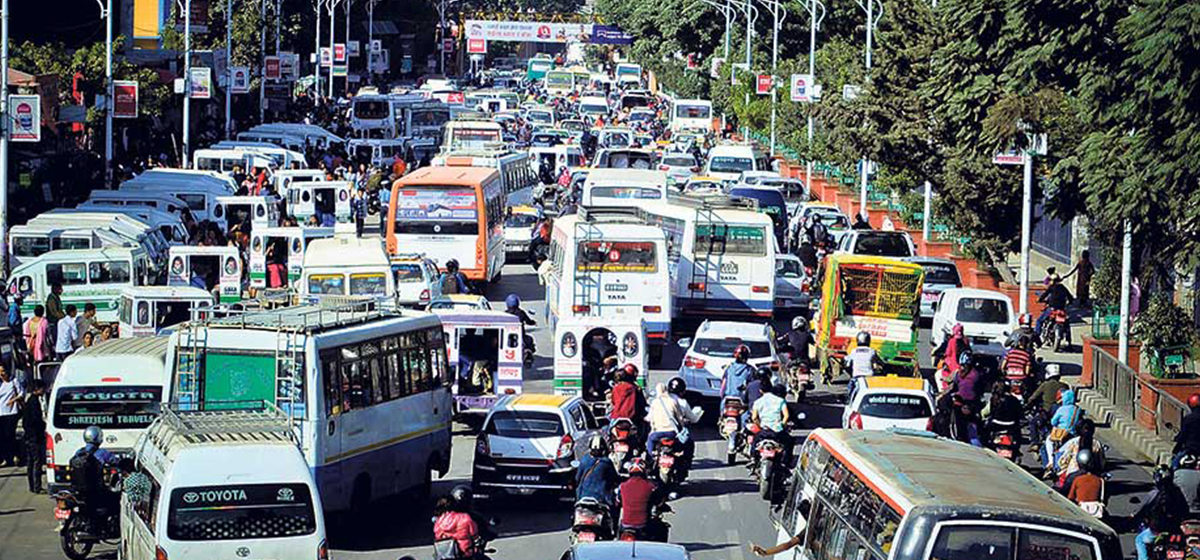
KATHMANDU: In a bid to make public transport services operating in the Kathmandu Valley safer, more organized, and passenger-friendly, authorities have shifted their focus toward technological surveillance and monitoring.
The Kathmandu Valley Traffic Police Office has announced that dashcameras, CCTV cameras, and GPS tracking systems have already been installed in 3,303 public service vehicles operating across the valley.
The installation of dashcameras, CCTV, and GPS systems has been made mandatory to enhance passenger safety, streamline traffic management, and ensure effective surveillance. Following regular monitoring by the Department of Transport Management and the traffic police to check compliance, transport entrepreneurs have begun prioritizing the installation of these devices.
Senior Superintendent of Police (SSP) Suresh Prasad Kafle, chief of the Kathmandu Valley Traffic Police Office, emphasized that the cameras and GPS tracking systems would be highly effective in monitoring and controlling instances of passenger harassment, overcharging of fares, and unsafe driving behaviors.
“This system will make it much easier to curb problems like overcharging fares and misbehavior against passengers,” SSP Kafle stated. “Crucially, it will also help dispel the biased trend where only the larger vehicle is blamed in the event of a road accident, and it will prevent the potential misuse of accident insurance.”
He added that the GPS system allows vehicle owners to easily track their vehicles’ real-time location and operational status. This is expected to yield positive results in terms of regular vehicle monitoring, making drivers more accountable, and enhancing overall passenger security. Furthermore, recorded footage from inside the vehicles will assist in resolving disputes swiftly.
Meanwhile, Saroj Sitaula, central president of the Federation of Nepalese Transport Entrepreneurs, welcomed the technological initiative as a positive step for transport operators.
“Installing dashcameras, CCTVs, and GPS in public service vehicles is a good thing for us,” Sitaula said. “However, the government needs to introduce clear guidelines and standard operating procedures. Once a proper framework is established, we are ready to roll this out across all public vehicles.”
Transport entrepreneurs have expressed their commitment to incorporating this technology, agreeing that it is crucial to creating a safe, transparent, and accountable public transport sector.
Superintendent of Police (SP) Naresh Raj Subedi, spokesperson for the Kathmandu Valley Traffic Office, stated that plans are underway to make this monitoring system strictly mandatory for all public vehicles operating in the valley in the coming days.
Authorities anticipate that enhanced technological vigilance will drastically reduce traffic accidents, address passenger grievances promptly, and ensure higher accountability among drivers and owners alike.