Kathmandu
Friday, June 26, 2026





Traditional political forces accelerate discussions and joint initiatives, warning that the current uncomfortable circumstances require immediate coordination among major parties
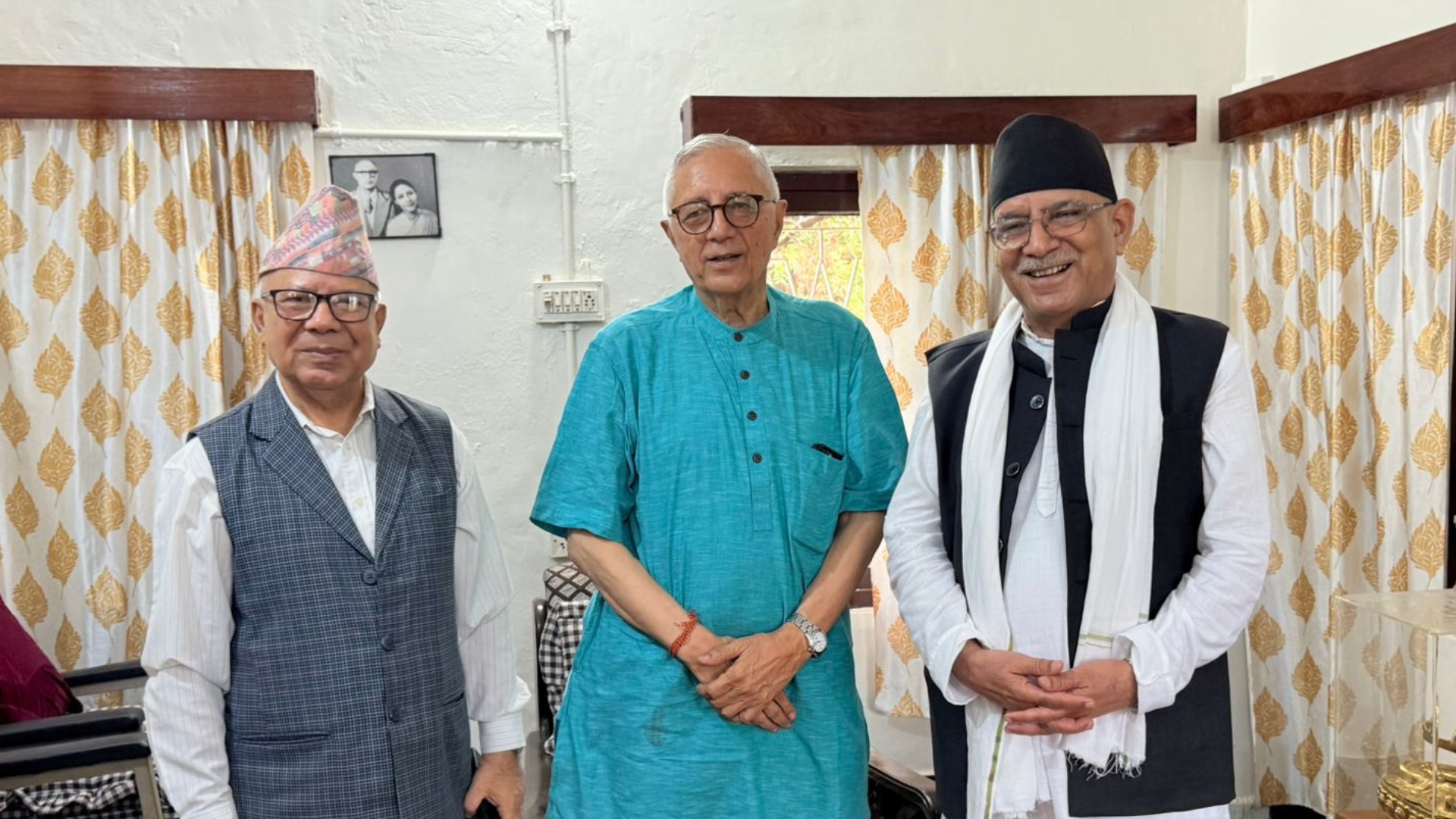
KATHMANDU: In a major political development on Friday (June 26), Nepali Communist Party (NCP) Coordinator Pushpa Kamal Dahal, popularly known as Prachanda, and Co-coordinator Madhav Kumar Nepal held a crucial meeting with Nepali Congress leader Shekhar Koirala at his residence to forge an alliance against rising political challenges.
Dahal and Nepal met Koirala during their visit to Biratnagar in connection with the NCP’s Koshi Province-level unity meeting and training program. Koirala’s secretariat provided information about the meeting between them. Koirala has been in Biratnagar since June 14.
After the meeting with Koirala, while addressing the NCP’s training program, Dahal stated that cooperation with the Communist Party of Nepal (Unified Marxist–Leninist), abbreviated CPN (UML), would move forward immediately. He did not disclose what kind of cooperation it would be. He mentioned that talks are ongoing not only with left-wing parties but also with democratic forces. In this process, he revealed that continuous dialogue is also taking place with the Janata Samajbadi Party (JSP).
It is not a mere coincidence that Dahal spoke about cooperation and dialogue with parties and met Koirala just before that. Leaders state that there is an immediate possibility of functional unity (agenda-based unity) among the old political forces.
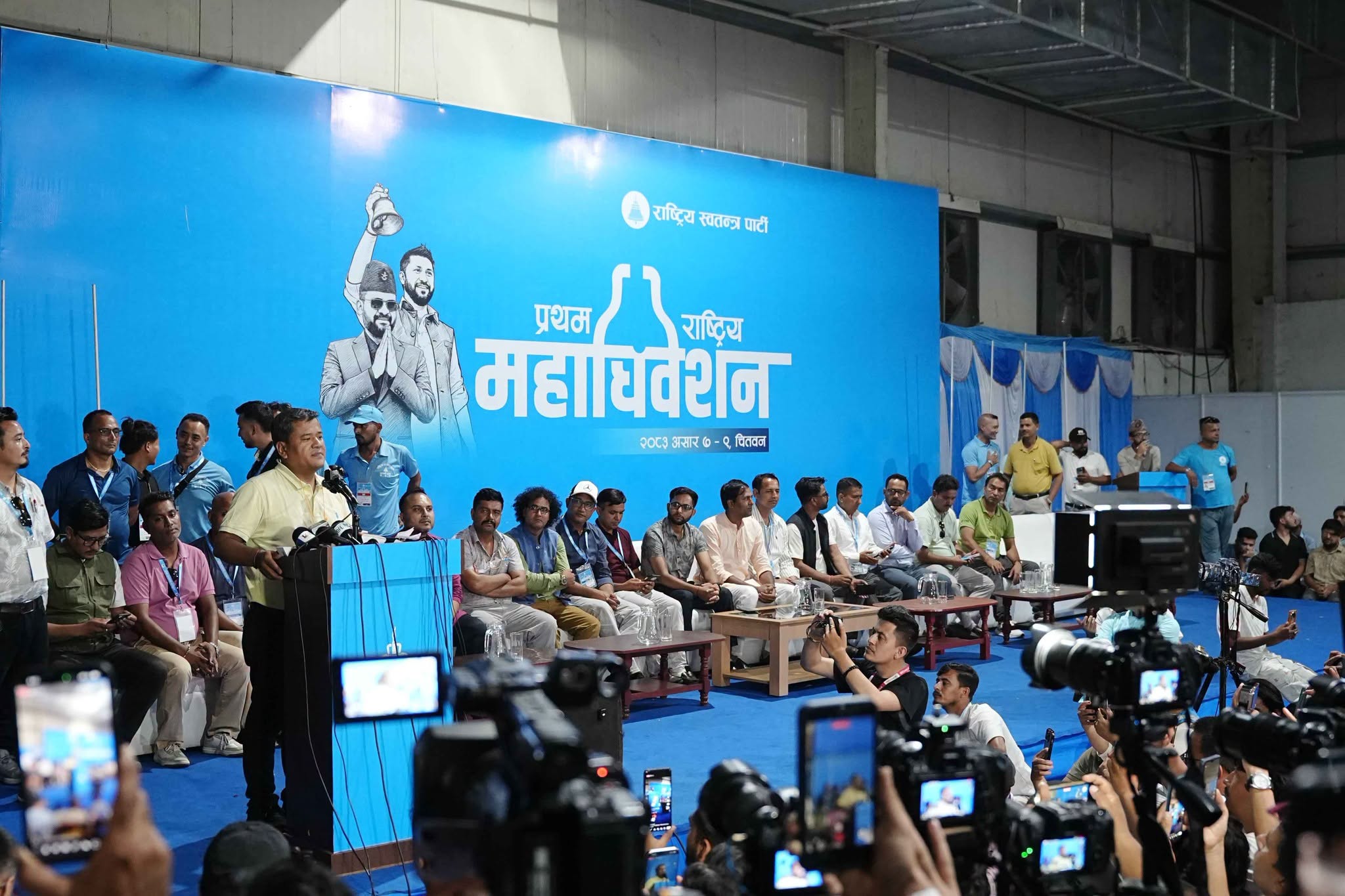
The general convention of the Rastriya Swatantra Party (RSP) is pushing established political forces to unite. Traditional parties now see a clear need for joint action, particularly because the RSP has introduced an agenda to abolish federalism.
CPN (UML) leader Pradip Gyawali says he does not know the meaning of the cooperation mentioned by NCP Coordinator Dahal, but in the context of democracy itself falling into crisis, broad cooperation is necessary not just with communist parties but with other forces as well. He states that the CPN (UML) is open to this. “We are already cooperating with the Congress in the parliament,” he says. “The situation after the election is uneasy; in a situation where a crisis befalls democracy, minimum cooperation with everyone can take place. I do not know in what sense Prachanda spoke about cooperation.”
The old political forces are starting to come together along with the general convention of the Rastriya Swatantra Party (RSP). Especially after the agenda of abolishing federalism appeared in the RSP’s political document, the old parties have felt the need for cooperation. It is assumed that Dahal and Nepal met Koirala in this connection.
The RSP has around a two-thirds majority in parliament. There is a suspicion that the RSP could abolish federalism on the strength of the two-thirds majority. The Prime Minister’s Office has formed a task force to collect suggestions for constitutional amendment. Since the attack on the constitution could increase with the abolition of federalism, the old political parties are trying to come to one place. Federalism, the democratic republic, and constitution-making were the shared agendas of the old parties.
NCP leader Agni Sapkota says that dialogue is ongoing for immediate cooperation with the CPN (UML). He states that cooperation will happen even if party unity does not take place immediately. However, the framework under which to cooperate is still under discussion. “Our party’s work adjustment committee and regulations policy are clear to move forward together in functional unity, cooperation, and national agendas,” he says. “Functional unity can take place based on subject matter.”
According to him, talks are ongoing at various levels of the CPN (UML). He states that since a situation could arise at any time where they have to go for street protests, the initiative for functional unity and cooperation has begun. “If anarchy keeps increasing in the country, a situation may arise where street protests must be conducted immediately,” he says. “For that, discussions are ongoing at various levels of the CPN (UML).”