Kathmandu
Monday, June 29, 2026





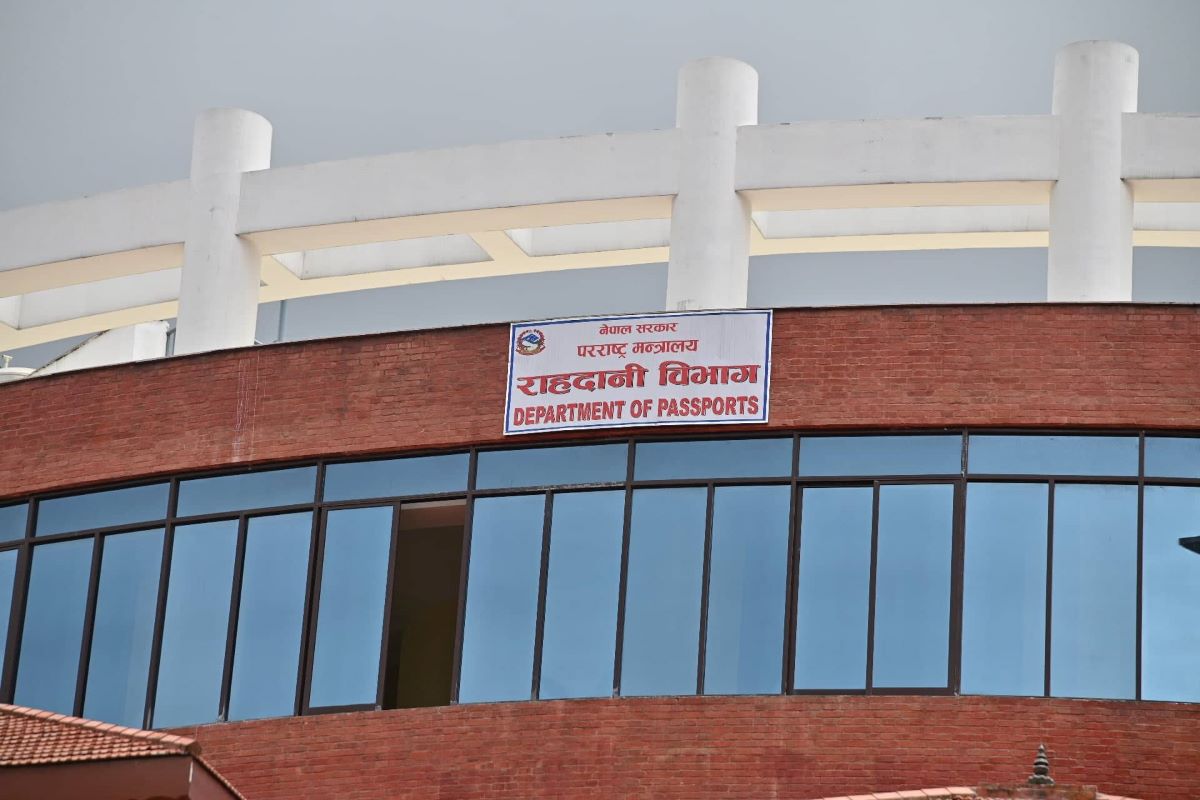
KATHMANDU: A dispute has emerged between Prime Minister Balen Shah’s Secretariat and the Ministry of Foreign Affairs over Nepal’s new e-passport contract with two German companies, with the Prime Minister’s office pressing officials to immediately terminate the agreement despite objections from the Foreign Ministry.
According to officials familiar with the matter, the Prime Minister’s Secretariat has been exerting pressure on the Department of Passports to cancel the contract awarded to the German firms. However, Foreign Minister Shisir Khanal has instructed the department to continue implementing the agreement, warning against any unilateral cancellation.
Following a formal warning from Germany’s Foreign Minister over the passport contract-including concerns about security, corruption allegations, and the risk of significant financial liabilities if the deal is terminated-Foreign Minister Khanal instructed the Department of Passports to proceed with the contract and continue preparations for passport production.
The dispute intensified after officials from the Prime Minister’s Secretariat bypassed the Ministry of Foreign Affairs and issued verbal instructions directly to the Department of Passports to terminate the contract.
Concerned by the unusual intervention, senior officials from the department met Foreign Minister Khanal on Sunday to brief him on the developments.
Deputy Director General of the Department of Passports, Dipak BK, along with other officials, met Foreign Minister Khanal, Foreign Secretary Amrit Rai, and other ministry officials during the briefing.
Officials also informed the minister that they had been instructed to contact representatives of the French company IDEMIA, which previously supplied Nepal’s passports, and initiate procedures to procure additional passports from the company after cancelling the German contract.
According to officials present at the meeting, they also told minister Khanal that the Prime Minister’s Office had warned them not to rely on decisions made by the Foreign Minister or the Foreign Secretary, arguing that both positions were temporary.
The Prime Minister’s team has been attempting to cancel the contract awarded to the two German companies, under which they are scheduled to print 6.4 million e-passports for Nepal over the next five years.
The German firms have already completed the final phase of preparations and have formally informed the Department of Passports that they are ready to begin printing the new e-passports from July 15.
They have also requested security arrangements for their personnel working in Nepal.
Officials also said advisers from the Prime Minister’s Office, including Asim Shah, IT adviser Bibek Mishra, and Madhav Khanal, previously visited the Department of Passports, where German engineers demonstrated the new passport production system by collecting biometric data and printing a sample passport.
Despite the demonstration, members of the Prime Minister’s Secretariat have continued questioning the German companies’ capacity and have repeatedly sought cancellation of the contract.
Nepal is approaching a passport shortage despite having more than half a million newly printed e-passports sitting unused in government vaults, as a corruption investigation into a Rs10.13 billion procurement deal with two German companies has escalated into a diplomatic dispute with Berlin and exposed deep divisions within the government.
With fewer than 45,000 existing passport booklets left for issuance, the Department of Passports had planned to launch the new e-passport system in the second week of July after exhausting current stock. However, around 550,000 passport booklets supplied by German firms Veridos GmbH and Muehlbauer ID Services GmbH remain locked in storage while criminal proceedings over the procurement continue.
The standoff has now moved beyond Nepal’s anti-corruption investigation. Germany’s Federal Foreign Ministry recently summoned Nepal’s Chargé d’Affaires in Berlin to protest what it described as unsupported corruption allegations against Veridos, seek assurances for the safety of German personnel travelling to Nepal, and warn that cancelling the contract could expose Nepal to costly international arbitration and substantial financial liability.
The Commission for Investigation of Abuse of Authority last week filed corruption cases against Department of Passports officials and representatives of the two German companies over the Rs10.13 billion contract to supply 6.4 million e-passports over five years.
According to officials familiar with the matter, the Prime Minister’s Office had pushed the anti-graft agency to take action, leading to the detention of officials before charges were filed in the Special Court.
The procurement replaced French firm IDEMIA, which had supplied Nepal’s passports for 17 years before losing the competitive tender. Although IDEMIA challenged the award, Nepal’s Public Procurement Review Committee dismissed its complaint.
Despite the corruption case, officials say the Ministry of Foreign Affairs has instructed the Department of Passports to continue implementing the contract, arguing that any unilateral cancellation could result in significant legal, financial and diplomatic consequences for Nepal.