Kathmandu
Saturday, July 4, 2026





After decades of neglect, agriculture is receiving renewed attention. Whether it can deliver genuine economic transformation remains an open question.
KATHMANDU: Agriculture remains the backbone of Nepal’s economy, employing a large share of the population and underpinning food security, rural livelihoods and domestic production. Yet for decades it has been defined more by neglect than investment. Fertile land has been abandoned, young people have left villages for foreign employment, farm productivity has stagnated and the country’s dependence on imported food has steadily increased. For a nation once defined as agrarian, the shift towards food import dependence has become one of Nepal’s most striking economic contradictions.
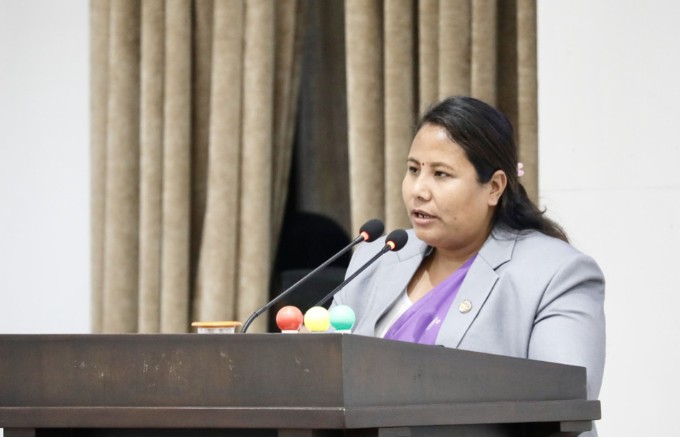
Prime Minister Balendra Shah has sought to reverse that trajectory by placing agriculture at the centre of his government’s economic agenda. Under Agriculture, Forest and Environment Minister Gita Chaudhary, the administration has framed agriculture not merely as a welfare sector but as a pillar of economic transformation, rural employment and import substitution. The rhetoric marks a notable departure from previous governments, which often treated agriculture as a peripheral policy issue.
One of the government’s clearest messages has been its emphasis on promoting domestic production. Symbolic gestures—including the Prime Minister publicly promoting Nepali-made yak cheese—have been accompanied by policies encouraging consumers to support local products. The broader objective is economic self-reliance: increasing domestic production while reducing Nepal’s growing dependence on imported food, dairy products and agricultural commodities.
The government has also pledged to bring abandoned farmland back into cultivation. Large areas of productive land, particularly in Nepal’s hills, have remained uncultivated as labour shortages and migration hollowed out rural communities. Reviving these fields could boost production while generating employment and revitalising local economies if implemented in partnership with local governments, cooperatives and the private sector.
Another area showing early progress is fertiliser supply. For years, delayed deliveries have disrupted Nepal’s planting seasons and become an annual symbol of policy failure. This year the government has moved earlier to secure imports through government-to-government agreements and international tenders, targeting roughly 600,000 metric tonnes of subsidised fertiliser.
Digital monitoring systems and complaint hotlines could improve transparency, though success will ultimately depend on whether fertiliser reaches farmers when they need it rather than remaining trapped in distribution bottlenecks.
The administration is also attempting structural reforms. Plans to introduce farmer identity cards and agricultural credit cards aim to ensure that subsidies, concessional loans and government support reach genuine farmers instead of politically connected intermediaries. If effectively implemented, these reforms could strengthen agricultural governance and improve the targeting of public spending.
Market reforms are another priority. The government has pledged minimum support prices, faster payments for agricultural produce and improved market information systems. Delayed payments to sugarcane and dairy farmers—long-standing grievances in Nepal’s farm economy—have reportedly begun to ease, suggesting incremental improvements in market discipline.
The longer-term vision extends beyond increasing production. Greater emphasis on mechanisation, improved seeds, soil health, digital agriculture, cold-storage facilities, food processing industries and value addition reflects an attempt to transform farming from a subsistence activity into a commercially viable enterprise capable of attracting younger entrepreneurs.
The government has also taken steps to strengthen farmers’ resilience. Compensation funds have been released for poultry farmers affected by bird flu, signalling a greater willingness to cushion agricultural losses during crises and reinforcing the state’s responsibility towards producers.
Yet optimism should be tempered with realism. Despite its ambitious narrative, the government’s agricultural strategy still lacks a clearly articulated long-term roadmap capable of fundamentally transforming the sector. Many of the announced measures build on existing programmes rather than introducing genuinely game-changing reforms.
The fiscal commitment also raises questions. While agriculture has been elevated politically, the sector’s overall budget has reportedly fallen by roughly Rs. 12 billion compared with the previous fiscal year, highlighting a disconnect between rhetoric and resource allocation.
Large-scale irrigation projects, agricultural research, mechanisation, logistics infrastructure and climate-resilient farming continue to suffer from chronic underinvestment.
Implementation remains Nepal’s perennial challenge. Previous governments have announced similar initiatives—from subsidised fertiliser and concessional loans to market reforms and land utilisation programmes—only to see them undermined by bureaucratic delays, weak coordination and inconsistent execution. Without institutional reforms that improve delivery, even well-designed policies risk producing limited results.
Perhaps most importantly, Nepal still lacks a comprehensive strategy linking agriculture to exports, agro-processing, industrial policy and regional value chains. Raising farm output alone will not transform rural incomes unless farmers can reliably access markets, storage, finance, technology and higher-value processing industries.
Even so, agriculture has re-entered the centre of Nepal’s policy debate after years of neglect. That alone marks an important shift. Whether the Shah government’s agenda ultimately becomes a turning point will depend less on its announcements than on its ability to translate political ambition into measurable gains in productivity, rural incomes and food security. For Nepal’s farmers, hope has returned. The challenge now is turning that hope into harvests.

![When Home Minister Gurung fondly mingled with a security check dog [Photo Feature]](https://english.nepalnews.com/wp-content/uploads/2026/07/9f40cd0f-9ebd-4bea-91f4-9b09b07a41b0.jpg)