Kathmandu
Monday, July 6, 2026





In a much-awaited verdict delivered today, the Special Court cleared former Information and Communication Technology Minister Mohan Bahadur Basnet and thirteen other defendants of criminal liability, while holding only three former Nepal Telecommunications Authority board members responsible in the telecom surveillance procurement scandal.
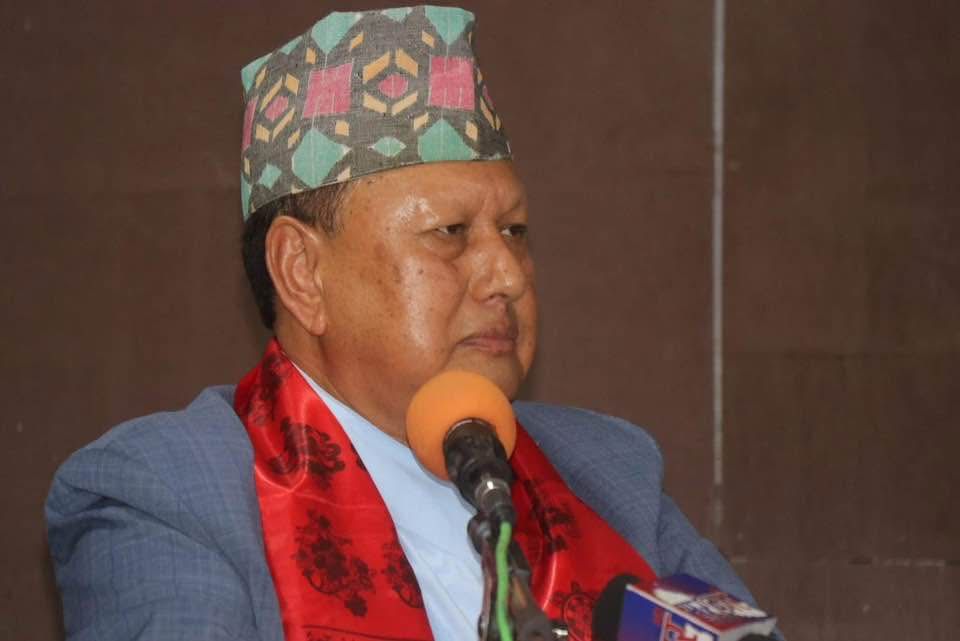
KATHMANDU: The Special Court on July 6, 2026, delivered its verdict in the long-running TERAMOCS corruption case, acquitting former minister Mohan Bahadur Basnet and most of the sixteen individuals and two companies charged by the Commission for the Investigation of Abuse of Authority in May 2025.
The three-judge bench found only the then Nepal Telecommunications Authority board, led by former chairperson Digambar Jha, criminally responsible for irregularities in procuring the Telecommunication Traffic Monitoring and Fraud Control System, a surveillance and billing-verification platform whose contested purchase had triggered allegations of financial loss exceeding Rs 3.21 billion to the state.
What did the Special Court decide today, July 6, 2026?
The Special Court, comprising Judges Hemanta Rawal, Dilliratna Shrestha, and Umesh Koirala, delivered its final verdict in the TERAMOCS procurement corruption case on July 6, 2026. The bench acquitted former Minister for Communication and Information Technology Mohan Bahadur Basnet, who had been named the principal accused when the Commission for the Investigation of Abuse of Authority filed the case in 2025.
The court also acquitted the majority of the other defendants named in the charge sheet, including several former Nepal Telecommunications Authority officials, employees of the winning bidder, and its local agent. Criminal liability was ultimately attached only to the Authority’s own board of directors from the period when the procurement decisions were made.
This outcome effectively narrowed a case that had once implicated a sitting lawmaker and more than a dozen officials down to three individuals found guilty, a result that is likely to generate significant debate about accountability in Nepal’s anti-corruption enforcement system.
What exactly is TERAMOCS?
TERAMOCS stands for the Telecommunication Traffic Monitoring and Fraud Control System, a technical platform that Nepal Telecommunications Authority procured to track voice and data traffic flowing through the networks of telecom operators in the country. Its stated purpose was to help regulators verify whether telecom service providers were billing customers correctly, delivering the quality of service promised under their licenses, and to detect fraudulent practices such as illegal call bypass, where international calls are routed through unauthorized channels to avoid regulatory fees.
In principle, such a system is a legitimate regulatory tool used in many countries to protect both government revenue and consumer interests. However, in Nepal’s case, the manner in which the system was approved, funded, and contracted out to a foreign firm became the subject of years of parliamentary scrutiny, media investigation, and eventually a formal anti-corruption prosecution, turning a technical regulatory upgrade into one of the country’s most closely watched corruption cases of the past two years.
When was the TERAMOCS case filed, and by which body?
The Commission for the Investigation of Abuse of Authority filed the corruption charge sheet in the TERAMOCS case at the Special Court in Kathmandu on May 15, 2025, following an investigation that had run for well over a year. The probe was originally set in motion after parliament’s Public Accounts Committee, in December 2023, directed the commission to examine suspected irregularities in the procurement process, and a parliamentary committee on education, health, and information technology separately sought related documents from the ministry in January 2024.
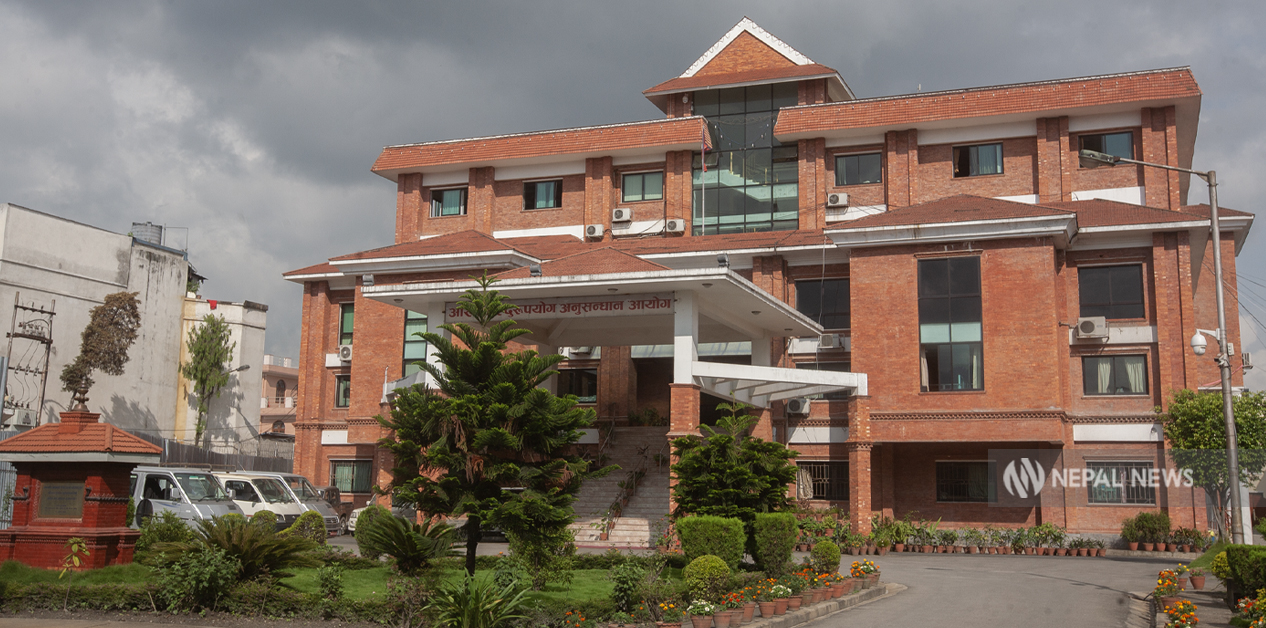
CIAA Office. Photo: Bikram Rai/ Nepal News
After completing witness examinations, document reviews, and financial analysis, the anti-graft body concluded that the procurement process had violated procurement law, breached the regulatory autonomy granted to the telecom authority under law, and ignored a prior Supreme Court directive.
The case named sixteen individuals and two companies as defendants, seeking recovery of more than Rs 3.21 billion in alleged damage to the state.
How much money was allegedly embezzled or lost to the state?
The Commission for the Investigation of Abuse of Authority alleged that the irregular procurement and operation of the TERAMOCS system caused a financial loss to the state of more than Rs 3.21 billion, and it sought recovery of this amount from the accused as part of the charge sheet filed in 2025.
This figure was based on the commission’s assessment of inflated costs, an allegedly flawed and non-competitive selection process for the winning consultant, and payments made for the system despite what investigators described as insufficient legal groundwork and disregard for procedural safeguards.
Separate reporting during the investigation also flagged specific pricing anomalies within the broader contract, including instances where individual hardware items were valued far above ordinary market rates, details that had drawn the attention of customs authorities even before the case reached the Special Court.
It remains unclear from today’s verdict whether the court has ordered recovery of any portion of this claimed amount from the three convicted officials.
Who were the original defendants named in the case?
When the Commission for the Investigation of Abuse of Authority filed its charge sheet in May 2025, sixteen individuals and two companies were named as defendants. Among them was former minister Mohan Bahadur Basnet, described as the central accused, along with former Nepal Telecommunications Authority chairpersons Digambar Jha and Purushottam Khanal, board members Dhan Raj Gyawali and Tika Prasad Upreti, directors Bijay Kumar Rai, Surendra Lal Hada, and Dipesh Acharya, and deputy directors Rewati Raj Pantha, Suresh Basnet, Hiranya Prasad Bastakoti, Achyutananda Mishra, and Sandip Adhikari.
The two corporate defendants were the offshore consulting firm Vanrise Solutions SAL, along with its chief executive, and its Kathmandu-based local agent Connection Trade Link Pvt Ltd, along with that company’s chairman and director.
Notably, the commission had also investigated but chose not to prosecute two other former ministers namely Gyanendra Bahadur Karki of Nepali Congress and Gokul Baskota of CPN (UML) linked to the project’s timeline, as well as a former chief secretary Baikuntha Aryal, concluding that its evidence did not support filing charges against them.
What specific wrongdoing did the anti-corruption commission allege?
The Commission for the Investigation of Abuse of Authority alleged that Nepal Telecommunications Authority officials prepared a falsified evaluation report to favor an unqualified bidder during the request-for-proposal process for selecting a TERAMOCS consultant, effectively rigging the competition in favor of the firm that ultimately won the contract.
Investigators further alleged that the project proceeded despite a February 2016 Supreme Court order that had barred implementation of such a citizen-monitoring system until a proper legal framework governing data privacy was enacted, a framework the commission said was never put in place.
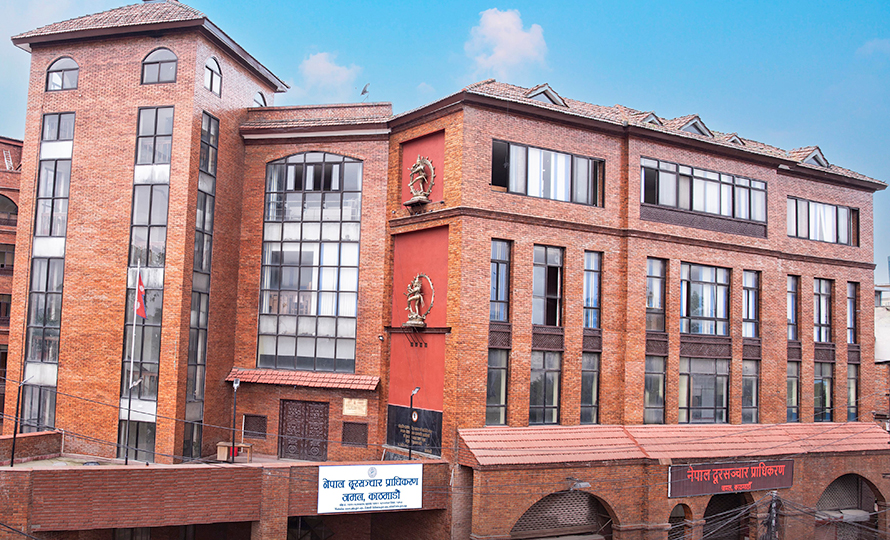
Nepal Telecommunications Authority
The charge sheet also accused the then minister of introducing the TERAMOCS component into the ministry’s program without it having been proposed by the telecom authority itself, and of proceeding without a feasibility study, a defined budget source, or consultation with relevant technical staff, actions the commission said breached both procurement law and the authority’s institutional independence.
What was former Minister Mohan Bahadur Basnet accused of, and why was he acquitted?
Mohan Bahadur Basnet, who served as Minister for Communication and Information Technology when the TERAMOCS procurement began, was accused by the Commission for the Investigation of Abuse of Authority of exceeding his legal authority by unilaterally directing the telecom authority to implement the project even though it had not been part of the authority’s approved annual program for the 2017/18 fiscal year.
The commission’s charge sheet listed twenty-one separate actions it said Basnet took in violation of prevailing law, including failing to ensure a feasibility study, a defined budget process, or proper interagency consultation before pushing the project forward.
Despite these detailed allegations, the three-judge Special Court bench concluded on July 6, 2026, that the evidence did not establish Basnet’s criminal culpability, and it acquitted him along with most of the other individual defendants, holding that direct criminal responsibility rested instead with the telecom authority’s board of directors who approved and executed the procurement decisions.
Who was convicted, and what sentences did the court hand down?
The Special Court held that only three former Nepal Telecommunications Authority board members bore criminal responsibility in the case. Former Authority chairperson Digambar Jha received the heaviest sentence among the three, being sentenced to one year in prison along with a fine of Rs 50,000. Former board members Dhan Raj Gyawali and Tika Prasad Upreti were each sentenced to six months in prison and fined Rs 50,000 apiece.
The court’s reasoning, as reflected in the outcome, appears to place the weight of criminal accountability on the board-level decision-making body that approved and oversaw the procurement, rather than on the individual technical staff, consultants, or the minister who had initially pushed the project forward.
This is a comparatively narrow outcome relative to the scale of the allegations and the number of officials originally charged, and it is likely to be scrutinized by anti-corruption watchdogs and lawmakers alike.
Which other defendants were acquitted along with Basnet?
Beyond Mohan Bahadur Basnet, the Special Court acquitted a long list of individuals who had been named in the 2025 charge sheet. These included former Nepal Telecommunications Authority chairperson Purushottam Khanal, along with Achyutananda Mishra, Surendra Lal Hada, Bijay Kumar Rai, Rewati Raj Pantha, Dipesh Acharya, Suresh Basnet, Hiranya Prasad Bastakoti, and Sandip Adhikari, all of whom had held director or deputy director level positions at the authority during the period under investigation.
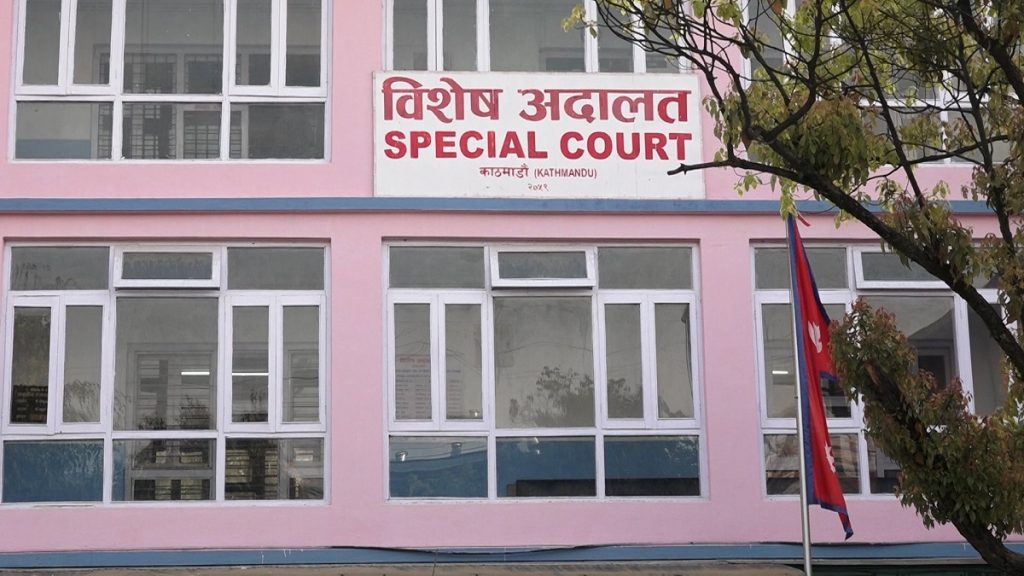
Special Court
The court also cleared the chief executive of Vanrise Solutions, the offshore consulting firm that had won the TERAMOCS contract, along with the company’s Kathmandu-based local agent and its representatives, who had similarly been charged with corruption for their alleged role in the tender process.
This means that of the sixteen individuals and two companies originally charged, the court found grounds for conviction against only three people, all of them former Authority board members rather than ministry officials or private contractors.
What was the alleged role of Vanrise Solutions and its local agent?
Vanrise Solutions SAL, an offshore consulting and technology firm with operations linked to Lebanon and registration in Cyprus, was awarded the TERAMOCS contract by Nepal Telecommunications Authority in December 2018 following a request-for-proposal process that the anti-corruption commission later alleged had been manipulated to favor the company despite questions over its qualifications.
The firm’s Kathmandu-based local agent, Connection Trade Link Pvt Ltd, along with its chairman and a company director, were also charged with corruption for their alleged part in facilitating the contract locally. Investigators had raised concerns during the probe about pricing irregularities within the contract, including reports that certain individual equipment items were valued at levels far exceeding typical market costs, details that reportedly drew scrutiny from customs officials even before the case was formally filed.
Despite these allegations, the Special Court’s July 6 verdict acquitted the company’s chief executive and its local agent representatives of criminal wrongdoing.
Why did the 2016 Supreme Court order matter to this case?
In February 2016, a Supreme Court bench had issued a mandamus order in response to a writ petition challenging government plans to monitor citizens’ telephone calls and text messages, ruling that such a surveillance system could not be implemented without a proper legal framework governing the collection and protection of private data.
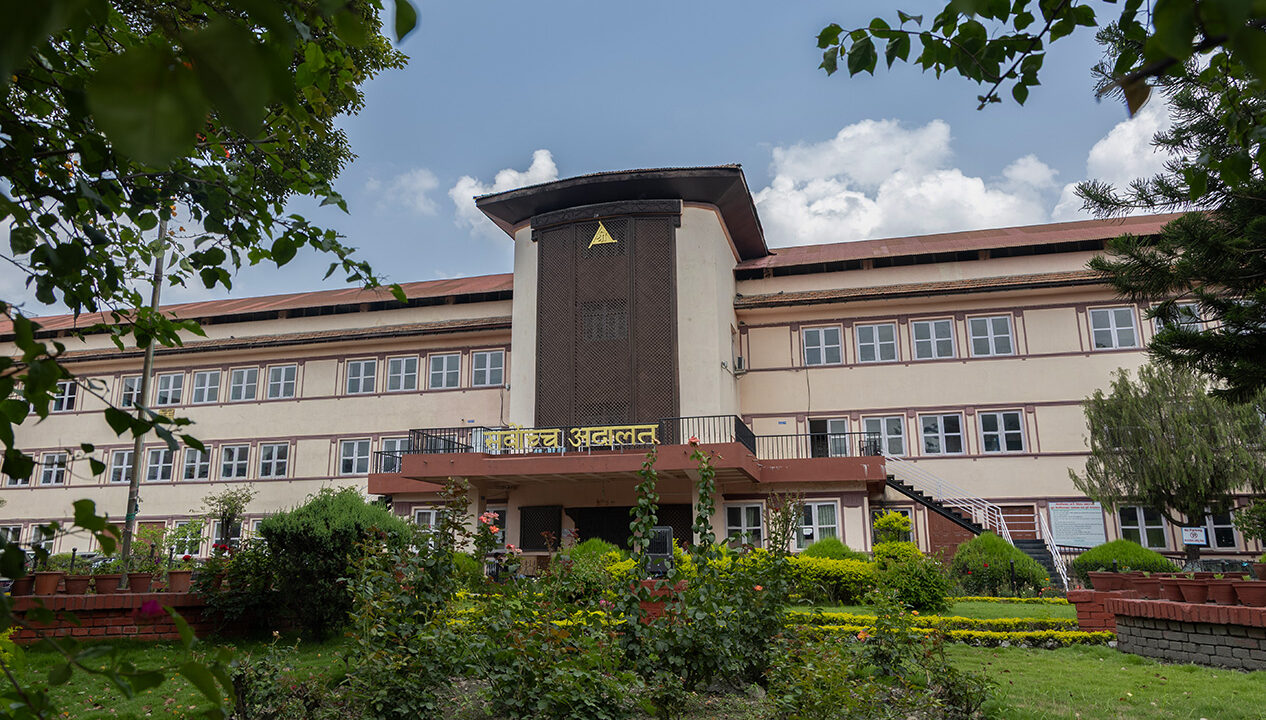
Supreme Court. Photo: Bikram Rai
The Commission for the Investigation of Abuse of Authority argued that the telecom authority proceeded with the TERAMOCS procurement and rollout regardless of this order, without ever putting in place the legal safeguards the court had required, and treated this as a central piece of evidence that the project had been pursued in defiance of judicial instruction and in violation of citizens’ privacy rights.
This aspect of the case placed TERAMOCS at the intersection of corruption and civil liberties concerns, since the technology in question was designed to intercept and analyze telecommunications traffic, making the absence of a legal privacy framework a serious point of contention throughout the investigation and prosecution.
What is the Special Court, and who presided over this verdict?
Nepal’s Special Court is a dedicated judicial body established to hear corruption cases filed by the Commission for the Investigation of Abuse of Authority, functioning separately from the ordinary court hierarchy to ensure specialized handling of anti-graft prosecutions involving public officials and state contracts.
Today’s verdict in the TERAMOCS case was delivered by a three-judge bench comprising Judges Hemanta Rawal, Dilliratna Shrestha, and Umesh Koirala. As the primary venue for major corruption trials in the country, the Special Court has in recent years handled a growing docket of high-value cases referred to it by the commission, ranging from telecommunications and information technology procurement scandals to infrastructure projects such as international airport construction.
Its verdicts carry considerable political and institutional weight, since convictions or acquittals of senior officials and former ministers are closely watched as indicators of how effectively Nepal’s anti-corruption apparatus can hold powerful figures accountable in practice.
How does the TERAMOCS case fit into Nepal’s broader anti-corruption efforts?
The TERAMOCS prosecution was one of the most closely watched corruption cases pursued by the Commission for the Investigation of Abuse of Authority during a particularly active period for the anti-graft body. Over the same broad period, the commission also filed charges against a former prime minister over irregular land transactions, pursued a former Nepal Telecom managing director over an alleged embezzlement of approximately USD 2.44 million in a separate billing-system procurement, and later filed one of the largest corruption cases in the country’s history over the construction of Pokhara Regional International Airport, involving alleged losses of around USD 74 million.
Seen against this backdrop, the TERAMOCS case was widely regarded as a test of whether the commission’s more assertive prosecutorial approach, which extended to a former minister, could translate into convictions of senior political figures rather than only lower and mid-level officials, a question today’s largely favorable verdict for Basnet has now answered in a way that may shape expectations for the outcomes of these other pending cases.
Can today’s verdict be appealed, and what might happen next?
Under Nepal’s judicial procedure for cases handled by the Special Court, verdicts in corruption cases can typically be challenged before the Supreme Court, which functions as the appellate authority for Special Court decisions. This means the Commission for the Investigation of Abuse of Authority, which built its original case around a claimed loss to the state of more than Rs 3.21 billion, retains the option of appealing the acquittals of Basnet and the other cleared defendants if it believes the trial court’s findings do not adequately reflect the evidence gathered during its investigation.
Similarly, the three officials who were convicted, Digambar Jha, Dhan Raj Gyawali, and Tika Prasad Upreti, may choose to appeal their convictions and sentences. Given the scale of public and parliamentary attention the TERAMOCS case has attracted since 2023, any decision by the commission on whether to appeal is likely to be closely watched as a signal of its continued commitment to pursuing the case beyond this first verdict.