Kathmandu
Monday, July 6, 2026





As Kathmandu permits quiet prayers but bans public displays, the Tibetan refugee question once again lays bare Nepal's delicate balancing act between Beijing's red lines, Washington's human rights pressure and an unresolved humanitarian legacy.
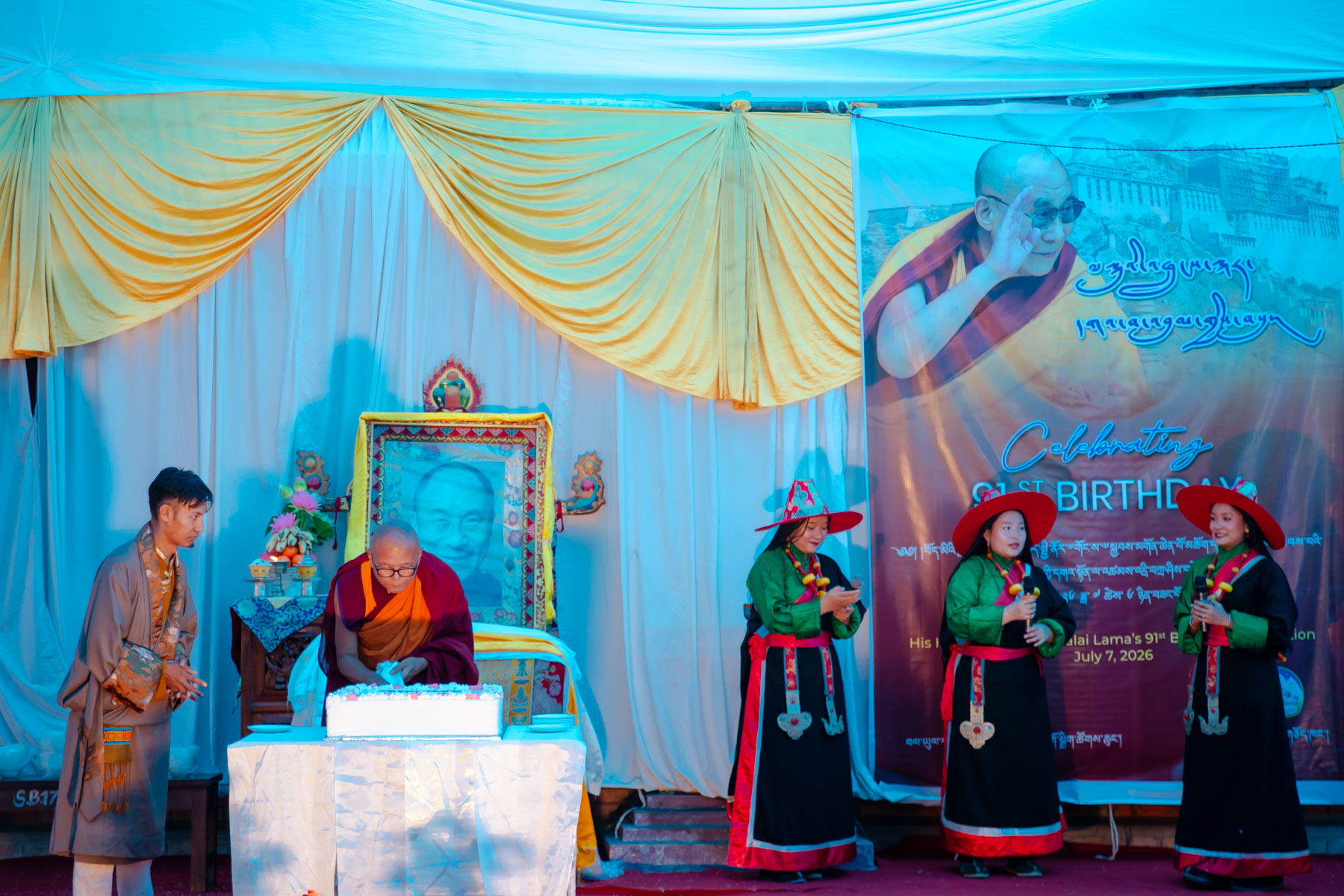
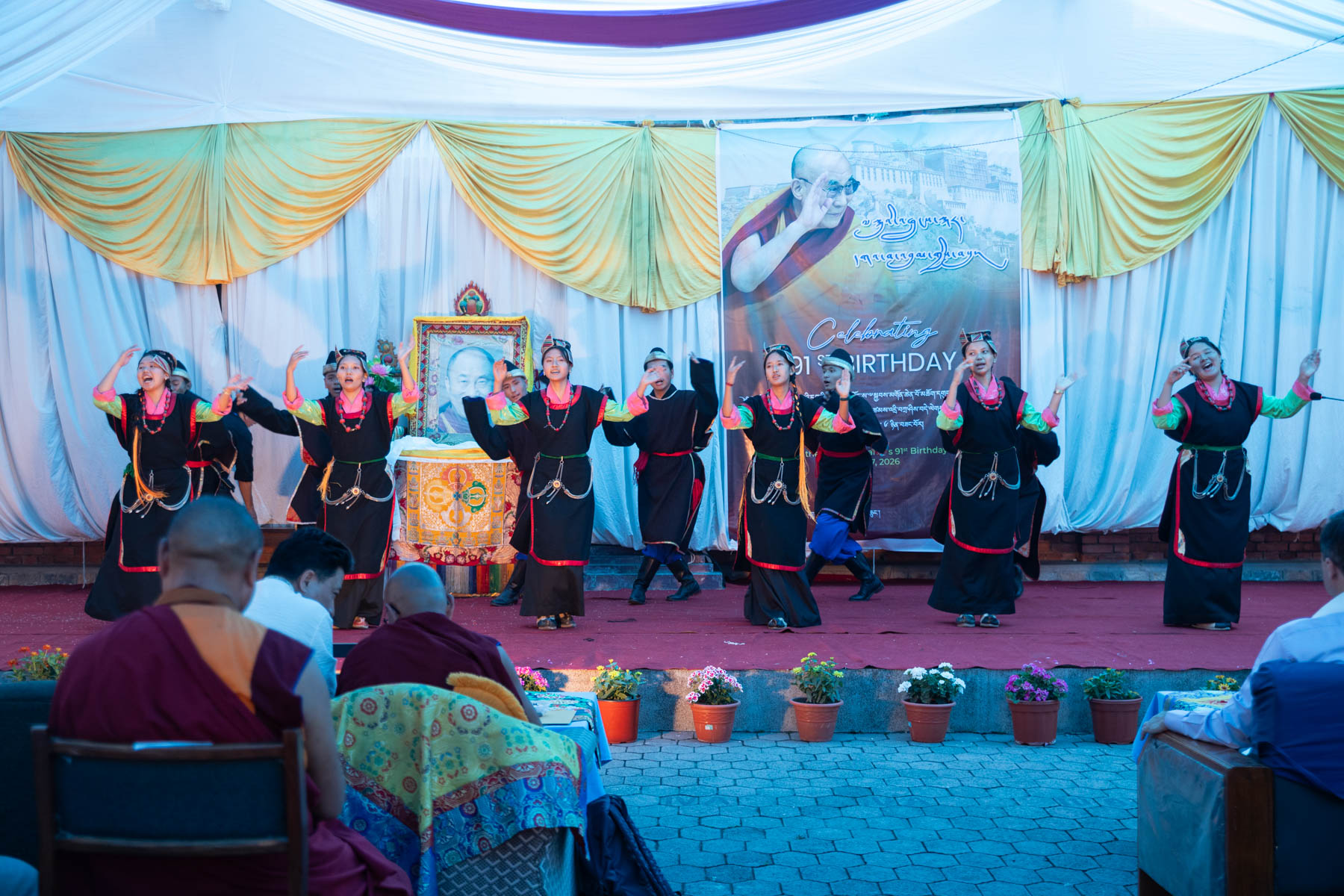
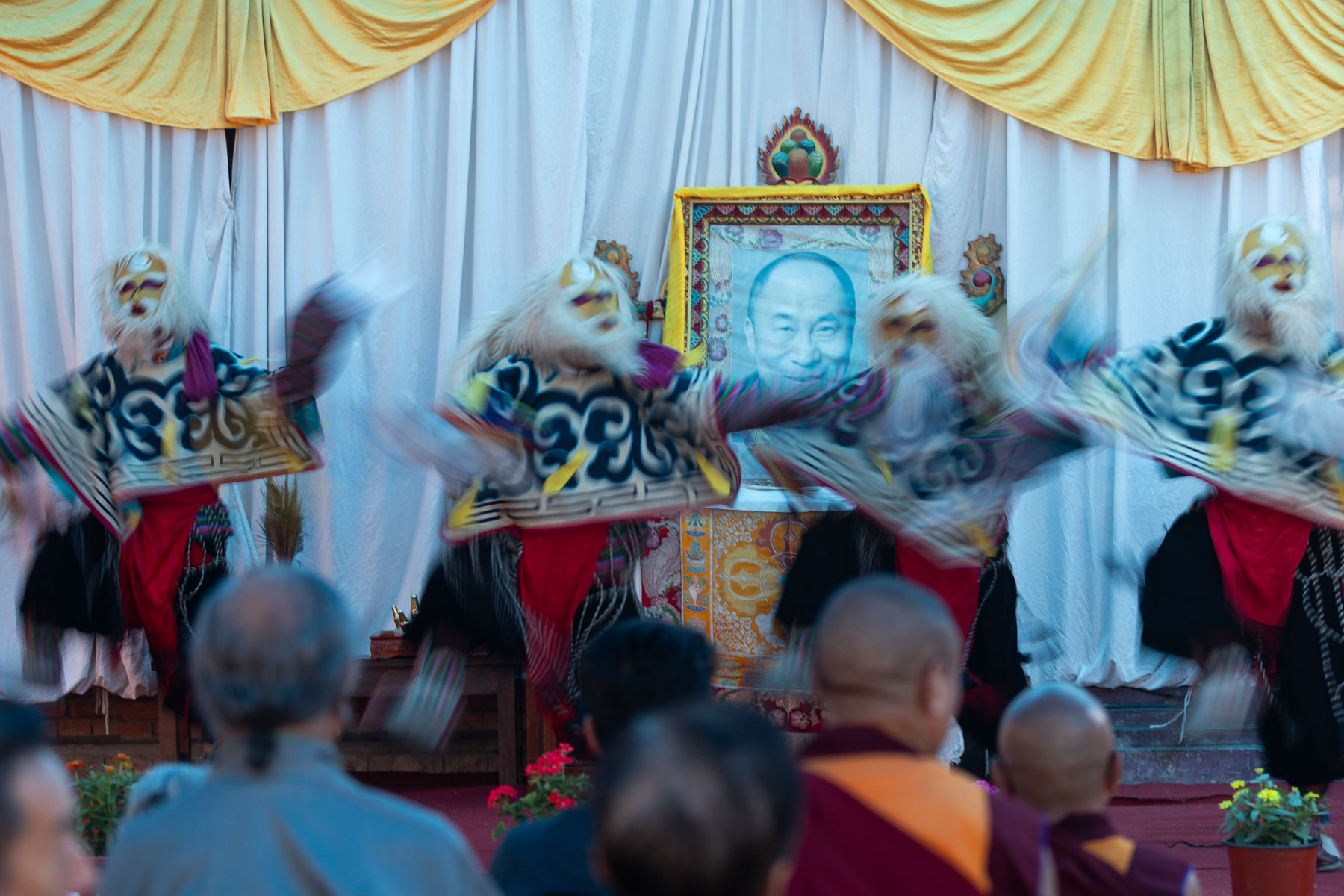
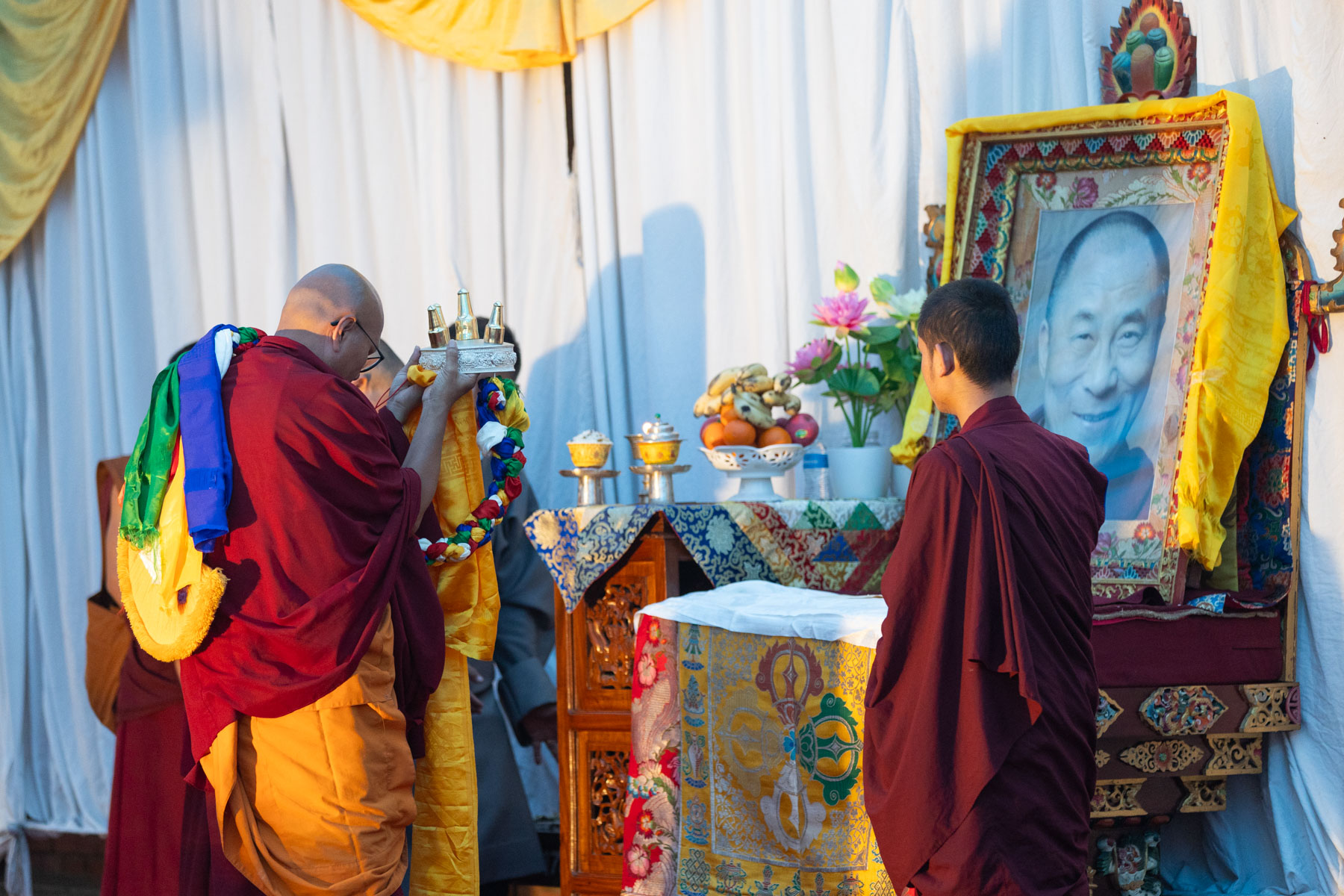
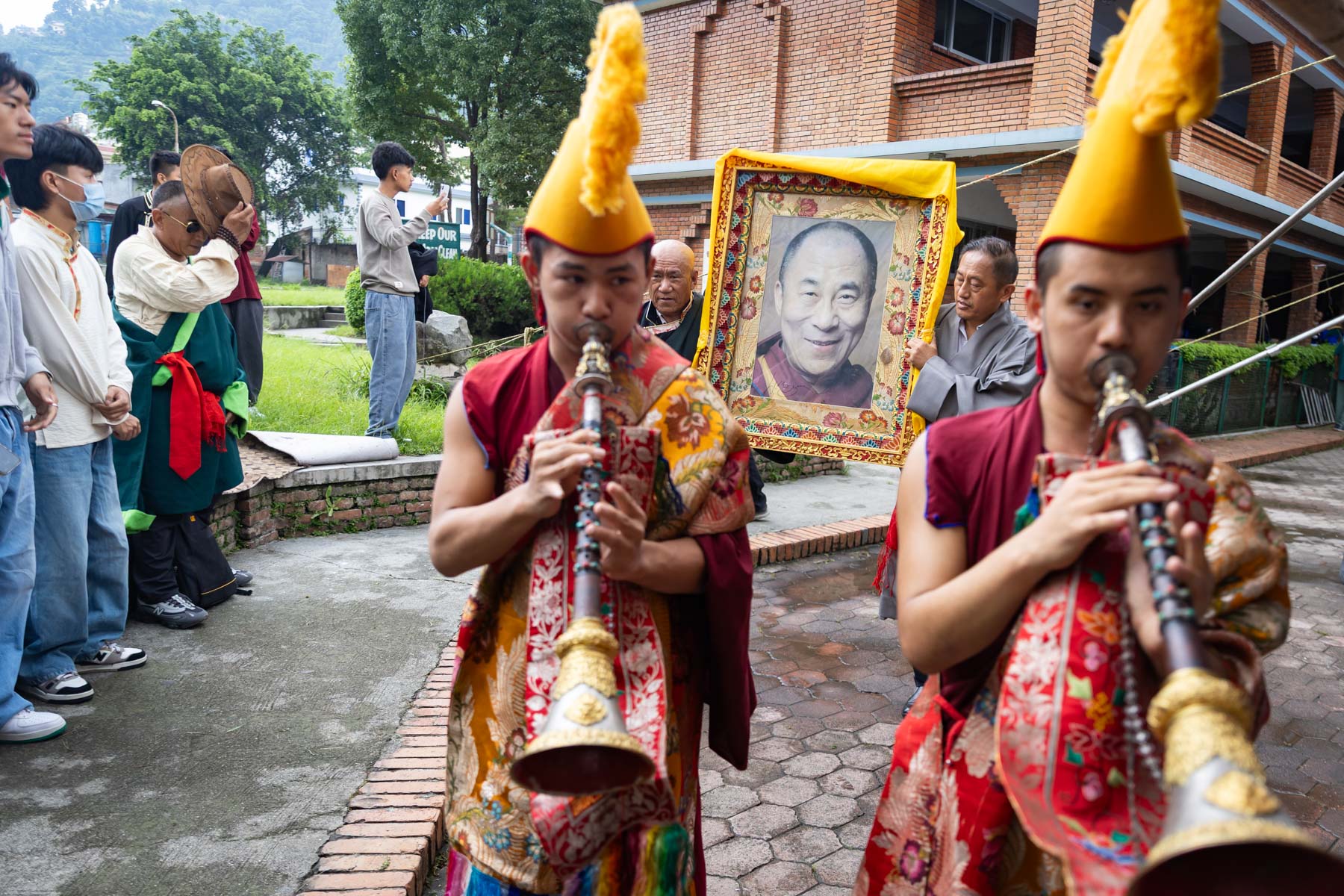
KATHMANDU: On Monday, a quiet but emotionally charged gathering unfolded inside Namgyal School in Swayambhu, Kathmandu, as members of Nepal’s Tibetan community, Buddhist devotees, and diplomatic representatives came together to mark the 91st birthday of the 14th Dalai Lama, the spiritual leader revered by Tibetan Buddhists worldwide. The event included prayers, cultural performances, and a cake-cutting ceremony, echoing similar tributes held simultaneously by Tibetan exile communities in India and other parts of the world. Yet what made this year’s observance in Nepal notable was not the celebration itself but the conditions under which it was permitted to happen.
A day earlier, the Kathmandu District Security Committee, headed by Chief District Officer Ishwar Raj Paudel, had issued an order banning public rallies, open assemblies, and poster campaigns anywhere in the valley that could be linked to “Free Tibet” activities. Security personnel were deployed with instructions to prevent any public or vocal demonstration that could be read as contradicting Nepal’s declared foreign policy. At the same time, the administration made clear that quiet, indoor observances, such as lighting incense or holding prayers inside schools and private premises, would be tolerated, provided there were no banners, slogans, or public speeches involved. This dual approach, celebration permitted indoors, dissent and public symbolism restricted outdoors, is a fairly precise illustration of the tightrope Nepal has walked for decades between honoring a community it has hosted since 1959 and avoiding any appearance of provoking its powerful northern neighbor.
The weight of the ‘One China’ policy
Nepal’s position rests on its long standing “One China” policy, under which Kathmandu formally recognizes Tibet as an integral part of the People’s Republic of China and commits that Nepali territory will not be used for any activity Beijing might interpret as separatist or anti-China in nature. This is not a recent or occasional pledge. It has been reaffirmed in successive joint statements between Nepal and China, including during Nepali prime ministerial visits to Beijing and Chinese presidential visits to Kathmandu. In a joint statement issued during a Nepali prime ministerial visit to China, Nepal reiterated that Tibet affairs are considered China’s internal affairs and pledged not to allow separatist activity against China from Nepali soil, while China in turn reaffirmed its support for Nepal’s independence, sovereignty and territorial integrity.
Analysts have noted a subtle shift in the wording of such statements over the years. Earlier joint communiques bundled Tibet and Taiwan together under a single “One China” formulation, whereas the phrasing used in more recent statements has separated the reference to Tibet from the explicit language of the One China Principle, even though the underlying substance of the commitment has not changed.
This year, that commitment has been tested repeatedly. In April 2026, Chinese Ambassador to Nepal Zhang Maoming met Nepal’s Home Minister Sudhan Gurung and, according to officials present, urged Kathmandu to further restrict activities related to Tibet and Taiwan, expressing concern over what Beijing described as separatist activity and a perceived westward tilt in Nepal’s politics. The ambassador specifically cautioned Nepali leaders against attending the swearing-in ceremony of the Central Tibetan Administration’s president, and raised the unresolved registration status of Tibetan refugees in Nepal as a matter of concern. In response, the Home Ministry reaffirmed that Nepal upholds its long standing position on Tibet and will not allow its territory to be used against China, while also asserting that Nepal will not become a pawn of any foreign power. Around the same period, Nepal’s new Foreign Minister separately assured the Chinese envoy that Kathmandu’s policy would remain unchanged under the new government led by Prime Minister Balendra Shah, even as Beijing continued to send delegations to study the implications of Nepal’s post Gen Z political transition. Beijing’s unease appears to have been sharpened by symbolic gestures such as congratulatory messages sent by the Dalai Lama and by Central Tibetan Administration president Penpa Tsering to Nepal’s recent heads of government, which Chinese observers reportedly interpreted as part of a wider pattern of warming ties between Kathmandu and Tibetan exile leadership.
Who are the Tibetan refugees and why Nepal
The presence of Tibetans in Nepal predates the modern refugee crisis, since ethnic Tibetan and Tibetic communities such as the Sherpa, Hyolmo, Jirel, and the Bhotia populations of Upper Mustang, Upper Dolpo, and the Humla and Walung valleys have lived in Nepal’s high Himalayan belt for centuries as citizens, not as refugees. The refugee population under discussion here is a distinct group: Tibetans who fled Chinese rule following the failed 1959 uprising in Lhasa and the flight of the Dalai Lama into exile in India. Tibetans had begun trickling into Nepal even before 1959, but the decisive wave came in 1959, 1960, and 1961, when tens of thousands crossed the Himalayas fleeing the consolidation of Chinese control over Tibet. Nepal’s then monarch, King Mahendra, opened the country’s borders to the new arrivals at a time when Kathmandu had far less economic dependence on Beijing than it does today, a decision credited with saving many lives even as it drew disapproval from Chinese authorities. Refugee camps were subsequently established with the help of the International Committee of the Red Cross, the Swiss government, and later the Office of the United Nations High Commissioner for Refugees, which set up organized settlements in Jawalakhel in Kathmandu, Tashi Palkhel and Tashi Ling near Pokhara, Chialsa in Solukhumbu, and Dhorpatan in western Nepal. Altogether, Nepal today hosts a network of roughly a dozen recognized Tibetan settlements, with the largest urban concentrations found in the Kathmandu valley, particularly in Jawalakhel, Swayambhu, and Boudhanath, alongside settlements in Pokhara and scattered smaller communities elsewhere in the hills.
For roughly three decades, Nepal’s approach to Tibetan arrivals remained relatively open. This changed after 1986, when Chinese pressure over border management began to translate into tighter Nepali controls, and especially after 1989, when Kathmandu stopped recognizing new Tibetan arrivals as refugees altogether. From that point, an informal understanding, often referred to as the Gentleman’s Agreement, was worked out between Nepal, the UNHCR, and the United States, under which newly arriving Tibetans crossing into Nepal would not be forcibly returned to Chinese territory but would instead be allowed safe, discreet transit toward the Tibetan exile community in Dharamshala, India, without being formally registered as refugees inside Nepal itself.
The exact numbers, and why they remain uncertain
There is no single authoritative figure for the number of Tibetan refugees currently living in Nepal, and this uncertainty is itself a significant part of the story. Different institutions cite different numbers depending on when their estimate was made and what population it counts. Historical United Nations records placed the number of Tibetans who settled in Nepal after the 1959 exodus at approximately 8,000 to a slightly higher figure, of whom a smaller number lived within formally recognized settlements. United States government human rights reporting in recent years has used a working estimate of approximately 12,000 resident Tibetan refugees in Nepal, a figure cited by the government’s own refugee data as well as by Nepali human rights organizations tracking the community. More recent academic research places the number lower, noting that the Tibetan exile population across South Asia has been shrinking for two decades, with approximately 10,000 Tibetans currently estimated to remain in Nepal compared with a far larger number in India. Reporting in early 2026 on Chinese diplomatic pressure over the refugee registration issue referenced a working figure of around 20,000 Tibetan refugees living in Nepal for decades, the large majority of whom remain unregistered and therefore without any recognized legal status. UNHCR’s own country level fact sheets have generally used broader combined refugee figures for Nepal, citing that the country hosts around 20,000 refugees in total when Tibetan, Bhutanese, and other nationalities are counted together.
The honest answer, then, is that no precise, currently verified census figure exists, because Nepal has not conducted a fresh registration exercise for Tibetans since the mid-1990s. Estimates in credible sources currently range roughly between 10,000 and 20,000 long-term Tibetan residents, a range that reflects genuine data limitations rather than any single organization’s error. This uncertainty is compounded by the fact that Nepal is not a signatory to the 1951 UN Refugee Convention or its 1967 Protocol, and has no domestic refugee law, meaning the country has never been under a legal obligation to maintain a formal, continuously updated refugee registry in the first place.
Verification, identity documents and the 1995 cut-off
The clearest and most consequential fact in the entire Tibetan refugee story in Nepal is this: Nepal conducted a census of its long-staying Tibetan population in 1993 and, based on that count, issued Refugee Certificates, commonly called RCs, in 1995 to those Tibetans who were 16 years of age or older at the time, with minor children listed as dependents on a parent’s card. Since 1995, the Nepali government has not issued a single new Refugee Certificate to any Tibetan. This means every Tibetan child born in Nepal after that year, every Tibetan who turned 16 after 1995, and every Tibetan who arrived after 1989 has no recognized legal identity document from the Nepali state. Human rights researchers estimate that as a result, roughly three out of every four Tibetans currently living in Nepal are undocumented, unable to obtain a Nepali citizenship certificate, a passport, a driving license, formal employment, land ownership, or a bank account in their own name.
The practical effects of this documentation gap are considerable. Undocumented Tibetans cannot register births, cannot buy or transfer property, cannot legally work, and face difficulty even opening a bank account. Older Tibetans who hold the 1995-era Refugee Certificate retain a narrow set of recognized rights, but even they cannot obtain full Nepali citizenship or vote. Successive UN human rights bodies, including the Committee on Economic, Social and Cultural Rights, have recommended that Nepal resume registration and issue identity documents to its Tibetan population, and Nepal has repeatedly acknowledged these recommendations during its Universal Periodic Review sessions at the UN Human Rights Council without, so far, resuming the practice.
Travel is similarly constrained. Tibetans who hold a valid 1995 Refugee Certificate are formally eligible to apply for a Nepali travel document allowing them to leave and re-enter the country, but the application process has long been described by researchers and the US State Department as slow, expensive, and inconsistently administered, with documents typically valid for only a single journey. Refugees seeking to travel for third-country resettlement have also been required to pay a daily fine, reported at roughly Rs 1,063 or about USD 8 per day, as a penalty for what the government terms illegal overstay, before an exit permit is granted. A 2016 government directive did simplify one part of the process by allowing chief district officers to waive a witness and police verification step for Tibetans who had previously been issued a travel document, but this eased only a narrow procedural bottleneck rather than resolving the underlying documentation gap.
What Washington says
The United States has been the most consistent and vocal outside actor pressing Nepal on this issue, largely through two channels: the State Department’s annual human rights reporting and periodic Congressional appropriations language. US State Department reporting has repeatedly noted that Nepal has not issued personal identification documents to Tibetan refugees since 1995, leaving most of this population without documents to present at police checkpoints, and that the government has continued to deny exit permits to newly arriving Tibetans while maintaining uneven enforcement of movement restrictions on refugees generally. The same reporting has documented episodes in which Nepali police intervened to stop private Tibetan celebrations of the Dalai Lama’s birthday even inside a settlement, only later permitting a scaled-back version of the event after negotiation with local authorities.
Washington’s leverage has not been limited to reporting. In its fiscal year 2027 appropriations report, the US House Appropriations Committee urged the State Department to press Nepal on the protection of Tibetan refugee rights, specifically calling for renewed registration efforts for Tibetans who have lacked legal recognition since 1995, and it proposed continued funding, including roughly USD 10 million for cultural preservation work connected to Tibet and USD 8 million for refugee and diaspora support programs in India and Nepal. The committee also urged the Secretary of State to press Nepal to honor its commitments to UNHCR, particularly the principle of non-refoulement, which prohibits returning individuals to a country where they would face persecution. Notably, the State Department had restored USD 6.8 million in aid for Tibetan communities across South Asia, including Nepal, in July 2025, after an earlier round of budget cuts had put that funding at risk. This restoration is frequently cited by observers as a concrete example of how American funding decisions function as a form of quiet pressure: aid can be paused when Washington is dissatisfied and restored when its concerns are addressed, giving the United States a recurring point of leverage over how Kathmandu treats its Tibetan population, quite apart from formal diplomatic statements.
It is worth adding a caveat here. The most recent State Department human rights reports have themselves been criticized by international rights organizations for narrowing their scope, and Human Rights Watch has argued that the 2025 edition of the report omitted categories of rights violations that had been standard in earlier editions, including sections on corruption in government and restrictions on peaceful assembly, describing the changes as reflecting a political recalibration under the current administration. This does not erase the substance of what the reports still document about Nepal’s Tibetan community, but it is a relevant caveat for readers assessing how much weight to place on any single year’s report.
What the OHCHR says
The United Nations human rights machinery has engaged with Nepal’s Tibetan issue mainly through periodic country visits and treaty body reviews rather than standalone statements. The most significant and recent intervention came in December 2025, when the UN Special Rapporteur on minority issues completed a nine-day mission to Nepal. In the end-of-mission statement, the Special Rapporteur noted a troubling new dimension to the Tibetan question: since the GenvZ protests of September 2025, Tibetans in Nepal have increasingly become targets of online hate speech, with social media content inciting animosity against the community and calling for the deportation of Tibetan refugees. The Special Rapporteur called on Nepal to take meaningful action against hate speech and misinformation and stressed that the situation of Tibetan as well as Bhutanese and Rohingya refugees needs to be addressed in line with international human rights standards, adding that Nepal bears responsibility for the safety of all individuals within its territory regardless of their citizenship status. The full report from this mission is still awaited.
This built on earlier and more specific recommendations. In its 2014 review of Nepal, the UN Committee on Economic, Social and Cultural Rights recommended that Nepal proceed to register all Tibetan refugees on its territory and provide them with identification documents, while also urging Nepal to consider ratifying the 1951 Refugee Convention. UNHCR’s own submissions to Nepal’s Universal Periodic Review have struck a notably even-handed tone, explicitly commending Nepal for its historical generosity. UNHCR’s submission stated that Nepal must be commended for welcoming Tibetan refugees beginning in 1959 and for continuing to generously host a large Tibetan refugee population while permitting new Tibetan arrivals safe and discreet transit through its territory, even as it flagged that a significant number of long-staying Tibetans remain unregistered and without any individual identification. This balance, acknowledging Nepal’s decades of hospitality on one hand while flagging the documentation gap on the other, is broadly representative of how UN bodies have approached the issue: as a call for improved practice rather than as an accusation of bad faith.
What China says
Beijing’s position is straightforward and has remained consistent for decades: Tibet is an inseparable part of Chinese territory, the Dalai Lama and the Central Tibetan Administration in Dharamshala are regarded as leading a separatist movement seeking to split Chinese territory, and any foreign government’s engagement with Tibetan exile institutions, however informal or culturally framed, is treated by Beijing as interference in China’s internal affairs. Chinese diplomatic communications with Nepal consistently frame the issue in these terms rather than as a humanitarian or refugee-rights matter. As reflected in recent meetings between the Chinese ambassador and Nepali officials, Beijing’s concerns have extended beyond symbolic events to the refugee documentation question itself, with Chinese officials reportedly raising the unresolved registration status of Tibetans in Nepal as something Beijing watches closely, alongside concerns about visits by Tibetan religious figures and any hint of formal Nepali government engagement with the Central Tibetan Administration’s leadership. Chinese state media have periodically criticized Central Tibetan Administration institutions directly, including describing exile Tibetan elections in dismissive terms as lacking any real territorial or political legitimacy. From Beijing’s perspective, restricting the visibility of Tibetan refugee identity and activity in Nepal is not an act of repression but a matter of protecting its own sovereignty and preventing what it regards as a foreign-based separatist project from operating on its southern border.
The geopolitical quagmire and why the Bhutanese refugee precedent does not apply
Nepal’s difficulty here is genuinely structural, not simply a matter of political will. The comparison people frequently raise, that Bhutanese refugees found a durable solution through third-country resettlement while Tibetans remain in limbo, is intuitive but rests on a false equivalence. The Bhutanese refugee crisis stemmed from a bilateral citizenship dispute between Nepal, Bhutan, and roughly 100,000 people of Nepali origin evicted from Bhutan in the early 1990s. Since Bhutan refused repatriation and the refugees had no realistic path back, the international community, led by the United States and coordinated through UNHCR and the International Organization for Migration, built a large-scale third-country resettlement program starting in 2007. Since that initiative began, UNHCR has helped relocate more than 100,000 Bhutanese refugees to countries including the United States, marking one of the largest resettlement operations of its kind.
The Tibetan situation differs in almost every structural respect. First, Tibetan refugees are not stateless in the same legal sense; China regards them as Chinese nationals, and their claim is precisely that they do not wish to be governed by China, not that they lack a country willing to claim them. Third-country resettlement would not resolve their political grievance, since the Tibetan exile movement’s core objective, autonomy or genuine self-rule for Tibet, cannot be achieved by dispersing Tibetans to Western countries.
Second, India, not Nepal, hosts the seat of the Tibetan exile government and the overwhelming majority of the exile population, and Dharamshala functions as the political and religious center of the movement. Nepal’s Tibetan community exists in this arrangement partly as a transit and secondary settlement population, and a mass resettlement drive out of Nepal specifically would fragment the movement’s geographic anchor rather than solve anything.
Third, and most decisively, China has direct leverage over Nepal in a way it never had over Bhutan’s refugee question, and Beijing has made clear over decades that it views large-scale Tibetan refugee registration or resettlement facilitation from Nepali soil as a direct challenge to its territorial claims, not a humanitarian technicality. Any Nepali government contemplating an active, internationally backed resettlement program for Tibetans would be doing something categorically more provocative to Beijing than facilitating an already politically resolved Bhutanese caseload.
Fourth, the Central Tibetan Administration itself has historically been ambivalent about mass resettlement of Tibetans out of South Asia, since dispersing communities away from India and Nepal risks accelerating the demographic decline of Tibetan settlements and weakening the exile community’s claim to eventually return to Tibet, a concern documented in recent research on the shrinking Tibetan population across South Asia.
This is the essence of Nepal’s quagmire. Registering Tibetans and issuing them full identity documents, something UN bodies and Western governments have urged for years, would be a relatively modest administrative step in isolation, but Beijing interprets even modest steps in this direction as symbolic recognition of a “Tibetan refugee problem” that legitimizes the exile cause. Refusing to register them draws consistent criticism from the United States, the UN human rights system, and international advocacy groups, and leaves tens of thousands of long-term Nepal residents, many of them born in the country, in a legal limbo that Nepal’s own courts and rights bodies have acknowledged is untenable. Nepal cannot satisfy both sides simultaneously, and every Nepali government since the late 1980s, regardless of party or ideology, has ultimately chosen to prioritize the relationship with Beijing, given Nepal’s geographic position, its trade and infrastructure dependence on both neighbors, and its narrow room for maneuver as a small state wedged between two much larger powers.
How American pressure has played out in practice
Historically, whenever Nepal has visibly tightened restrictions on its Tibetan community, whether through stopping birthday celebrations, deporting new arrivals, or reinforcing border security agreements with China, Washington has tended to respond through a mix of public criticism in its annual human rights reports, private diplomatic pressure, and, at times, funding-linked incentives. The pattern surrounding the 2025 aid cuts and subsequent partial restoration for Tibetan community programs in South Asia is a clear recent example: when funding was cut, advocacy groups and Congressional voices flagged the risk to Tibetan cultural and refugee support programs in Nepal and India, and the State Department subsequently restored a portion of that funding. Congressional committees have also used appropriations report language, which though not legally binding in the same way as the appropriations bill itself, functions as a recurring diplomatic signal that ties continued US assistance to Nepal’s human rights conduct toward its Tibetan population.
This is a softer form of leverage than outright sanctions, and it has rarely produced a fundamental change in Nepal’s registration policy, which has remained frozen since 1995 regardless of which government has been in power in Kathmandu or in Washington. But it does mean that the Tibetan refugee question in Nepal is never purely a bilateral Nepal-China matter. It sits inside a broader triangular dynamic in which Washington uses reporting, funding, and diplomatic statements to keep the issue visible, Beijing uses direct bilateral pressure and the weight of Nepal’s economic dependence to keep it contained, and Kathmandu manages the resulting friction through careful, often ambiguous, half-measures, such as permitting a subdued indoor birthday celebration while banning any outdoor demonstration, exactly the arrangement seen today in Kathmandu.
A balance that satisfies no one fully
Seen from Kathmandu, the picture that emerges is neither a simple story of Chinese-imposed repression nor one of Nepali indifference to a vulnerable community it has hosted since 1959. It is the story of a small, geographically constrained state managing an unresolved humanitarian legacy sandwiched between the strategic interests of two much larger powers, while facing continuous, sometimes contradictory, pressure from Washington, Geneva-based UN bodies, and Beijing all at once. Tibetan refugees in Nepal today live with a documentation gap now three decades old, uncertain legal status, restricted mobility, and rising social vulnerability, as illustrated by the hate speech concerns raised after the 2025 Gen Z protests. At the same time, Nepal continues to allow the community to practice its faith, run its schools and monasteries, and mark occasions like the Dalai Lama’s birthday, albeit within boundaries carefully calibrated not to provoke Beijing.
Whether this arrangement can hold indefinitely, or whether mounting pressure from Washington’s funding conditions, Geneva’s human rights reviews, and Beijing’s tightening vigilance eventually forces a more decisive Nepali policy choice, remains one of the more delicate open questions in South Asian geopolitics.