Kathmandu
Sunday, July 12, 2026





A single week of compounding disasters reveals that Nepal's problem is not which party occupies Singha Durbar, but a governing class that systematically criminalizes and discards the downtrodden.
KATHMANDU: Cruelty does not always arrive as a fist. Sometimes it arrives as a form, a wheel lock, a relocation order, a signature on an agreement everyone involved already knows will be ignored. Nepal’s government spent a single week in July 2026 proving that its cruelty toward the poor no longer even bothers to disguise itself as accident. It moved flood-threatened families into a shelter that drowned them anyway. It clamped the only income a desperate young man had until he burned his own body rather than face one more encounter with the state. It sent police to detain the volunteers who showed up to rescue families the government itself had failed to protect. And while all of this was unfolding in the capital, hundreds of loan shark victims were already walking on foot toward Kathmandu for the second time in three years, because a government that had signed its name to their relief chose, deliberately, to let that signature mean nothing.
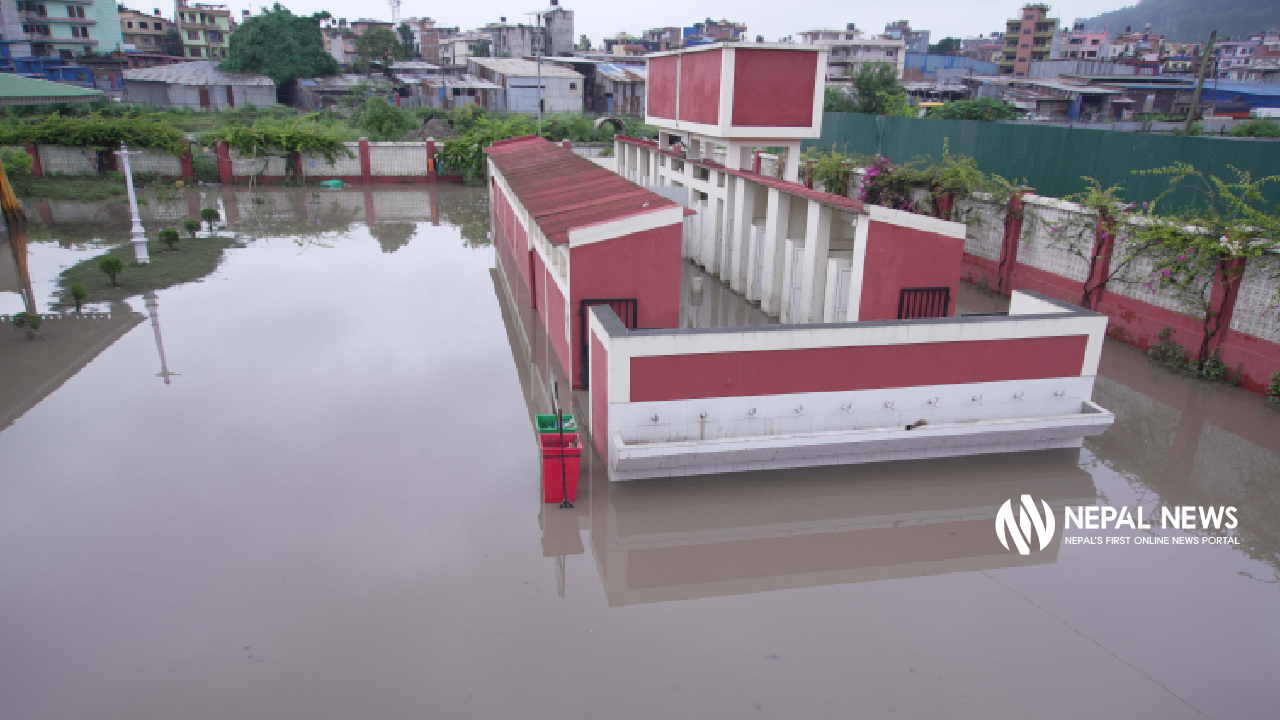
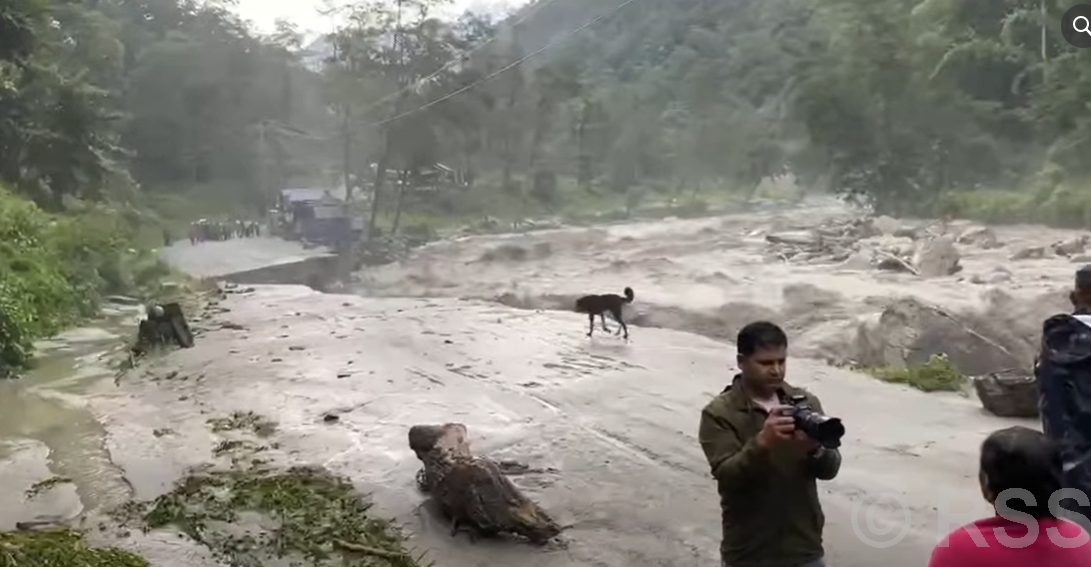
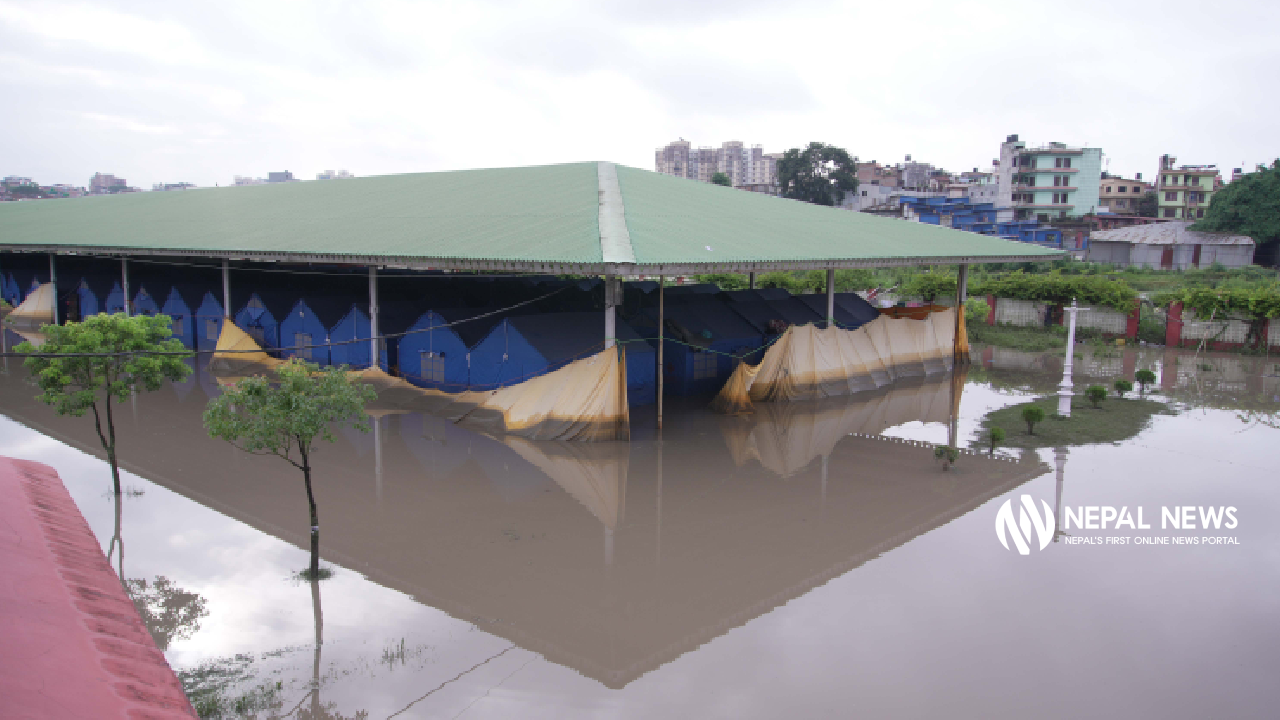
Floodwaters inundate the Kirtipur holding centre, where landless settlers displaced from Kathmandu’s riverbanks were relocated. Photo: Nepal Photo Library
None of this is new to Nepal. What makes this week different is that it no longer permits the comfortable fiction of coincidence. A government that rose to power on the explicit promise of ending precisely this kind of institutional violence has, within four months, become indistinguishable from every administration it replaced, and in some respects has proven itself faster, more efficient, more mechanically ruthless in producing the exact same harm. That should terrify Nepalis far more than any single scandal, because it confirms something the country has spent decades avoiding admitting to itself: Nepal is not currently a state built to protect its poor. It is a state built to manage them, discipline them, and discard them the moment their suffering becomes politically inconvenient. Whichever party sits in Singha Durbar changes the letterhead. It rarely changes the outcome for the person outside the passport office with a bike, a debt, or a flooded tent.
Nowhere is this exposed more nakedly than in the government’s own past words being used as a weapon against it. In 2023, Balendra Shah, then only Kathmandu’s mayor with no national authority to test his convictions against, wrote after entrepreneur Prem Prasad Acharya’s self-immolation that the state had failed the man at every single stage of his existence, calling it the most terrifying signal imaginable that every layer of government had abandoned him. It was a searing indictment, and it worked because it refused to soften into euphemism. It named the state as the perpetrator, not misfortune, not personal failing, the state. That kind of moral clarity is easy to produce from the outside. It costs an opposition figure nothing.
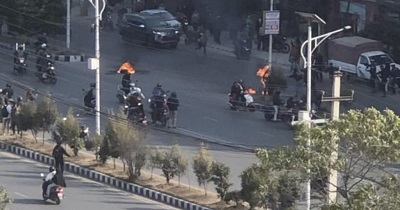
Prem Prasad Acharya set himself on fire outside Nepal’s Parliament building in Kathmandu in January 2023, later dying from his injuries. File photo
The real question was always what Shah’s own government would do once it possessed the exact machinery he had once condemned. That question was answered this month, brutally and specifically, in the form of a wheel lock placed on the motorcycle of Ganesh Nepali, a twenty-five-year-old ride-hailing driver from Mugu who had mortgaged his family’s land to buy the only asset standing between his household and destitution. Municipal police clamped the bike over a parking dispute, ignored his pleas, and moved to tow it while he stood there. He drained fuel from the tank, doused himself, and burned. He died a day later.
This was not an accident that slipped past a well-intentioned government. It was cruelty administered through paperwork, by the exact machinery Shah once swore, in writing, that he understood to be lethal. His silence since Nepali’s death, set against the moral thunder of his words in 2023, is not an inconsistency to be politely noted. It is a confession. It tells Nepalis precisely how much a politician’s outrage is worth once that politician is the one holding the wheel lock.
Nepal did not invent this particular cruelty, and the company it now keeps should offer no comfort, only warning. Mohamed Bouazizi, the Tunisian vendor whose 2010 self-immolation detonated the Arab Spring, died after officials seized his cart and, by most accounts, humiliated him in front of his community while doing it. Dimitris Christoulas, a retired Greek pharmacist, shot himself in Athens’ Constitution Square in 2012, leaving behind a note accusing his government of stripping away his dignity through austerity that abandoned citizens who had trusted the state their entire lives. In both cases, the government of the day tried, at first, to file the death away as a private tragedy rather than a public indictment. In both cases, that attempt collapsed, because the public understood instinctively what the state pretended not to: that a citizen setting himself on fire outside a government building is never really about that one citizen. It is a verdict on the system that pushed him there. Nepal’s government is currently attempting the identical dodge. It should expect the identical failure to contain what it has unleashed.
What should enrage Nepalis most is not that this horror repeated itself, but that it repeated itself with the state having learned absolutely nothing in between. After Acharya’s death in 2023, the country talked. Lawmakers condemned. Opposition, Shah among them, wrote passionately about systemic failure. And then the system stayed exactly as it was. Kathmandu still runs its dual-track traffic enforcement regime, municipal police and federal traffic police each imposing their own separate, sometimes harsher, fine structures on the same population of gig and informal workers, a defect opposition lawmakers named specifically this month as a direct contributor to Nepali’s death.
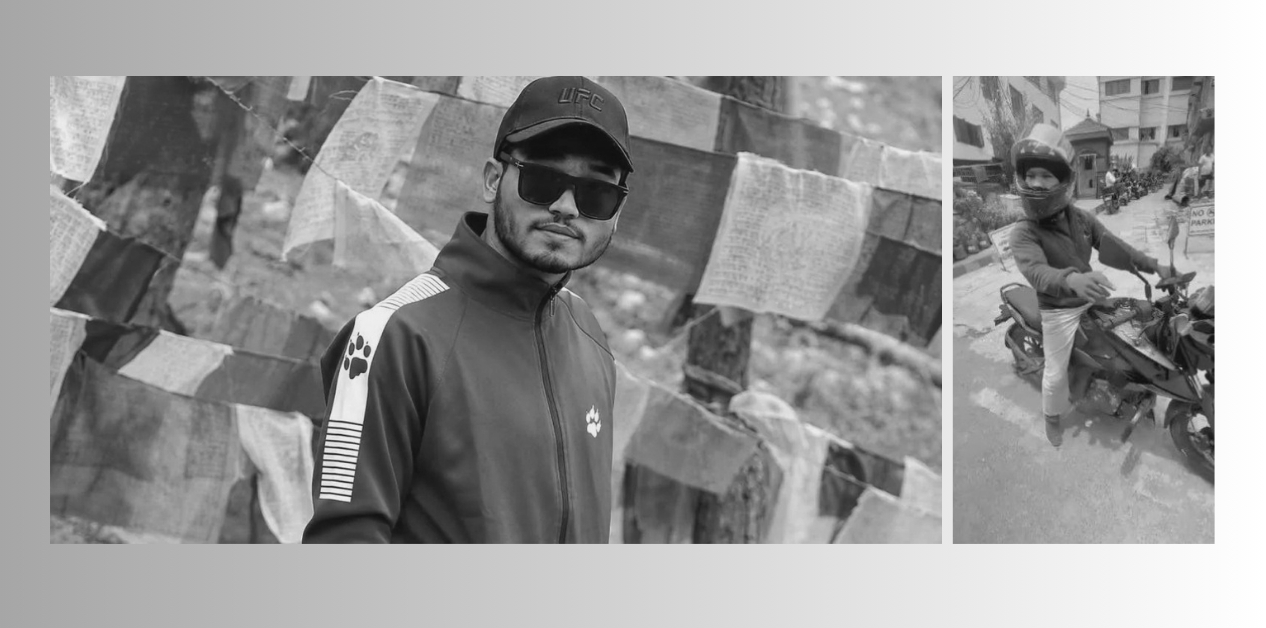
Ganesh Nepali
That defect was fully visible in 2023. Nobody with the power to fix it treated it as urgent enough to touch. A government that watches a man burn himself to death over exactly this kind of encounter, does nothing to reform the mechanism that produced it, and then watches it happen again, has forfeited any right to call the second death a tragedy. It is not a tragedy. It is a policy outcome, manufactured by three years of deliberate inaction.
If Nepali’s death exposes a government that refuses to learn, the flooding at the Kirtipur holding centre exposes a government that never even pretended to try. There is no fog of uncertainty to hide inside here, no unpredictable act of God to blame, because the government’s own stated justification for bulldozing riverbank settlements in April was flood protection. Shah wrote publicly, before a single wall came down, that residents faced deadly seasonal floods and needed secure relocation ahead of the monsoon. His own administration then placed the primary holding centre for those same families directly on the floodplain of the Bishnumati river, a site residents say floods almost every single year. When it flooded in June, submerging children sleeping on the bare ground, a government with any capacity for shame might have called that an unforgivable but singular mistake. When it flooded again in July, driving the same terrified families into the same freezing predawn scramble for belongings a second time, the word mistake stops applying. This was negligence, engineered by a state that knew the risk, ignored the risk, and then handed the bill for that decision to people who had no say in where they were dumped and no resources to survive the consequences.
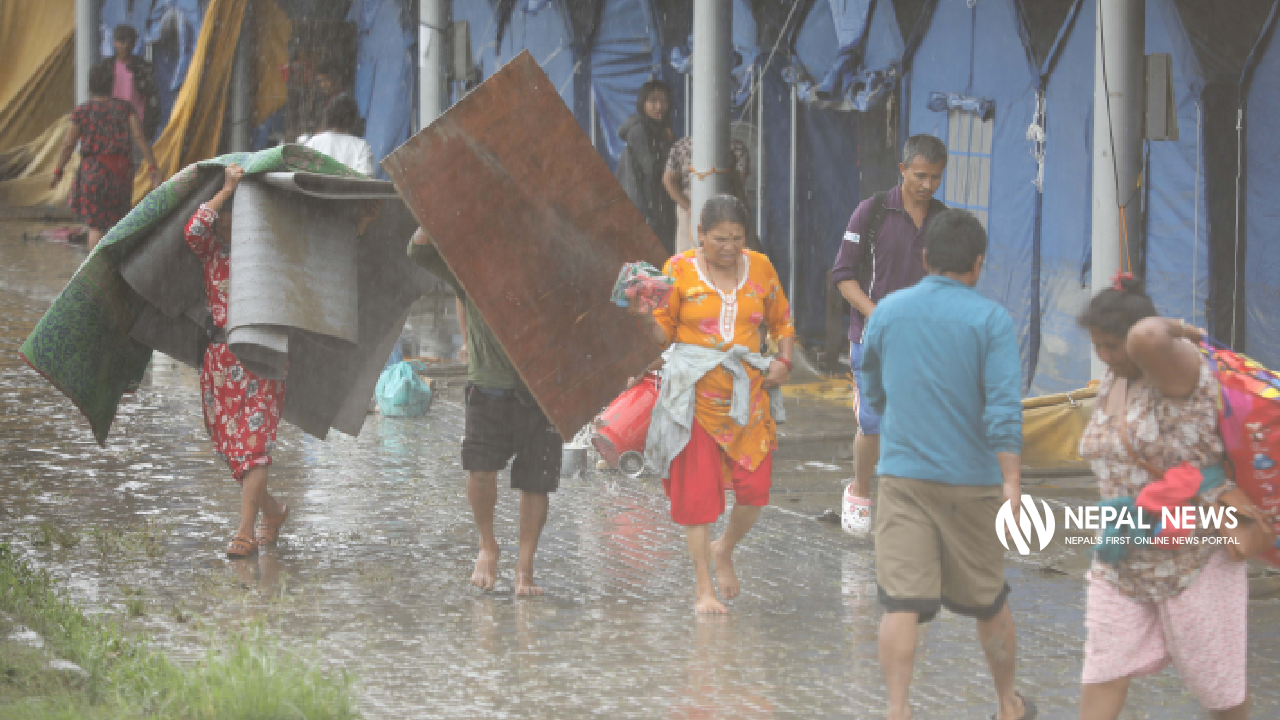
Displaced landless settlers at a temporary holding centre in Kirtipur face renewed hardship after heavy monsoon rain flooded the facility where they had been relocated.
Nepal is regrettably not alone in building a supposed sanctuary on ground its own experts could have flagged as dangerous, and the company it keeps here should chill anyone still capable of expecting better from their own government. In Bangladesh’s Sundarbans, resettlement shelters constructed for families displaced by Cyclone Aila in 2009 were, in multiple documented cases, sited on land itself vulnerable to tidal flooding, forcing the same families through repeated secondary displacement within a matter of years. Neither Bangladesh’s failure nor Nepal’s stemmed from a lack of technical knowledge. Flood maps exist. Hydrological data exists. What was absent in both places was the will to let that knowledge override the temptation to grab whatever land was administratively convenient and call the problem solved for the cameras. A state that already possesses the information required to avoid drowning the people it claims to be saving, and drowns them anyway, is not simply under-resourced. It has made a decision, consciously or through willful indifference, about whose safety is worth planning for and whose is not.
Then, as if to remove any lingering doubt about where this government’s instincts actually lie, came the detentions. When the Kirtipur centre flooded a second time, young activists including Majid Ansari and Sarishma Thapa arrived at the site, and police detained them, claiming they had obstructed a rescue effort. Fellow activists dispute that account entirely, describing a confrontation sparked by favoritism in how relief was being handed out among terrified families. Whichever account proves accurate, the picture that emerges is identical either way, and it is damning: at the precise moment when the state should have poured every available resource into pulling drenched children out of rising water, some of that resource went instead toward handcuffing the volunteers who had shown up to help.
A government confident in its own competence does not need to arrest the people cleaning up after its failures. A government that reaches instinctively for detention in the middle of a disaster of its own making is a government that has already decided dissent is the greater threat, not drowning children. That reflex, once exposed, rarely stays contained to a single flooded field. Sri Lanka lived this exact warning in 2022, when the Rajapaksa government repeatedly deployed emergency and security powers against protesters simply documenting shortages, a strategy that did not restore order but accelerated the government’s own collapse until the presidency itself became untenable. Nepal’s leadership should treat that history as prophecy, not as someone else’s cautionary footnote.
None of this cruelty exists apart from the wider machinery of debt crushing Nepal’s poorest, which is exactly why the loan shark victims currently marching from Janakpur toward Kathmandu deserve to be understood as more than a single grievance on a long list. This is, at minimum, the second major foot march of its kind inside three years. An earlier twenty-three-day march reached the capital in February 2024 carrying more than a thousand debtors and produced a five-point agreement, backed by a commission led by a former Special Court chairman. That agreement was left to rot, exactly as the ones before it were.
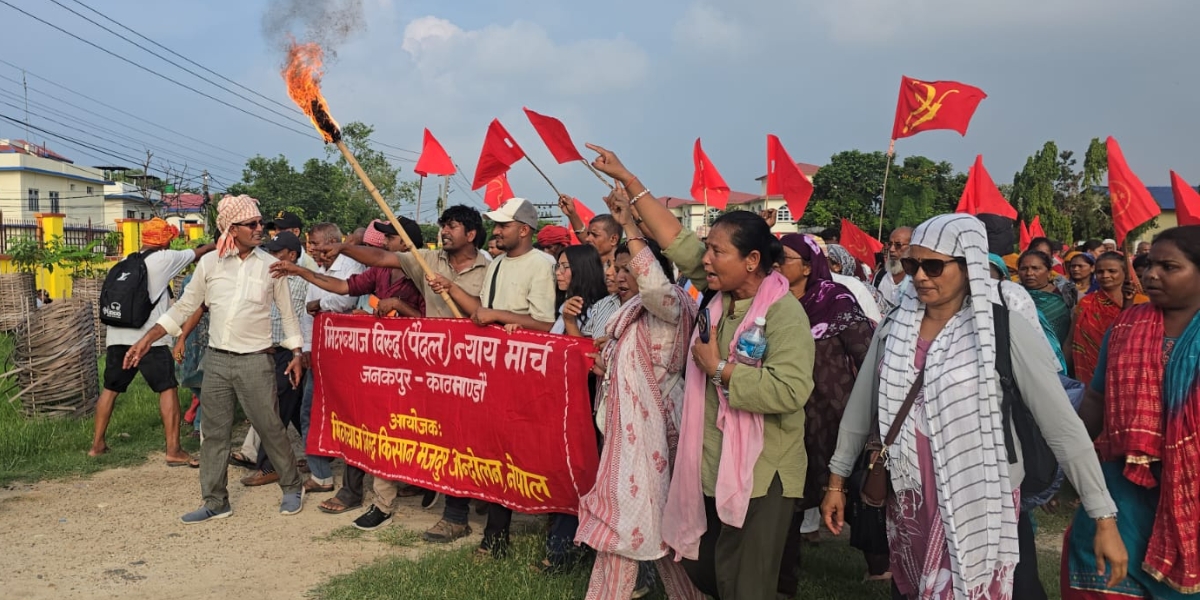
Loan shark victims on foot marching from Janakpur to Kathmandu in protest. Photo: Birendra Raman
The victims walking again now are doing so because the Nepali state’s signature on paper has proven, repeatedly and deliberately, to be worthless the moment public attention moves elsewhere. This is the identical rot visible in Nepal’s cooperative and land commissions, where twenty-two separate bodies have been convened since 1952 to fix chronic fraud and distribution failures, and where nearly every incoming government dissolves whatever its predecessor built and restarts verification from zero, obliterating institutional memory and public trust with the same casual disregard each time power changes hands. A state that keeps sabotaging its own accountability infrastructure this systematically is not struggling with a difficult problem. It has chosen, again and again, not to solve one.
India offers an uncomfortably exact mirror for this failure, one Nepal’s leaders have had a full generation to study and have chosen instead to ignore. Successive Indian governments have rolled out loan waiver schemes, debt relief commissions and moneylender registration rules since at least the 1990s, and yet farmer indebtedness driven by unregulated informal lending remains, according to National Crime Records Bureau data tracked across years, a documented driver of a persistently alarming suicide rate among Indian farmers. The lesson sitting in plain sight is that announcing relief and standing up commissions accomplishes close to nothing without sustained, properly funded implementation reaching all the way to the district level, capacity both countries have starved for decades relative to the human cost of not funding it. Nepal did not fail to notice this lesson. It simply decided the lesson was not worth acting on.
The cooperative fraud crisis turns this pattern into arithmetic so stark it needs no rhetorical embellishment to condemn itself. A parliamentary special investigation committee has confirmed roughly Rs 87.89 billion in embezzlement across the cooperatives it directly examined, while a national depositor protection federation estimates as much as Rs 275 billion sits at risk across more than 357 cooperatives nationwide. Against that scale of theft from ordinary savers, the government’s refund mechanism has, as of mid-2026, returned under Rs 1.4 million in its opening tranche to the very smallest depositors.

Cooperative victims stage a demonstration in Kathmandu, urging the government to accelerate refunds and hold those responsible for the fraud accountable. File photo
Run the numbers honestly and the verdict writes itself: at anything resembling the current pace, even the roughly 76,000 depositors the state has formally acknowledged owing money will wait years for what is theirs, while the far larger population whose cooperatives were never officially declared problematic will simply be written out of the process altogether. This is not a cautious government being careful with public money. It is a government whose press releases and its actual bank transfers exist in separate realities, and only one of those realities involves an ordinary depositor ever seeing their savings again.
Set beside a genuine supply shock beyond Kathmandu’s control, the fertilizer shortage might look, briefly, like the one crisis on this list the government cannot be blamed for outright. Conflict in West Asia has disrupted the Gulf shipping lanes carrying most of Nepal’s chemical fertilizer, and no ministry in Singha Durbar controls that. But watch how the government responded, and the same governing instinct resurfaces in a different costume. The Cabinet approved an emergency arrangement with India for 80,000 tonnes in early May, then quietly trimmed it to 50,000 tonnes once global prices softened, with delivery expected only by mid-August, arriving well after the peak transplantation window has closed.
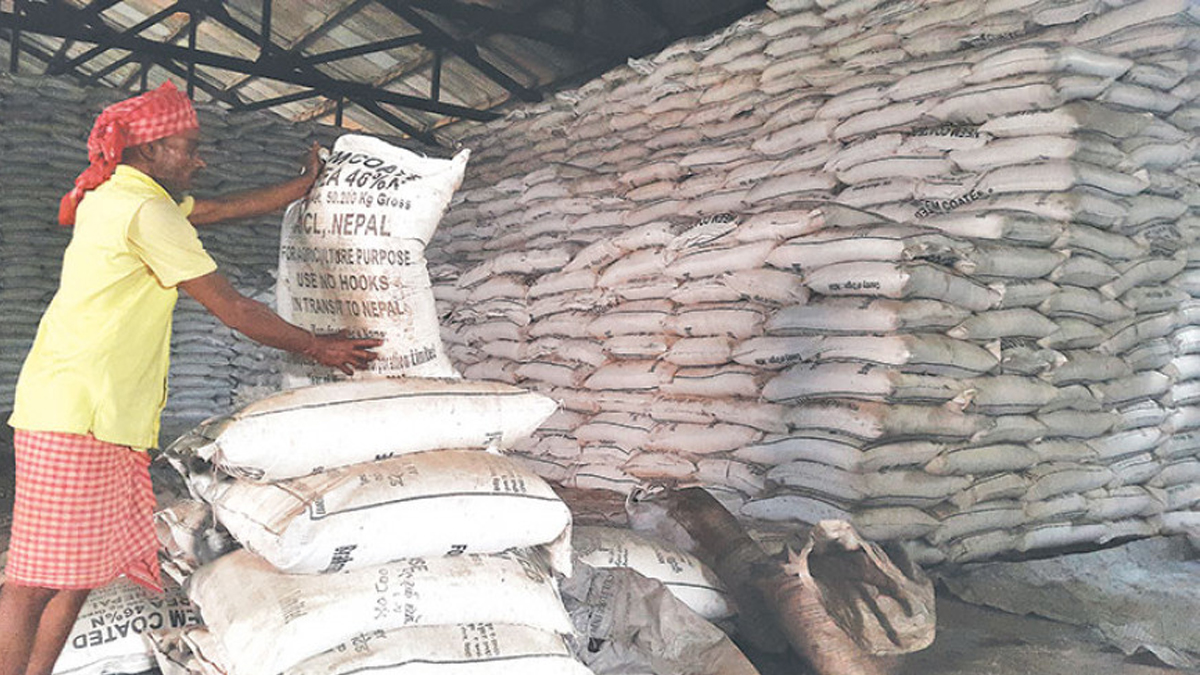
In Saptari, Banke and Rautahat, farmers describe watching their seedlings crack and die in unfertilized soil while waiting on a shipment timed to arrive after the damage is already locked in. An external shock does not excuse a domestic response calibrated to political convenience rather than the actual planting calendar. When a government’s own supply chain moves slower than the crop it claims to be safeguarding, the excuse of external circumstance stops covering for the choices made at home.
Look across all five of these disasters together, the self-immolation, the drowned shelter, the arrested volunteers, the betrayed loan shark agreements, the late fertiliser, and one governing reflex emerges with total clarity: this state treats visible suffering as a communications problem to be neutralized, not a human problem to be solved. A probe committee gets announced. An emergency import gets approved. A refund scheme gets launched. A commission gets convened. Each of these performs its intended function flawlessly, absorbing public fury, redirecting the next day’s headlines, buying the government room to breathe, while the actual work underneath, chronically starved of funding and staff relative to the scale of what it claims to address, crawls forward at a pace utterly divorced from the urgency the announcement itself invoked. This is not governance struggling under difficult conditions. This is the deliberate performance of governance, staged precisely so the real thing never has to happen.
There is something more dangerous than incompetence buried in this pattern, and it should alarm anyone who still believes Nepal’s republic is worth defending rather than merely enduring. A democracy survives only as long as its citizens believe legitimate channels, courts, elections, peaceful protest, written agreements, still produce proportional responses from power. Every episode catalogued here shows that belief being deliberately starved to death. Evictions proceeded before the Supreme Court had even finished weighing their legality. A shelter was imposed on displaced families with no meaningful consultation about whether it was even safe. Activists documenting the government’s own failure were handcuffed rather than heard. Loan shark victims who trusted the legitimate tool of a signed agreement discovered that agreement was worth less than the paper it was printed on, forcing them back onto the road on foot for a second time, because walking two hundred kilometers has apparently become a more reliable lever on this state than the rule of law it claims to uphold.
The families cycling between one dangerous riverbank and one dangerous holding centre have now been betrayed twice under the identical banner of protection
When lawful engagement with government repeatedly yields nothing while extreme desperation, a body set alight, a multi-week march through monsoon rain, finally forces a reaction, the state is teaching its most vulnerable citizens exactly which tactics work. That lesson corrodes a democracy far more efficiently than any single authoritarian decree ever could, because it is the citizens themselves, betrayed enough times, who eventually stop believing the system is worth appealing to at all.
Shah’s own defense, that a land and settlement crisis thirty-five years in the making cannot be solved within months, deserves an honest hearing rather than reflexive dismissal, because on its narrow terms it is true. Verifying land claims and constructing permanent housing are genuinely multi-year undertakings no government could rush without creating new injustices. But that defense has been stretched, cynically, to cover territory it was never meant to shield. Placing a temporary shelter on a known floodplain is not a thirty-five-year problem. Reforming a traffic enforcement structure whose lethal defects were named in Parliament after an identical death three years earlier is not a thirty-five-year problem. Honoring a five-point agreement signed with loan shark victims years ago is not a thirty-five-year problem. These are failures of will operating on a timescale of weeks, and dressing them in the language of intractable historical injustice is not patience. It is a government borrowing the moral weight of a genuinely hard problem to excuse its refusal to solve the easy ones sitting directly in front of it.
The compounding cost of all this falls, as it always does, on the people with the least capacity to absorb it, and it accumulates in places the government’s own statistics are never built to see. Every broken agreement makes the next one harder to believe, which is why the loan shark victims walking toward Kathmandu right now carry less faith than the ones who walked in 2024, and any eventual settlement this government offers will be met with earned contempt rather than gratitude. The families cycling between one dangerous riverbank and one dangerous holding centre have now been betrayed twice under the identical banner of protection, meaning the next promise of safety, however sincerely worded, arrives already bankrupt of credibility before a single sandbag is laid. And the deepest wounds fall hardest on women and children, who barely register in the government’s own accounting of this crisis.
This is not currently a country built for its downtrodden. It is a country that manages them, right up until the moment they burn, drown, or simply walk away in search of a state willing to see them as citizens rather than a problem to be contained.
It is women absorbing the daily labor of managing children’s shattered schooling through repeated forced moves. It is a young girl who quietly stops wanting to study after being promised, then denied, a hostel place she had been told to expect. It is infants not yet a year old sleeping on soaked ground inside a tent that was supposed to be their protection from exactly this danger. None of it appears in a press release celebrating relief funds disbursed or land certificates handed out, and that silence is itself a form of cruelty, allowing the state to claim progress on paper while the people actually paying for its failures remain invisible in every official telling.
It would be dishonest to place this entire architecture of cruelty solely at Balendra Shah’s door, because the truth underneath is even bleaker. This exact cycle, symbolic gesture standing in for substantive delivery, predates his government by decades and has survived monarchy, panchayat rule, multiparty democracy and republic alike, outlasting one leader after another who, while in opposition, delivered precisely the condemnation now being aimed back at them. That continuity is the most damning fact in this entire account, because it means Nepal’s crisis was never really about which individual occupies Singha Durbar.
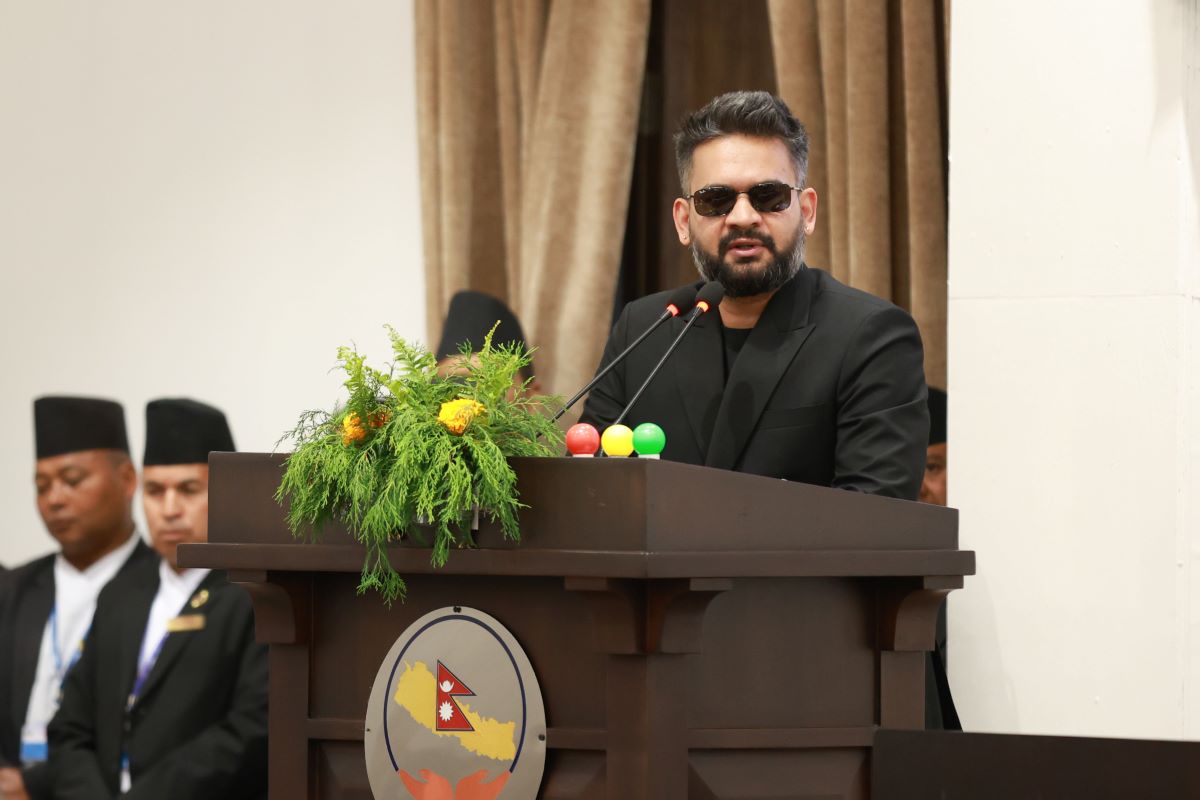
Prime Minister Balendra (Balen) Shah addressing the House on May 31, 2026. Photo: Nepal Photo Library
It is a crisis of institutional design, one engineered, whether by accident or by the accumulated self-interest of a political class, to keep producing the same betrayal of the poor almost regardless of who is nominally in charge. And that should frighten Nepalis far more than any single scandal, because it means the ballot box alone, the instrument the country has repeatedly been told is the answer, has never actually been enough to fix what keeps happening to the people at the bottom.
What this moment demands is not another eloquent statement about state failure, penned safely from outside the room where decisions get made. It demands sustained investment in implementation capacity that survives past any single election cycle. It demands an audit and verification system insulated from the political habit of dissolving every commission the instant power changes hands, the way Nepal’s twenty-two abandoned land bodies never were. It demands a complete reversal of enforcement priorities, away from punishing the poorest citizens for the crime of having no alternatives, whether that means clamping a ride-share driver’s only income or bulldozing a settlement ahead of a pending court ruling, and toward an approach that treats desperation as a signal to help rather than a target to discipline.
Until Nepal’s governing class, this one and whichever follows it, chooses that harder, slower, far less photogenic path over the easy theater of committees and press briefings, the country will keep producing exactly what it produced this July: a stack of preventable horrors, each one individually explainable, together delivering an unmistakable verdict. This is not currently a country built for its downtrodden. It is a country that manages them, right up until the moment they burn, drown, or simply walk away in search of a state willing to see them as citizens rather than a problem to be contained.