Kathmandu
Sunday, July 12, 2026





Evicted from the Thapathali riverbank in April and relocated to a government holding centre in Kirtipur, landless families have been uprooted again after floodwaters inundated the shelter, disrupting livelihoods, children's education and their search for a permanent home.
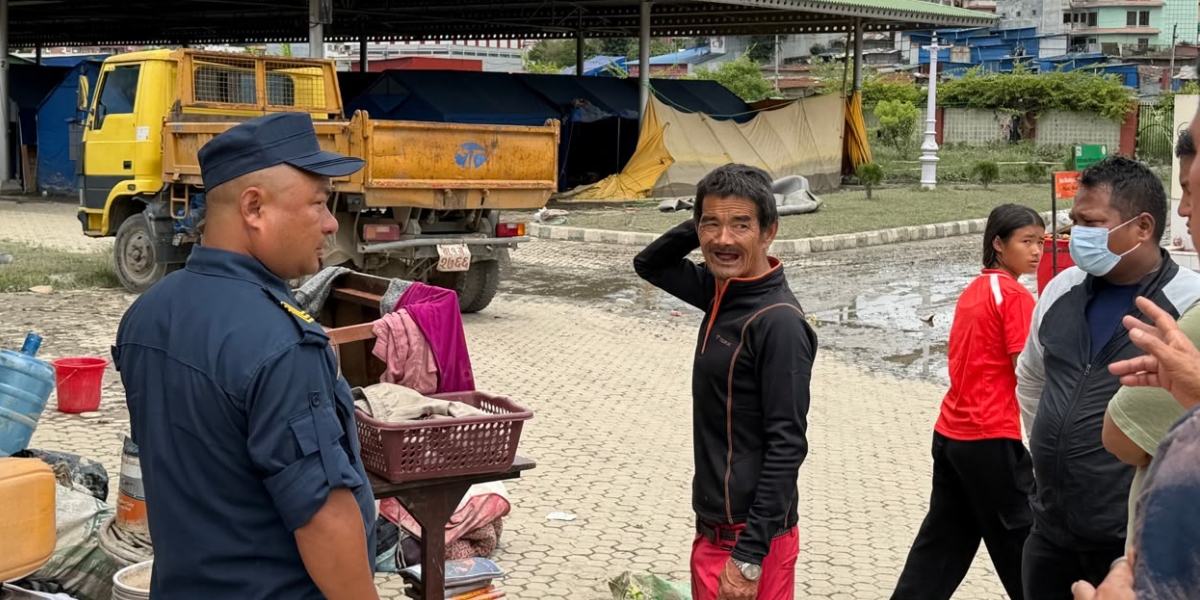
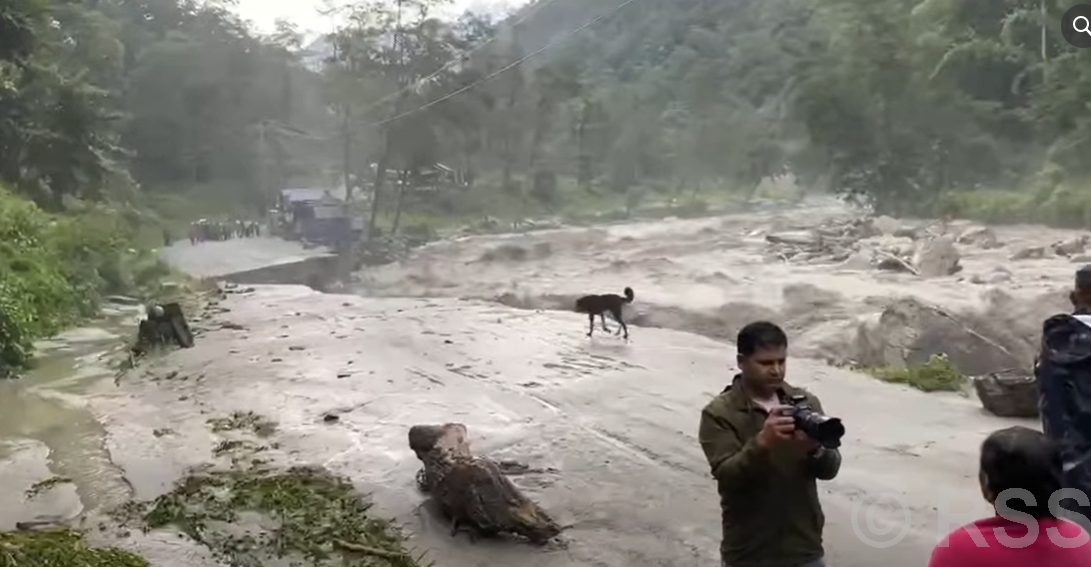
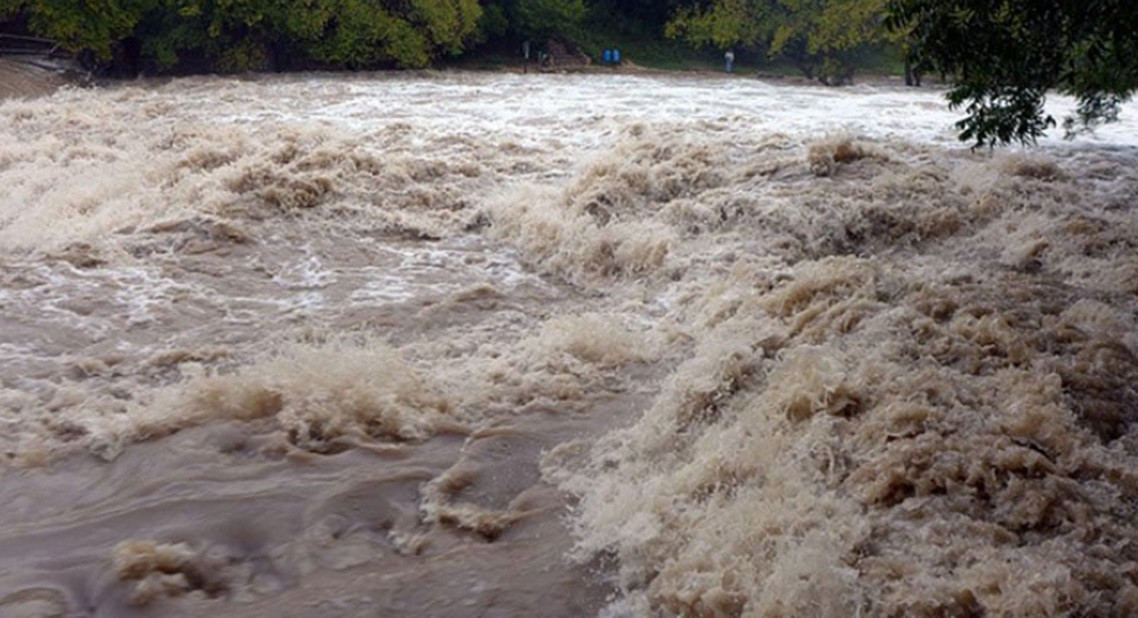
KATHMANDU: On Sunday afternoon, at the holding center located within the Radha Soami Satsang premises in Kirtipur, Nita Kumari Basnet Magar (43) was searching for her children’s books and notebooks that had been soaked in the floods and inundation since Friday midnight. Following continuous rainfall, floodwaters from the Bagmati River entered the holding center located in Kirtipur Municipality-10 at around 1 AM on Friday night. The 154 members of the squatter families, who were fast asleep, woke up to find water entering their beds. As it was raining continuously outside, they had no alternative or safe place to flee to.
After the floodwaters rushed in, a team comprising the Metropolitan City, the police, and the High-Powered Committee for Integrated Development of the Bagmati Civilization evacuated the Kirtipur holding center. Security personnel relocated these landless settlers to holding centers in Kharipati and Bode of Bhaktapur on Saturday and Sunday. Among them, Nita Kumari, along with her husband and daughters, returned to the Radha Soami holding center in Kirtipur on Sunday to search through their remaining baggage and belongings.
The government had temporarily relocated these families to Kirtipur on April 25, after removing them from the Thapathali riverbank. The landless settlers —who had been moved after dozers were brought into their settlement under the pretext of protecting them from floods—have found themselves displaced yet again after the government shelter itself became inundated. Nita Kumari is deeply frustrated after being hit by the floods and forced to move from Kirtipur to the Kharipati holding center just two months after experiencing displacement from her original settlement. She now plans to find a rented room on her own without relying on the government. “The government gave Rs 25,000; I will no longer look to the government, I will find a room myself and live there,” she says.
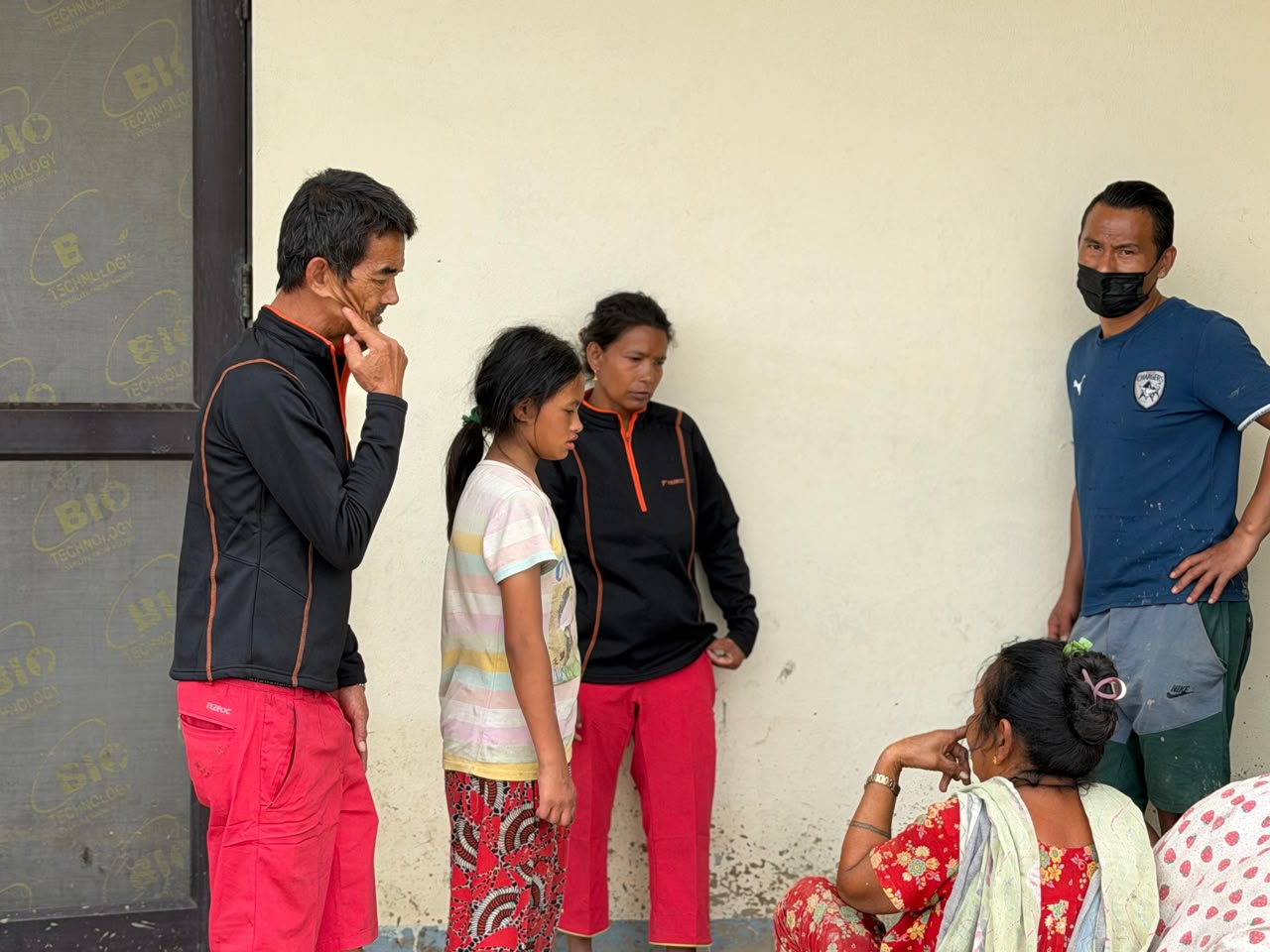
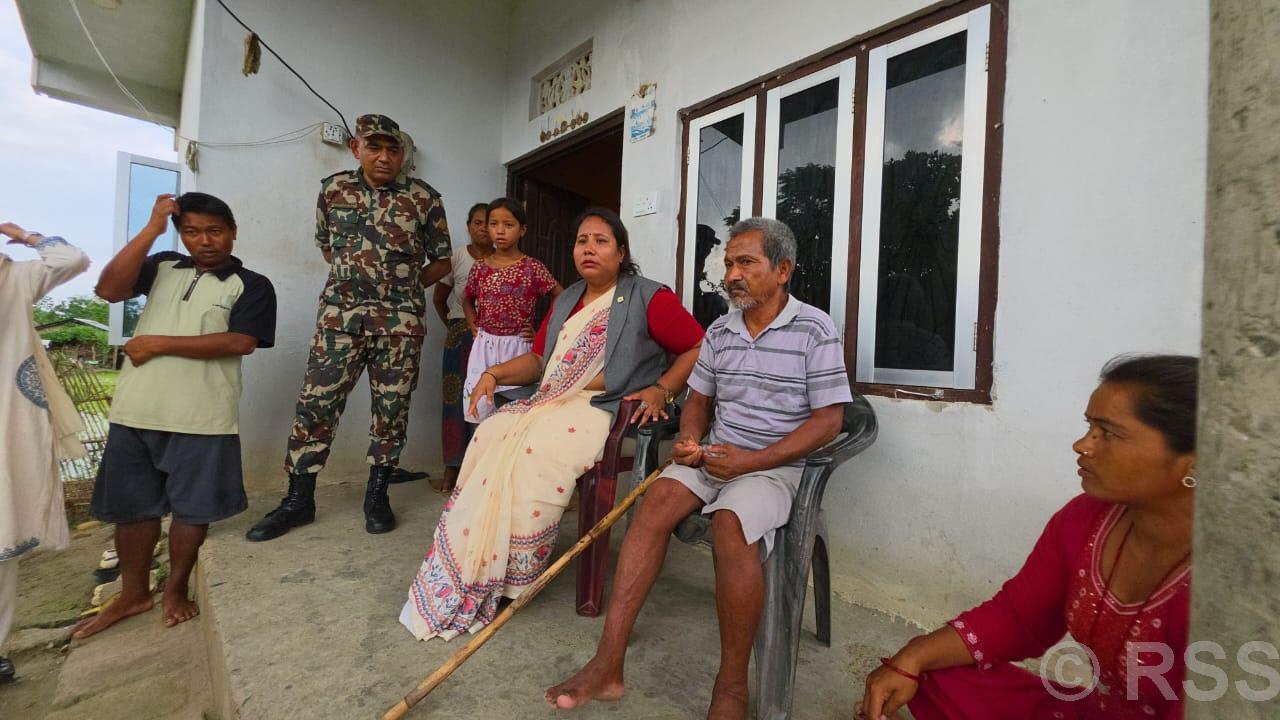
Nita Kumari Basnet Magar’s family.
She has five children—four daughters and one son—and arrived at the Kirtipur holding center after being evicted from the Thapathali settlement on April 25. In Thapathali, she used to work as a cleaner in houses and offices, earning Rs 20,000 a month. Her husband is largely unable to work. “Life was going on somehow when we lived in the hut at Thapathali, but after coming to Kirtipur, the work and income I had over there were lost,” she shares.
Not only was her employment disrupted, but commuting from Kirtipur also became too far for her four children, who study at the Guheshwori Bal Shiksha Secondary School in Thapathali. One of her daughters had also started studying in Grade 11 in Baneshwor with the support of a social organization. Just as they were getting accustomed to such inconveniences, Friday night’s flood completely shattered the rhythm of their daily life once again.
Since her children’s education would be ruined if they stayed at the Kharipati holding center, she is preparing to look for a rented room in the Thapathali area itself. She is currently walking around asking about room rents. “I thought about renting two rooms, but people are saying it costs Rs 14,000. No matter how much money it takes, we are now forced to find a place to stay,” she says. “The Kharipati holding center was not bad, but our work and the children’s education are based in Thapathali. It makes no sense to live there just because we get free meals from the government.”
Her daughter Vinisha, who is studying in Grade 9, became worried that she would miss school after moving to Bhaktapur. She has been pressuring her parents to return to Thapathali, if only for her education. “My daughter told me, ‘Whatever happens, let’s just rent a room around Thapathali now. I will study, help with household chores, and do outside work as much as possible,'” Nita Kumari says.
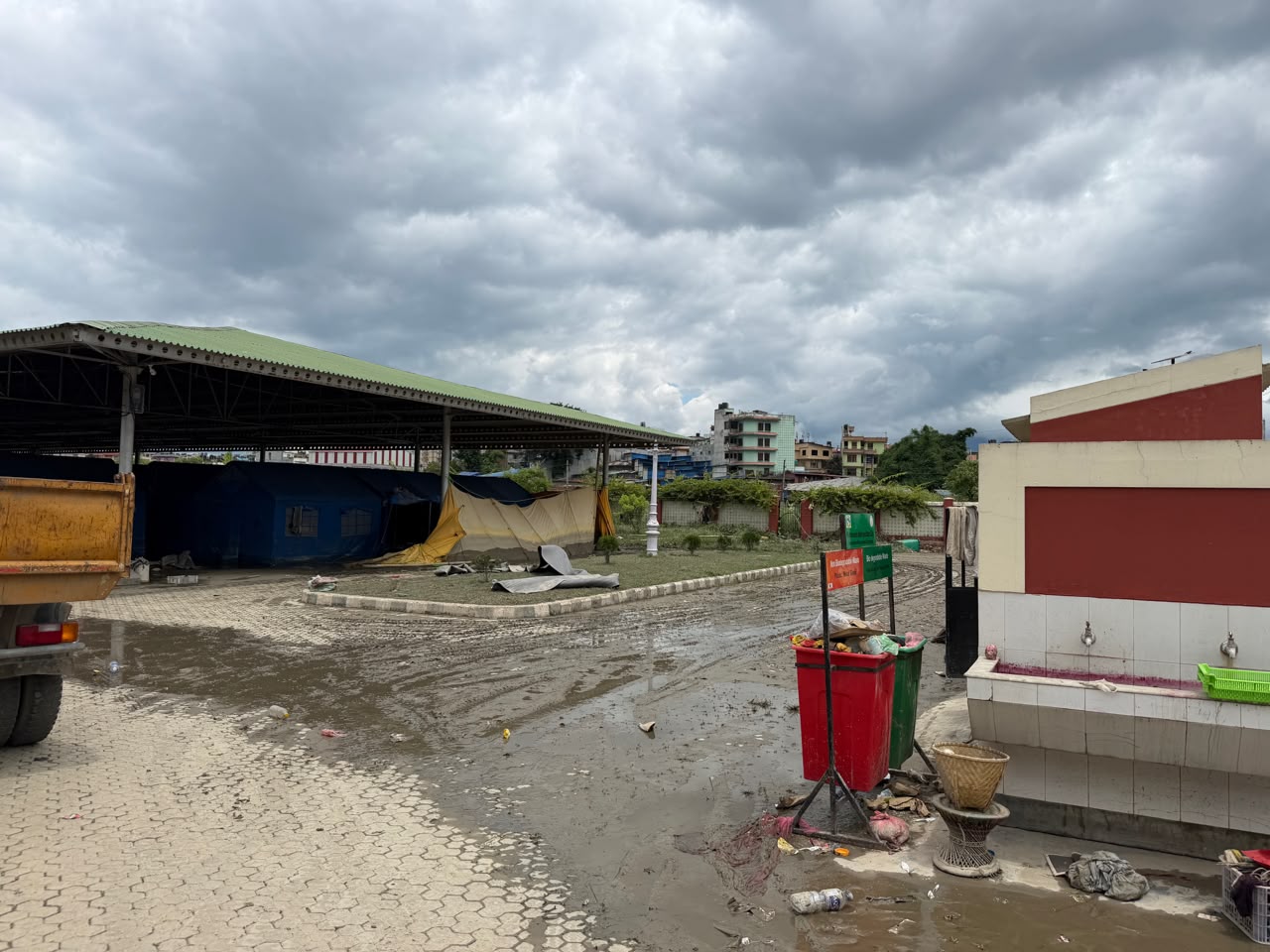
The condition of the holding center after water entered.
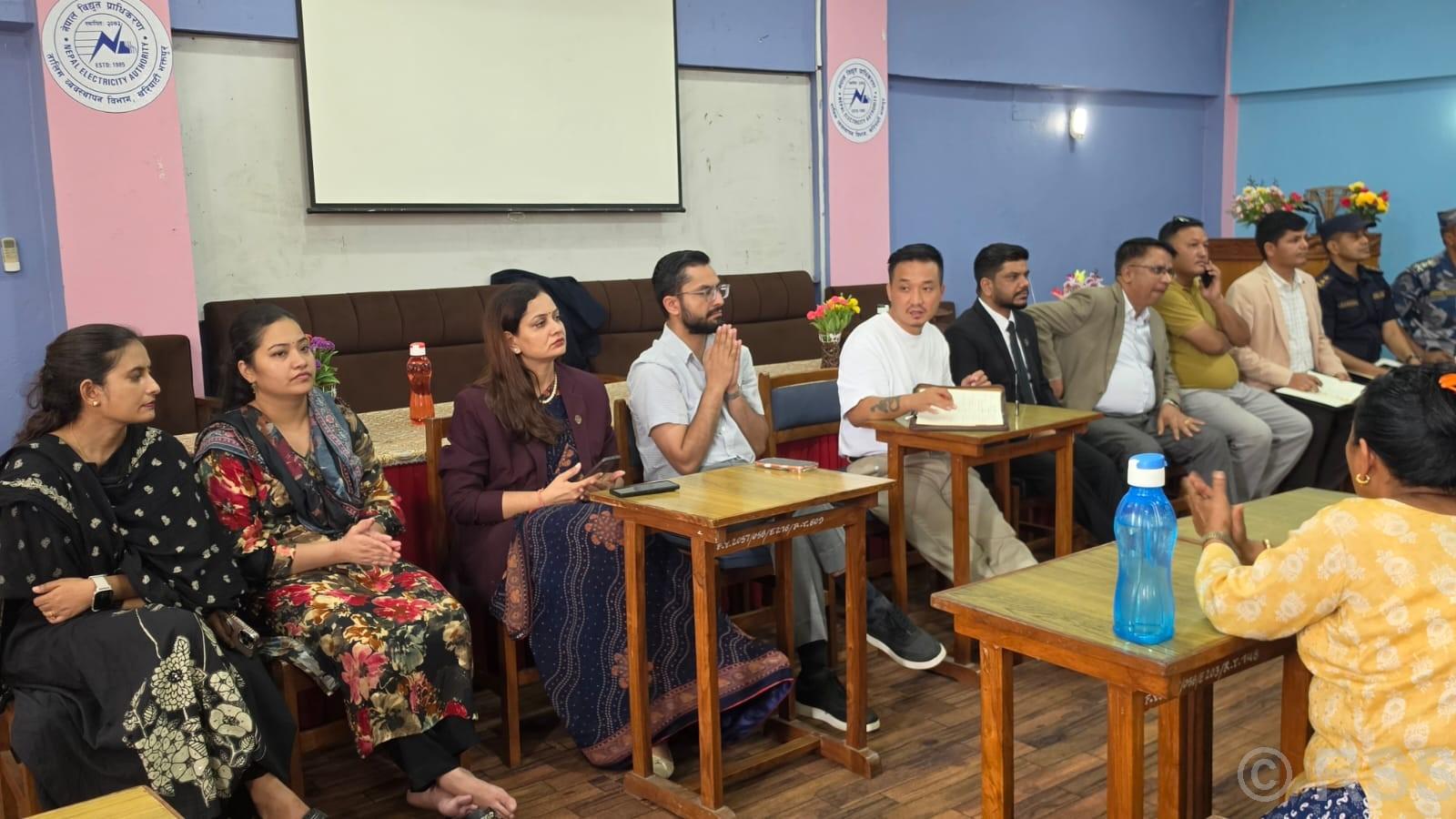
According to the District Police Range, Bhaktapur, 49 of the squatter families inundated in Kirtipur have been relocated to Bhaktapur. Among them, 73 individuals from 27 families have been housed at the Electricity Authority in Kharipati, while 62 individuals from 22 families are being kept at the Agricultural Training Center in Bode. Deputy Superintendent of Police Prakash Jabegu, the spokesperson for the District Police Range Bhaktapur, stated that several other individuals left on their own accord, saying they would manage independently and search for rented rooms.
According to Naresh Maharjan, the Ward Chairperson of Kirtipur Municipality-10, Radha Soami Satsang is located right on the banks of the Bagmati River. Because the water could not find an outlet to drain, the floodwaters breached the Satsang premises. “Some people are coming back to look for their clothes and belongings; all the landless settlers have been relocated elsewhere,” he said.
Crackdown on activists
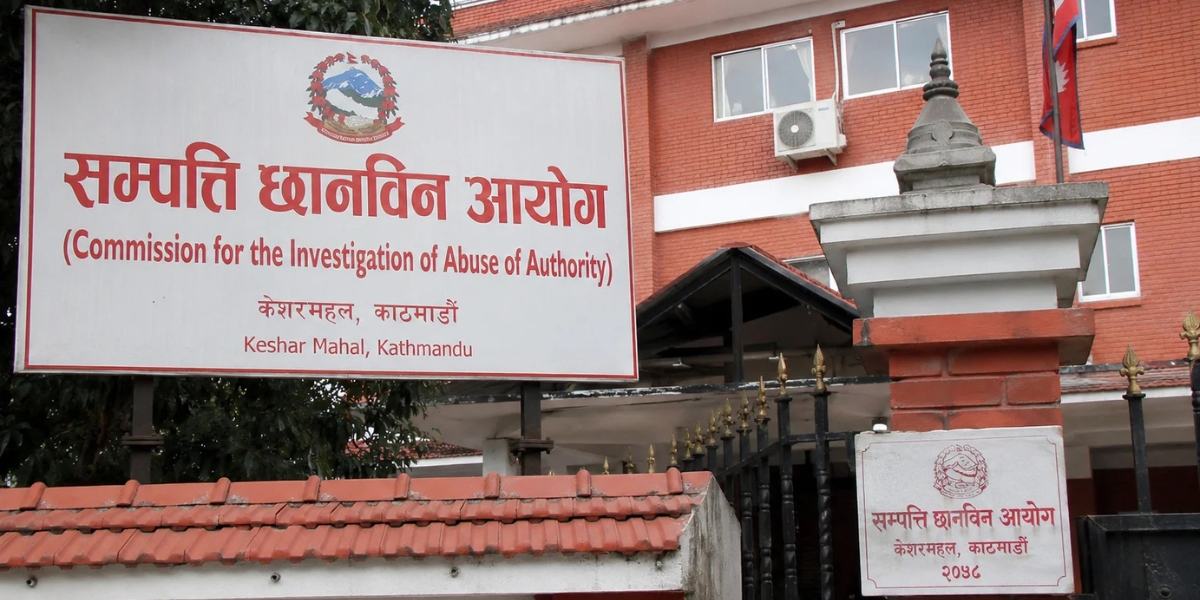
On Saturday, during the relocation of the landless settlers from the holding center, individuals deployed by the Ministry of Home Affairs arrived in Kirtipur. A team including Gen Z activist and Rastriya Swatantra Party (RSP) member Ojaswi Thapa reached the holding center. Thapa works in the secretariat of Home Minister Sudhan Gurung.
Following the flooding of the holding center, Gen Z activists Majid Ansari, Nahendra Khadka, and Sarishma Thapa, among others, had also arrived there to assess the situation. Khadka is also a former Vice-Chairperson of the Landless settlers ‘ Commission. However, the team led by Ojaswi assisted the police during the crackdown and detention of these activists.
During the incident, Ojaswi mistreated Khadka, accusing him of bringing members of the ‘YCL’ (Young Communist League). The police then pushed, manhandled, and arrested the activists.
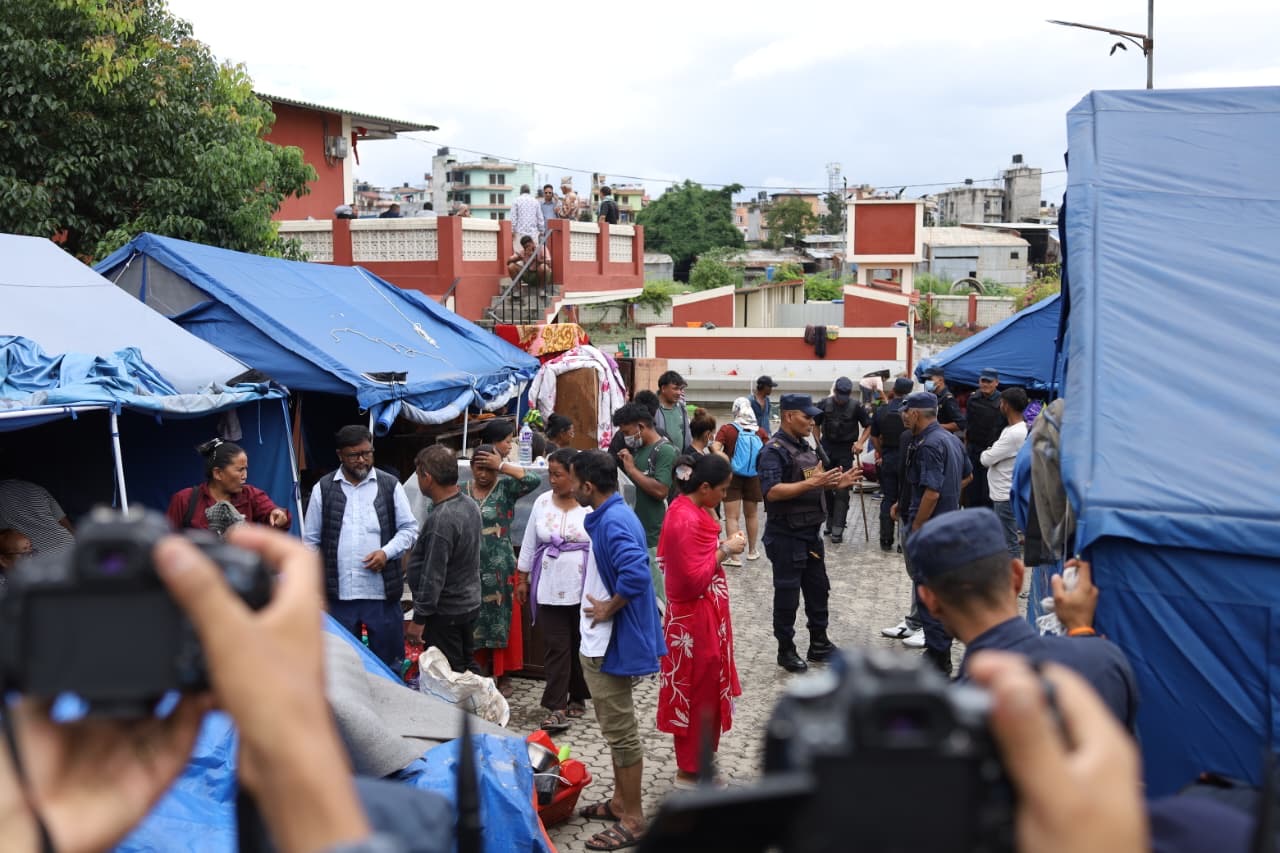
The landless settlers holding center in Kirtipur. Photo: Nepal Photo Library
Among those arrested, Khadka and Thapa have already been released. Ansari, however, is currently undergoing treatment at the T.U. Teaching Hospital in Maharajgunj, having sustained injuries to his nose and eyes. “They were taken into control after creating an uproar there; everyone has now been released,” said Superintendent of Police Pawan Kumar Bhattarai, spokesperson for the District Police Range, Kathmandu.
According to Khadka, upon arriving at the squatter shelter, they had discussed issues regarding food, children’s education, and upcoming examinations. He stated that they had requested the Home Minister’s representative, officials from the High-Powered Committee for Integrated Development of the Bagmati Civilization, and the police to ensure these necessities. “During this, the landless settlers expressed that it would be better if they could stay here for a few days. We noted that the floods might return in the evening and mentioned we would bring YCL members to help with the cleanup,” Khadka said. “Following that, shouting ‘YCL, really?’, the minister’s representative began verbally abusing us, and we were arrested in the midst of this.”
Following the arrest of the Gen Z activists, widespread protests are taking place regarding the role played by the Ministry of Home Affairs and individuals working within Minister Gurung’s secretariat. Legal practitioners have also criticized the government’s actions, declaring them a violation of human rights. Senior Advocate Tika Ram Bhattarai visited activist Ansari at the T.U. Teaching Hospital on Sunday. “I went to offer my support and sympathy because the human rights of a student struggling for legal rights were violated,” he said. “The government has suppressed activists who are involved in human rights and the movement for securing rights.”