Kathmandu
Sunday, July 12, 2026





With six constitutional questions under review, the court has stayed key functions of the Property Inquiry Commission, including asset verification and enforcement, until a final ruling.
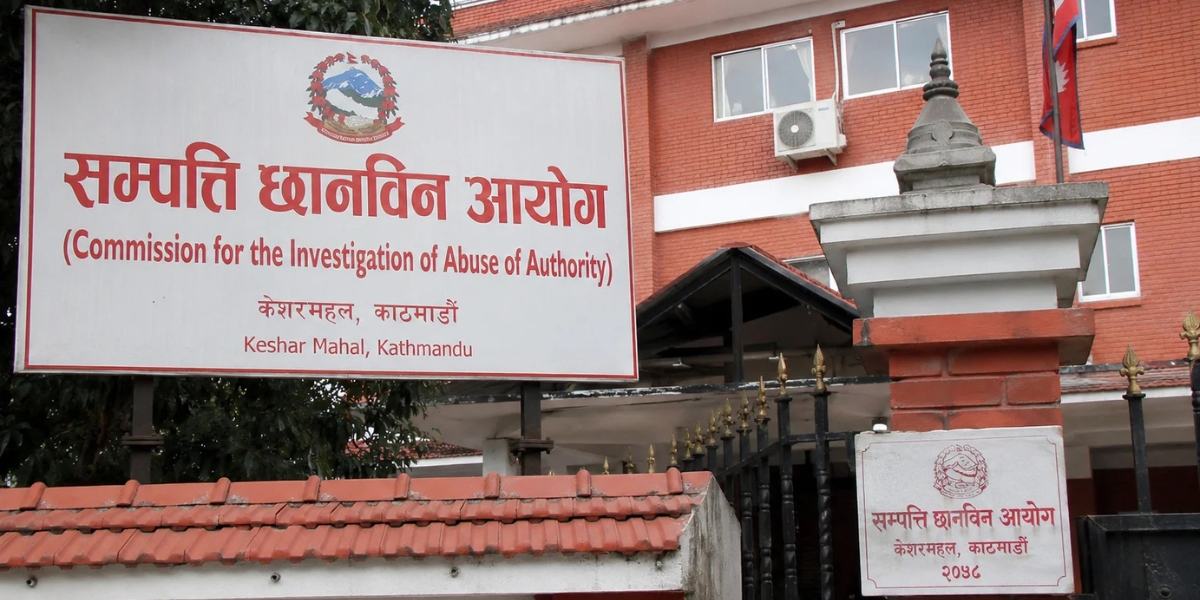
KATHMANDU: While the Property Inquiry Commission formed by the government is collecting asset details of former officials, employees, and others who held public office, the Supreme Court last Friday issued an interim order to maintain the status quo on the investigation of asset details. The Supreme Court has also questioned the rationale behind forming an investigation commission when the Constitution explicitly grants the authority to investigate corruption to the Commission for the Investigation of Abuse of Authority (CIAA).
The court issued this interim order in response to a writ petition filed at the Supreme Court on May 12, by advocate Prem Raj Silwal, raising constitutional questions against the Property Inquiry Commission and its officials. This interim order will remain in effect until a final verdict is reached on the case. A division bench of Judges Tek Prasad Dhungana and Srikant Paudel raised six constitutional and legal questions regarding the Property Inquiry Commission and ordered the case to be referred to a full bench (comprising three or more judges). The division bench also ordered the solicitation of two subject-matter experts each from the Nepal Bar Association and the Supreme Court Bar Association as “amicus curiae” (friends of the court) to assist the court in making the correct decision regarding the constitutional questions raised.
It is a common practice to summon an amicus curiae in cases involving serious and complex constitutional questions before the court. In this process, independent experts or legal practitioners offer suggestions to assist the concerned bench in its decision-making. The court delivers its judgment on the case by also taking into consideration the recommendations sent by the experts chosen by the Nepal Bar Association.
A cabinet meeting on April 15, had formed the five-member Property Inquiry Commission under the chairmanship of former Supreme Court Judge Rajendra Kumar Bhandari. The commission, which commenced its work on April 22, issued a public notice on May 14, urging individuals holding public office as well as retired individuals to submit details of assets held in their names and their family members’ names. The commission, which has been given a one-year tenure to complete its work, has mandated that those falling under the scope of the investigation must also submit substantiation and evidence of their assets when submitting their asset details.
In the first phase, the commission was mandated to collect, substantiate, and investigate the asset details of political officials, employees, and their families who held public office or were employed during the period from the fiscal year 2005/06 to 2025/26, and in the second phase, from the year 1991 to the fiscal year 2004/05. Accordingly, the commission is currently focusing on its first-phase operations. The Supreme Court issued the interim order while the commission was operating from its established office at Kesharmahal, Kathmandu.
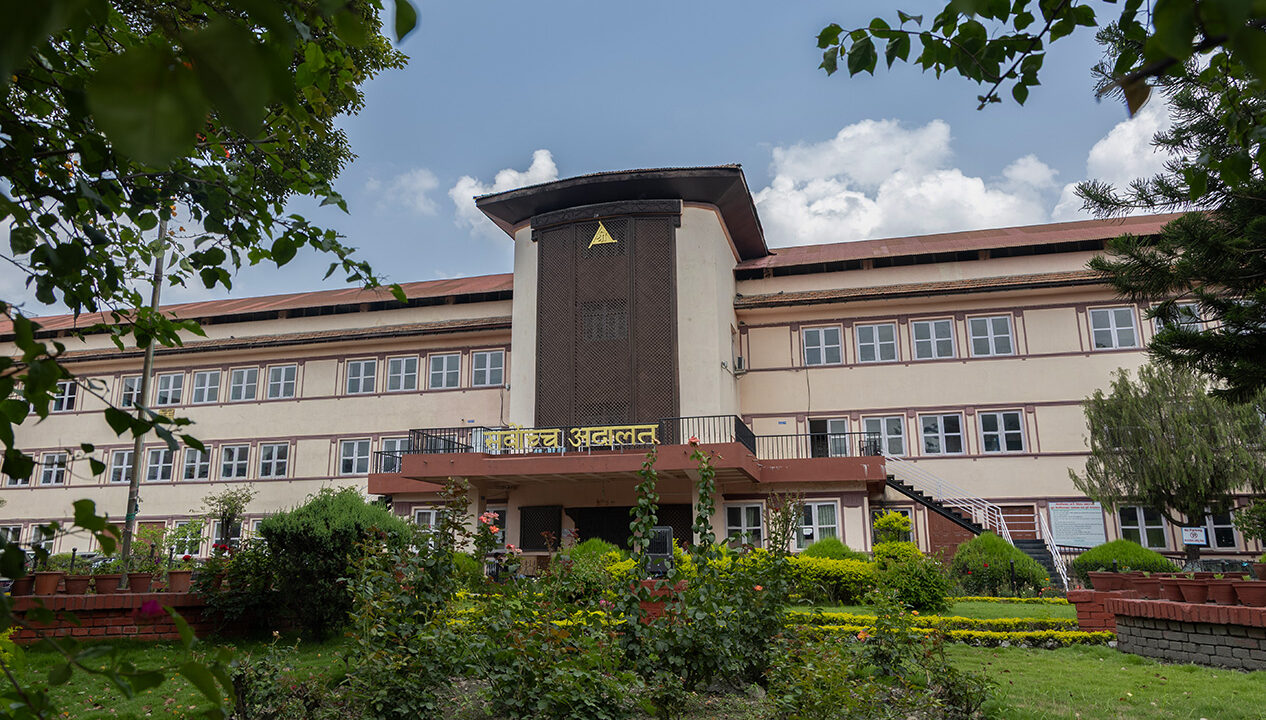
Supreme Court. Photo: Bikram Rai
The order states, “If the scope of investigation is determined in accordance with Clause 2, Section (e) of the Gazette notification dated April 15, regarding the formation of the commission based on the submitted asset details or complaints, it appears it would run contrary to the Constitution of Nepal and prevailing laws, resulting in irreparable loss… therefore, do not compel anyone to submit asset details until a final decision is reached by the full bench on the writ petition. Maintain the status quo on the work of investigating the asset details that have been submitted.” The Supreme Court has also directed not to recommend or cause to recommend any form of legal action against anyone.
Following this interim order, can the Property Inquiry Commission continue to function?
Ganesh KC, a member and spokesperson of the commission, states that the interim order has not stopped the commission from working entirely. “The commission has not been told not to work at all. It has stated not to compel anyone to submit asset details and not to recommend action,” he says. “We have not compelled anyone. An invitation was extended by issuing a notice. Now, we will proceed according to whatever verdict the full bench of the Supreme Court delivers.”
According to spokesperson KC, 14,000 individuals had submitted their asset details to the commission by Friday. Similarly, 1,500 complaints have been registered with the commission against individuals submitting their assets. However, none of the complaints have been opened so far. He states that they started working according to the mandate given by the government. However, the mandate does not clarify what to do if an individual fails to submit their asset details.
When the commission published the notice on May 14, it initially gave time until mid-June 2026 to submit asset details. When it became apparent that everyone would not submit within that timeframe, the deadline was extended until mid-July 2026.
Six questions raised by the Supreme Court
The Supreme Court raised six constitutional and legal questions after hearing arguments from both the government and the writ petitioner. Questions have been raised regarding why asset details were demanded even from individuals specified by the Constitution (such as sitting judges and Nepal Army officers). The amicus curiae will provide recommendations based on these very issues.
The first question raised by the Supreme Court’s interim order to the Property Inquiry Commission concerns jurisdiction. This question focuses on Article 239, Clauses 1 and 3 of the Constitution. That article assigns the responsibility to the Commission for the Investigation of Abuse of Authority (CIAA) to investigate if any person holding a constitutional office commits corruption by abusing authority. The court questioned the formation of the Property Inquiry Commission when the CIAA already holds the jurisdiction to file cases in court under its own laws. According to the Constitution, the CIAA has been filing corruption cases in the Special Court under the Commission for the Investigation of Abuse of Authority Act, 1991, and the Prevention of Corruption Act, 2002.
The Supreme Court’s second question is: “Is it compatible with the Constitution and prevailing laws to form a separate Property Inquiry Commission under the Inquiry Commission Act, 1969, to collect and investigate the asset details of political officials and public servants?”
The third question concerns whether the commission’s act of investigating and inquiring into assets is constitutionally sound or not.
The fourth question is: “Does appointing a person who has already served as a judge of the Supreme Court as the chairperson of the Assets Investigation Commission, and having them perform duties in that position, appear compatible with the Constitution under Article 132 of the Constitution of Nepal?” That article states that the Chief Justice and judges of the Supreme Court must not be engaged in any other assignments.
The fifth question raises issues concerning privacy. It questions whether the mandate given to the investigation commission violates the rights and privileges granted by the Constitution and the Privacy Act, 2018.
Article 28 of the Constitution provides that the liberty, accommodation, property, documents, data, correspondence, and character of a person shall be inviolable, except in accordance with the law. Similarly, the Privacy Act stipulates that every individual has the right to keep their asset details private, and no one shall inform, publicize, or cause to publicize an individual’s asset details without the consent of the person concerned.
The sixth question focuses on whether the mandate given to the Property Inquiry Commission reflects institutional discrimination in the asset investigation of officials and public servants. Stating that these questions are inherent to the matter, the division bench of the two judges ordered the case to be presented before the full bench.
Following this interim order from the Supreme Court, the investigation commission cannot pressure any individual to submit assets. Until the full bench delivers another decision, the commission cannot investigate asset details even if they are received.