Kathmandu
Tuesday, July 14, 2026





Five chief ministers in less than three and a half years, recurring budget disputes and coalition politics have weakened the Assembly's ability to legislate and hold the government accountable.
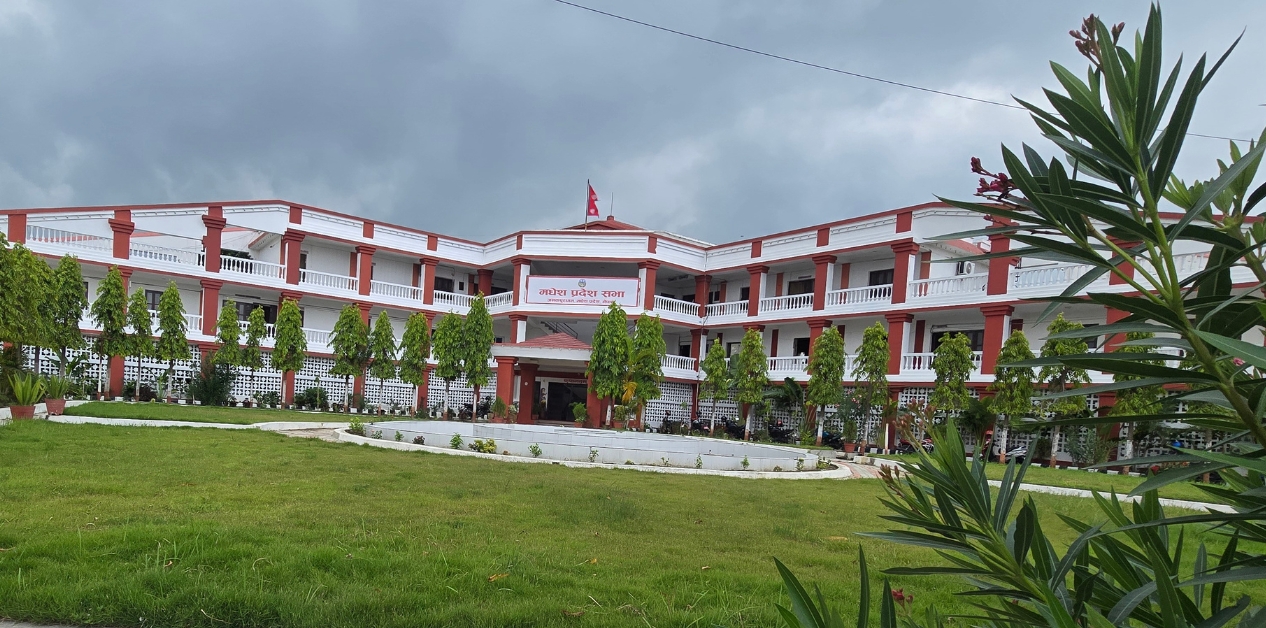
JANAKPURDHAM – The first term of the Madhesh Province Assembly is remembered for the enthusiasm of laying the foundation of federalism. There was pressure to build new structures, adopt new practices, and formulate the laws necessary for the implementation of federalism. However, reaching the second term, the pace of the Province Assembly has slowed down.
Almost three and a half years after the elections for the second term were held in November/December 2022, the Madhesh Province Assembly appears weak in lawmaking, raising public concern issues, and promoting good governance. Many laws required to implement federalism have yet to be made. Even the implementation of the laws formulated during the first term lacks enthusiasm.
Lately, the Province Assembly has limited itself to being a center for government formation, budget disputes, and inter-party bickering.
The same scene was repeated in the current session. After the government presented the budget on June 15, the Province Assembly meeting was adjourned. In the meeting held on July 1, the opposition parties disrupted the meeting, expressing disagreement with the budget and demanding its rewriting. After they obstructed the meeting, the session on July 2, was also affected, and the Province Assembly was adjourned indefinitely. Following that, discussions regarding the budget could not move forward.
However, after discussions between the ruling and opposition parties, a task force has been formed to resolve the budget dispute. With the formation of the task force on July 12, the obstruction by the opposition parties has been cleared. On July 14, the task force submitted its report to the Province Assembly with recommendations for minor amendments to the budget and policy reforms. Following the submission of the report, discussions on the Appropriation Bill for the upcoming fiscal year 2026/27 have progressed.
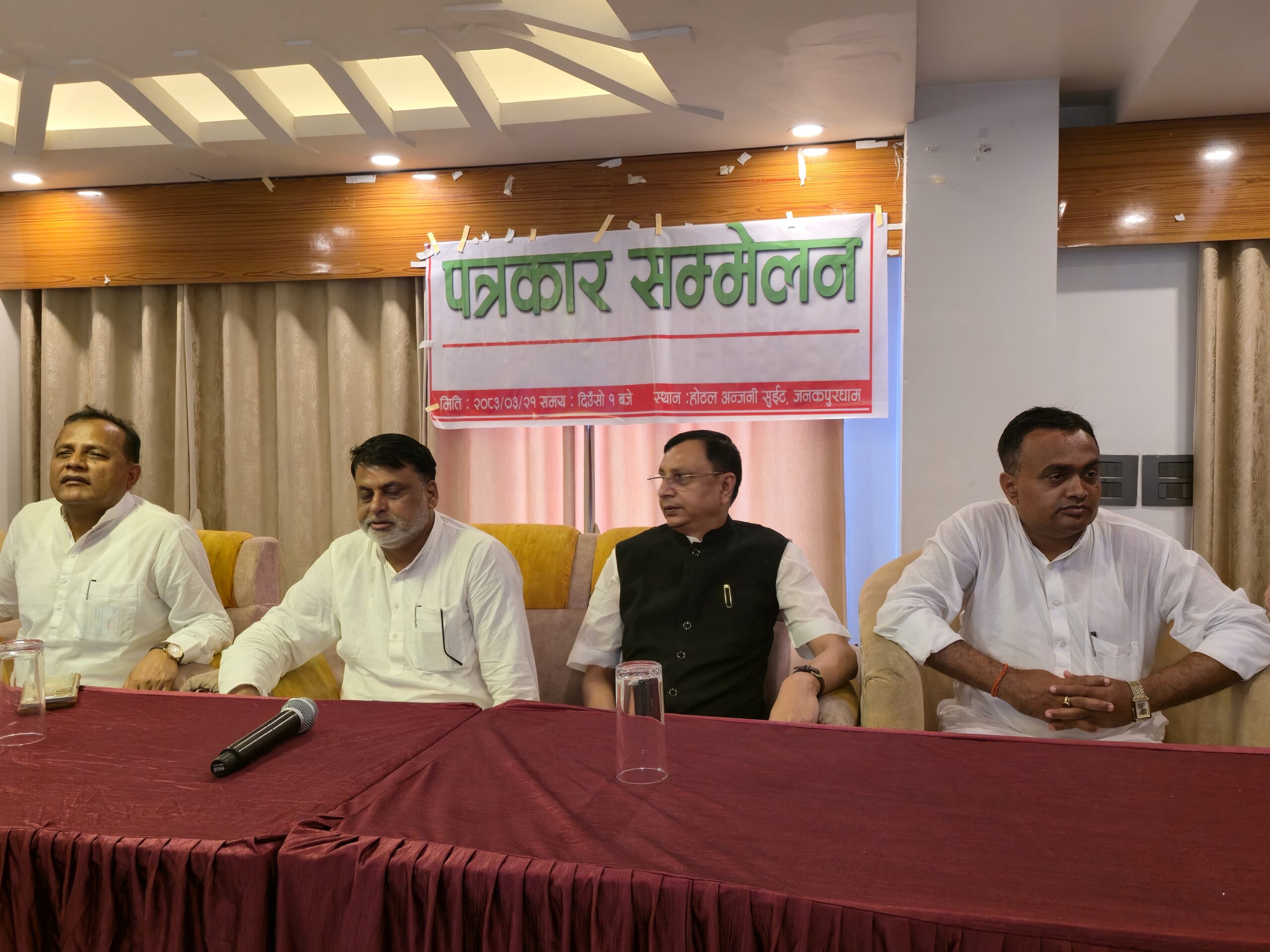
A press conference organized by opposition parties to provide information about the Province Assembly obstruction.
The task force members included Province Assembly members Upendra Mahato, Harinarayan Mahato, Jangilal Raya, Pramod Kumar Yadav, Sanjay Kumar Yadav, Bimala Ansari Tarun, and Saritakumari Thakur. Immediately after the obstruction was cleared, Finance Minister Yubaraj Bhattarai presented the Appropriation Bill in the Province Assembly.
The province government has presented a budget of Rs 41 billion 13 million 86 thousand for the upcoming fiscal year. The government claims that agriculture innovation, entrepreneurship promotion, education, and health have been prioritized in the budget. However, opposition parties have been raising questions, claiming that the budget is imbalanced, contains projects with unassured sources of funding, and is dominated by political interests.
Meetings take place, but work does not progress
The first meeting of the first session of the second term of the Madhesh Province Assembly was held on January 2. In the first session, 36 meetings were held. There were 14 meetings in the second session, 34 in the third, 23 in the fourth, 22 in the fifth, 20 in the sixth, and 16 meetings have been held so far in the ongoing seventh session.
Although the meetings seem frequent in terms of numbers, the Province Assembly appears weak in terms of effectiveness. According to the Province Assembly Secretariat, 27 bills have been received by the Business Operations Division. Out of those, 16 bills have been passed. Four bills are registered. Three bills have been tabled in the Assembly, while one bill is yet to be tabled. Two bills have been withdrawn by the government, and one bill is currently in a thematic committee.
During its first term, the Madhesh Province Assembly formulated around 56 laws. The second term, however, has appeared relatively inactive.
The Province Assembly spokesperson, Bipin Thakur, states that the operation of the Province Assembly depends on the government. According to him, the Assembly can move forward effectively only after the government provides bills and “business.” “The Province Assembly runs on mutual coordination,” Thakur says, “If the government gives us work, the Assembly runs. How can we run it if there are no bills?”
Opposition says: Assembly obstructed due to government’s arrogance
Former Chief Minister and Janata Samajbadi Party (JSP) leader Lalbabu Raut accuses the government of showing the arrogance of its majority. According to him, the tendency of not taking the issues raised by opposition parties seriously, not having adequate discussions in the Province Assembly, and pushing through every matter has increased obstructions. “Because the government does not prioritize dialogue and discussion, the Province Assembly appears almost inactive,” Raut says.
Chandan Kumar Singh, parliamentary party leader of the Janamat Party, also says that the government is not serious about resolving issues through dialogue. He alleges that the government is running under the influence of middlemen.
Upendra Mahato of JSP points out that projects without assured sources of funding have been included in the budget. According to him, the Chief Minister has issued tenders worth millions of rupees in his constituency, which risks adding further financial liability to the provincial government in the coming days.
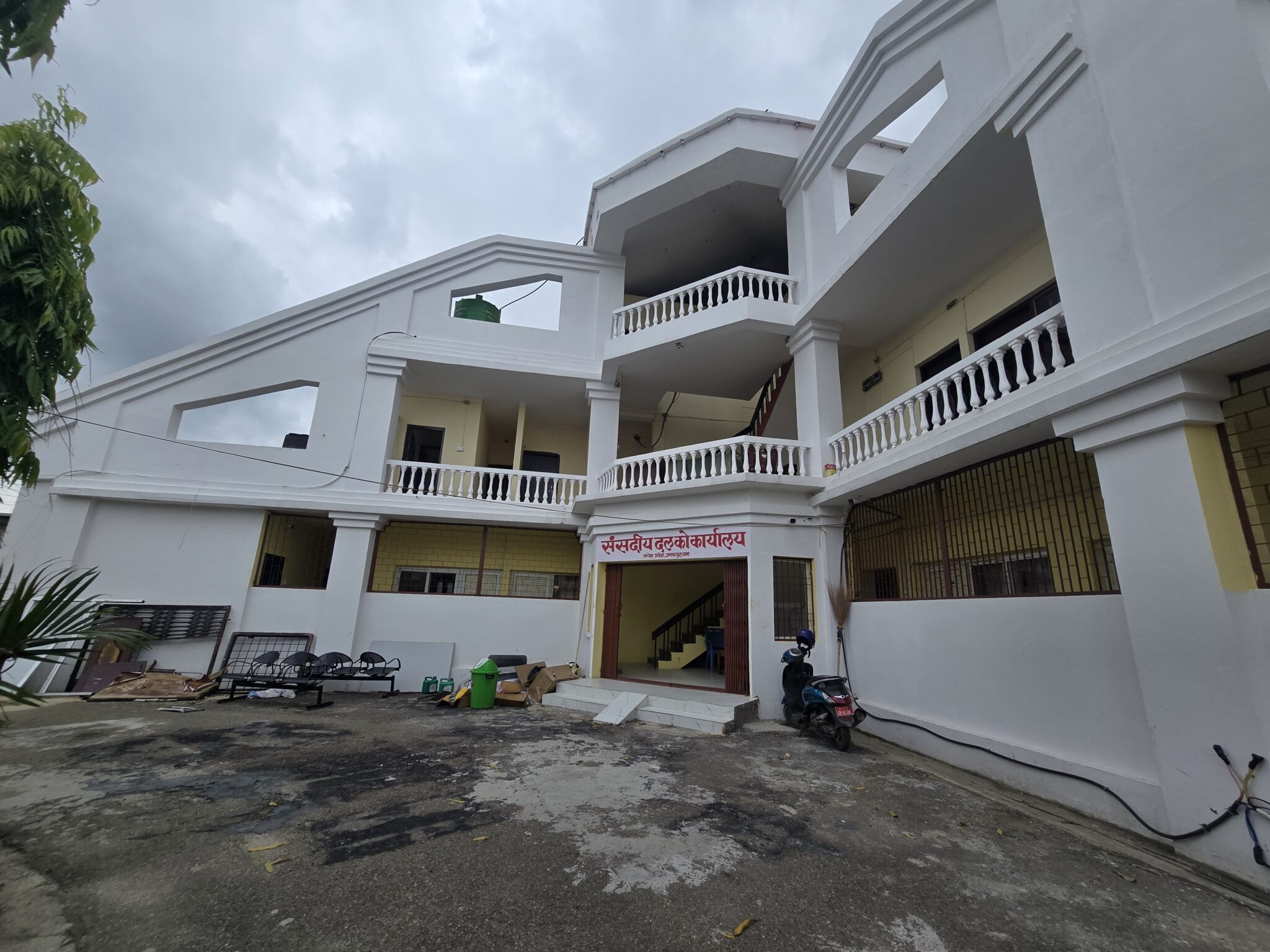
Offices of political parties at the Province Assembly.
Province Assembly members from the ruling Nepali Congress also admit that the Province Assembly is not as dynamic as expected. Nepali Congress Province Assembly member Ram Saroj Yadav says that the Assembly appears weaker now compared to the past. “The Province Assembly is not functioning the way it should,” Yadav says, “This has also limited the opportunities to raise issues of public concern.”
On the other hand, parties participating in the government claim that the government is serious about the Province Assembly. Finance Minister Yubaraj Bhattarai says that since the deadlock in the Province Assembly has been cleared, they will move forward with public concern issues and lawmaking by providing the necessary business.
Speaker Ram Ashish Yadav emphasizes that continuous dialogue is necessary among political parties. He states that the foundation for the province’s prosperity can only be built through consensus and cooperation. “The public is evaluating every action we take,” Speaker Yadav says, “Rather than harboring grudges over minor issues, we must seek solutions through dialogue.”
Less work, high benefits
Although the Province Assembly appears almost inactive, huge sums of money are being spent on the perks and facilities of office bearers and members.
According to the Province Assembly Secretariat, in the last three fiscal years, Rs 21,429,616 has been spent solely on fuel facilities for office bearers. Rs 6,705,592 was spent in FY 2023/24, Rs 8,021,784 in FY 2024/25, and Rs 6,702,240 in FY 2025/26.
Similarly, Rs 19,029,459 has been spent on vehicle maintenance over the last three fiscal years. According to the Secretariat, Rs 6,507,692 was spent in FY 2023/24, Rs 7,300,000 in FY 2024/25, and Rs 5,221,767 in FY 2025/26.
According to the Province Assembly Secretariat, 39 vehicles are mobilized for services and facilities in the Assembly. Out of these, seven are not in running condition. The remaining vehicles are being used by the Speaker, Deputy Speaker, Secretary, parliamentary party leaders, whips, and chairpersons of thematic committees.
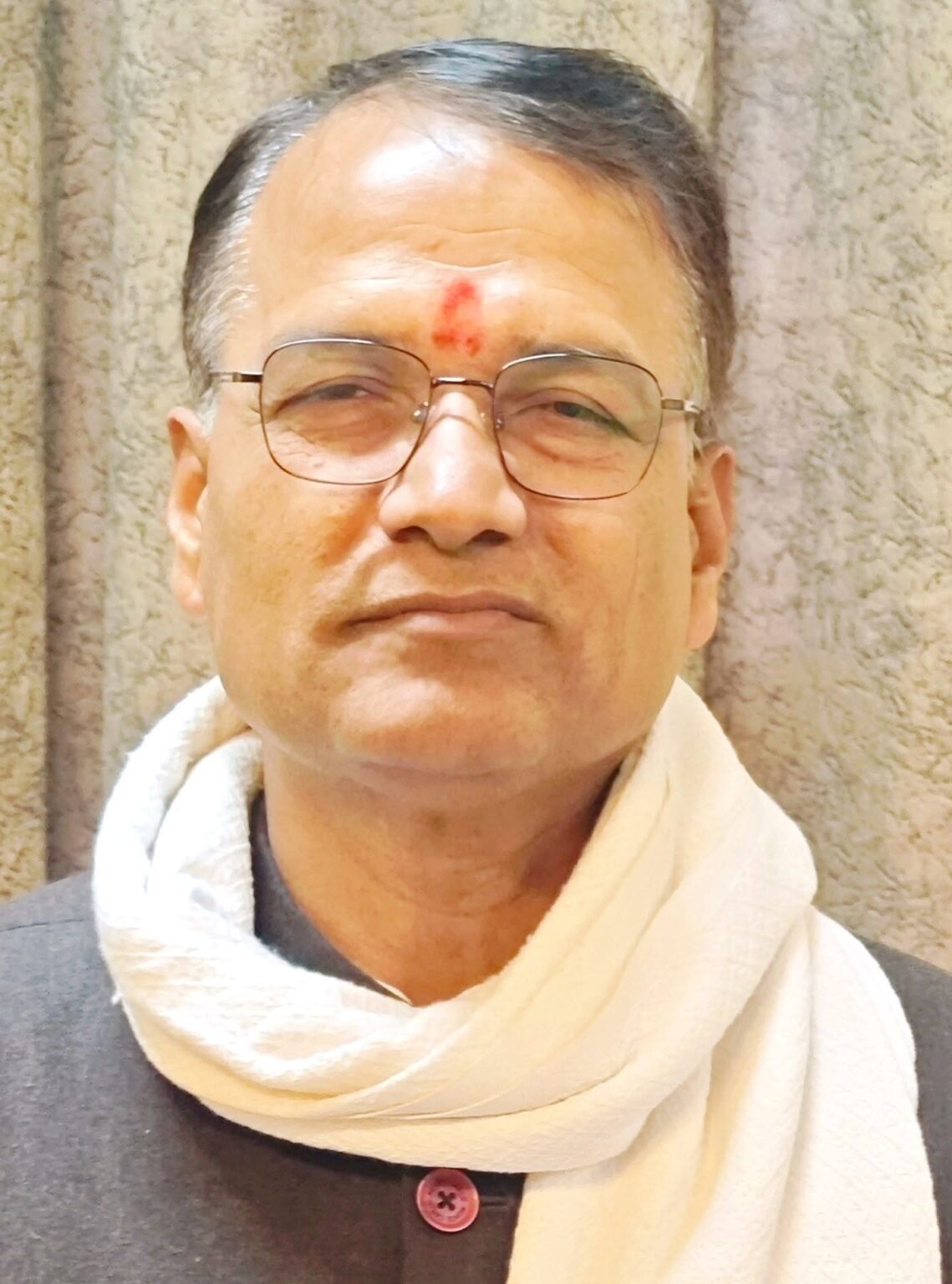
Speaker Ram Ashish Yadav.
Speaker Ram Ashish Yadav has been using one vehicle. Another vehicle is used as his security escort (escort vehicle), while one more is kept at the Secretariat. Deputy Speaker Babita Raut Isar has been using two vehicles, and one vehicle is registered under her secretariat. Chairpersons of seven thematic committees have also received vehicle facilities. Out of-going Speaker Ram Chandra Mandal has also taken vehicle facilities from the Province Assembly.
A Province Assembly weighed down by instability
Lawmaking, passing the budget, and forming the government are the main tasks of the Province Assembly. However, in the second term of the Madhesh Province Assembly, politics has revolved primarily around government formation and passing the budget, while public concern issues and lawmaking have been sidelined.
Since the beginning of the second term, political instability has been consistently visible in Madhesh Province. The elections for the second term of the Province Assembly were held on November 20, 2022. In the 107-member assembly, no single party secured a clear majority. CPN-UML emerged as the largest party with 25 seats. Nepali Congress won 22, JSP 19, Janamat Party 13, CPN (Maoist Centre) 9, LSP 9, and CPN (Unified Socialist) won 7 seats. Rastriya Prajatantra Party, Nagarik Unmukti Party, and Nepal Sanghiya Samajbadi also won one seat each.
At least three parties had to come together to form a government. Initially, a coalition of UML, JSP, and Janamat Party was formed. On that basis, it was agreed that JSP would lead the government, UML would get the Speaker, and Janamat would get the Deputy Speaker. Ram Chandra Mandal of UML became the Speaker, and Babita Raut Isar from the Janamat Party became the Deputy Speaker.
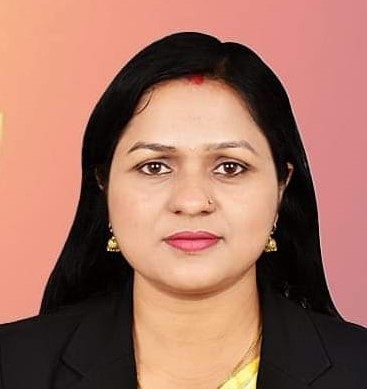
Deputy Speaker Babita Raut Isar.
Saroj Kumar Yadav, parliamentary party leader of JSP, was appointed Chief Minister on January 11, 2023. He had the support of UML, Janamat, Maoist Centre, LSP, Unified Socialist, and other parties. However, changes in the federal political coalition also affected the province. After securing a vote of confidence four times, Yadav was relieved of his post on June 5, 2024 after failing to secure the vote of confidence for the fifth time.
Following that, Satish Kumar Singh of the Janamat Party became the Chief Minister. However, due to a shift in the political alignment, his government could not last either. He announced his resignation in the Province Assembly on October 14, 2024.
Thereafter, Jitendra Sonal of LSP was appointed Chief Minister with the support of a six-party alliance. However, after seeing no prospect of securing a vote of confidence, he announced his resignation on November 7, 2024.
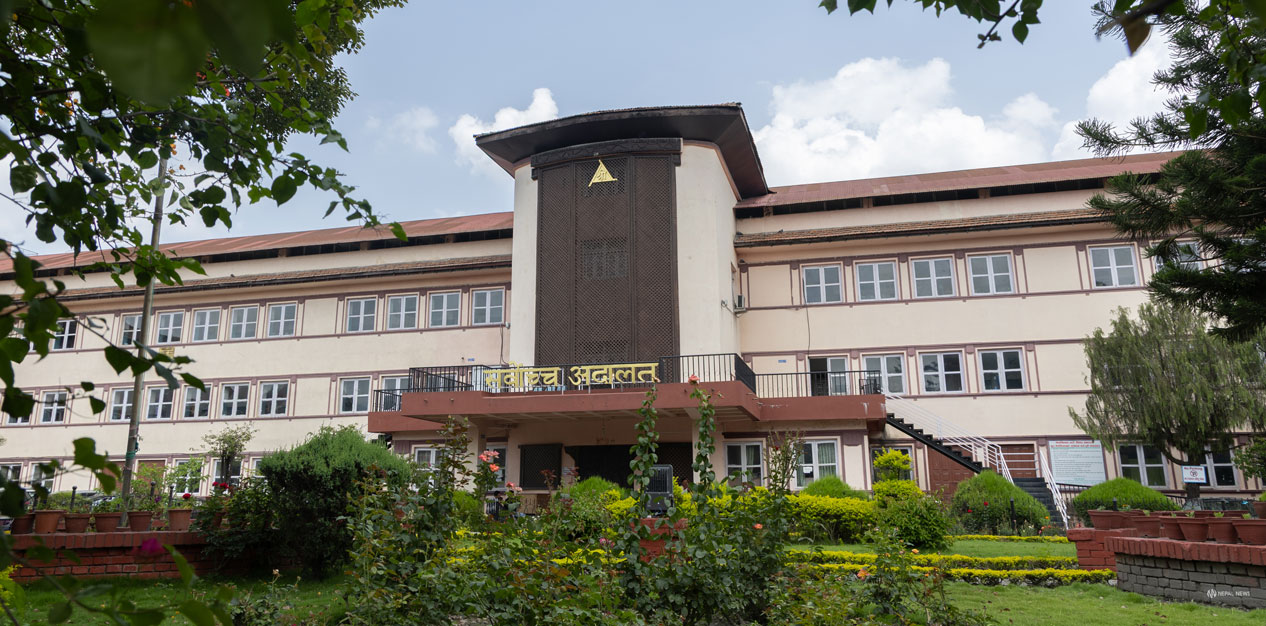
In accordance with Article 168(3) of the Constitution, as the leader of the largest party in the Province Assembly (UML), Saroj Kumar Yadav was appointed Chief Minister on the night of November 8, 2024. Province Chief Sumitra Subedi Bhandari administered the oath of office after appointing him Chief Minister at Panas Cottage in Kalapani, Bardibas. A writ petition was filed in the Supreme Court against this appointment by 73 lawmakers, including those from the seven-party alliance.
The Supreme Court issued a mandamus ordering Yadav to seek a vote of confidence in the Province Assembly within 24 hours, and if he failed to do so, to initiate a new government formation process under Article 168(2) of the Constitution. Following this, the Province Chief was changed. Speaker Ram Chandra Mandal was removed on charges of conduct unbecoming of his post, and Ram Ashish Yadav of JSP was elected Speaker.
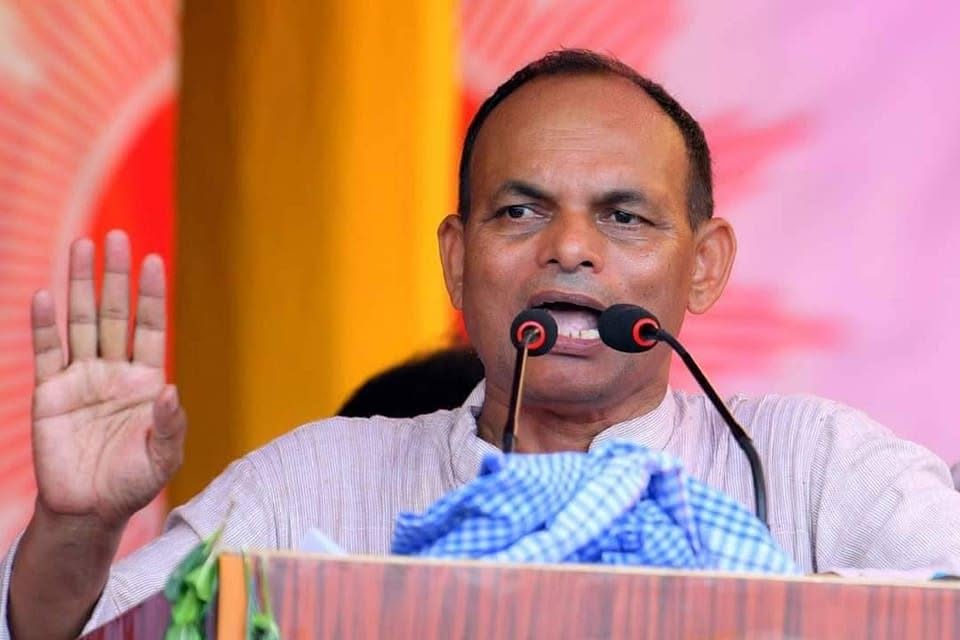
Former Speaker Ram Chandra Mandal.
Chief Minister Yadav announced his resignation after addressing the Province Assembly on December 2, 2024. Following that, Krishna Prasad Yadav was appointed Chief Minister on December 4, 2024 with the support of seven parties.
Having five Chief Ministers within less than three and a half years highlights the unstable political landscape of Madhesh Province. This instability has directly impacted the work of the Province Assembly, lawmaking, and budget discussions.
The Province Assembly is a platform to raise the voice of the public, make the government accountable, and prepare the legal foundation for implementing federalism. However, in Madhesh, this platform has repeatedly been entangled in power coalitions, budget disputes, and party conflicts.
The recent budget obstruction has been cleared following the formation of the task force. However, whether this is just a temporary fix or the beginning of making the Province Assembly dynamic again will be tested by the upcoming budget discussions and the pace of lawmaking.