Kathmandu
Tuesday, July 14, 2026





A wealth probe meant to humble decades of political elites has instead triggered a constitutional standoff with the judiciary, a Supreme Court stay and a fresh contempt petition filed just today
KATHMANDU: Born out of the anger that drove the September 2025 Gen Z uprising, Prime Minister Balendra “Balen” Shah’s government promised a reckoning with corrupt wealth accumulated since the 2006 political changeover.
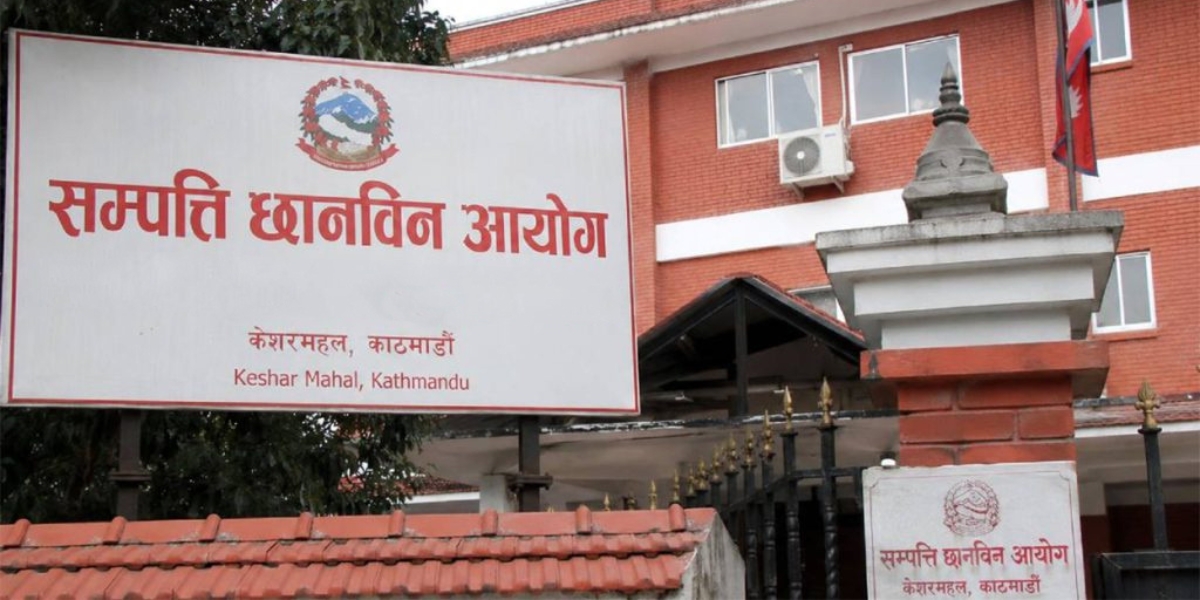
The Property Inquiry Commission, chaired by former Supreme Court justice Rajendra Kumar Bhandari, was that promise turned into paperwork. But its attempt to also question retired judges and army officers has pulled the panel into a bruising legal fight, now spilling into a contempt case at the apex court, just as its extended deadline for asset declarations expires.
What exactly is the Property Inquiry Commission?
Property Inquiry Commission is a government-appointed panel tasked with gathering, verifying, and investigating the asset declarations of Nepal’s political and bureaucratic elite going back nearly two decades. It functions as a fact-finding and screening body rather than a prosecuting authority.
It cannot convict anyone or seize property on its own. Instead, once it identifies wealth that looks disproportionate to a person’s known, legitimate income, it forwards the file onward, ultimately expecting the Commission for the Investigation of Abuse of Authority, Nepal’s permanent anti-graft body, to build criminal cases from its findings.
The panel works under the decades-old Commission of Inquiry Act of 1969, which gives it the power to summon records and individuals but leaves the actual punishment to other constitutional organs. In effect, it is meant to be the sorting mechanism that turns public suspicion about hidden fortunes into paper trails other institutions can act on.
When was it formed, and under what authority?
The idea took shape almost as soon as Balendra Shah was sworn in as prime minister. On March 27, 2026, his cabinet resolved to set up such a body within fifteen days, embedding the promise as point 43 of the government’s widely publicized 100-point governance reform agenda. That commitment was formally executed on April 15, 2026, when a cabinet meeting at the Prime Minister’s Office constituted the commission and published its terms in the Nepal Gazette the same day.
The four original members were sworn in under the chairmanship of Rajendra Kumar Bhandari, and the body began functioning within days, opening its first public notice by mid-May. So while the political announcement came in late March, the commission’s legal birth and functional start both trace to mid-April, giving it a working life of roughly three months before its authority ran into the courts.
Why was this commission created in the first place?
Its origins lie directly in the fury of the September 2025 protests, when young demonstrators, angry over corruption, nepotism, and economic stagnation, forced the resignation of then Prime Minister KP Sharma Oli after a bloody crackdown killed dozens. When Balendra Shah, a political outsider known for his anti-corruption rhetoric, took charge after March 5 elections, his government treated an aggressive wealth probe as a down payment on the movement’s demands.
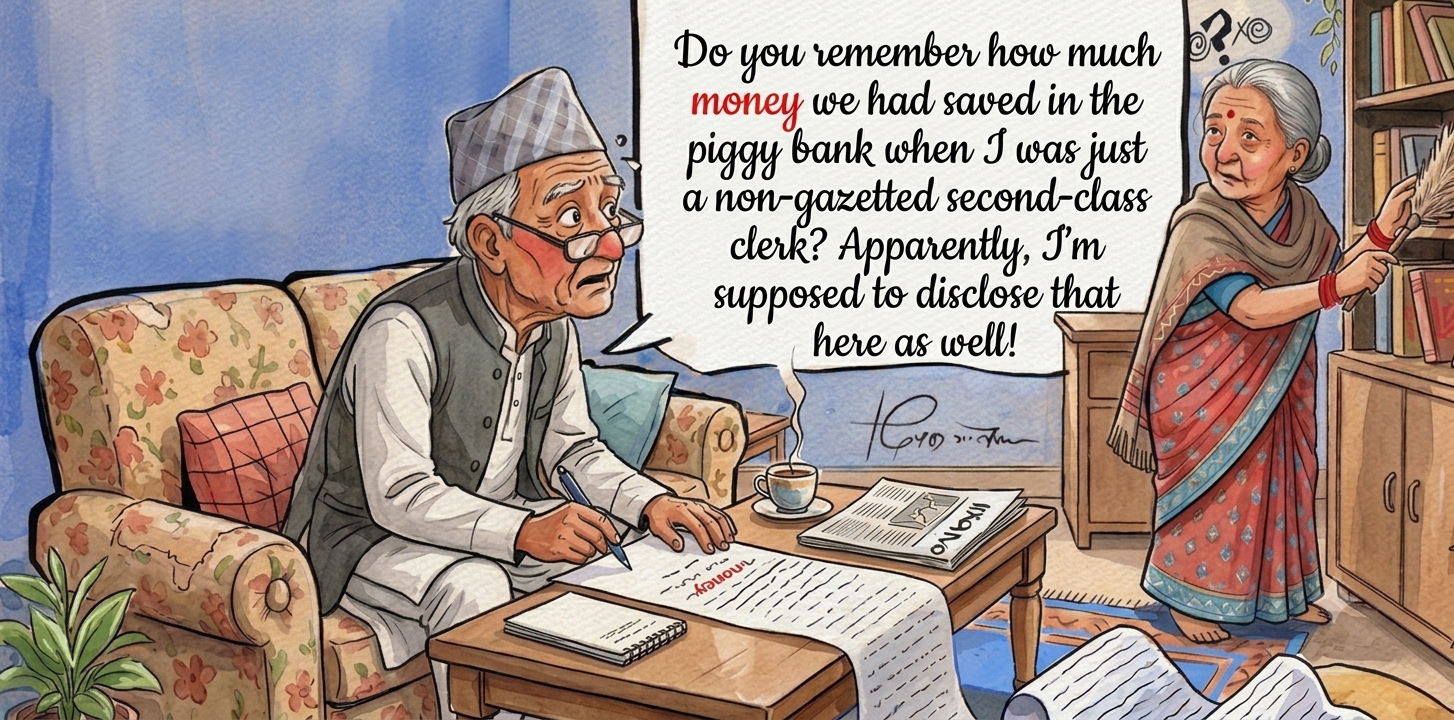
Civil society groups and lawmakers had also long pushed for an audit of how public officials had enriched themselves since the restoration of multiparty politics after 1990 and especially since the 2006 peace-era settlement.
Nepal has attempted similar reckonings before, most notably a 2002 Judicial Commission for Property Inquiry that quietly buried its report with the monarchy, and this new panel was pitched as finally breaking that decades-old cycle of official inquiries dying without consequence.
Who sits on the commission and what are their backgrounds?
The panel is led by Rajendra Kumar Bhandari, a former justice of the Supreme Court, whose appointment as chair has itself become part of the legal controversy discussed below. Alongside him sit two more former judges, Chandi Raj Dhakal and Purushottam Parajuli, both of whom previously served on Nepal’s appellate courts.
Rounding out the panel are Ganesh KC, a retired Deputy Inspector General of Nepal Police who also serves as the commission’s spokesperson, and Prakash Lamsal, a chartered accountant brought in to handle the complex forensic accounting side of tracing hidden wealth.
This composition was deliberate: a mix of judicial authority to interpret the law, investigative experience to track down concealed assets, and financial expertise to compare declared income against accumulated property. Critics, however, have pointed out that stacking a government-formed panel with former judges, rather than sitting judicial officers bound by constitutional process, is itself part of what has landed the commission in court.
What is the commission actually mandated to investigate?
Its brief covers individuals who have held major political office or senior public positions since fiscal year 2006, spanning roughly twenty years of Nepali public life. That includes former and sitting prime ministers, deputy prime ministers, ministers, members of the Constituent Assembly and Parliament, provincial officials, mayors, and heads of constitutional bodies.
Officials whose wealth appears to exceed their legitimate income, and who cannot satisfactorily explain the gap, are then classified as holding “illegal” or disproportionate assets under the commission’s internal criteria.
It also stretches deep into the bureaucracy, covering joint secretaries and above across the civil service, judiciary, police, army, armed police, and intelligence services, as well as top officials at Nepal Rastra Bank, state-owned banks, public enterprises, and even government-nominated board members at private-sector-linked institutions such as the Securities Board of Nepal and Nepal Telecom.
The commission’s method is to compare a person’s declared income, salary, agricultural earnings, and inherited property against their actual accumulated wealth; where the gap cannot be explained, the assets are treated as suspect and flagged for further scrutiny and eventual referral.
How is the investigation structured, and is there more than one phase?
The commission designed its work in two broad phases. The first phase, now underway, covers officials and employees who served between fiscal year 2005/06 and April 2026, the twenty-year window since Nepal’s peace-era political settlement. A second phase, promised as part of the government’s wider 100-point agenda, is meant to reach further back, examining wealth accumulated since 1990, the year multiparty democracy was restored after the fall of the Panchayat system.
Officials have said this second phase will only begin once the first is substantially completed and a fresh public notice is issued for that earlier period. Within the first phase itself, the process runs in two steps: an initial screening of asset declarations and complaints to sort genuine cases from routine ones, followed by a deeper, individualized investigation into the files that raise red flags, before anything is sent onward to the government and the anti-corruption body.
What happens to someone once the commission suspects wrongdoing?
The process is designed as a funnel rather than a courtroom. First, the individual or institution is asked to submit full asset details, and if third parties such as banks, land offices, or company registries hold relevant records, the commission can demand those directly, giving recipients around fifteen days to comply. Officials whose wealth appears to exceed their legitimate income, and who cannot satisfactorily explain the gap, are then classified as holding “illegal” or disproportionate assets under the commission’s internal criteria.
Out of an estimated 25,000 current and former officials expected to file, only around half had submitted declarations by early this week, though the pace picked up noticeably as the new date approached, with officials predicting the total could roughly triple in the final push.
At that point, the commission does not prosecute; instead it prepares a report and sends it to the government through the Chief Secretary, with the government legally required to decide on follow-up action within 45 days under the governing Inquiry Commission Act. In practice, officials expect the anti-graft body to take up confirmed cases and pursue formal corruption charges, with courts eventually deciding on conviction and the confiscation of unexplained wealth.
What is the deadline for filing asset declarations, and has it changed?
The commission originally gave officials one month from its mid-May public notice to submit their property details, setting an initial cut-off around mid-June. That timeline proved wildly optimistic. With record-keeping gaps, missing decades-old land and banking documents, and open resistance from sections of the judiciary, filings badly lagged expectations, and the commission was forced to push the deadline back to July 16.
Out of an estimated 25,000 current and former officials expected to file, only around half had submitted declarations by early this week, though the pace picked up noticeably as the new date approached, with officials predicting the total could roughly triple in the final push.
That extended July 16 deadline, however, now collides directly with the Supreme Court’s intervention, since the interim order handed down on July 10 has already frozen large parts of the commission’s authority to act on whatever it collects.
What has the commission actually accomplished so far?
Despite the slow start and the legal cloud now hanging over it, the commission has generated real activity. By early July it had received asset declarations from roughly 13,000 to 13,660 public officials and registered somewhere between 1,500 and 3,000 individual complaints alleging concealed wealth among former ministers, bureaucrats, and other officeholders.
It had already begun opening sealed files, taking up around 1,500 cases in a first preliminary batch, and reported completing initial reviews of several hundred within its first days of active screening. Several marquee names came forward voluntarily, including former prime ministers, a former acting head of government, and multiple former chief justices, lending the process some early credibility even as others stayed away.
The commission has also said it will pursue asset details of officials’ relatives, drivers, and close associates where there is reason to believe wealth was parked in their names to dodge scrutiny.
Which prominent figures have complied, and which have stayed away?
Compliance has been uneven but notable at the top. Former prime ministers Madhav Kumar Nepal and Sushila Karki filed declarations, as did former premier Khil Raj Regmi, former deputy prime minister Ishwar Pokharel, and several former ministers including Bhim Rawal, Raghuji Panta, and CP Mainali.
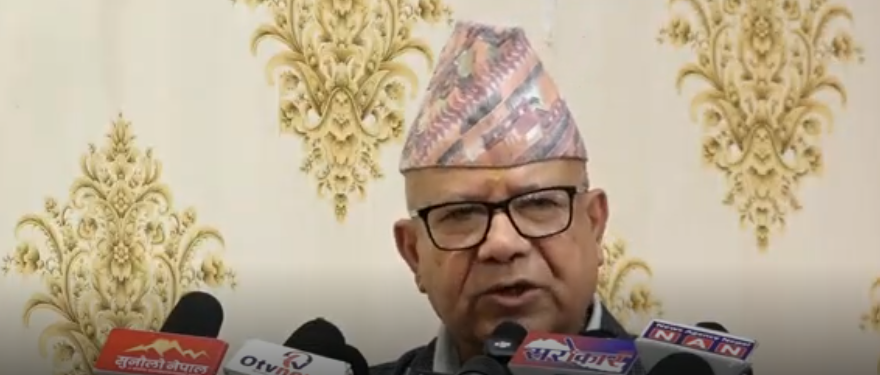
Former prime ministers Madhav Kumar Nepal
On the judicial side, four former chief justices, Ram Kumar Prasad Shah, Gopal Parajuli, Om Prakash Mishra, and Prakash Man Singh Raut, along with retired army chief Rookmangud Katawal and former chief secretary Suman Raj Aryal, also submitted their details, undercutting the narrative of blanket judicial defiance.
But a substantial and vocal bloc of retired judges, organized informally as a forum of former judges, has refused outright, arguing the whole exercise is constitutionally improper when directed at the judiciary. That split between judges who complied quietly and those who openly boycotted is central to the standoff now before the Supreme Court.
What exactly is the controversy over judges and the military?
At its core, this is a separation-of-powers fight. The commission’s original design cast an extremely wide net, reaching not just politicians and civil servants but also retired Supreme Court and High Court judges and senior former army officers, treating them the same as any other public official.
Nepal’s Constitution, however, places judges and constitutional officeholders behind their own special shields: judges can only face disciplinary consequences through the Judicial Council, constitutional officeholders can only be removed through impeachment, and army personnel answer to internal processes under the Army Act.
Critics argued that letting a cabinet-formed commission, effectively an arm of the executive, investigate people the Constitution deliberately insulated from executive reach, opened the door to political retaliation dressed up as anti-corruption work.
Opponents warned that if a sitting government could quietly weaponize such a commission against judges who ruled against it, or against generals who fell out of favor, judicial independence and civil-military balance would both be compromised.
What did the Supreme Court actually rule on July 10?
Hearing writ petitions filed by advocate Prem Raj Silwal, a joint bench of Justices Tek Prasad Dhungana and Shrikanta Paudel issued an interim order directing the commission to maintain the status quo. Specifically, it ordered that no one covered under Article 239 of the Constitution, meaning judges, constitutional officeholders, and similarly protected officials, should be compelled to submit asset details, and that the commission should not examine declarations already filed by such individuals or recommend any legal or disciplinary action against anyone until the matter is finally resolved.
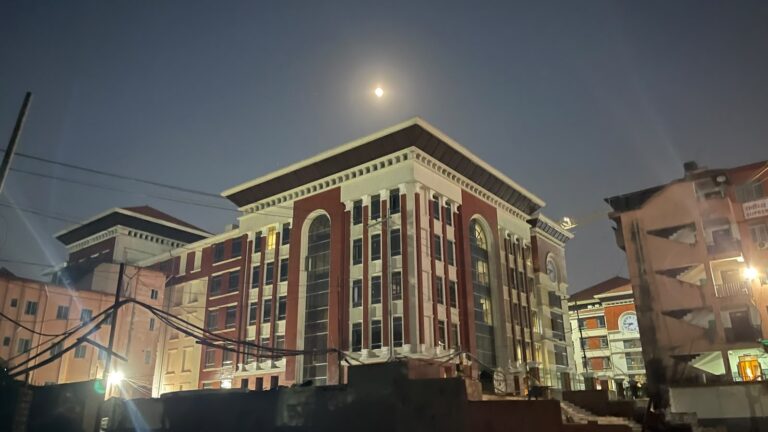
Supreme Court building. Photo: Bhasha Sharma
Because the case raised weighty constitutional questions, including whether appointing a former Supreme Court justice as the commission’s chair even violates Article 132’s restrictions on former judges holding other government posts, the bench referred the matter to a larger full bench for final adjudication, granting it priority status and ordering a hearing within fifteen days. The court also asked the Nepal Bar Association and Supreme Court Bar Association to nominate amicus curiae to assist the eventual hearing.
How did the commission respond to the court’s order?
Rather than treating the order as a full stop, the commission publicly staked out a narrower reading of it. Spokesperson Ganesh KC and the commission’s official notice argued that the interim order only protects individuals specifically named under Article 239, namely sitting judges, former judges, and former army officers whose service is governed by separate law, and does not touch its authority to keep investigating politicians, bureaucrats, and other officials who fall outside that constitutional shield.
On that basis, the commission issued its own public notice on July 13, declaring that asset scrutiny of everyone except judges and military officers would continue uninterrupted, including the approaching July 16 deadline for submissions.
This selective interpretation is precisely what has now landed the commission back in court, this time facing an accusation that it defied, rather than merely interpreted, the Supreme Court’s order.
What is today’s contempt of court petition about?
On July 14, advocate Prem Raj Silwal, the same petitioner behind the original writ, filed a fresh contempt of court petition against commission chair Rajendra Kumar Bhandari and all four members, arguing that the notice the commission published contradicted the spirit and letter of the July 10 interim order.
The petition contends that the commission cherry-picked a single line from a lengthy, carefully reasoned order running across several pages, and twisted it into a self-serving interpretation that let it carry on almost exactly as before. It accuses the commission of deliberately distorting the order’s intent to keep its operations running despite being told to pause, calling this an act of open disrespect for judicial authority rather than a good-faith legal reading.
As Nepal’s constitutional and judicial administration laws allow contempt of court to be punished with up to a year’s imprisonment, a fine, or both, the petition asks the court to hold Bhandari and his fellow commissioners personally accountable for what it frames as defiance disguised as clarification.
Who is Prem Raj Silwal, and what is his broader legal argument?
Silwal is the advocate who has driven nearly the entire legal challenge against this commission from the start, filing two separate writ petitions in late April and early May 2026 seeking to have the body declared void from its inception.
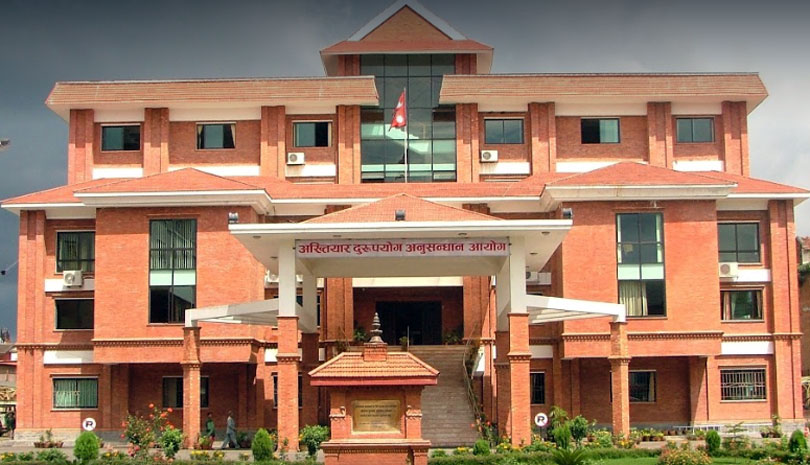
His arguments rest on several constitutional pillars: that the commission’s reach into judges and constitutional officeholders exceeds even the powers given to Nepal’s permanent anti-corruption body, the CIAA, under Article 239; that it tramples Article 28’s guarantee of privacy by demanding sweeping financial disclosures without adequate legal safeguards; and that Bhandari’s appointment as chair directly conflicts with Article 132, which bars former Supreme Court justices from holding other government positions except at the National Human Rights Commission.
He has also invoked the internationally recognized Bangalore Principles of Judicial Conduct and earlier Nepali case law on judicial independence to argue that no cabinet-created body, however well-intentioned, can lawfully sit in judgment over judges. His latest contempt filing extends that campaign, arguing the commission is now not just constitutionally overreaching but actively disobeying a court order.
What happens next, and when will the courts decide?
The case now sits before a full bench, referred there because of the constitutional weight of the questions involved, with the Supreme Court having ordered that a hearing take place within fifteen days of its July 10 order, putting the likely window around late July, with hearing expected on July 16 for the contempt case, the same date the commission’s own filing deadline expires.
The Nepal Bar Association and Supreme Court Bar Association have been asked to name amicus curiae to help the bench navigate the constitutional questions, and the fresh contempt petition filed on July 14 will likely be heard alongside or shortly after the main case.
The stakes are considerable: a ruling could either validate a form of executive-led wealth accountability that reaches even the judiciary and military, or it could gut the commission’s authority over roughly a hundred retired judges and senior officers, potentially forcing Nepal into yet another round of an anti-corruption commission whose findings quietly go nowhere, echoing the fate of the 2002 property inquiry whose report was never made public.