Kathmandu
Tuesday, July 28, 2026





Government officials say talks with FIFA are progressing, but the absence of a clear action plan has left Nepal's return to international football uncertain while players, clubs, and development projects continue to bear the cost.
KATHMANDU: Former Nepal coach Abdullah Almutairi, who led the team to the SAFF Championship final for the first time in history, is now chasing another dream. That dream is to end Sri Lanka’s more than three-decade-long trophy drought and make the team the champion of South Asia once again.
As the SAFF Championship draws near, a short response on social media gives an indication of how far his preparations have progressed. Sri Lankan football supporter Saliya Nanayakkara commented on Almutairi’s post, asking: “Coach, is there any plan to add some new faces, meaning new players, to the team before the SAFF Championship?”
Almutairi gave a brief reply: “Not enough time.”
His response indicates that the core structure of the Sri Lankan team ahead of SAFF has largely been finalized.
With the South Asian Football Federation (SAFF) announcing the tournament dates from November 4 to November 17 in Bangladesh, not only Sri Lanka, but also India, Bhutan, the Maldives, Bangladesh, and Pakistan have intensified their preparations.
Nepal’s participation, however, remains uncertain. Due to an indefinite suspension imposed on the All Nepal Football Association (ANFA) by FIFA, the supreme governing body of international football, Nepal’s participation in SAFF is still not confirmed.
Where is the suspension lifting process stuck?
FIFA decided to suspend ANFA indefinitely under Article 16 of its statutes on June 25, after ruling under Article 14, Paragraph 1 (i) and Paragraph 3 that there was third-party interference in ANFA’s operations.
In its history of more than five decades since becoming a FIFA member in 1972, ANFA has been suspended for the very first time.
Before imposing the suspension, FIFA had instructed ANFA to allow the old executive committee to continue in its role until another election could be conducted. However, the tenure of ANFA’s executive committee had already expired on June 20, 2026.
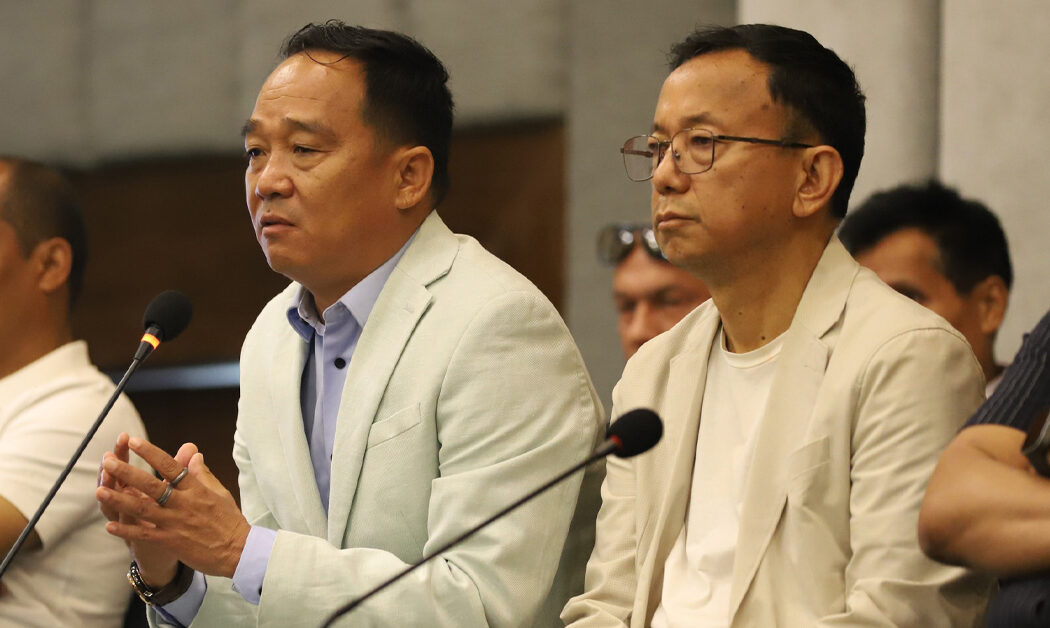
ANFA General Secretary Kiran Rai and President Pankaj Bikram Nembang (left). Photo: ANFA
The “third-party interference” cited by FIFA primarily relates to government interference. The dispute with the government began after ANFA decided to hold central elections on March 27.
Although the National Sports Council (NSC) repeatedly directed ANFA to conduct tiered elections, ANFA continually ignored the instructions. Consequently, on March 25—just two days before the elections scheduled for March 27 in Jhapa—the NSC suspended ANFA for three months.
Later, on May 15, the NSC lifted the suspension. ANFA leadership claimed that this was an unconditional revocation of the suspension. It was then expected that the dispute would subside.
Meanwhile, ANFA President Pankaj Bikram Nembang and General Secretary Kiran Rai, who were preparing to travel to Mexico to attend the FIFA World Cup opening ceremony, were turned back from Tribhuvan International Airport by the Department of Immigration. Based on the NSC’s recommendation, 24 people, including the president, were barred from traveling abroad.
FIFA viewed these developments as government interference in ANFA’s affairs. Determining that preventing representatives of a member association from independently participating in events constituted interference, FIFA asked for a clarification within a specified timeframe. According to ANFA, Nepal was suspended after a satisfactory response was not provided within the stipulated time.
Following ANFA’s suspension, Nepal has been excluded from all international football activities under the umbrella of FIFA and the Asian Football Confederation (AFC). National teams and Nepali clubs have been unable to participate in international competitions, and FIFA-accredited Nepali referees have also been barred from officiating international matches.
Additionally, technical and financial support from FIFA and AFC has been halted. However, ANFA spokesperson Suresh Shah states that no concrete initiative has been taken to resolve the issue, even though more than a month has passed since the suspension.
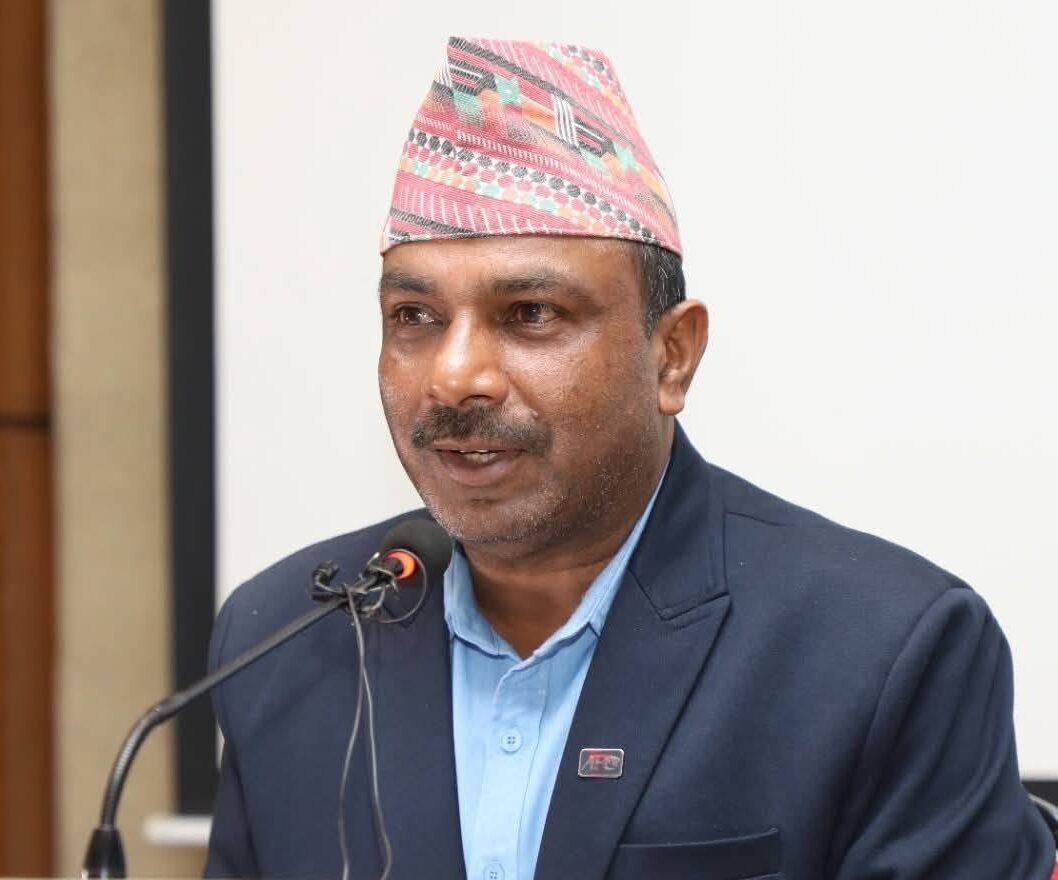
ANFA Spokesperson Suresh Shah. Photo: ANFA
“It has been a month since the suspension. This is a very long time. After the suspension, FIFA suspended formal contact with ANFA,” says Shah. “To my knowledge, direct dialogue is taking place between the government and FIFA. However, no concrete progress has been seen so far.”
According to him, the suspension has pushed Nepali football into a multi-dimensional crisis. Around 370 employees work directly for ANFA, while nearly 87,000 people are indirectly involved in various football-related professions and jobs. Shah states that as all ANFA activities have come to a standstill, their livelihoods have also been affected.
The impact of the suspension is not limited to sports administration. Annual investments and football infrastructure construction projects by the government, FIFA, and AFC have also been impacted.
Work on seven football fields currently under construction or planned for construction in various districts, including Kailali, Kavre, and Sindhupalchok, has stopped. There is now uncertainty over whether financial assistance for these projects will come from FIFA and AFC.
The biggest impact appears to fall on the future of the players. The competitive career of a football player generally lasts only until age 32 to 34.
Shah mentions that if the suspension drags on, many players face the risk of losing crucial years of their career. Therefore, he believes a serious debate is necessary regarding who should take responsibility for the current situation. “If mistakes were made by the leadership, action should be taken against the concerned individuals,” he says. “However, the question of who will take responsibility for a situation that halts all of Nepali football is equally important.”
The current dispute did not arise overnight. Starting from the central election process, FIFA had repeatedly written to the government through ANFA, providing an 11-point set of recommendations, including statute amendments.
Subsequently, it sent further letters warning against government interference. After the government revoked some decisions, FIFA wrote again, requesting clear updates on the progress made regarding the issues raised. However, ANFA has publicly claimed on social media that its association was suspended because the government failed to respond.
According to Shah, only limited options remain for a solution. First, the government could conclude that FIFA membership is unnecessary and decide to run only domestic football.
Second, the government could remove its interference and allow ANFA to operate independently according to FIFA statutes. The third path is to find a way out through consensus by holding joint negotiations among the government, ANFA, and FIFA. ANFA has maintained from the beginning that the third option is the most suitable approach.
“The jurisdictional dispute between the NSC and ANFA is not new. This is a recurring problem that has spanned many years,” says Shah. “FIFA maintains that its member associations must operate independently, while the government states that work must be done according to NSC guidelines. For this reason, ANFA has come under two-way pressure.”
He states that following the government’s decisions risks FIFA sanctions, while complying with FIFA rules leads to the problem of government interference. Therefore, Shah emphasizes the need to find a permanent solution to the conflict.
Fear of losing achievements
Following FIFA’s suspension, the biggest impact on Nepali football has been seen in international participation. As long as the suspension remains in effect, Nepal’s national team, age-group teams, and women’s team will not be allowed to participate in competitions under FIFA and AFC.
On July 1, the AFC sent a letter to ANFA informing them that if FIFA’s ban remains in place, Nepali teams and clubs will be excluded from various AFC competitions for the 2026/27 season. In the letter sent to ANFA General Secretary Kiran Rai, the AFC cited FIFA’s circular of June 24, 2026, stating that ANFA is currently ineligible to participate in international competitions.
According to the AFC, Nepal has been removed from the AFC Women’s Champions League 2026/27. The group draw for that tournament took place on July 2.
Similarly, the letter informed that if the suspension is not lifted by July 13 for the AFC U-17 Women’s Asian Cup China 2027 qualifiers, and by August 1 for the AFC U-20 Asian Cup China 2027 qualifiers, the Nepali team will not be allowed to participate.
ANFA had already registered the names of national teams and clubs for various AFC competitions for the 2026/27 season. However, due to the FIFA ban, all those participations are now in doubt.
This has also had a direct impact on club football. Departmental team Tribhuvan Army Club missed the opportunity to participate in the Durand Cup being held in India. Likewise, questions have arisen regarding Nepal’s participation in the SAFF Championship, which is being organized after three years.
According to former national player and coach Raju Kaji Shakya, there are many reasons behind Nepali football reaching its current state. Although Nepali football showed good promise until a few years ago, problems such as the lack of a regular league, players migrating abroad, and new players leaving in search of opportunities caused football to weaken.
In the meantime, as player dissatisfaction and internal disputes escalated, he states that a situation was created where the government had to step in. He believes that this has increased the risk of losing the achievements gained by Nepali football.
“At the South Asian level, although we could not win the SAFF Championship, our football was heading in the direction of development. In recent years, playing against teams like Malaysia, Jordan, and Australia showed positive signs,” says Shakya. “Conceding fewer goals against a team like Australia, which has played in the World Cup, was also an aspect of our performance. However, there is concern that the current suspension might push that progress backward again.”
In recent times, compared to the men’s team, Nepali women’s football had been making remarkable progress. The women’s team was viewed as a team with the potential to reach the World Cup in the future. The Nepali women’s team has played in the final of the SAFF Championship six times so far. The Nepali women’s team has won silver medals three times in the South Asian Games.
Additionally, it has a history of finishing as runner-up in the WAFF Women’s Championship, Hero Gold Cup, Nadezhda Cup, and International Women’s Championship. The Nepali women’s team has also played in the AFC Asian Cup three times.
During the AFC Women’s Asian Cup qualifiers last year, Nepal came close to an absolute milestone. However, losing 4–2 on penalties to Uzbekistan in the final match meant missing out on a golden opportunity to return to the Asian Cup for the first time since 1999.
Important players from the generation that delivered these achievements are now in the final stages of their careers.
The careers of players like captain Sabitra Bhandari ‘Samba’, Renuka Nagarkote, Anita Basnet, Saru Limbu, Deepa Shahi, Anjila Tumbapo Subba, and Hira Kumari Bhujel are no longer very long. Therefore, Shakya says that if the suspension is prolonged, it will impact the plans for Nepali women’s football. “It takes years to prepare players like Samba and Renuka. Such a generation does not come around repeatedly,” he says. “Therefore, to move forward with current achievements, work must be done toward lifting the suspension immediately.”
We are initiating efforts for revocation: NSC
NSC Acting Member Secretary Ram Charitra Mehta claims that the current situation arose due to ANFA’s own shortcomings and working style.
According to him, the state of dispute was created because ANFA failed to maintain institutional governance for a long time, did not run a regular league, and failed to address the legitimate demands of players and clubs.
Mehta was previously a Joint Secretary at the then Ministry of Youth and Sports. At that time, clubs and players approached the then Sports Minister Bablu Gupta with their grievances. Gupta then visited ANFA and issued instructions to run a regular league. However, ANFA was ignoring those instructions.
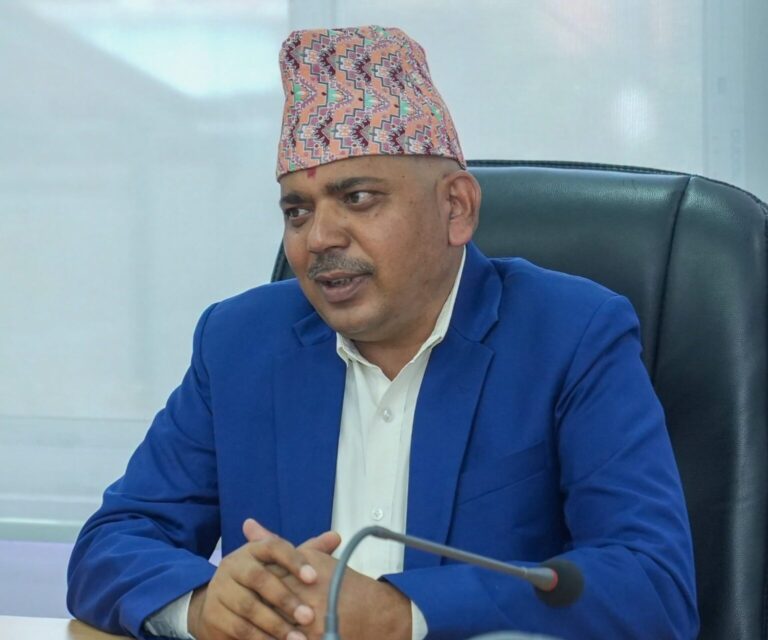
NSC Acting Member Secretary Ram Charitra Mehta. Photo: NSC
Clubs and players had long been protesting against ANFA, citing delays in conducting the league, lack of institutional governance, and dissatisfaction with management. As dissatisfaction grew, players even locked down the ANFA office. Although the Ministry repeatedly directed the ANFA executive committee to resolve the issues, Mehta says those directions were not effectively implemented.
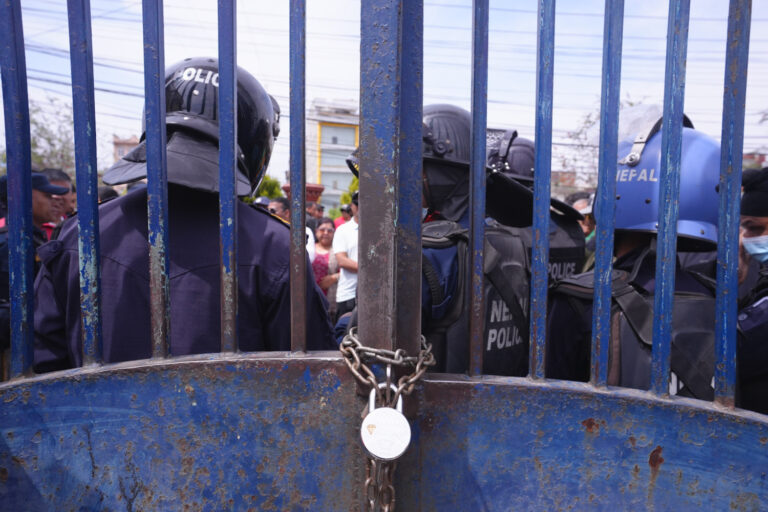
Protest demonstration held in front of the gate of All Nepal Football Association (ANFA) by various clubs and supporters. Photo: Nepal Photo Library
Against this backdrop, after Tanka Lal Ghising’s tenure ended on December 1, the government gave Mehta the acting responsibility for the vacant post of NSC Member Secretary.
After assuming responsibility, he maintained the view that ANFA should only move toward central elections after completing tiered elections first. However, Mehta states that after concluding that ANFA did not make necessary efforts regarding that matter and failed to comply with instructions from the Ministry and NSC, ANFA was suspended.
“The suspension was not of a permanent nature. According to prevailing law, the NSC can suspend any sports association,” he says. “There is a provision that if the concerned association submits an application within three months and the government or NSC deems it necessary, the suspension can be lifted. Under that provision, we imposed the suspension, and later we lifted it as well.”
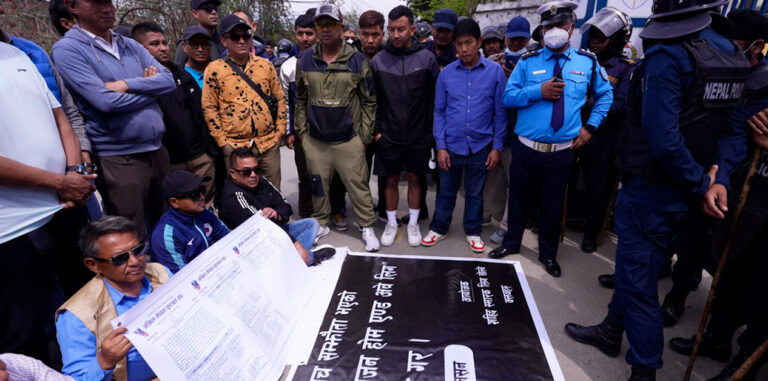
Protest demonstration held on Monday in front of the gate of All Nepal Football Association (ANFA) by various clubs and supporters. Photo: Nepal Photo Library
After the application for revoking the suspension was submitted, Mehta says the NSC reviewed the specified conditions, commitments for improvement, and the state of implementation by ANFA. The decision to lift the suspension was made after that.
However, he believes that the events triggered when ANFA leadership attempted to go abroad without resolving issues such as tiered elections led to the current crisis. Nevertheless, he states that after the suspension by FIFA, the government is currently in direct dialogue with FIFA and the AFC for a solution.
“Necessary initiatives are being taken on behalf of the government. Continuous correspondence is taking place with the AFC and FIFA. Correspondence has taken place in two or three rounds so far,” says Mehta. “The talks are moving in a positive direction.”
According to him, a week ago, the government stated its position and sent a letter again to FIFA and the AFC. A reply to that has not yet been received. He speculates that because of the World Cup, FIFA’s regular work has been affected, which might be causing a delay in the response.
NSC has not backed down from its stance
Even though ANFA was suspended by FIFA, the NSC has not backed down from its core position. The NSC has continued its demand that central elections should take place only after completing tiered elections.
The NSC has been stating that improvements are required in various areas concerning the structure of sports associations, election processes, and statute amendments.
These include electing office bearers and members of sports associations through democratic methods every four years, and operating associations in accordance with the National Sports Development Act, 2020, and its regulations.
Similarly, the NSC’s position is that provincial and district associations formed under ANFA’s statute must be organized according to the provisions of the National Sports Development Act, 2020, to build structures at the local and provincial levels and conduct tiered elections.
The NSC has been stating that every sports association must hold a general assembly within three months of the end of the fiscal year, complete periodic elections every four years, and obtain approval from the Council for elections.
The NSC maintains that the association’s statute should be revised in accordance with prevailing laws, and ANFA’s elections should be conducted strictly according to Articles 33–37 of the approved statute.
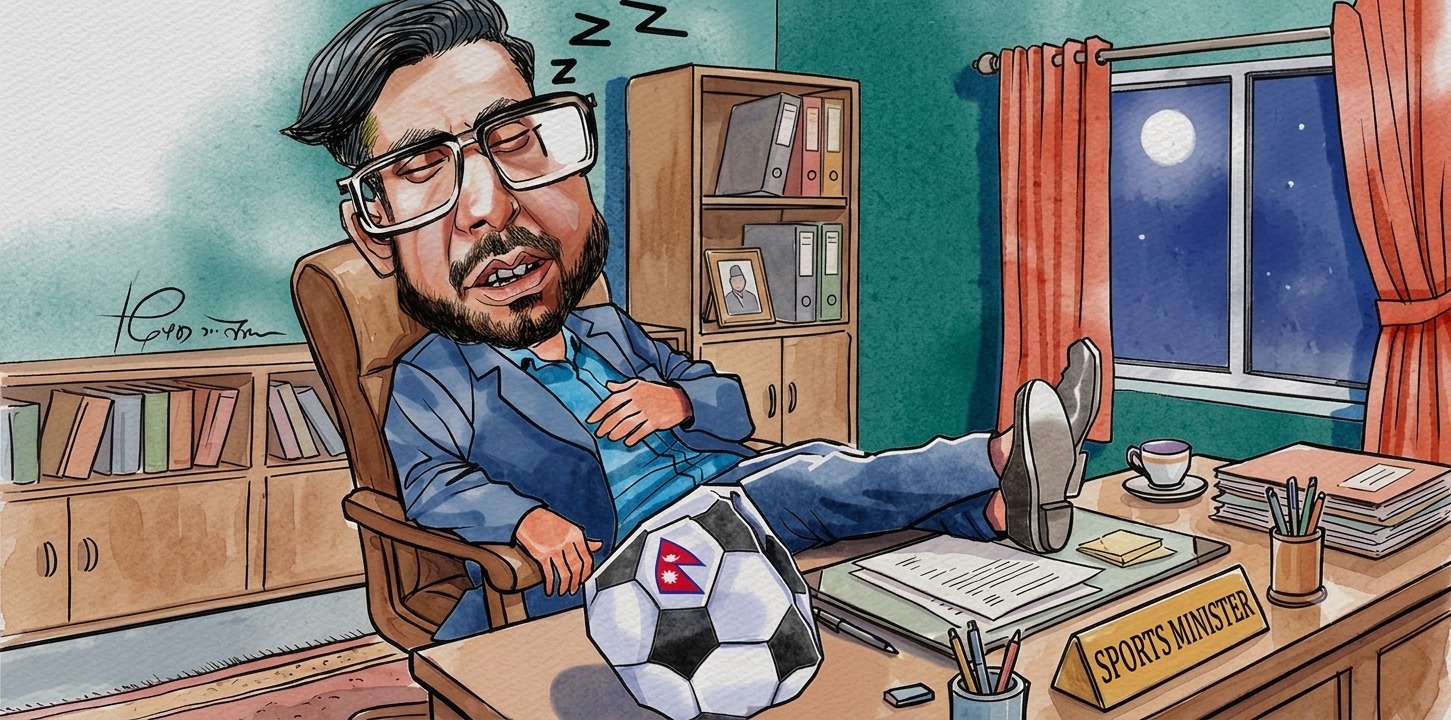
Under these circumstances, Minister for Education and Sports Sasmit Pokharel had moved forward to form an ad-hoc committee involving players who have played football. However, after realizing that the government itself cannot form such a committee and that permission from FIFA and AFC would also be required, he has temporarily stepped back.
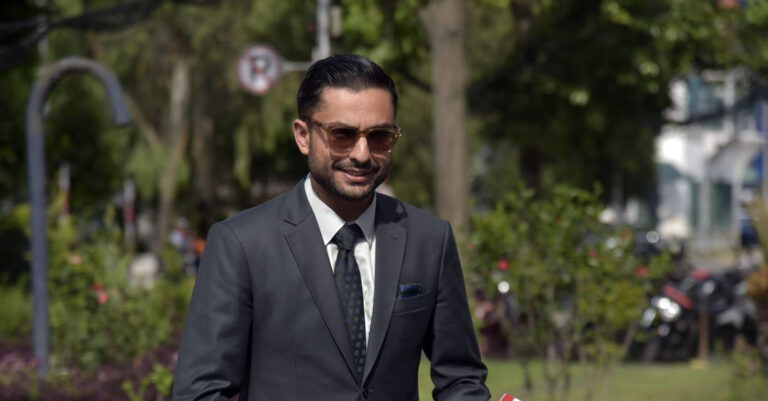
Minister for Education and Sports Sasmit Pokharel.
“Currently, rather than forming an ad-hoc committee, discussions are underway on how to address the issues we raised previously and reach a consensus,” says Mehta. “We must move forward considering the situation. Making any decision in haste could send the wrong message.”
Currently, the government is moving forward in favor of forming a committee from within that includes former figures as well. To this end, discussions are taking place regarding the government providing necessary names and, based on that, suggesting that FIFA and AFC form the committee. This means that a conclusion to lift the suspension immediately has not been reached yet. Nevertheless, overall, Mehta asserts that talks are progressing positively. He says, “We expect positive results in a few days and hope to hear good news.”
However, the government has not made public a clear action plan—including the conditions to be fulfilled, steps to be taken, and the associated timeframe—for lifting the suspension.