Kathmandu
Wednesday, July 22, 2026






KATHMANDU: Nepal News presents today’s snapshot of Nepal’s economic activities. Get quick updates on major market movements, policy shifts, and financial developments shaping the economy of Nepal. Here are the key economic highlights for today:
NRB Absorbs Rs 70 Billion Surplus Capital from Banking System
Nepal Rastra Bank (NRB) executed a financial mop-up operation on Friday, drawing Rs 70 billion out of the financial sector to handle excess institutional liquidity. Commercial institutions placed minimum bidding stakes starting at Rs 100 million, with larger amounts structured in multiples of Rs 50 million up to the full intervention cap. The capital absorption tender was opened exclusively to Class ‘A’, ‘B’, and ‘C’ banking groups under a multiple-interest rate bidding matrix. The financial deposit instrument runs for a fixed maturity timeline of 77 days, with the principal sum and accrued interest scheduled for final payout on August 21.
NEPSE Falls 11.37 Points, Turnover Rises to Rs 5.625 Billion
The Nepal Stock Exchange (NEPSE) fell by 11.37 points on Friday, closing at 2,755.41 points, down 0.41 percent from the previous session. The sensitive index also declined by 1.77 points to 471.99 points. Despite the fall, turnover increased to Rs 5.625 billion, up from Thursday’s Rs 4.703 billion. A total of 12.73 million shares of 351 companies were traded in 55,467 transactions. Market breadth remained weak, with 184 companies declining, 74 gaining, and 11 unchanged. Out of 13 sectoral indices, only four closed in green, led by finance and mutual funds, while the rest ended in the red.
TIA Extends Fee-Free Pick and Drop Window to 15 Minutes
The Tribhuvan International Airport (TIA) Office revised terminal traffic operations, allowing passenger transport vehicles a 15-minute fee-exempt window to perform pick-and-drop movements inside airport drop lanes. Airport administrators expanded the timeline from its previous seven-minute limit after receiving complaints from commuters that the short window caused transit issues and generated unavoidable parking charges. The updated time extension aims to decrease vehicular congestion around terminal entrance gates while simplifying passenger transfers for visiting families and commercial transport providers.
Trade Obstacles Block 15K Kg of Tea at Kolkata Port
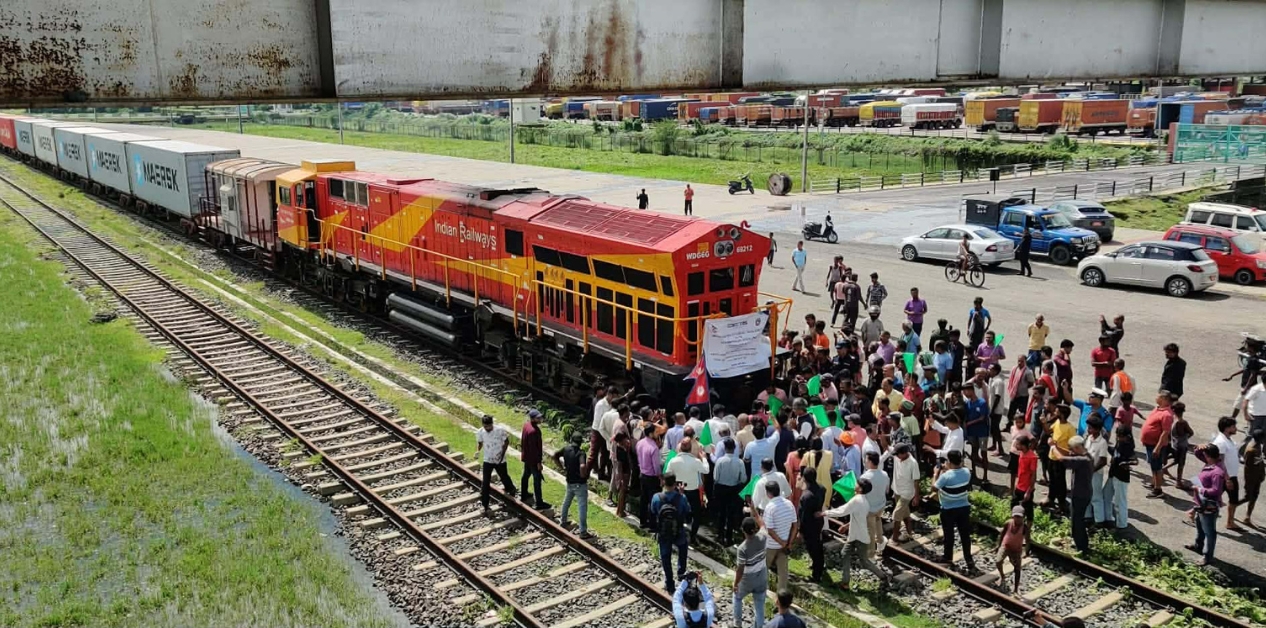
Indian border rules disrupted Nepalese trade routes again as custom houses blocked over 200 tons of packaged orthodox tea inside regional warehouses for technical evaluations. Freight movements resumed briefly on May 19 following a 19-day border freeze starting May 1, but trade halted after the Indian Tea Board re-established mandatory 100 percent sample evaluations for all inbound shipments. Cargo manifests verify that six heavy trucks have been delayed for 10 days waiting for lab clearance certificates at the Kolkata food testing facility, leaving 50,000 kilograms of tea stranded. Nepal yields 27,000 tons of processed tea annually, sending 90 percent to 95 percent of its exports to India, with shipments through the Mechi Customs Office hitting Rs 2.588 billion for 9949.794 tons by April 13 this year. New rules require importers to pay INR 11,120 per sample test plus added GST fees.
Gandaki Establishes Mandatory Fare Rates for Ride Sharing Services
The Ministry of Physical Infrastructure Development and Transport Management implemented formal price structures across commercial ride-sharing networks under the Gandaki Province Ride Sharing Second Amendment Regulation 2026. The minister-level mandate enacted on May 25 fixes the minimum four-wheeler tariff at Rs 157 and two-wheeler trips at Rs 46.50. Under the rule, four-wheeler taxi services levy a base fee of Rs 60 plus Rs 97 for the initial 2 kilometers, charging Rs 48.50 per kilometer thereafter up to a 50-kilometer route cap. Two-wheelers charge a Rs 30 base fee and Rs 16.50 per kilometer, while rules mandate price discounts of 10 percent for petroleum vehicles and 15 percent for electric models.
Birgunj Records Drop in Raw Grain Imports Through May
The Birgunj Customs Office reported a contraction in inbound shipments of raw paddy and maize during the first 10 months of the fiscal year through May 14 this year, while imports of processed rice and wheat increased. Paddy imports fell to Rs 10.94 billion for 272,200 ton, down from Rs 11.36 billion for 292,500 ton last year. Maize imports also dropped to Rs 5.31 billion for 111,400 tons from Rs 9.49 billion for 161,300 tons. Conversely, processed rice imports climbed to Rs 2.85 billion for 29,500 tons, wheat rose to Rs 280 million for 6,519 tons, and broken rice imports reached Rs 40 million for 800,000 kilograms.
Nepalgunj Collects Rs 16 Billion Revenue in 10 Months
The Nepalgunj Customs Office accumulated Rs 16.739 billion in public revenue through mid-May, meeting 68.2 percent of its fiscal target. The annual collection baseline is set at Rs 24.545 billion, requiring the office to gather the remaining 32 percent over the final two months of the financial year. Monthly collection ratios reached 74.14 percent in August 2025, 69.77 percent in September 2025, 87.83 percent in October 2025, 72.30 percent in November 2025, 83.45 percent in December 2025, 83.28 percent in January 2026, 88.24 percent in February 2026, 88.32 percent in March 2026, 98.37 percent in April 2026, and 85.38 percent in May 2026. Previous custom totals reached 74.64 percent of targets in fiscal year 2024/25 and 63.35 percent in fiscal year 2023/24.
Italy Becomes Largest Market for Nepali Pickles, Surpassing Australia
Data from the Department of Customs reveals that Italy became the highest-value export market for Nepalese pickles during the first 10 months (July, 17, 2025 to May 14, 2026) of the fiscal year 2025/26. Nepal exported more than 390 tons of pickles globally, generating Rs 196.4 million in foreign currency, a 174.42 percent volume surge compared to last year’s base. Out of this total, Italy bought around 57 tons valued at Rs 37.3 million, reflecting a 233.43 percent increase to outpace traditional buyers like Australia and the United Kingdom.
Overloaded Distribution Networks Strain Bharatpur Substation Infrastructure
The Nepal Electricity Authority (NEA) Bharatpur Distribution Branch requested customers to limit the use of non-essential electronic systems as rising heat waves drive peak electrical loads. Severe infrastructure overloads caused structural damage across power lines, distribution grids, and cooling transformers, resulting in line trips and drop-voltage variations. Engineering logs show that the Grid Substation Automation Project had paused its ongoing equipment overhaul program, which originally automated 10 feeder pillars at the Ward No. 11 substation complex since April 29. The distribution center registers 65 megawatts of daily consumption out of an overall station operating ceiling of 180 megawatts, delivering power across 75,000 active consumer nodes, including the Chanauli grid.
Private Developers Funnel Trillions into Energy Projects
The private sector injected Rs 1.310 trillion into the domestic power generation industry, elevating independent business contributions to 80 percent of national supply. Output records show that out of 4,200 megawatts of total installed electricity capacity, independent power producers account for 3,500 megawatts. The total sector investment includes Rs 870 billion sourced from banks and financial institutions alongside Rs 440 billion in private equity capital. The sector provides active employment for over three million workers and contributes more than Rs 25 billion in annual state revenues.
Govt. Directs Joint Probe Panel on Confiscated Electric Vehicles by APF
The Office of the Prime Minister and Council of Ministers ordered the establishment of a joint investigative committee to check 779 electric vehicles held under suspicion of custom tax evasion. The probe panel contains representatives drawn from the Ministry of Finance, Department of Customs, Nepal Police, and the Armed Police Force (APF). Operational logs verify that enforcement checkpoints seized 775 cars passing through the Korala border checkpoint in Mustang, two vehicles along the Pasang Lhamu road link in Nuwakot, and two cars at Adamghat in Dhading. Security agencies confirmed that normal vehicular freight transits passing through complete and validated legal documentation are moving through checkpoints without delays.
Ministry of Energy Assembles Panel to Select Regulatory Commission Officers
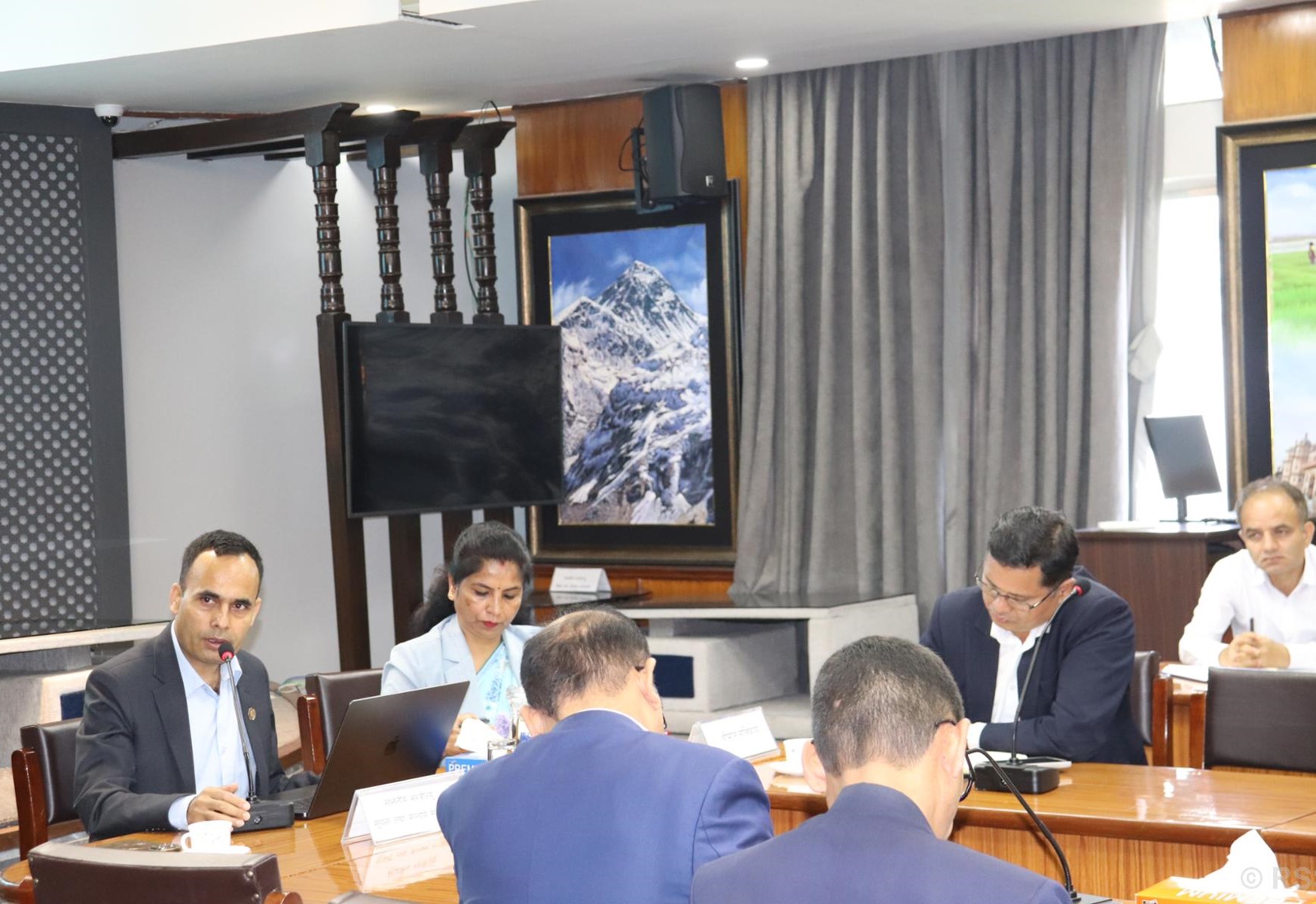
The Ministry of Energy, Water Resources and Irrigation formed a three-member evaluation panel via a minister-level directive on June 3 to recruit leaders for the vacant Electricity Regulatory Commission. The selection committee is led by Ministry Secretary Chiranjivi Chautaut, with Joint Secretary Sagar Raj Gautam and energy expert Satish Narayan Joshi serving as panel board members. The selection panel issued a 15-day application notice, drawing 10 applicants for the Commission Chairperson position and 22 candidates for open board member seats. The executive leadership positions were completely vacated following the implementation of the Special Provisions on De-seating of Public Officials Ordinance 2026.
Valley Traffic Penalizes 2,300 Motorists, Bags Rs 2 Million
The Kathmandu Valley Traffic Police Office fined 2,300 drivers for road safety violations over the past 24 hours, generating Rs 2,084,000 for the state exchequer. Traffic sheets record that highway officers cited 104 individuals for driving under the influence, 177 for operating unapproved ride-sharing transits, 147 for crossing traffic signal lights, and 105 for speeding infractions. Additional safety citations issued during the enforcement period include 56 lane errors, 152 horns blown in forbidden zones, 113 pavement parking instances, 141 illegal one-way entries, and 1,305 unclassified traffic law violations.
Himalaya Airlines Launches Direct Kathmandu–Shenzhen Service
Himalaya Airlines has launched direct scheduled flights between Kathmandu and Shenzhen, becoming the first carrier to operate nonstop services on the route. The inaugural flight departed from Tribhuvan International Airport on June 4 and arrived in Shenzhen the following morning. The return flight from Shenzhen landed in Kathmandu on June 5. The airline is operating the route with a 180-seat Airbus A320 aircraft and has initially scheduled two weekly round trips. Flights from Kathmandu operate on Tuesdays and Thursdays, with return flights from Shenzhen on Wednesdays and Fridays. Himalaya Airlines said the new route will enhance connectivity between Nepal and Shenzhen, one of China’s leading economic and technology hubs, while supporting tourism, business travel, and people-to-people exchanges between the two countries.
Daraz Announces Executive Resignation and Leadership Shifts
Daraz Nepal Managing Director Anchal Kunwar resigned from her executive leadership role after a four-and-a-half-year tenure, during which the platform expanded its domestic trade volume twofold. Corporate papers show the platform’s consumer base surpassed 3,000,000 users, with its logistics infrastructure covering 140 deployment points and supporting 24,000 merchant nodes. Ben Yi, the current Managing Director of Daraz Bangladesh and Group Chief Commercial Officer, will step in as Acting Managing Director. Concurrently, Ratish Luitel has been named Chief Commercial Officer, with all organizational leadership changes taking effect on July 1, while Kunwar stays on as a corporate advisor until December 31, 2026.
Jyoti Capital Appointed Underwriter for Peoples Energy IPO Issue
Peoples Energy Limited signed a formal equity underwriting contract with Jyoti Capital to manage its upcoming initial public offering (IPO) on the domestic capital market. The investment agreement stipulates that Jyoti Capital will guarantee the full subscription of 6,600,000 ordinary shares slated for public release. The financial issue is structured at a fixed par value of Rs 100 per share, bringing the total valuation of the public float to Rs 660 million. The underwriting documents were signed during a corporate ceremony in Kathmandu by Jyoti Capital CEO Bikas Dhakal and Peoples Energy General Manager Janardan Aryal.
Gold Traded at Rs 309,000, Silver at Rs 5,230 Today
Gold and silver prices have decreased in the Nepali market today. According to the Federation of Nepal Gold and Silver Dealers’ Association, the price of gold today has decreased by Rs 2,100 per tola (11.66 grams) and is currently trading at Rs 309,000. Previously on Thursday, gold was traded at Rs 311,100 per tola. Similarly, the price of silver has also decreased today. According to the Federation, the price of silver today has dropped by Rs 55 per tola and is trading at Rs 5,230 per tola. Previously on Thursday, silver was traded at Rs 5,285 per tola.