Kathmandu
Wednesday, July 15, 2026





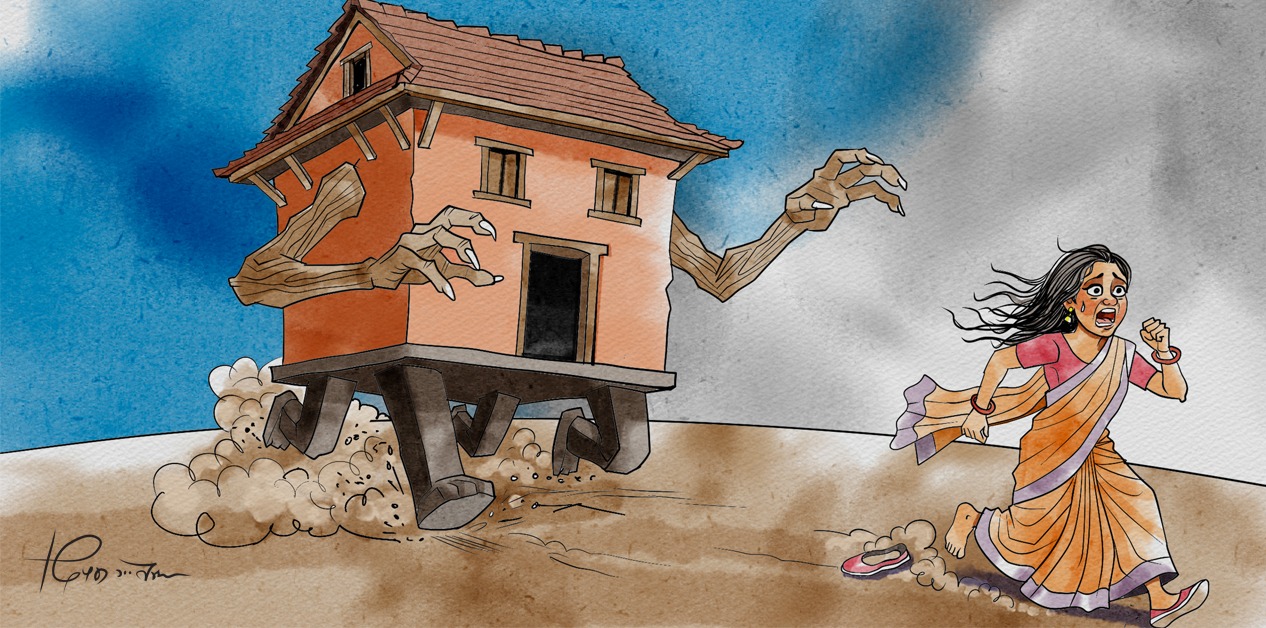
A string of brutal domestic murders in Morang and beyond exposes a disturbing rise in violence driven by suspicion, ego, and gender inequality, turning intimate relationships into the deadliest spaces of all.
BIRATNAGAR: Komal Kumari Sah, 32, of Hartali Hat in Biratnagar-15, Morang, was killed on March 20, 2026. Her husband Roshan Sah and brother-in-law Dipendra Sah have been arrested in connection with the killing. According to police officers investigating the case, after murdering his wife Roshan went on to commit further brutal acts to destroy evidence. He killed her at midnight, bound her hands and feet, wrapped the body in a bedsheet, placed it in a City Safari vehicle driven by his brother Dipendra, and dumped it beneath a culvert near the leather factory in Biratnagar-17.
Two days after the killing, Roshan went to the police station and filed a report with a description claiming his wife was missing. When a decomposed body was discovered beneath the culvert on March 24, his crime was exposed. Preliminary investigations by Morang police indicate that Roshan killed his wife out of suspicion that she was in an extramarital relationship. The suspicion did not just destroy one family; it shook an entire community.
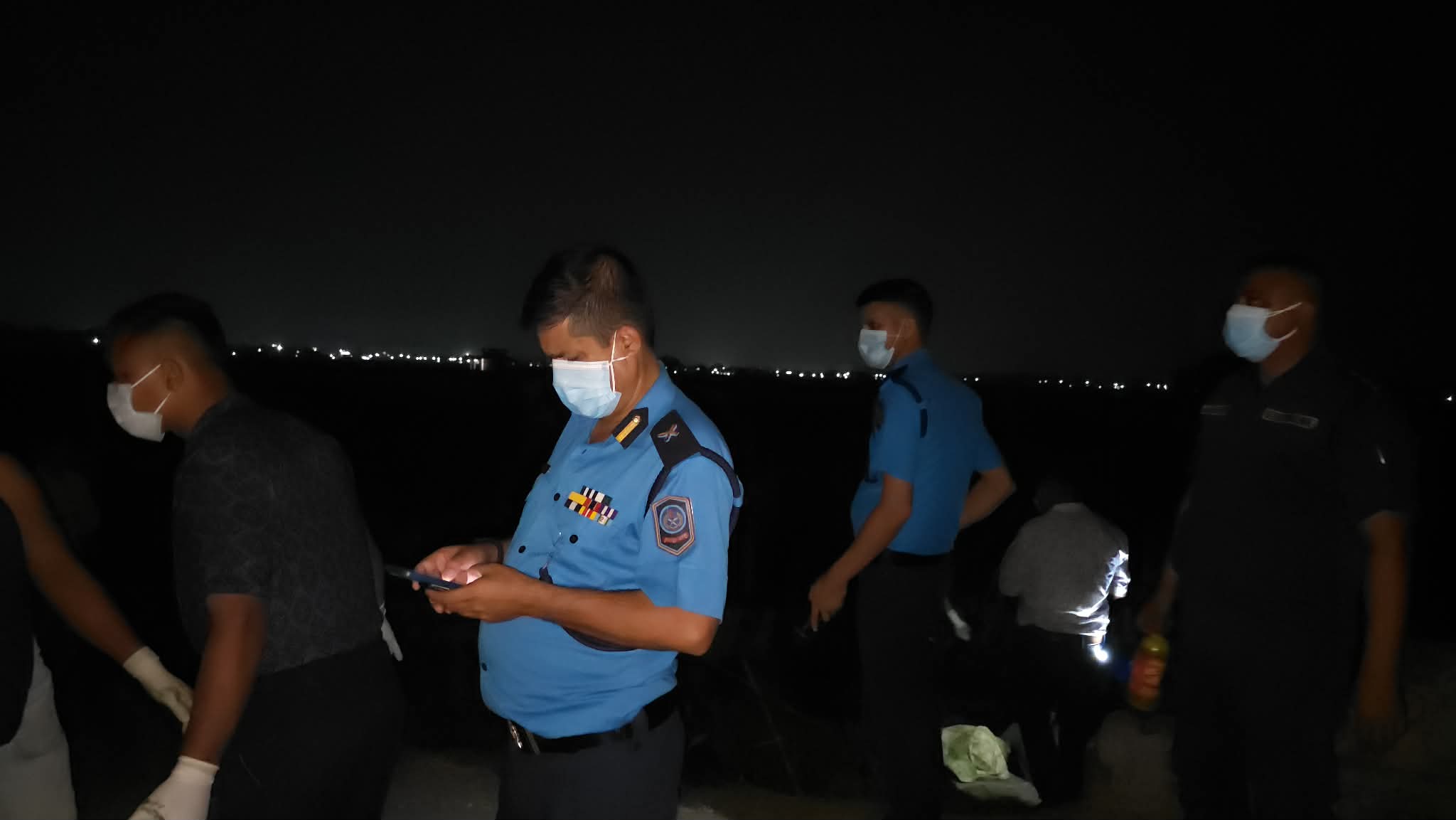
Police investigate at the scene after the body of 32-year-old Komal Kumari Sah of Hartali Hat, Biratnagar-15, was found. Photo: Anil Shrestha
Another heartbreaking incident occurred on February 2, 2026 in Dhanpatti, Rangeli-5, also in Morang. Mukesh Mandal, 22, and Ambika Mandal, 21, had married on November 28, 2025. Less than two months into the marriage, Mukesh killed Ambika and then took his own life.
The incident, which occurred at Ambika’s own parental home, has left neighbors and relatives in shock. Mukesh, a health worker (Health Assistant) by profession, was regarded by society as an educated and responsible person. Neither relatives nor neighbors had imagined such a fate awaiting a couple so newly married. The clear reason behind Mukesh’s decision to kill his wife and then take his own life has not yet been established. According to neighbors, the two were from the same village, had married for love, and were renting a room in Biratnagar. Mukesh had been reluctant to register their marriage and give it legal recognition. In the last week of December 2025, Ambika went to the District Police Office Morang with a complaint demanding that her husband register the marriage to secure her future. Police referred the matter to Morang Court and the marriage was registered. The relationship became legally official, but Mukesh apparently experienced this as a blow to his ego, and it culminated in killing and then suicide.

Mukesh Mandal and Ambika Mandal of Dhanpatti, Rangeli-5, Morang. Photo: Anil Shrestha
Chandrika Kumari Das, 25, a nurse at Nobel Teaching Hospital in Biratnagar, was killed on Marh 14, 2025. Her 22-year-old boyfriend Shiva Shankar Das killed her in a room near the hospital. The two, who were distant relatives and both from Lahan-21 in Siraha, had been in a relationship for four years. According to Morang Police, Shiva Shankar killed Chandrika in a fit of rage over a perceived betrayal in love, then took his own life three days later.
Home is normally where a person feels safest, and family members and relatives are the people from whom one expects the least harm. But killings in Koshi Province in recent years have upended this assumption. The criminal tendency to take lives within the family and among loved ones appears to be growing. Marriages and romantic relationships in particular are increasingly turning into brutal killings, undone by momentary impulse, mistrust, and suspicion.
The latest data from all 14 districts of Koshi Province shows a rising graph of violence and killing. According to records at the Provincial Police Office in Biratnagar, more than 9,000 criminal cases are registered on average every year. In fiscal year 2024/25 alone, Koshi recorded 9,461 cases, of which 103 were murder cases. The alarming fact is that of those 103 murder cases, 49 involved family members or relatives, with 51 men and 21 women arrested in connection with those 49 killings.
Over four years and eight months – from fiscal year 2021/22 (mid-July 2021 to mid-July 2022) to mid-March 2026 – killings within families and among relatives in Koshi Province have reached 202 cases, with 178 men and 42 women brought before the law in the course of investigations.
In fiscal year 2021/22, as many as 41 registered murder cases involved relatives, with 39 men and 6 women arrested.
In 2022/23, as many as 38 registered cases involved 33 men and 9 women; in 2023/24, as many as 45 cases involved 35 men and 3 women.
In 2024/25, as many as 49 registered cases resulted in 51 men and 21 women being arrested, while in the current fiscal year 2025/26 up to the end of Falgun (mid-March), 29 cases led to 29 men and 3 women being arrested, according to DSP Dhruba Kumar Shrestha, information officer at Koshi Provincial Police Office Biratnagar. The majority of those arrested in these cases are relatives of the victims.
Why is the family turning cruel?
Security officials say that the family home, long considered a center of safety and warmth, is becoming a factory of insecurity. DIG Binod Ghimire, chief of Koshi Provincial Police Office Biratnagar, says criminal incidents appear to stem primarily from domestic disputes, addiction, and betrayal in romantic relationships. “There is never just one cause in such killings. Economic, social, psychological, and sexual factors are intertwined,” DIG Ghimire says. “Most killings begin with mutual disputes, suspicion, and mistrust. Particularly in killings of wives, the imbalance of power between spouses and gender-based violence are the main factors.” He says most incidents arise from quarrels that follow drug and alcohol use.
Morang Police chief Kabit Katawal says those who become overly drawn to outside attractions and unnecessary suspicion end up involved in criminal incidents. Having investigated such crimes for a long time, Katawal says, “These incidents happen when people cannot control their impulses and come to see their own loved ones as obstacles.”
Technology has made people more isolated. As warmth disappears, people are becoming cruel even over small things.
Associate professor and sociologist Dilli Ram Prasai of Degree Campus, Biratnagar, identifies the rapid transformation of family structures as the main cause of such crimes. He believes that growing misuse of technology and an individualistic mindset have eroded collective bonds and warmth.
“People today are dominated by thinking only of themselves and what is theirs. The tendency to express only one’s own feelings while not listening to others has broken down collective bonds,” Prasai analyses. “Technology has made people more isolated. As warmth disappears, people are becoming cruel even over small things.”
‘Gender violence is rising, effective programs needed’
Counsellor and president of the Long-Term Rehabilitation Center, Koshi, Manjita Upadhyay, is alarmed by the data showing rising gender-based violence in recent years. She recommends that the state recognize Koshi Province as a high-risk area and introduce concrete, effective programs, since impunity in society has caused the tendency of men to commit violence against wives or girlfriends to grow.
Boyfriends demanding passwords from their girlfriends, blackmailing through social media, and character assassination have become normalized. Even more worryingly, the use of AI to create fake videos to cause psychological distress and commit cybercrime is also on the rise.
“The primary cause of violence is the gap between power and powerlessness. The tendency of those with power to dominate the weak is pervasive in society,” counsellor Upadhyay says. “Violence is born of the patriarchal thinking that says ‘I am a man, I can do whatever I want,’ and the ego that says ‘I am the husband or boyfriend, what I say must go.'”
According to her, unemployment, economic inequality, and patriarchal social structures in particular have driven up violence against women. Social media has also become a primary platform and vehicle for violence. She notes that growing numbers of people are ending up committing crimes after suspicion is fueled by what they see on social media. “Boyfriends demanding passwords from girlfriends, blackmailing through social media, and character assassination have become normalized. Even more worryingly, the use of AI to create fake videos to cause psychological distress and commit cybercrime is also on the rise,” she says. “Just as other countries have imposed restrictions or tightened controls on social media for children, Nepal too needs to regulate it.”
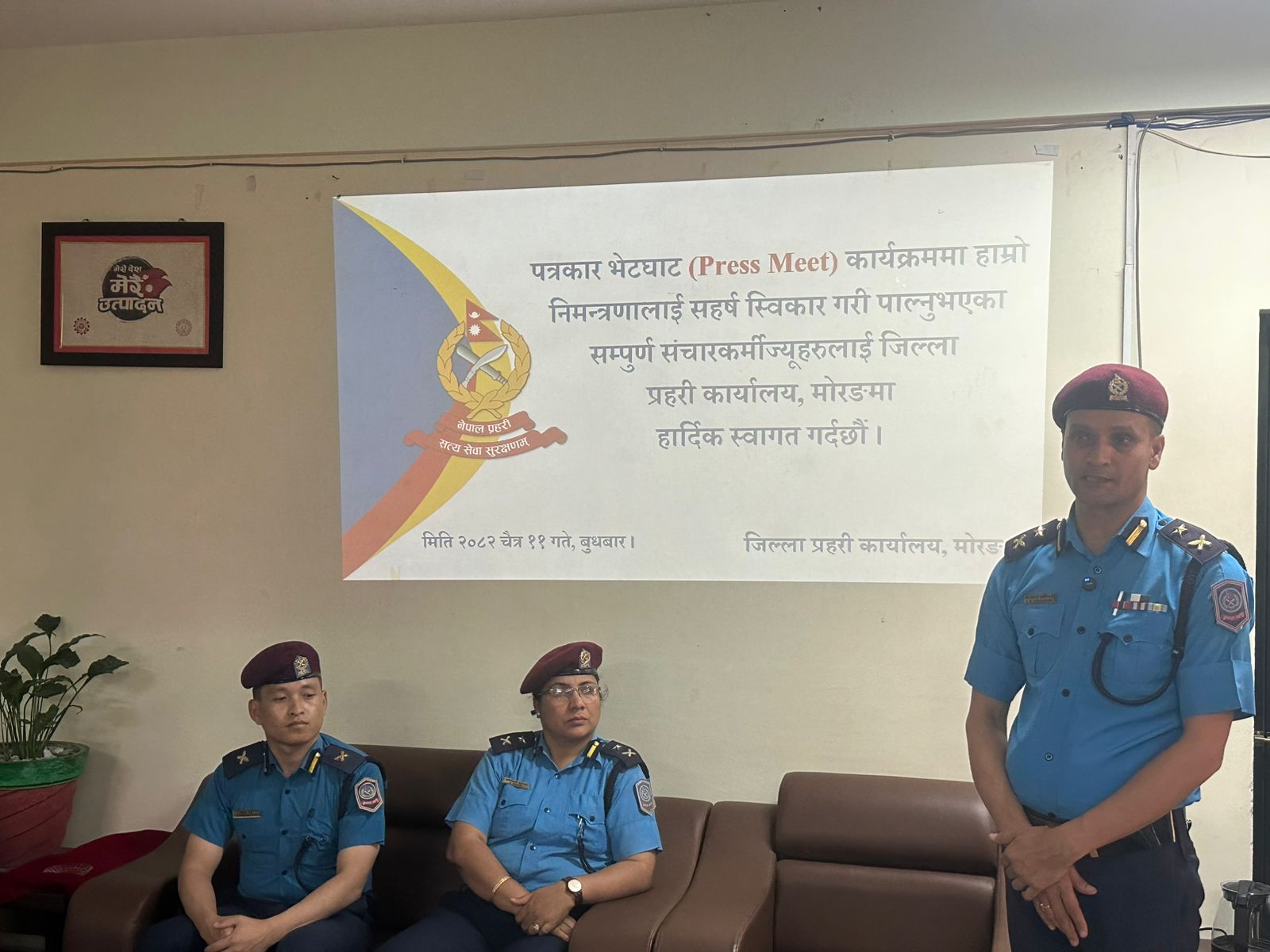
Morang police officials briefing the media on the murder of Komal Kumari Sah. Photo: Anil Shrestha
She says that since police alone cannot control crime, the efforts of ordinary citizens, civil society organizations, and the government are essential. “Going to the police after an incident has already occurred is always there as an option, but preventing incidents from happening in the first place requires social awareness and organized effort,” she says. “In recent times, incidents of rape and sexual abuse of minors in Koshi Province have increased alarmingly – a matter that is both shameful and challenging for society. While police continue to investigate such crimes, changing the patriarchal thinking prevalent in society remains extremely difficult.”