Kathmandu
Saturday, June 13, 2026





From decriminalizing homosexuality to protecting the Chure range, Nepal's Supreme Court has delivered verdicts that drew attention from international human rights bodies, foreign judiciaries, and global media, placing a tiny Himalayan nation at the center of jurisprudential history.
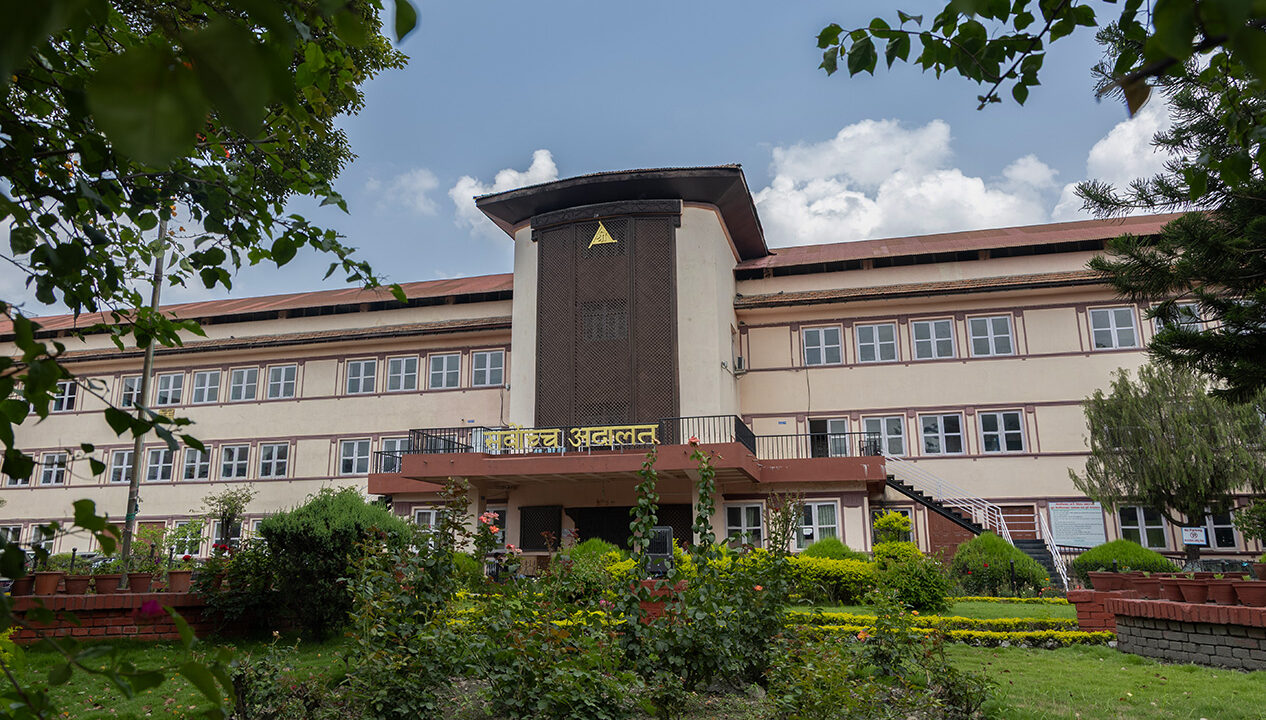
KATHMANDU: Nepal’s Supreme Court has, over the past three decades, emerged as an unlikely but influential voice in global jurisprudence. From expanding fundamental rights to shaping environmental and transitional justice norms, its rulings have often gone beyond national boundaries.
In a country marked by political instability and legislative gaps, the court has repeatedly stepped in to interpret constitutional guarantees in expansive ways. These decisions have drawn attention from international legal scholars, rights organizations, and foreign courts, placing Nepal within wider global debates on rights, accountability, and judicial activism.
What was the Sunil Babu Pant verdict of 2007 and why did it shake the world?
In December 2007, Nepal’s Supreme Court issued what many international legal scholars consider the most progressive gender rights ruling in Asian legal history. The case, Sunil Babu Pant and Others v. Government of Nepal, was filed by the Blue Diamond Society, Nepal’s pioneering LGBTQ+ organization, on behalf of lesbian, gay, bisexual, transgender, and intersex citizens.
The court ruled that all LGBTQ+ people are natural persons, that their identities arise naturally and not from mental disorder, and that they are fully entitled to every constitutional right without discrimination. It ordered the government to recognize a third gender category on official documents, scrap all discriminatory laws, and form a committee to study same-sex marriage legislation.
The judgment cited international precedents including cases from the United States Supreme Court and South Africa’s Constitutional Court. It has since been cited by courts in India, the United States, and the European Court of Human Rights as a positive global example. The Human Dignity Trust, the International Commission of Jurists, and Human Rights Watch all described the verdict as extraordinary and groundbreaking for Asia.
What concrete changes did the Sunil Babu Pant ruling actually produce in Nepali law and society?
The immediate and lasting impact of the ruling reshaped Nepal’s administrative and legal landscape in tangible ways. By 2010, Nepal’s voter rolls and immigration forms included a third gender category. In 2011, Nepal became the first country in the entire world to add a third gender option to its federal census, a historic first that drew global media coverage.
In 2015, Nepal began issuing passports that recognized a third gender, again a world first. The verdict decriminalized homosexuality and created the legal architecture for future same-sex marriage discussions. Sunil Babu Pant, the lead petitioner, went on to become Asia’s first openly gay elected parliamentarian when he joined the Constituent Assembly in 2008.
Legal scholars from Women’s Link Worldwide described the ruling as the first in all of Asia to recognize the full rights of LGBTQ+ collectives. The decision effectively moved Nepal from a country where gender minorities faced police violence and harassment into one that international organizations pointed to as a beacon for LGBTQ+ rights in Asia.
Why is the 1995 Godavari Marble case considered a foundational environmental verdict in South Asia?
The case of Surya Prasad Sharma Dhungel v. Godavari Marble Industries and Others, decided on October 31, 1995, stands as the cornerstone of environmental jurisprudence in Nepal and remains one of the most cited environmental cases in South Asian legal scholarship.
The petition was filed against a marble mining company whose blasting and quarrying operations were destroying the Godavari forest, polluting water sources, and endangering both the local ecology and surrounding communities. The Supreme Court made a sweeping declaration: that the right to a clean and healthy environment is inseparable from the right to life under the Constitution.
It also established that NGOs and public-spirited individuals had legal standing to bring environmental cases even without personal injury, which liberalized public interest litigation in Nepal. The court directed the government to draft environmental protection laws, directly catalyzing the enactment of Nepal’s Environment Protection Act in 1997.
The judgment is indexed in international environmental law databases, including the UN Environment Programme’s legal database, and is regularly cited in comparative environmental law literature across Asia.
What was the significance of Nepal’s Supreme Court striking down amnesty provisions for conflict-era crimes?
After Nepal’s decade-long Maoist armed conflict ended with the Comprehensive Peace Agreement of 2006, the government passed a transitional justice law in 2014 that established a Truth and Reconciliation Commission. However, the law contained provisions that would have allowed amnesties even for serious crimes including torture, rape, enforced disappearance, and extrajudicial killing.
On February 26, 2015, a special constitutional bench struck down those amnesty provisions as unconstitutional and incompatible with Nepal’s international obligations. The government immediately petitioned to reverse the ruling, but on April 27, 2020, the Supreme Court rejected that petition and reaffirmed its position.
Amnesty International, the International Commission of Jurists, Human Rights Watch, and TRIAL International all issued joint statements praising the decisions and pressing the government to implement them. The International Commission of Jurists called Nepal’s court one of the most human-rights-compliant in South Asia.
The verdicts declared that only the judiciary, and not administrative commissions, can determine criminal responsibility for wartime violations, and that no form of amnesty can be granted for crimes under international law.
More than 19 years since the peace agreement, these rulings remain central to ongoing debates about accountability in post-conflict societies.
What did Nepal’s Supreme Court rule on indigenous peoples’ rights in its landmark decision?
In a verdict that drew international praise from organizations including Cultural Survival, the Supreme Court of Nepal issued a ruling on June 6, 2025, mandating nationwide implementation of international treaties protecting indigenous peoples’ rights.
Nepal had been the first country in South Asia and only the second in Asia to ratify the International Labour Organization’s Convention No. 169 on indigenous peoples’ rights in 2007, and it voted in favor of the United Nations Declaration on the Rights of Indigenous Peoples in the same year. However, implementation had remained largely stagnant despite these commitments.
The court’s ruling affirmed that the free, prior, and informed consent of indigenous peoples must be secured before development projects affecting their ancestral lands could proceed. It directed federal, provincial, and local governments to integrate ILO Convention No. 169 and the UNDRIP into their policies and practices.
Cultural Survival, which covers indigenous rights across the Americas, Africa, and Asia, gave extensive coverage to the verdict. Advocates noted that Nepal’s 61 officially recognized indigenous nationalities, who make up over 35 percent of the population, have historically faced land dispossession and cultural assimilation. The decision was described as positioning Nepal as a potential leader in human rights enforcement in South Asia.
What was the Chure range judgment and how did Oxford’s Human Rights Hub cover it?
The June 2021 verdict of Nepal’s Supreme Court on protecting the Chure range, a fragile ecological belt along the southern foothills of the Himalayas, drew analysis from the Oxford Human Rights Hub and was highlighted by international environmental law platforms.
The case involved a petition challenging the government’s permission for the mass extraction and export of stone, gravel, and sand from the Chure, which scientists had identified as a geologically and ecologically critical region whose degradation was accelerating flooding and desertification in the Terai plains.
The court ruled that environmental sustainability is the most fundamental principle of Nepal’s constitution and that no economic activity can bypass it. It declared that the widespread destruction of the Chure through extraction amounted to what could be characterized as ecocide, and issued a sweeping order stopping the export of riverine materials from across Nepal until proper protective legislation was enacted.
The Oxford Human Rights Hub noted that the court urged the government not to view the Chure solely through an economic lens and to recognize the intergenerational obligation to protect ecological systems. The ruling reinforced the concept of sustainable development as a judicially enforceable principle, not merely a policy aspiration.
What was the Bagmati River verdict and why did it create such controversy?
The Supreme Court revisited its long-running Bagmati River protection jurisprudence, effectively scaling back earlier restrictions on land use along the riverbanks in Kathmandu Valley. On January 18, 2026, the court issued a partial reversal of its December 2023 verdict, which had expanded river protection measures by mandating an additional 20-meter no-construction buffer beyond the government’s existing standard.
That earlier ruling had raised the total restricted zone to 40 meters in some stretches of the Bagmati and its tributaries, triggering both environmental support and strong concerns over urban displacement.
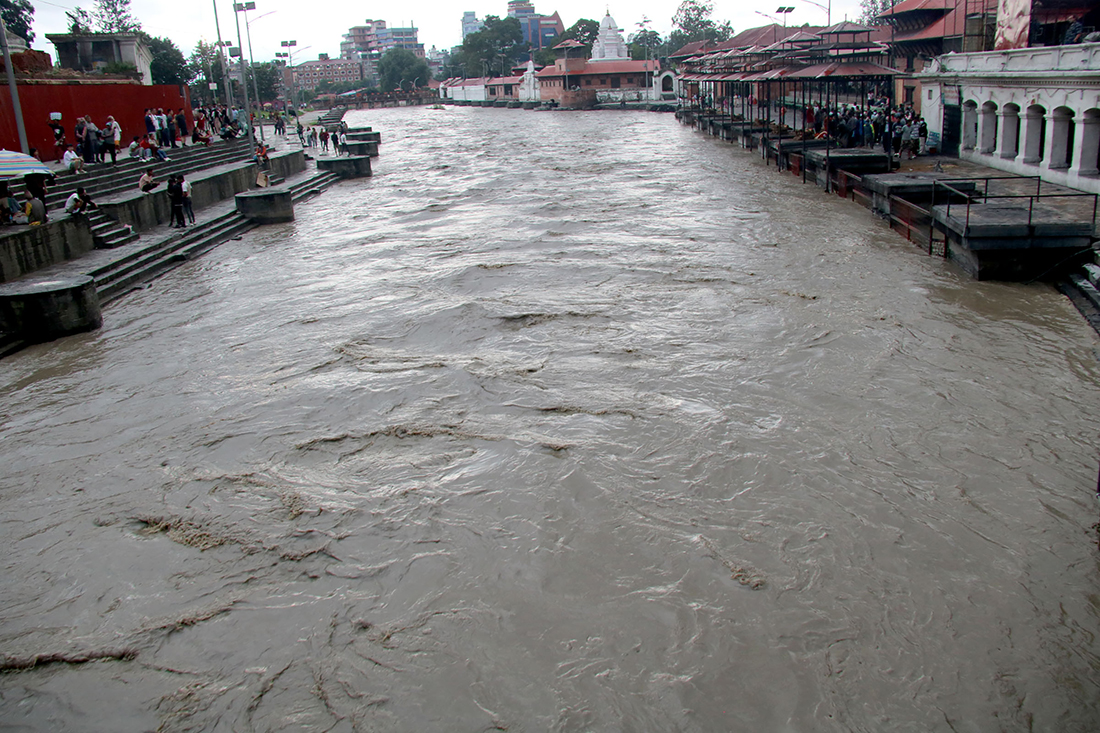
Bagmati River
The 2023 decision was widely seen as a landmark environmental intervention aimed at curbing encroachment and restoring degraded urban rivers. However, it also faced criticism from residents and state authorities, who argued that it conflicted with long-standing municipal approvals and planning norms.
In its 2026 ruling, a full bench of the Supreme Court overturned the expanded buffer requirement, stating that the additional restrictions were not legally sustainable. The court restored the 2008 Cabinet-approved standard setback policy as the governing framework for riverbank regulation.
With this decision, the earlier requirement for a 40-meter total buffer has been rolled back, and the additional 20-meter no-construction zone is no longer in force, pending publication of the detailed judgment.
How did Nepal become a model for abortion rights globally even among countries with more restrictive laws?
On May 20, 2009, Nepal’s Supreme Court delivered a landmark ruling in Lakshmi Devi Dhikta v. Nepal that transformed abortion access into a constitutional issue of reproductive rights. The case involved Lakshmi Devi Dhikta, a poor woman from far-western Nepal who was denied an abortion at a government hospital for her sixth unwanted pregnancy because she could not pay a fee of around 1,130 rupees.
The court held that the right to abortion forms an essential part of women’s reproductive autonomy and self-determination, and ruled that forcing a woman to continue an unwanted pregnancy amounts to a violation of her dignity and constitutes violence against women.
It directed the state to ensure affordable and accessible abortion services, including the creation of a national fund for poor women, expansion of facilities, stronger privacy safeguards, and comprehensive legislation. International rights bodies, including the Center for Reproductive Rights, described the judgment as historic, noting it was the first time a national supreme court held a state accountable for failing to ensure affordability of abortion services.
The ruling drew on global jurisprudence, including cases such as Tysiac v. Poland and Paulina v. Mexico, and became widely cited in reproductive rights literature. Building on Nepal’s 2002 liberalization of abortion laws, the 2009 decision addressed persistent inequality in access.
It later influenced policy reform, contributing to the 2018 Safe Motherhood and Reproductive Health Rights Act, which codified the principles laid out by the court and strengthened abortion access nationwide.
What does it mean that Nepal’s Supreme Court appointed a prime minister directly, and was this unprecedented globally?
In 2021, Nepal’s Supreme Court issued a series of landmark rulings that placed it at the center of global debates on constitutional interpretation and judicial power. After the then Prime Minister KP Sharma Oli dissolved parliament in December 2020, a constitutional bench ruled on February 23, 2021, that the move was unconstitutional, holding that dissolution was only valid after all constitutional options for forming a government had been exhausted.
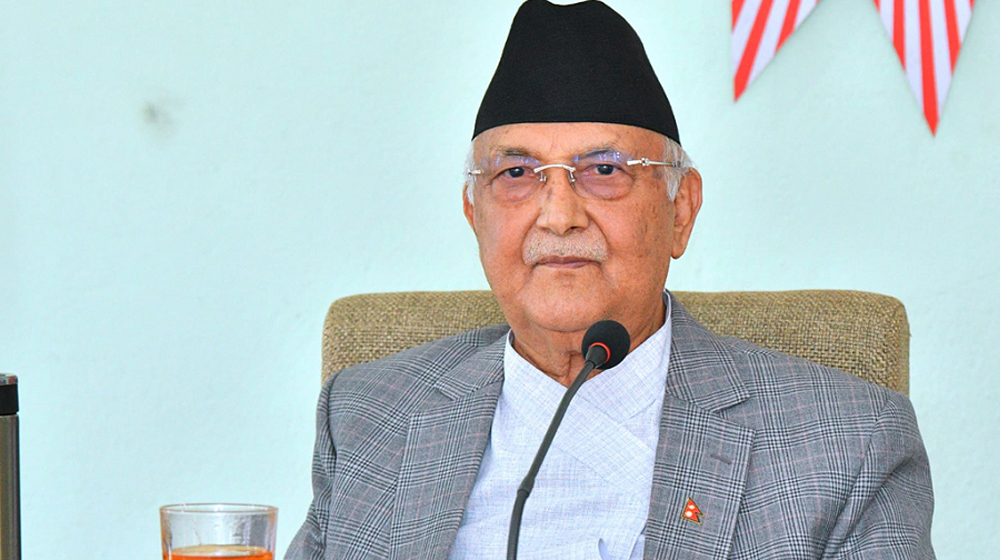
KP Sharma Oli. File photo
The court ordered parliament to be reinstated within 13 days, a decision widely reported by outlets such as Al Jazeera, Reuters, and the BBC. When Oli dissolved parliament again in May 2021, the court intervened more directly.
In July 2021, it issued a writ of mandamus directing President Bidya Devi Bhandari to appoint Sher Bahadur Deuba as prime minister within two days, after finding that her refusal to accept his claim was unconstitutional. The court held that the President’s role in such circumstances was ministerial rather than discretionary. The ruling triggered intense debate.
Critics described it as judicial overreach into executive authority, while supporters argued it was necessary to resolve a constitutional deadlock.
Geostrategist Brahma Chellaney stated that the verdict showed democracy was alive in Nepal. Constitutional scholars also questioned whether any court elsewhere had directly ordered the appointment of a head of government, placing Nepal at the center of global discussions on judicial activism and constitutional limits.
How did a conservationist’s petition about tiger pelts lead to a Supreme Court verdict celebrated by Lancaster University?
In a case that drew attention from conservation scientists at Lancaster University in the United Kingdom, Nepali conservationist Kumar Paudel successfully petitioned Nepal’s Supreme Court to enforce wildlife protection laws equally across all social classes.
The petition was sparked in part by a televised incident in which Nepal’s former Prime Minister was seen displaying the pelt of a Bengal Tiger in his home, a clear violation of Nepal’s stringent wildlife laws. Paudel’s petition argued that enforcement of these laws fell disproportionately on poor, marginalized, and often illiterate people, while powerful elites escaped accountability.
He relied on research conducted in collaboration with Lancaster University academics, including a paper based on interviews with more than 150 people imprisoned for wildlife crimes, which showed the vast majority were poor and marginalized.
On May 31, 2023, the Supreme Court recognized Paudel’s expertise and his legal standing, and issued an order that wildlife conservation laws must be enforced without distinction based on social status or power.
Lancaster University’s official communications described the verdict as landmark and noted it demonstrated how scientific research could directly drive legal and social change through litigation. The case highlighted Nepal’s role in wildlife protection as home to critical tiger and rhino habitats.
How did Nepal’s Supreme Court strike a blow for equality within its own national airline through the cabin crew discrimination case?
On January 3, 2024, all 135 cabin crew members of Nepal Airlines Corporation filed a collective writ petition at the Supreme Court, making it one of the most unified labor rights petitions in Nepali aviation history.
The petitioners, led by senior flight attendant Prajita Karki, alleged that the NAC had institutionalized a two-tiered employment system that treated flight attendants and air hostesses as second-class workers within a government-owned enterprise.
The discriminatory provisions they challenged were stark. While all other NAC employees enjoyed a retirement age of 58 years, cabin crew were forced out at 40, an age at which pilots and ground staff were still in mid-career. Cabin crew were also denied gratuity, could be terminated at any time with only one month’s compensation, and were kept on rolling contracts for the entirety of their careers, meaning they had no path to permanent employment, no disability allowance if injured in a crash, and no parity in medical benefits.
The Supreme Court, in an interim order issued on January 7, 2024, by a single bench led by Justice Til Prasad Shrestha, directed NAC not to take any action enforcing those discriminatory provisions against cabin crew. The order prohibited the corporation from terminating contracts, taking adverse action, or intervening in facilities for cabin crew based on their contractual status.
The case drew comparisons to airline labor rights litigation in South and Southeast Asia and was noted by aviation law observers as reflecting a broader pattern of gender-coded employment discrimination in the aviation sector, where roles dominated by women are systematically undervalued relative to roles dominated by men in the same organization.
What was the Right to Information verdict involving Tribhuvan University and why did the Open Society Foundations call it a milestone?
In a case that drew international attention from the Open Society Foundations, the Supreme Court issued what legal experts described as the first landmark judicial decision on the right to information in the country, ordering Tribhuvan University to allow students to inspect their own examination answer sheets.
The case arose after students, supported by the Citizens’ Campaign for Right to Information, a grantee of the Open Society Foundations, invoked Nepal’s Right to Information Act of 2007 to demand access to their evaluated answer sheets from the country’s oldest and largest university.
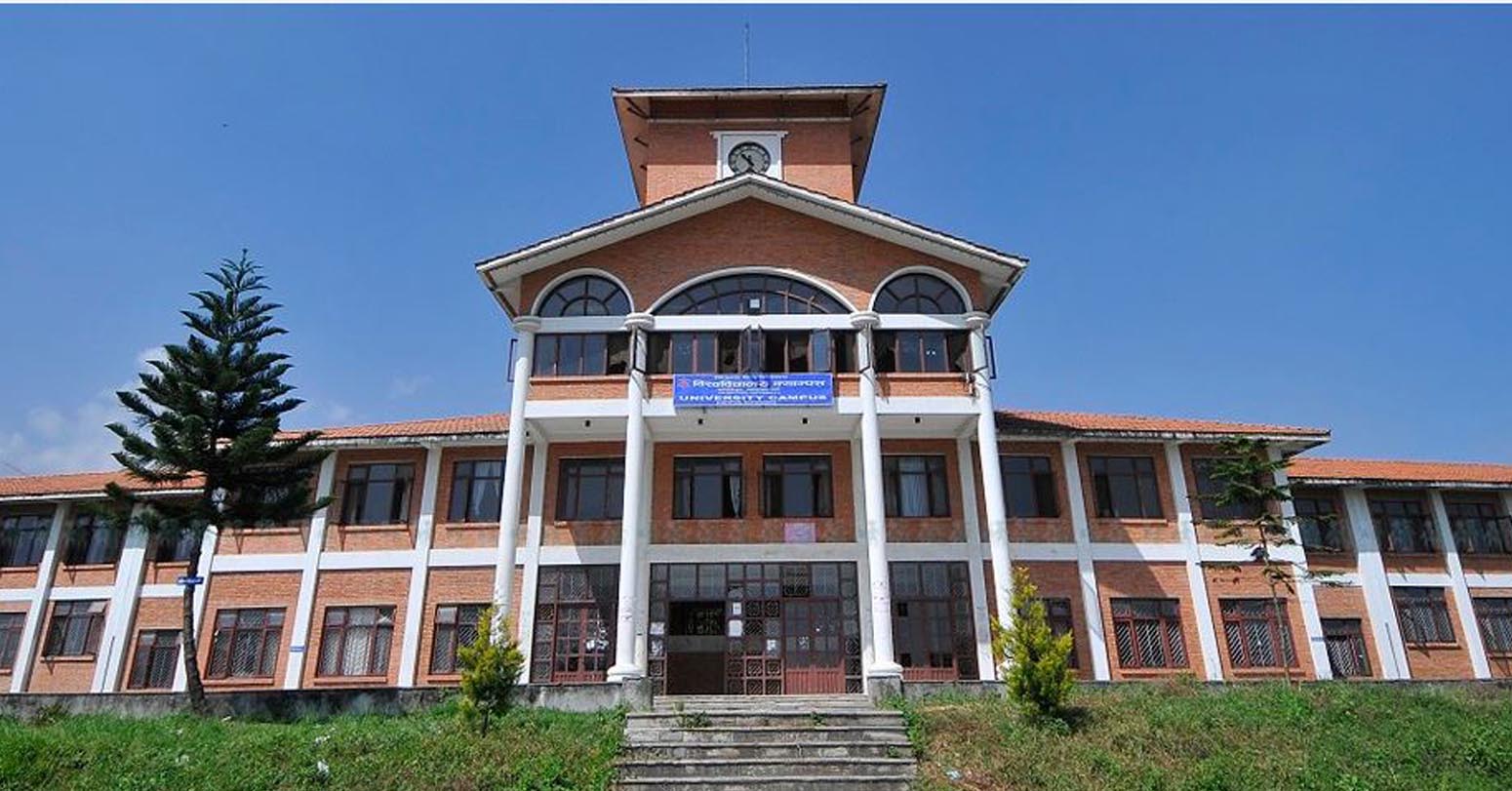
Tribhuvan University
Tribhuvan University refused, arguing that examination papers were secret and that disclosure would violate established examination norms and principles. The National Information Commission ruled in favor of the students and directed the university to release the papers. The university appealed to the Supreme Court, where a division bench of Justice Balaram KC and Justice Abadhesh Kumar Yadav dismissed the appeal and upheld the Commission’s order in May 2011.
The bench grounded its ruling in Article 27 of the Interim Constitution of 2007, which guaranteed the right to information as a fundamental right, and in the Right to Information Act itself. The court held that there was no legitimate reason to withhold answer sheets if the examination process had been conducted fairly, and that transparency in assessment was a duty of a public institution, not a discretionary favor.
It directed the university to make answer sheets accessible to any student who was dissatisfied with their results, subject to reasonable conditions. The Open Society Foundations highlighted the verdict as a milestone in the history of the right to information in Nepal, noting that it established strong legal precedent for holding public institutions accountable for transparency.
Two years after the verdict, the university amended its own regulations to formally comply with the court’s order, and the principle it established has since influenced debates about transparency in public examinations across the country.
How did a man who contracted polio as an infant use Supreme Court to win free education for thousands of people with disabilities?
In what disability rights advocates and the Ashoka Foundation both described as a transformative public interest litigation, Sudarshan Subedi, a polio survivor and advocate from Bardiya District who went on to become the two-time president of the National Federation of the Disabled Nepal, filed a writ petition at the Supreme Court demanding that people with disabilities be guaranteed free education and training opportunities across all public schools, universities, and training centers in Nepal.
The petition was filed on behalf of himself and Nepal Disabled Human Rights Center, an organization he had founded in 2000 to shift the discourse on disability in Nepal from a charity-based model to a rights-based one. Subedi’s own childhood experience of being denied schooling because the nearest school was inaccessible had given him a personal stake in the case.
He argued that existing laws protecting the rights of people with disabilities were being systematically ignored by state institutions, and that the absence of meaningful enforcement was leaving hundreds of thousands of Nepalis without recourse to education, healthcare, or livelihood.
In November 2003, the Supreme Court delivered a landmark verdict in his favor, ruling that free education and training for people with disabilities in public institutions was a constitutional obligation of the state, not a matter of institutional discretion. The BBC covered the verdict, and media across Nepal reported it widely.
The Ashoka Foundation, which elected Subedi as an Ashoka Fellow in 2005, noted that more than two thousand disabled students who had previously been denied admission to schools received free education directly as a result of the ruling.
The Education Ministry subsequently circulated letters to district and regional education officers placing them on notice that denial of educational rights to people with disabilities was unlawful. The verdict also seeded further litigation.
Subedi later won additional cases at the Supreme Court expanding the social security allowance for people with disabilities and securing treatment provisions for people with mental health conditions.
These cases collectively shaped the 2017 Rights of Persons with Disabilities Act and the 2017 Inclusive Education Policy, both of which legal scholars trace to the judicial groundwork laid by the 2003 verdict. The case remains a foundational reference in South Asian disability rights jurisprudence.
Looking at all these verdicts together, what does Nepal’s Supreme Court tell us about the role of courts in protecting rights that legislatures ignore?
Nepal’s body of landmark jurisprudence offers a compelling case study in what legal scholars call constitutional activism: courts stepping forward to protect rights when legislative and executive bodies fail to act or actively resist.
Across all the major verdicts examined in this explainer, a pattern emerges. Whether it was LGBTQ+ rights that parliament had not legislated, reproductive access that the health system failed to provide, environmental laws that agencies failed to enforce, transitional justice that the government tried to avoid, the right to information that a public university suppressed, disability rights that state institutions routinely ignored, or labor protections that a government-owned airline denied its own workers, the Supreme Court repeatedly intervened to hold the state accountable to its own constitutional promises and international commitments.
International law scholars, including those writing in the South Asian Journal of Human Rights and Social Justice, have analyzed how Nepal’s court derives implicit rights from the penumbra of explicit constitutional guarantees, similar to how the United States Supreme Court found a right to privacy in Griswold v. Connecticut.
The United Nations Environment Programme, the International Commission of Jurists, the Center for Reproductive Rights, Human Rights Watch, the Oxford Human Rights Hub, the Open Society Foundations, and the Ashoka Foundation have all covered specific Nepal verdicts as examples for other jurisdictions.
Nepal’s Supreme Court has demonstrated that a court in a small, landlocked, developing country can produce jurisprudence that resonates in global legal conversations, and that the distance between a courthouse in Kathmandu and the chambers of international human rights bodies is not as wide as geography suggests.