Kathmandu
Saturday, June 13, 2026





How reading a poem sparked an impulsive journey to see the iconic monument, the Taj Mahal
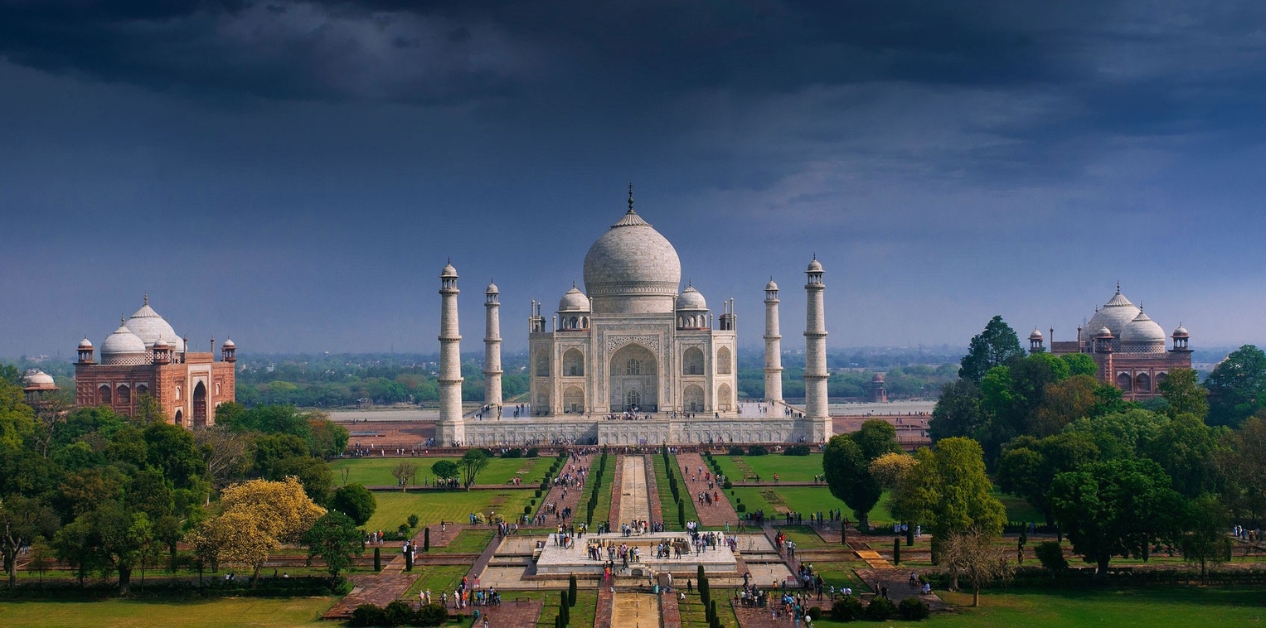
The Taj Mahal might be a symbol of love to you!
You may hold a deep reverence for this beautiful place!
But my beloved, meet me somewhere else instead!
What is the meaning of a poor person entering a royal palace?
On a path where the emblems of grandeur are affixed to every door,
What justification is there for a loving soul to travel?
My beloved, behind the veil of this advertisement for love,
You ought to see the stamps of absolute opulence!
You, who find joy in the tombs of dead rulers!
Should look at least once inside your own dark hut!
Countless people have loved in this world,
And who is to say their love was not pure?
But they lacked the means to advertise their love,
Because they, too, were destitute just like us.
These palaces and courts, these forts and walls,
Are but pillars to the greatness of autocratic kings;
Those intricate patterns woven onto the fabric of the world,
Are stained with the blended blood of your ancestors and mine.
My beloved, they must have loved too—
Those whose artistic hands gave this monument its beautiful form.
Yet, there is no trace or sign of the tombs of their love;
To this day, no one has ever lit a single lamp for them!
These gardens, this bank of the Yamuna River, this palace,
These walls etched with art, these alcoves, and these doors—
An emperor, with the backing of immense wealth,
Has mocked the love of us poor people in a garish way.
My beloved, meet me somewhere else instead!
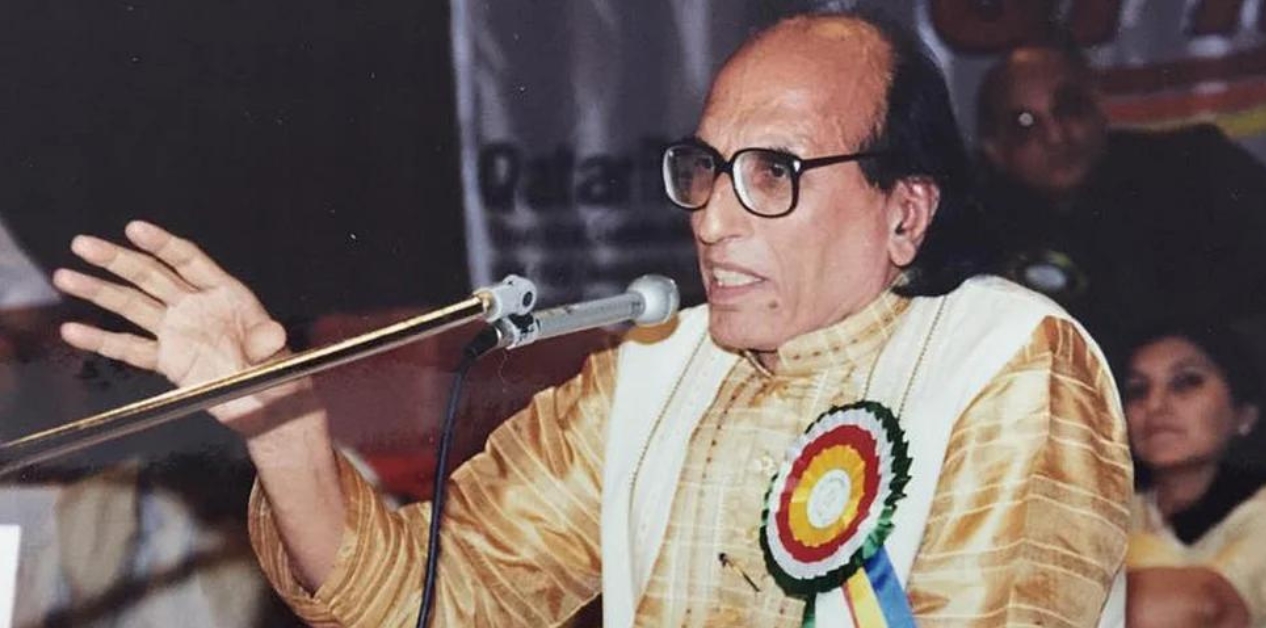
This poem was written by the popular Indian poet Sahir Ludhianvi. It is said that because of this very poem, another renowned Indian poet and writer, Amrita Pritam, fell in love with Sahir. Even today, their divine love is talked about all over the world.
In the final days of her life, Amrita Pritam wrote a poem for her lover, Imroz:
I will meet you yet again
Where, how? I do not know
But I will surely meet you
I will meet you yet again…
Imroz was 12 years younger than Amrita. They lived together under the same roof for 40 years of their lives. I first became acquainted with Amrita through this very poem. After that, I got the chance to understand Sahir and Imroz closely as well. Who wouldn’t be moved by their famous triangular love story?
Amrita’s poems fascinated me so much that I couldn’t rest until I read her biography. It was only after reading her autobiography, Rasidi Ticket (The Revenue Stamp), that my restlessness finally settled. Within Amrita’s life, her struggles, the stories of Sahir and Amrita’s love, and her relationship with Imroz, one finds many dimensions of love. It was during this time that I started searching for and listening again to Sahir’s ghazals, which I had heard many times before. Kabhi kabhi mere dil mein ek khayal aata hai… isse pehle sitaron mein bastee thi kahin zameen par bulaya gaya hai tujhe mere liye… While listening to this, it felt as though Sahir hadn’t written this ghazal for Amrita, but for me.
I searched for and read every ghazal written by Sahir that I could find on Google, even those that weren’t on YouTube. When I read his highly celebrated poem Taj Mahal, it touched me deeply. It completely captivated me. After that, I translated the poem into Nepali. I had already translated Amrita Pritam’s poems before this. A book containing my translations of her poems that I loved into the Nepali language had already been published. That collection, featuring selected translated poems of Amrita Pritam, was gaining good traction in the Nepali literary market.
And it was this very poem that suddenly sparked an intense longing in me to visit the Taj Mahal. Ever since I read Sahir’s poem, I was constantly wondering when I would finally reach the Taj Mahal.
Taking advantage of the Dashain holiday, I set aside a few days and decided to go to the Taj Mahal. Once the holidays started, others headed toward their respective homes and villages to celebrate Dashain. As for me, I set out for Agra carrying my daughter.
I had already booked a train ticket from Gorakhpur for the following morning. At around 7:00 PM, we boarded a night bus from Sunauli and set off on our journey. We spent the entire night bus journey sleeping. When daylight broke, the bus dropped us off at Sunauli. Shortly after, we left for Gorakhpur. We had breakfast somewhere along the way. Two hours later, the vehicle dropped us off in Gorakhpur.
The border was crowded with people. There was a long line of rickshaw pullers waiting to cross back and forth. They acted as if they would pull or carry people onto their rickshaws by force. For a moment, I even felt a bit scared. The Nepali police questioned us. They cross-examined me, asking where we were going, why we were going, and requesting to see my citizenship certificate. After seeing “Pyuthan” written on my citizenship card, the officer glanced at my face, smiled warmly, and said politely, “Oh, you are a daughter of our own village! Well, have a safe journey. There might be thieves and swindlers around, so please go carefully. And when will you be returning?” I had walked a little further away with my bag. I turned back and said, “In 3 or 4 days.” “Great, have a wonderful time touring around. Have a good journey!” he said, waving his hand. I replied, “Okay, thank you.”
By then, the rickshaw pullers had surrounded us. They kept following us, saying, “Come, I will take you across the border.” When one of them actually came to grab my bag, I asked how much he would charge. He said, “First take a seat, I’ll charge a reasonable price, why do you worry?” while picking up the bag and placing it in his rickshaw. My daughter and I followed him and sat in the rickshaw. Giving us sidelong glances, singing Bhojpuri songs, and spitting betel nut juice out, he brought us across the border to the railway station. When I asked for the fare upon getting off, he said Rs 600 IC. I was completely shocked! That much money just for crossing the border such a short distance? “How can it be that much?” I snapped angrily. He barked back, “This is India, INR is required. Our rules apply here, not yours.” The surrounding rickshaw pullers, adjusting the cloths around their necks, watched and walked closer, asking, “What happened, Abdul?” I felt a bit frightened.
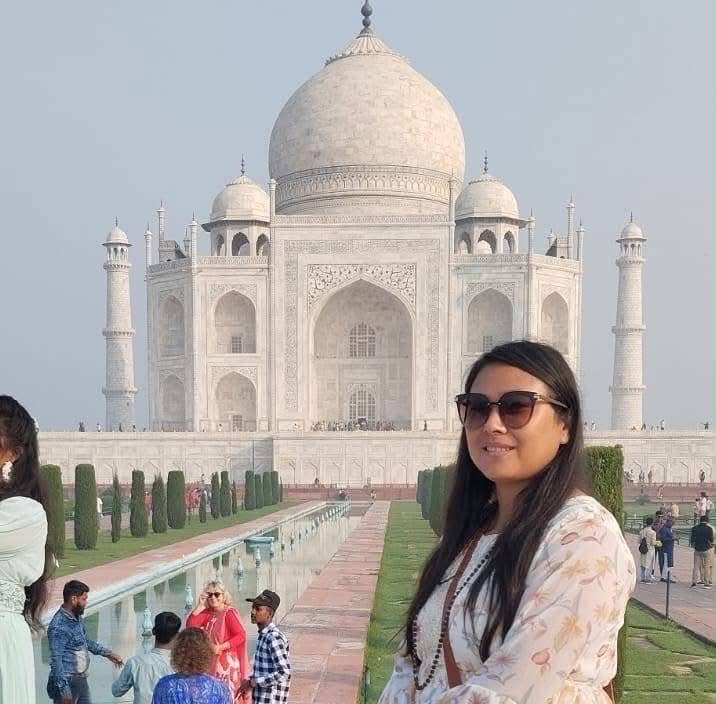
Author KC posing for a photo in front of the Taj Mahal
Moreover, it was just the two of us, a mother and daughter. Without saying another word, I quietly paid him the amount he asked for and headed toward the station. The railway station was so packed with people that it was beyond description. The noise was intense, and the filth was just as bad. People had chewed betel leaves and gutkha and spat everywhere, leaving the ground stained red as if blood had been spilled. There was garbage everywhere. Wherever you went, a terrible stench wafted through, and on top of that, people were stretched out, sleeping on that filthy floor. For a moment, it felt very strange to me. I stood and looked around in all directions. Just across the border, Nepal is so clean and tidy. Over here in India, it is so dirty, smelly, crowded, and chaotic. It felt bizarre.
I wandered around for a while looking for the inquiry desk to get information about our train. Upon inquiring, I found out that our train was delayed and would only leave around 7:00 or 8:00 PM. Now I was in a real fix! What was I to do the entire day? Where should I go? While thinking for a while, time slipped away as I lingered there. When my little girl said she was hungry, we went out toward the market to get some snacks. It was just as crowded there, filled with smoke, dust, and filth—ugh! For a moment, it felt hard to breathe. What could one even eat in a place like this? But we were hungry.
We spent a long time searching for a place to eat. We couldn’t find a single decent, clean place that served fresh snacks. Even after walking around extensively, when we couldn’t find the kind of snack shop we were looking for, we entered a place that looked slightly cleaner than the rest. We ordered roti and vegetables and ate. Once our stomachs were full, we were undecided on where to go next. Stranded in a dilemma, we just stood there looking around.
In front of us, 3 or 4 Indian citizens were talking about going to Varanasi (Banaras), and that too by booking a cab. We stayed there listening to their conversation. Meanwhile, they were discussing watching the evening Aarati (prayer ritual) of the Ganges River. A mother was telling her children that it is a very beautiful evening Aarati. The children seemed very eager to get there. I suddenly felt a sudden impulse—should we also head that way?
After they reached an agreement and left in their vehicle, I went up to the front cab among those parked in line and asked the driver. He said it would cost Rs 5,000, and if we went non-stop, he would get us there in 4 to 5 hours. Then, fear crept in again. It was just a mother and daughter, we knew nothing; what if he took us somewhere and sold us? Then another part of my mind thought, “No, you can’t get scared, just go, girl—victory lies beyond fear,” reassuring myself. Then I told him, “Wait, I’ll be right back,” and walked a little further ahead where there was a police station. I went there and saw 3 or 4 police officers.
They looked at me and asked in Hindi, “What happened?” I tried to find out how safe a cab journey would be and how much the fare from there to Varanasi usually costs. They assured me it was safe, told me not to worry, said the fare rate was fixed, and that I could go. That gave me some reassurance. I returned, placed the bag in the car, we boarded the cab, and headed toward Varanasi. My daughter was becoming a victim of my madness, but she was enjoying it too. We embarked on the cab journey while looking at the plains of Bihar, the villages, and the sights of the towns and markets. On the way, the driver shared various stories connected to local politics, society, movies, and actors. We ate food at a dhaba along the way.
We reached Varanasi around 5:00 PM. The driver himself dropped us off at a hotel he knew. We rested for a while. Then, after making inquiries, we took a rickshaw and set out for the evening Aarati at the banks of the Ganges. In that same rickshaw, a young guy was also going to the same place. He had mingled with Nepalis while working in Dubai. He was a very good man; he guided us all the way to the banks of the Ganges and went his own way. There was a massive crowd of people. The people on the boats in the Ganges River looked like an ocean. That evening, that crowd was incredibly enchanting; the glitter of lamps and candles, the atmosphere filled with the sound of conch shells and bells during the Aarati was so captivating that I cannot describe it in words.
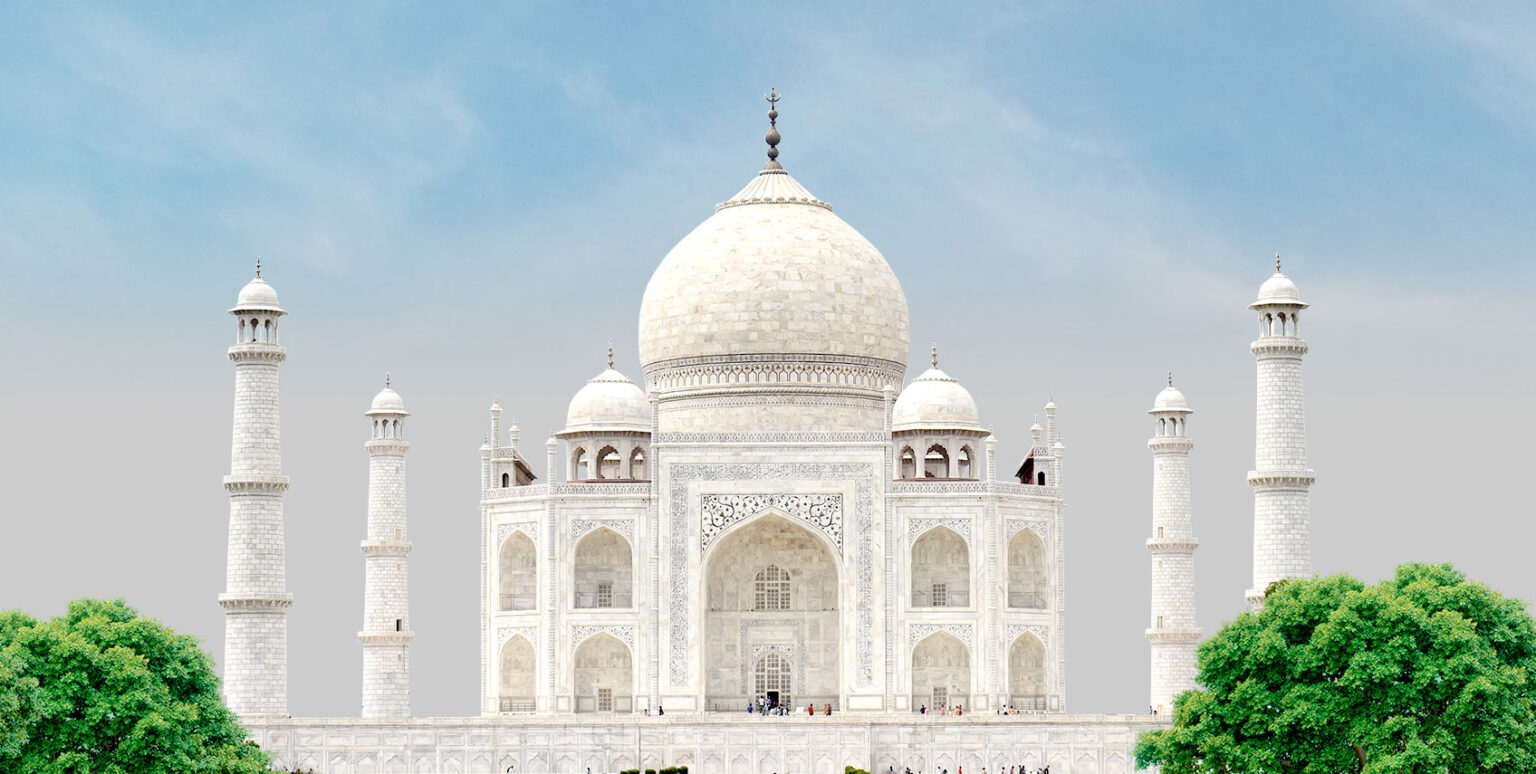
The Taj Mahal. Photo Source: tajmahal.gov.in
After the Aarati ended, we returned to the hotel, had dinner, and went to sleep. In the morning, we booked a cab again and set out for Agra. If we waited for the train, it was only available in the evening. Going by bus would take too long. Therefore, we chose to go by cab. The car sped like the wind along a very wide road, passing through Varanasi city, villages, plains, and forests. Once we reached Kolkata, the car flew like a storm on a massive fast-track highway. We ate snacks and meals at the dhabas that fell along the way.
We could see mirages on the road. In the middle of the road, one lane was full of colorful flowers, and the sides were also lined with flowers—a very clean and beautiful road. In the large fields nearby, farmers looked busy harvesting paddy. I noticed that even in such heat, Indian farmers worked very hard compared to Nepali farmers.
We reached the Taj Mahal in Agra around evening. The driver dropped us off at a hotel. After freshening up for a bit, I stepped out onto the balcony. Seeing the Taj Mahal looking shrouded in fog, I didn’t know whether to feel happy or sad. When the little one said she was hungry, we went out toward the main road to eat biryani. On the way, the driver had told us that biryani is the famous food here. After walking around for a while, we ate biryani and drank lassi. As we were strolling along the street, we reached a cafe opened by women who were acid attack survivors. When we arrived, the cafe was about to close. Therefore, we met 2 or 3 women, wished them well, and returned. After returning to the hotel, I found out that the cafe is quite famous on social media.
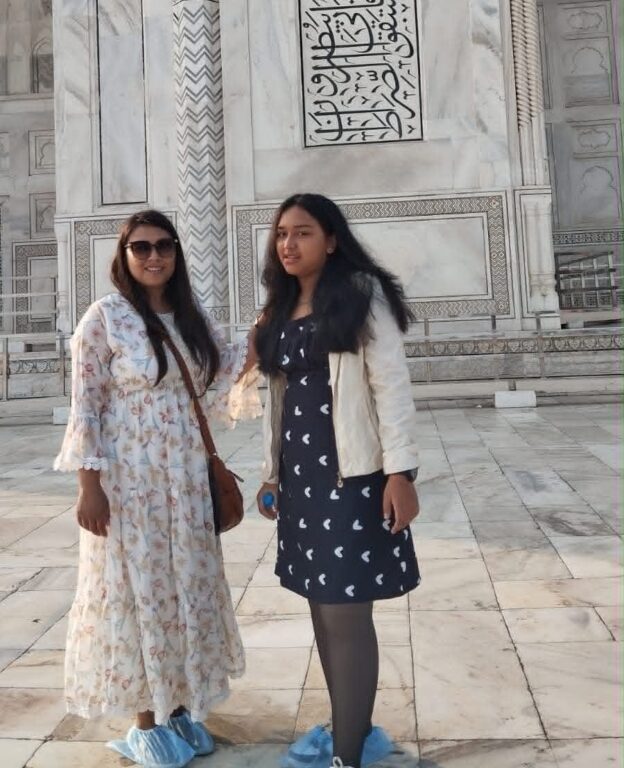
Rima KC with her daughter at the Taj Mahal
We woke up early in the morning, had breakfast, and headed to the Taj Mahal. At the ticket counter, they asked for my daughter’s ID. When we left, she had completely forgotten to pack her ID. Now we were in a fix. When I said she is just a child, they didn’t believe me. It turned out that a half-ticket is required for children under 12 years old. They cross-examined us for a long time. They have made a uniform fee for everyone from across Asia. After somehow convincing them, as we were about to enter, the police stopped us again. He didn’t believe my story at all and asked my daughter for her date of birth. She gave it in the Nepali Bikram Sambat calendar, so he asked for the English date of birth (AD) again. Only after she stated it herself did he finally let us enter.
I had brought my two books along with me. During the security check, they took out and kept both Akshar (a poetry collection) and Amrita Pritamka Chhadiyeka Kabita (Selected Poems of Amrita Pritam). In fact, bringing any belongings inside was strictly prohibited.
Once inside, everyone was busy taking photos and videos. We also took a few.
After entering the Taj Mahal, my heart suddenly grew heavy. Waves of tears rushed into my eyes involuntarily. I don’t know why I cried. Everyone watched me as they walked past, but I didn’t care about anyone. When my daughter asked what happened, I dismissed it, saying it was nothing. I don’t even know why I wept like that upon arriving there. After a while, my heart felt a bit lighter. I went inside the Taj Mahal. I looked at the tombs of Mumtaz and Shah Jahan. I walked all around. I looked at the banks of the Yamuna. I looked at the walls, alcoves, and pillars there. In all of them, the prints of the workers’ fingers lay hidden invisibly.
I observed the Taj Mahal closely, just as Sahir’s poem had described. I took some pictures and recorded a few videos. Sitting in front of the Taj Mahal, I recited that very poem titled Taj Mahal by Sahir, which I had translated myself. With swollen eyes, a weary face, and a heavy heart, I returned from the Taj Mahal!