Kathmandu
Saturday, June 13, 2026





The anticipation of waiting for Marauti (Acmella oleracea) Chicken was becoming hard to bear. In my imagination, I expected a dish of tender chicken beautifully adorned with the yellow flowers of the Acmella oleracea plant. What arrived was entirely different—but the taste was absolute bliss
KATHMANDU: “Ramaram Marauti, timro rupai karauti…” (Tantalizing Acmella oleracea, your beauty cuts like a saw…)
As this song played softly in the background at a restaurant, my mind wandered back to the countryside. I pictured the yellow-flowered plant that is often neglected and pushed to the edges of the fields. Back home, when mothers couldn’t find any other ingredients for chutney, they would throw in some Acmella oleracea to get by. If someone had a mild stomach ache, they were given a broth made of Acmella oleracea instead of carom seeds (jwano). When a tooth ached, they were told to chew it raw. It was a plant that never ranked high on anyone’s priority list, yet it was an absolute necessity in every backyard garden—Acmella oleracea.
Written by Netra Aryal and composed by Khem Century, the song “Ramaram Marauti Timro Rupai Karauti…” took the market by storm around 2021. It prompted many who had migrated to the cities to fondly look back at the very weed of their childhood. Singing along with Khem Century and Asmita Adhikari, people remembered those tiny yellow flowers, leaving a tingling sensation in their mouths. While the song remained a topic of discussion, the buzz around the actual Acmella oleracea plant faded away within a few months.
Before the song playing in the restaurant could even finish, my younger brother Bishwokant Ghimire, who has been carving out a reputation in media management, looked at me and asked, “By the way, have you ever had the chance to eat Acmella oleracea Chicken?” The moment I replied with a “No,” he immediately set off to arrange it, saying, “Alright, let me fix that.” Why pass up an opportunity to try something I had never even heard of? My curiosity was piqued, and I began digging for more information.
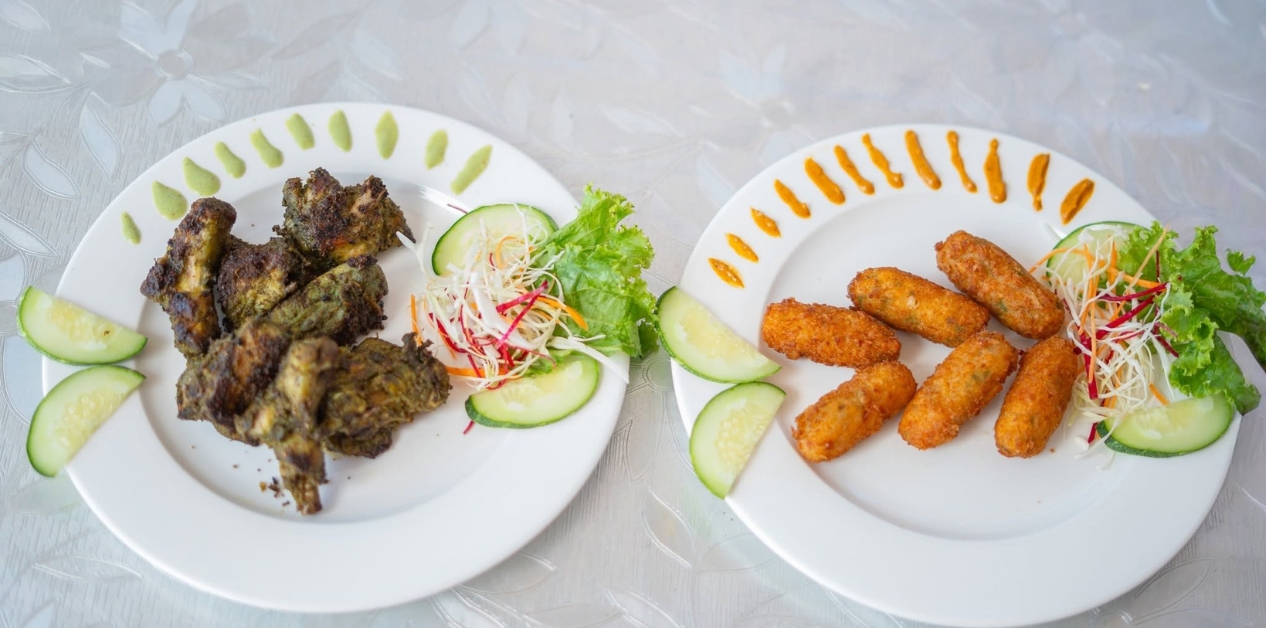
Mint Chicken and Corn Cheese Tikki
A few weeks later, the opportunity finally arrived. We made our way to Hotel Pauwa, located in Gaushala, Kathmandu. There, I met Dhruba Neupane, the visionary behind Hotel Pauwa, a hospitality chain expanding rapidly across Nepal. Over a brief conversation, Dhruba shared the story of how their journey began with just a seven-room building in Saljhandi, Rupandehi, and detailed Pauwa Hospitality’s ambitious blueprint to open one hundred hotels and resorts across the country within ten years. He then personally placed an order for Acmella oleracea Chicken with the kitchen. Constantly occupied with executing his grand expansion plans, Dhruba bid us farewell, leaving the hosting duties in the capable hands of Pauwa’s Kathmandu Manager, Mahendra Bhandari.
Mahendra, who is not even thirty, possessed a youthful drive and energy that was wonderful to witness. He elaborately explained Pauwa’s core mission: promoting authentic Nepalese identity while delivering top-tier guest services. According to Mahendra, everything from the staff uniforms to the interior decor is meticulously designed to mirror traditional Nepalese culture.
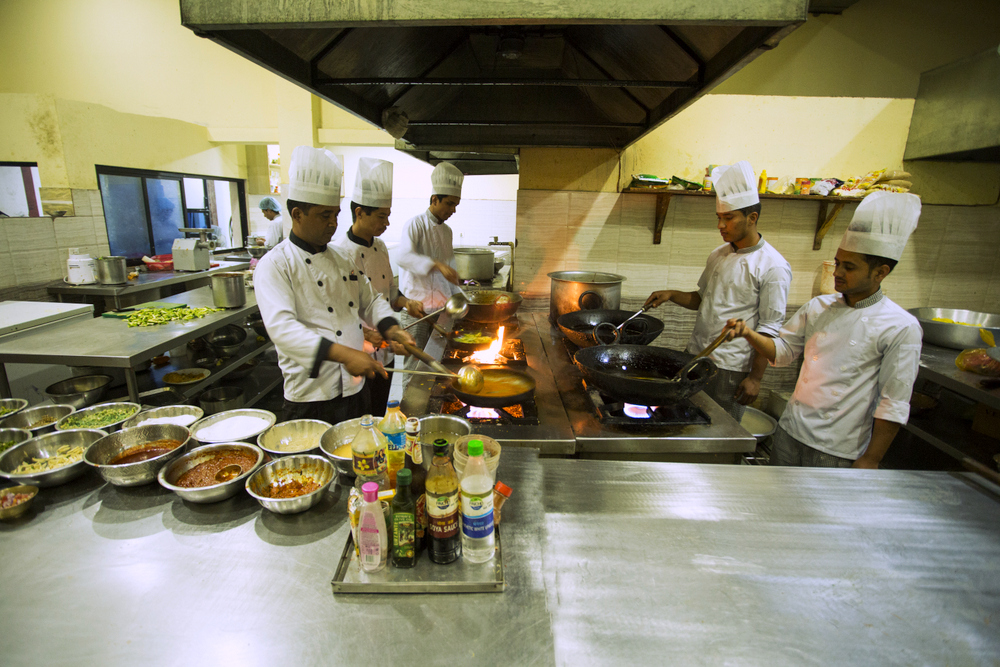
Kitchen of Pauwa Hotel
While Mahendra naturally continued to promote his hotel, I was finding it increasingly difficult to pass the time as I waited for the Acmella oleracea Chicken. In my mind’s eye, I kept envisioning tender pieces of chicken gracefully garnished with yellow blossoms.
Depending on the region and community, Marauti (Acmella oleracea) is known by various names such as marauthi, marethi, marhatti, and by some as bhui-timur (ground Sichuan pepper). Chewing it sends a sudden, electric-like jolt of tingling sensations straight through the tongue. It triggers heavy salivation, followed by a brief period of total numbness in the mouth.
Botanists explain that the plant contains a potent chemical compound called spilanthol. This compound temporarily blocks pain signals from the nerves in our mouth from reaching the brain, effectively operating as a natural anesthetic. When mothers used to say “chew some Acmella oleracea” for a toothache, it was to grant instant relief by completely numbing that area of the mouth. This is precisely why its English common name is the toothache plant. Scientists and bartenders also refer to it as the electric daisy or sichuan buttons.
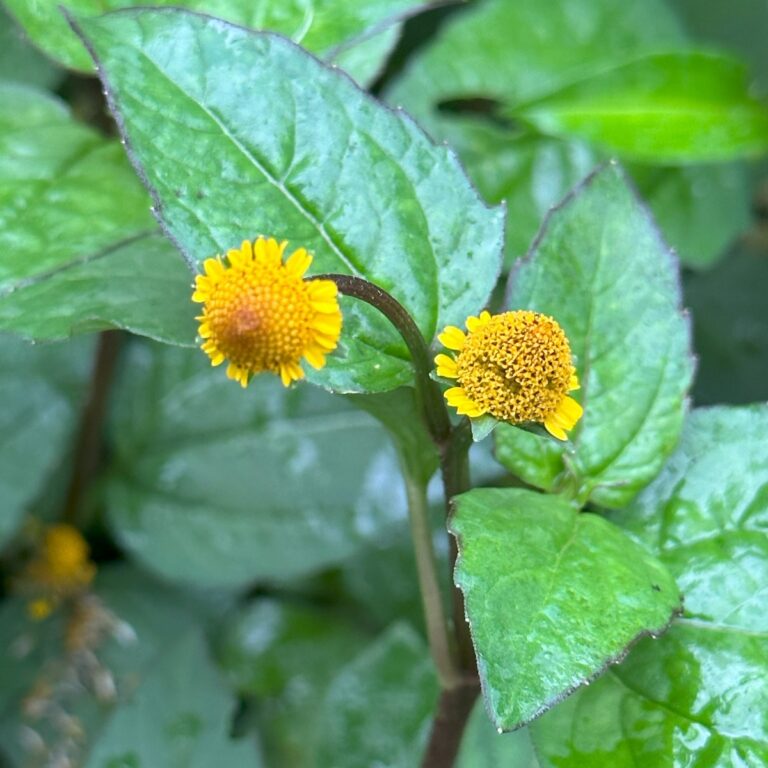
Acmella oleracea. Photo Courtesy: Kalari Foundation
The plant traces its origins back to the Amazon Basin of South America, specifically around Brazil and Peru. Thousands of years ago, the indigenous communities there discovered a wild weed called Acmella alba that caused oral numbness upon chewing. They began domesticating it around their settlements. By selectively breeding only the plants that yielded the finest and most potent flavors over generations, they birthed the modern Marauti (Acmella oleracea). For millennia, they consumed it both as a traditional medicine and as a leafy green tossed into meat and fish broths.
After the year 1700, Portuguese merchant sailors carried Acmella oleracea seeds across the globe during their maritime voyages. They utilized the plant to heal mouth ulcers and ward off scurvy, a disease triggered by vitamin C deficiency. Around 1900, Indian laborers inadvertently brought these seeds into South Asia and the hilly terrains of Nepal. The plant adapted effortlessly to the local climate and flourished. Because it is natively a South American species, experts note that Acmella oleracea is completely absent from ancient Ayurvedic texts compiled over 2,000 years ago, such as the Charaka Samhita or Sushruta Samhita. It only began appearing in 18th-century Ayurvedic literature under the name ‘Akarakara’.
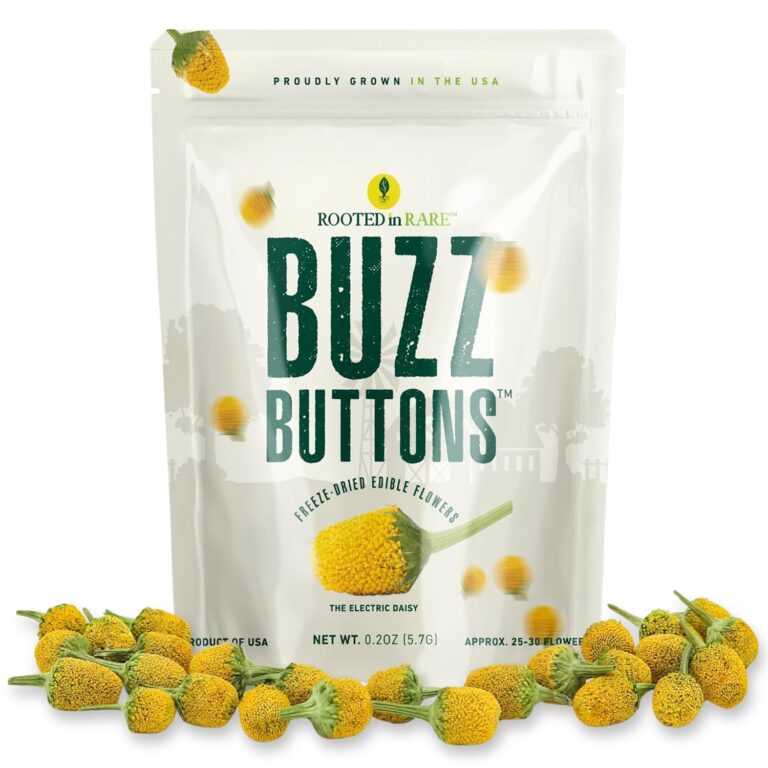
A packet of dried Acmella oleracea listed for sale on the e-commerce platform Amazon
In the hilly regions of Nepal, a remarkably flavorful and palate-cleansing chutney is prepared by grinding a few Marauti (Acmella oleracea) flowers and tender leaves on a traditional stone mortar (silauta) along with tomatoes, garlic, green chilies, and cilantro. In certain pockets where timur (Sichuan pepper) is unavailable, the dried flowers of Acmella oleracea are ground and blended with salt and chili to create a spice mix called ‘chhop’, which is enjoyed alongside boiled potatoes or dhido. Others toss its leaves into pots of wild game or mutton, believing it strips away the gamey odor and tenderizes the meat rapidly. It was likely a chef who understood these properties that pioneered the reimagining of meat with Acmella oleracea.
According to Mahendra Bhandari, Hotel Pauwa hosts an annual culinary competition among its chefs, and it was during one of these events that a chef from Butwal pitched the concept of Acmella oleracea Chicken. Captivated by its unique flavor profile and rich Nepalese roots, Pauwa decided to integrate this dish across all its restaurants nationwide.
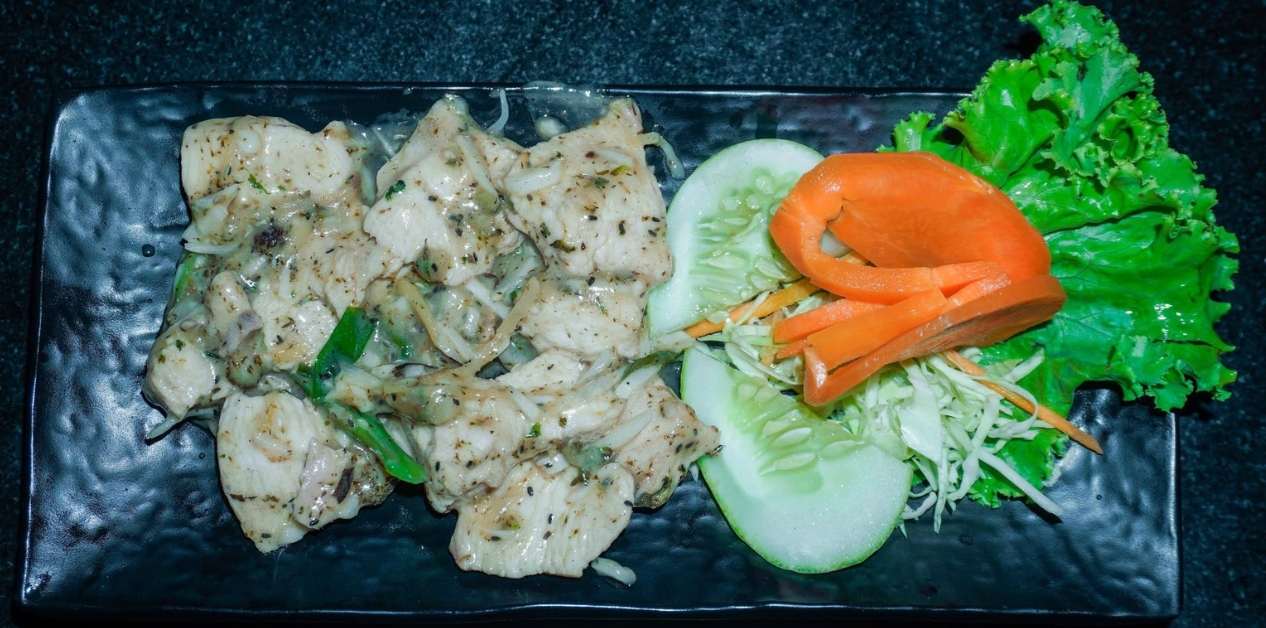
Following my deep internal reflection on the history of Acmella oleracea, the Acmella oleracea Chicken finally arrived at our table. However, it bore absolutely no resemblance to what I had imagined. There was no yellow tint, nor were there any visible traces of Acmella oleracea flowers. Instead, it presented itself as boneless chicken cooked in a rich, creamy gravy.
The moment I placed a piece in my mouth, the unmistakably vibrant, tingling essence of Acmella oleracea revealed itself. The chicken was incredibly tender, melting effortlessly on the palate without requiring any effort from my teeth. “Oh, wow,” I muttered to myself.
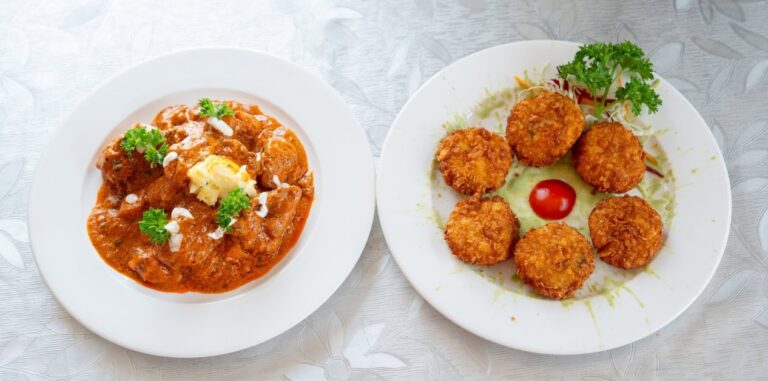
Nawabi Kebab and Butter Masala Chicken
Manager Mahendra explained the culinary process: the chicken is slow-cooked in water infused with boiled Acmella oleracea. It is seasoned with ginger, garlic, salt, chilies, and a subtle squeeze of lime, before being finished in rich clarified butter (ghee) or butter. Because it is cooked in Acmella oleracea-infused water, the distinct flavor and aroma seep deep into every single fiber of the meat. To ensure a steady supply of the ingredient, Hotel Pauwa and its sister concern, Peucho, have contracted local farmers in Gulmi to systematically cultivate Acmella oleracea.
Under the leadership of Corporate Chef Dev Neupane, Hotel Pauwa has been experimenting relentlessly to modernize and commercialize traditional Nepalese cuisine. Alongside Acmella oleracea Chicken, Pauwa is actively promoting an array of indigenous delicacies, including Acmella oleracea soup, dhikri, batuk, chukauni, gundruk ko suruwa (fermented leafy green soup), gundruk chutney, and unique pickles crafted from koiralo (orchid tree blossoms), kavro (fig leaves), and banana blossoms. They also serve traditional puddings (kheer) made from yam, pumpkin, rice, bottle gourd, carrots, and corn.
As we were sampling these, the founder Dhruba Neupane joined our table and added, “We have another unique offering where we sun-dry raw jackfruit, grind it into flour, and use it to bake traditional flatbreads (roti).”
To truly savor all these heritage dishes, one would have to return to the restaurant consecutively for several days. Thus, for that afternoon, I contentedly anchored my palate to the Acmella oleracea Chicken. It felt like a triumph of local culinary innovation.
Having traversed a long historical path from the Amazon Basin to become an inseparable part of our ecosystem, the Acmella oleracea plant holds immense untapped potential for Nepalese creators. In the international market, Acmella oleracea blossoms are widely utilized in elite mixology under the names “buzz buttons” and “electric daisies.” Rather than using it purely for flavor, mixologists employ it to offer cocktail enthusiasts a multi-sensory adventure and an exhilarating physical reaction.
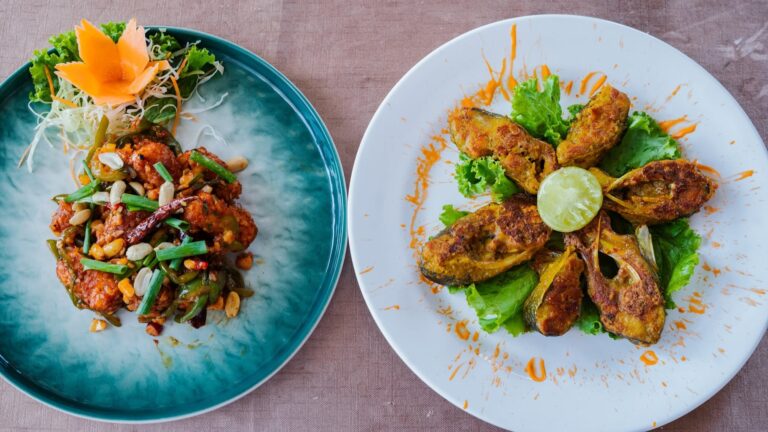
A fiery (Akabare) chili-infused chicken and Fish Fry
In a technique known as “garnish to chew,” a fresh or freeze-dried yellow Acmella oleracea flower is perched elegantly on the rim of a cocktail glass. Before taking a sip, the bartender instructs the guest to place the flower in their mouth and chew it gently for 20 to 30 seconds. The moment the flower is chewed, a popping, buzzing sensation—reminiscent of ‘Pop Rocks’ candy—explodes across the mouth, accompanied by an intense rush of salivation. As the mouth tingles and grows numb, the guest takes their first sip of the cocktail. Suddenly, the sour, sweet, or alcoholic notes of the drink taste ten times sharper and profoundly more intense than normal. It completely electrifies the taste buds. That right there is the magic.
Beyond raw garnishes, the plant is being infused into “buzz foams,” specialty margaritas, and electric syrups to make alcoholic beverages significantly more intoxicating. This skyrocketing global demand explains why dried Acmella oleracea is packaged and sold aggressively on major e-commerce platforms like Amazon.
If similar creative mixology and culinary practices are adopted across Nepal, local demand would surge. This could pave the way for mountain farmers across our terrain—just like those in Gulmi—to generate a lucrative stream of income from this long-neglected, humble wildflower.