Kathmandu
Wednesday, June 10, 2026





As the World Cup expands to an unprecedented 48-nation format across the US, Canada, and Mexico, Nepali fans face high travel costs and early morning broadcasts, while living legends Lionel Messi and Cristiano Ronaldo prepare for a historic sixth tournament alongside four debutant nations.
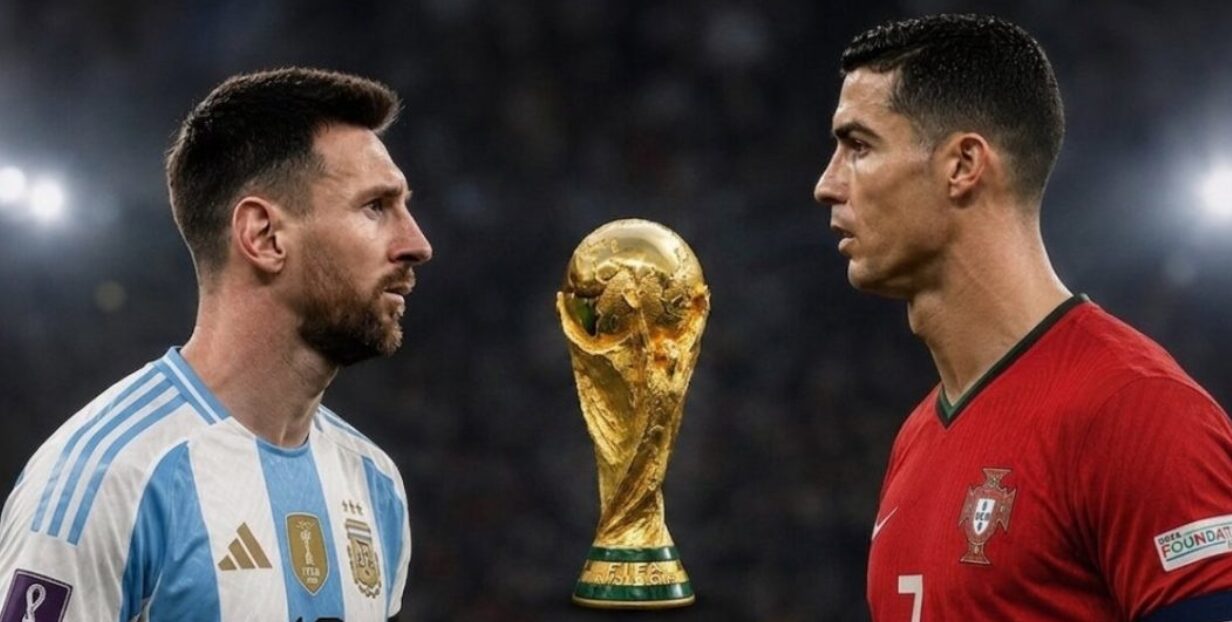
KATHMANDU: Because it was organized in the Middle East for the first time, the 2022 FIFA World Cup was a subject of special discussion. To bear witness to this famous festival, Narayan Dev Rana, the president of the Nepal Black Belt Committee, reached Qatar.
For Rana, a supporter of South American football, getting to watch the World Cup live was a dream come true. He got the opportunity in Qatar to watch many unforgettable moments of the World Cup from up close. The most memorable moment was the quarter-final between Brazil and Croatia.
Before that match, the global football world seemed to be in favor of Brazil. The team filled with star players was considered a strong contender for the title. The atmosphere of the Education City Stadium, the enthusiasm of the supporters, and the global discussion were revolving right around Brazil.
Rana was also almost certain that Brazil would win the match. However, that very match proved why football is called a game of uncertainties. The result came contrary to expectations. Being defeated 4-2 in the penalty shootout, Brazil was knocked out of the tournament, and Croatia reached the semi-finals.
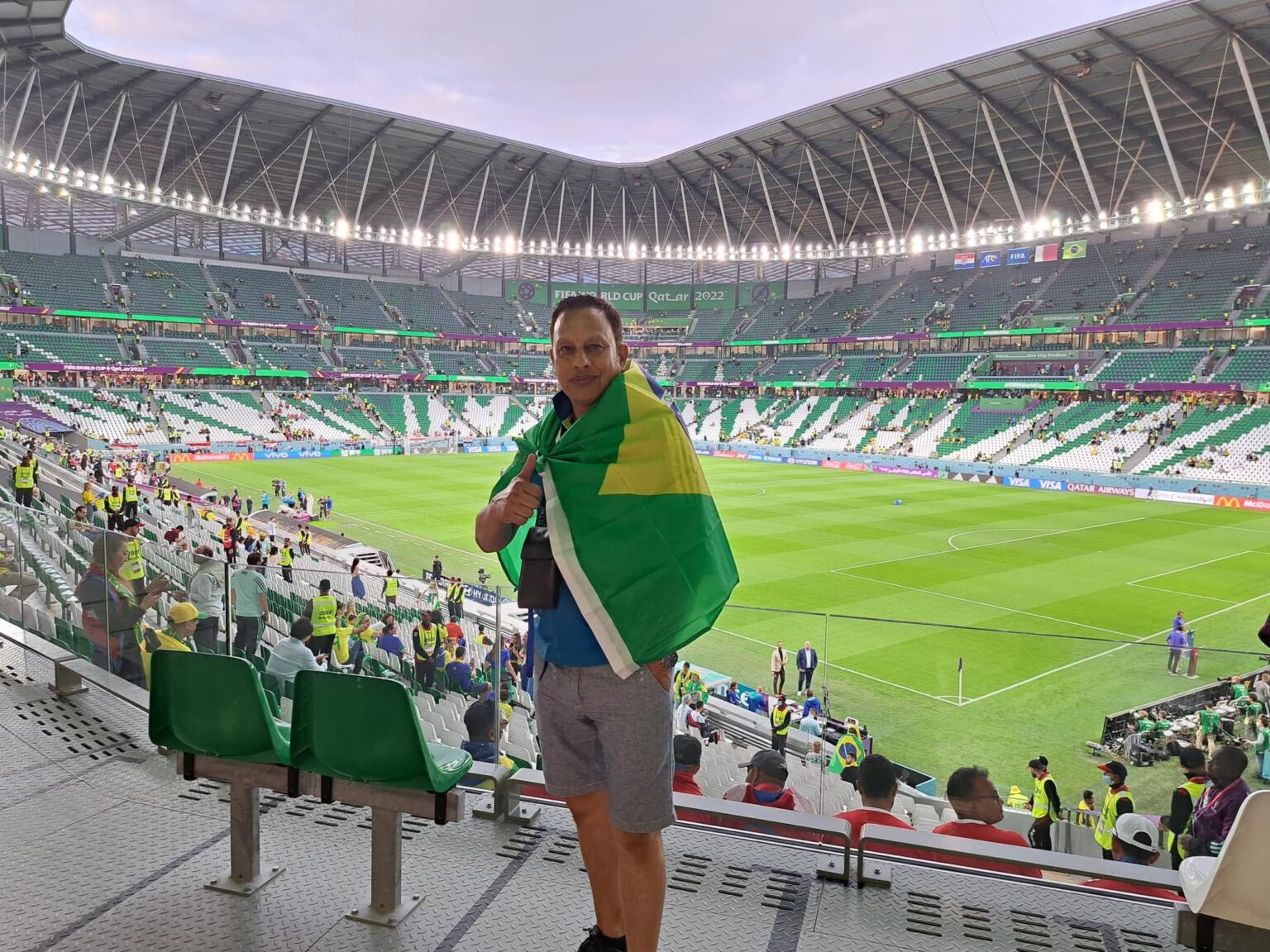
Narayan Dev Rana, who reached Qatar to watch Brazil’s match. Photo: Rana’s social media
In fact, it is the playing style itself that has made the South American teams special. He says, “The way teams like Argentina and Brazil play is different and more artistic than others. It gives a different pleasure to watch.”
The World Cup at that time was within the financial capacity of Nepali supporters to go and watch live by paying money. Therefore, Rana had reached the host nation itself to experience the football mega-festival live. With the destination of the World Cup becoming North America, Rana’s plan has changed. Although he has a desire to live-witness the 2026 World Cup, which will be jointly held in America, Canada, and Mexico, the expenses have stopped him.
“Since Qatar is in Asia itself, the expenses for coming and going were not much. Now it is in America. We cannot afford that at all,” he says with a laugh, “This time, the plan has been made to watch the World Cup sitting with friends in Nepal itself.”
In this edition of the World Cup, 48 teams are competing. While 32 teams used to participate previously, FIFA has added 16 teams in this edition. This is the first time since 1998 that the number of teams has been increased in the World Cup.
The FIFA World Cup 2026 is being organized with a new format and an unprecedented size. This edition of the World Cup, to be jointly hosted by America, Canada, and Mexico, will become the largest ever in terms of participating teams, number of matches, and hosting.
In this edition of the World Cup, 48 teams are competing. While 32 teams used to participate previously, FIFA has added 16 teams in this edition. This is the first time since 1998 that the number of teams has been increased in the World Cup.
Along with this, the structure of the tournament has also changed. Groups have been added to the group stage. A ‘Round of 32’ has been added to the knockout stage. Therefore, the World Cup 2026 is expected to become a special milestone in the history of world football.
This time, 104 matches will take place in 16 stadiums. Sixteen cities across three nations are becoming the centers of the World Cup. The tournament will run for 39 days across 11 cities in America, three in Mexico, and two in Canada. Mexico and Canada will host 13 matches each, while 78 matches will be played in America.
The most important matches are taking place in America. Among them, the quarter-finals, semi-finals, and final matches will take place at the MetLife Stadium in New Jersey. After the 2002 World Cup jointly hosted by Japan and South Korea, this is the second World Cup to have multi-nation hosts.
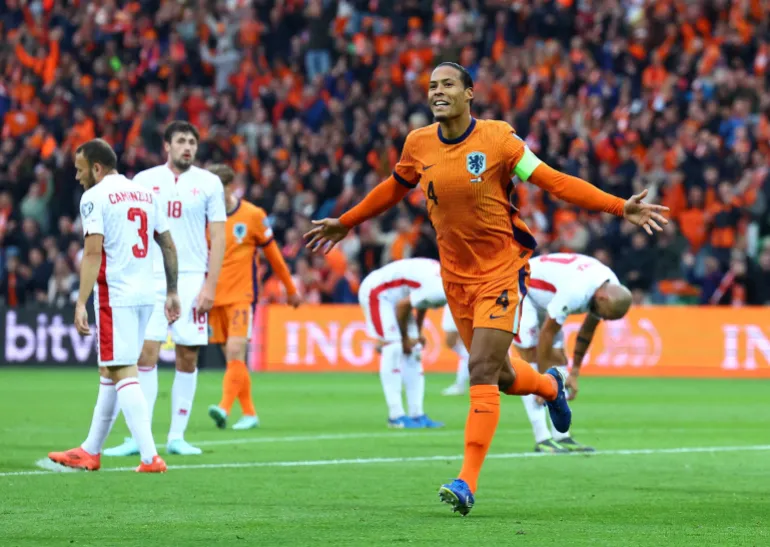
Netherlands captain Virgil van Dijk. Photo: AP
The opening match of the tournament will be organized on June 11 in Mexico City. In this match, Mexico and South Africa will clash. A day after that, Canada will start its campaign by playing against Bosnia and Herzegovina in Toronto. America will also begin its World Cup journey on June 12 by playing against Paraguay. However, most of the matches will be in the early morning according to Nepali time. Therefore, Shiksha Karki, who is studying at the undergraduate level at Kathmandu Shiksha Campus, states that anxiety has been added regarding how to watch this time’s tournament.
Karki, a fan of Portugal, says, “This time is the final tournament of our idol Ronaldo. A consultation has taken place with friends to not miss Portugal’s matches as far as possible. However, since the matches will be in the early morning, it will be difficult to gather at one place, so the plan is to watch sitting at home.”
The opening match of the tournament is being organized on June 11 in Mexico City, in which Mexico and South Africa will clash. A day after that, Canada will start its campaign by playing against Bosnia and Herzegovina in Toronto. America will also begin its World Cup journey on June 12 by playing against Paraguay.
Four new nations
The World Cup has welcomed four new nations this time. Cape Verde, Curaçao, Jordan, and Uzbekistan have made a place in the World Cup for the first time. Curaçao is the smallest nation ever to qualify for the World Cup in terms of population, which has a population of around 156,000.
Curaçao’s team will start the tournament by playing against world football’s superpower and four-time winner Germany. Located in the Caribbean region, Curaçao was a Dutch colony for centuries. Therefore, the number of players born and raised in the Netherlands is significant in the team.
Iceland is the second smallest nation, while Cape Verde, which has a population of around 500,000, is the third among the small nations to qualify for the World Cup.
Located off the west coast of Africa, this nation of 10 volcanic islands made its place in the World Cup from a group containing strong teams like Cameroon and Angola. During the qualifiers, the Cape Verde team remained undefeated and managed to keep a ‘clean sheet’ in all five matches played on home ground. Since 2020, Pedro Leitão Brito, alias ‘Bubista’, has been the coach of the team. He is also a former captain of the national team.
Apart from these two, another new team is Jordan. Jordan has not been able to achieve major success apart from becoming the runner-up once in the Asian Cup.
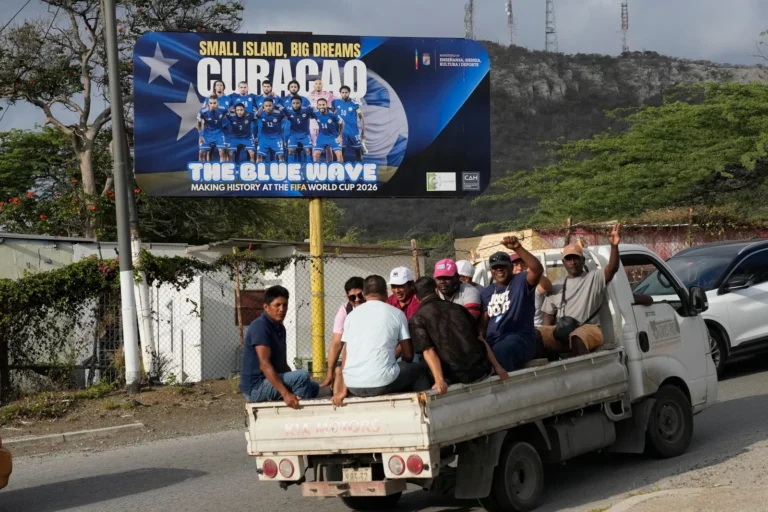
Caption: A photo of Curaçao’s football team. Photo: AP
Musa Al-Taamari, a player famous from the French club Stade Rennais, is playing in the World Cup. He has scored 24 goals for the national team. Jordan, under the coaching of former Moroccan international midfielder Jamal Sellami, will be aiming to leave an impression in its first participation.
Uzbekistan, ranked 50th in the world rankings, is playing in the World Cup for the first time. After the dissolution of the Soviet Union, Uzbekistan became an independent nation and began playing international tournaments by forming its own national team. The coach of the team nicknamed ‘White Wolves’ is Italy’s Fabio Cannavaro.
Appointed only last October, he took the place of Timur Kapadze, who had previously qualified the team. Cannavaro had captained Italy when they won the World Cup in 2006.
Eight world champions
By the time it reaches the 23rd edition, the number of nations playing the World Cup is reaching 84. Even though the number of appearances has reached this high, only eight nations have won the title so far. In the last 11 editions, France (1998) and Spain (2010) became champions for the first time. Otherwise, the dominance of old teams remained sustained in other editions.
Until now, Brazil has won the maximum titles. In 1958, 1962, 1970, 1994, and 2002, it had captured the title five times. Germany and Italy have four each, Argentina has three, France and Uruguay have two each, and England and Spain have one title each.
Although the Netherlands reached the final three times, Hungary and the Czech Republic two times each, and Sweden and Costa Rica one time each, they have not been able to lift the title. France is aiming to reach the World Cup final for the third consecutive time. Previously, West Germany and Brazil had achieved that feat.
In the history of world football, teams that have won two consecutive World Cups are very few. The only nation to achieve such a feat is Brazil. This team had lifted the title consecutively in 1958 and 1962. Since then, no team has been able to continuously defend the World Cup title. Now, the responsibility of creating this history is on the shoulders of the 2022 world champion, Argentina.
Until now, there is a record of the reigning champion team being knocked out from the group stage itself six times. Among the last four World Cups, Italy (2010), Spain (2014), and Germany (2018) had faced similar disappointing results. Egypt, on the other hand, has not been able to win any of the seven matches it has played in the World Cup. Its record consists of five losses and two draws.
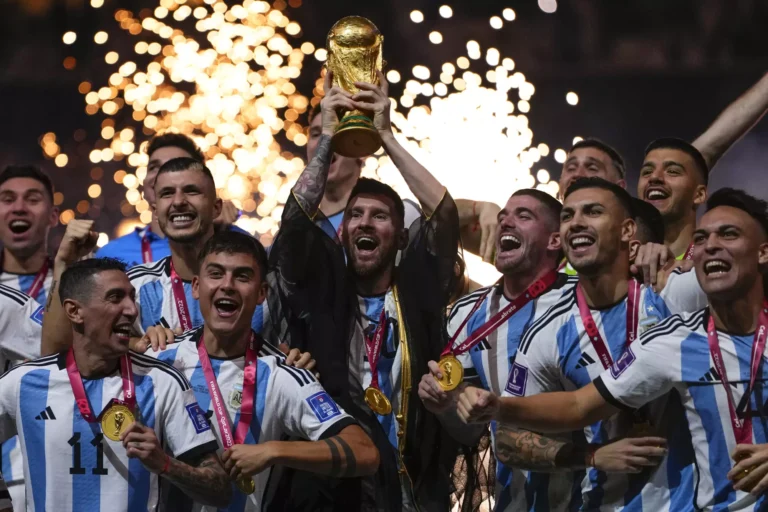
Argentine players after winning the World Cup in 2022. Photo: AP
Brazil’s Continuous Presence
The only nation to participate in all editions of the World Cup is Brazil. It has achieved the highest 76 victories and has scored 237 goals. Brazil, the most successful nation in World Cup history, won the title last time in 2002. Since then, except in 2014, it has been knocked out from the quarter-finals itself in every World Cup.
In 2014, during the World Cup held on home ground, Brazil had reached the semi-finals. But it faced a humiliating 7-1 defeat against Germany. In the 2022 World Cup, Brazil was eliminated from the quarter-final stage. Just like four years prior, it was stopped by Croatia at that time as well.
In the group stage, Brazil had achieved victories against Serbia and Switzerland. Even though it was defeated by Cameroon in the final group match, the team succeeded in entering the knockout stage by remaining at the top spot of Group ‘G’.
Among the players participating in the tournament, 357 individuals have already played at least one edition of the World Cup previously. The remaining 891 players are getting the opportunity to show their capability for the first time on the biggest stage of world football. This has shown an influential presence of new faces in the World Cup.
In the ‘Round of 16’, Brazil secured a comfortable 4-1 win against South Korea to make a place in the quarter-finals. After that, its meeting took place with the 2018 World Cup runner-up, Croatia.
The designated 90 minutes of the quarter-final had ended in a goalless draw.
After both teams scored 1-1 goals in extra time, the match reached a penalty shootout. In the penalties, Croatia secured a 4-2 win to make a place in the semi-finals, while Brazil’s dream of winning the World Cup for the sixth time ended right there.
This time, the leadership of Brazil will be done by Real Madrid’s Vinícius Júnior, Santos’s Neymar Júnior, and Barcelona’s Raphinha. In a situation where it was performing weakly in the World Cup qualifiers, Brazil has brought the experienced coach Carlo Ancelotti from Real.
Despite some disappointing results, including a loss to Argentina, he brought the team to the World Cup for the 23rd time. Nevertheless, Brazil was limited to fifth place in the South American qualifiers.
For Ancelotti, who has won the Champions League five times, this will be his first World Cup as a head coach.
1,248 players from 48 nations
With the release of the final squads participating in the World Cup, the picture of the players stepping onto the field in world football’s biggest tournament has become clear. This time, 1,248 players from 48 nations will participate in the World Cup.
Among the players participating in the tournament, 357 individuals have already played at least one edition of the World Cup previously. The remaining 891 players are getting the opportunity to show their capability for the first time on the biggest stage of world football. This has shown an influential presence of new faces in the World Cup.
Players from 449 different clubs across 71 nations are playing this World Cup. From the clubs of England, considered the center of club football, the highest number of 200 players will mark their participation in the World Cup.
After that, 109 players from Germany, 86 each from France and Spain, 71 from Italy, and 49 players from Saudi Arabia have made it into the World Cup squads. A record 44 players will also participate from America’s Major League Soccer (MLS).
The five-time Ballon d’Or winner Ronaldo has not been able to win a World Cup title until now. In the knockout stage of the World Cup, he has not been able to score even a single goal. Despite many achievements in club and international football, his World Cup legacy has not been able to shine according to expectations.
When looking in the context of clubs, English champion Manchester City has the maximum 19 players in the World Cup. While 18 players of German giant Bayern Munich are participating, 16-16 players each from the French club Paris Saint-Germain (PSG) and English club Arsenal have fallen into World Cup squads.
From the Catalan club Barcelona, 15 players are participating.
In terms of age as well, this time’s World Cup has become special. Scotland’s goalkeeper Craig Gordon will be the oldest player, who is playing the tournament at the age of 43 years and 162 days. On the other hand, Mexico’s Gilberto Mora is ready to play the World Cup as the youngest player at the age of 17 years and 240 days. An interval of more than 25 years exists between these two players.
Twenty-two players under the age of 20 years are participating in the World Cup, while seven players of age 40 years or above will bring their experience onto the field. The generational gap is also expected to become a special attraction of this World Cup.
Sixth World Cup for Ronaldo, Messi, and Ochoa
Portugal’s captain Cristiano Ronaldo has played 226 international matches. This is the highest in the history of men’s football. Along with Mexico’s goalkeeper Guillermo Ochoa and Argentina’s captain Lionel Messi, he is preparing to become the first player to play 6 times in the World Cup.
Ronaldo is the only player to score in five consecutive World Cups. He has scored eight goals in 22 matches. If Portugal succeeds in winning this year’s World Cup, the 41-year-old Ronaldo will become the oldest player in history to lift the World Cup.
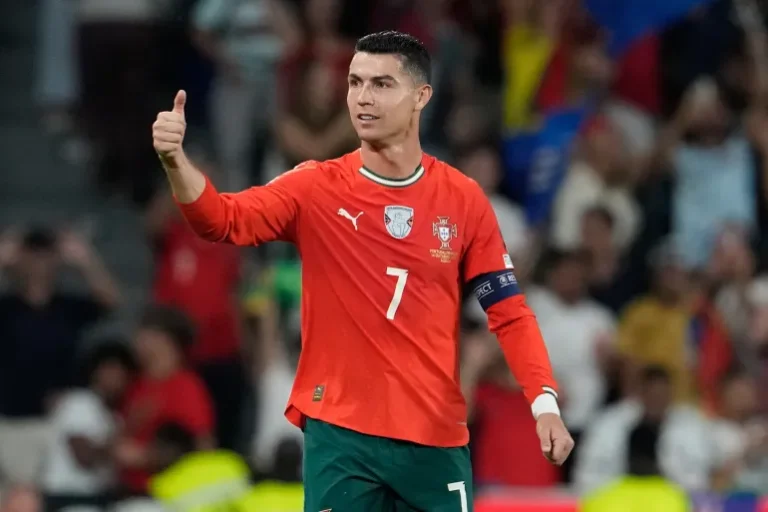
Cristiano Ronaldo. Photo: AP
The five-time Ballon d’Or winner Ronaldo has not been able to win a World Cup title until now. In the knockout stage of the World Cup, he has not been able to score even a single goal. Despite many achievements in club and international football, his World Cup legacy has not been able to shine according to expectations.
Being able to play high-level football even at the age of 41 years is considered almost impossible in the sports world. However, Ronaldo is still continuously scoring goals for the Saudi Arabian club Al-Nassr. He has also not given any indication of taking retirement in the near future.
To take Messi, who made the impossible possible throughout his career, as a player who will bid a quiet farewell could be a big mistake. The football world is still waiting for another wonderful performance from him.
Portugal’s squad is filled with talented players. Young players like Rafael Leão, Pedro Neto, and Gonçalo Ramos are waiting to establish an identity in international football. However, coach Roberto Martínez has still kept Ronaldo at the center of the team. Quite possibly, this will be Ronaldo’s final World Cup and also the final opportunity to win world football’s biggest title. If he can make Portugal the world champion, that achievement will make his historic career even more complete and unforgettable.
Messi, who has played the highest 26 matches in the World Cup, has already neared 39 years. Despite some confusing indications that came in between, he is playing a record sixth World Cup in history. Considered the greatest player in football history, Messi had fulfilled the most unfulfilled dream of his career by steering Argentina to the World Cup title in 2022.
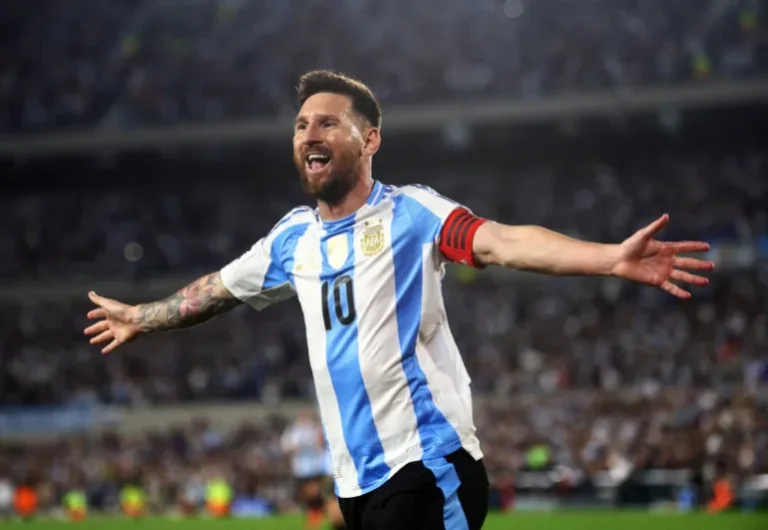
Lionel Messi. Photo: Reuters
Since then, Messi has been associated with the American Major League Soccer (MLS) club Inter Miami. Moving out of European football, he is continuing his playing life in the less competitive but exciting American league. In this process, he is also taking special care of his physical condition.
Even as age progresses, Messi has not stopped playing for Argentina. Crucial goals and assists are still expected from him for the team. Nevertheless, questions are being raised regarding what kind of performance Messi will deliver in this World Cup amid an expanded format, higher number of matches, and expected extreme heat.
To take Messi, who made the impossible possible throughout his career, as a player who will bid a quiet farewell could be a big mistake. The football world is still waiting for another wonderful performance from him.
Mexico’s goalkeeper Ochoa is also preparing to play the World Cup for the sixth time, just like Ronaldo and Messi. He had not, however, received an opportunity to play in 2006 and 2010.
The Fastest Goal Record Left to be Broken
In the 22 editions of the World Cup organized from 1930 to 2022, 964 matches have been played, in which 2,720 goals have been scored. Even so, the record for one goal has not been able to be broken yet. The player holding such a record is Turkey’s famous striker Hakan Şükür. Known as Turkey’s ‘Golden Boy’, he had set the record for the fastest goal in World Cup history by making the ball kiss the net before 11 seconds of the match starting had passed.
In the 2002 World Cup, he had not been able to score a single goal even after spending eight hours and 22 minutes on the field. Following continuous goal-less performances, discussion had intensified that he could be left out of the team’s starting lineup. However, coach Şenol Güneş trusted him in the match held for the third place against South Korea.
Şükür did not take much time to maintain that trust. He created history by scoring a goal in just 10.8 seconds after the match started.
After the match started, the ball had reached South Korea’s captain and defender Hong Myung-bo. But Turkey’s İlhan Mansız snatched the ball immediately. He gave a pass to Şükür. Upon getting the opportunity, Şükür made a calm and precise strike, making the ball kiss the net.
Before many spectators could even get to sit in their seats, the ball had already entered inside the goalpost. With this goal, he broke the 15-second record set by Czechoslovakia’s Václav Mašek in 1962. Even as more than two decades have passed, that goal of Şükür remains intact in the list of the fastest goals in World Cup history.
Opportunity for Messi and Mbappé to break the record
The player who has scored the most goals in world football is Miroslav Klose. His World Cup journey had started in a grand manner in 2002. By scoring a hat-trick in the match against Saudi Arabia, he gave a strong signal of his arrival in world football. After that, Klose led Germany’s attack in four consecutive World Cups.
In 2002, he scored five goals. Four years after that, he added five goals in the tournament held on home soil. Having scored four goals in the 2010 World Cup, he brought his World Cup career to a historic height by scoring two more goals in 2014.
The most memorable moment of Klose’s career was on July 8, 2014. That was his final World Cup. In the historic match where Germany handed a humiliating 7-1 defeat to the host Brazil in the semi-finals of the tournament organized in Brazil, Klose had scored his 16th World Cup goal.
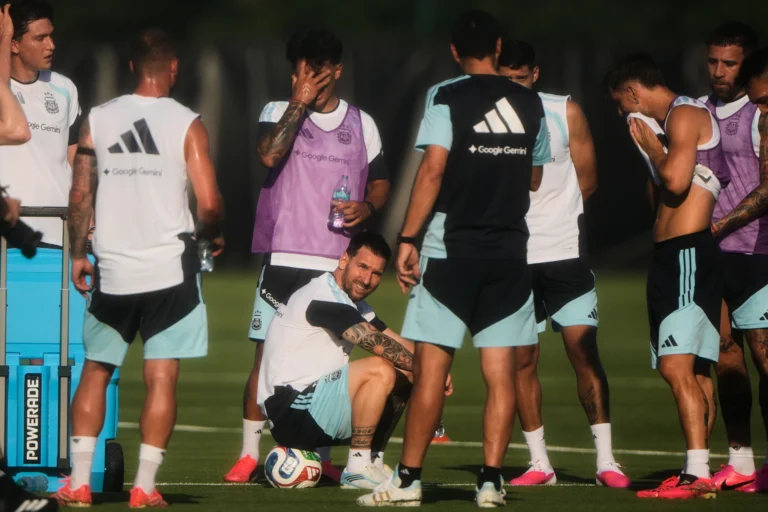
Messi in final preparations for the World Cup. Photo: AP
With that goal, he set the record for the player scoring the highest number of goals in World Cup history. He broke the record of Brazil’s great striker Ronaldo. He had scored 15 goals in the World Cup.
What was special was that when Klose scored his record-breaking goal, Ronaldo himself was present in the stadium’s spectator stands. While the German striker created history, another great goal-scorer of football was watching that moment directly.
Apart from these two, Germany’s Gerd Müller has scored 14 and France’s Just Fontaine has scored 13 goals. All these players have already taken retirement.
Therefore, the opportunity to break Müller’s record has aligned this time for the Argentine captain Lionel Messi and French captain Kylian Mbappé. Messi has already scored 13 and Mbappé has scored 12 goals.