Kathmandu
Wednesday, July 15, 2026





After a controversial ban that reserved state advertisements for government-owned media, Supreme Court struck down the order, restoring private outlets' access to billions of rupees in public advertising
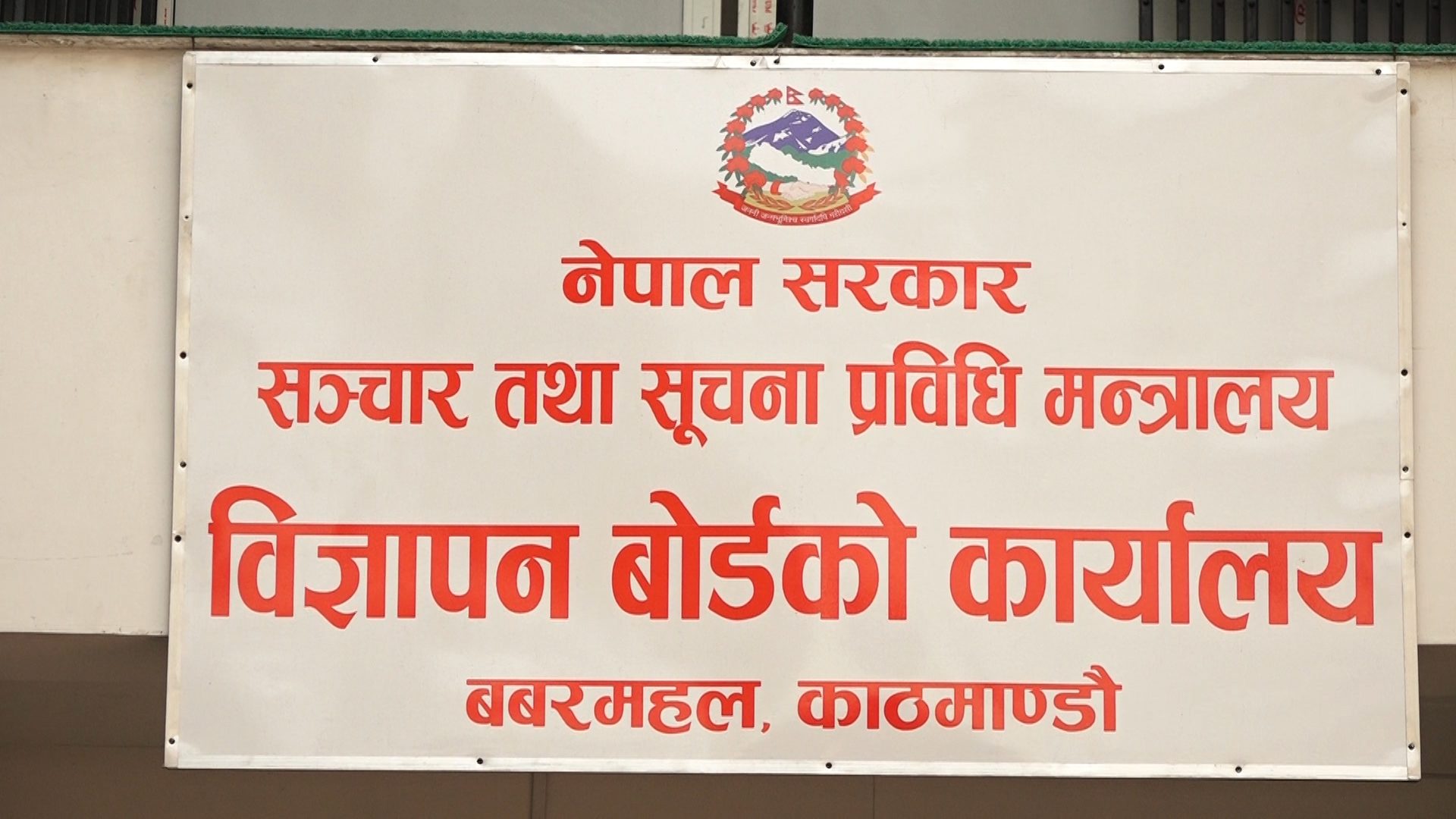
KATHMANDU: Since April 2026, a single administrative circular had barred every government body in Nepal, federal, provincial and local, from advertising anywhere except Gorkhapatra, Radio Nepal and Nepal Television. Communications Minister Bikram Timilsina defended it as a fix for commission-skimming by middlemen. Media owners called it financial strangulation of the private press.
On July 14, judges sided with the media, voiding the order and putting private outlets back in the running for public advertising money. Here’s what the ruling means for the media industry, press freedom and the government’s reform agenda.
What did the Supreme Court actually decide, and how did it decide it?
Two judges, Sharanga Subedi and Nripadhwaj Niraula, sitting together on the bench, threw out the circular entirely rather than modifying it or narrowing its scope. Their instrument for doing so was a writ of certiorari, a legal tool courts use specifically to erase an administrative order as though it had never been valid, not merely to suspend its effect going forward.
That distinction matters here because it means government bodies aren’t just newly permitted to advertise with private media from this point onward; the legal basis for having excluded them in the first place has been wiped out retroactively. What reporters and lawyers didn’t have on the day of the ruling was the bench’s full written reasoning, only the operative order announced in court.
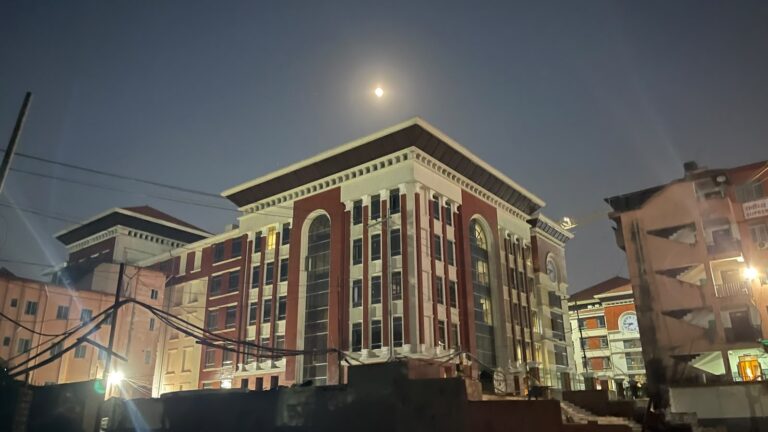
Supreme Court building. Photo: Bhasha Sharma
Nepal’s judicial custom in high-profile cases like this one is to release the detailed judgment days after the short order, so the legal community expected the complete text, spelling out exactly which statutory and constitutional provisions the ban had violated, within roughly forty-eight hours of the July 14 announcement.
What was the government’s April order, precisely, and who did it bind?
Nothing about the April measure was narrow or symbolic. A secretary-level decision inside the Office of the Prime Minister and Council of Ministers translated into a circular sent to every layer of government, federal ministries, provincial administrations, municipal and rural bodies, plus any public institution running on state funds, instructing all of them to route notices and paid advertisements solely through government-owned platforms.
Even the money itself was redirected: rather than paying private outlets or advertising agencies as before, government bodies were told to deposit advertisement payments straight into accounts controlled by Gorkhapatra, Radio Nepal and Nepal Television. There was no grace period built in for outlets that had budgeted around expected government contracts, and no carve-out for local governments that might have wanted to keep advertising through community radio or district papers they’d worked with for years.
The scale of what was cut off, essentially the entire private media industry’s access to one funding stream, is part of why the case escalated to the Supreme Court rather than being resolved through ministry-level negotiation.
Before April, how was government advertising supposed to be divided among media outlets?
Nepal’s advertising law never left this to ministerial whim. The Advertisement Regulation Act created an eight-member Advertisement Board, sitting under the Communications Ministry, and gave it the specific job of splitting government advertising money among media houses on a proportional basis, factoring in things like reach, circulation and category rather than political preference.
This board’s authority wasn’t optional or advisory; the statute treats proportional distribution as something media outlets are entitled to, not a courtesy the executive can withdraw. That legal architecture is exactly what the petitioners leaned on in court, telling judges that no circular from the Prime Minister’s Office could lawfully strip the Board of a distribution power the legislature had assigned to it.
In theory, this meant that before April, a small district newspaper and a national broadcaster were both eligible to receive a share of public advertising, calculated through Board-supervised formulas, even though critics had long complained that implementation on the ground was inconsistent and vulnerable to manipulation by whoever controlled the paperwork.
What reasoning has Minister Bikram Timilsina offered for cutting private media out?
Timilsina’s public defense has consistently centered on money disappearing into middlemen’s pockets rather than reaching journalists or the state treasury. Speaking to a delegation from the Federation of Nepali Journalists, he said plainly that government advertising funds had been widely misused under the old arrangement, with brokers extracting value while working reporters saw little benefit.
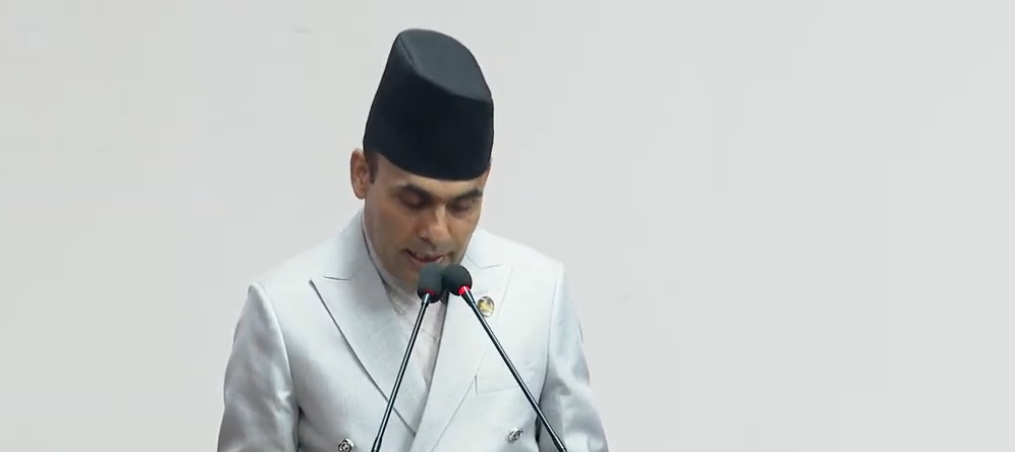
Communication and Information Technology Minister Bikram Timilsina
On a separate occasion, addressing lawmakers directly, he pushed the point further, arguing that public money entrusted by taxpayers shouldn’t be siphoned off by outlets whose main function seemed to be capturing advertising and grants rather than serving any real public purpose, and he called for a serious evaluation of which media organizations were actually contributing something worthwhile in exchange for state money.
Government officials close to the Prime Minister’s Secretariat backed this framing with a specific trigger: an investigative report published by a daily newspaper on advertising irregularities reportedly prompted an internal study that fed directly into the April decision. Throughout, Timilsina has insisted the goal was never to silence anyone, only to make distribution “systematic” and to end what he called undue, access-based favoritism in who got advertising.
On what legal grounds did the Nepal Media Society challenge the ban?
The Society’s lawyers built a two-pronged case, one statutory and one constitutional. Statutorily, they argued the government’s move amounted to financial pressure deliberately applied to weaken private outlets, pointing to the Advertisement Act’s proportional-distribution guarantee as a right the executive simply couldn’t override through internal circular, and insisting that the Advertisement Board, not the Prime Minister’s Office, held the legal authority to decide who received what share of public advertising.
A second, less obvious argument concerned Nepal’s federal structure: counsel told the bench that provincial and local governments have their own constitutionally recognized authority over communication and outreach spending, meaning a directive issued centrally from Kathmandu had no business dictating how a municipality in, say, Madhesh Province chose to publicize its own tenders.
Layered on top of these technical arguments was a broader constitutional claim, that excluding an entire category of privately owned media from state advertising functioned as an indirect attack on press freedom, since concentrating advertising revenue exclusively in state hands gives the government leverage over which outlets can survive financially, regardless of editorial content.

Photo courtesy: PMO
What is the actual size of Nepal’s government advertising market in money terms?
Estimates differ depending on which body produced them and what year they cover, but none of them are small. One frequently quoted figure puts the government’s overall annual advertising allocation at roughly Rs 10.39 billion, a number attributed to the state’s own Advertising Board, which is responsible for regulating how that money moves.
A more granular breakdown, produced through Board-linked research, separated this by medium: print advertising alone was valued at about Rs 8.5 billion before standard discounts were applied, dropping to roughly Rs 3.5 billion once discounts were factored in, while broadcast media accounted for far smaller pre-discount totals, close to Rs 97.8 million for radio and Rs 91.75 million for television.
A separate, narrower estimate specifically tied to alleged financial leakage put the “vanishing” portion of government advertising spending at around Rs 3.25 billion annually. Whichever number one anchors to, the underlying reality is the same: this is a market large enough that a policy shift redirecting it entirely toward three state outlets represents a serious redistribution of resources across the whole media economy.
What specific corrupt practices did critics say plagued the pre-April system?
The most commonly cited problem was a mismatch between what media outlets billed and what advertising agencies then charged the government for the same space. Under that arrangement, a newspaper might invoice an agency at one rate, while the agency turned around and billed the relevant government office at a considerably higher rate, pocketing the difference as commission with little transparency about where the gap actually went.
A government source described this dynamic starkly: agencies functioning as brokers were extracting large commissions while, in the source’s words, neither the state paying for the advertisement nor the media house running it ever saw the corresponding benefit. Independent research backed this up with concrete figures.
One study found that although advertisements nominally worth close to Rs 3.84 billion were placed in private media, the outlets themselves ended up collecting only Rs 50 to 60 million of that total, meaning something in the range of Rs 3.5 billion effectively evaporated somewhere between the government’s payment and the media’s bank account.
Separately, Gorkhapatra alone was found to be pulling in roughly Rs 1 billion a year in government advertising, illustrating how lopsided the distribution already was well before private media was cut out entirely.
How did the private media industry initially react when the ban was announced in April?
The backlash was immediate and fairly unified in tone, if not entirely in substance. The Federation of Nepali Journalists framed the decision as effectively an economic assault on the press at a moment when the industry was already under financial strain, warning that pulling advertising revenue away, rather than offering support during a downturn, put small radio and television operators at particular risk of shutting down, especially in rural areas that depend heavily on locally sold advertising.
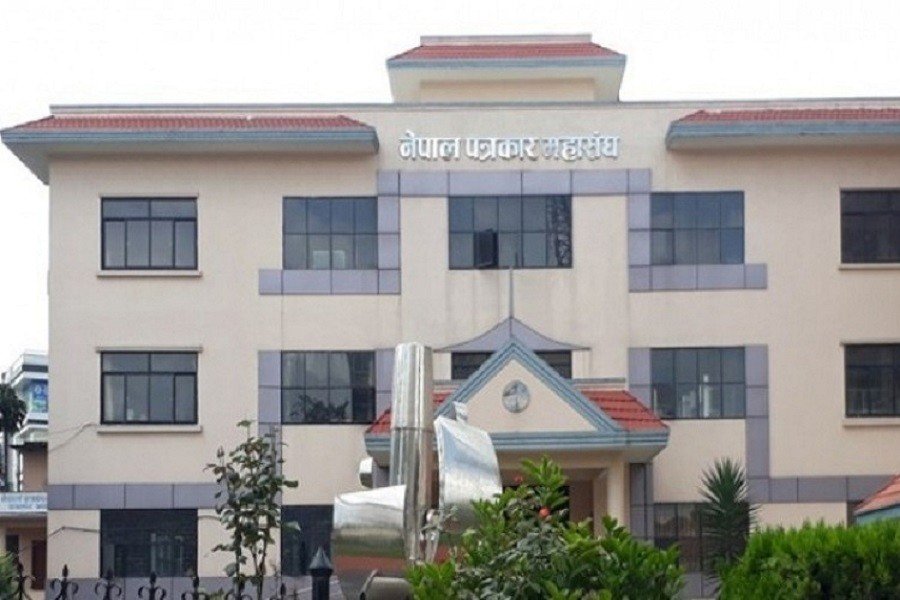
Senior newspaper editors used equally sharp language; one veteran editor and former Press Council chairman called the move an “economic blockade,” arguing it trampled on a constitutionally protected right to information rather than addressing any actual wrongdoing.
Analysts covering the fallout pointed to a deeper structural risk too: because private commercial advertising in Nepal skews heavily urban and is dominated by a handful of large firms, smaller outlets outside major cities had comparatively few alternative revenue sources to fall back on once government advertising disappeared, making the policy’s damage uneven across the industry rather than spread evenly.
Did every private media outlet actually oppose the government’s decision?
Not at all, and this internal split turned out to be one of the more consequential threads of the whole episode. While many small and regional papers described themselves as facing genuine survival threats, Kantipur Media Group, by far Nepal’s largest media house, publicly endorsed the government’s move, framing it as the collapse of a corrupt distribution system rather than an attack on the press. That disagreement wasn’t just rhetorical.
When the Nepal Media Society, of which Kantipur had been a founding member, moved to file its writ petition against the government, Kantipur pulled out of the Society’s legal effort altogether, with its chief executive stating the company simply didn’t agree with challenging the government in court over this issue. Then KMG Managing Director Sambhav Sirohiya had welcomed the government’s decision, saying it dismantled what he called a corrupt government advertising system. He had said Kantipur Media Group did not rely on state advertisements and would continue operating without them.
The split reflected differing financial exposure more than differing principles: a media conglomerate with diverse private-sector advertising clients had comparatively little to lose from forgoing government notices, unlike smaller outlets for which those notices were often a primary income source, and that asymmetry shaped how differently companies across the industry responded to the same policy.
Did media companies try fixing the underlying corruption themselves, rather than only fighting the ban in court?
Yes, and one case in particular suggests parts of the industry accepted that the corruption critique had genuine merit even while rejecting a blanket ban as the remedy. Nagarik Daily, published by Nepal Republic Media, introduced a self-imposed billing reform under which it pledged to invoice the government for exactly the amount it actually received, nothing more, specifically to close the gap that had allowed agencies to bill inflated rates while paying media houses far less.
Government offices at every level, federal ministries, provincial secretariats, municipal and rural bodies, are once again permitted, and in a sense required, to consider private outlets when placing official advertisements, since the legal basis for excluding them has been erased.
As part of the same push, the paper slashed its published advertising rate sharply, and the company estimated that if similar reforms spread industry-wide, the roughly five-billion-rupee government advertising market could shrink meaningfully once inflated middleman billing was eliminated, freeing up public money that could instead fund infrastructure or other capital spending.
Critics of the April ban pointed to this kind of voluntary reform as proof that targeted transparency measures, rather than excluding an entire category of media outright, could have addressed the same problem the government cited as its justification.
What is the National Advertisement Policy 2026, and how does it connect to this case?
Roughly two weeks before the court’s ruling, and seemingly running on a separate but parallel track, the Cabinet approved a much broader overhaul of how advertising is regulated in Nepal altogether. This new policy extends well past the government-advertising dispute, bringing digital platforms, social media influencers and AI-generated advertisements under regulatory oversight for the first time, with the stated goal of making the whole sector more transparent, accountable and competitive.
On the specific question of state advertising, the policy commits to building an integrated digital system meant to track and make transparent how advertisement money is allocated and paid out, while directing that local-level notices go through media operating at that same local level, and promising that public-interest advertising be spread out fairly rather than concentrated.
It also proposes giving the Advertisement Board more independence and resources, alongside new provincial and municipal oversight committees. As this policy was approved so close to the court’s verdict, the government now effectively has to build out this more elaborate reform structure within a system the ruling has forced back open to private media.
Practically speaking, what changes now, and what happens next?
Government offices at every level, federal ministries, provincial secretariats, municipal and rural bodies, are once again permitted, and in a sense required, to consider private outlets when placing official advertisements, since the legal basis for excluding them has been erased. This doesn’t automatically restore things exactly as they were before April; how quickly individual ministries resume the practice, and whether the Advertisement Board reasserts its proportional-distribution role immediately or gradually, will depend partly on administrative follow-through rather than the ruling alone.
The detailed written judgment, once published, will carry real weight going forward, since it will lay out precisely which constitutional and statutory grounds the bench relied on, shaping how much room the government retains to design future advertising rules without repeating the same legal mistake.
It remains possible, in principle, for the government to pursue the same underlying goal, reducing state media spending in private outlets, through more carefully drafted policy rather than an outright ban, so continued scrutiny from the Federation of Nepali Journalists, the Media Society and the Advertisement Board is likely in the months ahead.
What does this ruling mean for how much control local and provincial governments have over their own advertising?
This piece of the case reaches beyond press freedom into Nepal’s federal power-sharing arrangement. The petitioners specifically told the court that a directive issued from the Prime Minister’s Office in Kathmandu had no business overriding the separate constitutional authority that provincial and local governments hold over their own communications spending, since federalism was designed precisely to let those lower tiers manage matters like public outreach independently.
1656849566.jpeg)
By nullifying a circular that bound every level of government uniformly, the court’s decision reinforces the principle that a single centrally issued administrative order cannot dictate how a municipality or province spends its own advertising budget or which outlets it chooses to work with.
This has concrete stakes for smaller media: local governments are often the primary advertising clients for district-level newspapers and community radio stations that rarely, if ever, receive advertising directly from federal ministries, so protecting that layer of independence matters as much to those outlets’ survival as the ruling’s more headline-grabbing implications for national press freedom.
Would the ban have hurt small, regional media differently than large national outlets?
Considerably, and this asymmetry is central to understanding why the private sector’s reaction wasn’t uniform. Nepal’s media landscape includes more than 800 outlets, spanning major national newspapers down to small-town FM stations, but private commercial advertising money concentrates heavily in cities and flows mostly to a handful of large companies, leaving mid-sized and small outlets with comparatively few stable income alternatives beyond government notices.
For those smaller organizations, losing government advertising wasn’t a matter of trimming margins, it threatened outright closure, which is part of why the April ban, whatever its stated anti-corruption purpose, risked accelerating consolidation in an industry that was already tilted toward a few dominant players.
Stepping back, what does this whole episode suggest about press freedom and governance in Nepal going forward?
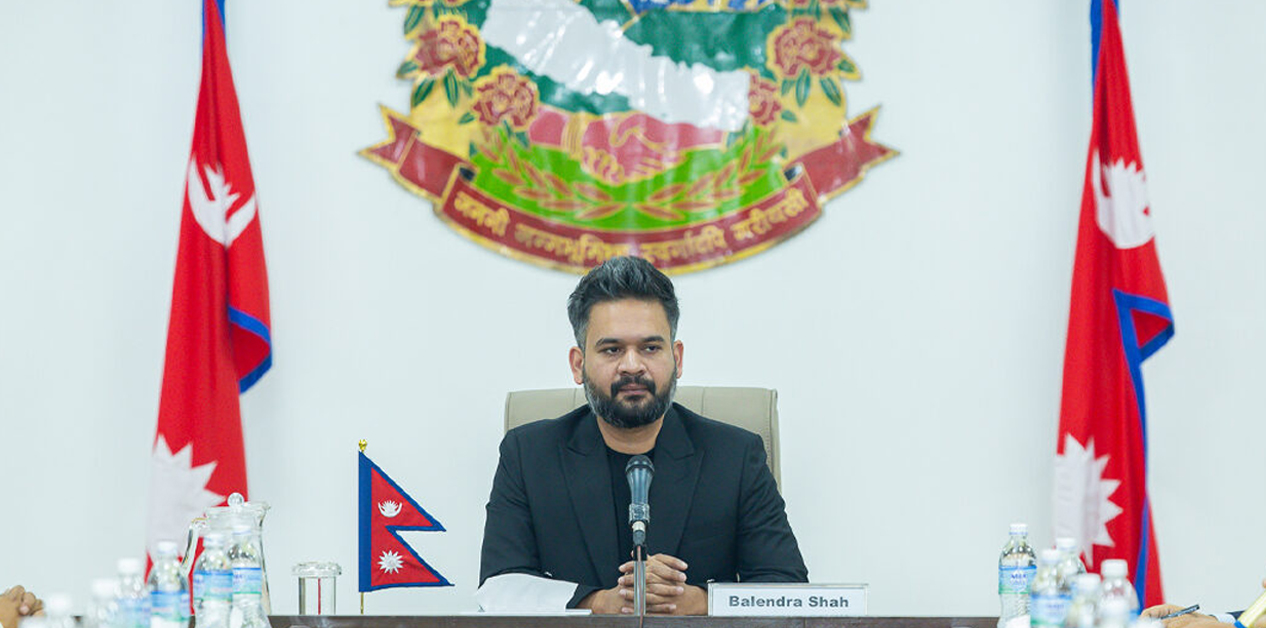
The case functions as an early stress test of how far the Balendra Shah government’s executive decisions can go before running into judicial and constitutional limits. Winning at the Supreme Court confirms that even a policy framed around a legitimate anti-corruption goal cannot lawfully bypass statutory guarantees like proportional advertisement distribution, nor can it ignore the constitutional division of authority between federal, provincial and local governments.
Observers have described the ruling as meaningful for press freedom specifically because it restores access to a funding channel that many outlets, particularly smaller, financially fragile ones, rely on to stay independent of any single patron, state or private.
What the verdict doesn’t resolve, though, is the underlying problem that started this whole dispute: the commissions taken by intermediary agencies, the wide gap between what government pays and what media actually receives, and unanswered questions about which outlets genuinely serve the public rather than simply chasing state money.
Whether the government follows through on the National Advertisement Policy 2026’s promises of a transparent digital tracking system and a stronger, more independent Advertisement Board will determine whether this ruling produces lasting reform, or simply restores the same flawed system that existed before April, corruption included.

![Kathmandu municipal police return to duty after security concerns [Photo Feature]](https://english.nepalnews.com/wp-content/uploads/2026/07/city-police-5.jpg)