Kathmandu
Wednesday, June 24, 2026





A former JPMorgan executive filed a high-profile lawsuit in New York alleging a "predatory" workplace environment, claiming he was subjected to sexual assault, racial harassment, and professional coercion by a senior female director.
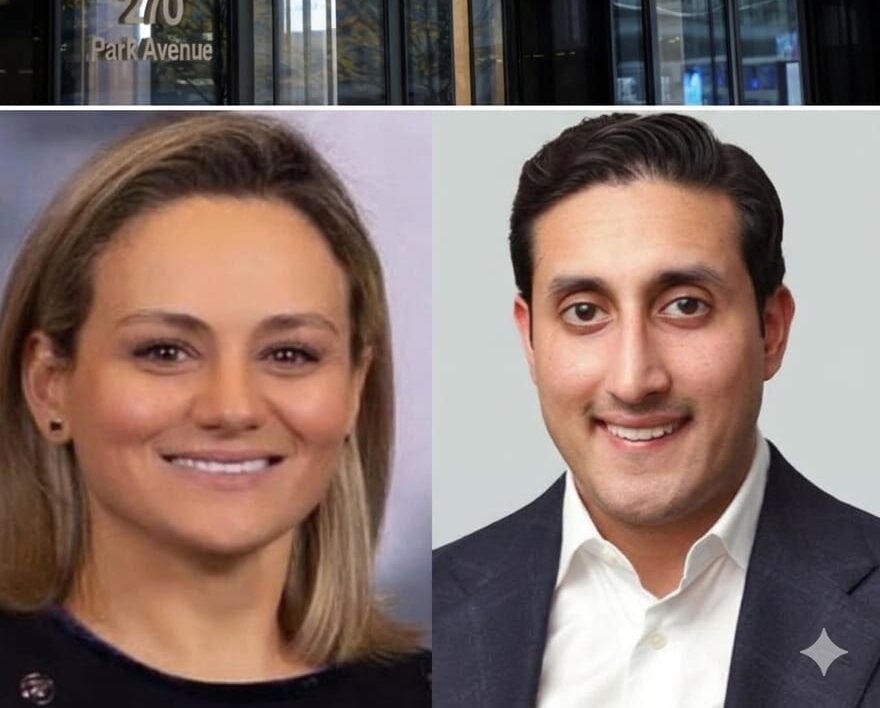
KATHMANDU: A 35-year-old Nepali-American investment banker named Chirayu Rana has set Wall Street on fire with a civil lawsuit that inverts the familiar story of workplace power and abuse. Rana, a former senior vice president in JPMorgan Chase’s leveraged finance division, accuses a senior female colleague — Lorna Hajdini, 37, an executive director at the same bank — of sexual assault, racial harassment, drugging, and career coercion.
He says she repeatedly forced him into sexual encounters, threatened to destroy his career if he resisted, and routinely referred to him with racial slurs tied to his South Asian identity. Hajdini has denied every single allegation and calls the entire lawsuit fabricated.
JPMorgan ran an internal investigation and reached the same conclusion. But the bank still quietly offered Rana a $1 million settlement in March 2026, which he rejected in favor of demanding $11.75 million.
When negotiations collapsed, Rana filed in New York County Supreme Court under the pseudonym “John Doe.” The New York Post unmasked him. The lawsuit went globally viral, AI-generated videos depicting the alleged incidents spread across social media, and the story has since drawn in everyone from podcasters to prime-time journalists.
As of 10 p.m. on May 8, 2026 (Nepal Standard Time), the case remains active in the New York court system, with witnesses having come forward, while the settlement gap is still unresolved.
These are the latest facts we have as of this writing. The case is live, developing, and no court has yet tested these allegations on the merits.
Who exactly is Chirayu Rana — what kind of person was he before all of this?
Chirayu Rana is not some anonymous junior analyst who wandered into a high-profile scandal. He is a finance professional with a genuinely impressive career arc built across more than a decade on Wall Street.
He grew up in Vienna, Virginia, the son of Nepali immigrants — his father’s name is Chaitanya Rana — and attended Rutgers University in New Jersey, where he studied finance and played collegiate soccer as a midfielder.
From there, he built a résumé that would make any ambitious twenty-something jealous: analyst and associate roles at Credit Suisse’s M&A division, a stint at the elite private equity firm The Carlyle Group in their Strategic Credit Solutions Group, then Morgan Stanley Investment Management where he focused on private credit, and eventually JPMorgan Chase’s leveraged finance team, which he joined in May 2024 as a senior vice president — not a junior position.
His work concentrated on originating and underwriting sponsor-backed credit deals in the software and technology sectors. After JPMorgan, he moved to Bregal Sagemount, a New York-based private equity firm, as a principal.
He reportedly left that role on April 2, 2026 — just weeks before filing the lawsuit. His surname, Rana, carries historical weight in Nepal, associated with an aristocratic lineage prominent in the country’s military and upper-class society.
Before the scandal, he was known professionally for deal-making, not controversy.
Who is Lorna Hajdini and why does her position matter to this case?
Lorna Hajdini is a 37-year-old banking executive who has worked at JPMorgan Chase since the early 2010s, steadily climbing from analyst roles to vice president and eventually to executive director in the bank’s leveraged finance division — a title that carries real authority inside one of America’s most powerful financial institutions.

Lorna Hajdini
She completed the Private Equity and Venture Capital program at Harvard Business School’s executive education track, suggesting she is not only institutionally embedded but academically credentialed.
Her position matters to this case for a complicated reason: Rana and Hajdini did not share the same direct reporting line.
According to the New York Post, Hajdini reported to managing director Brandon Graffeo, while Rana reported to a different managing director, Jon Wolter. This organizational detail is central to JPMorgan’s defense — the bank argues she had no formal authority over his salary, promotions, or performance reviews, which would undercut his claim that she could realistically threaten his career.
But Rana’s legal team counters that institutional seniority and social capital in a place like JPMorgan can translate into real power regardless of org chart lines. Hajdini has flatly denied every allegation, with her lawyers stating she was never even present at the locations described in the lawsuit and never had any physical encounter with Rana of any nature whatsoever.

Harvard Business School
What exactly does Rana accuse Hajdini of doing — what are the specific allegations in the lawsuit?
The lawsuit, filed in New York County Supreme Court, contains allegations that are graphic even by the already-lurid standards of workplace harassment litigation. Rana claims Hajdini began making unwelcome sexual advances shortly after they started working together in spring 2024, escalating from inappropriate physical contact and explicit comments into what he describes as repeated sexual assault.
He alleges she drugged him on at least one occasion — reports reference both Rohypnol, a sedative commonly called a date-rape drug, and Viagra — and that she forced him into degrading sexual encounters while threatening his career if he refused or resisted. According to the court filing, she allegedly said things like “If you don’t sleep with me soon, I’m going to ruin you — never forget, I own you” and threatened to sabotage his promotions if he didn’t comply.
He also claims she subjected him to sustained racial harassment, referring to him with slurs connected to his South Asian background throughout their working relationship — in one reported instance allegedly calling his wife an “Asian fish head.”
Rana further alleges that the bank retaliated against him after he filed an internal HR complaint in May 2025 by placing him on paid leave and effectively sidelining him while conducting an investigation that, from his perspective, was designed to protect Hajdini rather than uncover the truth.
He says the cumulative experience left him with diagnosed post-traumatic stress disorder.
What has JPMorgan said about all this, and how credible is their defense?
JPMorgan’s position has been consistent from the start: it says it conducted a thorough internal investigation involving multiple employees and found no merit in Rana’s allegations.
The bank reviewed emails, phone records, and witness accounts — and concluded that the evidence simply did not corroborate what Rana claimed. One particularly significant detail JPMorgan has cited is that Rana himself allegedly did not fully cooperate with the investigation, which they say hampered its ability to validate anything.
JPMorgan
The bank’s official statement also noted that its offer to settle for $1 million was not an admission of wrongdoing but rather an attempt to avoid the cost and reputational damage of prolonged litigation — a perfectly standard legal strategy used by large corporations constantly, even in cases they believe they would win.
Hajdini’s lawyers have gone further, stating she has never been to the locations where the alleged assaults supposedly occurred. Whether JPMorgan’s internal review was genuinely rigorous or strategically contained is something the court will eventually need to examine.
Corporate internal investigations have a well-documented track record of producing findings that protect the company rather than victims — but equally, they sometimes correctly conclude that allegations lack support.
The credibility of JPMorgan’s defense will ultimately be tested by discovery, witness depositions, and the production of documentary evidence under court supervision, which is a very different environment from a company-run HR probe.
Why did the case go viral, and what is the broader social context that explains the public reaction?
The case exploded on social media for several overlapping reasons that each, on their own, would generate interest — but together created something close to a cultural wildfire.
First, the gender reversal alone was enough to grab attention: a man accusing a woman of sexual assault and career coercion flips the usual script in a way that many people found either refreshing, suspicious, or deeply revealing depending on their existing priors.
Second, the lawsuit’s language was extraordinarily graphic for a court document — detailed descriptions of sexual acts, alleged drugging, and quoted threats created the kind of material that is almost impossible not to share online.
Third, the allegations unfolded inside JPMorgan Chase, which is not just a bank but a globally recognized symbol of elite financial power, making the story feel like a window into a world most people never see.
Fourth, and perhaps most significantly, AI-generated videos dramatizing scenes described in the lawsuit spread rapidly across X and Instagram — blurring the line between allegation, animation, and apparent reality for millions of casual viewers who may not have read the actual filing.
Podcasters like Joe Rogan weighed in questioning Rana’s credibility, adding yet another layer of tribal debate. And for the Nepali diaspora in particular, the story touched raw nerves about navigating racial identity in overwhelmingly white professional environments — Rana’s South Asian background made the racial harassment allegations personal for many readers following from Kathmandu.
What are the credibility problems that have emerged on Rana’s side?
While the spotlight has burned hottest on the allegations themselves, several counter-narratives have emerged that raise serious questions about Rana’s own reliability as a witness. The most striking involves bereavement leave: in mid-December 2024, Rana allegedly told JPMorgan supervisors that his father had died, and proceeded to string together bereavement leave with other paid time off to accumulate nearly three months away from work.
The New York Post tracked down his father, Chaitanya Rana, at the family home in Vienna, Virginia — and he was alive. When reached, the elder Rana said he had no knowledge of any legal case or death claim connected to his son.
“I don’t know anything about it. He’s my son. He’s a good guy,” was his full comment to the paper. Separately, reports surfaced suggesting Rana had consulted an AI legal chatbot with allegations that bore similarities to his JPMorgan claims — but directed at a male supervisor at Morgan Stanley, an earlier employer — before filing his lawsuit.
Critics have seized on this as evidence that the complaint may have been constructed, not experienced. There is also the matter of his employment record: he was reportedly “managed out” of a prior firm, MidCap Financial, an Apollo affiliate, over performance concerns after about six months.
His overall pattern of short tenures across five firms in roughly twelve years has been cited as context, though job-hopping alone proves nothing about the veracity of his claims.
Where does the court case actually stand right now, and what happens next procedurally?
As of May 8, 2026, the lawsuit is active in the New York County Supreme Court. The procedural path has not been straightforward: the original filing was briefly withdrawn last week — not voluntarily in the conventional sense, but because the court clerk flagged that filing under a pseudonym required judicial sign-off.
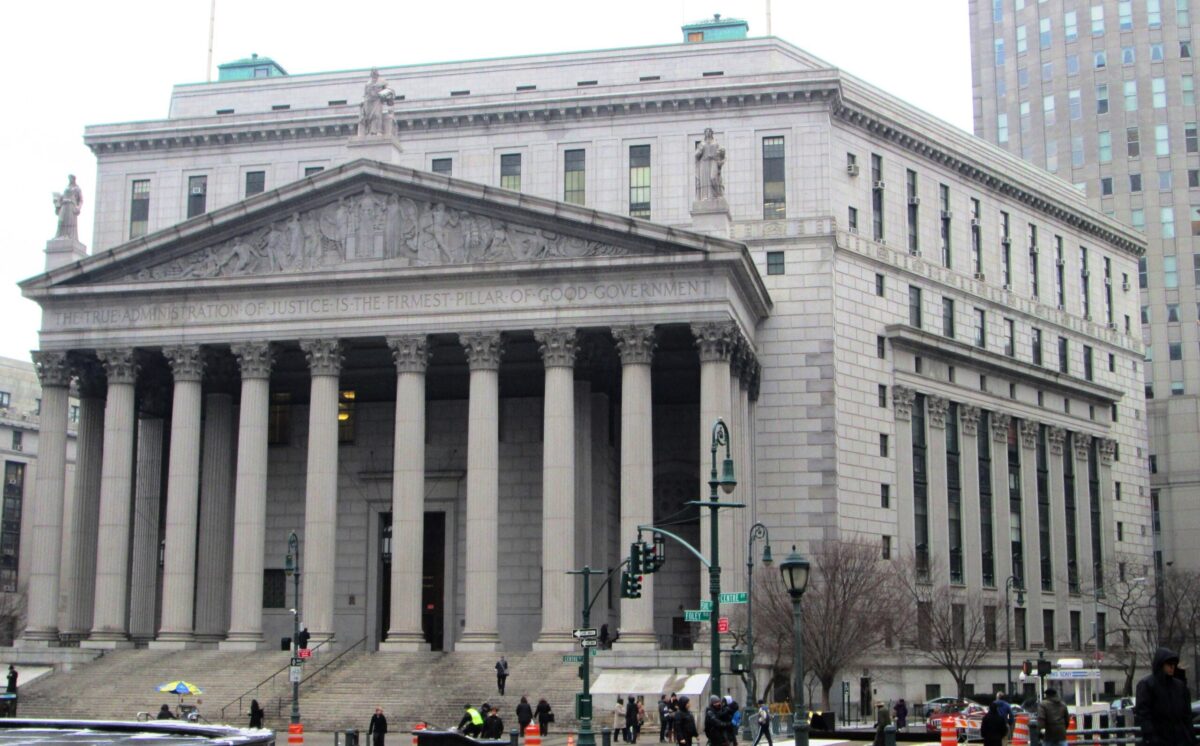
New York County Supreme Court
Once a judge formally approved the John Doe designation, the complaint was refiled. The amended version filed this week is reportedly more substantial than the original: it includes sworn witness affirmations from at least two individuals, new factual claims Rana says strengthen his case, and medical documentation — presumably the PTSD diagnosis he has referenced.
Neither Hajdini nor her legal team had publicly responded to the new witness claims as of Tuesday. From here, the standard procedural sequence would involve JPMorgan and Hajdini filing their formal answer to the complaint, after which the case enters discovery — the phase where each side compels the other to produce documents, communications, and testimony under oath.
Discovery in a case like this involving a bank with extensive digital records could be extensive and revelatory.
A trial, if the case gets that far, remains a considerable distance away. Settlement negotiations, given the wide gap between $1 million and $11.75 million, could resume at any point.
What does U.S. law actually say about male victims of sexual harassment in the workplace?
American law offers clear and equal protection to male victims of workplace sexual harassment — a fact that often surprises people unfamiliar with the statutory framework, since most public discourse about workplace harassment has historically centered on women as victims.
Title VII of the Civil Rights Act of 1964 is the foundational federal law. It prohibits sex-based discrimination and harassment in any workplace with fifteen or more employees, and it explicitly applies regardless of the gender of either the victim or the perpetrator.
A woman can sexually harass a man. A man can sexually harass another man. The law does not require that victim and harasser be of different genders. In New York, two additional layers of protection apply.
The New York State Human Rights Law covers employers of any size, removing the fifteen-employee threshold that limits Title VII. The New York City Human Rights Law goes even further — often considered one of the most expansive anti-discrimination statutes in the country — covering employers with as few as four workers and offering broader definitions of what constitutes a hostile work environment.
The legal theory Rana appears to be pursuing combines quid pro quo harassment, where compliance with sexual demands is tied to career outcomes, with hostile work environment claims and retaliation for reporting.
If proven, each of these independently constitutes an actionable violation. The 2022 federal Ending Forced Arbitration of Sexual Assault and Sexual Harassment Act also matters here: it bars companies from forcing harassment claims into private arbitration, meaning Rana had the right to pursue his case publicly in court regardless of any arbitration clause in his employment contract.
If Rana’s allegations turn out to be true, what could he actually win?
If a jury finds in Rana’s favor, the potential damages framework is multi-layered and could be substantial. Under Title VII and its companion New York statutes, he would first be entitled to compensatory damages — money designed to make him whole for actual losses he suffered.
This includes back pay for income he lost, front pay for future earnings his career trajectory would have produced had the harassment not occurred, and compensation for documented emotional distress such as the PTSD he claims. Beyond compensatory damages, New York law in particular allows courts to award punitive damages in cases where the defendant’s conduct is found to be willful, malicious, or recklessly indifferent to the plaintiff’s legal rights — which, if the allegations are believed, they clearly were.
Punitive damages can multiply a verdict significantly, and in a case involving one of the world’s largest banks, juries have been known to make statements. Rana would also be entitled to attorneys’ fees and court costs if he prevails, a feature of harassment law designed to incentivize attorneys to take cases on contingency.
His PTSD diagnosis, if medically corroborated, adds an additional category of compensable harm. The counter-demand of $11.75 million is not arbitrary — it presumably represents a calculation of lost earnings from the JPMorgan role, diminished career trajectory, medical treatment costs, emotional distress, and some anticipation of punitive exposure. Whether a jury would award anywhere near that figure is impossible to predict.
Are there precedents — similar cases where a male employee sued a female superior for sexual harassment?
Male-accuses-female workplace harassment cases are far less common in the litigation record but are by no means legally unprecedented.
The 1998 U.S. Supreme Court case Oncale v. Sundowner Offshore Services definitively settled the question of same-sex harassment, ruling that Title VII reaches all forms of sex-based harassment regardless of gender combination. That same logic extends to opposite-sex cases where women are perpetrators.
In finance specifically, there have been prior cases where the gender script was scrambled. The history of Wall Street harassment litigation is largely a story of women suing men — the “Boom Boom Room” case at Smith Barney in the 1990s, the Goldman Sachs class action involving gender discrimination — but courts have increasingly seen cases where male employees claim hostile environments created by female superiors or colleagues.
What makes the Rana case unusual is not the legal theory but the level of specificity, the institutional prominence of the employer, the settlement negotiation that became public, and the social media amplification that transformed a civil filing into a global news event.
The closest cultural analog people have reached for is a gender-reversed version of the Anita Hill hearings or a male equivalent of the MeToo wave — but neither comparison quite fits, because this is a civil lawsuit between two private parties rather than a public accountability moment with an accused in a position of public trust.
What is the significance of the $1 million settlement offer — does it prove anything?
This is one of the most legally and rhetorically charged aspects of the entire story. JPMorgan’s decision to offer Rana $1 million through weeks of mediation in March 2026 — before the lawsuit was even filed publicly — has been interpreted very differently depending on which side of the debate you inhabit.
Settlement skeptics correctly point out that large institutions settle cases all the time precisely because litigation is expensive, time-consuming, and reputationally disruptive, even when the underlying claims are entirely without merit.
JPMorgan itself said as much in its public statement, noting that the settlement attempt was aimed at “avoiding the time and expense of litigation.” However, one million dollars is not a rounding error even for a bank of JPMorgan’s scale.
It is a figure that requires internal approval, legal sign-off, and the kind of deliberate institutional decision-making that does not happen casually. Critics of JPMorgan’s position argue that institutions do not write seven-figure checks purely as a cost-avoidance measure when they are genuinely and completely certain the claims are fabricated — the risk-benefit calculus simply does not work that way.
Legally, a settlement offer is not admissible as evidence of liability under Federal Rule of Evidence 408, which means Rana’s attorneys cannot walk into a courtroom and say “they offered a million, therefore they knew they were guilty.”
But in the court of public opinion, where this case is also very much being tried, the settlement offer continues to generate scrutiny that is difficult for JPMorgan to simply wave away.
What does this case mean for the future of workplace harassment law and culture on Wall Street?
The Rana-Hajdini case, whatever its ultimate outcome, has already cracked open conversations that Wall Street has preferred to keep sealed.

Wall Street
For decades, the financial industry managed its harassment problems through confidential settlements, mandatory arbitration clauses, and non-disclosure agreements that made it structurally impossible for patterns of misconduct to become publicly visible.
The 2022 federal law ending forced arbitration for sexual harassment and assault claims removed one of those structural barriers, and this case is arriving in a legal landscape where those claims must now be allowed into public court.
The gender reversal of the case has done something unexpected: it has drawn in constituencies who were previously skeptical of or indifferent to harassment law — men who see Rana’s story as proof that the system can be used against them, and women who see either a legitimate victim or a potentially cynical weaponization of feminist legal infrastructure.
Either reading, if it motivates more careful thinking about how power actually works in elite financial environments, may produce something useful. The broader institutional lesson, regardless of who is telling the truth, is that the culture of leveraged finance — high-stakes, high-pressure, tightly hierarchical, intensely private, and rich enough to buy silence — creates conditions where abuse of any kind can flourish.
Courts, regulators, and the public are now paying closer attention than they were twelve months ago. That shift, at minimum, has already happened.




![Ministers and party leaders join dancing and singing inside convention hall ahead of election [Photo Feature]](https://english.nepalnews.com/wp-content/uploads/2026/06/Rasopa-general-convention-day-4-Nepal-photo-library-12.jpg)