Kathmandu
Saturday, July 18, 2026





In Biratnagar’s nearby Kathari, the Rajbanshi community celebrates the Siruwa festival with water, mud, and color, honoring nature, renewing cultural bonds, and passing an ancestral reverence for the earth to a new generation.
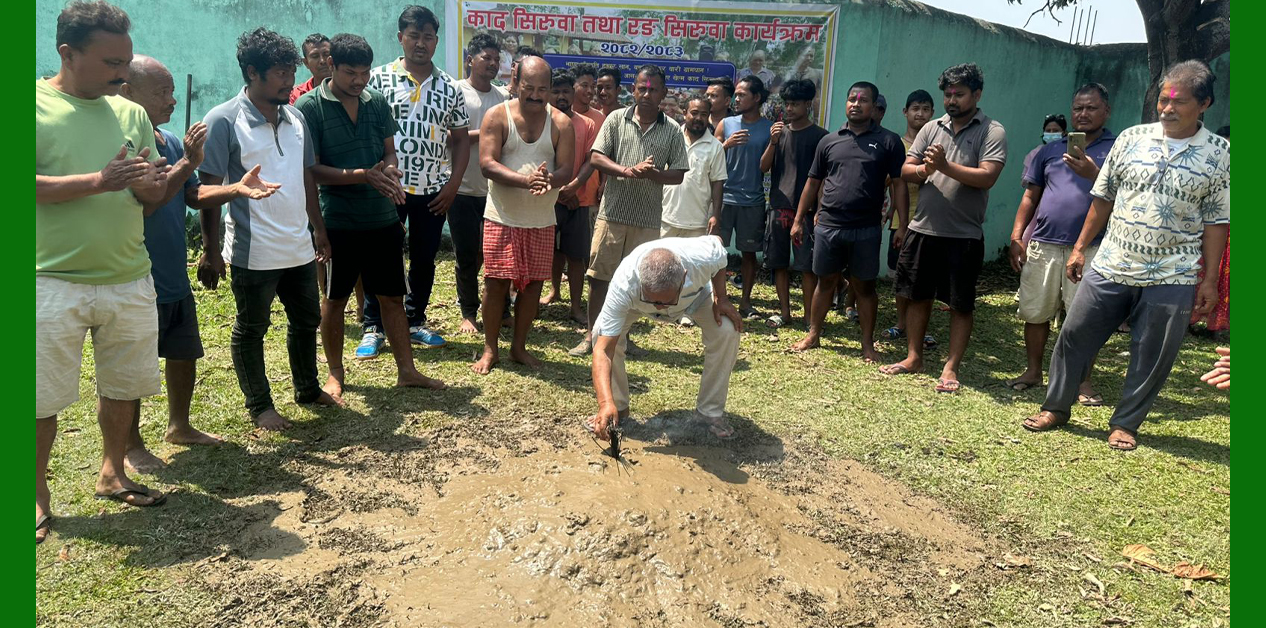
BIRATNAGAR. Young people digging at the earth with spades. Others busy connecting a pipe to turn the same soil into mud. A little further off, women preparing traditional snacks and chatting with each other. This was the scene on Monday afternoon in front of the Gramthan, the sacred community shrine of the Rajbanshi people, in Katahari Rural Municipality-3, Morang.
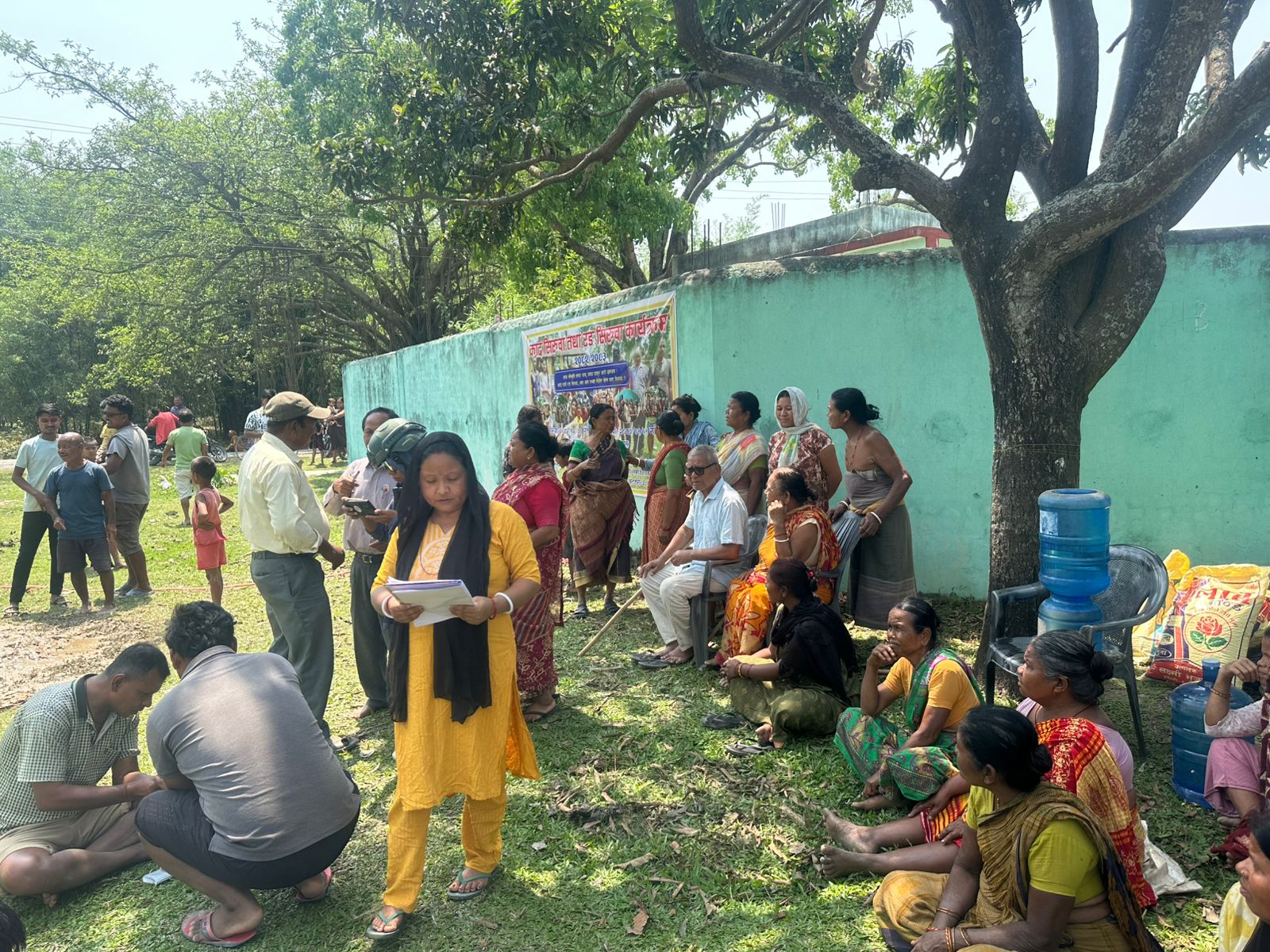
It looks as if some fieldwork is being prepared. But the bustle was not about farming at all. It was the jubilation of Kaad Siruwa, the great festival of the Rajbanshi people, indigenous sons of the soil who have worshipped nature and the earth as divine for centuries. Kapleshwar Rajbanshi, a member of the Rajbanshi Youth Society, had been at work in the open ground in front of the Gramthan since early morning. Together with other young men he piled up soil and mixed in water to make mud. Their activity was not mere formality; it was a genuine effort to pass on their distinct identity and culture to the next generation.
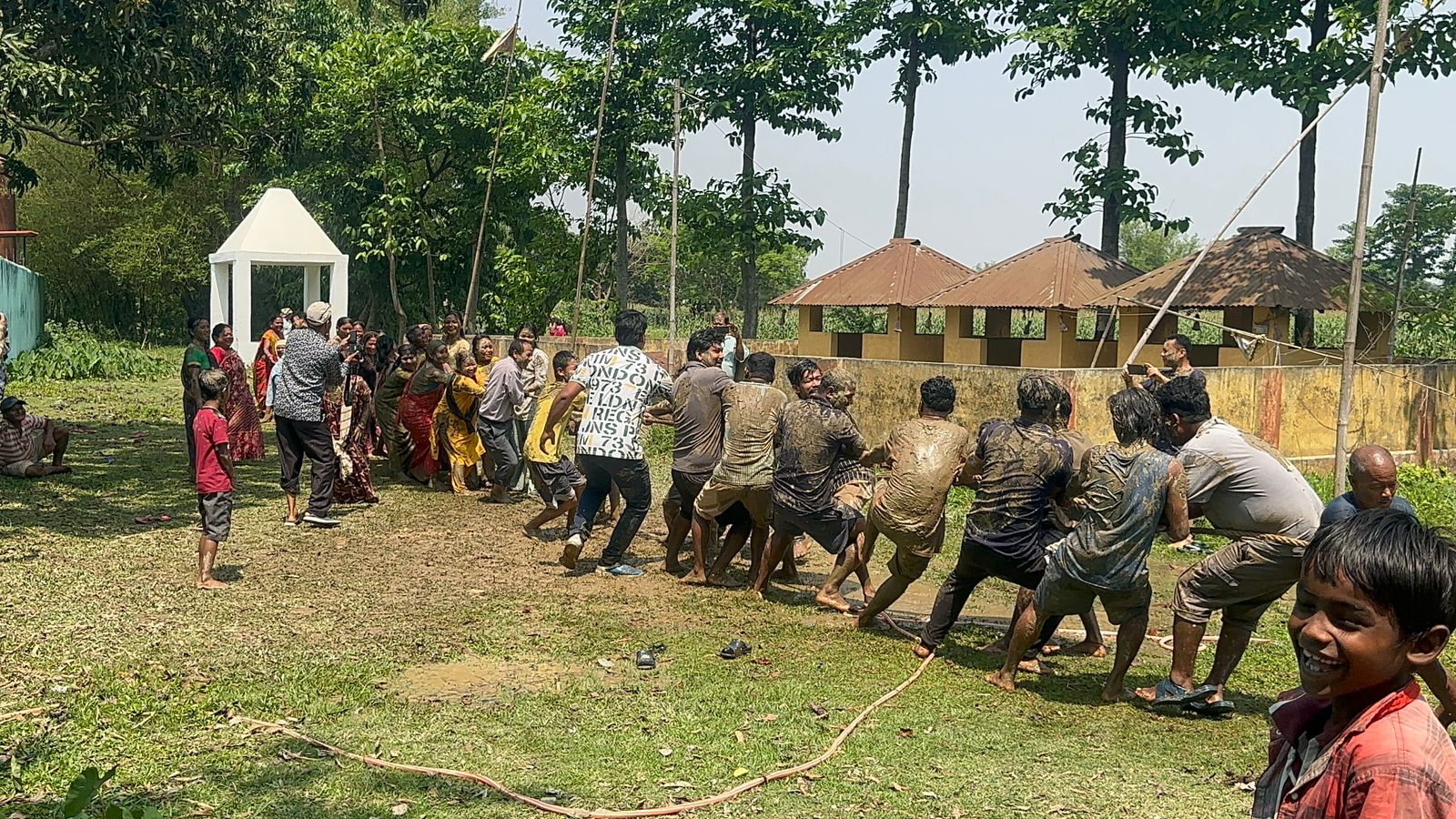
Rajbanshi youths playing a tug-of-war game during the Kaad Siruwa festival.
Then Bhimraj Rajbanshi, a senior figure of the Rajbanshi Social Development Committee and former state minister, arrived at the Gramthan. After performing the prescribed rituals, he applied a tilak of mud to those gathered. With Bhim Rajbanshi’s application of the mud tilak, the Kaad Siruwa festival officially began.
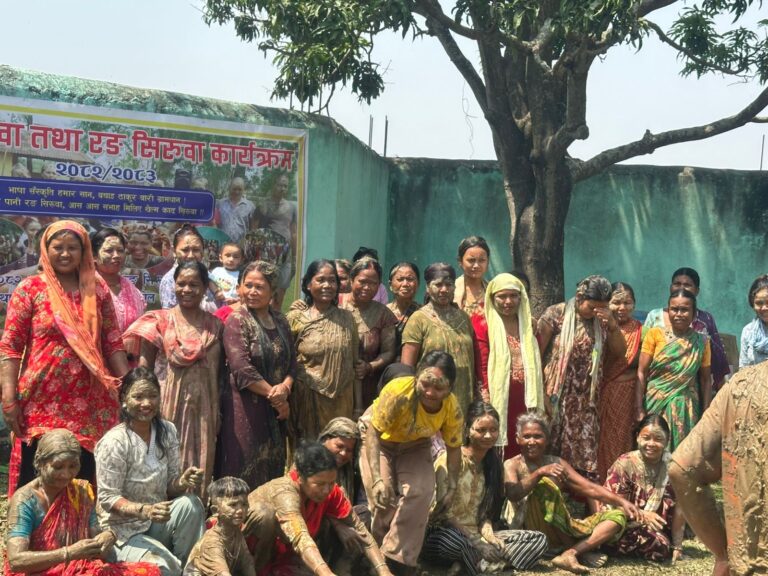
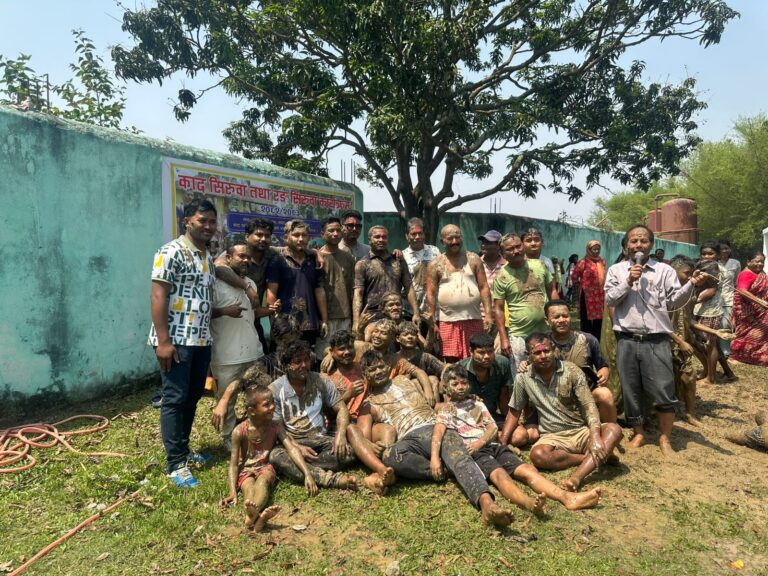
Then the mud-splashing began. Everyone from the elderly on the edge of old age to small children was covered in mud. Smearing each other and laughing, they exchanged the joy of the new year. “This is not merely a festival of playing in mud. It is our reverence for the earth,” says Pratim Rajbanshi, president of the Rajbanshi Youth Society. “Human life cannot go on without soil. That is why we celebrate this festival by treating the earth itself as divine.” According to him, the Rajbanshi communities living in Jhapa, Morang, and Sunsari observe it as a celebration welcoming the new year.
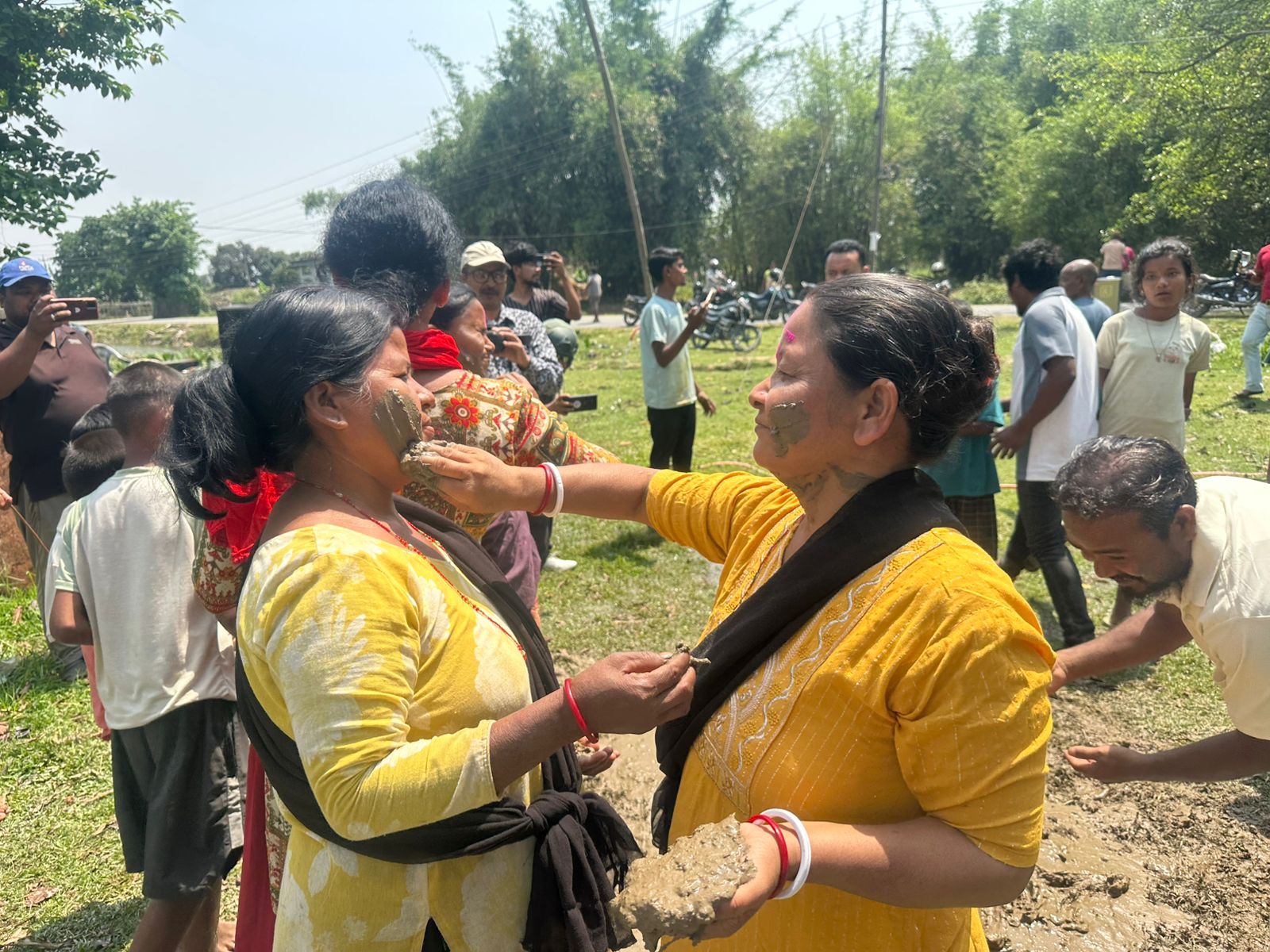
Rajbanshi women marking the start of the Kaad Siruwa festival by applying mud tika to each other.
Three days, three festivals
The Siruwa festival in the Rajbanshi community lasts three days. On 1 Baisakh, Jal Siruwa or playing in water opens the celebration. The second day is Kaad Siruwa, the mud play, and the third day is Rang Siruwa, celebrated with colors much like Holi. “For us this is the greatest festival of all,” said Sabitri Devi Rajbanshi of Kathari-3, wiping mud from her face. “Gathering at the Gramthan after the new year begins and reveling in the mud like this fills the heart with joy.”
This community worships not only the earth but all of nature. Because Chaitra and Baisakh (mid-March to mid-May) bring storms and a high risk of fire to the Terai, they offer pure water to their rooftops, plants, and the tulsi shrine to ward off any natural calamity. There is a tradition of worshipping the ancestral deity and praying for happiness and peace throughout the year.
A bond of cultural unity
The Rajbanshi, Tharu, Meche, Uraon, Kisan, Dhimal, Tajpuriya, Gangai, and Majhi communities of the eastern Terai all observe the festival as a shared celebration. Despite differences of caste and community, the Siruwa festival binds them all in a single thread.
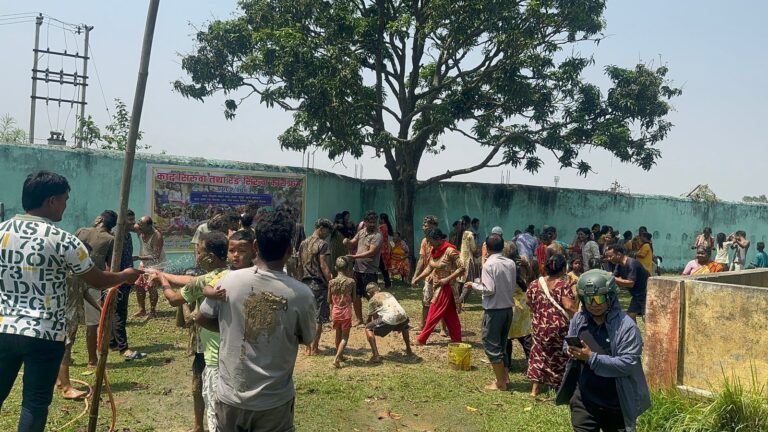
The nature-worshipping Rajbanshi people regard themselves as children of the earth. Their every rite is connected to the soil. As the month of Chaitra (mid-March to mid-April) gives way to the opening of the month of Baisakh (mid-April to mid-May), the mud cools the body, and the scent of the earth keeps their distinct identity alive.
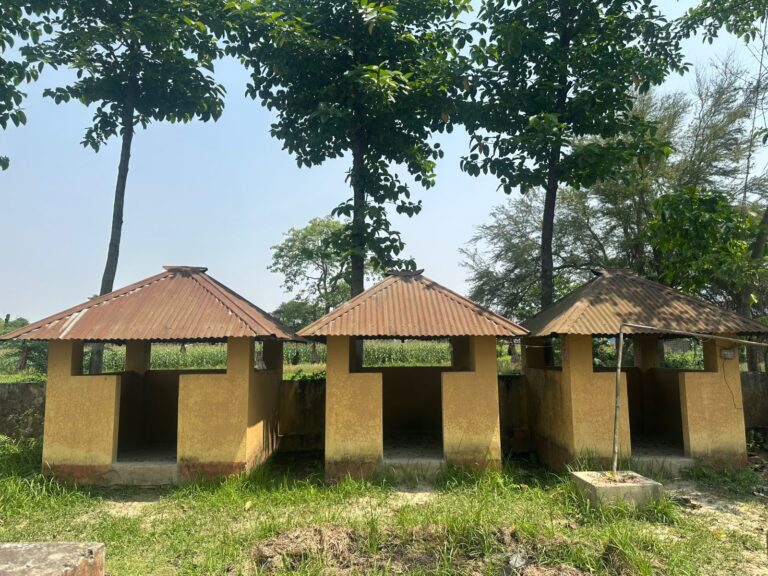
The Gramthan (village shrine) of the Rajbanshi community located in Katahari-3.
As the sun began to dip, the number of people playing in the mud at the Gramthan’s open ground kept growing. No one’s face was recognizable; all were painted in the same shade of earth. At a time when the wave of modernity is causing many cultures to fade from view, the Rajbanshi people of Katahari have once again tightened their ancient bond with the soil, former state minister Bhim Rajbanshi observed. “This mud festival was not merely a game. It is a beautiful way of giving thanks to nature and a priceless inheritance left by our ancestors. The color of the mud will wash away, but this deep reverence for the earth will remain fresh in the Rajbanshi community’s hearts all year long,” he said.