Kathmandu
Tuesday, July 14, 2026





The misery of drinking water deepens as underground water levels continue to deplete in the districts of Madhesh Province.

JANAKPURDHAM– For Daya Sindhu Jha of Pipara Rural Municipality-5, Hardiya in Mahottari—located about five kilometers away from Janakpurdham—local residents are forced to rely on the tube well of the local Janata Primary School for drinking water during the summer season. However, out of the school’s two tube wells, one had already dried up at the very beginning of the summer season last year. Water is barely managed from just the remaining one. For Dayasindhu and the local villagers, this is the sole source of drinking water.
In Hardiya, which has around 500 households, most tube wells dry up with the onset of the summer season. Across the entire village, water currently runs in only about five tube wells. These are fulfilling the drinking water needs of the whole village.
As the underground water level continues to deplete, the water shortage has escalated significantly in the Chure region and the area south of Chure. The water crisis in Terai-Madhesh is being driven by factors such as the exploitation of the Chure hills, erratic monsoons, and dry winters. A severe crisis of drinking water has begun to surface in the border settlements of Dhanusha.
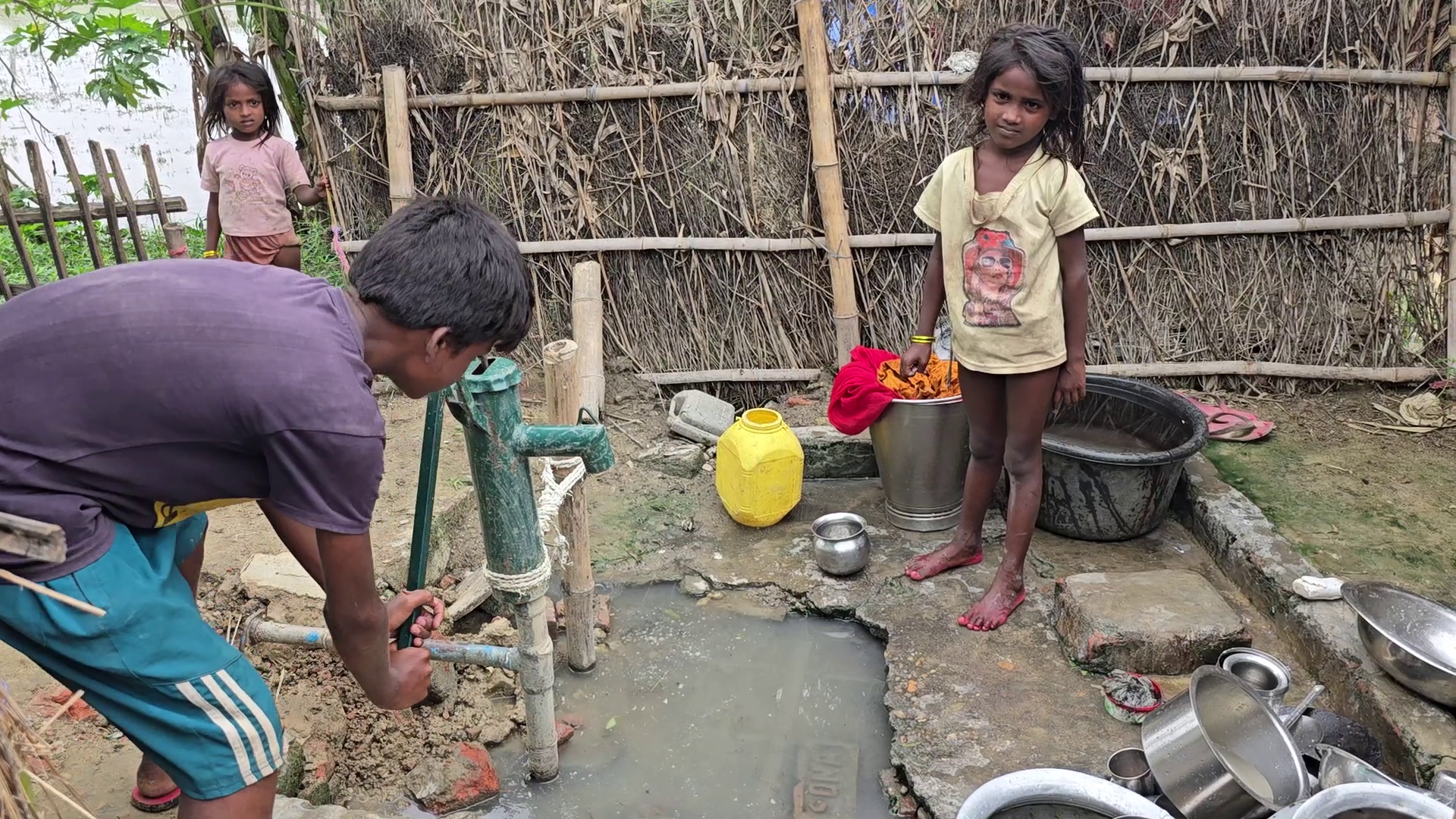
A dried tube well in a Dalit settlement of Hansapur Municipality.
In Jaleshwar Municipality of Mahottari, tube wells and wells frequently dry up. Last year, the municipality distributed water using tankers after water stopped running from tube wells across 12 wards of Jaleshwar. Ramesh Mandal of Jaleshwar Municipality-5 states that once summer begins, all except 8 to 10 tube wells in the village dry up. “This is not a problem of today. We have been facing this exact type of problem annually for 10 years,” he says. “Previously, the water depletion problem was minor, but now it has started to become more severe.”
Last year, a drought occurred right in the middle of the monsoon season, affecting agriculture and causing a shortage of drinking water in Madhesh Province. At that time, the Madhesh Province government and local governments distributed drinking water via tankers in various locations. Voices were raised across different levels of government regarding a long-term solution to the water crisis. However, after it began raining a few months later, daily life eased and the government’s attention shifted away from it.
Until a decade ago, rivers flowing with clean water, fully filled wells, and natural springs and sources that sustained irrigation have today become limited only to memories.
In the Terai, the problem of drinking water troubles residents every year once the summer season begins. However, the government has not paid attention to implementing a sustainable solution. The government only shows brief concern after the problem arrives, fails to make pre-arrangements before the summer season begins, and shows no interest in completing drinking water projects for a long-term solution. Because of this, the drinking water problem repeats annually during the summer season in Terai-Madhesh.
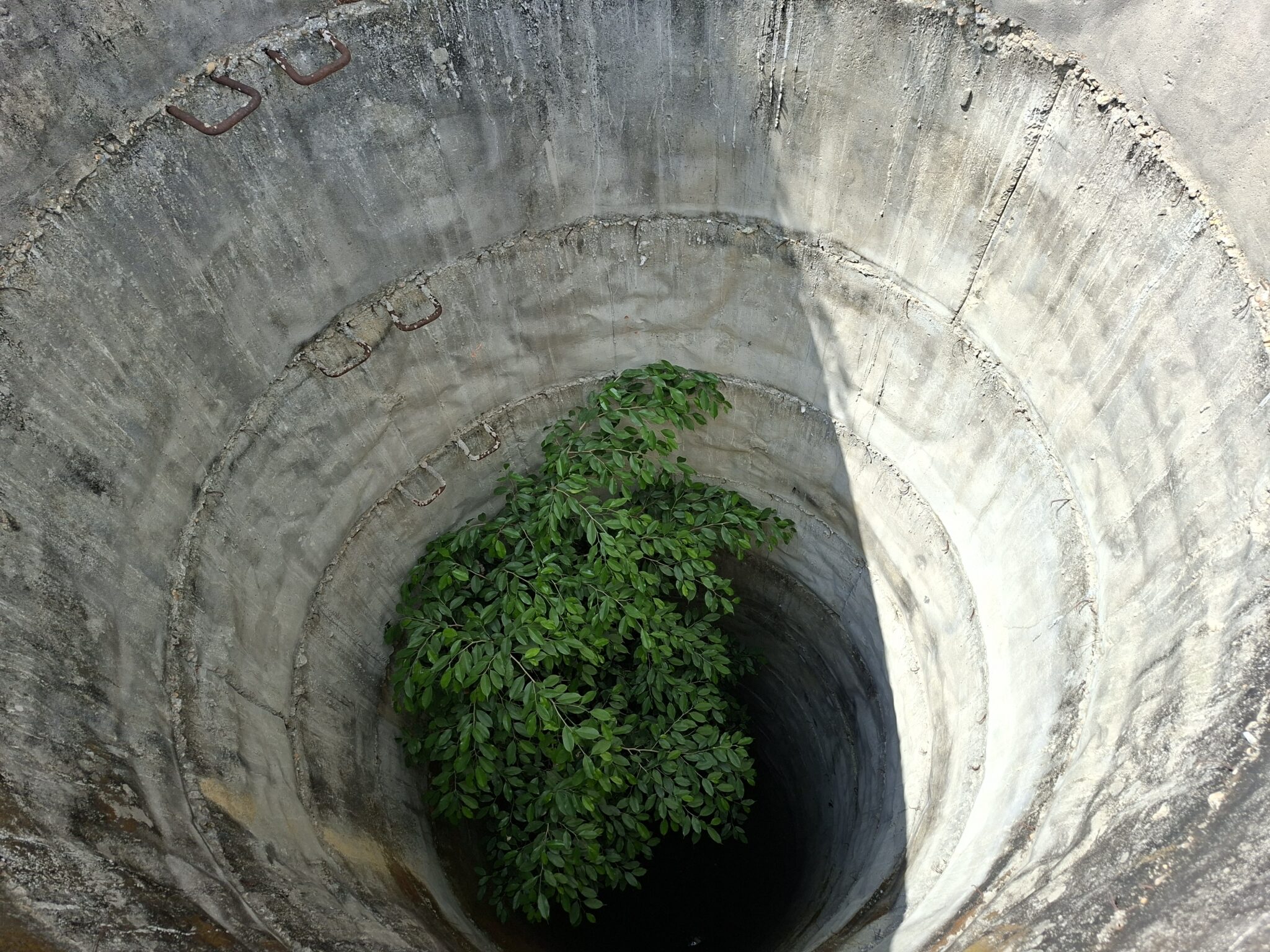
For the past two to three years, Madhesh Province has received low rainfall. Consequently, the natural replenishment of underground water has not been sufficient. The extraction rate of groundwater has surpassed its replenishment rate. The natural replenishment system has collapsed due to the excessive extraction of water for irrigation and industrial purposes. As a result, the underground water level has been depleting year after year. In the districts of Madhesh, where water could easily be reached by digging 100 feet in the past, it is now difficult to find water even at 300 feet.
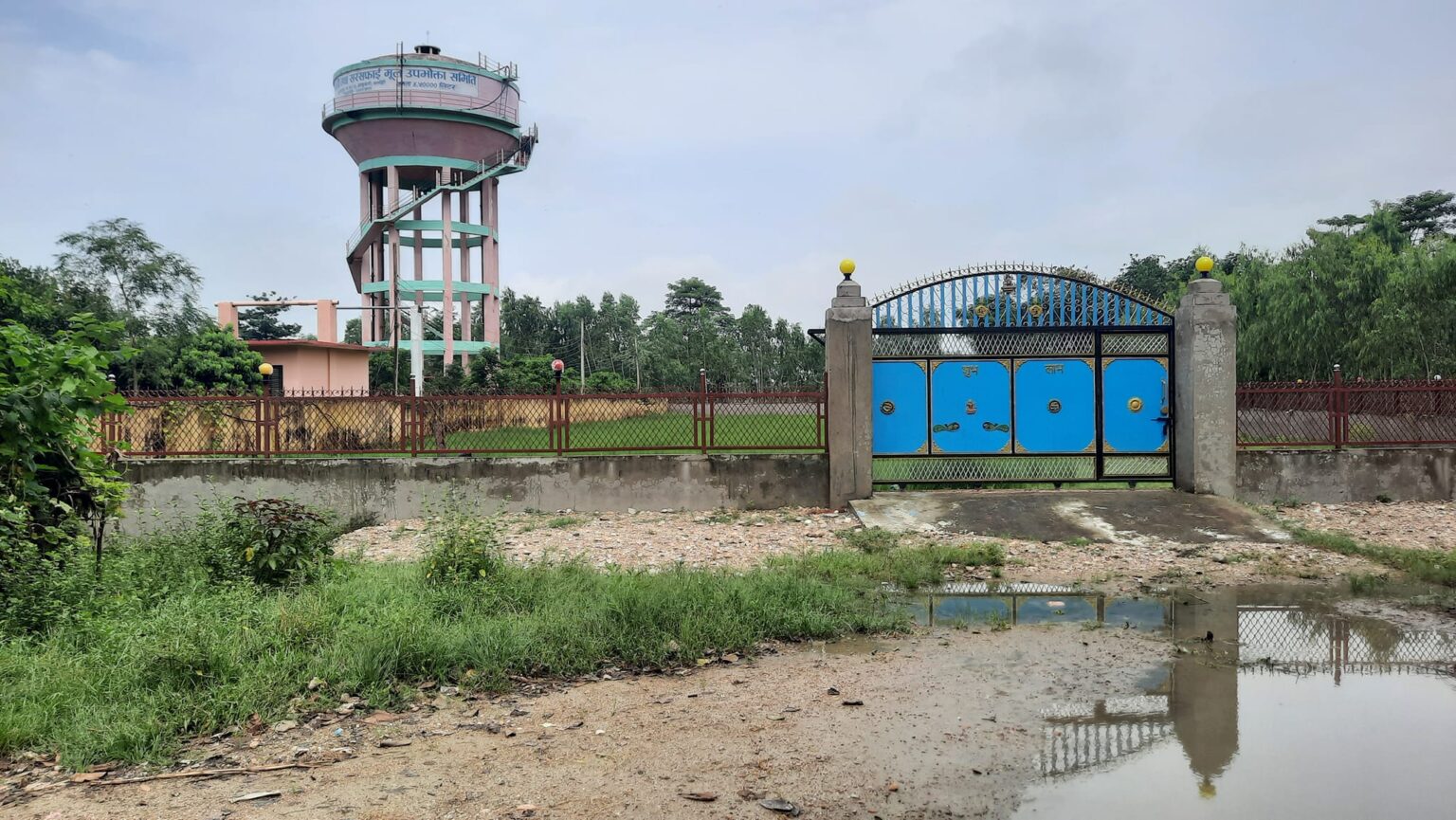
A drinking water tank located in Ishworpur of Sarlahi.
Sohan Sah, former vice-chairperson of the Provincial Policy and Planning Commission Madhesh, states that traditional farming practices are also a cause of the water crisis in Madhesh. “Groundwater is heavily exploited for agricultural irrigation, but because the water is not recharged underground at the same rate it is extracted, the problem keeps worsening,” he says.
Incomplete Projects
The depth of the water shortage is also aggravating due to the tendency of not completing the work of drinking water projects on time.
A total of 184 water and drinking water projects are operational in Madhesh Province. Among these, the Ministry of Energy, Irrigation and Water Supply of province runs a total of 53 drinking water programs in Madhesh Province. Similarly, under the conditional grants of the federal government, the provincial government’s Ministry of Energy, Irrigation, and Water Supply is implementing 43 projects, while the provincial ministry is executing 88 projects using its own resources and conditional grants.
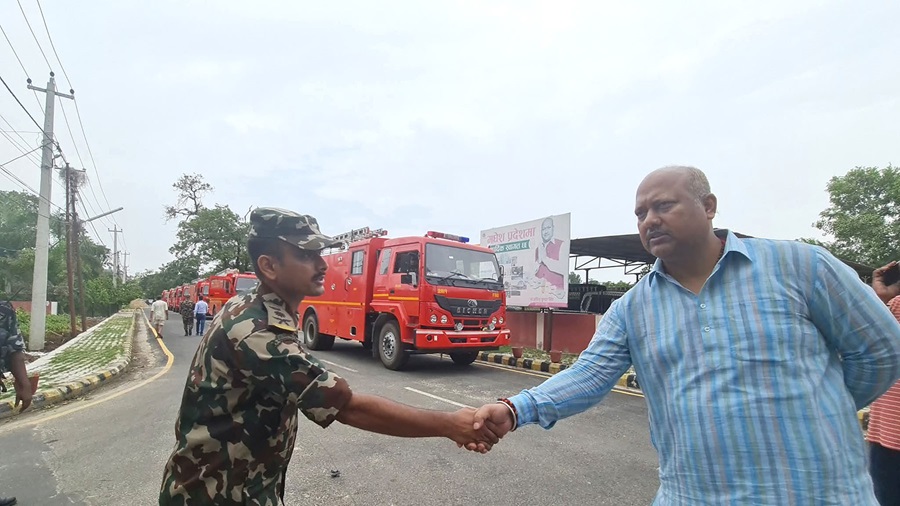
Then-Chief Minister Satish Kumar Singh during the dispatch of tankers for drinking water distribution in the districts of Madhesh Province.
Out of a total of 436 drinking water projects transferred to Madhesh Province under conditional grants from the federal government in the fiscal year 2020/21, 149 projects remain incomplete. Although the primary infrastructure work, such as tube wells (boring) and overhead tanks, has been completed in these projects, the laying of pipelines remains pending.
The reasons behind the slow progress of the projects include the lack of adequate budget allocation from the federal government, and difficulties regarding voluntary labor or contributions from the local community for pipeline excavation.
Causes of the problem and remedial measures
Environmental activist Suresh Sharma states that the main drivers behind the annual droughts and drinking water crises appearing in Terai-Madhesh are Chure exploitation, deforestation, and the current model of development. According to him, concrete structures built in Madhesh recently in the name of pond beautification have obstructed underground water replenishment. “Making the base of the pond out of concrete and covering the surface with plastic materials prevents water from seeping into the ground entirely,” he says. “We are only taking from the Earth; because we lack the mindset and practice of giving back, the misery of water has intensified.”
Chure expert Bijay Singh Danuwar states that the only option for a long-term solution to the drinking water problem in Madhesh is the protection of the Chure region, which serves as the natural replenishment zone.
The impacts of deforestation and uncontrolled exploitation of natural resources taking place in the Chure region are falling upon the Bhabar and Terai areas. Experts have also been pointing to haphazard urbanization and industrialization, the destruction of ponds, open wells, and tube wells, river encroachment, arbitrary plotting of land, failure to harvest rainwater, and climate change as causes of the water crisis.
Out of the 931,331 households in Madhesh Province, tube wells are the primary source of drinking water for nearly 77 percent. However, as underground water is excessively extracted for irrigation and industries, the water level has been dropping, causing most tube wells to dry up.
Sah, the former vice-chairperson of the Madhesh Provincial Policy Commission, suggests that to resolve the water crisis in Madhesh, traditional agricultural systems must be reformed, and plans should be made to retain water by interconnecting rivers and streams that otherwise go to waste. “Interconnecting rivers and streams will aid irrigation and simultaneously replenish groundwater,” he says.
Meanwhile, drinking water expert and engineer Surendra Sharma suggests that to eliminate the water problem, ponds must be cleaned to arrange for easy replenishment, the exploitation of the Chure region and deforestation must be stopped, and adequate tree plantation must be carried out. “With the expansion of human settlements, the excessive exploitation of natural resources, deforestation, and the tendency to pour cement concrete everywhere in the name of development have escalated the water problem,” he says. “To eliminate the water crisis, substantial work must be done in the protection and management of watershed areas.”