Kathmandu
Monday, July 13, 2026





Secret marriages, school dropouts, early pregnancies and broken relationships reveal the gap between official declarations and reality in western Nepal.
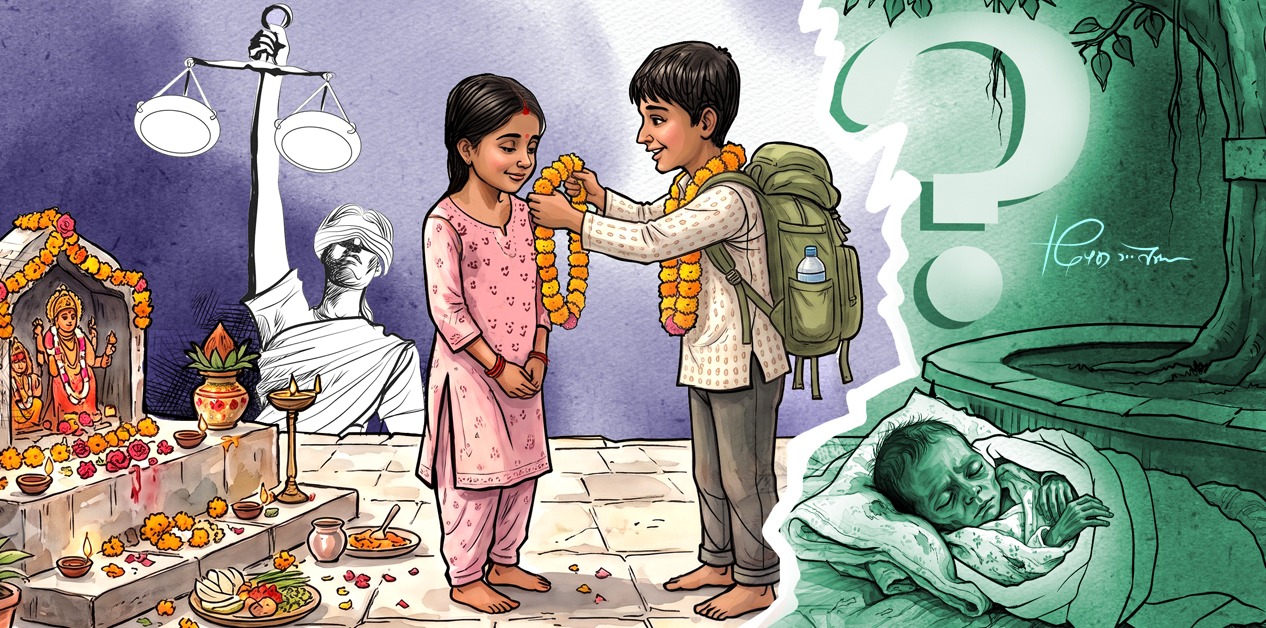
KAILALI: A 14-year-old girl from Bardagoriya Rural Municipality, Kailali, who was appearing for her Grade 8 examinations, suddenly fainted shortly after reaching home. Her mother rushed her to a nearby hospital as she had been suffering from heart issues since childhood. After preliminary treatment, the doctor advised taking her to Kathmandu for further examination and treatment.
The family had previously taken her to Kathmandu for treatment as well. After doctors stated that she required heart surgery, the family had been gathering treatment funds through donations and loans. They planned to take her back to Kathmandu as soon as the examinations concluded. However, her health deteriorated right after she took her third exam.
During pre-surgery testing in Kathmandu, the family discovered an unexpected fact: the girl was four months pregnant. “We knew our daughter had a heart problem, but we had no idea about the pregnancy,” her mother says.
Upon being questioned by her mother, the girl revealed she was in a relationship with a 16-year-old boy from their village. According to the family, the pregnancy had already reached four months, and doctors advised that an abortion would be highly risky due to her heart condition. Consequently, the family decided to let her give birth.
The family had raised Rs 100,000 in donations for her heart treatment and borrowed Rs 200,000 from a village group. Nearly Rs 300,000 were exhausted just on travel to Kathmandu and medical treatments.
After returning to the village, both families held a discussion. Following this, the girl was sent to the boy’s house after performing ‘Parchhaute‘—a traditional wedding ritual prevalent in the Tharu community.
The pregnant girl had to take on the responsibilities of a daughter-in-law. According to the girl and her mother, she had to cook for 10 to 12 people, fetch water, and collect fodder and firewood. She gave birth to a child in September 2025.
About two months after birth, the infant caught a fever. According to the girl’s mother, the family did not take the baby to a hospital but instead sought traditional healing (jharphuk) from a village Guruwa (shaman). The infant subsequently passed away.
The girl is currently living at her maternal home. Her mother states that the boy and his family no longer care for her. She has re-enrolled in Grade 8 and started attending school again.
This incident is just one example of the child marriages secretly taking place in Kailali and Bardiya. Even in wards that have been declared child-marriage-free or are preparing for the declaration, underage adolescents run away to live together, families later perform traditional marriages, local authorities only find out during pregnancy or after childbirth, and relationships fall apart within a few years.
Relationship due to insecurity, even greater insecurity afterward
A 17-year-old girl from Bardagoriya was studying in Grade 9. Because her father inflicted violence upon her mother, her mother took her along to live at her maternal home. She mentions that her mother raised her alone for nearly 14 years.
In June 2025, her mother remarried. Two months later, talks began within the new family about marrying the girl off as well. At the time, she was in a relationship with a boy from the village. When her family started looking for another groom, she ran away with the boy she was seeing and married him at a temple. Currently, both have dropped out of school. The boy has gone to India for employment.
Her relationship was labeled a love marriage in the village. However, it was deeply intertwined with childhood domestic violence, family breakdown, and the pressure to marry before reaching the legal age.
A 15-year-old girl from Janaki Rural Municipality, Kailali, has been facing insecurity following her child marriage. In March 2025, she eloped with a boy from a neighboring village. Her mother states that the boy took her to India. They returned home in October 2025.
Following their return, the boy left the girl at her maternal home saying, “We will marry once we come of age,” and went completely out of contact.
Currently, rather than providing an environment for the girl to study or seeking legal protection, her family is worried about how to hand her back over to the boy. “It does not look good for a married daughter to stay at her maternal home,” her mother says, “The boy must take responsibility by any means necessary.”
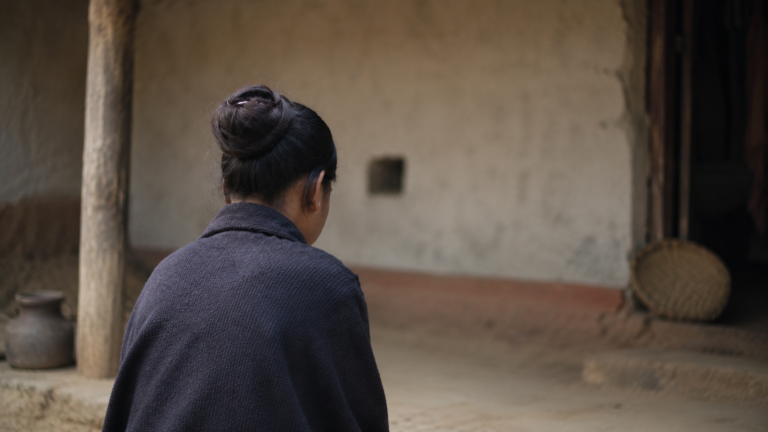
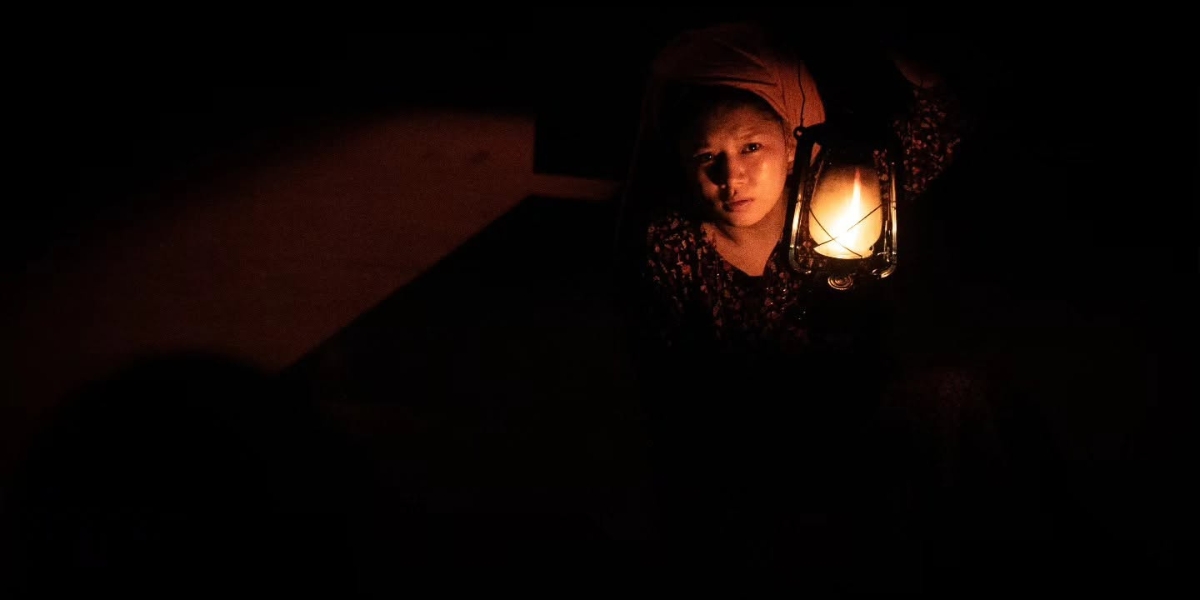
A young girl talking about the pain she endured after child marriage.
This incident shows that families and communities treat child marriage as if it were legitimate. Due to social pressure, families face the burden of sending the girl back to the house she once eloped to, rather than returning her to school or finding options for her future.
A girl from Gulariya, Bardiya, eloped with a boy at the age of 17 and gave birth to a child at 18. She mentions that because they had not reached the legal age, their marriage could not be registered. She plans to have both the marriage and the child’s birth registered together once she turns 20.
Since the household consists only of her husband, her husband’s elder brother, and his wife, she notes that she did not face severe mistreatment. However, she regrets marrying at a young age. “When I see my peers studying, playing, and traveling, I wish I could do the same,” she says, “Even if the family is good, it is difficult to shoulder the responsibilities of a daughter-in-law at such a young age.” Based on her experience, she has been unable to go out whenever she wants, meet friends, or study since getting married.
She now advises her friends to marry only after finishing their education. “I made a mistake by marrying young,” she tells her friends, “Do not make the same mistake.”
Her elder brother and sister-in-law had also married before reaching the legal age. She shares that her brother and sister-in-law’s marriage was registered only after their child turned one year old.
She has observed that the relationships of many who married at a young age in the village deteriorate over minor disputes, leading to separations within a few years. She states that a lack of maturity causes misunderstandings between husbands and wives, resulting in divorces.
Secret marriages after the declaration
Another 15-year-old girl from Gulariya eloped with a village boy studying in Grade 11 while she was in Grade 8. Later, their families organized a traditional wedding. After they began living together, both left school.
Due to their weak financial condition, they migrate between India and Nepalgunj to work as laborers. Family members state that they live secretly without making the marriage public because the ward has been declared child-marriage-free. This demonstrates that child marriage has not stopped after the local level’s declaration; instead, it has merely been concealed. The families appear to accept the relationship without hosting feasts or large ceremonies.
Incidents reveal that girls suffer the most in these hidden marriages. In most cases, dropping out of school, early pregnancy, an increased burden of domestic chores, and returning to the maternal home after relationships fall apart are recurring patterns.
A young woman from Kailari Rural Municipality had eloped at the age of 14. She is now 19 years old and has a four-year-old child.
She states that because the marriage is not registered, she faces difficulties in obtaining a birth certificate for her child. She has approached the rural municipality’s judicial committee, stating that the school refuses to enroll the child due to the lack of a birth certificate.
According to the Rural Municipality Vice-Chairperson, Bhagwati Kumari Chaudhary, the number of people coming forward with such problems is rising. Over the past four years, 10 young women who married at an early age and faced family disputes have approached the judicial committee for mediation. She notes that some have already divorced by the age of 23 or 24. However, some relationships have improved through discussions and reconciliation.
In the judicial committee of Gulariya Municipality, five to seven such cases of broken relationships arrive annually, according to Deputy Mayor Gautam. “They elope at the age of 17 or 18, and we only find out after a child is born,” she says, “By the time they reach the legal age to marry, some of their relationships have already broken down.”
She notes that after realizing the judicial committee does not handle divorce cases, many individuals go straight to court. A few, however, approach the judicial committee hoping to mend their relationship through mediation.
Arranged marriages decrease, elopements continue
Out of the 12 wards in Gulariya Municipality, Bardiya, 11 wards (except Ward No. 2) have already been declared child-marriage-free, while the remaining ward is preparing for the declaration.
According to Deputy Mayor Savitra Gautam, the municipality declared the wards child-marriage-free based on data showing that child marriage had dropped by 90 percent, bringing the rate below 10 percent. However, Jagu Ram Tharu, the Ward Chair of Gulariya-1, admits that the practice of underage elopement has not stopped even in the declared wards.
According to him, the custom of parents organizing arranged child marriages has almost completely stopped. However, the trend of adolescents eloping, with families subsequently accepting the relationship, continues. In the process, several girls become pregnant and give birth before reaching the age of 18. “We, as elected representatives, are aware that child marriages are taking place,” Tharu says, “But it is difficult to raise one’s voice against our own villagers.”
He admits there is a fear that taking legal action will ruin relationships with villagers and result in a loss of votes in the next election. Since families and neighbors do not file complaints, most incidents are settled locally through village discussions, he states. For this reason, child marriage does not appear in official government records.
Apart from Gulariya, the other local units mentioned in the aforementioned incidents are also preparing to declare their wards child-marriage-free. Due to the practice of avoiding formal wedding ceremonies, hiding pregnancies or births, and registering marriages only after reaching the legal age, the wards appear child-marriage-free on paper, but the actual reality is different.
The National Population Census of 2021 showed that many individuals who were in the 20–24 age group at the time of the census had married before turning 18. In Kailali, out of 91,913 individuals in that age group, 10,918 had married before the age of 18. This accounts for 11.88 percent of the total population in this age bracket. The rate stands at 17.21 percent for females and 4.92 percent for males.
In Kailari Rural Municipality, Kailali, 617 out of 4,916 individuals aged 20 to 24 had married before the age of 18. The child marriage rate in the rural municipality stands at 12.55 percent. This rate is 17.12 percent for females and 6.46 percent for males.
In Bardiya, according to the same indicator, the rate of individuals marrying before the age of 18 is 15.66 percent. Local unit-wise census data shows that 899 individuals (12.11 percent) in Gulariya, 1,176 individuals (16.34 percent) in Barbardiya, and 918 individuals (18.97 percent) in Madhuwan had married before reaching 18 years of age.
These statistics serve as indicators to measure past situations; they do not represent a count of every child marriage occurring at present. However, the incidents of child marriage found in villages even after the ‘free’ declarations show that the gap between declaration and practice remains wide.
In the health branch of Kailari Rural Municipality, 85 pregnant females under the age of 20 were registered up to July 9 for the fiscal year 2025/26. Among them, 46 have already given birth, according to Naresh Chaudhary, the head of the health branch.
While this data reflects the age of the pregnant individuals, it does not confirm that all of them are married. It also includes women aged 18 and 19 who are legally considered adults. Nevertheless, it indicates that a significant number of young individuals undergoing early pregnancies are reaching local health institutions.
According to Chaudhary, becoming pregnant at an early age increases health risks for both the mother and the baby. He notes that issues such as failing to receive proper nutrition, receiving less family support during pregnancy and postpartum periods, and facing mental pressure are common.
AI-generated image.
The rural municipality records show that 26 children are suffering from severe acute malnutrition and 146 children from moderate acute malnutrition. Separate data clarifying how many of them were born to mothers under the age of 20 is not available. However, Chaudhary notes from general observation that children born to young mothers show a higher risk of malnutrition.
Only three cases in Sudurpashchim
Nepali law sets the minimum age of marriage at 20 years for both women and men. A marriage contracted before reaching 20 years is void, and the individuals entering into or organizing such a marriage can face imprisonment and fines. However, the information and complaints required to enforce the law rarely reach the police.
In the Sudurpashchim Province Police Office, only three cases were registered under the category of child marriage during the fiscal year 2025/26.
SSP Padam Singh Bisht of the Province Police Office states that many incidents do not reach the police because families, relatives, and neighbors remain silent. “Where law enforcement is ineffective, legal evasion is high,” he says, “In cases of child marriage as well, families, relatives, and neighbors choose to remain quiet.”
He mentions that while complaints regarding missing children, forced abductions, sexual violence, or trafficking do arrive, separate case registrations specifically for child marriage remain minimal.
Even though individuals participating in the wedding or attending the feast can inform the police, he states that no information has come from the community.
He adds that law enforcement also faces challenges due to provisions where an individual becomes a legal adult at 18 but must wait until 20 to marry. Consequently, police experience shows that adolescents elope to live together and register their marriage only after turning 20.
Enthusiasm in programs, hesitation in complaints
To prevent child marriage, Gulariya Municipality has been running life-skills transformation classes (Rupantaran Kaksha) once a week in schools. Out-of-school adolescents are also encouraged to participate in these classes, according to Deputy Mayor Gautam.
The municipality spent Rs 800,000 on street dramas related to reducing child marriage in the fiscal year 2024/25. She states that Rs 1.8 million were spent on awareness programs in the fiscal year 2025/26.
Gautam mentions that she stopped three underage marriages during the current year with the assistance of the police. She states that after the adolescents eloped, she reached the location along with the police just as the families were preparing to conduct traditional rituals and feasts, thereby stopping the marriage. However, legal proceedings were not pursued in those incidents. Citing the fear of ruining the adolescents’ future, both parties were counseled and handed back over to their families, she says.
Such practices highlight the dual role played by local governments. On one hand, the municipality declares wards child-marriage-free, allocates budgets for programs, and stops marriages. On the other hand, it settles known incidents within families without initiating legal processes.
Vimala Kadayat, the head of the Adolescent Empowerment Project at the Dalit Women’s Rights Forum, states that child marriage disrupts education, causes early pregnancy, creates birth registration issues, increases financial burdens, and fuels domestic violence and family conflict. It also has a long-term impact on producing educated and skilled human resources within the community, she adds. She notes that the problem remains hidden because incidents do not reach the police, and even when they do, the tendency pushes them toward mutual settlement.
Nepal aims to end child marriage by 2030. The national strategy formulated for this purpose prioritizes the eradication of child marriage across federal, provincial, and local levels. Under this, there is also a policy to incentivize local levels to declare themselves child-marriage-free.
However, while the criteria for making declarations show a decline in formal marriages organized by parents, they fail to account for practices involving elopement, subsequent traditional ceremonies, hidden pregnancies, and delayed registration until the legal age is reached. Not only the families and communities who conceal child marriages, but also the elected representatives who know about them yet fail to report them, have become part of the questions raised regarding the credibility of these declarations.
(The names, addresses, and certain identifying details of the children mentioned above have been kept confidential.)