Kathmandu
Sunday, July 12, 2026





From the death of ride-sharing driver Ganesh Nepali and flooded shelters for displaced families to loan shark protests, cooperative fraud and fertilizer shortages, Nepal's poorest citizens are confronting multiple crises at once.
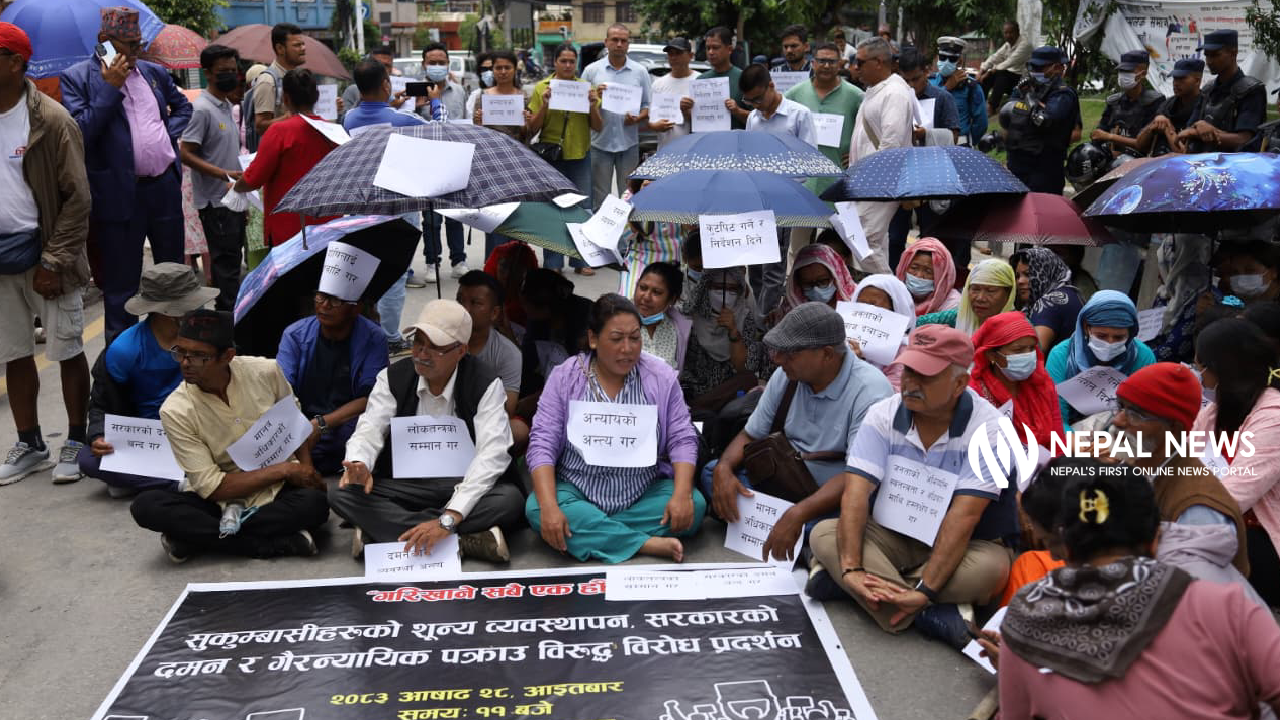
KATHMANDU: The death of ride-sharing driver Ganesh Nepali, flooded shelters for evicted riverbank settlers, a renewed march by loan shark victims, slow relief for cooperative depositors and fertilizer shortages have unfolded almost simultaneously across Nepal.
Far from isolated incidents, they point to a broader pattern of governance failures, exposing persistent gaps between policy and implementation while raising questions about state responsiveness.
Together, these overlapping crises have deepened the hardships facing ordinary citizens and put the Balen Shah government’s promise of responsive and accountable governance to the test.
What is the overall picture of hardship facing Nepal’s working poor as of July 12, 2026?
The picture is one of parallel emergencies converging on the same population at the same time. A ride-sharing driver died after setting himself on fire over a parking dispute, a government holding centre for evicted landless settlers flooded twice within weeks, hundreds of loan shark victims are walking from Janakpur to Kathmandu because past agreements were never honored, tens of thousands of cooperative depositors are still waiting for savings that vanished years ago, and farmers across the Terai are transplanting paddy without adequate fertilizer as the monsoon behaves erratically.
None of these crises are new in isolation. What is new is their simultaneity, occurring within the same fortnight, under a government that took office promising precisely the kind of responsive, accountable administration that could have prevented each of them from reaching this point.
Civil society figures have described the pattern as evidence of a deeper structural failure rather than a string of unconnected accidents. Taken together, these events suggest that Nepal’s poorest citizens are being asked to absorb the cost of institutional dysfunction through their bodies, their savings and their crops, while the state’s response remains largely reactive.
Who was Ganesh Nepali and what exactly happened to him?
Ganesh Nepali was a 25-year-old ride-hailing driver originally from Soru Rural Municipality in the remote district of Mugu, living in Bhaktapur with his wife and young daughter. He had studied agriculture but, like many young Nepalis from the hills, found no viable work in that field and instead mortgaged family land to buy a motorcycle on instalments so he could earn through ride-sharing platforms.
On the afternoon of July 9, after dropping off a passenger near the Department of Passports in Tripureshwar, he parked to wait for his next ride request. A municipal police officer told him to move, a dispute followed, and officers from Kathmandu Metropolitan City then placed a wheel lock on his motorcycle for an alleged parking violation. When he pleaded for its release and officers instead moved to tow the vehicle, he siphoned petrol from the tank, poured it over himself and set himself alight.
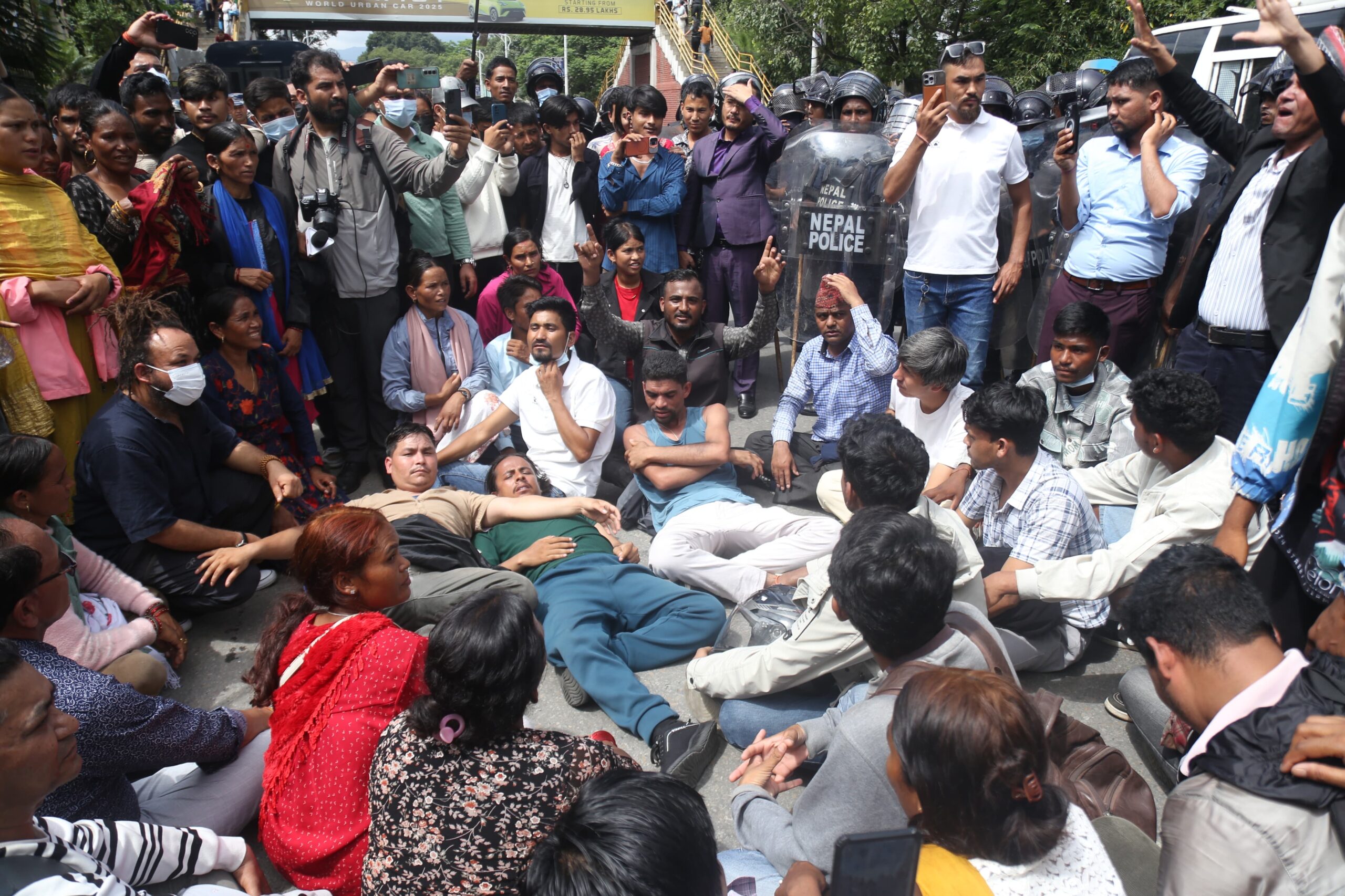
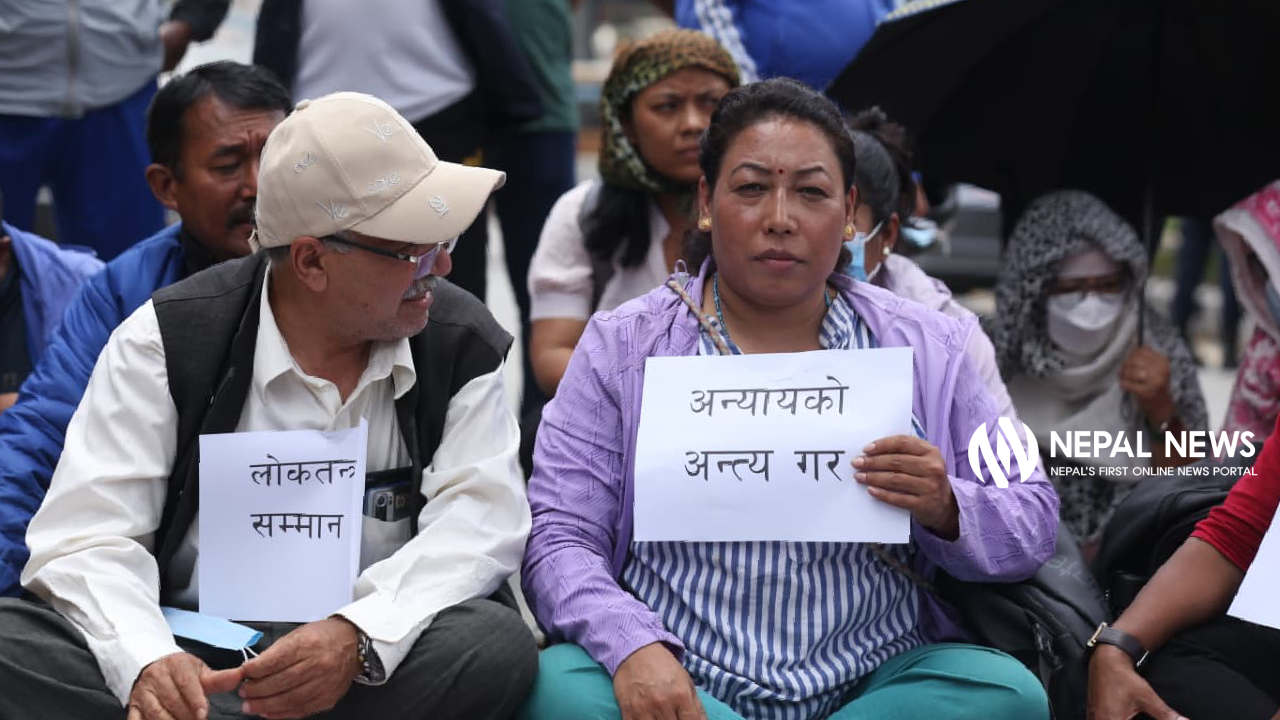
Protesters demand justice for Ganesh Nepali, who died from burn injuries after self-immolating in Kathmandu.
Nepali suffered burns across more than half his body and died at Bir Hospital roughly 22 hours later despite an overnight effort by the Civil Aviation Authority to keep a plane ready in case doctors cleared him for transfer to New Delhi for treatment.
His family says he had messaged relatives a week earlier describing an identical dispute and an earlier Rs 1,000 fine, ending the message with crying emojis, a small detail that has since come to symbolize the quiet, unspoken accumulation of pressure the state failed to notice until it was too late.
What made this single parking dispute escalate into a national political crisis?
The escalation happened because Ganesh Nepali’s death arrived at a moment when the public was already primed to see it as symbolic rather than isolated. Within hours, hundreds of young people gathered at Maitighar Mandala demanding justice, holding placards protesting what they called traffic terror, and a march toward Bir Hospital was intercepted by riot police at Bhadrakali before demonstrators returned for a candlelight vigil.
The following morning, the matter reached the House of Representatives, where opposition lawmakers from Nepali Congress, CPN (UML), Nepali Communist Party, Rastriya Prajatantra Party and Shram Sanskriti Party accused the government of cruelty and demanded accountability, with one lawmaker declaring that a government that compels a citizen toward suicide has no right to remain in power.
The federal government responded by forming a high-level probe panel the same evening and Kathmandu District Police detained three municipal officers connected to the incident.
Lawmakers from the ruling Rastriya Swatantra Party itself broke ranks publicly, with one RSP legislator saying that if forced to choose between enforcing a rule and preserving a human life, the choice should never be difficult. The family, meanwhile, has refused to claim the body until the government commits to compensation and guarantees for his daughter’s education, turning a private grief into an open political standoff that neither the ruling party nor the opposition can easily walk away from.
What did Balendra Shah say about Prem Prasad Acharya’s self-immolation in 2023, and how does that compare with his response now?
In 2023, while serving as mayor of Kathmandu, Balendra Shah wrote publicly on social media after entrepreneur Prem Prasad Acharya’s self-immolation outside the federal parliament that the state had failed at every single stage of the victim’s life. He wrote that the most terrifying signal was the state’s total failure, adding that in matters of livelihood, despair, requests for help, safety and rescue, every layer and every organ of the state had failed the man.
Prem Prasad Acharya set himself on fire outside Nepal’s Parliament building in Kathmandu in January 2023, later dying from his injuries. File photo
That post, written from the relative safety of opposition to the federal government of the day, was widely shared and helped cement Shah’s image as a leader unafraid to hold the state accountable for the suffering of ordinary citizens. Three years later, now leading the federal government himself, Shah has not issued any comparable public statement following Ganesh Nepali’s death.
His 2023 post was read back to him inside the House of Representatives by opposition lawmakers precisely because of that contrast, and members of his own party have publicly acknowledged the awkwardness of the comparison without fully resolving it. The silence has become its own kind of statement, illustrating how quickly a critic’s moral clarity can dissolve once that critic is the one responsible for the machinery that failed someone.
Who was Prem Prasad Acharya and why does his death continue to shape this conversation?
Prem Prasad Acharya was a 37-year-old entrepreneur from Ilam who set himself on fire outside Nepal’s federal parliament building in 2023 after years of struggling against high-interest loans, a declining business environment and what he described as bureaucratic indifference toward small entrepreneurs. Before his death he had published a lengthy public statement outlining the impossible financial burdens facing small business owners and calling for structural economic reform, effectively writing his own manifesto of grievance.
Acharya’s death was treated at the time as a watershed moment, prompting widespread political sympathy and promises of reform from politicians across the spectrum, including those, like Shah, who were not yet in government. The recurrence of the same act of protest, this time by a ride-sharing driver rather than an entrepreneur, has forced a reckoning with how little has actually changed in the underlying relationship between citizens and the state since 2023.
Where Acharya wrote twenty-five points of grievance, Nepali left only a short message to a nephew and a request that his parents be looked after, suggesting that the impulse to protest through self-destruction has, if anything, become more immediate and less articulated over the intervening three years.
What is the background to the government’s eviction drive against landless riverbank settlers?
Since April 2026, the government has carried out a large-scale demolition campaign against informal settlements along the Bagmati, Bishnumati and other rivers running through Kathmandu Valley, citing the annual danger of monsoon flooding to justify relocating residents before the rains arrived.
On April 25, security forces used bulldozers to clear the Thapathali, Gairigaun and Manohara settlements, displacing roughly 2,600 people who were bussed to Dasharath Stadium for registration before being moved into a mix of hotels, training centres and other temporary sites.
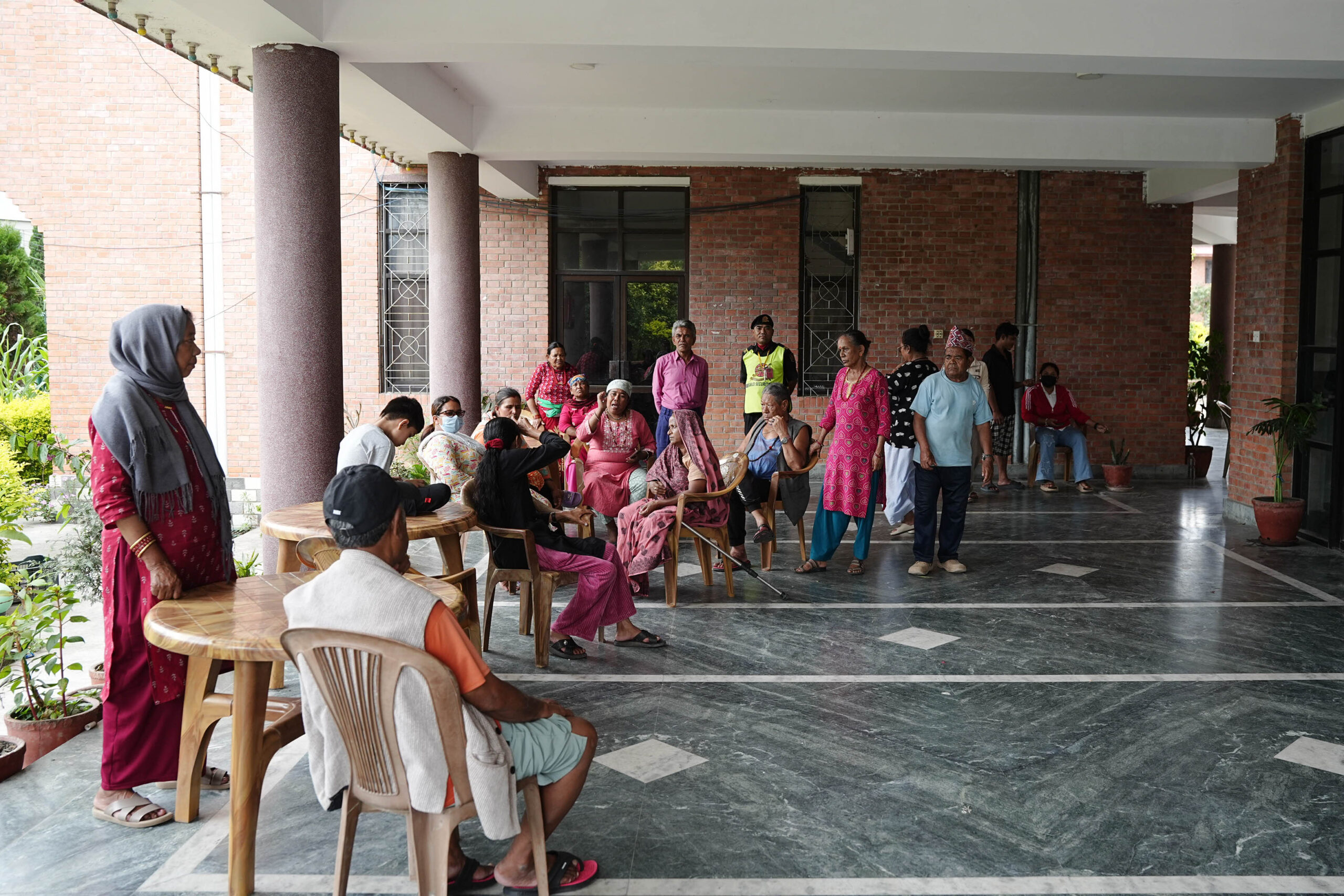
Displaced landless settlers at a holding center. File photo
The operation proceeded even though a writ petition challenging its legality had been filed at the Supreme Court the day before demolitions began, and the court’s initial show cause order arrived only after the clearance was already underway.
A more forceful Supreme Court interim order on May 8 explicitly barred further evictions without due process and instructed the government to arrange housing, education, health services and food support for those already displaced, but by then the principal wave of demolitions was complete.
More than two months later, hundreds of families remain in seven institutional holding centres across Kathmandu, Bhaktapur and Kavrepalanchok districts, with repeated vacate deadlines extended after residents said they could not afford market rents even with government relief money in hand.
What happened at the Kirtipur holding centre on the night of July 11?
Heavy overnight rainfall caused the Bagmati River to swell rapidly, and floodwaters breached the Radha Soami Satsang holding centre in Sundarighat, Kirtipur, at around one in the morning, submerging the very facility to which landless settlers had been relocated for their own safety months earlier.
Panic spread quickly as water rose through the compound, and by around five in the morning the entire shelter was waterlogged, forcing residents, many of them children and elderly people, to stand outside in the cold as their remaining possessions floated away. According to the National Disaster Risk Reduction and Management Authority, 54 of the roughly 154 people sheltering there were rescued and moved to Smriti Bhawan at Tribhuvan University, with security forces mobilised to distribute food, water and emergency relief.
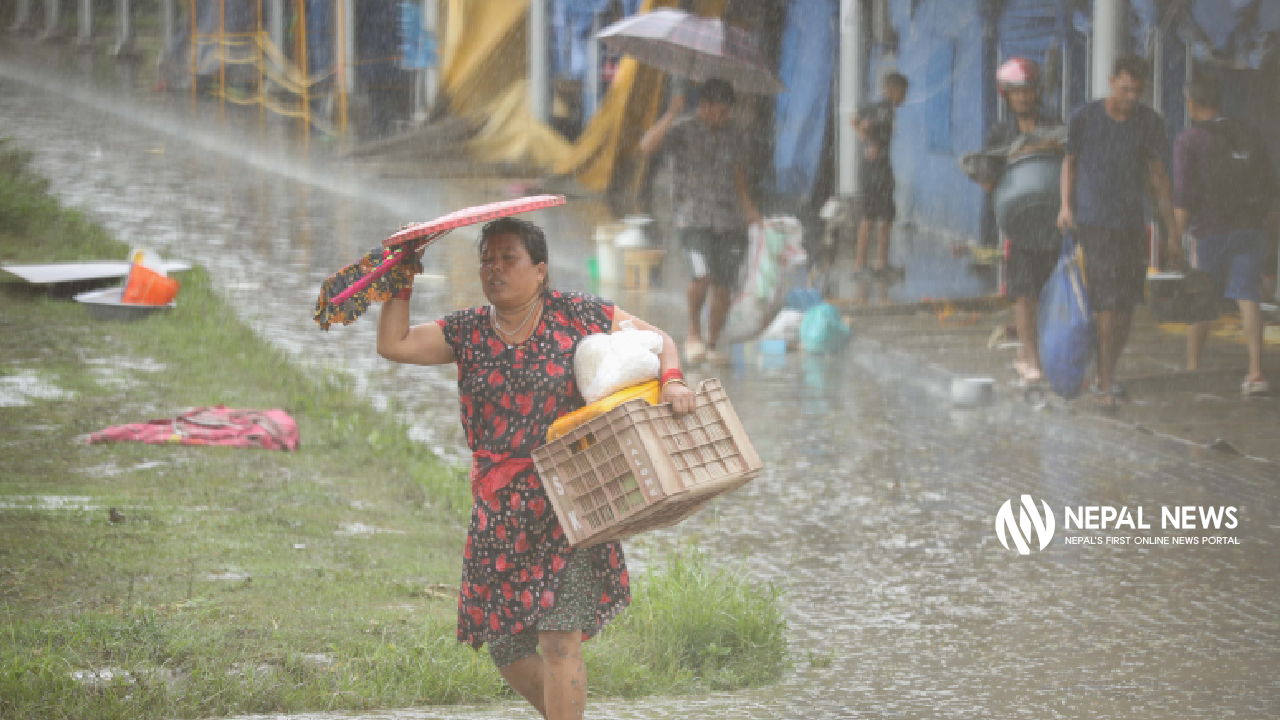
Displaced landless settlers at a temporary holding centre in Kirtipur face renewed hardship after heavy monsoon rain flooded the facility where they had been relocated.
Residents said security personnel arrived to help only after the water had already risen substantially, and many families lost clothing, bedding and children’s schoolbooks in the flood, echoing an almost identical flooding incident at the same centre roughly two weeks earlier in late June. The recurrence has become the starkest possible illustration of a government relocating people away from flood risk into a facility that carried the same flood risk all along.
Why is this flooding considered such a damning failure of government planning?
The failure is damning because the entire justification for the original eviction was flood safety. Prime Minister Shah had personally written in April, before the bulldozers arrived, that residents living along Kathmandu’s riverbanks faced life-threatening floods every monsoon and that they needed to be relocated securely before the rains returned.
Placing the designated safe holding centre on the floodplain of the Bagmati river in Kirtipur, a location that itself floods regularly during heavy rain, directly contradicts that stated rationale and exposed families to the very danger the government claimed to be protecting them from.
Displaced residents and volunteers monitoring the site said this was foreseeable, noting that the location floods almost every monsoon and that no adequate drainage or flood barrier was built before families were moved in. The repetition of flooding at the same site within weeks, rather than a one-off natural disaster, points toward a planning failure rather than an unforeseeable act of nature, and it has become a rallying point for critics who argue the eviction drive was executed for its optics of decisive governance rather than any genuine concern for resident welfare.
What happened to the activists detained at the Kirtipur holding centre, including Majid Ansari?
On the evening of July 11, police detained three young activists, including Majid Ansari and Sarishma Thapa, from the Kirtipur holding centre following a dispute over how the flood-displaced settlers were being managed. Police said the group had obstructed officers who were attempting to carry out rescue operations for the flood-affected families and that they were asked to leave the area before being taken into custody when they refused.
Fellow activists and eyewitnesses at the scene disputed that account, alleging that the confrontation began because of perceived favouritism in how relief and rescue efforts were being distributed among different families, rather than any deliberate obstruction of emergency work. The detentions occurred at a moment of already heightened public anger over the flooding itself, and critics have questioned why police resources at the scene of a humanitarian emergency were directed toward detaining young volunteers rather than solely toward accelerating the rescue and relief operation.
The episode has added a further layer of grievance to an already volatile situation, with activists arguing that the state’s instinct in a moment of visible failure was to police dissent rather than to absorb criticism and correct course.
What is daily life actually like for families still inside the holding centres?
Conditions inside the centres have been described consistently, by residents, volunteers and journalists who have visited the sites, as a form of prolonged, humiliating limbo rather than functioning temporary shelter. Families have gone entire days without food when meals failed to arrive, and where food is provided, elderly residents and young children say the quantity and quality are inadequate.
Overcrowding is common, relief payments are frequently delayed, and residents at multiple centres say that government representatives visiting to collect information often cannot themselves explain what happens next, deepening the anxiety of people who no longer know how long their displacement will last.
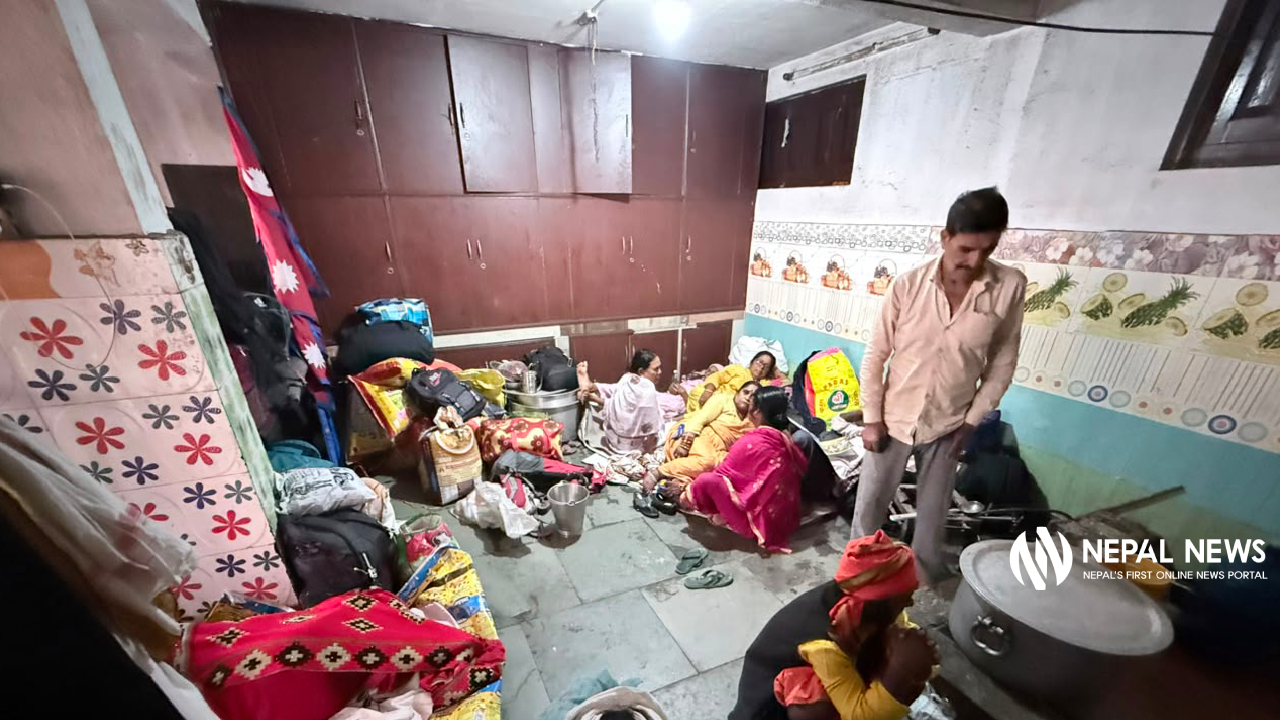
Families displaced from Kathmandu’s riverbanks endure cramped conditions and an uncertain future at a temporary holding centre in Kirtipur. File photo
A mother at one centre described how repeated unfulfilled promises about her children’s education, including a suggestion that they might be moved to hostels that never materialized, led her young daughter to say she no longer wanted to study, a small but telling sign of how prolonged uncertainty is eroding not just material conditions but the morale and future prospects of an entire generation of displaced children.
At the flooded Kirtipur site specifically, the camp population before the second flood included a postpartum mother and four infants under the age of one, families sleeping directly on the ground under tents that had been erected for what was supposed to be a fifteen-day stay and had instead stretched past two months.
Why are hundreds of loan shark victims marching from Janakpur to Kathmandu again?
Nearly four hundred to five hundred victims of predatory lending began a fresh march from Tirhutiya Gaachhi in Janakpur toward Kathmandu on July 9, organised by the Farmers and Workers Movement Against Loan Sharking Nepal, because the government has repeatedly failed to implement four separate written agreements it previously signed with victims of usurious moneylenders.
The organisers say more victims are joining the march in every district it passes through, with participants contributing small amounts of between Rs 50 and Rs 200 each to cover food and lodging for what they expect to be roughly a fifteen-day journey.
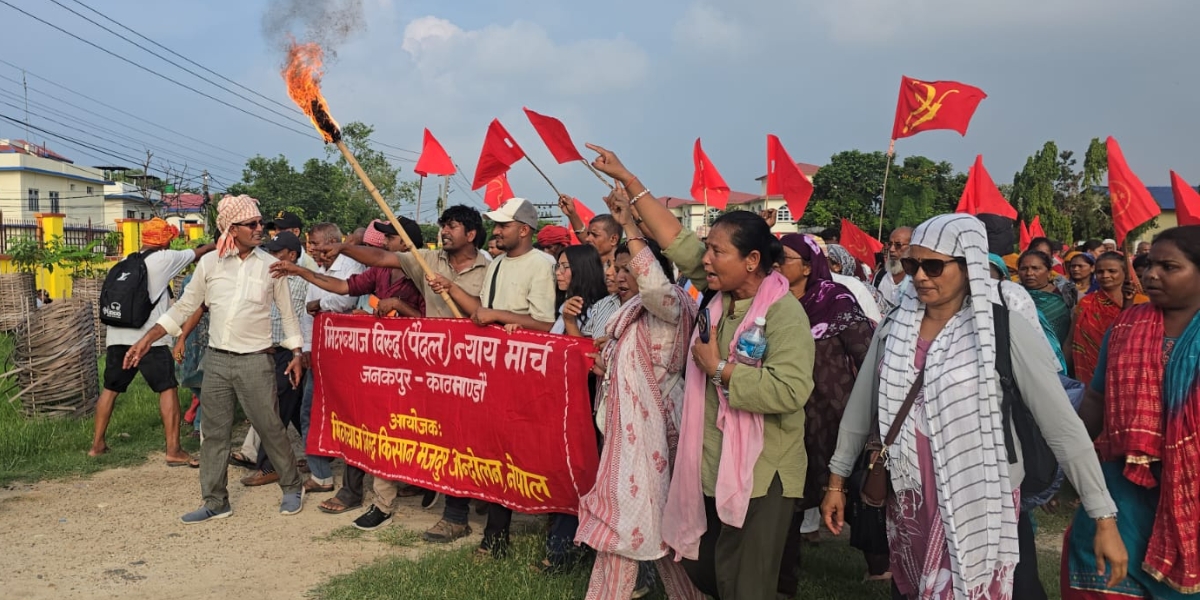
Loan shark victims on foot marching from Janakpur to Kathmandu in protest. File photo: Birendra Raman
Their demands include the cancellation of fraudulent loan documents, a dedicated law against predatory lending, a special tribunal to handle loan shark cases, formal investigations into the assets of moneylenders, and the return of property that has been seized from victims through manipulated court cases.
This is not the first such march.
Victims first walked a similar route in 2023, and organizers have warned that if this latest attempt is again ignored, they will escalate into a larger, more sustained protest movement in the capital that draws victims from across the country simultaneously.
What kinds of exploitation are loan shark victims describing, and how severe is it?
The accounts collected from marchers describe a pattern of predatory lending in which small loans taken for medical emergencies, weddings or accident recovery balloon through compounding interest into sums many times the original principal, and lenders subsequently use fraudulent documentation or manipulated court proceedings to seize victims’ land even after loans have been repaid.
One marcher described borrowing Rs 80,000 for medical expenses in 2014 and eventually being forced to pay Rs 520,000 to settle the debt, only to be sued again afterward despite having paid in the presence of district officials.
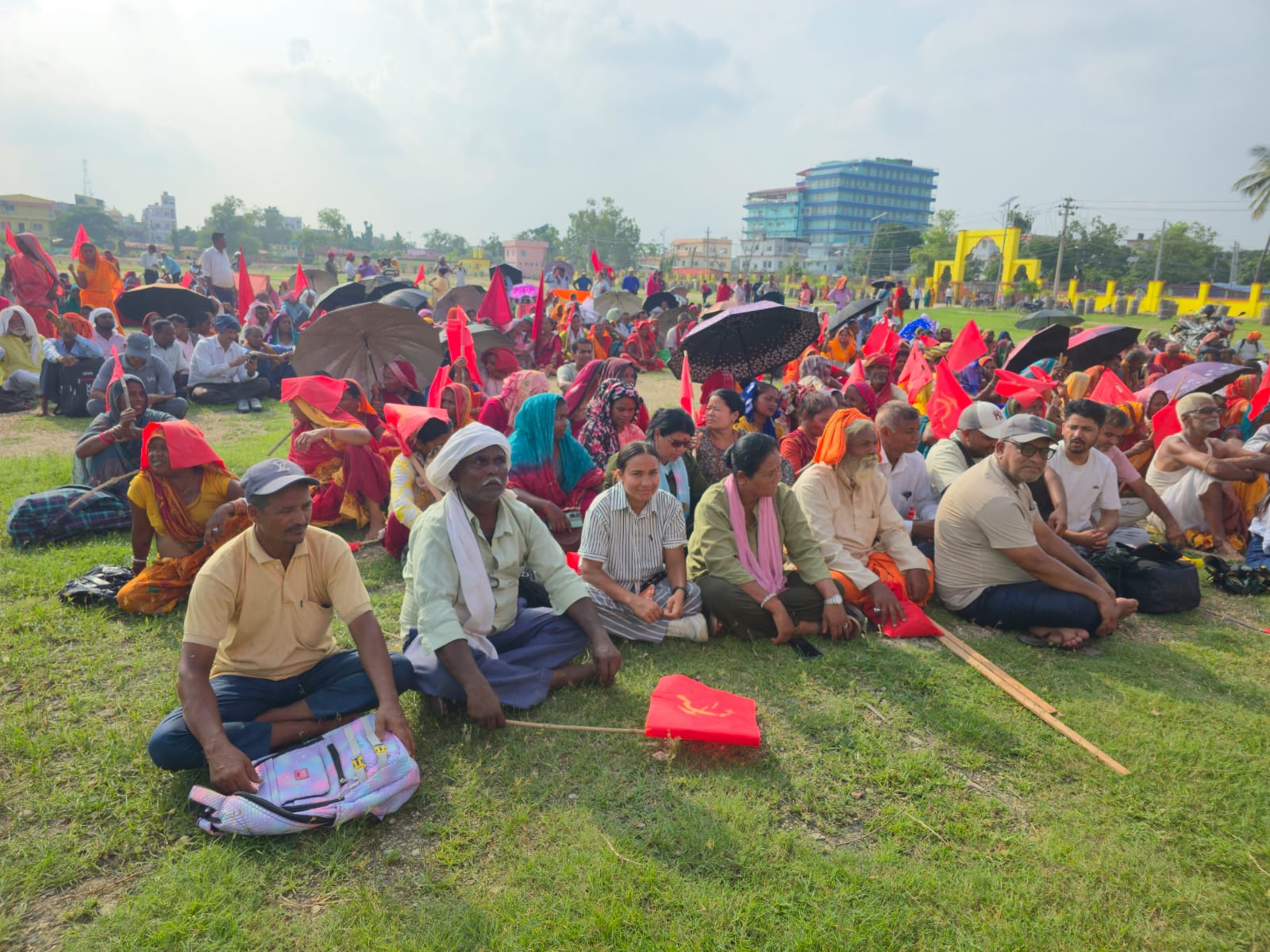
Loan shark victims embark on their third justice march, traveling on foot from Janakpur to Kathmandu. File photo
Another described repaying more than the original loan amount only for the lender to deny in community mediation that any repayment had occurred, resulting in the auction of the family’s land.
A third victim said a lender who had accepted repayment through a wife while the husband worked abroad later claimed the loan document had simply been torn up rather than settled, and denied ever receiving the money.
These are not isolated grievances but part of a well-documented economic pattern in Nepal’s Terai region, where limited access to formal banking, high illiteracy among borrowers and weak regulatory enforcement have allowed informal lenders to operate for generations with near total impunity, despite government commissions and an anti-loan-sharking ordinance introduced specifically to curb the practice.
What is the current status of Nepal’s cooperative fraud crisis and victim compensation?
The cooperative fraud crisis, involving billions of rupees embezzled from savings and credit cooperatives across the country, remains only partially addressed despite the government beginning a formal refund process in May 2026. Around 76,000 depositors linked to cooperatives officially declared problematic are owed a combined total of roughly Rs 46 billion, and refunds so far have reached only a small fraction of that figure, with the Problematic Cooperative Management Committee returning under Rs 1.4 million to the first 378 small depositors in its initial phase.
The government has prioritized savers with deposits under Rs 100,000 through a revolving fund built partly from Finance Ministry allocations and partly from loan recoveries from cooperative borrowers, but the fund’s total size, around Rs 600 million as of May, is dwarfed by the scale of what is owed. Separately, a national federation representing cooperative victims has pointed out that around 500 cooperatives beyond the 23 officially declared problematic have also failed to return depositors’ money, meaning tens of thousands of additional victims remain entirely outside the current relief mechanism.

Cooperative depositors stage a protest in Kathmandu, demanding the return of their savings and faster government action to address Nepal’s long-running cooperative fraud crisis. File photo
High-profile legal cases connected to the scandal, including those involving Rastriya Swatantra Party chairman Rabi Lamichhane, continue to move slowly through multiple district courts, and the recent decisions by multiple district courts to drop money-laundering and organized-crime charges in related cases has deepened public scepticism about whether accountability will ever match the scale of the losses.
Why are farmers facing a fertilizer shortage during this year’s monsoon planting season?
Nepal’s chronic fertilizer shortage this year has been compounded by a specific external shock, tension in West Asia disrupting the Gulf region supply routes through which most of the country’s chemical fertilizer is imported, layered on top of Nepal’s long-standing structural weaknesses in procurement planning, storage and distribution.
Demand during the paddy transplantation season alone runs to around 250,000 tonnes, and officials acknowledged in the spring that available stock would likely cover only a portion of that need, prompting an emergency government-to-government request to India for supplementary supply.
The Cabinet approved procurement of 80,000 tonnes from India in early May before later scaling that back to 50,000 tonnes as global prices eased, with deliveries hoped to arrive by mid-August, well after peak planting demand.

In the meantime, farmers across districts including Saptari, Banke, Bardiya, Rautahat and Palpa have described transplanting paddy without adequate fertilizer, delaying planting until seedlings dried up in the fields, or crossing into Indian markets to buy fertilizer informally, sometimes facing humiliating treatment from Nepali police upon their return for carrying what amounts to smuggled agricultural inputs.
Government spokesperson has simultaneously claimed that improved supply management has prevented shortages this year, a claim that sits uneasily against the accounts farmers themselves are giving from the fields.
How is the erratic monsoon compounding the hardship facing farmers this year?
Beyond the fertiliser shortage, farmers are contending with a monsoon that arrived roughly a week late on June 19 and then stalled after covering only parts of Gandaki and a small section of Lumbini province, leaving large stretches of the central and western Terai dry with temperatures hovering near 40 degrees Celsius during what should be the height of the planting season.
Falling groundwater levels have rendered many shallow tube wells unusable, and where electricity is available to power water pumps, farmers report voltage too low to operate them effectively, compounding the difficulty of irrigating fields that depend on the monsoon for roughly 80 percent of their water supply.
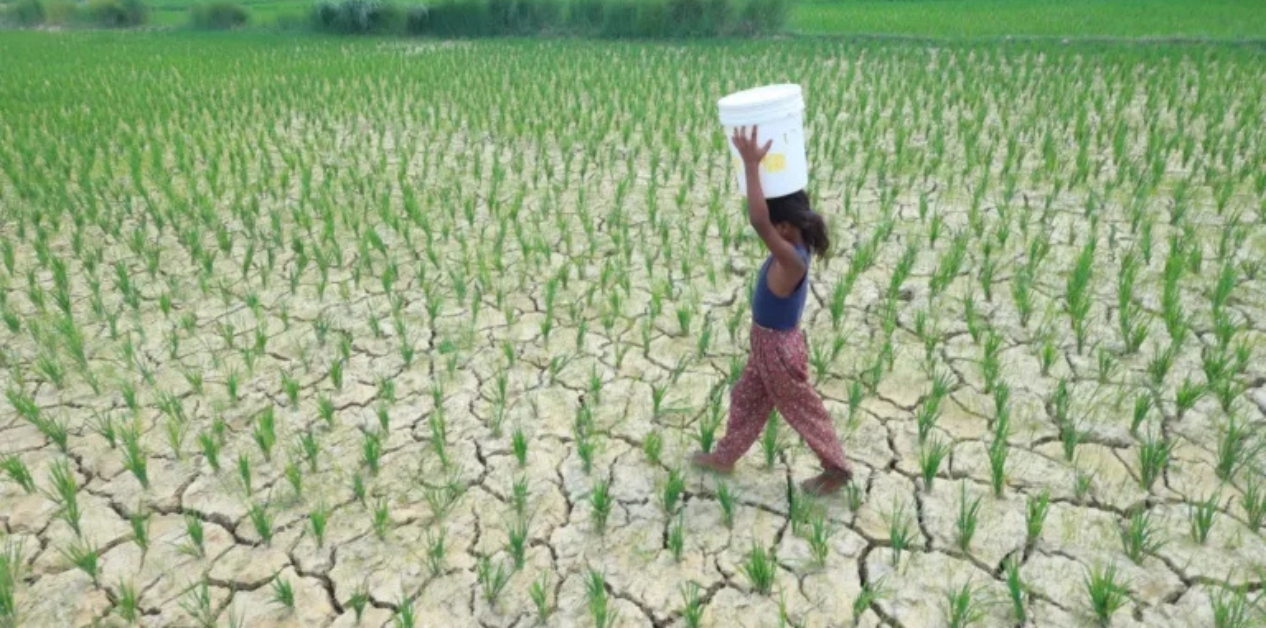
The drought experienced in Madhesh Province during the 2025 monsoon period. Photo: UNICEF
Farmers who have already invested in ploughing, seed beds and partial fertilizer using remittance money sent home by family members working in the Gulf describe watching seedlings crack and die in unwatered soil, forcing them to spend again on a second batch of seedlings with no guarantee that the second attempt will fare any better.
Economists have noted that even a ten percent shift in paddy production, given rice accounts for roughly two-thirds of Nepal’s cereal consumption and over half its caloric intake, can move national economic growth by close to half a percentage point, meaning this season’s combination of erratic rainfall and input shortages carries consequences well beyond the individual farming households currently bearing its weight.
How does the Balen Shah government’s record over its first months compare with its original promises?
The government took office in March 2026 on the strength of a detailed governance agenda, including a Good Governance Roadmap and a 100-point reform action plan, that explicitly promised faster resolution of the cooperative crisis, more humane treatment of landless and informal settlers, reformed agricultural input distribution and a generally more responsive relationship between citizens and the state than previous administrations had delivered.
On some fronts, incremental progress is real and measurable. Land ownership certificates have begun reaching genuinely landless households in Bardiya for the first time in years, cooperative refunds have started flowing however slowly, and a new Land Management Committee has replaced a long-dysfunctional land commission structure.
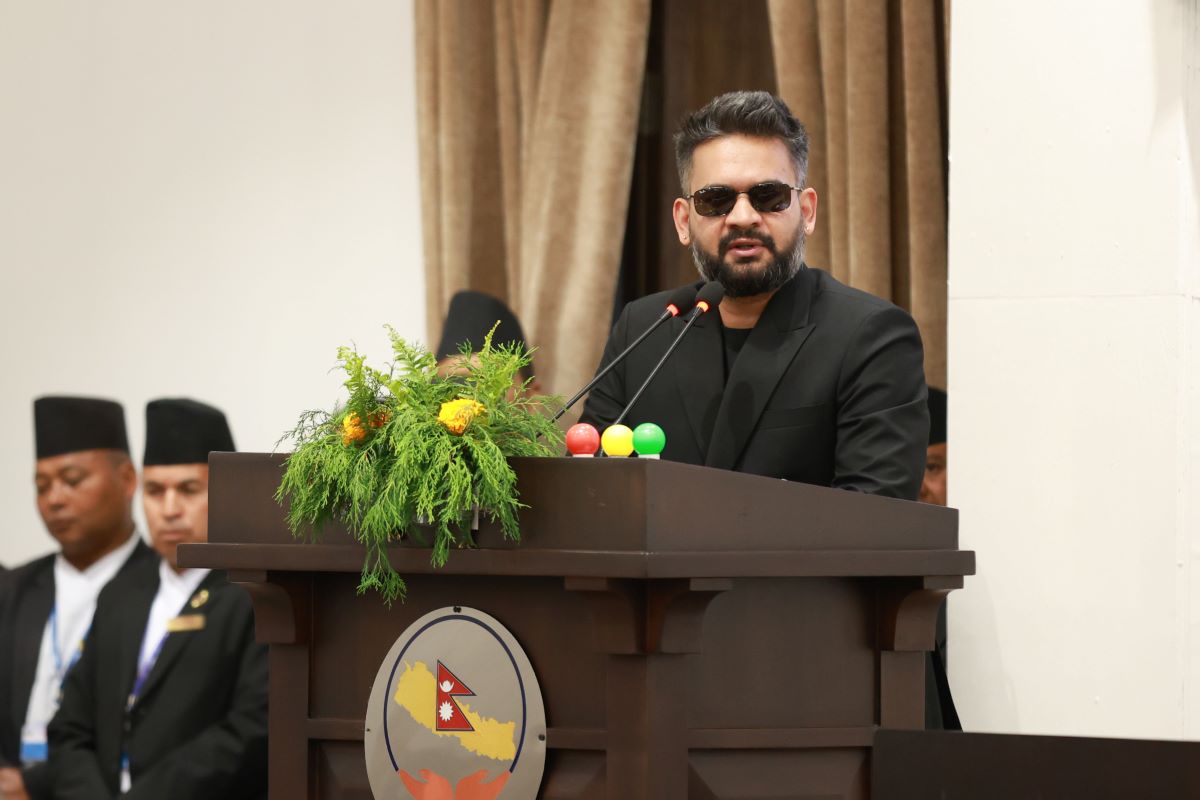
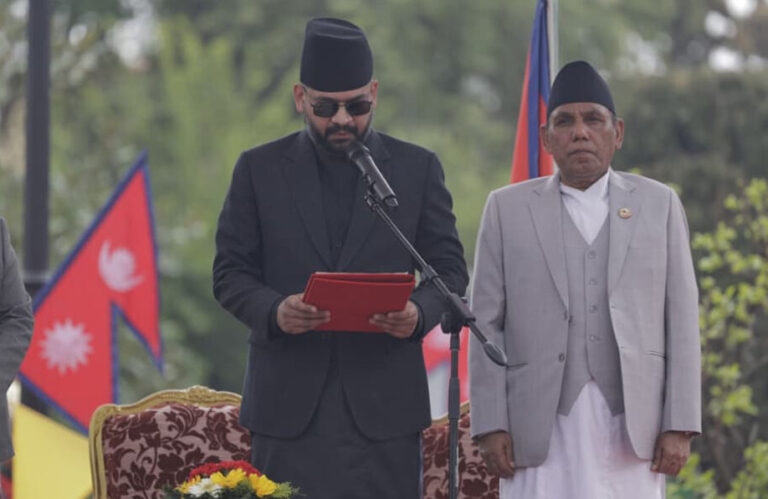
Prime Minister Balendra (Balen) Shah addressing the House on May 31, 2026. Photo: Nepal Photo Library
On other fronts, the gap between promise and delivery has widened into the same pattern of earlier governments, evictions proceeding ahead of court rulings, holding centres inadequately sited and provisioned, fertilizer shortages recurring despite assurances otherwise, and loan shark victims marching for a cause the state has now failed to resolve across at least two administrations.
The government’s defenders argue that structural problems accumulated over decades cannot be solved within months, a defence Shah himself has made explicitly regarding the landless settlement crisis, while critics argue that the manner of execution, evicting first and planning second, reflects a choice about priorities rather than an unavoidable constraint of time.
What effect is this accumulation of crises having on the morale of Nepal’s poorest citizens?
The cumulative psychological toll on displaced, indebted and economically precarious Nepalis appears to be deepening rather than easing, based on the accounts gathered from holding centres, loan shark marchers and bereaved families this month. Repeated experiences of promises not kept, whether a fifteen-day shelter stay stretching past two months, four written agreements on loan sharking left unimplemented, or a flood-safe holding centre that itself flooded, produce a specific and corrosive kind of despair distinct from ordinary economic hardship, the sense that no institution exists capable of hearing or resolving a grievance through legitimate means.
This is precisely the dynamic that preceded both Prem Prasad Acharya’s death in 2023 and Ganesh Nepali’s death this week, and it is visible in smaller ways throughout the accounts collected here, in a child who no longer wants to study after being promised and then denied a hostel place, in a mother who has stopped believing government representatives who cannot say what happens next, and in farmers who describe humiliation as much as financial loss when their access to basic agricultural inputs depends on informal cross-border purchases.
Civil society voices have specifically warned against treating such episodes as isolated individual crises rather than symptoms of a wider erosion of trust between the state and the citizens it governs.
What other pressing issues are affecting ordinary Nepalis right now that deserve attention alongside these?
Beyond the crises detailed above, several other pressures are compounding the difficulty of daily life for Nepal’s working population this season. Continued heavy outmigration of young working-age Nepalis for foreign employment, often financed through exactly the kind of informal high-interest borrowing described by loan shark victims, remains both a safety valve for unemployment and a source of family financial fragility whenever remittance flows are interrupted or workers return early.
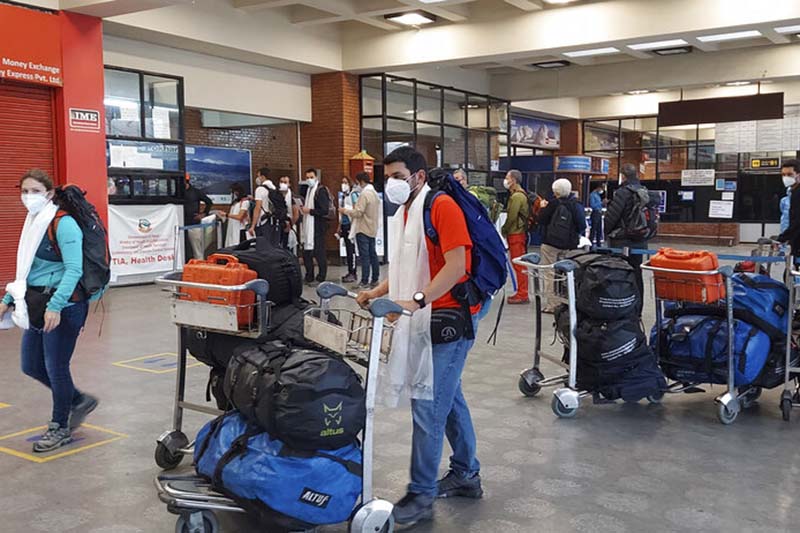
Around 2,300 Nepalis leave the country for foreign employment every day, reflecting the continued reliance on overseas jobs. File photo
Rental market discrimination against displaced settlers, with landlords reportedly asking about caste, employment status and prior settlement history before refusing tenancy, is closing off the very housing solutions the government is directing evicted families toward. The mismatch between the government’s Rs 15,000 monthly rental support and actual Kathmandu Valley rents commonly running Rs 25,000 to 30,000 leaves displaced families with no mathematically viable path to independent housing even when they want one.
Meanwhile, families with ongoing medical needs among the displaced population describe the disruption of settled community and hospital access as compounding existing health burdens in ways that are rarely captured in official casualty or relief figures, suggesting the true human cost of this year’s overlapping crises extends well beyond the headline numbers of deaths, floods and financial losses currently being tracked.
What has the government’s institutional response looked like across these different crises, and is it working?
Across each of these crises, the government’s institutional response has followed a broadly similar pattern, formation of a committee or commission after public pressure builds, partial and incremental relief measures, and continued execution problems in the field despite policy announcements at the centre.
A high-level probe panel was formed within hours of Ganesh Nepali’s death. A Land Management Committee replaced the previous land commission structure. A Problematic Cooperative Management Committee began disbursing refunds, however slowly. An emergency fertilizer import arrangement was negotiated with India.
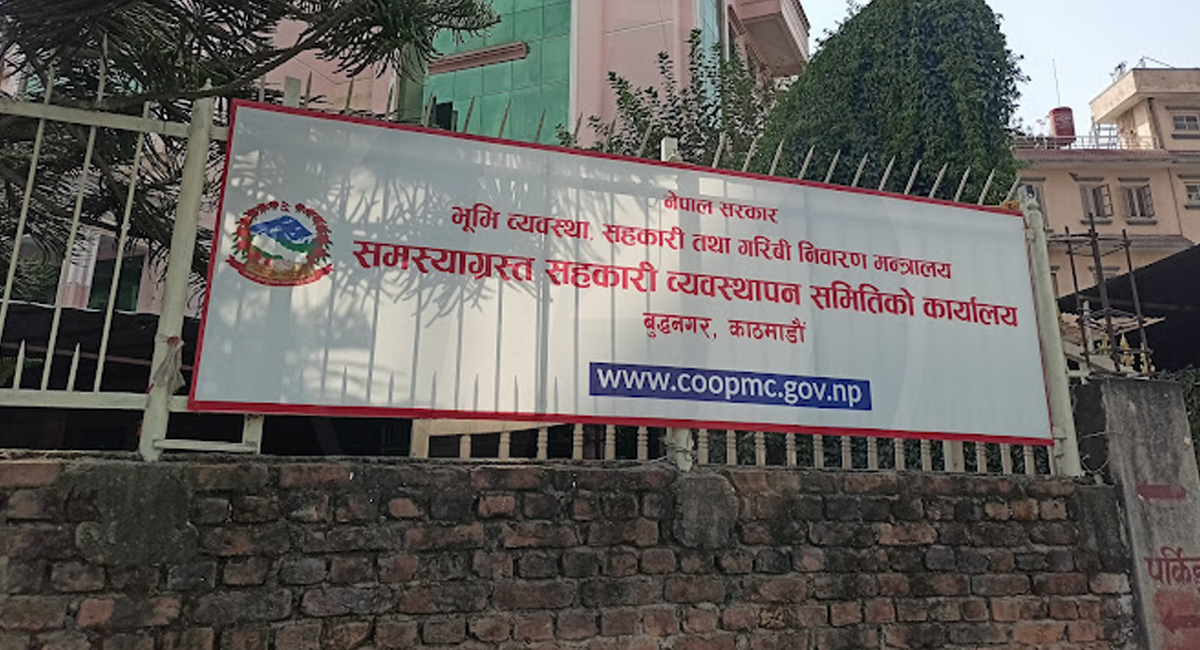
Office of the Problematic Cooperative Management Committee. File photo
In each case, the institutional response has been proven too slow, too small in scale, or too poorly executed at the local level to prevent continued suffering among the affected population.
The recurring flooding at the Kirtipur holding centre, occurring twice within a matter of weeks despite the first incident having already exposed the site’s vulnerability, is perhaps the starkest illustration of how announcements of institutional reform at the national level are not consistently translating into competent execution on the ground, where the people actually living through these crises encounter the state.
What should be watched in the coming weeks to judge whether this pattern of crisis is being genuinely addressed?
Several concrete developments over the coming weeks will indicate whether the government’s response moves beyond symbolic gestures toward substantive resolution. Whether the high-level probe into Ganesh Nepali’s death results in meaningful accountability, rather than the detention of a small number of municipal officers followed by the matter fading from public attention, will be an early test.
Whether displaced families from the Kirtipur holding centre are moved to genuinely flood-safe accommodation in Kharipati or elsewhere, rather than shuffled between similarly vulnerable sites, will indicate whether the government has actually absorbed the lesson of the past two floods.
Whether the loan shark victims marching toward Kathmandu receive a substantive response within the fifteen days organizers have allotted before threatening larger protests, rather than another unimplemented agreement, will reveal whether this fifth or sixth iteration of the same protest cycle produces any different outcome than its predecessors.
And whether cooperative refund disbursements accelerate meaningfully beyond the current pace of a few hundred depositors processed at a time, against tens of thousands still waiting, will determine whether trust in that specific institutional response can be rebuilt before public patience runs out entirely.
Each of these will offer a clearer answer than any single government statement about whether Nepal’s governing culture is actually changing or merely rearranging its symbols of responsiveness while the underlying pattern persists.