Kathmandu
Sunday, July 12, 2026





Investigations show that Nepal's recurring air disasters stem not only from difficult terrain and volatile weather but also from systemic regulatory failures, poor oversight, neglected safety recommendations, and delayed reforms.
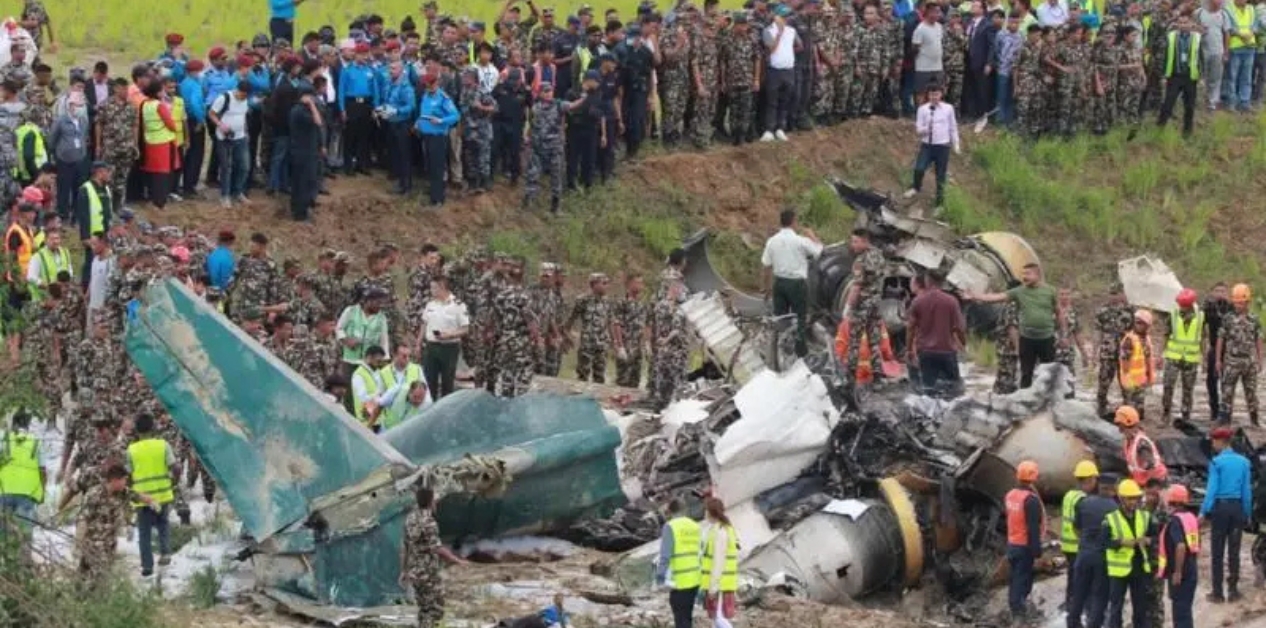
KATHMANDU: Bad weather is considered one of the leading causes of aviation accidents. Adverse weather conditions such as heavy rain, fog, and storms increase the risk of crashes. To mitigate these risks, the Civil Aviation Authority of Nepal (CAAN) has implemented a rule stipulating that domestic flights will not be permitted unless the weather conditions across the flight route and the destination are completely clear. However, in Nepal, accidents continue to occur not only due to bad weather but also because of difficult geographical terrain.
Nevertheless, these two factors alone are not the only reasons making Nepali skies perilous. Experts point out that the cycle of accidents persists because the reports generated by investigation committees formed after crashes are ignored, and safety standards are not effectively implemented.
In approximately seven decades since 1956, Nepal has witnessed 112 aviation accidents (involving both airplanes and helicopters), claiming 965 lives. Various study reports have pointed out that the accident rate has surged due to the non-implementation of a nine-point safety directive introduced by CAAN.
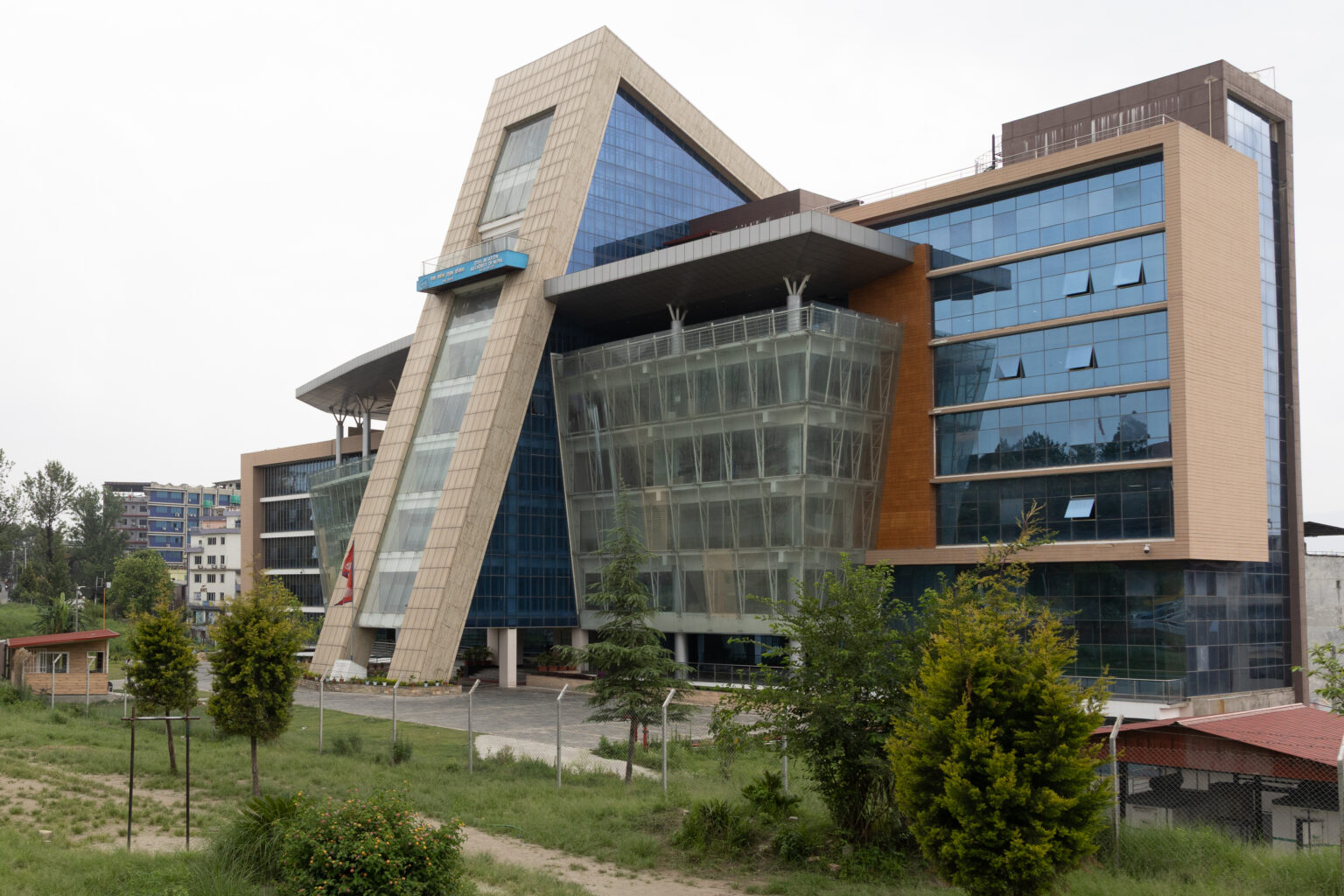
Civil Aviation Authority of Nepal. Photo: Bikram Rai
Ratish Chandra Lal Suman, former Director General of the Civil Aviation Authority and head of several aviation accident investigation commissions, states that the causes of these crashes are multifaceted. He notes that having the regulator and the service provider bundled within the same institutional structure, weaknesses in the inspection system, a shortage of skilled technical manpower, negligence, and a weak safety culture have kept Nepal’s aviation sector hazardous for years.
“The rate of aviation accidents in Nepal has risen because the safety standards introduced by CAAN are not enforced during flights,” Suman says. “Due to lax monitoring, the international community continues to view Nepali aviation services as unsafe.” According to him, secondary causes of accidents include technical failures, pilots losing control of the aircraft, runway excursions, unauthorized objects entering the runway, and mid-air collisions with birds or other animals.
While the world trusts aviation as the safest mode of transportation, in Nepal, it has instead become synonymous with accidents and insecurity for years. After every air crash, commitments to safety improvements are voiced for a few days, an investigation committee is formed, and a report is prepared. However, as time passes, those commitments cool down, and the recommendations remain buried in files. Then, another accident triggers the exact same question: Why couldn’t Nepal’s skies be made safe?
Regulator and service provider combined
In Nepal, the body that grants flight permissions and the regulatory body are one and the same—the Civil Aviation Authority of Nepal. This very structure, where the responsibility for permitting flights and monitoring them lies within a single agency, remains highly controversial.
In other countries, the regulatory and service-permitting bodies operate independently. In South Asia, only Bangladesh and Nepal still have a single entity managing both roles. The International Civil Aviation Organization (ICAO) has repeatedly raised questions regarding Nepal’s aviation structure. CAAN is among the authorities of 193 nations under ICAO.
“The rate of aviation accidents in Nepal has risen because the safety standards introduced by CAAN are not enforced during flights,” Suman says. “Due to lax monitoring, the international community continues to view Nepali aviation services as unsafe.” According to him, secondary causes of accidents include technical failures, pilots losing control of the aircraft, runway excursions, unauthorized objects entering the runway, and mid-air collisions with birds or other animals.
Among many reasons for lax regulation in aviation services, the primary cause is this dual role played by the Authority. Former Director General of CAAN, Rajan Pokhrel, says, “Impartiality is lost when a single body takes on both roles of service provision and monitoring. The one giving permissions is the same as the one checking for mistakes. In such a scenario, a conflict of interest is inevitable.”
Nepal has realized the necessity of a separate aviation monitoring body only after enduring 112 accidents. The Ministry of Culture, Tourism, and Civil Aviation has tabled a bill in the House of Representatives to establish and manage the Aviation Services Authority, for which the ministry is currently seeking feedback. Alongside this, the Civil Aviation Authority of Nepal Bill is also pending in the House of Representatives. The Authority Bill had been under discussion since 2020, while the Aviation Services Authority Bill was pushed forward in 2026. The ministry has now advanced both bills simultaneously.
Ignored while blacklisted
The European Union, which strictly follows ICAO guidelines, has kept Nepal on its aviation blacklist citing the high rate of air crashes. ICAO had placed Nepal on its Significant Safety Concerns list from 2013 to 2017 before removing it. However, the EU has maintained its ban, stating that further improvements are required in Nepal’s civil aviation sector.
To enforce aviation safety standards, CAAN houses a Civil Aviation Safety Directorate. This directorate was set up in 2009 after ICAO repeatedly questioned the authority’s impartiality. However, it remains ad-hoc, and ICAO has not formally accepted it.
Aviation safety departments have been established within airlines under this directorate, inside of which quality assurance departments have also been formed. The authority is supposed to regulate all of them. However, the manpower required to inspect airline companies is severely deficient. There are only 11 engineers tasked with inspecting aircraft maintenance, and they are expected to monitor 86 domestic airplanes and 33 helicopters.
The authority lacks permanent expert manpower to regulate pilots. It has hired six expert personnel (Senior Flight Operations Inspectors) on temporary contracts. Among them are two jet aircraft inspectors, two turboprop inspectors (ATR, Bombardier), and two senior pilots. There is also one dangerous goods inspector and two cabin safety inspectors on contract. “Although the existing manpower CAAN has for monitoring airlines and pilots is skilled, it is insufficient,” says former Director General Pokhrel.
However, authority officials believe the current manpower is adequate. “The Office of the Auditor General cannot employ 10,000 auditors. Similarly, it doesn’t work that way here,” says Gyanendra Bhul, Information Officer for CAAN. “We have designated responsible individuals within the airlines themselves. The primary regulation of an airline must be done by the airline itself. When they report a fault, we go in for inspection.”
There are about 20 other inspectors who belong to the airlines themselves. The CAAN team deploys to the field only if the respective company files a report. “One cannot confidently claim that inspectors from the respective airlines report their company’s shortcomings to CAAN exactly as they are,” points out former Director General Pokhrel.
There are 454 pilots in Nepal, consisting of 340 airplane pilots and 114 helicopter pilots. On the domestic front, 53 airplanes and 33 helicopters conduct hundreds of flights daily.
Why is Nepali sky unsafe?
A High-Level Civil Aviation Study and Recommendation Committee has concluded that improvements are required across multiple facets of aviation safety. It stated that the issues lie not just within CAAN’s inspection manpower, but structural and technological upgrades are desperately needed. Led by former Supreme Court Justice Anil Kumar Sinha, this high-level panel on civil aviation sector reforms was formed on October 18, 2024. The committee submitted its report to the government on September 5, 2025. The report demonstrated that systemic, policy-level, and administrative failures—rather than the skies, weather, or hills and mountains—are to blame for the rising number of aviation accidents in Nepal.
According to the report, passengers and airline companies are levied an additional 40% tax in the name of airport fees, ticketing fees, and fuel surcharges. Even though passengers and airlines pay 40% more, the money is not spent on aviation safety technology. Instead, that capital is spent on physical infrastructure like buildings, terminal construction, and flattening hills.
There is no investment in state-of-the-art radar, advanced communications, or navigation. “No investment is seen in the aircraft’s Communication, Navigation, and Surveillance (CNS) system, which serves as the eyes and ears of an airport. This is another major cause of aviation accidents,” the report notes.
The committee raised questions about the quality of the technical manpower deployed for maintenance. Furthermore, questions were raised regarding the monitoring of pilots, flight engineers, cabin crew, and dispatchers. Although the authority employs experienced inspectors for aircraft inspections, they are hired on temporary contracts. The current technical staff reports to the Operations Division of CAAN’s Aviation Safety Department. However, that division is staffed by pilots and co-pilots who are less experienced and junior. “We have recommended dismantling a structure where experienced inspectors are forced to report to individuals junior to them,” Sinha says.
It has also become evident that the practice of hiring pilot inspectors on one-year contracts needs reform. “Even if it is on a contract basis, the duration must be longer. It should be structured in a way that allows foreign inspectors to be brought in and deployed for monitoring,” Sinha adds.
The report suggests that the Civil Aviation Authority of Nepal must be clearly split into an aviation regulator and a service provider (airport operations, air navigation services). It also suggests that the contradictions and complexities between the Civil Aviation Act of 1959 and the Civil Aviation Authority of Nepal Act of 1996 must be resolved by coordinating and revising both acts. Furthermore, it recommends establishing a permanent “Nepal Aviation Safety Bureau” for the impartial investigation of air accidents.
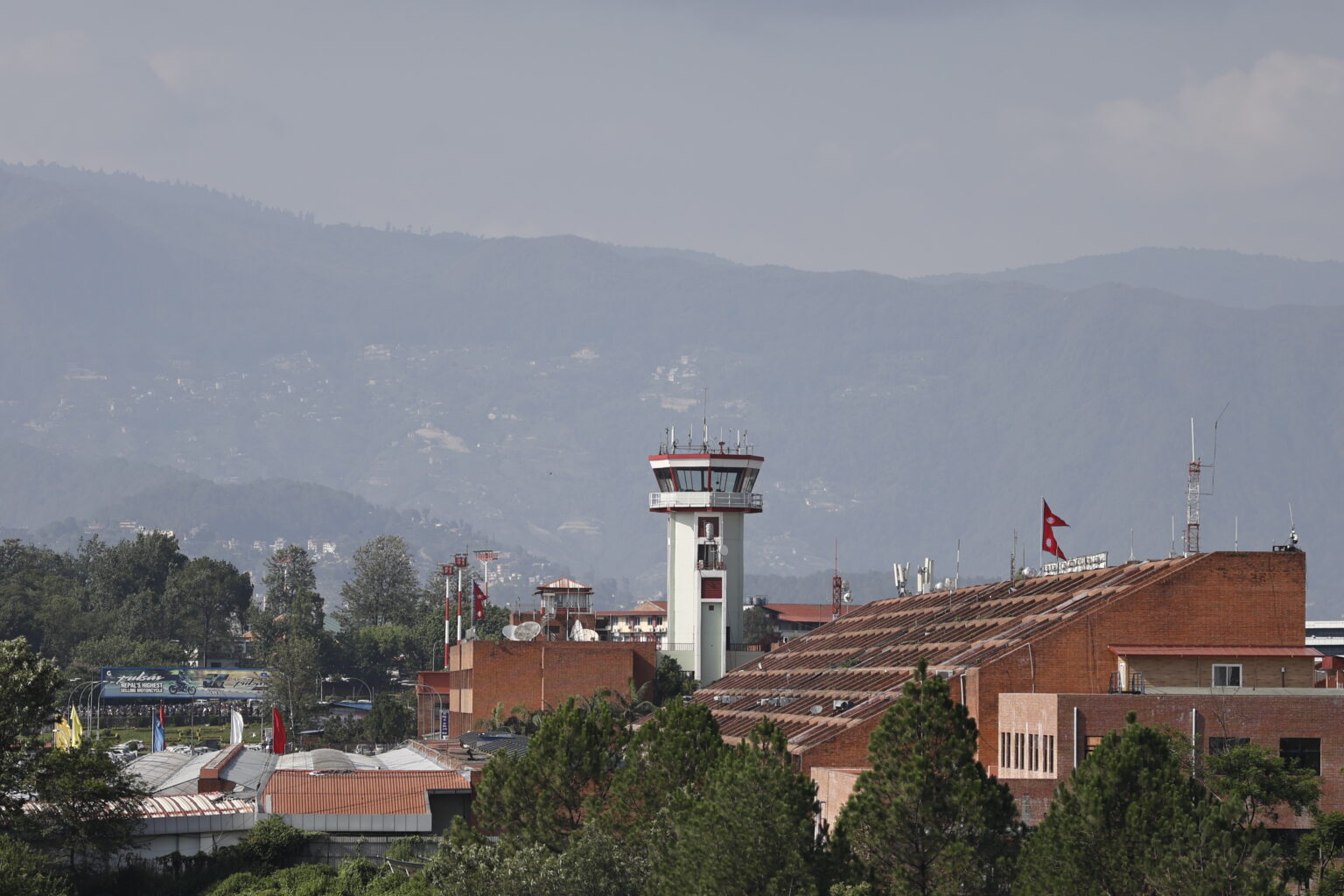
Tribhuvan International Airport. Photo: Bikram Rai
Senior pilots have raised concerns regarding the existing system of aircraft maintenance. According to them, Nepal lacks adequate hangars for repairing aircraft. At Tribhuvan International Airport (TIA), only Nepal Airlines Corporation and Buddha Air possess hangars. CAAN owns one hangar each in Pokhara and Nepalgunj. Yeti, Shree, and Himalaya Airlines have received permission to construct hangars at TIA. “There aren’t enough hangars to repair aircraft. There is a space crunch at Tribhuvan Airport. Hangars should be built outside Kathmandu as well. Due to the lack of hangars, we are forced to repair aircraft in the open,” says senior pilot Vijay Lama. “Even automobiles are repaired and serviced in secure spaces. Here, we see aircraft being hammered away in open fields. This is simply unacceptable.”
When the wide-body flew without permission
On June 23, 2024, the wide-body Airbus A330 ‘Annapurna’ was flown directly from Dubai, UAE, to Naples, Italy, without securing permission from the authority. CAAN’s Engineering Planning Department sent an email to halt the flight. Despite this, the pilots flew the aircraft on the orders of the Continuing Airworthiness Management Organization (CAMO) Manager / Deputy Managing Director of Nepal Airlines Corporation (NAC). The aircraft had already breached its maintenance schedule deadline; hence, management resorted to flying it to the Italian maintenance firm, Atitech S.p.A., without obtaining clearance.
The aircraft flown to Italy in this manner was not even handed over to Atitech. It was merely left parked in the lot of the Approved Maintenance Organization. This indicates that the pilots were operating under immense pressure from the corporation’s management.
Although contract negotiations with the company were ongoing, the approval phase was incomplete. After the aircraft was flown without authorization, the then Minister for Culture, Tourism, and Civil Aviation, Hit Bahadur Tamang, formed an investigation committee on July 2 and 3. The committee, led by former CAAN Director General Tri Ratna Manandhar, submitted its report on July 16. The report laid out a detailed list of ongoing negligence regarding the corporation’s international flight safety.
It was discovered that the corporation sent the wide-body to Italy in violation of procurement regulations. At that time, the bidding process had not even concluded. The corporation’s evaluation committee recommended Atitech on June 16, 2024. Atitech received a ‘Letter of Intent’ on June 18, 2024. Once other bidders are notified of this, a grace period remains for lodging complaints. Only after that does the contract phase begin. Before completing these procedures, the corporation flew the plane to Italy and left it stranded.
Taking an aircraft for maintenance without a properly executed agreement and without regulatory clearance was illegal and deeply flawed. Treating it as severe negligence, the authority barred the then Executive Chairman of the corporation, Yubraj Adhikari, from exercising his authority as the Accountable Manager. The Captain and Co-pilot who flew the wide-body, alongside the corporation’s Operations Director, were also suspended from executing their professional duties. NAC spokesperson Archana Khadka admits to some lapses in the flight process, stating, “The flight clearance procedure for the aircraft was underway. There were merely a few technical shortcomings in the procurement process.”
The committee pointed out that the corporation’s management has consistently demonstrated recklessness regarding aircraft maintenance. “The list of tasks that need to be executed within deadlines is never prepared on time. Even when prepared, it is not implemented, leading to rushed, last-minute work,” the report states.
That report was ultimately shelved by the Ministry of Culture, Tourism, and Civil Aviation under the leadership of the then Minister Badri Prasad Pandey. “We presented a report detailing exactly what we observed. The ministry likely did not consider it important to implement that report,” Manandhar reflects. “By delivering the report, all we managed to do was earn enemies.”
It has been seven years since the wide-body aircraft was brought into operation. Extreme negligence is evident within the corporation, characterized by a lack of foresight and planning to secure backup engines despite knowing failures could occur. This exact plight is repeatedly faced by the wide-body A330 and the Airbus A320.
Confusion over maintenance schedules
The corporation repeatedly compromises on aviation safety. A history of negligence regarding maintenance is apparent. Chapter 24 of the institution’s Financial Regulations of 2008 contains provisions regarding the procurement, overhaul, and repair of engines and spare parts.
According to Regulation 216 (1), the head of the engineering department must fix a maintenance schedule for procuring, overhauling, repairing, or modifying engines or spare parts based on timing and cost-effectiveness. Such aircraft components have an average lifespan. A list and schedule must be prepared well in advance based on their replacement cycles. However, the corporation never creates a schedule on time. “The list of tasks that need to be executed within deadlines is never prepared on time. Even when prepared, it is not implemented, leading to rushed, last-minute work,” the report notes.
This fate befell the Airbus A320. The aircraft was flown back within 12 days of being taken to Israel Aerospace Industries (IAI) by fitting it with a leased engine. However, the other engine developed issues within just two months. The company failed to provide a replacement engine as per the prior agreement. Consequently, the aircraft remained grounded for 149 days.
On April 26, 2024, the aircraft returned to Kathmandu with a leased engine. The corporation operated the aircraft for one year and nine months entirely dependent on a leased engine. The engine leasing episode caused a loss of over 1.5 billion rupees to the corporation. Lacking a provision for backup engines, the corporation does not even have a contingency plan when issues emerge. Employees stated that the corporation’s leadership failed due to political interference and negative influences. During the investigation, staff revealed that they faced immense pressure from upper management. The Manandhar committee report mentions that threats of disciplinary action were issued if instructions were not followed, and actions were taken if employees still refused to comply. “We presented a report detailing exactly what we observed. The ministry likely did not consider it important to implement that report,” Manandhar states. “By delivering the report, all we managed to do was earn enemies.”
Meanwhile, Ministry spokesperson Jayanarayan Acharya expresses complete ignorance regarding the report.
Abandoned investigation reports
Nepal has a long history of aviation accidents. The first crash occurred in Simara in 1955. From 1960 to 2024, 112 crashes occurred, resulting in the loss of 965 lives. Among these, 98 people died in 41 helicopter crashes, 373 perished in 10 foreign aircraft crashes, and 25 lost their lives in 8 single-engine aircraft accidents.
Additionally, 469 individuals died in 51 multi-engine aircraft crashes. The Yeti Airlines crash in Pokhara on January 15, 2023 is regarded as the most horrific disaster in domestic aviation history. That incident killed 72 people, including the crew and passengers.
Suman notes that most crashes involved small aircraft flying in hilly terrains. The government forms an inquiry commission following every accident. These commissions point out various causes of the crashes and offer recommendations to the respective airlines and the authority to rectify shortcomings. However, the willingness to correct mistakes remains critically low.
“The main reason the EU keeps us on the blacklist is the high accident rate. The recommendations we provided instructed them to fix these errors. The moment errors are corrected, the accident rate will fall,” Suman says. “Since the accident rate hasn’t dropped, it shows the recommendations were not implemented.” According to him, commission reports are rarely put into practice. Until they are implemented, accidents will not decrease.
The government has also admitted to these weaknesses. Ministry spokesperson Acharya states that a lot of work remains to be done to reform the aviation sector. “The inspection manpower at the authority is low. There are weaknesses in the capacity of the ministry’s aviation branch. Work remains to be done regarding acts, laws, and directives,” he says. “There are tasks for the authority to perform, and tasks for us. We are actively working on how to bring about reforms.”
Absence of ‘flight dispatch’ for domestic flights
Every flight relies on ‘flight dispatch’. This is an essential procedure for conducting a safe flight operation. Flight dispatchers are crucial to this process, operating from the ground to ensure a successful flight.
Once a flight concludes, a new dispatch must be prepared for the next route. This includes weather monitoring, technical assessment of the aircraft, fuel planning, load balancing, flight permissions, flight tracking, and emergency communication responses. However, flight dispatch is not conducted for every single route in domestic operations. “This is not implemented 100%. If this were to be enforced, CAAN would have to step out to inspect the aircraft before every single takeoff,” Suman says.
“VFR flights are supposed to be dictated strictly by the weather. How are VFR flights being managed? I raise this question repeatedly,” says senior pilot Vijay Lama. “Either let us convert all airports into IFR.”
At most airports, the role of flight dispatchers is being carried out by staff from the airlines’ marketing departments. There are no flight dispatchers in Lukla, which is an exceptionally high-risk airport. An Air Traffic Controller (ATC) based in Lukla states that this is the case not just there, but at almost all airports, where airlines handle the flight dispatcher’s role themselves. “In international aviation, a new dispatch sheet must be created for every route. In domestic aviation, where planes fly one leg after another without stopping, are they creating fresh dispatches?” senior pilot Lama questions. There is only one dispatcher at the authority. Conversely, Information Officer Bhul claims that dispatching takes place for every single flight.
Why are SOPs not being followed?
Flights operate under Standard Operating Procedures (SOPs). This spans everything from analyzing weather forecasts and preparing flight plans to conducting pre-flight aircraft inspections, verifying fuel quantities, and checking passenger and cargo loads. It also includes the phases followed during engine startup, communication with ATC, runway permissions and clearances, and adherence to aircraft speeds on the runway.
The airline’s flight safety department, quality assurance department, and the authority are all involved in this entire process. The authority sets the flight standards, and it is responsible for monitoring whether they are implemented. An SOP is a benchmark that must be followed not just by the pilot, but by ATCs, operators, ground engineers, and operations engineers alike.
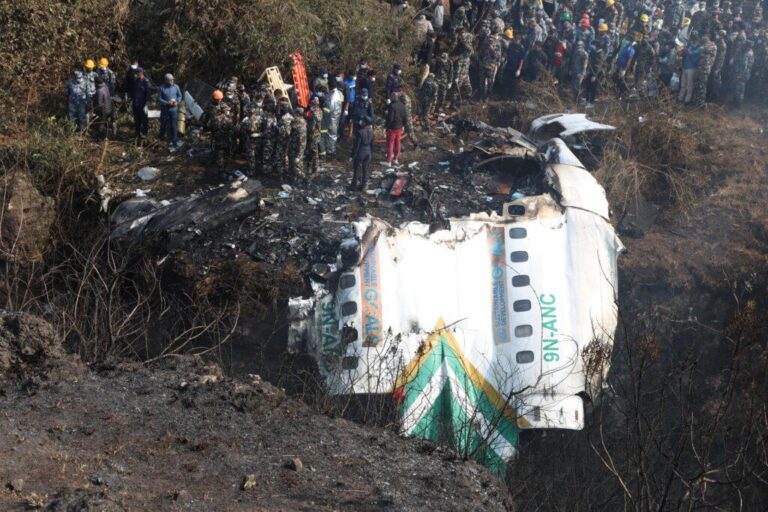
The Yeti Airlines plane crash in Pokhara. Photo: Social Media
Pilots are not the only ones to blame for negligence; the flight safety departments of the respective airline companies are equally responsible. The body tasked with monitoring them is CAAN’s Aviation Safety Directorate. The authority has delegated the vast majority of aircraft safety responsibilities to the airlines’ internal flight safety departments. “Every airline company operating under CAAN houses a separate safety department to ensure all flight safety standards are met. They design the safety benchmarks, and CAAN reviews them to ensure implementation,” Bhul explains.
ICAO binds the authority to a 19-point safety compliance roadmap for aviation safety. This includes issuing licenses and providing weather services, among other responsibilities. It also dictates what units to use in air transportation, how aeronautical charts are drawn, aircraft registration, servicing, air traffic services, the type of training provided to pilots, aeronautical telecommunications satellite-based services, search and rescue, post-accident investigations, and airspace management.
According to Bhul, the authority employs two main safety practices. It runs the State Safety Programme (SSP), while airlines develop a Safety Management System (SMS). All of these must meet ICAO standards. While ICAO conducts occasional audits, the authority must perform regular inspections. Despite reports indicating that SOPs were violated in the majority of accidents, the authority has failed to ensure effective enforcement.
High accident rate in VFR flights: The core of negligence
In Nepal, geographical conditions make flying inherently risky, further compounded by the adverse impacts of unpredictable weather. In hilly and high Himalayan regions, the weather changes within minutes. Airports in these zones operate under Visual Flight Rules (VFR). Aircraft flying under VFR are the ones that have crashed most frequently.
Two types of flight systems exist globally: IFR and VFR. Under VFR, standards are prescribed for the authority, airlines, pilots, and ATCs. These flights have fundamental prerequisites. VFR fundamentally relies on the pilot navigating by looking outside. It requires maintaining a safe distance from the ground and other aircraft. The pilot’s eyes are the primary tool. When the eyes can no longer see ahead, they must turn back immediately.
When flying above 10,000 feet, visibility must extend to eight kilometers. Pilots must remain 1,500 meters horizontally and 300 meters vertically clear of clouds. At that altitude, aircraft speeds are higher than normal, meaning if something appears ahead, there is sufficient time and distance to react.
Below 1,000 feet and in the airspace above it, five kilometers of visibility is sufficient. Pilots must stay clear of clouds, and the ground must be clearly visible. Those airspaces are less controlled areas; pilots must look out and protect themselves.
If the weather near an airport is bad, takeoffs and landings are prohibited. If the lowest cloud base drops below 1,500 feet or ground visibility falls below five kilometers, such flights must be halted. In this system, if a pilot is caught entering a cloud, they face disciplinary action.
Out of 33 operational airports in Nepal, VFR flights are conducted from 23. When executing such flights, immense focus must be placed on utilizing onboard instruments. Aircraft feature automated systems that collect and analyze weather data, known as the Terrain Awareness and Warning System (TAWS). This system provides pilots with information about upcoming weather conditions. In VFR flights, aircraft maintain contact with ATC, but there is no active coordination. Therefore, if a risk arises, the pilot must make the decision independently.
In adverse weather and around rugged hills, contact with the tower can be cut off. Sudden weather changes like clouds, fog, or heavy winds can destabilize the aircraft. Because instrument assistance is minimal, finding the path in foul weather becomes exceptionally difficult. Hilly terrain can obstruct walkie-talkie or radio communications. In such situations, TAWS, the instrument that warns of ground-mountain contours and altitude, continues to function.
“VFR flights are supposed to be dictated strictly by the weather. How are VFR flights being managed? I raise this question repeatedly,” says senior pilot Vijay Lama. “Either let us convert all airports into IFR.”
Both the pilot and the passengers must respect the weather updates provided by the tower. “Just because someone says the weather is good and tells you to come, should you go? A pilot cannot play with human lives,” Captain Lama asserts. “Nowadays, everyone has become a meteorologist. But pilots must not fly under coercion.”
Instrument Flight Rules (IFR) is a system based entirely on instruments and equipment. It is considered safe worldwide and is highly tech-driven. Pilots fly with the assistance of flight instruments like altimeters, attitude indicators, and GPS. Such flights secure permissions from ATC and maintain continuous contact. Flying under this system is possible even in bad weather, at night, inside clouds, or through thick fog. It follows high safety standards, predefined routes, fixed paths, and specific altitude protocols.
Modern aircraft are equipped with the Enhanced Ground Proximity Warning System (EGPWS), an advanced safety mechanism that minimizes the risk of controlled flight into terrain. It determines whether the aircraft is dangerously close to the ground or a mountain, whether a rapid descent is occurring, whether the proper altitude is being maintained, and whether a safe landing state exists as the runway approaches. The onboard GPS tracks the aircraft’s position and altitude, displaying a digital map of the surrounding terrain while providing altitude, speed, and heading data. It features a radio altimeter that states the actual distance from the sky to the ground.
Bhul argues that due to the abundance of hills, mountains, and gorges in hilly and high Himalayan regions, navigating purely on technology is highly difficult. He contends that providing IFR services in such places increases investment to a level that the government simply cannot recover. “Heavy investment must be made in ground equipment. Investing heavily in tech places a massive burden on the state. It ends up looking like excessive investment beyond what is necessary,” he says.
Small airports feature runways measuring just 500 meters. Implementing IFR requires a runway of at least 1,500 meters. Achieving that costs between 500 million to 600 million rupees per airport. “In terrains surrounded by hills, IFR cannot be installed at all. It would require cutting down mountains, which demands massive financial expenditure from the state,” Bhul explains.
Suman, however, maintains that IFR technology can be expanded incrementally. “Nothing is impossible. Whoever said IFR cannot be installed said so without understanding,” he notes. “Has a feasibility study ever been conducted anywhere regarding the installation of IFR?”
This technology is currently available at 10 airports, including Tribhuvan, Gautam Buddha, Chandragadhi, Biratnagar, Janakpur, Simara, Nepalgunj, Dhangadhi, and Rajbiraj, making night flights possible at these locations.
An obsession to build airports, a neglect to run them
Aviation infrastructure has reached a complicated state. There are 55 airports across the country, but only 33 are operational. Among those in operation, three are of international standard. Tribhuvan International Airport is the most active. On the domestic front, 30 airports are operational across the plains, hills, and mountain regions.
A total of 22 airports remain inactive, pointing to the fact that built infrastructure is underutilized. Aviation access in hilly regions appears to be shrinking. The number of aircraft available with the airlines operating in those areas is minimal. Nepal Airlines Corporation has two, Tara Air has three, Sita Air has two, and Summit Air has four—totaling just 10 aircraft. These planes operate only once a week on these routes, whereas a minimum of 15 flights are required to sustain a regular service on the same route.
Bhul states that the lack of small-sized aircraft to service these routes is the primary reason behind the closure of most of these airports. Additionally, the development of alternative transportation infrastructure in many areas has relatively reduced the necessity for air travel. Airline companies remain indifferent toward buying small aircraft. Coupled with this, the reduction in aircraft numbers due to crashes has made the problem even more complex.
Political parties have consistently made airport construction an integral part of their election strategies. This trend has led to an inflation in the number of airports in remote hilly areas, as seen with the Kamal Bazar Airport in Achham. Even as regular flights fail to take place at Sanfebagar in Achham, another airport has been built nearby.
Despite building airports in remote areas, the authority faces challenges in operating effective services. On one hand, airports are not getting aircraft, while on the other hand, the government addressed preparations to build an international airport in Nijgadh in the 2026 / 2027 budget. Airport construction continues in Arghakhanchi and Kalikot.
While ample investment has poured into infrastructure, there is a severe shortage of aircraft. Geographical challenges persist, exacerbated by a lack of alternative transport options and effective management. Consequently, this sector has not been fully utilized. The politically motivated construction of airports has added challenges to long-term operations and to addressing citizens’ actual needs.
Following the introduction of the National Aviation Policy in 1993, the skies opened up to private airline companies. With the enforcement of the Civil Aviation Authority of Nepal Act in 1996, the authority was formally established. Once this policy foundation was laid, a new chapter of competitive flight began in the Nepali skies.
The Nepali aviation sector has weathered numerous highs and lows. Amid these extensive fluctuations, nine private airline companies and 12 helicopter service providers continue to operate on domestic routes. Yet, with every single takeoff, one question consistently looms: Are these flights safe?
A regulatory mindset, structures completely devoid of accountability, and an indifference toward human safety serve as the core drivers behind these accidents. As long as regulation remains a mere charade, the skies will remain unsafe, and the fear of a new disaster will accompany every single flight.