Kathmandu
Friday, July 10, 2026





Nepal’s below-average rainfall forecast may appear reassuring, but experts warn that prolonged drought, rising temperatures, and sudden heavy rainfall could trigger floods, landslides, and glacier-related disasters across the Himalayas.
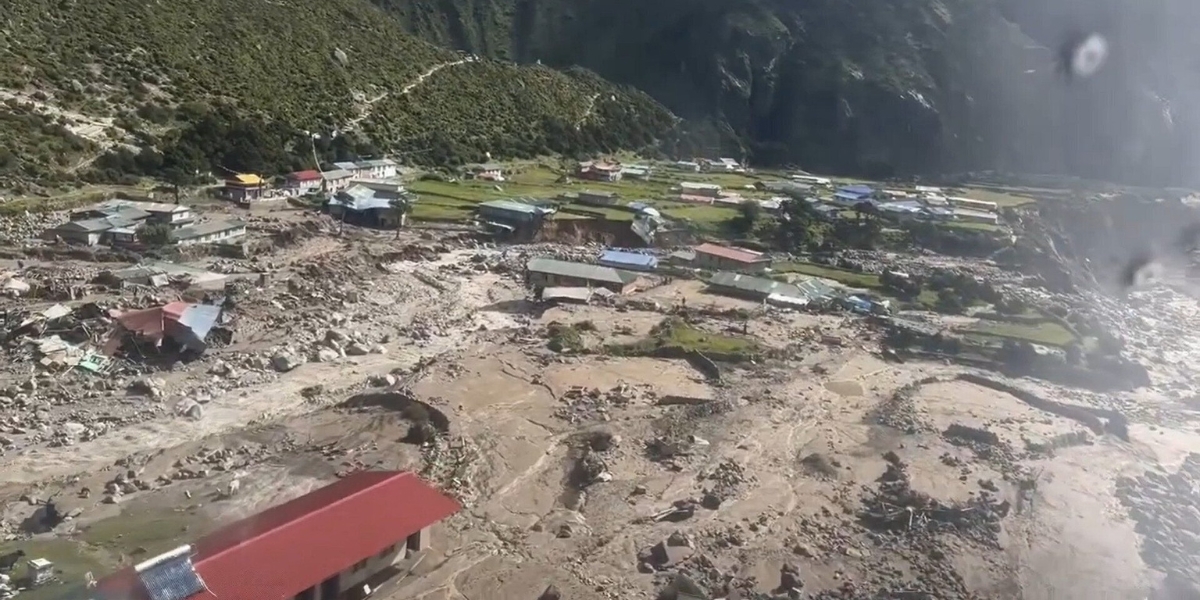
KATHMANDU: Current weather patterns align with the Department of Hydrology and Meteorology’s projection of below-average rainfall for this year’s monsoon. However, a study shows that low monsoon rainfall does not guarantee safety from disasters. A study on extreme weather impacts by the International Centre for Integrated Mountain Development (ICIMOD) states that heavy rainfall following prolonged droughts heightens the risk of flash floods, landslides, and glacial disasters. ICIMOD shared this information through a press release on Tuesday, July 7, 2026, regarding its “Hindu Kush Himalaya Monsoon Outlook, 2026” report, which was originally published on June 9, 2026.
This year, the El Niño climate cycle—caused by unusual changes in Pacific Ocean sea-surface temperatures—is projected to cause below-average rainfall and rising temperatures across South Asia, including Nepal, during the monsoon period. However, the risk of sudden, extreme weather events causing massive devastation remains equally high.
“Everyone falsely assumes that less rain means a lower risk of flooding,” says Shaswat Sanyal, a disaster risk reduction expert at ICIMOD. “But while El Niño causes prolonged droughts, local atmospheric pressure can trigger sudden heavy downpours, causing devastating floods and landslides.”
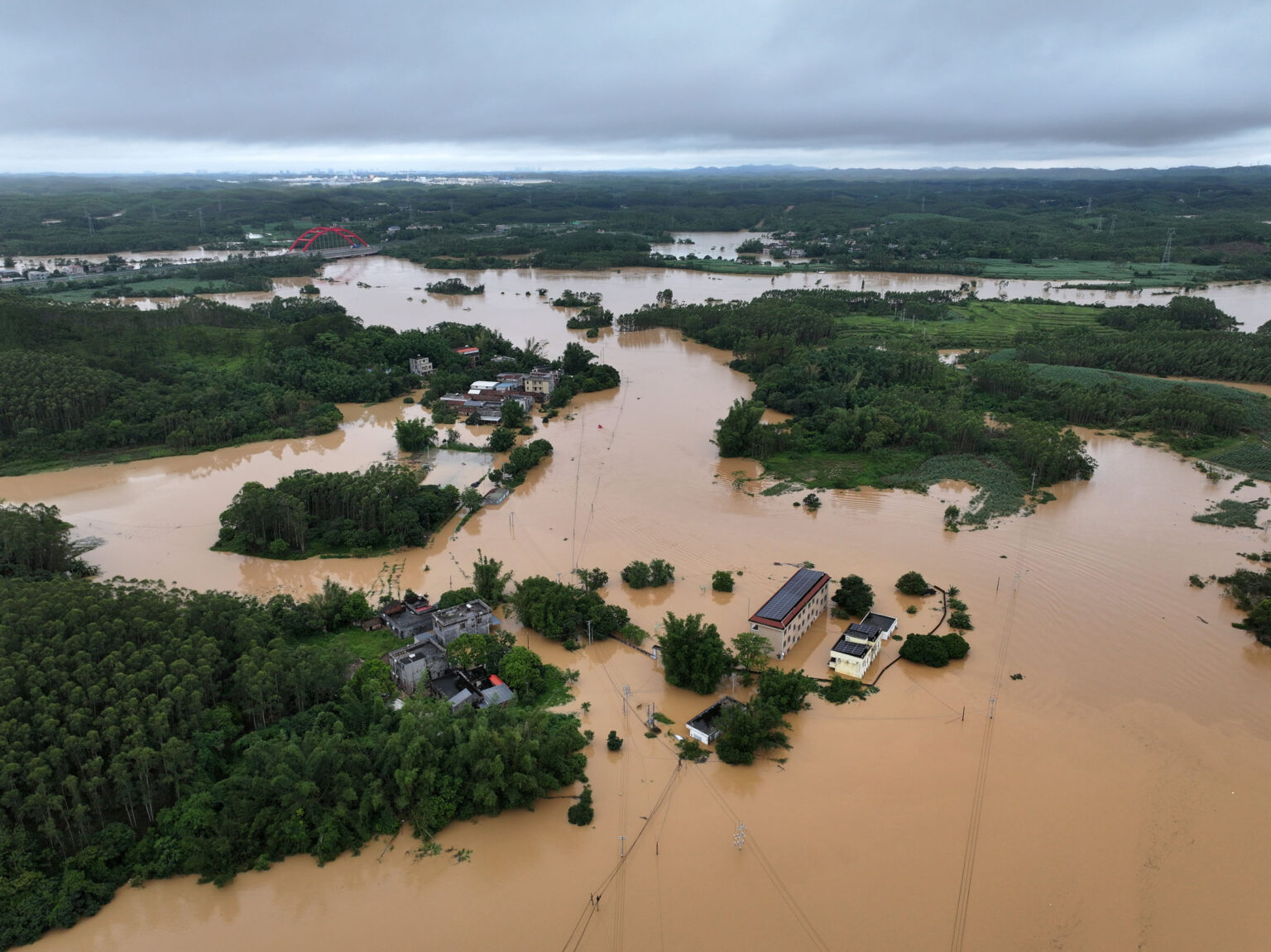
Caption: Flooding in the Guangxi region of southern China. Photo: Xinhua
Just this week, southern China’s Guangxi region was hit by devastating floods following heavy rains caused by a storm named Maysak. The international media outlet Al Jazeera reported that the floods killed at least 39 people by Thursday and led to the rescue of around 130,000 affected individuals. The flooding also damaged large infrastructure, including dams.
Impact of unusual temperature rise
ICIMOD’s press release notes that above-average temperature increases are projected to further heighten risks in the glacier-dependent Indus, Ganges, and Brahmaputra river basins. Because unusual temperature spikes accelerate the melting of glaciers and snow, they create potential disaster risks in these basins. Increased melting rates weaken steep Himalayan slopes and moraine-dammed lakes formed by glaciers.
In recent years, new types of disaster-related problems have begun emerging, particularly in the Himalayan region. On May 15, 2025, 18 families were displaced by flash floods and dry landslides that occurred without any rainfall in Til village of Namkha Rural Municipality, Humla. A technical team from the National Disaster Risk Reduction and Management Authority (NDRRMA), the Department of Mines and Geology, and the Department of Hydrology and Meteorology traveled from Kathmandu for a field study and concluded that the event was caused by “thermokarst.” According to ICIMOD, permanently frozen underground rock, soil, and debris in high-altitude mountain areas is called “permafrost.” The process of permafrost thawing due to rising temperatures and other factors is known as “thermokarst.”
According to the technical team’s study, the underground area containing a sub-surface lake had melted, causing erosion through a weak section. The eroded area was on a steep slope. The surface ice above the lake had collapsed. As the eroded debris washed away, it turned into a flood and landslide. This event in Humla’s Til village is considered rare in Nepal. Arun Bhakta Shrestha, a senior climate change specialist at ICIMOD, says, “This had previously occurred around Afghanistan, but it was a novel event in Nepal’s context. The Til village incident suggests that permafrost degradation is starting to manifest in Nepal as well.”
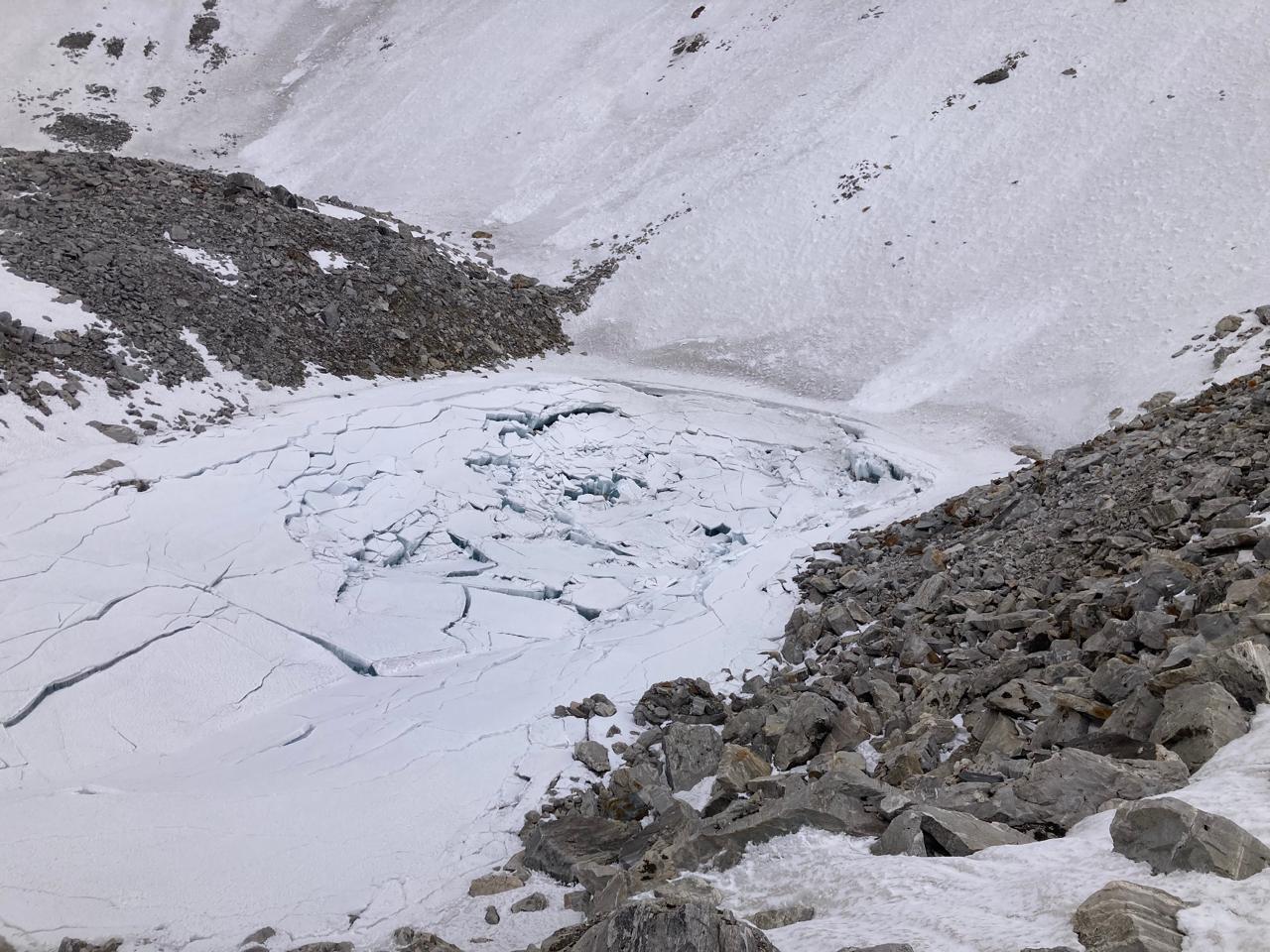
Flooding and landslide in Til village of Namkha Rural Municipality, Humla. Photo Source: National Disaster Risk Reduction and Management Authority
According to ICIMOD scientists, disasters such as droughts, extreme heat, flash floods, landslides, and glacial lake outburst floods (GLOFs) are beginning to appear in cascades. In other words, one disaster fuels another. For instance, drought and flooding are considered interconnected disasters. Experts suggest that the government must adopt integrated early preparation and response systems to mitigate the risks of these interconnected disasters. Manish Shrestha, a hydrologist at ICIMOD, says, “Each disaster risk should not be treated in isolation; they must be addressed together to mitigate their impacts.”
Heavy rainfall following droughts, flash floods, and glacier melting caused by temperature rises increase river flows, risking lives and property in downstream areas. Particular attention must be paid to riverbanks, steep terrains, and areas undergoing rapid, unplanned urbanization in Nepal, India’s northern and north-eastern states, Pakistan, and other sensitive Himalayan regions. ICIMOD hydrologist Shrestha advises that the government must place special emphasis on adequate preparedness and response, as weak geological formations, rising temperatures, and rapid infrastructure expansion are adding to the risks in these regions.
Government says disaster preparedness is complete
The National Disaster Risk Reduction and Management Authority (NDRRMA) under the Ministry of Home Affairs stated that it has completed necessary preparations to respond to disasters during the monsoon period. NDRRMA spokesperson Shanti Mahat says, “Preparations have been made in line with prior forecasts by the Department of Hydrology and Meteorology, which warned of potential flash floods and landslides.”
The Department of Hydrology and Meteorology is working to make flood forecasting reliable and dependable. Targeting the general public, the Authority has launched a toll-free and accessible telephone service. Citizens can call 1234 to receive disaster-related information and updates, as well as to report problems and grievances regarding disaster response. Previously, calls from the public went directly to the Authority, but they will now connect to the respective District Emergency Operation Center. From there, disaster response teams must deploy to provide rescue and relief at the incident site. Similarly, excavators have been arranged in every district to clear road networks blocked by floods and landslides. Spokesperson Mahat states that preparedness has been established from the central to the local levels to streamline post-disaster rescue and relief.
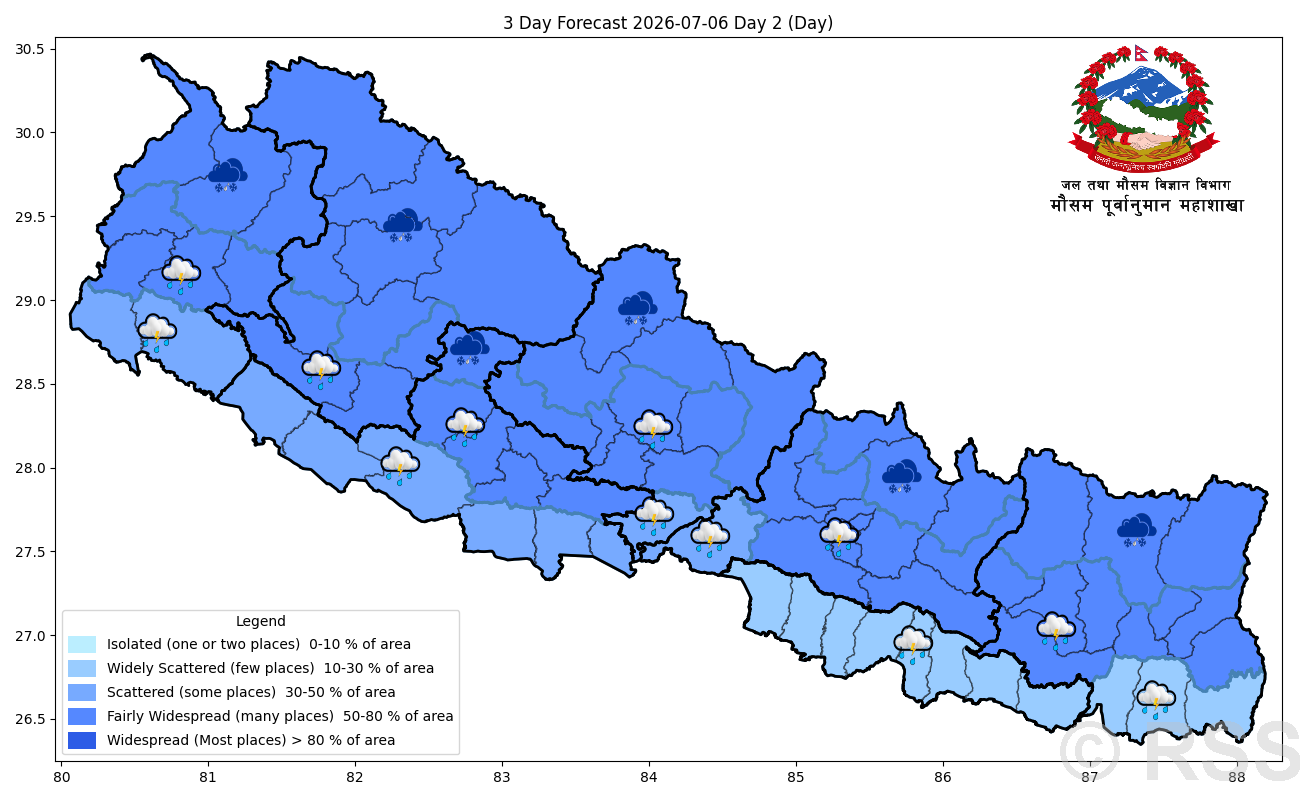
Meanwhile, meteorologist Binod Pokharel notes that although weather forecasts currently show light to moderate rain across the country, rainfall remains erratic, hitting some places well while missing others. Even though weather forecast models show rainfall, eastern Nepal has received no rain. The Terai region appears continuously cloudy, yet it has not rained. Although there is a possibility of heavy rainfall, its exact location and volume have not been precisely forecasted. “From this evening (Friday) until Sunday, there is a possibility of heavy rain in some places,” Pokharel wrote on Facebook. “Two different models show different locations and volumes for the heavy rainfall—one shows the west, the other shows the east, making it difficult to pinpoint the exact location.” However, he assesses that the heavy rainfall will not last long. Nevertheless, he has advised precaution against potential risks from heavy rain.