Kathmandu
Monday, June 15, 2026





A 1.5-kilometre busy stretch in Kathmandu runs directly beneath 132 kV and 66 kV transmission lines, exposing thousands of daily commuters to persistent risk despite safety regulations mandating clearance distances.

KATHMANDU: High-tension transmission lines are considered highly risky due to safety concerns, which is why construction of settlements, roads, or other structures is generally restricted beneath them. For safety reasons, a clear distance of nine metres must be maintained on both sides of such lines.
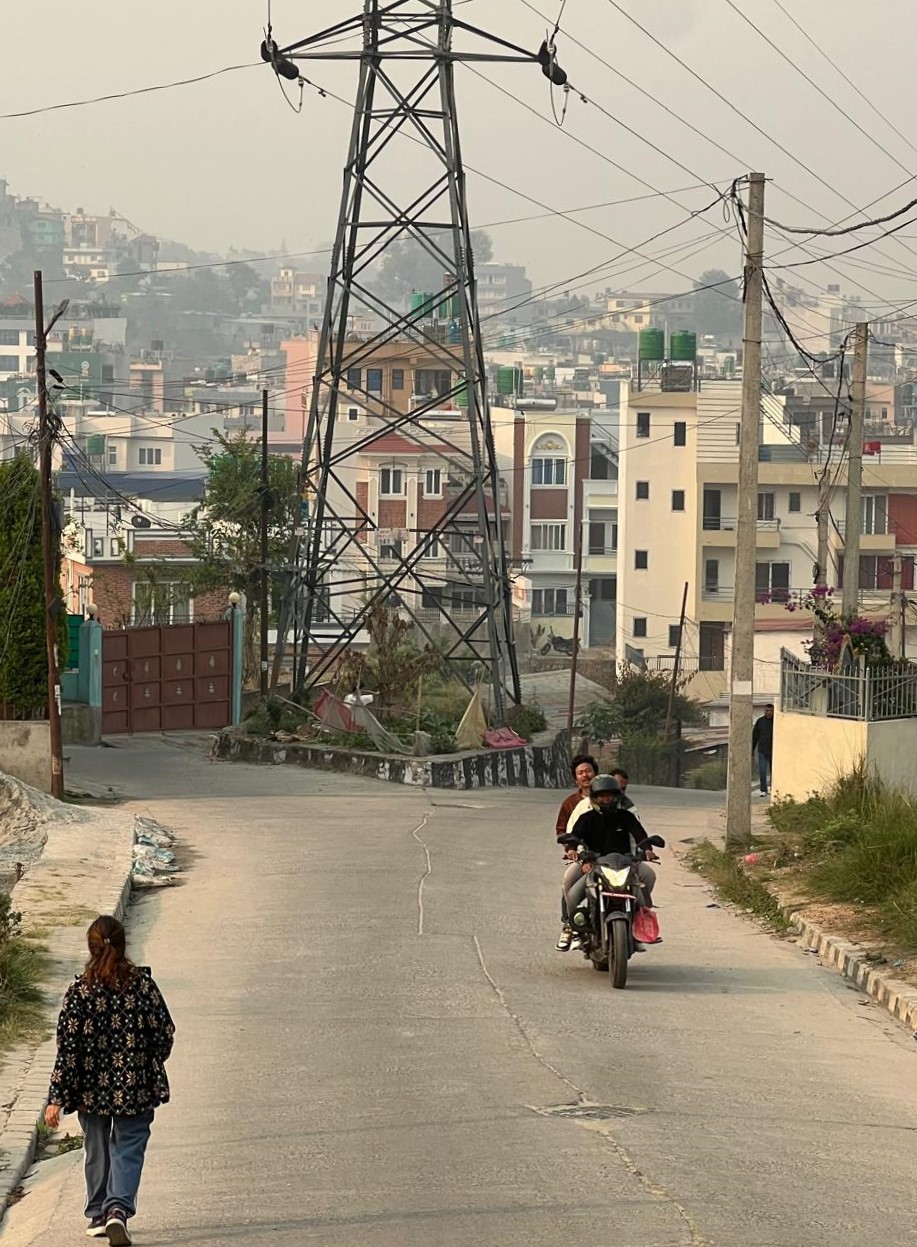
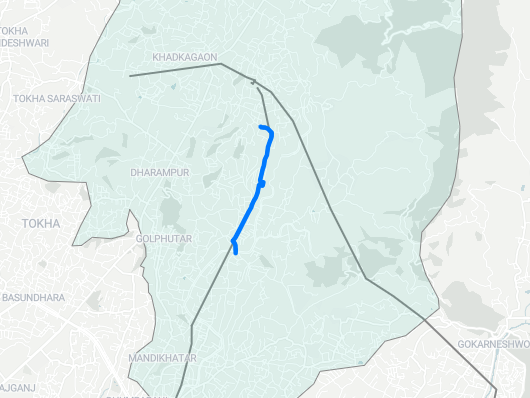
However, in Budhanilkantha Municipality of Kathmandu, a busy road exists directly under a high-tension transmission line operated by the Nepal Electricity Authority. In Ward No. 2 of the municipality, a 1.5-kilometre road stretches from Sundartar to Alpha Chowk in Ward No. 8, where hundreds of vehicles pass daily and thousands of people travel, exposing them to constant risk.
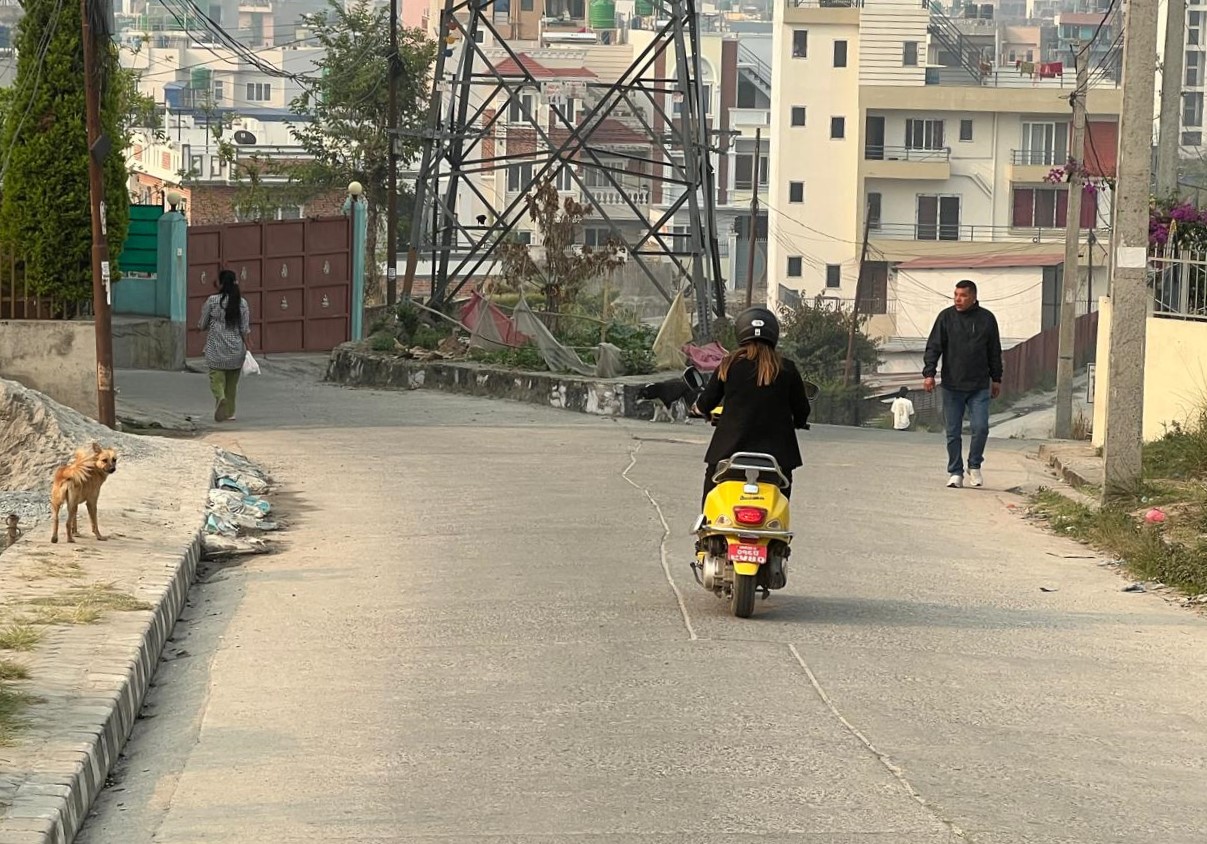
Electricity is transmitted from Bhaktapur through a 132 kV line to the Authority’s sub-distribution centre in Chapali, Ward No. 2 of Budhanilkantha. From there, it is carried via a 66 kV transmission line passing through Wards 2, 8, 9 and 10 of Budhanilkantha Municipality, as well as Ward No. 4 of Kathmandu Metropolitan City, before reaching another sub-distribution centre at Gopikrishna in Chabahil.
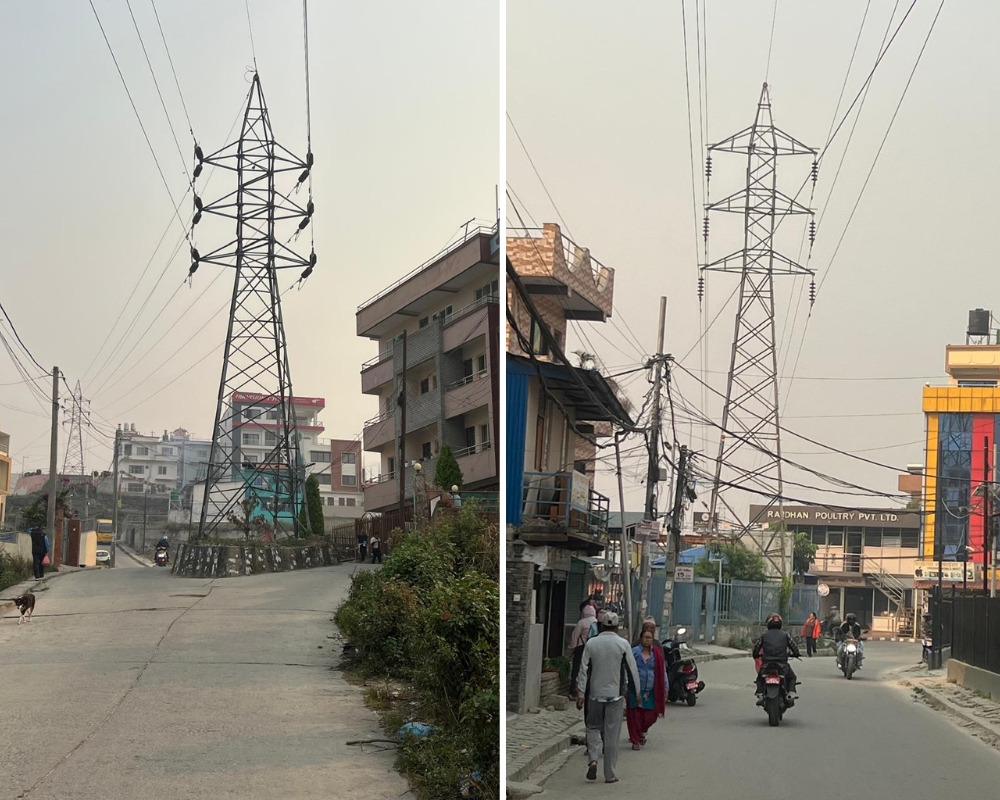
Along this route, the high-tension line runs directly above the busy 1.5-kilometre road section, raising ongoing and serious safety concerns for people and vehicles moving underneath.