Kathmandu
Saturday, July 18, 2026





With insurance services cut in private hospitals, 7.74 million insured patients face rising financial pressure and forced borrowing
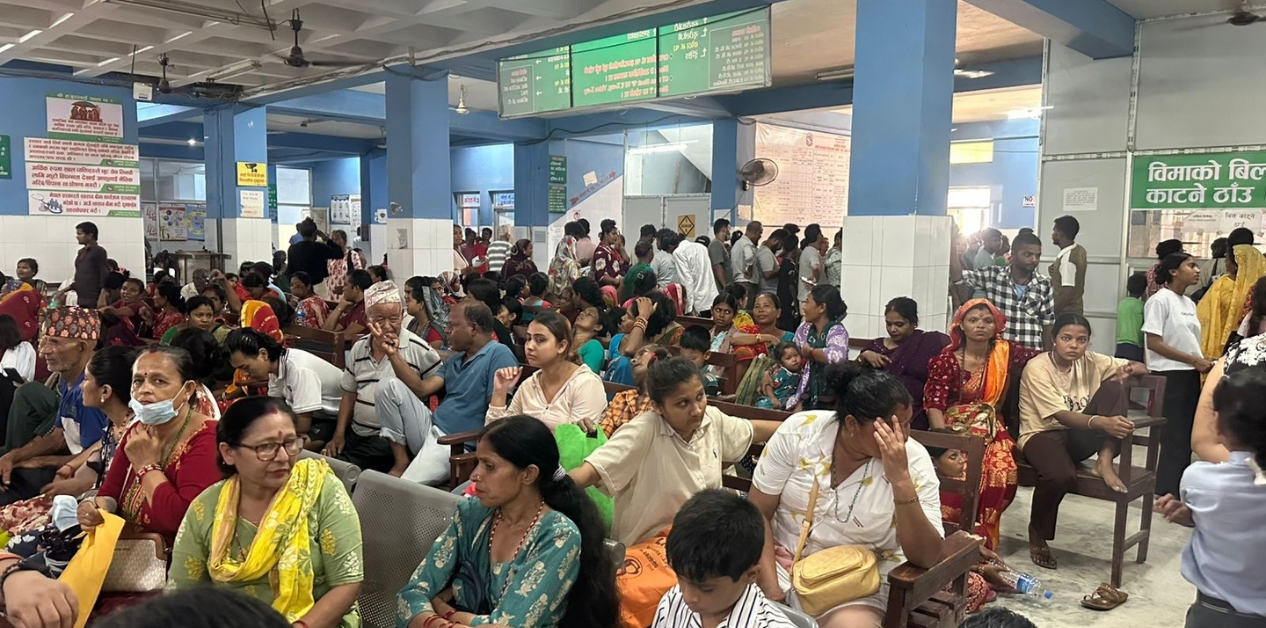
BIRATNAGAR: The daily routine of 84-year-old Keshar Man Shrestha of Morang, Urlabari-1, Laxmijhar, is painful these days. Prostate problems have left him bedridden for months, and he urinates with the help of a pipe. His body is frail, and he keeps writhing in pain caused by a 24-gram prostate.
The health insurance card saved for years was a support for Shrestha. Relying on that very card, he had been receiving treatment at Nobel Medical College located in Biratnagar. Meanwhile, the doctor advised undergoing surgery. The Shrestha family, whose financial condition is fragile, was waiting for the surgery to take place today (June 1) under the insurance itself. But a decision made by the government on May 25 shattered the dreams of thousands of poor insured individuals like Shrestha.
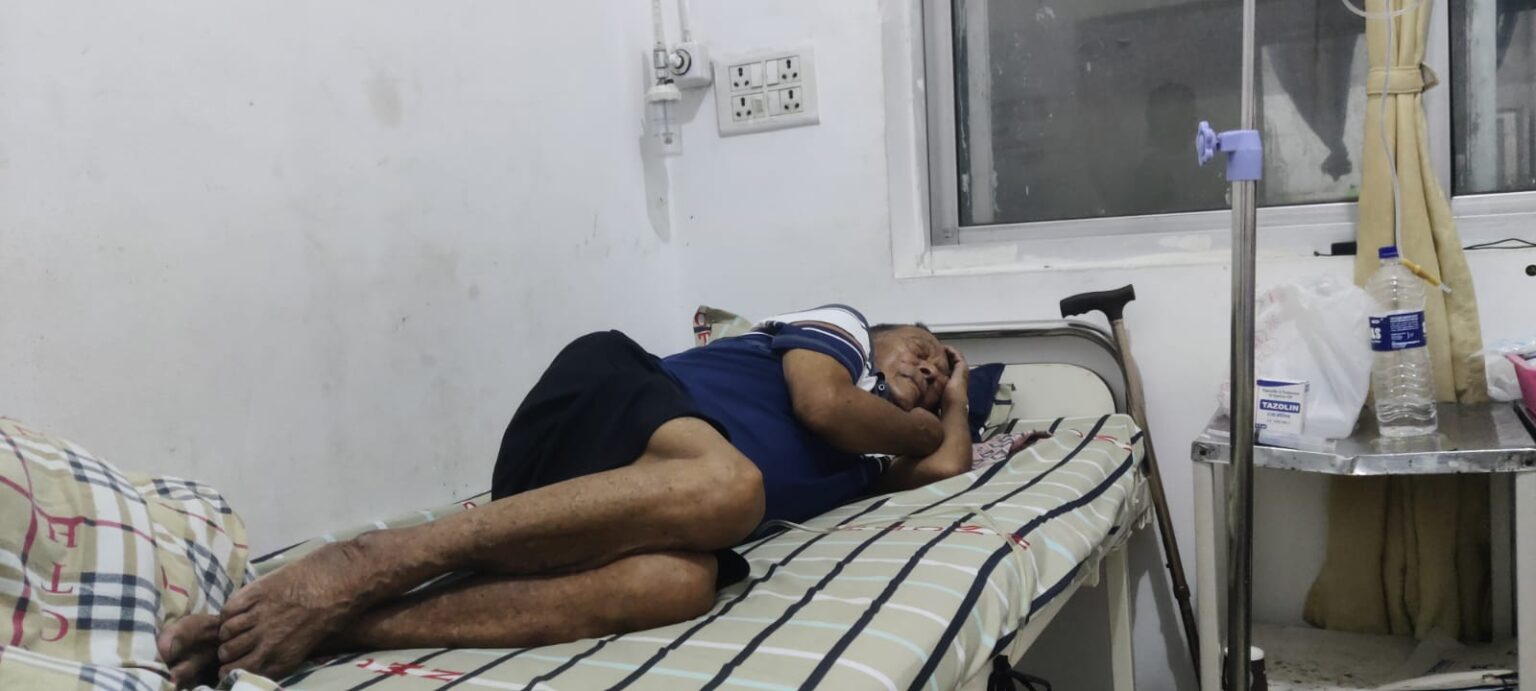
84-year-old Keshar Man Shrestha of Morang, Urlabari–1, Laxmijhar, sitting on a bed at Nobel Hospital for a prostate operation
The Health Insurance Board’s decision to suspend all insurance services except emergency ones at private hospitals stopped Shrestha’s surgery. “We were reassured that the treatment would be done through insurance, and after completing all check-ups, the turn for the operation had come,” says Keshar Man’s son, Beg Bahadur Shrestha. “At the last moment, the hospital said that the insurance does not work. Since my father reached a state where he could not bear the pain, we have admitted him to the hospital by taking out loans.”
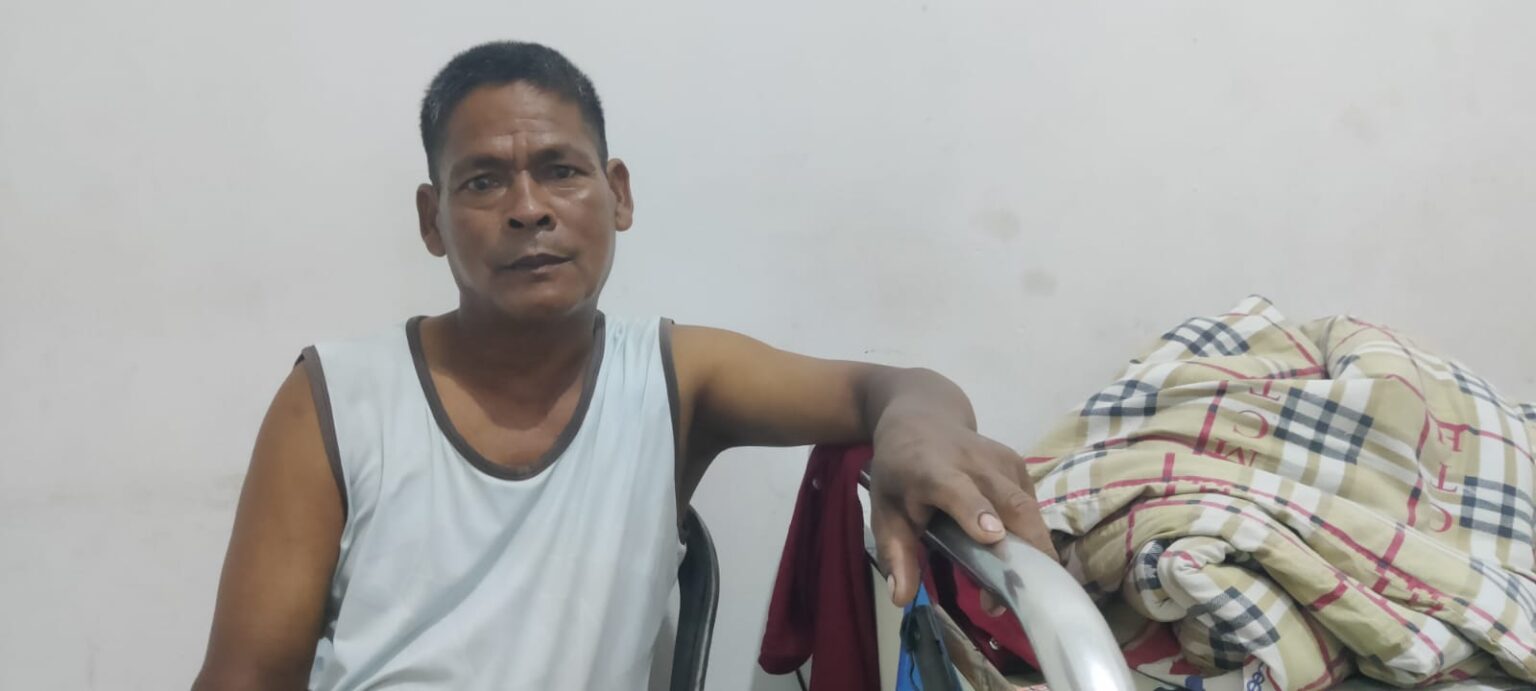
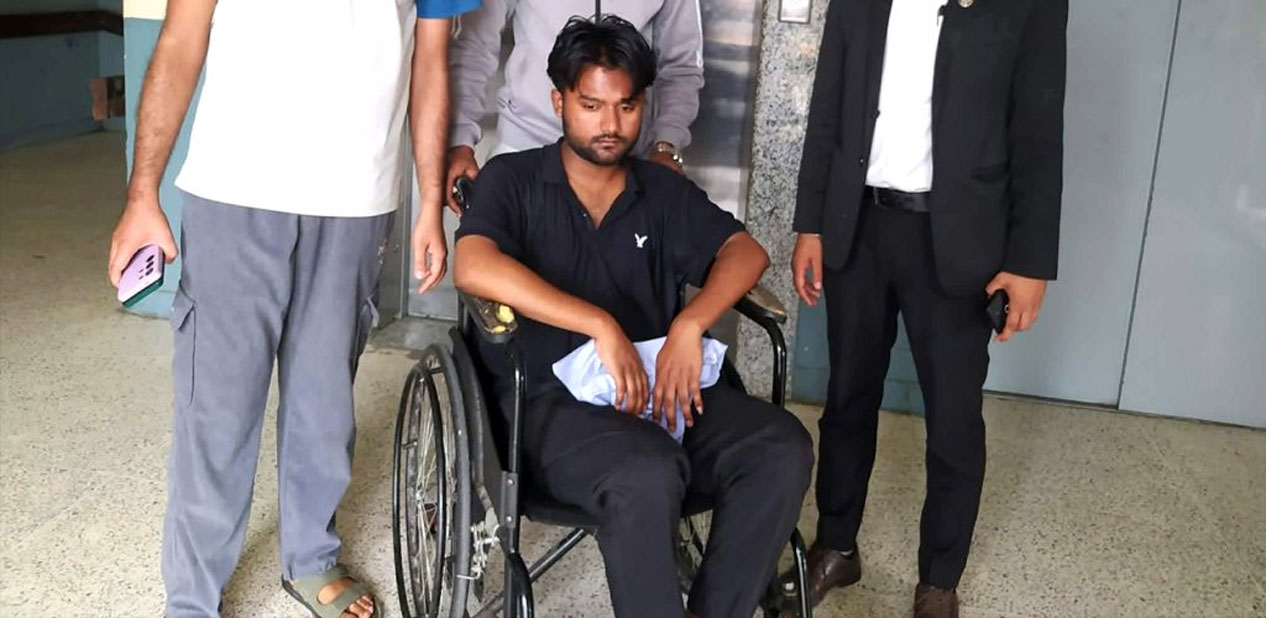
Beg Bahadur Shrestha, the son of Kesharman, sitting as a caregiver for his father’s treatment
When taking his father to Nobel Hospital on May 31, Beg Bahadur did not have an insurance card in his pocket but sought money as a loan. “The operation fee alone cost Rs 50,820,” says he, who is taking care of his father while waiting for the turn for the operation. “When adding the expenses of medicine and others, how much it will reach, there is no account. A single decision of the government caused great hardship to poor people like us.”
The experience of 46-year-old Kamala Lamsal of Morang, Budhiganga Rural Municipality-1, is also similar. After having a stone in her gallbladder, she was taking regular consultations at Birat Teaching Hospital. The doctor had fixed the date of surgery for May 31. However, from May 30 itself, the board issued a notice to close services in private hospitals.
“The preparation was to get treatment through insurance, and the service closed exactly the day before,” Lamsal says. “Now, the compulsion to get treatment in a private hospital by paying high fees has befallen me. It is difficult to get a turn in a government hospital, and there is no money here.”
Unbearable pressure at government hospitals
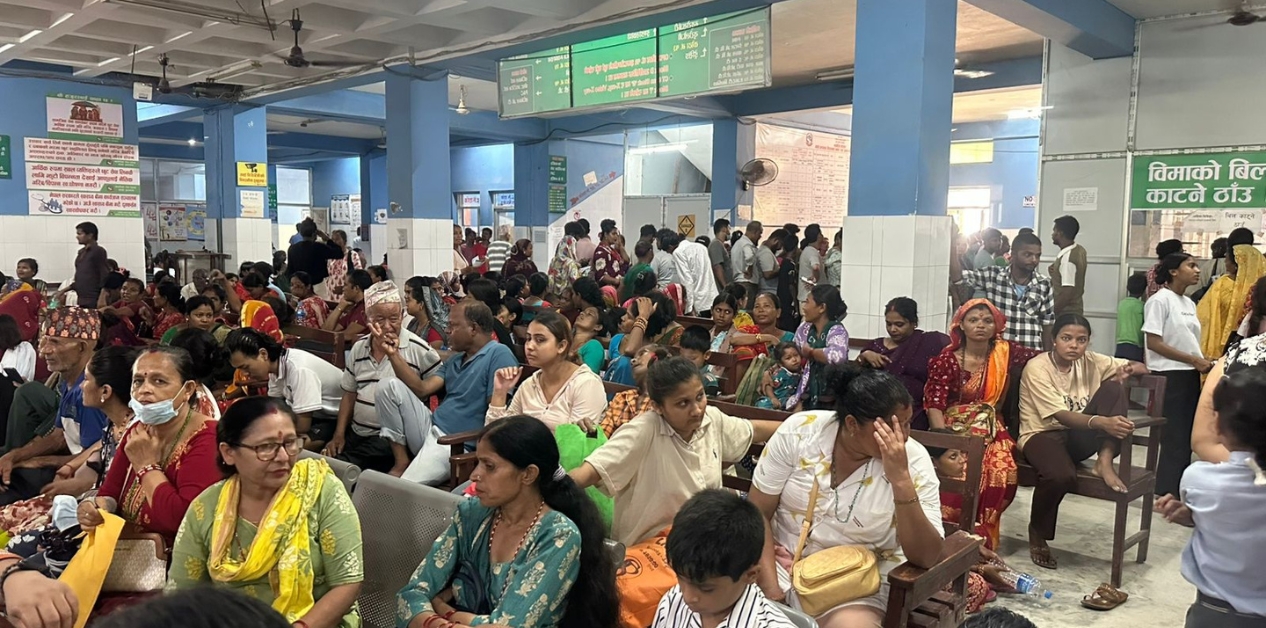
After health insurance services were cut at private hospitals, their direct impact has been seen in government hospitals. In Koshi Hospital, the largest government hospital in Koshi Province, nowadays there is not even a place for patients to step. The number of patients coming to receive OPD (outpatient) services, which was previously around 1,000 to 1,200 daily, has suddenly increased and started crossing 2,000.
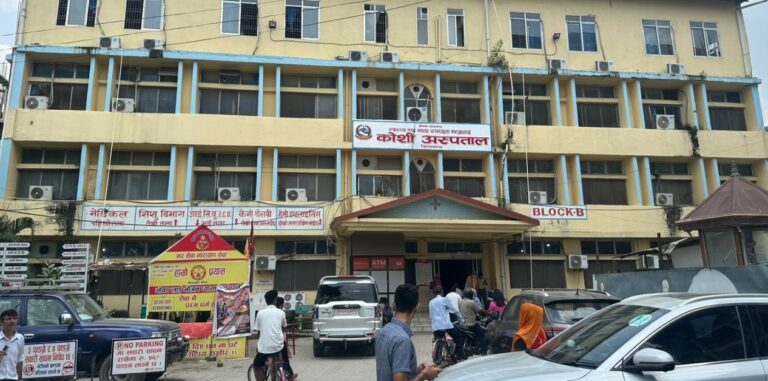
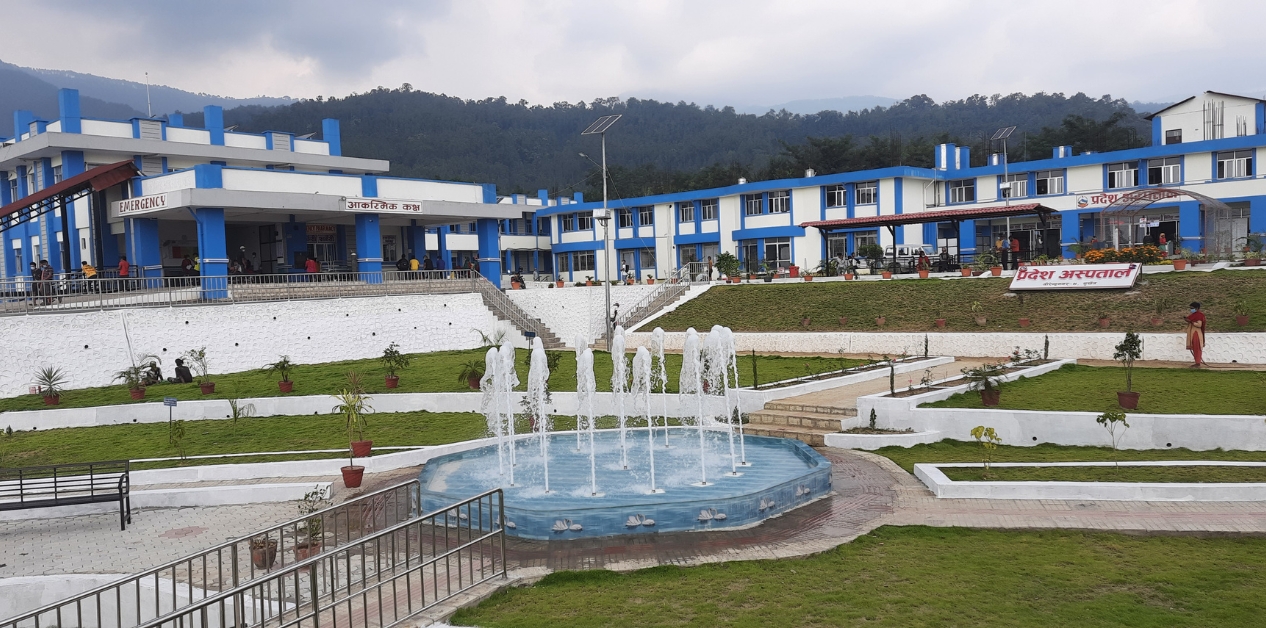
Koshi Hospital
By 1 PM on Monday, today, at least 1,8000 patients had already taken OPD tickets. Medical Superintendent Dr Ram Narayan Chaudhary of Koshi Hospital says, “After insurance closed in private hospitals, it is natural for the pressure to increase in government ones. Our estimate is that the number of patients will reach 2,000 by 3 PM.”
Along with the increased pressure in government hospitals, service seekers are facing great hardship. Apan Miya of Biratnagar had reached the hospital at 8 AM in the morning and stood in line. Only after five hours of waiting did he get to meet the doctor. “The line is so long that it takes hours just to get a token; after that one has to wait for the doctor, and it takes an equal amount of time at the place to show reports and at billing,” he says. “Since insurance stopped working in private hospitals, the line at the government hospital itself will make ordinary citizens like us sick.”
Status of the insured
According to the data of the Health Insurance Board, 22.54 percent of citizens across the country are affiliated with insurance so far. A total of 7,741,453 individuals have done insurance. The number of insured individuals in Koshi Province is comparatively encouraging. Here, 52 percent of the total population, or 2,593,508 individuals, have health insurance.
Patient in hospital
The Chief of the Health Insurance Board of Koshi Province, Arjun Pandit, states that a total of 497,886 families are insured in the province. According to him, out of the total insured, 1,426,429 individuals have already taken services so far. In the province, there are 6,060 ultra-poor insured families, 225,869 senior citizens, 4,736 HIV-infected individuals, and 51,869 insured individuals with severe disabilities.
Previously in Koshi Province, insurance services were being provided from 113 health institutions, including 87 government, five community, and 21 private ones. However, after services closed in 21 private hospitals, including three large medical colleges, the insured are in a dilemma whether to rely on government hospitals or to pay high fees.
Why was the path diverted?
The Health Insurance Board has suspended services other than emergency ones provided from private health institutions from May 30 until another decision is made. In the notice signed by the board’s Executive Director Shakuntala Prajapati, subject matters regarding strengthening government health services and managing the reimbursement of private ones are mentioned.
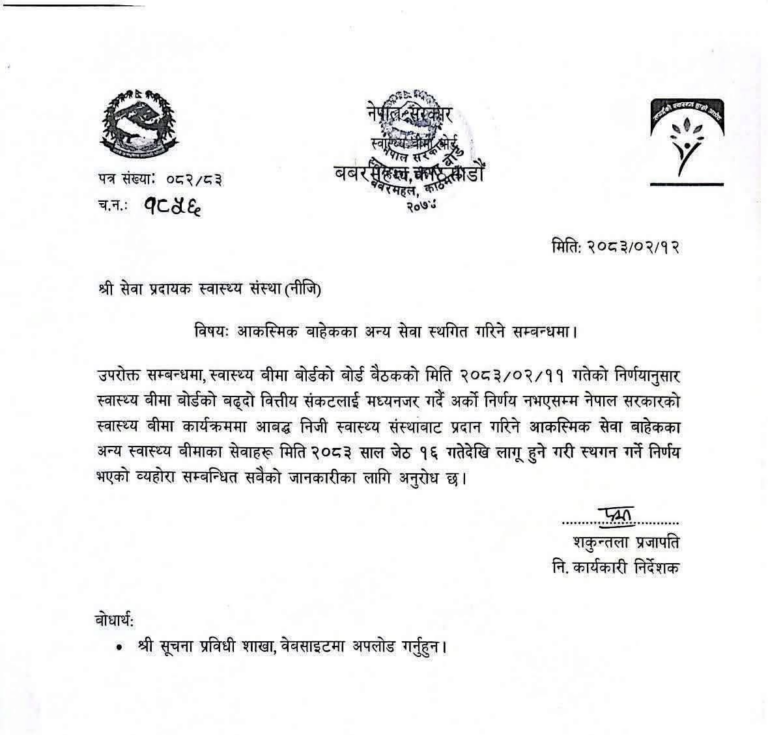
A letter from the Health Insurance Board closing services other than emergencies
However, its inner side is different. Private hospitals had been complaining for a long time that the government has not made payments for insurance, has stuck the claim amount, and has given procedural hassles. This crisis arose after the government was unable to provide payments and when confusion appeared in the budget regarding the participation of private entities.
Right now, the services of OPD, surgery, lab tests, and medicines that the insured were getting from hundreds of private hospitals and medical colleges across the country have been fully affected.
Although the health insurance program itself is a welfare scheme, stakeholders state that due to the weakness of implementation, it has become like an ‘apple in the sky’ (unattainable fruit) for the poor. Dr Gyanendra Man Singh Karki, president of the Association of Private Medical and Dental Colleges of Nepal and operator of Birat Medical College, explains this as the state’s short-sightedness and arrogance. “The state can open and close it at any time it wants, but this decision, made without dialogue and without preparation, has given great hardship to citizens,” Dr Karki says. “In the 10 years since the insurance program started, more than 5 million people have already been affiliated. To suddenly close such a sensitive program means playing with the health rights of citizens.”
According to him, private hospitals are yet to receive nearly Rs 10 billion to Rs 12 billion in reimbursement from the government. “We provided services to patients by bringing medicines worth crores on credit, and we paid salaries to doctors and staff,” he adds. “Even though the state did not give money, we did not stop services, but the state itself suddenly shut the door.”
Claiming that some government hospitals in Nepal lack resources and manpower, he says, “In some, there is neither an MRI nor an advanced CT scan. If a complicated heart patient comes, there is no machine to perform an angiography. In such a situation, how justified is it to tell people to bypass the private ones and go only to the government ones?”