Kathmandu
Tuesday, July 14, 2026





While the Rai community possesses a cultural identity that forbids even touching or eating goats, their recent acceptance of it represents less of cultural intermingling and more of cultural assimilation

BIRATNAGAR: In the autumn season of the year 2012, an Austrian citizen, Professor Rupert Huber, had come to Nepal with the objective of conducting a study tour of Kirat Mundum (natural and cultural landmarks that are sacred to the indigenous Kirat communities) sites and talking with connoisseurs of Mundum and Kirat Rai shamans (Mangpa, Mopa, Home and Nakchhong). Having arranged a time to meet a Mangpa, popular as the largest precisely in the western region of Bhojpur, he reached his house in Dilpa Nagi. However, even before stepping onto the courtyard of the Mangpa, he shied away as if he were frightened. He began to say he would not enter that house. His guides and assistants were astonished. At the end, he told the reason: ‘This Mangpa happens to rear goats.’ Only after that, his assistants saw a pen of castrated goats and female goats near the courtyard of the Mangpa’s house and goat droppings all over the courtyard. They returned without entering inside.
After a few days, Huber reached Sapsudhap of Khotang. Upon seeing the droppings of castrated goats and female goats around the shrine, he refused to enter there as well. He remained far away. Only after the assistants cleaned the path and around the shrine with a broom and water did he enter.
Having learned the shamanistic lore from Nungnuma Rai, the central Nakchhong of the Kirat Rai Yayokkha of the decade of the 1990s, Huber had learned, ‘Rai people must not eat the meat of any type of castrated goat or female goat, and even the touch or splash of its feces and urine must not fall. If the touch or splash falls, the ancestral deity Mang punishes, and to save oneself from that punishment, one must rub mugwort on the body and chew a little to perform penance.’
Immediately after knowing this matter, he began to remain far away from the goat species. Not only that, but he had also abandoned many things, including pumpkin, which the common Rai people of that region could eat but Mangpas and Nakchhongs could not eat. Along with this, he had also understood that castrated goats and female goats must not enter ginger and millet fields, which are absolutely necessary in cultural functions. However, after seeing that the Mangpa himself, who leads the cultural leadership of the Rai people, reared goats, he became disappointed.
Although a branch within the Kirat Great Dynasty, the Rai people are a multilingual and multicultural nationality. Some linguistic communities of Rais appear quite liberal towards castrated goats and female goats. They take rearing and eating goats as a normal thing. Even though many take rearing and eating as normal, they do not use it in ancestral and cultural functions, do not take it to the main hearth, the Suptulung, and cook it on a separate hearth. The majority, however, consider the goat as ‘Sungsa.’ This means impure meat or animals, touching which also makes one impure, let alone rearing or eating. On that very basis, Gopal Siwakoti has written in the book ‘Kirat Jati,’ ‘Not eating castrated goats and female goats is the totem of the Rai nationality.’ “Totem” means a clan emblem or, to say it in a simple meaning, the major cultural identity. Remaining far away from castrated goats and female goats is the cultural identity of the Rai.
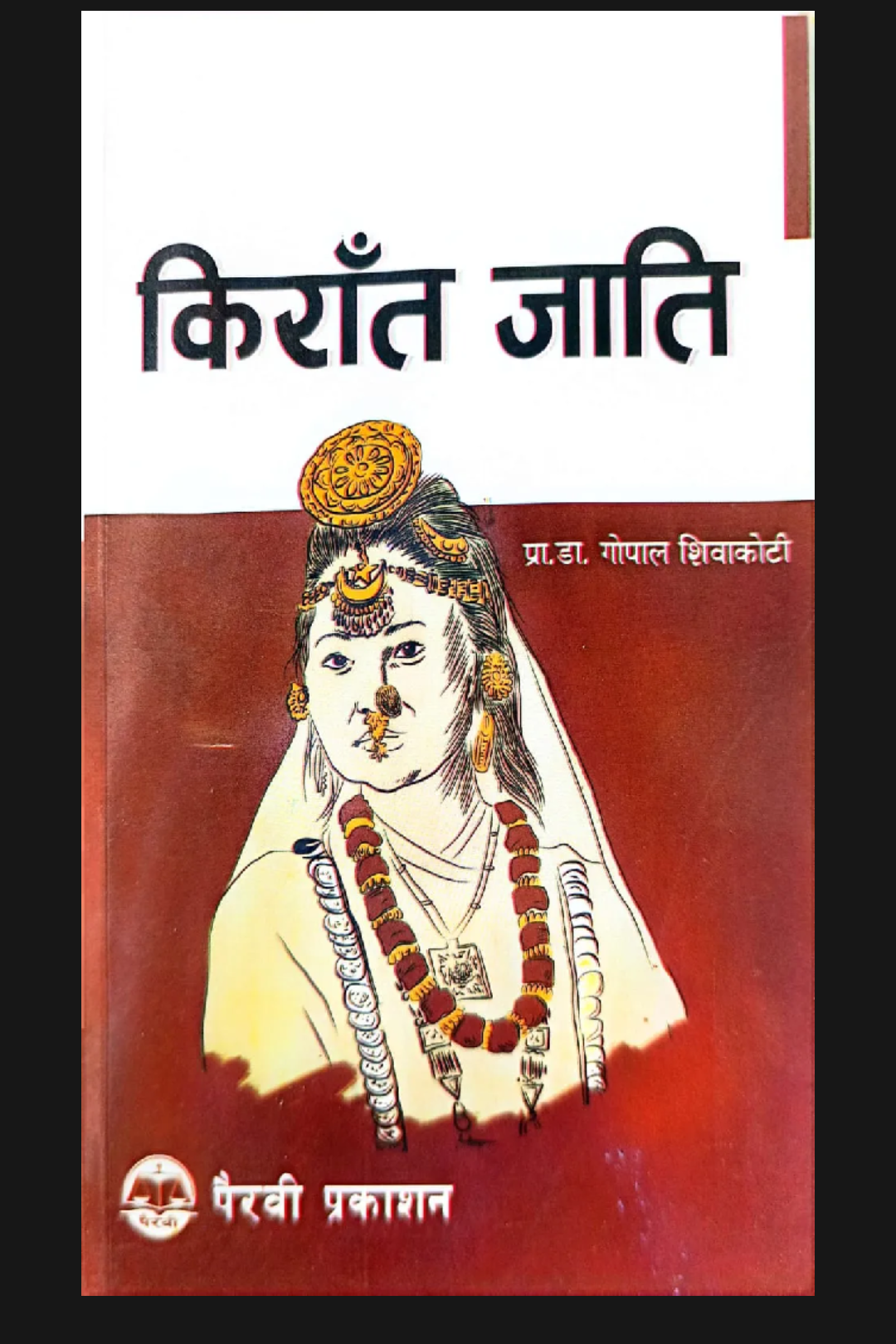
Cover of Gopal Siwakoti’s ‘Kirat Jati’ book
Myth and science
No scientific reason for Rais not eating castrated goats and female goats has been discovered. Various myths stating reasons regarding this, however, are encountered. The cultural behavior has functioned due to the public faith towards the myths.
In the myth popular among the Rai people of the Pikhuwa watershed area of Bhojpur, there is a reference to an incident that occurred during the course of the migration of the Kiratis. Three branches of the Kirati dynasty, Bhusuri, Chhachhappa, and Wachhappa, along with their respective families, were ascending towards the Himalayas following the Saptakoshi River from the Madhesh. The Bhusuris moved ahead very, very fast. Khuwalung, the place where the Arun, Tamor, and Dudhkoshi rivers separate, was closed. Only after chanting the Mundum and sacrificing an animal or bird would Khuwalung open. The Bhusuris chanted the Mundum and sacrificed a bulbul bird. After Khuwalung opened, they moved forward. Khuwalung closed again.
The Chhachhappas and Wachhappas reached there. The Chhachhappas and Wachhappas asked the Bhusuris, who were climbing uphill, what they had sacrificed. The Bhusuris stated that they killed and offered their own daughter/sister. The Chhachhappa and Wachhappa cut the pinky finger of their daughter/sister and offered blood. Khuwalung opened. They moved forward. They had a goat with them. They saw that the goat licked and ate the blood that fell from the daughter’s/sister’s finger. After the goat licked the blood, the daughter/sister died. After that, they made a vow not to eat the meat of the one who ate their daughter’s/sister’s blood and not to touch it henceforth. From there on, there is a belief that the descendants of Chhachhappa and Wachhappa stopped eating castrated goats and female goats.
The Chhachhappa and Wachhappa cut the pinky finger of their daughter/sister and offered blood.
In the statement of the Rai people, not only eating the meat of a goat but also mere touch or splash also causes problems like twisting of nerves, trembling, and being crippled. If anyone among the people of other castes and nationalities living in the neighborhood of the Rai people experiences tingling of the body or feels a disturbance in the nerves, it is usually said that the deity of the Rai has affected them. If such a thing happens to the Rai people, it is believed that a touch or splash occurred with a castrated goat or female goat.
Nutritionists divide meat into two parts, red and white. The meat of a castrated goat and female goat falls into red. Its core characteristic is that fat solidifies quickly and becomes hard. Because the amount of protein is also excessive, its high consumption brings problems in blood vessels, the heart, nerves, and joints. Because of not having eaten the meat of castrated goats and male goats since the time of ancestors themselves, if someone begins to eat, first, one might feel that a problem occurred due to psychological reasons, while on the other hand, a problem can come in the nerves due to the characteristic present in the meat, which gives birth to the belief that the ancestral deity cursed them or a deity affected them.
Cultural intermingling versus cultural assimilation
Until the expansion of the then Gorkha Empire into any of the villages of Majh Kirat, the historical-geographical region of eastern Nepal that existed until then, castrated goats and female goats had not entered. The advisors in some major forts of that time were Khas and Brahmins. They too ate the meat of castrated goats and male goats only in their own houses. Along with the increase in the number of people who received jobs and land grants after the expansion of the Gorkha state and who resided under their support, the entry of castrated goats and female goats is found to have become widespread in Rai settlements as well. After that, a type of cultural rift appeared between the ruler and the ruled. The rulers, meaning the Gorkhalis, considered the meat of castrated goats and male goats as high-class meat-eating and treated pigs with disgust. The ruled Rai people considered the pig the most delicious and did not touch castrated goats and female goats at all. However, among the Rai people who were tax collectors (Jimmawal) and chiefs (Mukhiya) responsible for collecting the land revenue of the state, the kitchen began to see castrated goats and female goats finding a place occasionally due to the company of the Gorkhalis. The common Rai people, however, remained far away for a long time.
After the Gorkha recruitment started, when returning after being recruited and reaching many places of the world and fighting two world wars as well as other wars, and even when the Gorkha soldiers had already been divided into two parts after India became independent from Britain, the common Rai people had not started eating castrated goats and male goats. The Victoria Cross (VC) winner Gaje Ghale has spoken in an interview about his companionship with another VC winner, Agamsing Rai, “I happened to be a Ghale; pig wouldn’t do for me. He happened to be a Rai; a castrated goat wouldn’t do for him. The kitchen did not match. I learned to eat pig due to his very companionship, but he did not learn to eat castrated goat.”
Rai people who were tax collectors (Jimmawal) and chiefs (Mukhiya) responsible for collecting the land revenue of the state, the kitchen began to see castrated goats and female goats finding a place occasionally due to the company of the Gorkhalis.
Bishnu Kumar Rai, the then chairman of the former Annapurna Village Development Committee of Bhojpur, states that castrated goats and female goats entered his lineage since the year 1961 (2018 BS). According to him, his paternal uncle reared castrated goats and female goats for the first time precisely among the Rais of that region. After that, the belief that it is indeed acceptable to rear goats began to extend among the Rais of that region. After rearing, one had to touch it, but the custom of eating it right away started much later. Today, it has begun to be considered normal for any Rai to rear goats. The belief is established that except for the person who has to touch the Machhamama, meaning the place of worship, or the head of the house, others can eat, but after eating, do not enter the Samkha (main hearth). Therefore, only the core person of the house is found not eating the meat of a goat.
Right here, it is appropriate to mention the ‘Theory of Cultural Hegemony’ of the twentieth-century Italian philosopher Antonio Gramsci. He says, because one culture is being conserved by the state power in a multicultural society, it becomes powerful and dominant, which goes on influencing other cultures, and in the course of time, weak cultures assimilate into the powerful culture. Sociologists call this ‘cultural assimilation.’
There is another side to this. People of a culture that has become weak due to not receiving conservation from the state consider it a matter of pride to adopt the culture established as upper in society. That process starts from the influential individuals or lineages of the weak community. Their contact, according to their status, happens with the representatives of the state from the lower to the upper levels. According to that very theory, the Rai people who became the representatives of the state at that time fell among the very first to let castrated goats and female goats enter the kitchen in the common Rai community because they truly had to appear as rulers.
Today, it is the era of cultural intermingling. What one eats and what one does not eat is an individual’s choice. In the name of tradition and culture, it is said that an individual’s mind and tastes cannot be controlled. However, the practice is not like that. For example, one society that eats castrated goats and male goats and does not eat pigs and another society that does not eat castrated goats and male goats and eats pigs are in the same place. Those who previously did not eat castrated goats and female goats have started eating. Those who did not eat pork have started eating. However, no matter how much the matter of cultural intermingling is talked about, a type of cultural line exists after all. The illustration of this is that if a person who grew up in the tradition of not eating pigs starts eating castrated goats and female goats, they disclose what they ate with pride. However, if a person who grew up in the tradition of not eating pigs learns to eat pigs, they hide that matter. The matter of state power itself arises in this. The Rai people accepting castrated goats and female goats gradually is less cultural intermingling and more cultural assimilation.