Kathmandu
Saturday, July 4, 2026





Practices associated with Tantra—such as the ritual use of wine, meat, alcohol, and sexual union—were not accepted within Brahmanical tradition. As a result, the Tantric Yogini temples gradually fell out of use and, over time, faded into obscurity.
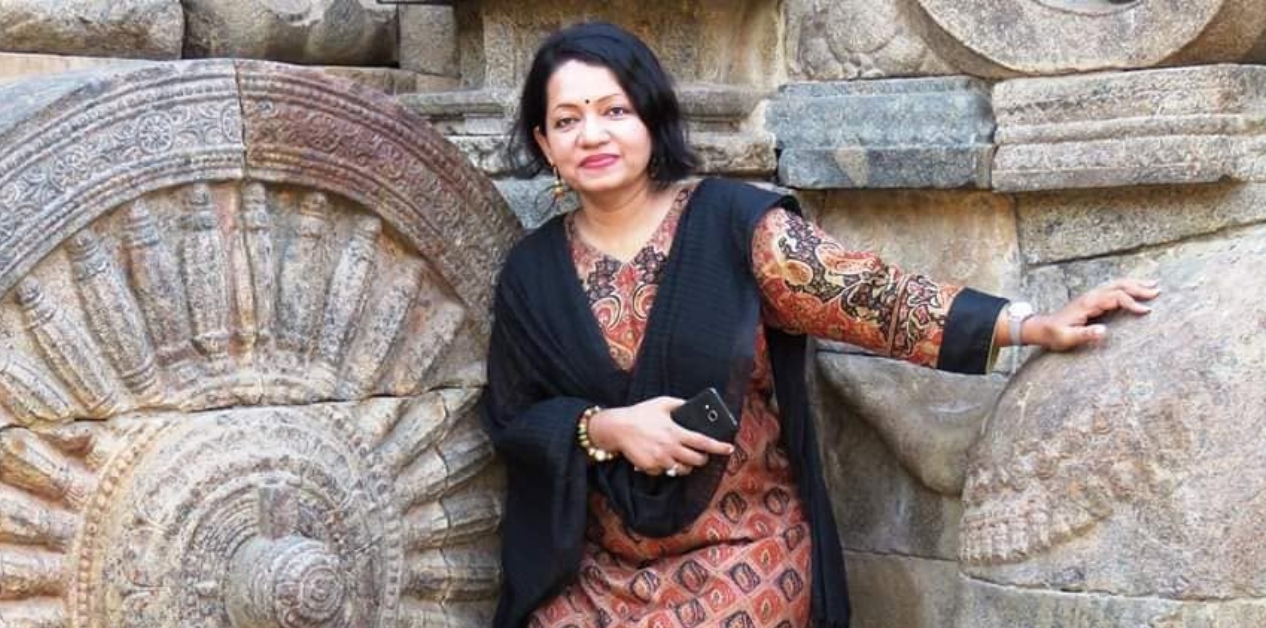
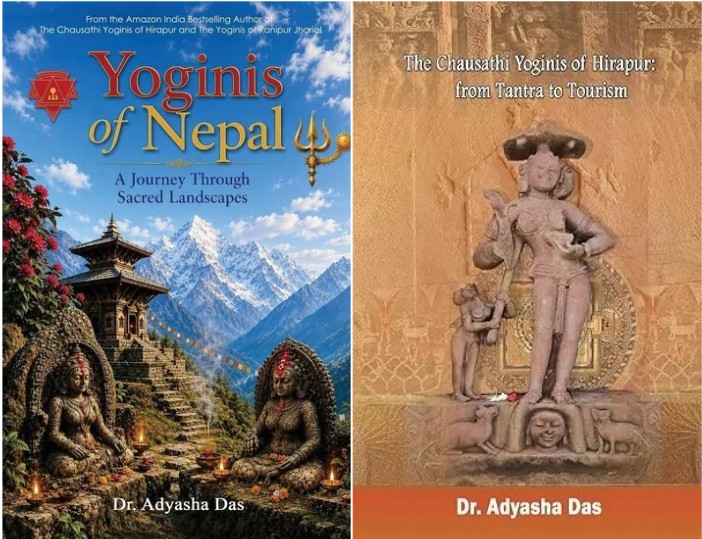
Adyasha Das from Odisha, India, teaches at the Indian Institute of Travel and Tourism. Das, who has a keen interest in heritage, is also actively working to link heritage with tourism to create income-generating paths for local people and communities. After conducting research on the Yogini temple in Hirapur, Odisha, Das published her first book, The Chausathi Yoginis of Hirapur: From Tantra to Tourism . In this sequence, Das has also studied and researched the Yogini temples in Nepal and published her latest book, Yoginis of Nepal: A Journey Through Sacred Landscapes .
Sewa Bhattarai spoke with Das during her visit to Kathmandu for the Kalinga Literary Festival in early June.
What is a Yogini?
The concept of a Yogini is the divine feminine. You can call a Yogini a form of Shakti (power). Yoginis have many aspects.
If we look at the evolution of Yoginis, we have to go to the villages. There are many assumptions about what Yoginis are. One of them says that Shakti Peethas (sacred shrines) emerged in the places where the body parts of Satidevi fell, and the Yoginis are the followers of Mata Durga. It is also said that those who are worshipped by the mother in the cremation grounds are Yoginis. There are many such understandings about Yoginis. One very interesting understanding that is close to reality is that every village in Odisha has a Gramadevi (village deity). They protect the village. To elevate the prestige of these village deities, they were brought into the group of Yoginis.
There are sixty-four Yoginis in a temple. There are many interesting understandings about this as well. For example, sixty-four Yoginis represent sixty-four arts.
I started my research on Yoginis from Odisha. There are 13 locations or Peethas of Yoginis in India, and out of those, two are in Odisha. All those locations are currently on UNESCO’s tentative list. Along with religion and culture, I am also active in the heritage and tourism sector. Therefore, I also work on how the local community can generate income from these temples. My first book was also about this— Yoginis of Hirapur: From Tantra to Tourism .
What is the place of Yoginis in Tantra?
There is a misunderstanding about Tantra in India. Tantra means inner consciousness. If Tantra is utilized correctly, one does not need to look elsewhere for freedom. Along with Vajrayana, such tantric temples of Yoginis were built in India, which were patronized by the monarchy. If you look at the idols of Yoginis in these tantric temples in India, you will see a very interesting ‘iconography’ or statue science. The woman’s body features an animal’s head. This composite image shows that we have negative emotions within us, we have aggression, we have determination, and despite all that, we are tender. This is a strong message for today’s women that even in the sixth or seventh century, there were such empowered women in society, while we are still struggling for women’s empowerment today.
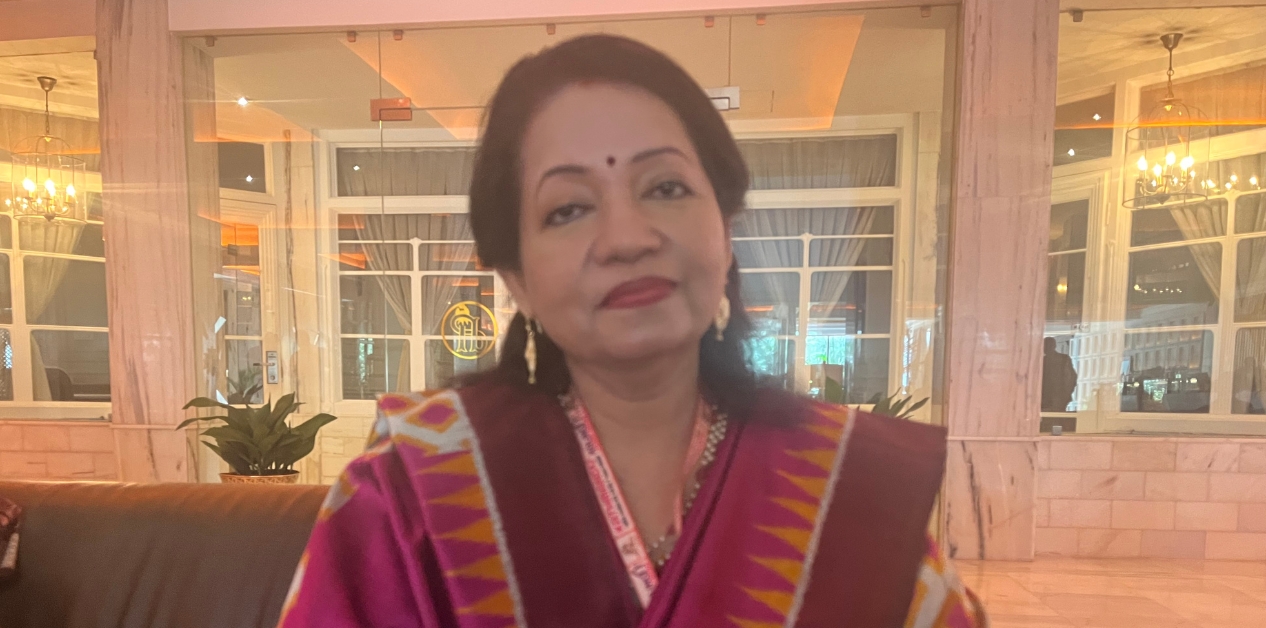
Author Adyasha Das. Photo: Sewa Bhattarai
After that, with the rise of Brahmanism, the principles of Brahmanism appeared to be the exact opposite of Tantra. The processes involved in Tantra, such as alcohol, meat, wine, sexual intercourse, etc., were not accepted in Brahmanism. Therefore, the use of these tantric Yogini temples decreased and they gradually fell into oblivion.
You mentioned that Tantra gave women an empowered position and that it weakened with Brahmanism. So, how different is the position given to women by Tantra and Brahmanism?
There are goddesses in Brahmanism too, and these goddesses are ‘perfect’ or the best in every aspect. However, its scope is narrow. If you look at Tantra, these women are more independent. If you look at these tantric temples in India, most of them do not have idols; they have been taken to museums. And the locals have turned these temples into Hindu temples. One Yogini is considered the main goddess, and she is made socially acceptable by dressing her in a sari or similar attire. But in reality, she is a Yogini.
You have also linked tourism to your research on Yoginis. What is the place of Yoginis in tourism?
Currently, the trend of solo tourism is increasing. Women are looking for their own space. This does not mean there is a problem with the family. But they want to make their own identity, and they want to find and understand their own meaning. With this concept, many tourists are visiting Yogini temples these days. If you ask them what they find in this temple, they say identity, understanding, and peace. Looking at the age group, a lot of youth are also coming this way.
In Nepal as well, you have researched this topic by visiting places like Sankhu, Pharping, Bajrayogini, Guhyeshwari, Bijeshwari, etc. What did you find from the research in Nepal?
I have visited all the temples related to Yoginis in Kathmandu. What I found is that the structures or related rituals of these temples might be different, but the fundamental essence is the same here and in the Yogini temples of Odisha. The Dakinis in Vajrayana Buddhism, and the Yoginis of Hindu Tantra and these Dakinis, are different forms of the same concept.
Yoginis are often found in the form of idols and in temples. Dakinis are limitless and are found more in spiritual spaces rather than physical ones. Yet, the hymns (stotras) of Yoginis and Dakinis are very similar. The fundamental essence is the same—the divine feminine.
Are you trying to say that even though we belong to different countries, our culture is very similar?
Yes. I have traveled to so many countries; I went to Cambodia too. The goddesses there also match with the Yoginis. Even though we have given different names, it is the same thing. Ultimately, they are women.
You mentioned an interesting point that today’s women are also looking for their identity in the Yogini temples of Odisha. Did you find the same in Nepal?
I found fewer tourists in such temples in Nepal. For example, many tourists are found in Patan, but not so many are found in Bijeshwari, Pharping, or Sankhu. Even though there were few tourists in Sankhu, I spoke with them. They said—a sense of deep solitude comes here. In Tantra, there is a concept of Shunya (emptiness); it is said that to achieve salvation, we must reach emptiness. We can find such a feeling only in these empty, secluded places.
Especially after COVID, many people do not want to engage in mainstream tourism, which is crowded. People are looking for less famous places. These places are suitable for such tourism. I didn’t think people would come after I wrote the book, but people are coming to see the Yogini temples of Odisha.
You said that the idols of Yoginis built centuries ago look empowered. What is the reason behind this?
For example, if you look at the idols or paintings of Dakinis, they are flying in the sky. Such images are also found in Thangka paintings. Some Yoginis hold swords, some stand in cremation grounds or on corpses, and power is visible in these images. In the Hindu pantheon, male deities often appear prominent, while goddesses appear as their wives or companions. But in the Yogini group, independent women are found; there are no male deities here. For instance, there is no Ganesh, there is Vinayaki. There is no Brahma, there is Brahmayani, etc. It is an interesting thing how female companions have become central here.
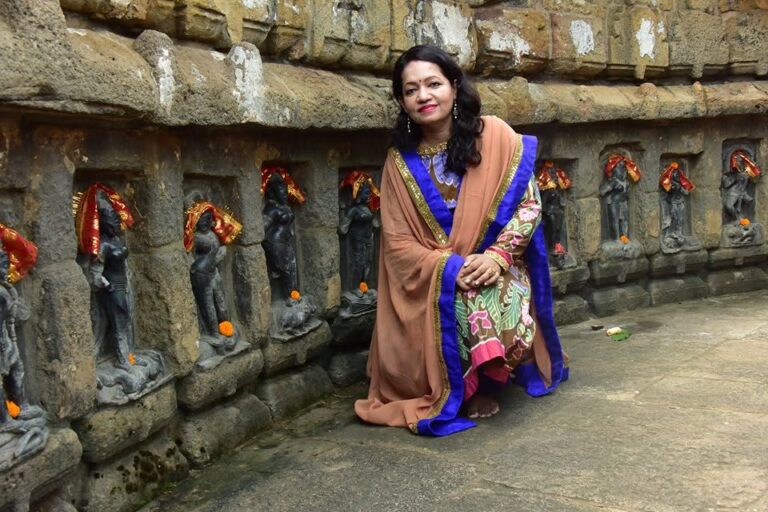
Author Adyasha Das. Photo: Adyasha Das’s Facebook
I want to mention a Yogini idol here. In the Chausathi Yogini temple of Hirapur, there is a Yogini, Saraswati. Saraswati has a traditional image; calm, beautiful, playing the Veena. But here, Saraswati is Ardhanarishwar (half-male, half-female). Half of the body is male, twirling his mustache, and the other half is female, playing the Veena. This means that there is a wonderful mixture of the male element and the female element within us. If we move forward taking both together, we can do anything; there will be no division between man and woman.
What can today’s women do to achieve such empowerment?
The fundamental feeling behind this is that we must recognize the talent within ourselves and understand our roles. Because society gives many roles, and the problem for most women is the excessive burden of these roles. In the sixth and seventh centuries, there were women who, like today’s women, lived in a man’s world. Yet, they were excellent; these temples are dedicated to them. I think this can be a source of inspiration. These Yoginis give a message to women to awaken the talent within themselves. We have both things within us—tenderness and aggression. This is a wonderful blend, and we can move forward with it.


![140 MW Tanahun Hydropower Project under construction [Photo feature]](https://english.nepalnews.com/wp-content/uploads/2026/07/Tanahu-Hydropower-8.png)