Kathmandu
Saturday, July 18, 2026





While the legendary filmmaker made Nepal his lifelong home and workplace, the official recognition remains pending as administrative delays leave his citizenship request stuck between unfulfilled promises and missing official endorsements
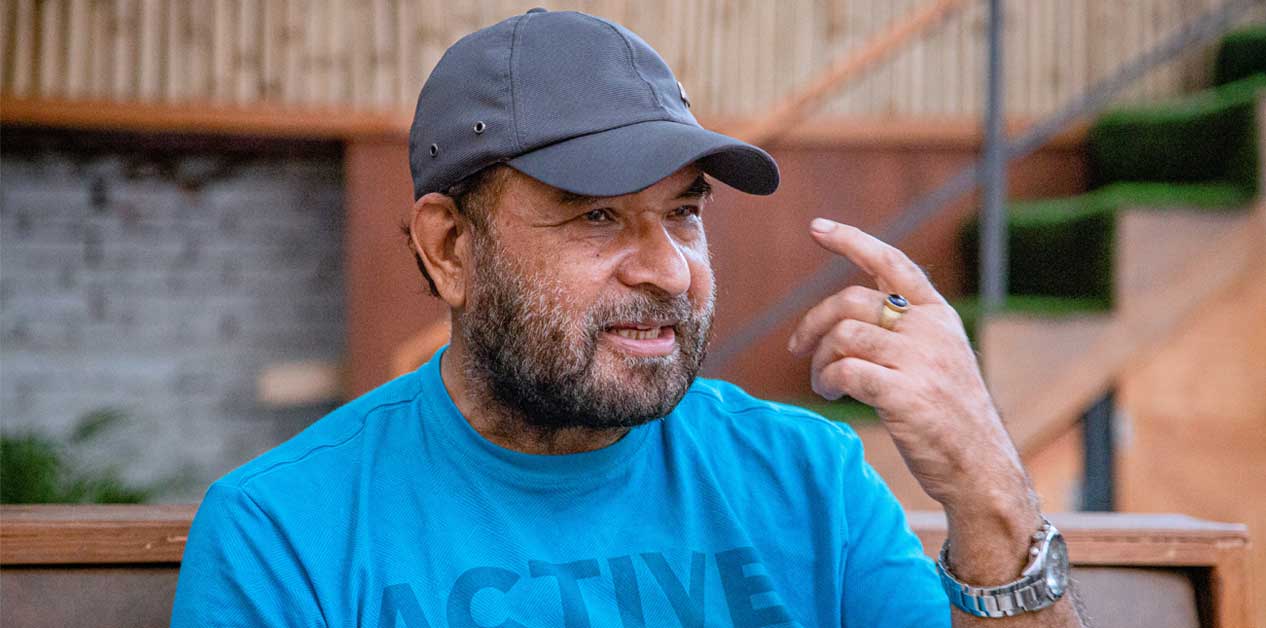
KATHMANDU: Even though 15 years have passed since the proposal to grant honorary Nepali citizenship to movie director Tulsi Ghimire reached Singha Durbar, the government’s decision has not come.
As an honor for the distinct contribution made to the Nepali language, art, culture, and movie sector, the Film Development Board had recommended to the government to give honorary citizenship to Ghimire back in 2011/2012. The recommendation file advanced from the board reached the Ministry of Home Affairs via the then-Ministry of Information and Communications. Ghimire also submitted necessary documents including personal details, honors received by him, and appreciation letters.
After all documents reached the Ministry of Home Affairs, he could not get a clear answer as to where and why the process stopped. The government has made neither a formal decision that it is not possible to give honorary citizenship to Ghimire nor one that it is possible to give. “No one said no, but they also did not advance the process of giving,” says activist Pradip Khanal, who has been taking initiatives to secure citizenship for Ghimire.
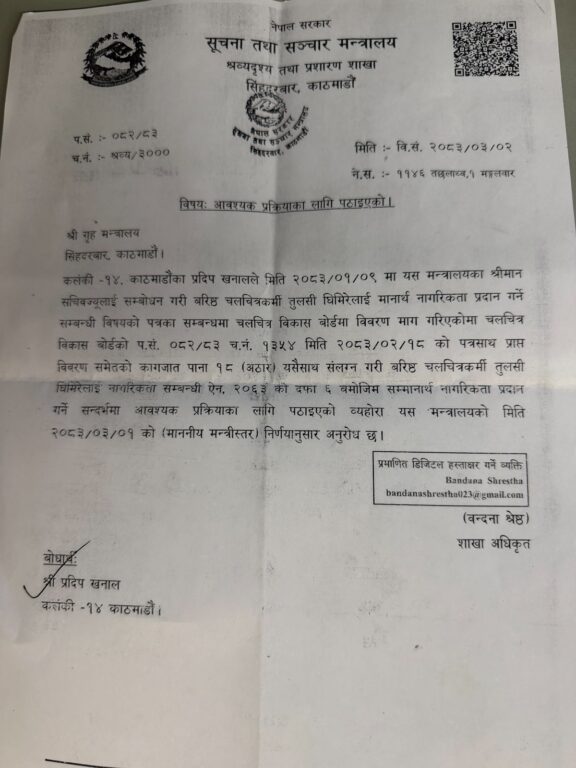
After Khanal submitted an application reminding the Ministry of Information and Communications of the 15-year-old file, discussions regarding Ghimire’s citizenship has started again. He had given an application on June 1 this year, addressing the Secretary of the ministry, to implement the process of giving citizenship according to the old recommendation. Along with the application, he has also submitted the letter from the Film Development Board.
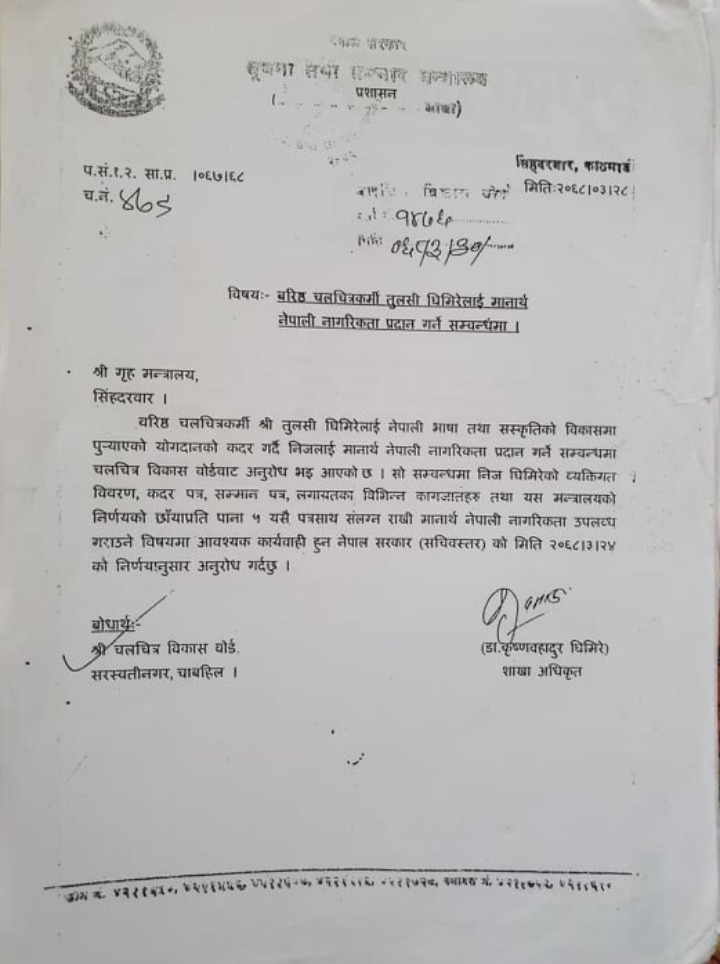
After that, the Ministry of Communications made a minister-level decision on June 15 and sent the proposal to the Ministry of Home Affairs. The Ministry of Home Affairs, however, has not made a decision until now.
“The current government has said that a decision made by one ministry will not be stalled or stopped by another ministry and that it will facilitate service,” Khanal says, “but until now, the decision has not been made. He has already made all the necessary contributions in Nepal to receive honorary citizenship. Therefore, it should not be difficult to make a decision.”
From Kalimpong to Nepali cinema
Born in Kalimpong, India, on July 15, 1951, Ghimire’s maternal home is Nepal. Due to that very relationship, he used to come and go to Nepal since his childhood.
After graduating in the arts subject from North Bengal University in the fiscal year 1973/74, he came to Nepal. Since then, he made Nepal his land of work itself. He remained continuously active in movie production, direction, and acting.
Even though he spent nearly half a century in Nepal, Ghimire, however, never applied for naturalized citizenship. He states that because not having citizenship did not cause a major problem in his life or work, he did not run to government bodies for it. “Even when I did not have citizenship, it never caused a major problem in life, so I did not go to take it,” he says, “if the government gives it right away, I will say thank you.”
There is a provision in the Constitution of Nepal and law that naturalized citizenship can be given to a foreign citizen. On the basis of being able to speak Nepali or any language prevailing in Nepal, residing having done some business in Nepal, having renounced or declared the renunciation of the citizenship of another country, having resided in Nepal for at least 15 years, and having good character, among others, the government can give naturalized citizenship.
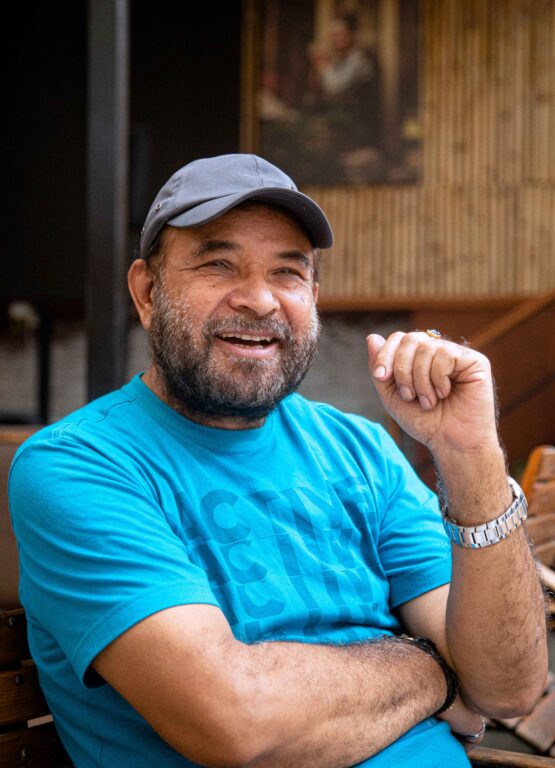
Tulsi Ghimire. Photo courtesy: Krushpa Shrestha
However, Ghimire did not show interest in naturalized citizenship. The initiative being taken right now is for the honorary citizenship that the government can provide as an honor for the contribution he made to Nepali art and movies.
He looks at Nepali citizenship as a formal acknowledgment done by the state of his relationship with Nepal rather than an administrative necessity. “Nepal is my maternal home,” Ghimire says, “if the government gives citizenship, it will be like the grandmother keeping one in the lap.”
He states that his purpose is not to use citizenship to obtain any post or decoration. His statement is that if the law of Nepal accepts, he is ready to become a Nepali citizen. Even if no work stopped, he states that because of not having Nepali citizenship, he did face various bitter-sweet events in life.
Effort that started from an Unshot film
The start of the initiative to secure honorary citizenship for Ghimire is connected with a movie that could not be made.
About 15 years ago, he was doing a long research for the construction of ‘Siddhartha Gautam‘ based on the life of Gautam Buddha. His friends expected that the said movie, based on the story that Buddha was born in Nepal, could reach the international level and even receive an ‘Oscar Award’.
Thinking that such an achievement would increase the prestige of Nepal, they had started the initiative to secure Nepali citizenship for Ghimire.
There was a preparation to include songs written by National Poet Madhav Prasad Ghimire in the said movie as well. However, the producer of the film passed away. After that, the movie construction stopped. The citizenship process has also been stuck exactly since that time. “After the death of the producer, the film was not made. I also did not run searching what happened to the matter of my citizenship,” Ghimire says, “now, friends have gone again taking the subject of citizenship.”
Right now, he has restarted work on ‘Siddhartha Gautam‘. Ghimire is known as a director who brings the sensitivities of society, human relationships, and the life experiences of common people onto the screen.
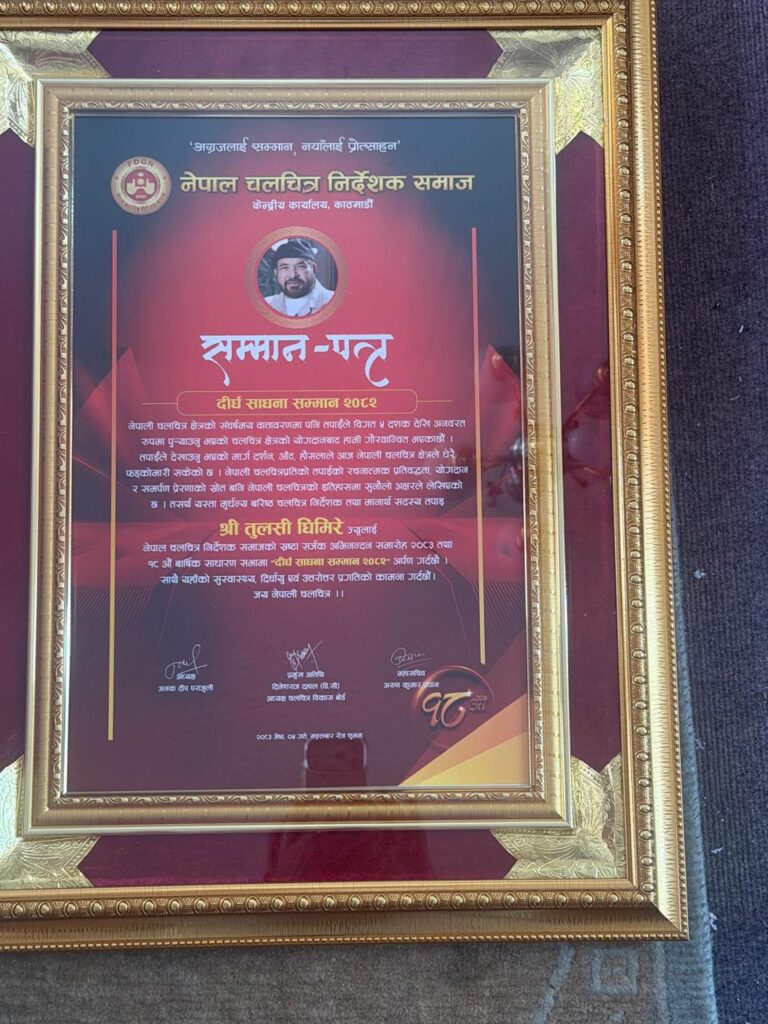
Among more than two dozen movies produced and directed by him, the majority have been commercially successful. Having started his movie journey in Nepal while directing ‘Bansuri‘ in the 1981, Ghimire gave new heights to Nepali cinema through movies including Basudev, Kusume Rumal, Lahure, Aanyay, Koseli, Chino, Deuta, Dui Thopa Aansu, Dakshina, Balidan, and Darpan Chhaya. His latest movie ‘Pahad‘ came into screening from past April 14 this year.
The law recognizes, Singha Durbar does not conclude
The Constitution of Nepal and the Nepal Citizenship Act, 2006 have made a provision that honorary Nepali citizenship can be given to an internationally renowned person. However, the detailed criteria as to whom, on the basis of which contribution, and through what process such citizenship is to be given are not clear.
It is not that the practice of giving honorary citizenship in Nepal has not happened. The government had previously given honorary Nepali citizenship to Toni Hagen, Edmund Hillary, Colin Philip Smith, and Um Hong-gil. On the basis of the contributions they made to the geological study and development, mountain climbing, biological study, and social sector of Nepal, such citizenship was given to them.
Honorary citizenship is taken as a national honor of a distinct contribution rather than a general administrative facility.
Activist Khanal had also made Ghimire meet with the Secretaries and Ministers of the Ministry of Home Affairs in the past for citizenship. “Making Nepal his land of work, he gave more than half a century to the Nepali language, art, and movies without any self-interest,” Khanal says. “Now, if he receives honorary Nepali citizenship, that will not be just giving citizenship to one individual, it will also be the nation expressing honor toward its creators.”
Regarding why the process of Ghimire’s honorary citizenship stopped in the past, the Ministry of Home Affairs also does not have a clear answer. The officials of the ministry state that they do not have the information as to why the old file became inactive. This time, however, they appear optimistic that the process will advance in a positive manner.
According to Suman Ghimire, Joint Secretary and Chief of the Planning, Monitoring, and Evaluation Division of the Ministry of Home Affairs, the proposal along with necessary documents has arrived at the Ministry of Home Affairs from the Ministry of Communications.
“His documents have come. An internal discussion has taken place to advance the process,” he says.
According to him, now after the decision of Home Minister Sudhan Gurung, the proposal will be presented to the Council of Ministers. “The Minister is currently on a field visit. Since he has been outside most of the time, the opportunity to brief him on this subject has not been found,” Joint Secretary Ghimire says. “After giving the information to the Minister, the process will move forward.”