Kathmandu
Tuesday, July 21, 2026





Nepal's proposed Foreign Exchange (Regulation and Management) Bill replaces outdated laws with a contemporary regulatory framework, but its expanded powers for Nepal Rastra Bank and the government have sparked questions about transparency, accountability and civil liberties
KATHMANDU: Ministry of Finance has picked an interesting moment to retire two laws that have quietly outlived their usefulness. The Foreign Exchange (Regulation) Act of 1962 and the Act Restricting Investment Abroad of 1964 were written for a Nepal that had no digital banking, no cryptocurrency, no meaningful outward investment, and a currency regime that bore almost no resemblance to what exists today. That the bill has finally surfaced, drawing on a 2016/17 financial sector strategy, a budget commitment from FY 2024/25, and Nepal Rastra Bank’s own 2022-2026 strategic plan, tells you this is less a sudden policy pivot than the slow discharge of an old institutional debt.
The real question is not whether Nepal needed a rewrite. It plainly did. The question is whether this particular rewrite gets the balance right between modernization, control, and the practical realities of how money actually moves in and out of Nepal.
The first thing that jumps out is how much power concentrates in Nepal Rastra Bank under this draft, and how little of that concentration comes with visible counterweight. The central bank already set exchange policy and issued licenses under the old law, so continuity there is unsurprising. What is new is the explicit grant of binding directive power, including through electronic means, paired with fining authority over licensees and a retained ability to suspend or revoke licenses for repeated currency misuse. Add to that the government’s emergency power, exercised by gazette notice, to compel citizens and firms to surrender foreign exchange holdings during an external sector crisis, and you have a legal architecture that gives the state extraordinary reach into private currency holdings whenever it decides a crisis exists.
Nepal has flirted with exactly this kind of crisis language before, most memorably during the 2022 reserve crunch when import restrictions and informal capital controls became de facto policy without much statutory grounding. Codifying an explicit surrender power now effectively pre-authorizes a repeat of that episode, only with cleaner legal cover. Whether that is prudent depends entirely on how narrowly “external sector crisis” ends up being defined in subsidiary rules, and the bill as summarized gives no indication that such a definition exists yet. A power this blunt deserves a trigger this precise, and right now the trigger is left to executive discretion.

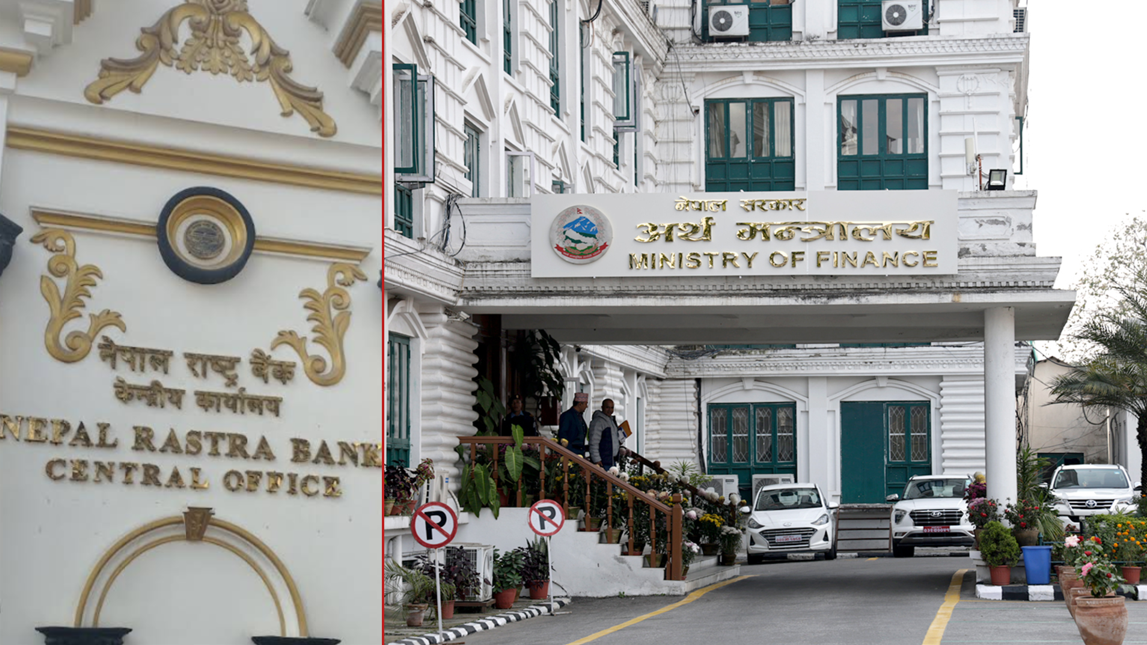
Gate of the Nepal Rastra Bank Central Office, Baluwatar, Kathmandu. File photo
The licensing regime, on the surface, reads as a rationalization exercise. Consolidating a reportedly inconsistent approval process into a single application, fee, and guarantee framework is the sort of technical housekeeping that rarely makes headlines but genuinely affects how many legitimate money changers and remittance companies can operate without arbitrary friction.
The catch is that the same section that promises simplification also preserves near total discretion for the bank to deny or restrict permissions on money laundering or fitness grounds. That discretion is not inherently wrong, prudential regulators everywhere retain some version of it, but paired with the confidentiality obligations imposed later on investigating officers and bank staff, it creates a regime where an applicant can be refused a license for reasons that never have to be transparently defended in public.
For a country still working to convince the Financial Action Task Force that its anti-money-laundering architecture is credible rather than cosmetic, this kind of opacity cuts both ways. It can be read as the tightening FATF wants to see, or as exactly the kind of unaccountable gatekeeping that invites the grey-list scrutiny Nepal is trying to shed.
The cryptocurrency provision is where the bill shows its age even as it tries to look forward. Barring the use of any electronic or virtual currency not recognized as legal tender or valid forex instrument by Nepal Rastra Bank, whether directly or indirectly involved, is a blanket prohibition dressed up in modern vocabulary. It does not distinguish between speculative retail trading, blockchain infrastructure with no monetary function, stablecoins pegged to sovereign currencies, or the growing use of crypto rails for cross-border remittance settlement that several South Asian peers are now studying rather than banning outright.
Nepal already prohibited crypto trading administratively before this bill, so in practical terms the law formalizes rather than innovates. But formalizing a blanket ban into primary legislation, with criminal exposure attached through the same tiered penalty structure used for currency smuggling and hundi, raises the stakes for anyone operating in a genuinely gray area, such as freelancers paid in crypto by foreign clients or fintech firms experimenting with tokenized settlement.

Most popular cryptocurrency coins around the world
A remittance-dependent economy that is simultaneously trying to court information technology exports, which this same bill elsewhere gives preferential outward investment treatment to, is sending mixed signals when it treats all virtual value representation as presumptively criminal. The bill would have been stronger if it had built in a licensing or sandbox pathway for recognized use cases rather than leaving the entire category subject to blanket exclusion unless and until the central bank chooses to recognize something, which given NRB’s institutional caution on this topic could mean effectively never.
Hundi (informal money transfer system) gets the harshest and least ambiguous treatment in the bill, and here the logic holds up better. Defining hundi as any cross-border transfer or settlement outside recognized institutions or authorized payment instruments is broad enough to capture the informal networks that have historically siphoned remittance flows away from the formal banking channel, costing Nepal both transaction visibility and, indirectly, tax revenue. Given that remittances make up close to a quarter of Nepal’s GDP, keeping that flow inside monitored channels is not a trivial regulatory preference, it is close to a macroeconomic necessity.
The problem is enforcement capacity rather than legal design. Nepal’s land border with India remains porous, informal money transfer has survived decades of prohibition under the very 1962 law this bill replaces, and nothing in the summarized provisions suggests new investigative resources, cross-border cooperation mechanisms, or technology-based tracing tools to back up what is otherwise just a restated prohibition with slightly clearer definitional language. Laws against hundi have existed in one form or another since before most of today’s practitioners were born. Restating the ban more precisely is useful for prosecutors building a case, but it does nothing on its own to shrink the informal remittance economy that persists because it is often faster, cheaper, and more accessible in rural areas than formal alternatives.
The outward investment provisions deserve particular scrutiny because they quietly pick winners. Only Nepal Gazette-exempted entities, technology transfer recipients with central bank permission, and firms classified as information technology businesses get a clear legal pathway to invest abroad. Everyone else operates outside the bill’s affirmative permission structure. This is consistent with Nepal’s long-standing capital account conservatism, rooted in reserve adequacy concerns that are legitimate given how import-dependent and remittance-financed the economy remains. But it also means the bill, for all its modernization rhetoric, does not meaningfully liberalize outward investment for the broader Nepali private sector, manufacturing firms looking to establish regional supply chain footholds, or service exporters outside the narrow IT carve-out.
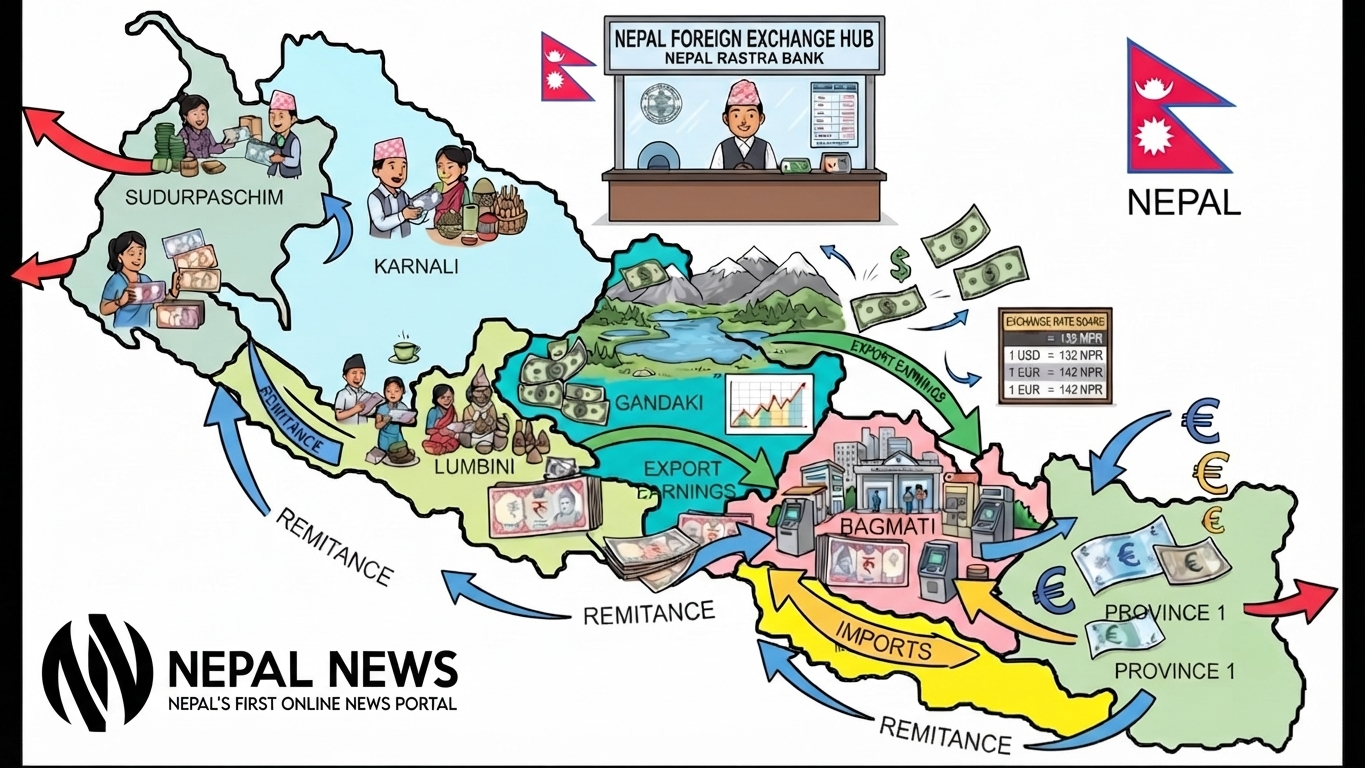
The preferential treatment for IT businesses looks forward-leaning until you notice it exists in isolation, unaccompanied by any parallel opening for other export-oriented sectors that might benefit just as much from offshore market access, distribution subsidiaries, or joint ventures. A more coherent liberalization strategy would have tied outward investment permissions to export orientation or foreign currency earning potential generally, rather than carving out a single favored sector by name.
On repatriation, the bill’s list of permissible return categories, dividends, liquidation proceeds, technology transfer fees, loan repayments with interest, reads as comprehensive on paper, and the practical value of this section lies less in the categories than in whether the “procedures the central bank determines” turn out to be fast and predictable or slow and discretionary. Nepali businesses with legitimate overseas earnings have historically complained less about the legal permission to repatriate and more about the bureaucratic friction of actually doing so within reasonable timeframes. The bill does not address turnaround time, appeal rights for delayed approval, or any service standard NRB must meet, leaving this section as a statement of principle rather than an operational guarantee.
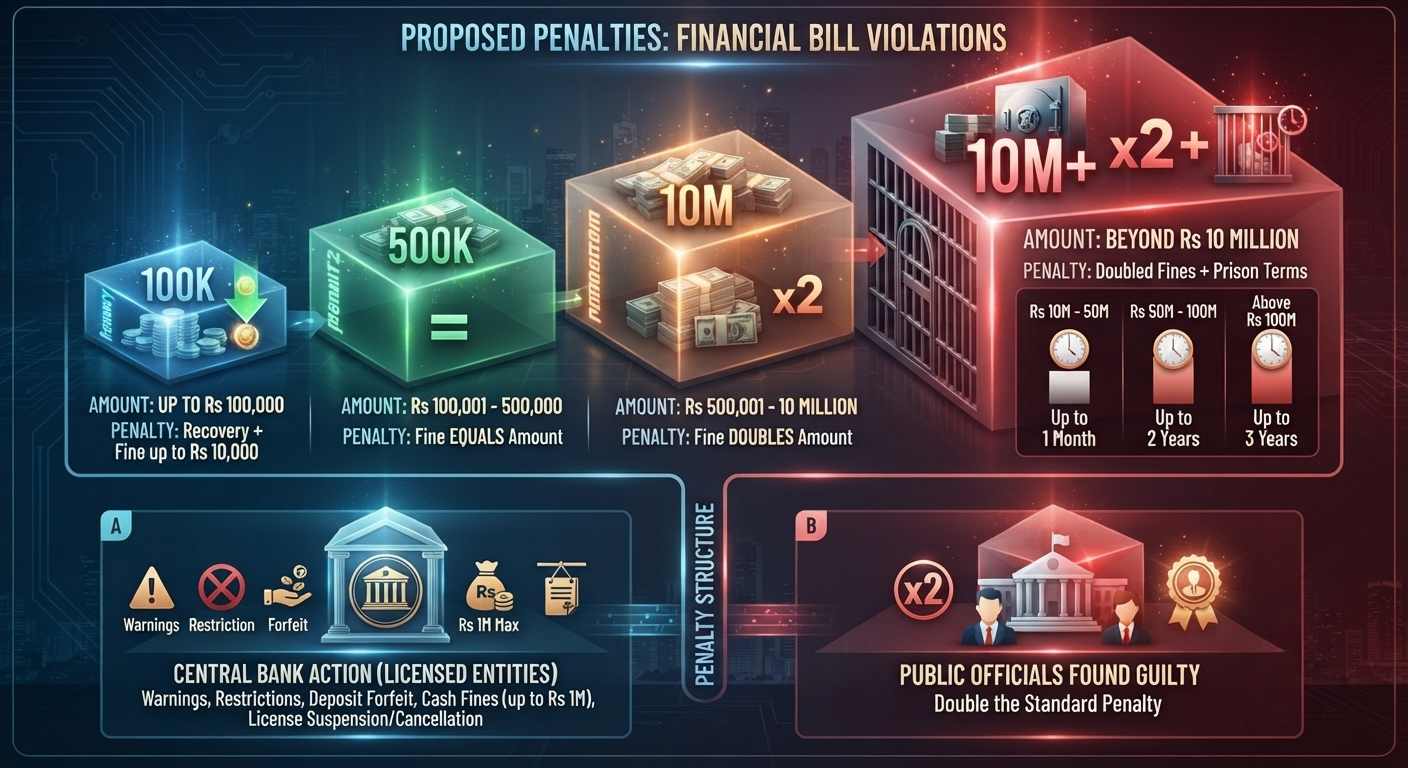
The penalty structure is where the bill’s internal logic starts to strain. A tiered system running from a flat Rs 10,000 fine on sub-100,000 amounts up to tripled fines and multi-year imprisonment above Rs 100 million looks proportionate in the abstract, escalating punishment with the scale of the offense. But fixed rupee thresholds embedded directly into primary legislation age badly in an economy with persistent inflation and a currency that has depreciated meaningfully against the dollar over the past decade.
What counts as a serious offense today, crossing the Rs 10 million threshold that triggers potential imprisonment, will represent a much smaller real transaction in ten years than it does now, quietly softening deterrence over time unless the law is amended again, which is precisely the kind of legislative inertia this bill was drafted to escape. A more durable design would have indexed thresholds to some reference point, whether inflation, a multiple of minimum wage, or NRB’s own periodically published parameters, rather than hardcoding rupee figures that will need political will to revisit before they become obsolete.
What counts as a serious offense today, crossing the Rs 10 million threshold that triggers potential imprisonment, will represent a much smaller real transaction in ten years than it does now, quietly softening deterrence over time unless the law is amended again, which is precisely the kind of legislative inertia this bill was drafted to escape.
The doubling of penalties for public officials is a welcome accountability signal, at least on paper, since financial misconduct facilitated by officials with institutional access arguably deserves harsher treatment than equivalent conduct by private individuals. Whether this provision gets applied with any consistency is a separate question entirely, and Nepal’s track record on prosecuting officials for financial crimes, visible in the slow movement of cases like the cooperative fraud inquiry or various procurement scandals, gives reason for measured skepticism rather than confidence that this clause will do real deterrent work.
The investigative and due process provisions raise more serious concerns. Granting an investigating officer search and seizure power over premises, vehicles, and individuals based on reasonable suspicion, combined with a thirty five day custody window for investigation, is an unusually long detention period for what is fundamentally a financial regulatory offense rather than a violent crime. Compare that to ordinary criminal procedure timelines and the gap is stark. There is a legitimate argument that complex cross-border financial investigations take time to build, tracing money trails through multiple jurisdictions and financial instruments is not quick work, but thirty five days of pre-charge custody for currency and forex violations sits uncomfortably close to the kind of extended detention authority usually reserved for national security or organized crime statutes.
Nothing in the bill’s summarized structure suggests judicial oversight during that custody period beyond the initial twenty four hour presentation requirement, meaning a district court signs off on the arrest but does not necessarily supervise the full detention window. Given Nepal’s own history of custodial abuse concerns in unrelated contexts, any law granting extended executive detention power deserves closer human rights scrutiny than a purely economic reading of the bill would suggest, and this is an area where civil society and legal aid groups commenting during the fifteen day consultation window would do well to focus.
The extraterritorial reach of the bill, binding Nepali citizens abroad and Nepal-registered firms operating overseas including their branch and liaison offices, is legally ambitious and practically difficult to enforce. Nepal has limited mutual legal assistance infrastructure and a thin network of financial intelligence sharing agreements compared to larger economies that routinely enforce extraterritorial financial law through correspondent banking relationships and multilateral cooperation frameworks.
Declaring jurisdiction over a Nepali-registered firm’s Dubai branch office is one thing. Actually investigating, seizing assets, or prosecuting a violation committed entirely outside Nepal’s borders is another matter altogether, and the bill offers no visible mechanism, whether through NRB counterpart agreements or Ministry of Foreign Affairs coordination, for making that extraterritorial claim operationally real rather than symbolic. Broad jurisdictional language that cannot be backed by enforcement capacity risks becoming exactly the kind of paper tiger provision that erodes rather than builds regulatory credibility.
The physical currency, gold, and silver movement restrictions read as a direct response to persistent smuggling routes along the open border with India and the well-documented gold smuggling cases that have periodically embarrassed Nepali customs enforcement. Vesting NRB with discretionary notice power to restrict movement, alongside a general threshold-based carrying limit for non-bank entities, gives customs a cleaner legal hook for seizure than existed under the 1962 Act. The vehicle confiscation clause, paired with an innocent-owner exception, is a sensible balance that avoids penalizing, say, a taxi driver whose vehicle was used without knowledge for smuggling. But smuggling enforcement has never really failed in Nepal for lack of legal authority to seize goods.
It has failed because of under-resourced customs posts, corruption risk at exactly the chokepoints where this law would need to be applied, and porous informal crossings that no amount of statutory language addresses. This is a recurring theme across the bill: legal modernization without a parallel commitment to enforcement infrastructure risks simply raising the theoretical penalty for behavior that continues largely unimpeded in practice.
The foreign bank account provisions represent one of the bill’s more consequential quiet expansions of state visibility into private financial lives. Requiring NRB approval before any Nepali resident or Nepal-registered firm opens a foreign account, and requiring disclosure of balances for accounts opened while living abroad that remain active after return, effectively closes a gap that has allowed offshore savings, particularly among returning migrant workers, to sit outside central bank monitoring. There is a reasonable prudential case for this, since undisclosed offshore holdings complicate reserve management and tax enforcement alike.
But, for the large Nepali diaspora and returning labor migrants, many of whom maintain modest overseas savings precisely because domestic banking access or trust has historically been limited, this creates a new compliance burden that risks either being ignored en masse due to low awareness, or selectively enforced against people who happen to get flagged, neither of which is a particularly good outcome. A public education and simplified disclosure mechanism, rather than reliance on individuals proactively navigating “procedures the bank prescribes,” would make this provision far more effective than the bare legal requirement alone.
The contract voidance clause, automatically nullifying any forex-related agreement that conflicts with the Act or its subsidiary directives, is standard regulatory practice but carries real commercial risk given how broadly “conflicts with directives, procedures, circulars or notices” can be interpreted. Directives and circulars are administrative instruments that can change with far less scrutiny than primary legislation, meaning a contract compliant today could become retroactively voidable if NRB issues a new circular tomorrow.

Finance Minister Swarnim Wagle
Businesses engaged in legitimate cross-border commercial arrangements, trade financing, supply contracts with foreign currency components, joint venture agreements, now carry latent legal risk tied to administrative rule changes they may not even be aware of in real time. The explicit permission for hedging transactions is a genuine improvement over ambiguity in the old law, since Nepali firms with foreign currency exposure have long operated in a gray zone on whether hedging instruments were even legally available to them. But hedging permission that depends entirely on procedures NRB has yet to prescribe is a promise rather than a functioning market, and until those procedures actually exist, the practical improvement remains theoretical.
The good faith immunity clause for officials, while standard in regulatory statutes to prevent chilling effects on enforcement, sits alongside strict confidentiality obligations in a way that limits external accountability. If an official’s actions during an investigation cannot be publicly scrutinized due to confidentiality rules, and the official enjoys immunity for anything done in apparent good faith, the practical burden of proving negligence or malice to overcome that immunity falls almost entirely on an aggrieved party who may never see the internal record of what actually happened. This is a familiar tension in financial regulatory law everywhere, protecting regulators from vexatious litigation while limiting redress for genuine abuse, but Nepal’s weaker record of independent judicial review in financial cases means this tension resolves less favorably for ordinary citizens here than it might in jurisdictions with stronger administrative law traditions.
Stepping back, the bill’s greatest strength is definitional modernization. It genuinely closes gaps the 1962 and 1964 laws left wide open around digital instruments, offshore accounts, and modern investment structures. Its greatest weakness is that it multiplies central bank and state discretion faster than it builds the transparency, enforcement capacity, or judicial oversight mechanisms needed to keep that discretion in check.
For a country trying to exit the FATF grey list and rebuild credibility in its financial governance, that combination, more power with the same accountability gaps, may not read as convincingly to international observers as its drafters hope. The fifteen day comment period, while procedurally correct, is a thin window for a bill this consequential, and whether meaningful revisions emerge before parliamentary submission will say a great deal about whether this reform is substance or box-ticking.