Kathmandu
Thursday, July 23, 2026





Fourteen years, 24 hunger strikes and repeated government promises have left Nepal confronting the same question: why does reform still depend on one doctor’s declining health?
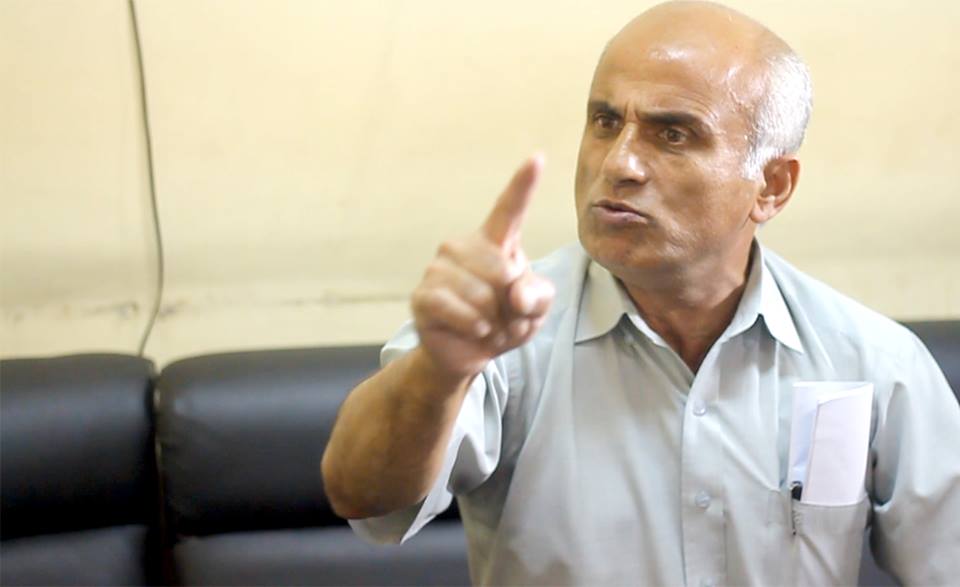
KATHMANDU: Dr Govinda KC’s decision to begin his 24th fast-unto-death on July 23, 2026, in a small pilgrim rest house attached to a temple in Dhangadhi is, on one level, a small and almost procedural event: an elderly, retired surgeon refusing food over a disputed appointment to a regulatory commission. On another level, it is the latest chapter in one of the longest running and most consequential civic accountability campaigns in South Asia, a fourteen year confrontation between one individual’s body and the machinery of an entire national health and education system. Understanding why this keeps happening, and why it keeps happening in almost exactly the same shape each time, says a great deal about the structural weaknesses in Nepal’s governance that no single agreement, however detailed, has yet managed to fix.
Start with the surface level facts. The immediate spark for this fast was the July 7, 2026 appointment of Devendra Khatri, a retired Major General, as vice-chairperson of the Medical Education Commission, a body created specifically to insulate medical college regulation from political and commercial interference. Dr KC’s objection was not merely personal distaste for the appointee but a structural argument: that the position was filled without an open, competitive process, and that filling a regulatory oversight role with someone he considers to carry a predetermined agenda undermines the very independence the commission was designed to guarantee. When his July 17 ultimatum, giving the government until July 21, produced no reversal, he did exactly what he has done twenty-three times before: he stopped eating.
What makes this pattern worth examining closely is not the individual dispute over one appointment, but the fact that this specific type of dispute, over who controls appointments to Nepal’s medical education regulatory architecture, has been the recurring battleground since at least 2014, when Dr KC’s fourth fast targeted a politically appointed dean at the Institute of Medicine. The names of the institutions and individuals change. The underlying grievance, that appointments meant to be insulated from political and commercial pressure keep ending up filled by people connected to those very interests, does not. This is the single most important throughline connecting this week’s protest to protests that took place a decade earlier, and it suggests the problem was never really solved by any of the prior agreements, only temporarily paused.
Consider the record of what those prior agreements actually achieved. The National Medical Education Act, passed in January 2019 after years of sustained pressure including multiple fasts, was itself a genuine structural achievement: it created the Medical Education Commission as an empowered regulator, capped the number of colleges any single university could affiliate with, and set a legal pathway toward converting medical education into a non-profit sector. These are not trivial outcomes for a civic movement led by one person’s body rather than an organized political party or a well-funded advocacy organization.
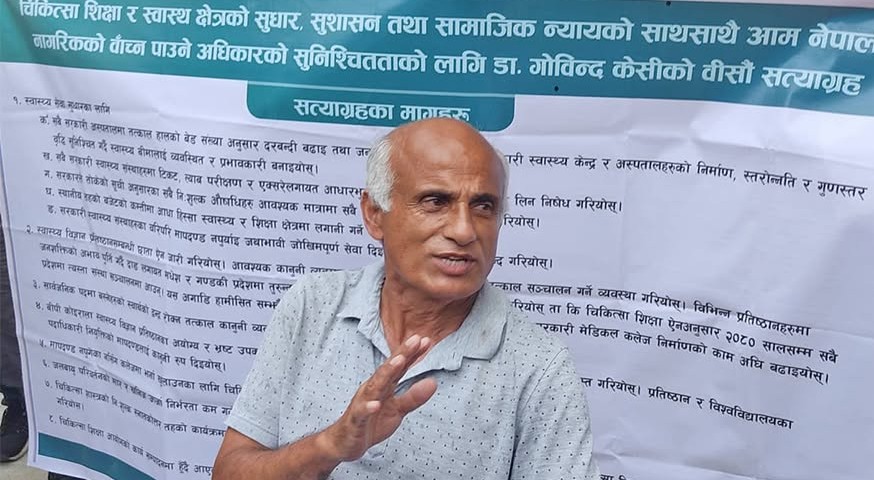
Dr. Govinda KC Commences Hunger Strike on September 11, 2022 (Bhadra 26, 2079) at the Krishna Mandir Dharamshala in Dhangadhi
And yet, seven years later, the very commission created by that act is at the center of the latest crisis, because the mechanism for appointing its leadership remains, in Dr KC’s telling, just as vulnerable to political capture as the institutions the act was designed to replace. This is the paradox at the heart of Nepal’s medical education reform story: laws can be won through extraordinary personal sacrifice, but the ongoing administration of those laws, appointment by appointment, decision by decision, remains subject to exactly the same pressures that made the original laws necessary.
The December 2014 episode involving 146 lawmakers, most from CPN (UML), who were found to have signed a document defending a medical college affiliation in which they personally held financial shares, remains perhaps the single most illuminating data point in this entire saga. It demonstrates, in the starkest possible terms, that the conflict Dr KC has spent his career fighting is not an abstraction or a matter of poor administrative practice. It is a direct, quantifiable overlap between the people who write and pass Nepal’s laws and the people who financially benefit from those laws being written loosely enough to permit continued private medical college expansion.
When elected representatives have skin in the game of an industry they are simultaneously meant to regulate, no single piece of legislation, however carefully worded, can fully close the gap between the law as written and the law as enforced, because enforcement ultimately depends on appointees, budgets, and administrative follow-through controlled by people who may have reasons to slow-walk exactly the provisions Dr KC cares most about.
This helps explain why the non-profit transition demanded under the 2019 act, with its 2028 target date, has become such a central and recurring flashpoint.
Converting an entire tier of Nepal’s higher education and health sector from a private, profit-generating model into a non-profit or state-backed model is not a matter of flipping an administrative switch. It requires unwinding investment structures built over decades, addressing existing owners’ expectations of return on capital already sunk into buildings, equipment, and faculty, and managing the political fallout from investors who will resist losing a profitable asset.
Every government since 2019 has had legal authority to push this transition forward. None has moved with anything like the urgency Dr KC demands, and it is difficult to interpret that pattern as anything other than a reflection of how deeply private capital remains embedded in the political economy surrounding medical education in Nepal, regardless of which party or coalition happens to hold office in any given year.
The involvement of the Balen Shah government adds a particularly interesting dimension to this year’s episode. Shah’s premiership, which began on March 27, 2026, following his party’s landslide election victory, was widely framed both domestically and internationally as a generational and reformist break from Nepal’s traditional political establishment, arising directly out of the youth-led anti-corruption protests of 2025 that toppled the preceding government. A government elected explicitly on an anti-corruption, technocratic reform mandate finding itself, within months of taking office, embroiled in almost exactly the same category of dispute that has plagued every government since 2012, an allegedly conflict-of-interest laden regulatory appointment, is a meaningful data point about how difficult it is to change the underlying incentive structures of a sector through electoral change alone.
It is also notable that this is not even the first friction point between Dr KC and the Shah government. In April 2026, just weeks into the new administration, Dr KC prepared to protest a cabinet decision made by then-interim Prime Minister Sushila Karki on March 14 and later inherited by the Balen Shah administration. The decision allowed an individual who did not meet standard merit thresholds to enter a medical programme under a scholarship quota, reviving decades-old disputes over exceptions, quotas and merit standards in medical admissions.
The recurrence of this exact category of conflict, twice within the first four months of a supposedly reform-minded government, suggests that the pressures pushing officials toward these kinds of decisions are structural rather than simply a function of which individuals or parties happen to hold power.
There is also a governance lesson embedded in the sheer repetitiveness of the negotiation choreography itself. Across nearly every one of Dr KC’s prior fasts, from the 15th in 2018 through the 19th in 2020 and the 20th in 2022, the same sequence has played out: initial government silence or dismissal, a period of mounting public and medical community pressure as Dr KC’s health visibly deteriorates, hurried late-night negotiations involving senior ministers or the prime minister’s office, and a signed multi-point agreement that ends the immediate crisis.
This choreography reveals something uncomfortable about how policy commitments actually get made and unmade in Nepal’s system: durable, binding commitments to reform a sector as consequential as medical education appear to require a health emergency involving an elderly man’s body before they receive sustained executive attention, rather than being generated and enforced through the ordinary functioning of parliamentary oversight, judicial review, or administrative accountability mechanisms.
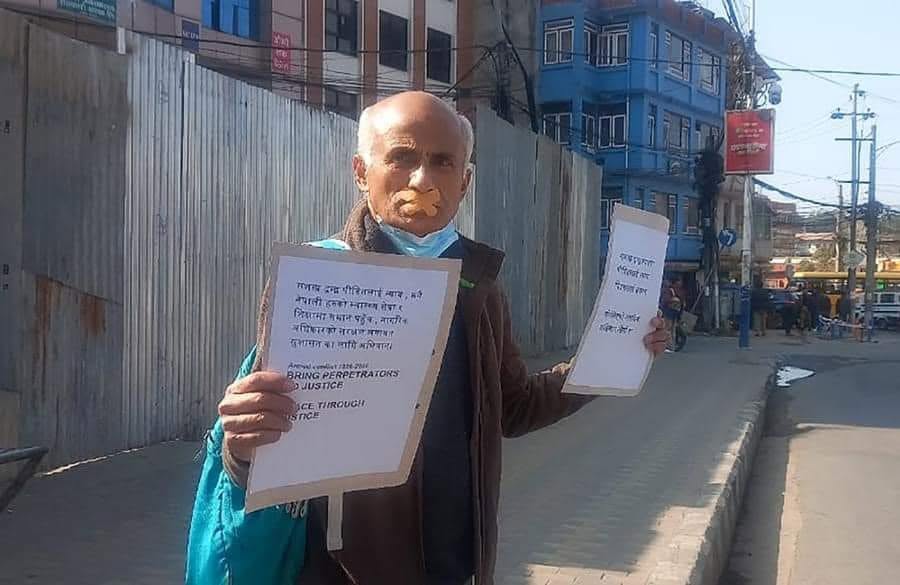
Dr. Govinda KC protests with tape over his mouth at Maitighar in January 2024. File photo
Every time this happens, it also raises the same uncomfortable question that seems to go unanswered: why should it take a fast-unto-death, rather than routine bureaucratic enforcement of an existing law, to get a government to fill a regulatory post through open competition instead of political appointment.
The health dimension of this particular fast deserves serious attention on its own terms, separate from the policy substance. Dr KC is 69 years old, a decade older than he was during his most medically dramatic fasts in the mid-2010s. Medical bulletins from his 19th fast in 2020, at age 63, already documented critically low blood sugar, dangerously depleted electrolytes, and reduced white blood cell counts putting him at serious infection risk within roughly three to four weeks of fasting.
At nearly seventy, his physiological reserve to withstand a prolonged fast is almost certainly diminished compared to those earlier episodes, meaning the window before the government faces a genuine life-threatening medical emergency, rather than merely a politically embarrassing protest, is likely to be considerably shorter this time. This has historically been the single most powerful lever forcing rapid government action, more so than the policy arguments themselves, and it raises a genuinely difficult ethical question that Nepali civil society, the medical community, and the government all continue to wrestle with: whether a system that depends on repeatedly bringing one aging man to the brink of organ failure to enforce its own laws represents a sustainable model of accountability, however admirable the individual’s personal courage and sacrifice may be.
It is also worth examining the controversies and criticisms that have accompanied this movement honestly, rather than treating Dr KC’s campaign purely as an uncomplicated moral crusade. Some private medical college operators and political figures have long argued that repeated indefinite hunger strikes represent a form of coercive pressure that short-circuits Nepal’s normal legislative and administrative deliberation processes, forcing governments to negotiate under the acute pressure of a potential death rather than through ordinary democratic debate weighing competing interests, including the interests of private investors who have made legitimate investments under previously existing rules.
Critics have argued that repeated fast-unto-deaths place governments under extraordinary pressure and can bypass normal legislative and administrative processes. But that criticism can obscure the deeper reality of Dr KC’s campaign: he has repeatedly resorted to fasting only after institutional mechanisms have failed to address concerns about political interference, conflicts of interest and the erosion of merit-based standards in medical education. His fasts have historically been effective precisely because they have brought urgent public attention to issues that ordinary governance has repeatedly failed to resolve.
The 2020 episode, when police forcibly took Dr KC to a trauma centre against his wishes, also highlighted the difficult tension between his right to make decisions about his own body and the government’s responsibility to protect his life.
These are complex ethical questions, but the broader record suggests that the risks associated with Dr KC’s protests cannot be examined separately from the governance failures that have repeatedly driven him to undertake them. The fact that an elderly doctor has had to risk his life 24 times to press for the implementation of reforms and principles that governments themselves have often formally accepted is, in itself, a powerful indictment of Nepal’s political and administrative system.
Stepping back further, this recurring conflict also illuminates broader structural weaknesses in Nepal’s health sector that extend well beyond medical education regulation narrowly defined. The persistence of demands Dr KC first raised more than a decade ago, such as ensuring at least one functioning government medical college in every province, guaranteeing free essential medicines at public facilities, and expanding basic health, education, and transport infrastructure in remote border regions like the far west, points to uneven public health investment that has left significant capacity gaps for private providers to fill on commercial terms.
When public medical education and healthcare infrastructure fails to keep pace with demand, private colleges and hospitals step into that gap, often at costs that place quality care out of reach for many Nepali families, and often accompanied by the kind of underqualified graduates and inadequate facilities that Dr KC has spent years warning about. In this sense, the fight over the vice-chairperson of a single regulatory commission is really a proxy battle over a much larger question facing Nepal: whether healthcare and medical education will primarily be treated as public goods the state is obligated to provide and safeguard, or as commercial services subject to market dynamics and the political influence that flows from private capital, a question that has remained essentially unresolved despite fourteen years of the country’s most visible activist repeatedly staking his life on one side of that argument.
Looking at what would actually change if every one of Dr KC’s current demands were implemented in full offers a useful way to measure the stakes involved. Reversing the contested appointments at the Medical Education Commission and Dasharath Chand University would, at least symbolically and potentially substantively, restore a degree of independence to bodies whose entire purpose is undermined if their leadership is seen as compromised from the outset.
Halting proposals to expand private college seats while cutting scholarships would slow, even if only temporarily, the expansion of a for-profit training pipeline that critics argue has already outpaced Nepal’s capacity to ensure adequate faculty, clinical training sites, and infrastructure. Most consequentially, genuine progress toward the 2028 non-profit transition deadline would represent the kind of structural transformation that no single agreement has yet delivered, converting an industry built substantially on tuition revenue and private investment returns into something closer to the state-backed or non-profit models Dr KC frequently cites from wealthier countries as the appropriate template for essential public services like healthcare and medical training.
Whether any of this actually happens as a result of this 24th fast is, based on the historical pattern, genuinely uncertain, and probably depends more on how quickly Dr KC’s health deteriorates and how much public and medical community pressure builds in the coming days than on the underlying merits of his specific arguments, however sound those arguments may be. What is more certain is that whatever agreement eventually emerges, whether after three days or after nearly a month, as some of his past fasts have run, will likely follow the same pattern that has defined every prior episode: a hard-won set of written commitments that addresses the immediate crisis, followed by partial implementation, followed eventually by a new dispute over a new appointment or a new policy reversal, followed by another fast.
Breaking that cycle would require something that has proven elusive across four different governing coalitions and three different major political parties holding power over the past fourteen years, namely a genuine and durable realignment of the incentives facing the people who appoint Nepal’s medical education regulators, away from political convenience and private commercial interest and toward the kind of independent, merit-based governance that the laws Dr KC has already helped win were designed, on paper, to guarantee.