Kathmandu
Monday, July 20, 2026





The province has mapped disaster risks and assigned response roles, but questions remain over whether authorities are prepared to put the plan into action.
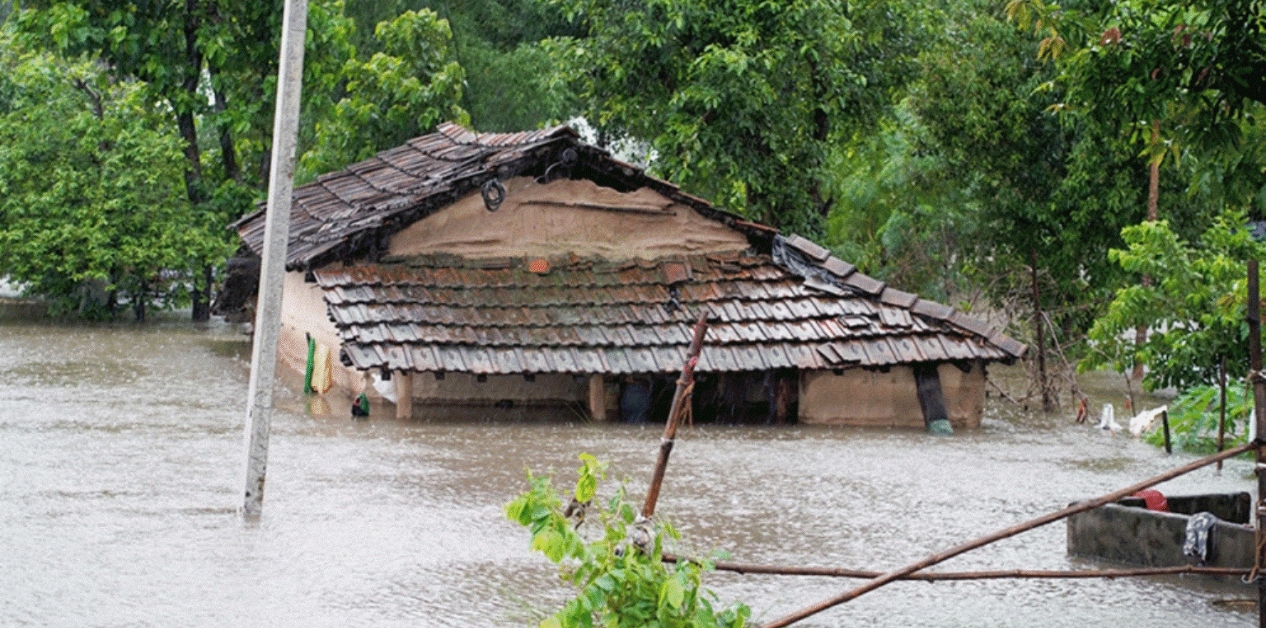
KAILALI: The Sudurpashchim Province Government has approved the ‘Monsoon Preparedness and Response Provincial Action Plan Fifth Amendment, 2026’ to face the risks of monsoon-induced disasters.
On July 11, a meeting of the Provincial Disaster Management Council held under the chairmanship of Kamal Bahadur Shah, Chairman of the Council and Chief Minister of Sudurpashchim Province, approved the action plan along with the Multi-Hazard Early Warning Strategic Action Plan, 2025.
The action plan assigns responsibilities to various agencies ranging from forecasting risks such as floods, landslides, inundation, river erosion, and road blockages to search and rescue, relief distribution, and rehabilitation.
The National Disaster Risk Reduction and Management Authority has estimated that 226,661 citizens from 51,868 households across the country could be affected by monsoon-induced disasters in the year 2026. In Sudurpashchim Province alone, it is estimated that 33,227 people from 7,603 households could be affected.
According to the Department of Hydrology and Meteorology, there is a 45 to 55 percent probability of below-average rainfall in most parts of the country this year. However, the department forecasts that the risk of floods, inundation, and landslides will remain high due to extreme and heavy rainfall occurring within short periods.
According to the provincial government’s assessment, Kanchanpur is at the highest risk of monsoon-induced disasters in Sudurpashchim. It is followed by Kailali and Doti. Janak Dhami, the disaster focal person of the province’s Ministry of Internal Affairs and Law, states that relevant agencies have been urged to remain alert based on the risk situation.
According to data from the provincial Ministry of Internal Affairs and Law, it is estimated that 7,132 citizens could be affected by monsoon-induced disasters in Kanchanpur. Due to the flow of the Mahakali and other rivers, the district is at high risk of floods, inundation, and river erosion.
In Kailali, it is estimated that 6,195 citizens could be affected. Settlements in the Bhajani area and around the Mohana River are at higher risk.
According to Dhami, the provincial government has identified locations, settlements, and households that could be affected by disasters.
“The provincial government is coordinating inter-agency cooperation, role fulfillment according to responsibilities, and necessary resource management for monsoon preparedness and response,” he says. “Currently, we have identified the locations and households at risk.”
What is in the action plan?
The approved Monsoon Preparedness and Response Action Plan includes forecasting and mitigation measures for risks that may occur during the rainy season, including floods, landslides, inundation, erosion, and road blockages.
Responsibilities related to search and rescue, relief distribution, temporary shelter, rehabilitation, and the mobilization of various government agencies during disasters have also been assigned. The action plan even includes a division of labor regarding how which agency will be mobilized during emergencies.
The action plan was developed based on the Disaster Risk Reduction and Management Act, 2017; Disaster Risk Reduction and Management Rules, 2019; and the National Disaster Response Framework, 2013. Similarly, the Provincial Disaster Management Plan, 2020; Provincial Disaster Response Framework, 2023; Disaster Preparedness and Response Plan Formulation Guidelines, 2019; and the Provincial Disaster Risk Reduction and Management Act, 2019 were also used as foundations for creating the action plan.
The Multi-Hazard Early Warning Strategic Action Plan 2025–2030 emphasizes the development and expansion of an effective early warning system across the province.
Sanjay Kumar Sah, Chief Engineer of the Hydrology and Meteorology Office in Attariya, states that aiming to reduce risks, the plan focuses on human-centered forecasting, effective communication mechanisms, and the use of modern technology, keeping in mind the increasing disaster risks caused by climate change.
Procedure in collaboration with 26 organizations
An operating procedure regarding disaster preparedness, response, and recovery is also being developed in Sudurpashchim. Work is underway for this in collaboration with 26 organizations.
According to Nabin Dahal, Disaster Management Training Coordinator for UN Women, the procedure is being prepared with the support of non-governmental organizations active in the province. UN Women conducted a workshop from July 16 to July 17, 2026, aimed at institutionalizing gender equality, disability, and social inclusion-responsive disaster preparedness and humanitarian action through the development and effective use of practical tools, systems, and coordination mechanisms.
The workshop discussed matters including making post-disaster initial rapid assessment forms mandatory, conducting rapid gender analysis, and operating community kitchens in affected settlements.
According to Vibhisika Adhikari, Humanitarian Assistance, Disaster Risk Reduction and Climate Change Programme Officer at UN Women, the ‘SUPER’ program is being implemented to increase the participation of women’s rights organizations, organizations of persons with disabilities, and civil society from marginalized communities in disaster management.
Under the program, she says that 117 organizations have been identified, including women-led organizations, gender and sexual minority organizations, and community-based organizations across Sudurpashchim, Bagmati, Lumbini, and Karnali provinces. According to Adhikari, UN Women is supporting the capacity building of these organizations, coordination with government agencies, and advocacy related to risk reduction.
Preparation for disaster response
Due to geographical diversity, the nature of disasters also varies across different districts of Sudurpashchim.
In the Terai districts of Kailali and Kanchanpur, river erosion, floods, and inundation are the main challenges. Although the probability of floods and inundation is relatively low in the hilly and mountainous districts, the risk of landslides is high.
Janak Dhami, the disaster focal person, states that due to haphazardly dug rural roads, weak geological structures, and the lack of water drainage structures, even normal rainfall triggers large landslides, putting settlements at risk.
“The problem of floods and inundation is greater in the Terai. In the hilly districts, the probability of landslides is high due to newly dug roads and soil erosion,” he says. “The provincial government has identified risky locations and formulated a security strategy.”
Dhami states that since immediate search and rescue and relief distribution are the most crucial aspects during a disaster, security personnel from the Nepali Army, Nepal Police, and Armed Police Force have been given special training and kept on standby.
He mentions that the disaster management committees formed at the local level are also on standby. Security personnel will be deployed to rescue people trapped in floods, clear landslides, and move those affected to safe locations.
According to him, boats, life jackets, first-aid materials, and other equipment necessary for search and rescue have also been kept ready.
Dhami admits that since the provincial government failed to pass the budget for the current fiscal year, difficulties could arise in response efforts if a major disaster occurs. Nevertheless, he claims that since coordination is ongoing with government and non-governmental organizations, there will not be a massive immediate shortage of resources. Dhami informs that Rs 50 million remains secure in the Provincial Disaster Management Fund.
According to Section 5, Subsection 3, and Schedule 1 of the ‘Disaster Sensitive Social Security and Relief Distribution Criteria, 2024’ issued by the Ministry of Home Affairs, there is a provision to provide relief at the rate of Rs 200 per person per day for food and non-food items to those affected by disasters. The provincial disaster action plan prepared by the Sudurpashchim Province Government has also set the relief rate by exactly following these criteria of the federal government.
Dhami says the government will distribute relief in accordance with the approved criteria. However, amidst rising market inflation, it appears highly difficult to sustain basic needs such as food, shelter, clothing, and sanitation for affected families with only Rs 200 per person per day. He admits that complaints from disaster victims about not receiving adequate relief are repeated every year.
Administration unaware in the most high-risk district
Although the province stated that it has identified high-risk districts, the population likely to be affected, and rescue mechanisms, it appears that the necessary exchange of information has not taken place between the provincial and district-level administrations. The provincial government considers Kanchanpur to be the district at the highest risk of monsoon-induced disasters. However, Madan Koirala, the Chief District Officer of Kanchanpur, says he is unaware of the provincial government’s said risk assessment.
When asked what kind of preparedness the district has made in the context of Kanchanpur being assessed as the most high-risk district in the province, he says, “It obviously rains during the rainy season. You are asking questions as if the sky itself is falling. I haven’t heard about the risk. If a problem arises, it will be solved. What is there to prepare for this?”
His response raises questions about the coordination between the provincial government’s risk assessment and district-level preparedness.
Kanchanpur has previously suffered human casualties due to monsoon-induced disasters. Life in the district was severely affected by floods and inundation on July 8, 2024. Srijana Bogati, Aarti Bogati, and Laxmi Bogati of Punarbas Municipality-5, ‘Ga’ Village, who had gone to rescue others in a neighboring village, drowned to death.