Kathmandu
Tuesday, June 16, 2026





If Nepal lacks a clear policy on standardization and its own digital infrastructure, technology is highly likely to steer the Nepali language toward standards developed in India.
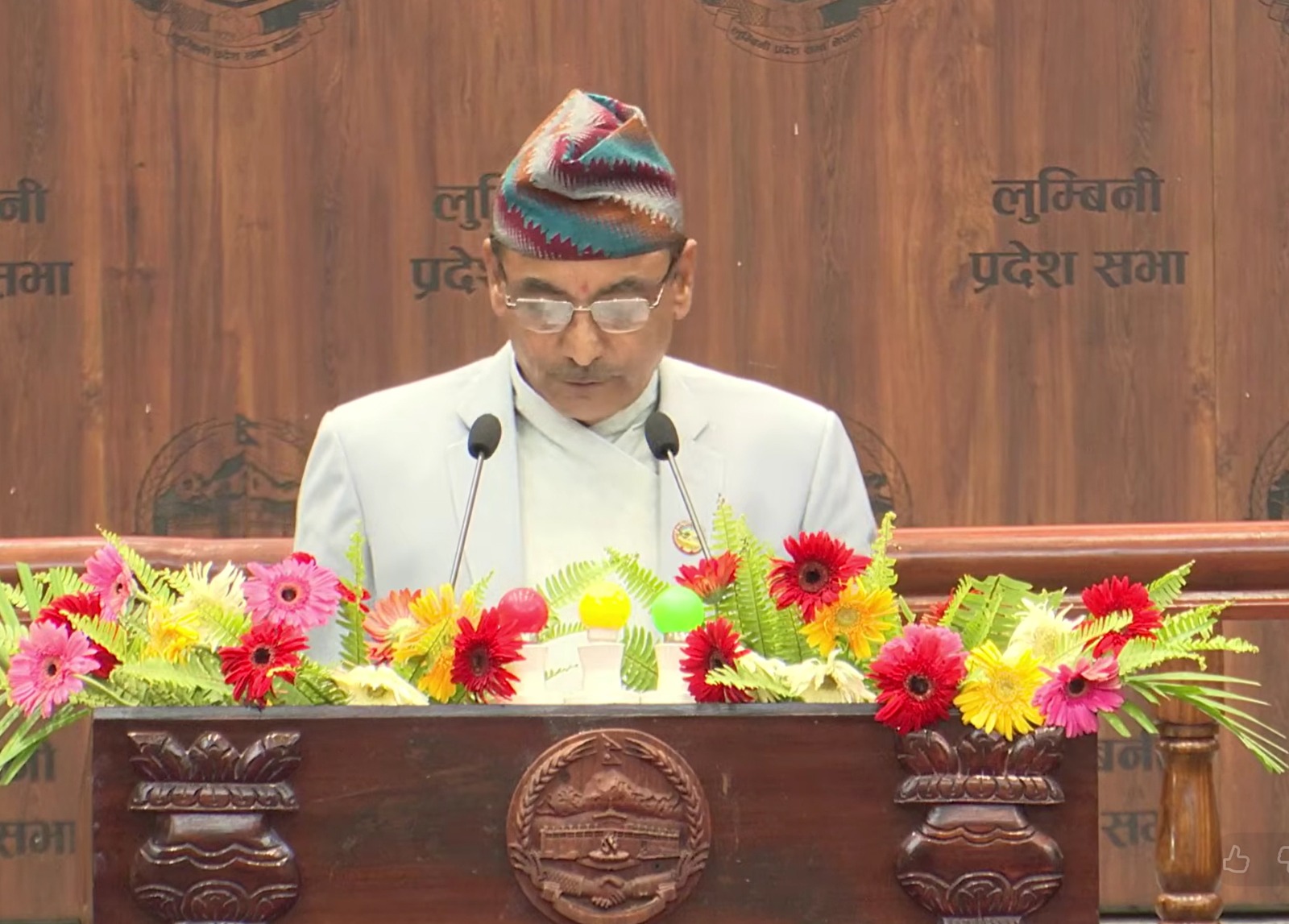
KATHMANDU: On June 10, 2026, Rastriya Swatantra Party Member of Parliament Bipin Acharya raised a point in Parliament suggesting that Nepal should leverage the language and technology resources developed by India. Arguing that India is investing heavily in language-based AI development, he reasoned that instead of starting everything from scratch, Nepal could utilize India’s open-source technologies and integrate sovereign aspects tailored to Nepal’s specific needs.
Alluding to India’s “Bhashini” project, he remarked, “The Nepali language is recognized under the Eighth Schedule of the Constitution of India. Currently, India is investing billions of rupees in developing AI based on various languages. Therefore, rather than starting everything from absolute zero and building our own AI computing centers, we can choose a path where we utilize open-source technologies developed by India and add sovereign aspects to them based on Nepal’s requirements. This would not only yield high-quality results but also save a massive amount of money.”
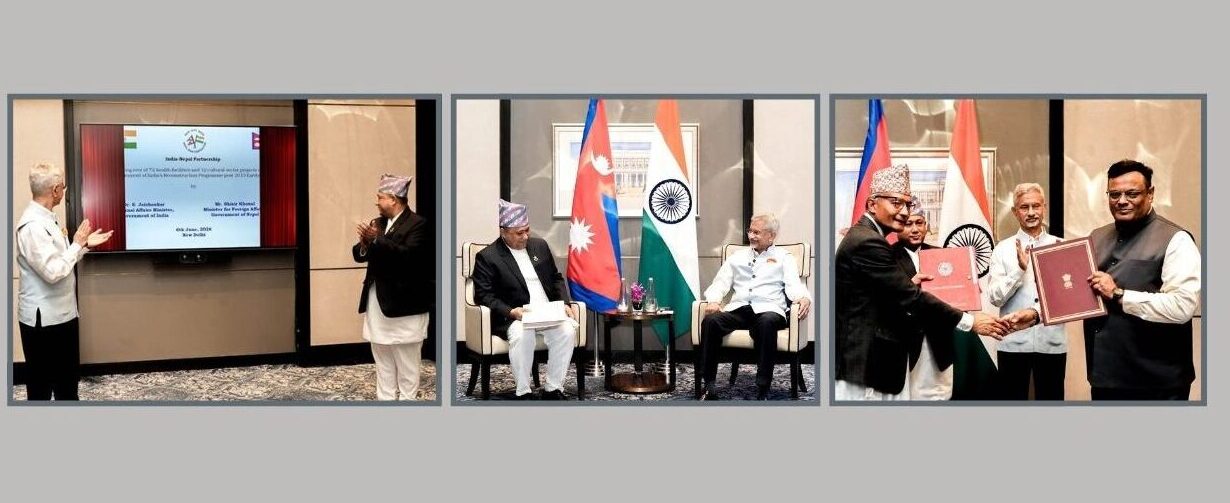
Acharya’s statement was not merely a casual parliamentary commentary. A few days prior, on June 6, 2026, a Memorandum of Understanding (MoU) was signed between the Digital India Bhashini Division (under the Ministry of Electronics and Information Technology, Government of India) and the Center for Digital Public Infrastructure and Artificial Intelligence at Kathmandu University. The agreement aims to cooperate on language-based AI, multilingual digital public infrastructure, and the development of inclusive digital systems.
The MoU was signed by Amitabh Nag, Chief Executive Officer of the Digital India Bhashini Division, and Prof. Bal Krishna Bal, Associate Dean of Kathmandu University. The MoU exchange ceremony took place in New Delhi in the presence of India’s External Affairs Minister S. Jaishankar and Nepal’s Foreign Minister Shisir Khanal.
Both sides have characterized the agreement as a testament to the Nepal-India commitment toward collaboration in technology and digital transformation. Deemed a high priority by both governments, this agreement is being viewed as the cornerstone for long-term cooperation between Nepal and India in the fields of language technology and digital inclusion.
However, alongside this collaboration, a sensitive question has emerged: Is Nepal building its own national language-AI infrastructure, or is it merely embedding itself into the linguistic standards and technological frameworks developed in India?
According to details published on the website of India’s Ministry of Electronics and Information Technology, Bhashini Division CEO Nag described the collaboration with Kathmandu University as a significant stride toward inclusive language technology development in South Asia. He stated that Bhashini’s open digital public infrastructure model could expand digital access for millions of citizens. He further noted that it would build a new generation of multilingual AI while preserving shared linguistic and cultural heritage.
Prof. Bal Krishna Bal, Associate Dean of Kathmandu University (KU), also views this agreement as a reflection of a shared commitment between Nepal and India to harness AI for linguistic inclusion and social impact. According to him, the agreement—which aims to facilitate speech-to-text conversion, text-to-speech creation, and multilingual dialogue systems—could make Bhashini a crucial vehicle for expanding linguistic accessibility across government services, public information systems, and digital platforms.
“Along with the expansion of AI and digital public services,” Bal says, “this collaboration can provide an opportunity to bridge the Nepali language, as well as other local languages, with modern language technology.”
Currently, Large Language Models (LLMs) are being rapidly developed worldwide. In India, Bhashini is developing “voice-first” solutions across 22 scheduled languages. It is also training language models for various government and public services, which include the Nepali and Maithili languages.
According to Associate Dean Bal, India has already implemented this system across various government services. In this context, he notes that how Nepal can utilize such systems or what it can learn from them will be of critical importance.
“Another aspect,” he adds, “is that Nepal can also contribute data and linguistic resources necessary for the continuous improvement of such a system.”
KU is currently developing Nepali-Tamang and English-Tamang translation systems with support from Google. According to Bal, there is a potential to adapt the “voice interface” being developed by Bhashini to the Nepali context using local data, thereby operating Nepal’s government services in accordance with local linguistic needs.
Based on its output, the open-source-driven Bhashini is considered one of the largest language-AI systems in the world. When Nepal collaborates on such a massive project, it is natural for the Nepali side to view it positively, seeing an opportunity to advance rapidly by utilizing India’s ready-made infrastructure, resources, and experience.
Linguists, however, argue that such collaboration should not be viewed merely as a technical opportunity. According to them, language technology is not just a matter of software or applications; it is intrinsically linked to language standardization, data ownership, legal frameworks, digital sovereignty, and long-term technological self-reliance.
“The word ‘open source’ is prominently used in the current understanding. Open source implies that the system can be modified. However, that does not equate to complete independence or absolute self-reliance,” says linguist Bhim Regmi. “It comes with its own technical, legal, and structural limitations. Therefore, we must closely observe how it is implemented in the future.”
Regmi, who possesses extensive experience in projects concerning language technology, dictionary compilation, corpus building, and text-to-speech systems, points out that the way the Nepali language is evolving, practiced in writing, and standardized in India should not blindly be adopted as the standard for Nepal’s Nepali language.
He notes, “We must lose no time in clarifying whether we want to develop our Nepali language by linking it to the Nepali spoken in India, or by basing it on its relationship with other indigenous languages within Nepal. If we fail to develop our own distinct perspectives on language standardization, orthography, and technology-related matters, future technologies will naturally drag us toward the standards developed in India.”
Regmi’s other major concern centers on how much Nepal is investing in developing its own data centers, computing infrastructure, and technical workforce. He believes that relying on external platforms without building a foundational domestic architecture will raise serious questions regarding data sovereignty, national security, and technological self-reliance in the long run.
The collaboration with Bhashini is not just an opportunity for Nepal to utilize technology; it is also a litmus test for its language and digital policies. While benefits can be reaped from India’s open-source infrastructure, experts like Regmi argue that Nepal must independently formulate answers to critical questions: How will this technology be adopted? How will the standards for Nepali and other regional languages of Nepal be determined? Where will the data reside? Under whose control will the system operate? And ultimately, how will Nepal build its own independent language-AI infrastructure?